Tag: country

  • Only radical thinking will deliver the integrated tertiary system the country needs

    Only radical thinking will deliver the integrated tertiary system the country needs

    The post-16 white paper was an opportunity to radically enable an education and skills ecosystem that is built around the industrial strategy, and that has real resonance with place.

    The idea that skills exist in an entirely different space to education is just wrongheaded. The opportunity comes, however, when we can see a real connection, both in principle and in practice, between further and higher education: a tertiary system that can serve students, employers and society.

    Significant foundations are already in place with the Lifelong Learning Entitlement providing sharp focus within the higher education sector and apprenticeships, now well established, and well regarded across both HE and FE. Yet we still have the clear problem that schools, FE, teaching in HE, research and knowledge transfer are fragmented across the DfE and other associated sector bodies.

    Sum of the parts

    The policy framework needs to be supported by a major and radical rethink of how the parts fit together so we can truly unlock the combined transformational power of education and innovation to raise aspirations, opportunity, attainment, and ultimately, living standards. This could require a tertiary commission of the likes of Diamond and Hazelkorn in the Welsh system in the mid-2010’s.

    Such a commission could produce bold thinking on the scale of the academies movement in schools over the last 25 years. The encouragement to bring groups of schools together has resulted in challenge, but also significant opportunity. We have seen the creation of some excellent FE college groups following an area-based review around a decade ago. The first major coming together of HE institutions is in train with Greenwich and Kent. We have seen limited pilot FE/HE mergers. Now feels like the right time for blue sky thinking that enables the best of all of those activities in a structured and purposeful way that is primarily focused on the benefits to learning and national productivity rather than simply financial necessity.

    Creating opportunities for HE, FE and schools to come together not only in partnerships, but in structural ways will enable the innovation that will create tangible change in local and regional communities. All parts of the education ecosystem face ever-increasing financial challenge. If an FE college and a university wished to offer shared services, then there would need to be competitive tender for the purposes of best value. This sounds sensible except the cost of running such a process is high. If those institutions are part of the same group, then it can be done so much more efficiently.

    FE colleges are embedded in their place and even more connected to local communities. The ability to reach into more disadvantaged communities and to take the HE classroom from the traditional university setting, is a distinct benefit. The growth in private, for-profit HE provision is often because it has a great ability to reach into specific communities. The power of FE/HE collaboration into those same communities would bring both choice and exciting possibility.

    While in theory FE and HE can merge through a section 28 application to the Secretary of State, the reality is that any activity to this point has been marginal and driven by motivation other than enhanced skills provision. If the DfE were to enable, and indeed drive, such collaboration they could create both financial efficiencies and a much greater and more coordinated offer to employers and learners.

    The industrial strategy and the growth in devolved responsibility for skills create interesting new opportunities but we must find ways that avoid a new decade of confusion for employers and learners. The announcement of new vocational qualifications, Technical Excellence Colleges and the like are to be welcomed but must be more than headlines. Learners and employers alike need to be able to see pathways and support for their lifelong skills and learning needs.

    Path to integration

    The full integration of FE and HE could create powerful regional and place-based education and skills offers. Adding in schools and creating education trusts that straddle all levels means that employers could benefit from integrated offers, less bureaucracy and clear, accelerated pathways.

    So now is the moment to develop Integrated Skills and Education Trusts (ISET): entities that sit within broad groups and benefit from the efficiencies of scale but maintaining local provision. Taking the best of FE, understanding skills and local needs and the best of HE and actively enabling them to come together.

    Our experience at Coventry, working closely and collaboratively with several FE partners, is that the barriers thrown up within the DfE are in stark and clear contrast to the policy statements of ministers and, indeed, of the Prime Minister. The post-16 white paper will only lead to real change if the policy and the “plumbing” align. The call has to be to think with ambition and to encourage and enable action that serves learners, employers and communities with an education and skills offer that is fit for the next generation.

    Source link

  •  How Being a Feline Escort in a Muslim Country Reaffirmed My Patriotism—Even if That’s a Dirty Word in Higher Ed

     How Being a Feline Escort in a Muslim Country Reaffirmed My Patriotism—Even if That’s a Dirty Word in Higher Ed

    This summer, I did a gig as an international cat courier. As a favor, I agreed to fly from my home in Spokane, Wash., to D.C., meet my sister-in-law and travel with her to her new government post—taking responsibility for one of her two cats—on a plane to Algiers.

    Having never visited a Muslim country, I was game, though people who’d traveled widely warned me that Algiers is unusually conservative and restrictive. I got warnings not to ask about religion or politics. A friend who works for the U.N. gave me a talking-to about what to wear, which boiled down to: no exposed skin.

    My sister-in-law would start work the day after we arrived, so I’d be on my own in a country where my options were limited. You cannot use credit cards, only cash, and can’t change money. I’d tough it out and then five days later head to Italy for a vacation.

    The only thing I could do in Algiers was walk around, make friends with many street cats, and talk to strangers. In French brushed up from college with some recent Duolingo practice, I spoke with shopkeepers, chatted with security guards outside embassies and met people hanging out on the streets. I didn’t always bother conjugating verbs and probably misgendered every noun.

    What I found were people who love their homeland and were eager to show me around. Even in a country that fought for independence in the 1960s, endured a bloody civil war in the ’90s and now exists under a repressive government, pride endured. But I also noticed what wasn’t there: easy travel, open political discourse, casual criticism of authority. Their pride lived alongside careful silence.

    In my layover on the way home, I struck up a conversation with a Delta employee from Algeria. I told him how generous and openhearted I’d found everyone I’d met. His face lit up. “It’s good now. It’s better.” But when he spoke of the government and the civil war—even in the Minneapolis airport—his voice dropped to a whisper.

    He now lived in the U.S., scanning bags as they rode around the carousel, having earned a Ph.D. in economics in his home country and taught for 30 years at a university in Poland. He would be going “home” to Algeria in September.

    People, I’m just gonna go there and say it: I love America.

    Given my politics, profession and (hippie Vietnam War–protesting) parentage (father: regional public faculty; mother: community college and Ivy lecturer), I’m a little surprised to find myself feeling a surge of patriotism, especially these days, I know I’m expected to be cynically critical of everything our (legitimate) government does. Many of my friends and colleagues dismiss folks who vote differently from us and wave a virtue flag at “those people” who drape their homes in red, white and blue.

    And yet, many who share my convictions about diversity, equity and inclusion have often been intolerant of others. We’ve gotten shouty, telling others they’re wrong, uneducated and a bucket of creeps. Maybe some of them are. Maybe some of us are, too. But we sure have stopped talking to each other. We’re not even getting the same news or finding the same facts. Some of my friends say they’ve become numb to what’s coming out our nation’s capitol. Not me. Every day I am shocked by where we are now, and where I fear we might be heading (another bloody civil war).

    In academe, we have the luxury to spout off. We spouted and in 2016 learned a big lesson: Not everyone was buying what we were selling. Which is how we got to the current political, cultural and societal shit show.

    And yet, I still love America. I love the values expressed in the documents that established us, written in such beautiful language I often assign them to creative writing students. The autobiography of our funniest founder—the first best-selling book—still carries so much wit and wisdom I’m filled with awe and envy when I reread it. The America Lincoln described in speeches with the brevity and power of a prose poem can bring me to my knees. And I love that over the past two centuries, our best leaders hoped by their criticism to form a more perfect union, to correct the many things we’ve gotten wrong.

    Just before I boarded a long and uncomfortable flight, a friend sent me a link to Ronald Reagan’s last speech. In it, he quoted from a letter he’d received: “You can go to live in France, but you cannot become a Frenchman … But anyone, from any corner of the Earth, can come to live in America and become an American.” His point: “If we ever closed the door to new Americans, our leadership in the world would soon be lost.”

    If you’d told me decades ago I’d write in praise of Ronald freaking Reagan, I’d have said that’s as likely as 2001: A Space Odyssey’s HAL becoming reality. But, well, here we are.

    We can’t stop critiquing our country—that’s the essence of democracy and the real value of higher ed. But instead of just spouting off about what’s wrong with America, we need to model how to engage constructively with imperfect institutions. We need to teach our students how to critique while also participating, how to demand better while acknowledging what’s worth preserving.

    Seeing a country like Algeria, that has closed itself down politically, isolated from the other North African nations and in many ways the rest of the world, even after throwing off colonial rule, felt like a cautionary example. In higher education, when we shut ourselves off to uncomfortable truths or dismiss those who disagree with us, we risk becoming like that whispered conversation in the airport—fearful, constrained, diminished.

    Which is why, after five days of wandering Algiers with bad French and heat-slick layers of covered skin, I boarded my flight to Rome to stuff myself with pasta alla carbonara, gelato and vigorous discussions about what’s wrong with today’s world with an odd mix of relief and resolve. You don’t have to think your country’s perfect to love it, but you do have to notice when the door’s still open and fight to keep it that way. In democracy, as in academe, the moment we stop letting in new voices, new challenges, new possibilities, we begin to die from the inside out.

    Rachel Toor is a contributing editor at Inside Higher Ed and the co-founder of The Sandbox, a weekly newsletter that allows presidents and chancellors to write anonymously. She is also a professor of creative writing and the author of books on weirdly diverse subjects. Reach her here with questions, comments and complaints compliments.

    Source link

  • Help Us Uncover the Best Investigative Stories from College Newspapers Across the Country

    Help Us Uncover the Best Investigative Stories from College Newspapers Across the Country

    In the shifting landscape of higher education, some of the most courageous and insightful journalism comes not from national outlets, but from the campus newspapers that quietly dig into the stories shaping student life, faculty struggles, and university governance.

    At the Higher Education Inquirer (HEI), we believe that student investigative reporting holds the key to revealing systemic problems and sparking meaningful change. Yet these stories too often remain local, unamplified, and overlooked beyond campus borders.

    That is why we are launching “Campus Beat”—a new series dedicated to curating and amplifying the best investigative research coming from college newspapers, whether from large flagship universities, small liberal arts colleges, or commuter-based community colleges.  

    Student reporters regularly expose tuition hikes, mismanagement, labor abuses, campus safety failures, and other urgent issues affecting millions of students and workers. These investigations often anticipate or push back against narratives set by university administrations and mainstream media. From uncovering adjunct faculty exploitation at large state schools to revealing discriminatory housing policies at private colleges, student journalists perform vital watchdog work under difficult conditions—limited resources, censorship, and often threats from administration.

    We want to highlight investigative or deeply reported pieces that expose systemic problems affecting students, faculty, or staff; illuminate trends in higher education policy or campus governance; tell stories of activism, resistance, or community impact; or offer data-driven or document-based reporting rather than opinion or commentary.

    We especially encourage reporters who have faced censorship or suppression to submit their work or share their experiences. Your voice is critical to uncovering truths that might otherwise be silenced.

    If you are a student journalist or adviser with an investigative story you are proud of, or if you know of exceptional reporting from your campus, please send us links or documents. Selected stories will be featured in our Campus Beat roundup, accompanied by context and analysis connecting them to the broader higher education landscape.

    By sharing and spotlighting the work of student journalists, HEI hopes to build bridges across campuses and contribute to a more informed, equitable conversation about the future of higher education. We invite student reporters, advisers, and readers alike to help us identify the stories that deserve national attention. Together, we can amplify voices too often unheard and push for the systemic change our colleges and universities desperately need.

    For submissions or questions, our email contact is [email protected].

    Source link

  • New Jersey has the lowest rates of inclusion for students in special education in the country

    New Jersey has the lowest rates of inclusion for students in special education in the country

    New Jersey students with disabilities are the least likely in the nation to spend their days surrounded by peers without disabilities. 

    One underlying reason: a sprawling network of separate schools that allows districts to outsource educating them.

    New Jersey has more than a hundred private schools, plus eight county-run districts specifically for students with disabilities. 

    Districts spend hundreds of millions of dollars placing students in private schools rather than investing in their own staffing and programs — placements that cost New Jersey taxpayers $784 million in 2024, not including transportation. That’s up from about $725 million the year before. This can create a self-perpetuating cycle that increases reliance on separate schools and, experts say, may violate students’ federal right to spend as much time as possible learning alongside students without disabilities.

    In many cases, parents say school administrators are too quick to send children out of district and pressure families to agree to those settings. Other times, parents choose to send their child to a separate school, sometimes feeling that they have no choice after repeatedly failing to get their kids the help they need in their local school.

    “Whatever it is that their kids need within the district, they’re not getting,” said special education parent and advocate Amanda Villamar, who works with families throughout New Jersey. “The question becomes: Why are these services in private schools and not necessarily integrated into our public school system?” 

    Related: A lot goes on in classrooms from kindergarten to high school. Keep up with our free weekly newsletter on K-12 education.

    In all, about 30,000 students with disabilities in New Jersey — or 13 percent— attend separate private or public schools, according to The Hechinger Report’s analysis of federal data. That’s the highest percentage in the country. Nationwide, 4 percent attend separate schools. 

    New Jersey’s history of failing to include children with disabilities in public school classrooms dates back to the 1910s. That’s when the state began promoting separate schools for students with disabilities as a more humane alternative to barring them from schools altogether. 

    Nationwide, only 1 in 5 students with disabilities were enrolled in the public school system in the 1970s, when Congress passed the Individuals with Disabilities in Education Act or IDEA. The law enshrines integration by saying students with disabilities have a right to learn alongside students without disabilities to the “maximum extent” possible and that they should be placed in the “least restrictive environment.” 

    Across the nation, parents and children fought state laws excluding students with disabilities from public schools — with fights in Washington D.C. and Pennsylvania fueling the passage of IDEA. It wasn’t until 1992 that New Jersey repealed its statutes allowing public schools to exclude “untrainable” children with disabilities. By then, separate schools were an integral part of the state’s highly decentralized education system, which today comprises roughly 600 districts. 

    New Jersey Department of Education officials said the state is committed to ensuring students with disabilities are in the most appropriate school setting based on individual needs, and that includes out-of-district programs. 

    “New Jersey is uniquely positioned in this regard, with a longstanding infrastructure of out-of-district options and many small local public school districts,” department spokesman Michael Yaple said in an email. “These and other factors have contributed to the state’s historical reliance on a wide array of specialized programs designed to offer diverse, individualized educational options for students with disabilities.”

    The rate at which New Jersey school districts place students in separate schools has declined over the past two decades. In the same period, however, more parents chose to send their children to private schools, sometimes because they felt they had no other viable options. 

    Related: Young kids with and without disabilities can learn side by side. One state has instead kept them apart for years

    Some parents say there are significant trade-offs when their child leaves their district school.

    Ellen Woodcock’s son, a fifth grader, attends a county-run school for students with disabilities where she says teachers understand his autism much better than they did in her home district.* Despite her son’s fascination with geography, however, teachers spend little time on science or social studies. The school has no library, and the day ends an hour earlier than his district elementary school. School staff focus on teaching social skills, but he’s lost the chance to model the behavior of peers without disabilities. 

    “I feel like he’s not being challenged, like he’s kind of pigeonholed,” Woodcock said. “We just felt like we didn’t have a choice.”

    Her son spent kindergarten through second grade learning in general education classrooms at his local neighborhood school in Haddonfield, New Jersey, and she was happy with the social and academic progress he was making. In third grade, however, things changed. The school shifted him into a separate classroom for significant parts of the day. Woodcock said school staff seemed unable, or unwilling, to address how his autism affected his learning and provide the right support to account for it. She felt he was unwanted.

    In the middle of fourth grade, she said she reluctantly transferred him to a specialized school where he spent his day with other students with autism.

    “It was almost out of desperation,” Woodcock said. “It was like, let’s get him out of the school district, because we feel like they can’t support him. It was a fight all the time to get him what he needed.”

    Haddonfield district officials said privacy laws prevent them from commenting on individual students but noted that the percentage of students with disabilities who spend almost all of their time in general education classrooms is significantly higher than the state’s average. About 69 percent of Haddonfield students with disabilities spend at least 80 percent of the school day in general education classrooms, compared with 45 percent statewide, according to state Education Department data

    “We are proud of our inclusive practices and the strong sense of belonging we strive to create for all students,” district officials said in a statement. “The least restrictive environment can look different for each student.”

    In Haddonfield, 19 percent of parents with students with disabilities choose to enroll their children in private schools, compared with 7 percent statewide.

    Woodcock decided to move her son back to the district next year, where he’ll start sixth grade at the local middle school. She understands that her son may need to be pulled out of class to learn a subject like math in a special education resource room — but she believes he can, and should, learn in general education classrooms as well. 

    Related: Special education and Trump: What parents and schools need to know

    Under IDEA, students with disabilities should be placed in separate schools or classes only if their disability makes it too difficult for them to learn in a regular classroom, even with extra help and support. A team made up of a child’s parents, teachers, school district officials and, when appropriate, the child, decide on a placement together and must review it each year. 

    The federal Department of Education says those teams have to make this decision based on an individual child’s needs — not solely because of the kind of disability, how significant the child’s needs are or whether the school has the money or the staff. In New Jersey, however, some parents say schools too often determine placement on a child’s diagnosis alone.

    Observers, including special education advocates and attorneys, say school districts and leaders of separate schools tend to argue it would be too difficult for all of New Jersey’s hundreds of public school districts to provide services for all types of disabilities. That’s fueled a reliance on private and county-run separate schools, many of which have classrooms or programs focused on a specific disability, such as autism or dyslexia, with specially trained teachers.  

    Districts sometimes launch specific special education programs — applied behavioral analysis classrooms for students with autism, for example — only to abandon them after challenges paying for them or finding qualified staff, said Paul Barger, a special education lawyer in Irvington, New Jersey.

    “Instead of continuing to develop their own programs in the districts, they went ahead and just said they’re placing out into state-approved private school programs,” Barger said.

    Returning some students with disabilities to in-district schools would require more money. Lawmakers in New Jersey are debating the governor’s proposal to boost funding for special education services in public schools by $400 million for the next school year. Advocates say that’s an opportunity to build stronger special education systems in public schools. The governor also proposed flat funding of $420 million for private school tuition payments for students with disabilities.

    Related: OPINION: Students with disabilities should not lose their rights when they are placed in private settings by public school systems

    Some parents, unhappy with the services they see in public districts, prefer private schools: A growing number pay for their children to attend. That’s despite the fact that those parents who choose private schools lose federal protections, including the rights to raise formal complaints. 

    ASAH, the group representing New Jersey private schools for students with disabilities, which enroll more than 10,000 students, points out the lack of special education services in public districts. It tells parents that poorly trained paraprofessionals in public schools can be stigmatizing, and placing students in self-contained classrooms doesn’t make students feel valued or included. The group, formerly known as the Association of Schools and Agencies for the Handicapped, argues private schools may not be more costly to the state than public schools once pensions are factored in.

    Students with disabilities have the right to options like private schools, the association’s executive director John Mulholland said in an interview. 

    “It really is an individualized determination, and merely just being a part of your home district isn’t always a least restrictive environment,” he said. 

    Unlike for public schools, the federal government doesn’t collect data from private schools about how often their students interact with peers without disabilities. According to the association’s recent study of 5,300 students served by ASAH schools, 262 students planned to leave their private schools in the 2022-23 school year to return to their home district. That report suggests such a move was less likely for children with autism and multiple disabilities.

    Mulholland said private schools may offer some interaction with students without disabilities through community service or sporting events. His association’s analyses have found that students who start at a private school earlier are more likely to return to their public school district. 

    “If students come to us younger, they can get the intensive support they need or return to their school districts — many of our members pride themselves on that turnaround,” Mulholland said.

    Nicole Lannutti, of Washington Township in Gloucester County, said her daughter Sophia, who is non-verbal and has multiple disabilities, attended a private preschool for one year at a cost to the district of roughly $90,000. (New Jersey requires school districts to provide preschool for students with disabilities.) 

    Lannutti pushed to get Sophia into the public school system for a second year of preschool and then elementary school, where she said her daughter thrived in a school that prioritized inclusion. But that changed in middle school, where her mom says she’s had to push to have her daughter included even in lunch, recess and extracurricular activities. Washington Township school district did not respond to requests for comment. 

    Lannutti said her local public school is still the most appropriate setting for her child, who will enter seventh grade in the fall and has made friends by participating in the school play. The school agrees, and said as much in her education plan. Lannutti said private schools play an important role, but public schools should work harder to serve more students and fulfill their civil right to an education. “When it comes to my kid, it’s not that she should go because this district can’t handle it,” Lannutti said. “They should learn how to do it.” 

    *Correction: This story has been updated to correct Ellen Woodcock’s son’s current grade level.

    Contact investigative reporter Marina Villeneuve at 212-678-3430 or [email protected] or on Signal at mvilleneuve.78

    Contact senior investigative reporter Meredith Kolodner at 212-870-1063 or [email protected] or on Signal at merkolodner.04

    This story about special education and inclusion was produced by The Hechinger Report, a nonprofit, independent news organization focused on inequality and innovation in education. Sign up for the Hechinger newsletter.

    The Hechinger Report provides in-depth, fact-based, unbiased reporting on education that is free to all readers. But that doesn’t mean it’s free to produce. Our work keeps educators and the public informed about pressing issues at schools and on campuses throughout the country. We tell the whole story, even when the details are inconvenient. Help us keep doing that.

    Join us today.

    Source link

  • Unis should get behind Country University Centres and Regional Study Hubs – Campus Review

    Unis should get behind Country University Centres and Regional Study Hubs – Campus Review

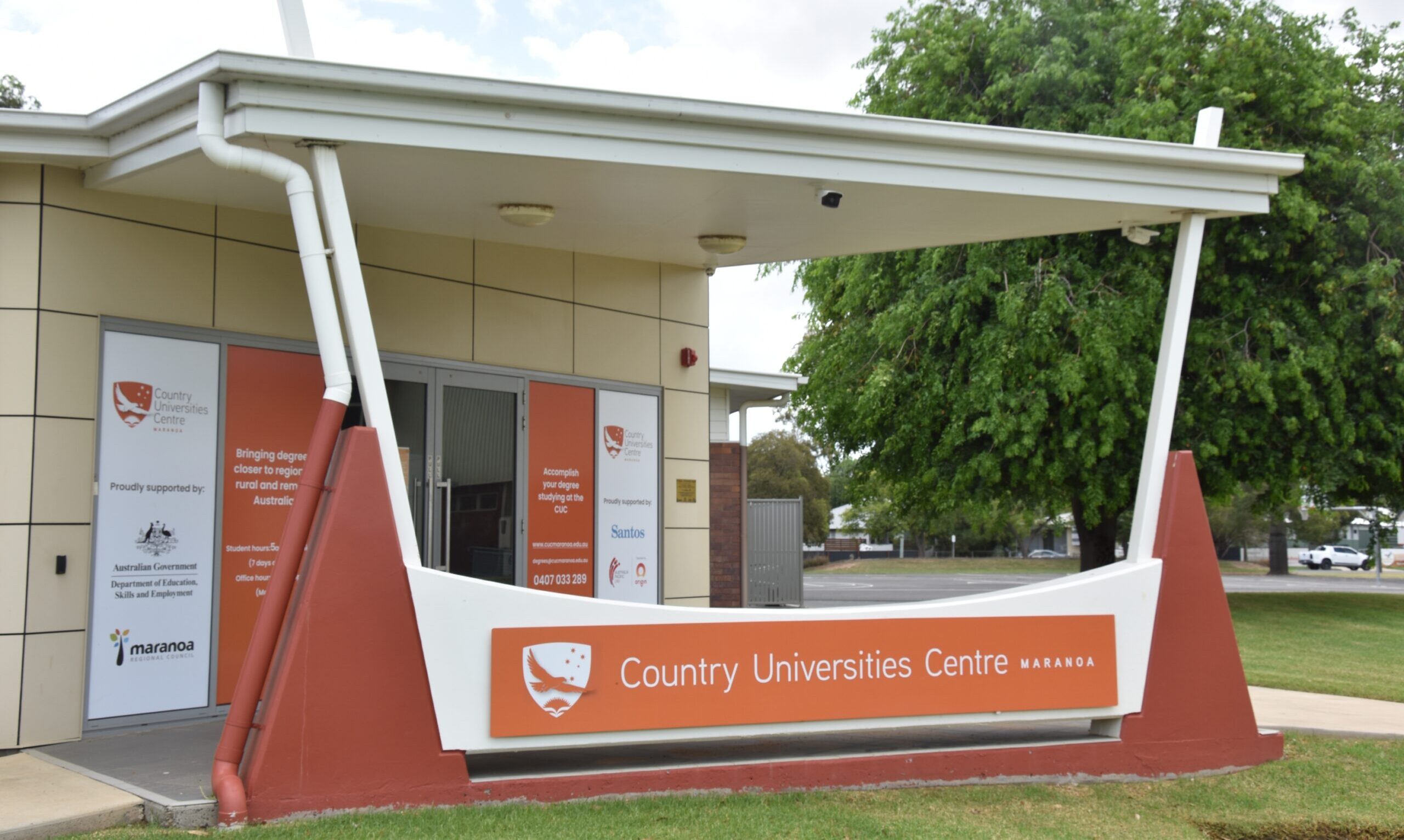
    In the heart of Broken Hill, 22-year-old Hannah Maalste is pursuing a Bachelor of Health and Medical Science, a path that once seemed out of reach due to her remote location and lack of an ATAR.

    Please login below to view content or subscribe now.

    Membership Login

    Source link

  • Cornell Student Who Faced Deportation Leaves the Country

    Cornell Student Who Faced Deportation Leaves the Country

    Momodou Taal, the Cornell University graduate student who said his institution effectively tried to deport him in the fall over his pro-Palestine activism, announced Monday he’s leaving the U.S. of his own accord under threat from the Trump administration.

    “I have lost faith I could walk the streets without being abducted,” Taal wrote on X. He added that “we are facing a government that has no respect for the judiciary or for the rule of the law.”

    On March 15, Taal, his professor and another Cornell Ph.D. student sued President Trump, the Department of Homeland Security and Homeland Security secretary Kristi Noem, challenging executive orders that empowered immigration officials to deport noncitizens they deem national security threats. Immigration officers have targeted multiple international students suspected of participating in pro-Palestine protests. Taal is a U.K. and Gambian citizen.

    A few days after he sued, Immigration and Customs Enforcement agents visited Taal in what Homeland Security acknowledged “was an attempt to detain him,” he said in a court filing. The State Department had revoked Taal’s visa, according to the lawsuit.

    Now his lawyers have dismissed the case. “Trump did not want me to have my day in court and sent ICE agents to my home,” Taal wrote on X.

    In an email to Inside Higher Ed Tuesday, an unnamed “senior” Homeland Security official called it “a privilege to be granted a visa to live and study” in the U.S.

    “When you advocate for violence and terrorism, that privilege should be revoked, and you should not be in this country,” the official said. “We are pleased to confirm that this Cornell University terrorist sympathizer heeded Secretary Noem’s advice to self-deport.”

    When asked for specifics on when Taal sympathized with terrorism, Homeland Security pointed to where Taal referenced in his Monday post the “Zionist genocide,” and wrote, “Long live the student intifada!” In his post, Taal wrote that the “repression of Palestinian solidarity is now being used to wage a wholesale attack on any form of expression that challenges oppressive and exploitative relations in the US.”

    Taal added, “If you have been led to think that your safety is only guaranteed by state kidnap, repression, deportation, the slaughter of children, and the suppression of the global majority, then let Gaza’s shards of glass be your mirror.”

    Source link

  • Greensboro School Is First Public Gaming and Robotics School in the Country – The 74

    Greensboro School Is First Public Gaming and Robotics School in the Country – The 74


    Get stories like this delivered straight to your inbox. Sign up for The 74 Newsletter

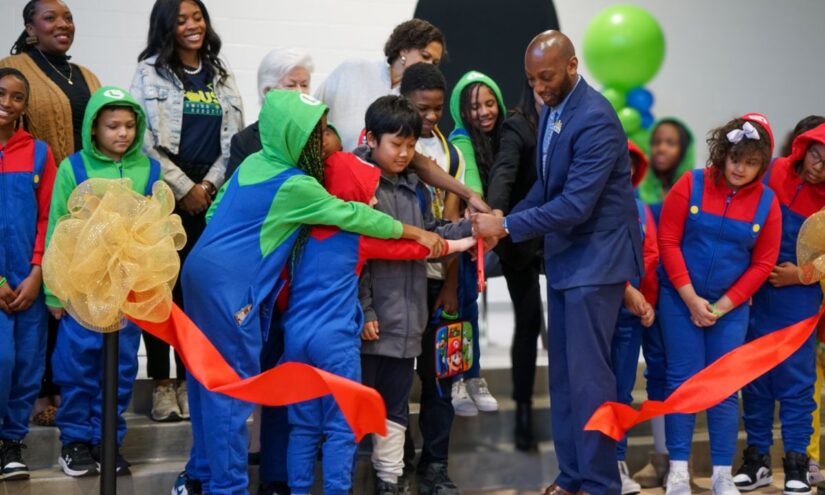
    Historic Foust Elementary School has had a game changing start to the year. School and district leaders, parents, and community members were eager to get inside one of Greensboro’s newest elementary schools for their ribbon cutting ceremony on Feb. 3, 2025 to witness an innovative progression in the school’s history. They were greeted by students and the school’s robotic dog, Astro.

    Foust Elementary School, part of Guilford County Schools (GCS), is the country’s first public gaming and robotics elementary school, according to the district. The school still sits on its original land, but the building has been rebuilt from the ground up. They began welcoming students into the new building at the start of 2025.

    Foust Elementary School’s history goes all the way back to the 1960s. Foust student Nyla Parker read the following account at the ribbon cutting ceremony:

    “Since its construction in 1965, Julius I Foust Elementary School has prided itself in serving the students and families of its community, with the goal of creating citizens who will leave this place with high character and academic excellence. … Now, almost 60 years later, we welcome you to the new chapter of Foust Gaming and Robotics Elementary School. As a student here at Foust, I am excited about various opportunities that will be offered to me as I learn more about exciting industries such as gaming, robotics, coding, and 2D plus 3D animation. Thank you to the voters of our community for saying yes to the 2020 bond that allowed this place to become a reality for me and my fellow classmates. Game on!”

    Foust is a Title I school in a historically underinvested part of Guilford County. Several years ago, the district conducted a master facility study, which resulted in Foust getting on the list to receive an entirely new building.

    “Foust was one of the oldest buildings in the district and it was literally falling apart, so we were on the list to have a total new construction,” said Kendrick Alston, principal of Foust.

    “During that time, we also talked with the district and really thought about, well, building a new school. What can we also do differently in terms of teaching and learning, instead of just building a new building?”

    The mission of Foust is to “envision a future where students are equipped with the skills, knowledge, and tools to lead the new global economy,” according to their website. The new global economy, featuring high projected growth in fields that include technology, was a driving factor for planners as they decided to focus the school on gaming and robotics.

    There are many jobs that can come from learning the skills necessary to build video games and robots. Looking at recent labor market trends, many of those jobs are growing. Web developers and digital designers have an 8% projected growth rate from 2023-2033 with a median pay of $92,750 per year, according to the U.S. Bureau of Labor Statistics.

    “We looked at a lot of studies, we looked at research, and one of the things that we looked at was something from the World Economic Forum that looked at the annual jobs report. We saw that STEM, engineering, those kinds of jobs, were some of the top fastest growing jobs across the world,” said Alston. “When we think about school looking different for our students and being engaging, well, let’s make it something that’s relevant to them but is also giving them a skill set that they can be marketable in the global workforce as well.”

    The team at Foust, including teachers and staff, have spent several months in specialized training on a new and unique curriculum designed to help prepare students for the ever evolving world of work. The building, designed to bring 21st century learning to life, is part of the first phase of schools constructed from a combined $2 billion bond.

    “I am excited for what this new space is going to produce,” said Hope Purcell, a teacher at Foust. “With the continued support from our robotics curriculum, students will have the opportunity to tap into a new world of discovery that will prepare them for the future.”

    Many community and education leaders were present at the ribbon cutting, including several county commissioners and Guilford superintendent Whitney Oakley. Oakley shared excitement about the new school and reminded everyone that the leaders who came before her who advocated for the passing of the bond and were open to the vision of a school like Foust were a huge part of making this new school a reality.

    “Today is not just about celebrating a building,” Oakley said. “It’s about celebrating what this building really represents, and that’s opportunity and access to the tools of modern K-12 education. It represents the culmination of years of planning and conversation and design to make sure that we can build a space that serves families and students for decades to come. The joy on the faces of the staff and the families and the students is just a reminder that teaching and learning is more effective when everybody has the resources that they need to thrive, and that should not be the exception, that should be the rule.”

    Students sometimes need different levels of support and resources in order to thrive. Foust hopes to be a place where all students can succeed. Another school district in New Jersey, the Morris-Union Jointure Commission, is using gaming and technology to engage students with cognitive and behavioral differences. They have created an esports arenadesigned specifically for students with cognitive challenges, like Autism Spectrum Disorder. This is just one example of how gaming can create an inclusive learning environment.

    As Foust settles into its brand new building, they are already planning for new opportunities ahead, including partnerships with the University of North Carolina at Greensboro and North Carolina Agricultural and Technical State University for innovative programming for students and parents.

    This article first appeared on EducationNC and is republished here under a Creative Commons license.


    Get stories like these delivered straight to your inbox. Sign up for The 74 Newsletter

    Source link

  • How foreign aid helps the country that gives it

    How foreign aid helps the country that gives it

    In international relations, nation states vie for power and security. They do this through diplomacy and treaties which establish how they should behave towards one another.

    If those agreements don’t work, states resort to violence to achieve their goals. 

    In addition to diplomatic relations and wars, states can also project their interests through soft power. Dialogue, compromise and consensus are all part of soft power. 

    Foreign assistance, where one country provides money, goods or services to another without implicitly asking for anything in return, is a form of soft power because it can make a needy nation dependent or beholden to a wealthier one. 

    In 2023, the U.S. government had obligations to provide some $68 billion in foreign aid spread across more than 10 agencies to more than 200 countries. The U.S. Agency for International Development (USAID) alone spent $38 billion in 2023 and operated in 177 different countries. 

    Spreading good will through aid

    USAID has been fundamental to projecting a positive image of the United States throughout the world. In an essay published by the New York Times, Samantha Power, the former administrator of USAID, described how nearly $20 billion of its assistance went to health programs that combat such things as malaria, tuberculosis, H.I.V./AIDS and infectious disease outbreaks, and humanitarian assistance to respond to emergencies and help stabilize war-torn regions.

    Other USAID investments, she wrote, give girls access to education and the ability to enter the work force. 

    When President John F. Kennedy established USAID in 1961, he said in a message to Congress: “We live at a very special moment in history. The whole southern half of the world — Latin America, Africa, the Middle East, and Asia — are caught up in the adventures of asserting their independence and modernizing their old ways of life. These new nations need aid in loans and technical assistance just as we in the northern half of the world drew successively on one another’s capital and know-how as we moved into industrialization and regular growth.”

    He acknowledged that the reason for the aid was not totally humanitarian.

    “For widespread poverty and chaos lead to a collapse of existing political and social structures which would inevitably invite the advance of totalitarianism into every weak and unstable area,” Kennedy said. “Thus our own security would be endangered and our prosperity imperilled. A program of assistance to the underdeveloped nations must continue because the nation’s interest and the cause of political freedom require it.” 

    Investing in emerging democracies

    The fear of communism was obvious in 1961. The motivation behind U.S. foreign assistance is always both humanitarian and political; the two can never be separated. 

    Today, the United States is competing with China and its Belt and Road Initiative (BRI) for global influence through foreign assistance. The BRI was started by Chinese President Xi Jinping in 2023. It is global, with its Silk Road Economic Belt connecting China with Central Asia and Europe, and the 21st Century Maritime Silk Road connecting China with South and Southeast Asia and Africa and Latin America.

    Most of the projects involve infrastructure improvement — things like roads and bridges, mass transit and power supplies — and increased trade and investment. 

    As of 2013, 149 countries have joined BRI. In the first half of 2023, a total of $43 billion in agreements were signed. Because of its lending policy, BRI lending has made China the world’s largest debt collector.

    While the Chinese foreign assistance often requires repayment, the United States has dispensed money through USAID with no direct feedback. Trump thinks that needs to be changed. “We get tired of giving massive amounts of money to countries that hate us, don’t we?” he said on 27 January 2024. 

    Returns are hard to see.

    Traditionally, U.S. foreign assistance, unlike the Chinese BRI, has not been transactional. There is no guarantee that what is spent will have a direct impact. Soft power is not quantifiable. Questions of image, status and prestige are hard to measure.

    Besides helping millions of people, Samantha Power gave another more transactional reason for supporting U.S. foreign assistance.

    “USAID has generated vast stores of political capital in the more than 100 countries where it works, making it more likely that when the United States makes hard requests for other leaders — for example — to send peace keepers to a war zone, to help a U.S. company enter a new market or to extradite a criminal to the United States — they say yes,” she wrote.

    Trump is known as a “transactional” president, but even this argument has not convinced him to continue to support USAID. 

    Soft power is definitely not part of his vision of the art of the deal.


    Three questions to consider:

    1. What is “foreign aid”?
    2. Why would one country give money to another without asking for anything in return?
    3. Do you think wealthier nations should be obliged to help poorer countries?


    Source link

  • The latest roundup of DEI cuts across the country

    The latest roundup of DEI cuts across the country

    This audio is auto-generated. Please let us know if you have feedback.

    The conservative-led fight against diversity, equity and inclusion efforts has been supercharged thanks to a powerful ally — the newly sworn-in President Donald Trump.

    In recent years, many state legislatures have enacted anti-DEI laws, and even more have proposed these measures. But these attempts happened under the Biden administration, which supported diversity initiatives at colleges and sought to strengthen them at the federal level.

    Trump has aimed to unravel that work.

    He signed multiple executive orders attacking diversity efforts in the first couple days of his second term, including one declaring that college DEI policies and programs could amount to violations of federal civil rights laws. It also prompted federal agencies to identify organizations, including colleges with endowments over $1 billion, for potential civil compliance investigations

    Another executive order directed agencies to end all DEI programs and positions “under whatever name they appear.” It further sought to terminate federal “equity-related” grants and contracts, endangering massive swaths of college research funding.

    Trump’s orders have incited confusion among higher education leaders and sparked legal challenges. However, colleges in states across the political spectrum are cutting DEI programs in response. 

    Below, Higher Ed Dive is rounding up the ever-growing list of colleges nixing DEI programs, pulling DEI language from institutional communications, and cancelling events aimed at supporting students from minority groups.

    Arizona State University

    On Jan. 27, the U.S. Office of Budget and Management released a memo calling for a massive freeze on federal funding to ensure government programs complied with Trump’s executive orders, including one targeting DEI. The news prompted Arizona State University to instruct its researchers to stop working on DEI-related activities on their federally funded projects and avoid using unspent funds allocated for DEI work.

    Even after OMB rescinded the memo — and White House officials released conflicting messages on where the freeze stood — Arizona State told researchers to hold off.

    “All Executive Orders remain in effect and will continue to be enforced,” the guidance said.

    Arizona State has since placed that announcement — and its entire webpage dedicated to research operations news — behind a university login. The university did not immediately respond to a request for comment Tuesday.

    Boston University

    Boston University announced Jan. 30 that its Center for Antiracist Research would shutter on June 30. CAR’s 12 staff members will be employed through that time and “are receiving resources and support to assist with their transitions,” the university said. 

    The private nonprofit attributed the closure to the departure of Ibram X. Kendi, a prominent antiracist scholar and the center’s founder.

    Kendi, who left to lead the Howard University Institute for Advanced Study in Washington, D.C., acknowledged the challenge of opening the center during the pandemic and the “intense backlash over critical race theory” it faced. CAR opened in 2020, shortly after the murder of George Floyd and the resulting demonstrations against police violence.

    “I feel honored to have been able to do this work with you over the last five years,” Kendi said in a statement. “I am departing for an opportunity I could not pass up, but what connected us at CAR remains, especially during this precarious time.”

    CAR prompted concern in 2023 when it laid off more than half its staff — a total of 19 employees — citing a need to restructure. Boston University launched an investigation into CAR’s use of grant funds, though its final audit found “no issues” with how the center managed its money. 

    California Polytechnic State University

    California Polytechnic State University will eliminate its Office of University Diversity and Inclusion as an independent department and move it under the personnel division, the Mustang News, its student newspaper, reported in late January. 

    A spokesperson for the public minority-serving institution told Mustang News that the decision was “not in response to any outside influences.”

    As of Tuesday, the university’s statement affirming diversity is still viewable online.

    Source link

  • Would you sell your country to Trump?

    Would you sell your country to Trump?

    Greenland is three times the size of the U.S. state of Texas, making it the world’s largest island if you don’t count the continent of Australia.  

    It sits on critical rare earth minerals and fossil fuel reserves. Its retreating ice, due to global warming, is opening up new trade routes and longer shipping seasons

    No wonder U.S. President Donald Trump wants it for the United States. A purchase price would be steep. Based on past purchases of territory and Greenland’s economic potential, it is estimated that the price of Greenland could be anywhere between $12.5 billion and $77 billion. And he only has to convince the 56,000 people who live there that they would prosper under U.S. rule. 

    Greenland is a former Danish colony that still relies heavily upon Denmark for its economy.

    If Trump were able to buy it, he’d have to take it as is, and the country suffers from high rates of suicide, alcoholism and sexual abuse

    Is there art in the deal?

    A Google map of Greenland.

    Trump made an offer in December, called “absurd” by Danish Prime Minister Mette Frederiksen. It was the second time he broached this subject, having first spoken of it during the lead up to his first presidential term. 

    This time, he said he won’t rule out using economic or military force to buy the world’s biggest island based on the logic that Greenland is necessary for “national security and freedom” of the United States. Greenland and the United States are separated by about 2,289 kilometers (1,422 miles) of water between the two closest points — Grand Manan in the U.S. state of Maine and Nanortalik in Greenland.

    Much of the world has been laughing at Trump’s demand but it is no laughing matter for Denmark. This week, Danish Prime Minister Mette Frederiksen visited German Chancellor Olaf Scholz, French President Emmanuel Macron and NATO General Secretary Mark Rutte, to talk about strengthening the EU’s security and defence and to further prioritise the Arctic.

    In the meantime, Greenlanders are feeling their value to Denmark has risen.

    Greenland was a Danish colony until 1953, when it became a self-governing region of Denmark. This means that it has its own local government and two seats in the Danish parliament. The relationship also means that Greenlanders are citizens of the European Union, with the benefits that come with that. 

    A fractured relationship

    The relationship between Greenland and Denmark is still recovering from that colonial past. The majority of Greenlanders support full independence from Denmark despite its deep reliance on the Danish government. 

    Denmark is still responsible for Greenland’s foreign, security and defence policy, and provides Greenland an annual financial aid of DKK 3.9 billion (roughly €522 million), which makes up around 20% of Greenland’s gross domestic product. That’s the value of all the goods and services a country produces and it is used as a measurement of a nation’s economic health. 

    The scars of colonialism are still fresh for many Greenlanders. In 1953 Denmark allowed the forced relocation of an Indigenous population from the Dundas area in Greenland, for a U.S. military base. The Thule tribe had been semi-nomadic catchers in the Dundas area for thousands of years. Their relocation took place over just a few days. 

    Later, in the 1960s and 70s, Danish health authorities fitted thousands of Inuit women and girls the IUD contraceptive device, many without proper notification or consent. An investigation into the procedure suggests that its aim was to curb a growing population — which worked. Many of these women went on to suffer health issues due to the IUD. 

    Now Greenlanders are being told that their future is theirs to decide. 

    There’s green beneath the ice.

    What does Trump want with Greenland? 

    Greenland’s ice sheet covers nearly 80% of the country, which is losing mass at a rate of around 200 gigatonnes per year due to climate change. That seems like an incomprehensible amount. It is the equivalent of 200 billion metric tons or, according to NASA, if you could picture it, two million fully-loaded aircraft carriers. 

    Trump has framed his interest in Greenland as a matter of national security and freedom. By this, he points to the island’s strategic value: its untapped reserves of rare earth minerals and fossil fuels, as well as emerging trade routes enabled by retreating ice. 

    Greenland’s mineral reserves are largely untouched. The island harbors significant deposits of rare earth elements, essential for various high-tech applications, including electronics, renewable energy technologies and defence systems. 

    Owning Greenland would ease U.S. concerns over China’s dominance in the rare earth market, with China currently controlling 70–80% of the world’s critical rare earth minerals. Acquiring access to Greenland’s mineral reserves could serve to diversify and secure the U.S. supply chain, reducing reliance on Chinese exports. 

    Controlling the Arctic

    Exploiting Greenland’s mineral wealth still presents considerable challenges. The island’s harsh climate and limited infrastructure means large start-up costs for mining projects.

    Having control over new trade routes in the Arctic is also appealing, as well as having an expanded military presence in the region to monitor Russian navy vessels and nuclear submarines.  

    Is it possible to buy another country? 

    This isn’t the first time the United States has offered to buy Greenland. In 1946, President Harry Truman offered Denmark $100 million for the island. Denmark rejected the proposal but permitted the construction of the Pituffik Space Base which is responsible for missile warning systems and monitoring of satellites in space. 

    But for an exchange from Greenland to the United States to happen, both Denmark and Greenland would need to agree to the sale, with an Act on Greenland Self-Government stating that the people of Greenland have a right to self-determination.

    And right now, Greenlanders don’t want to be under anyone’s rule but their own

    The international news service Reuters reported 29 January that a poll commissioned by the Danish paper Berlingske, found that 87% of Greenlanders would turn down Trump’s offer and another 9% are undecided.

    But they’re not telling the United States to go away. While Greenland’s Prime Minister Mute Egede said that his country is not for sale, Greenlanders are open to cooperating with the United States on defence and exploration of its minerals

    And then there’s golf. With all that melting ice, maybe Trump is picturing a fabulous par-72 resort. Right now Greenland only has two courses. Just picture those sand traps on the edge of the Arctic. 


    Three questions to consider:

    1. How would the United States benefit from controlling Greenland?
    2. What’s Greenland’s relationship with Denmark?
    3. If you were a Greenlander, would you vote to become part of the United States? Why?


    Source link