Tag: Courses

  • Summer Courses to Help Incoming College Students Adjust

    Summer Courses to Help Incoming College Students Adjust

    National data suggests today’s college students are less prepared to succeed in college than previous cohorts, due in part to the COVID-19 pandemic and remote instruction. Students lack academic and socio-emotional readiness, administrators say, prompting colleges to implement new interventions to get them up to speed.

    For years, Mount Saint Mary’s University in California has offered a summer bridge program for students who may be less prepared to make the transition to college, such as first-generation students.

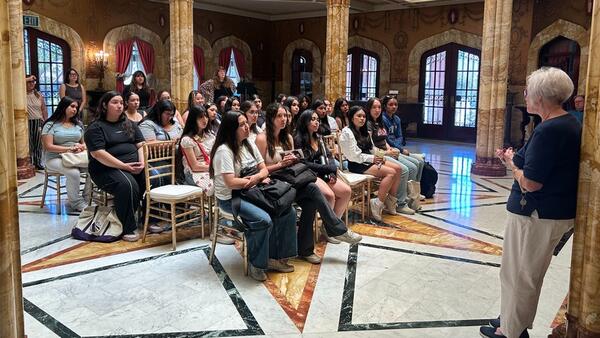
    This summer, MSMU launched Summer Pathways, which is designed for all incoming students to get a head start on college. They complete two college courses for free and are able to connect with peers and explore campus before starting the term.

    “We felt the earlier we can engage students, the better,” said Amanda Romero, interim assistant provost.

    How it works: Summer Pathways is a six-week, credit-bearing experience that takes place in the middle of the summer, after orientation in June but before classes start in August.

    During the program, students complete a Summer Pathway seminar and one additional introductory course, choosing among sociology, English and mathematics.

    Students take classes Mondays, Wednesdays and Fridays; on Tuesdays and Thursdays they participate in workshops about managing their time, dealing with impostor syndrome or maintaining well-being.

    “We’ve invited the whole campus community to come in, meet with our students in person, talk about their careers, their offices, how they ended up at the Mount, what their hopes and aspirations are for the future,” said Elizabeth Sturgeon, interim assistant provost and director for Summer Pathways.

    The goal is to make students aware of campus resources and connect them with faculty and staff early in their college careers.

    The program also takes students on fun excursions around Los Angeles, including to the ballet, the Hollywood Bowl and the Getty Museum.

    The experience is free, and students are given a $250 stipend to help pay for gas and food. They can also pay $3,000 to live in a residence hall for the six-week program if they don’t want to commute to campus each day.

    A community approach: While many faculty work on eight-month contracts and have the summers off, Sturgeon and Romero said it wasn’t difficult to get professors engaged and on campus for the program.

    “We had departments that had never participated in Summer Pathways before, never knew what it was about, opting in and coming down in person to present to our students,” Sturgeon said.

    “It’s important for our core faculty to get in front of students, and this is a great opportunity to do just that,” Romero said.

    Returning students also stepped up to serve as peer mentors for new students.

    The program has paid off thus far, leaders said, with students hitting the ground running at the start of the term.

    “It offers a smoother transition,” Romero said. “A lot of anxiety with starting a new place is ‘where’s this, where’s that, where do I go?’”

    “They know what the resources are, they know where to park, what to order in the cafeteria,” Sturgeon said. “They have a friend group; they have that one peer mentor who’s their friend they can reach out to. From day one, in the business of being a college student, they’re an alum after six weeks.”

    What’s next: In summer 2025, 66 out of 90 incoming students participated in Summer Pathways, engaging in five different courses. And 98.5 percent of them matriculated in the fall.

    In the future, campus leaders hope to introduce project-based learning into the courses, interweaving the university’s mission as a Sisters of St. Joseph of Carondelet institution.

    “We just want to make it bigger going forward, with more classes and students participating,” Sturgeon said.

    The overarching dream is to get all incoming students to sign up, but administrators recognize that those who don’t live in the region may face additional barriers to engaging in in-person activities because they lack housing. Sturgeon and Romero are pushing for additional resources to offer housing and seeking solutions to address the need for additional funding and staffing.

    If your student success program has a unique feature or twist, we’d like to know about it. Click here to submit.


    Source link

  • Shutting Women Out of Preferred Courses Sets Them Back

    Shutting Women Out of Preferred Courses Sets Them Back

    Getting shut out of a preferred course can have lasting negative effects on incoming female students, a recent working paper found.

    The paper, published by the National Bureau of Economic Research, tracked first-year students at Purdue University who couldn’t take their first-choice classes in 2018 because of a surge in enrollment. Incoming students had to rank their course preferences; 49 percent got into all the courses they wanted, but 51 percent were shut out of a course.

    The study found that female students locked out of a course were 7.5 percent less likely to graduate within four years than women who got to take their desired courses. Their cumulative college GPAs were also slightly lower—by 0.05 points—than those of female students who took their preferred classes their first semester. Women locked out of a course were 5 percent less likely to major in STEM fields and even earned about 3.5 percent less in salary after they graduated, compared to female students who took their top-choice courses their first year.

    The working paper found no statistically significant effects on male students.

    “Our estimates suggest that reducing course shutouts, particularly for STEM courses, can be an effective way to improve female-student outcomes,” co-author Kevin Mumford, an associate dean and professor at Purdue’s Mitch Daniels School of Business, told The Wall Street Journal.

    Source link

  • Dual Enrollment and AP Courses Yield Positive Outcomes

    Dual Enrollment and AP Courses Yield Positive Outcomes

    A recent report from the Community College Research Center at Columbia University’s Teachers College found that high school students graduate college at higher rates and earn more after college if they’ve taken a combination of dual-enrollment and Advanced Placement courses.

    The report, released Tuesday, drew on administrative data from Texas on students expected to graduate high school in 2015–16 and 2016–17, as well as some data from students expected to complete in 2019–20 and 2022–23. It explored how different kinds of accelerated coursework, and different combinations of such work, affected student outcomes.

    Researchers found that students who combined Advanced Placement or International Baccalaureate courses with dual-enrollment courses boasted higher completion rates and earnings than their peers. Of these students, 92 percent enrolled in or completed a credential a year after high school, and 71 percent earned a credential by year six.

    These students also showed the strongest earnings outcomes in their early 20s. They earned $10,306 per quarter on average at age 24, compared to $9,746 per quarter among students who took only dual enrollment and $8,934 per quarter for students who took only AP/IB courses. However, students taking both dual-enrollment and AP/IB courses tended to be less racially and socioeconomically diverse than students taking AP/IB courses alone, the report found.

    Students who combined dual enrollment with career and technical education—who made up just 5 percent of students in the study—also reaped positive outcomes later in life. These students earned $9,746 per quarter on average by age 24, compared to $8,097 per quarter on average for students with only a CTE focus.

    “Most dual-enrollment students in Texas also take other accelerated courses, and those who do tend to have stronger college and earnings trajectories,” CCRC senior research associate Tatiana Velasco said in a press release. “It’s a pattern we hadn’t fully appreciated before, which offers clues for how to expand the benefits of dual enrollment to more students.”

    Source link

  • Unis need modern tech for flexible courses – Campus Review

    Unis need modern tech for flexible courses – Campus Review

    Calls for universities to offer shorter, more flexible courses that meet the demands of Australia’s future economy must be met with better technology management, according to sector voices from a leading software company.

    Please login below to view content or subscribe now.

    Membership Login

    Source link

  • UTS defends decision to cut courses – Campus Review

    UTS defends decision to cut courses – Campus Review

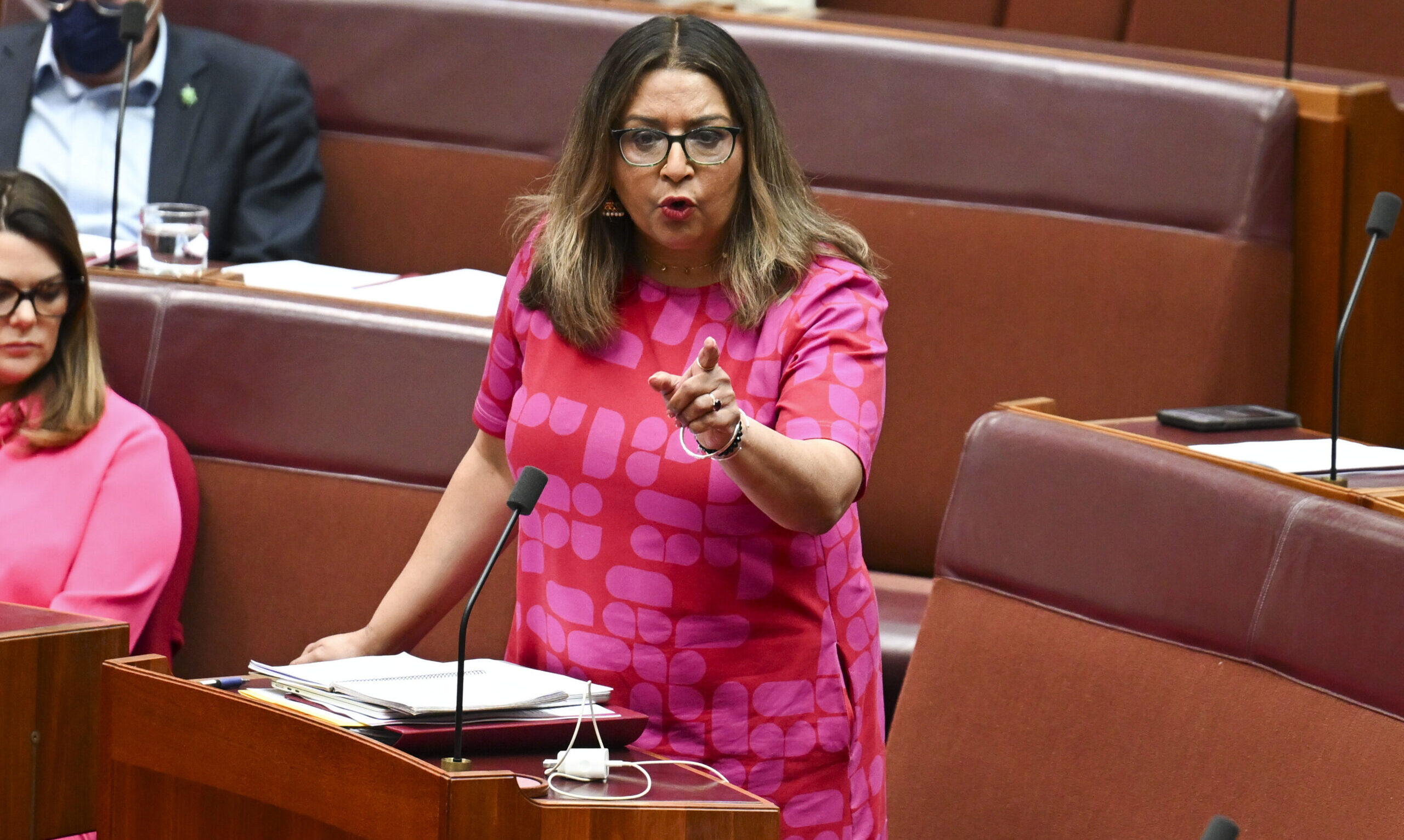
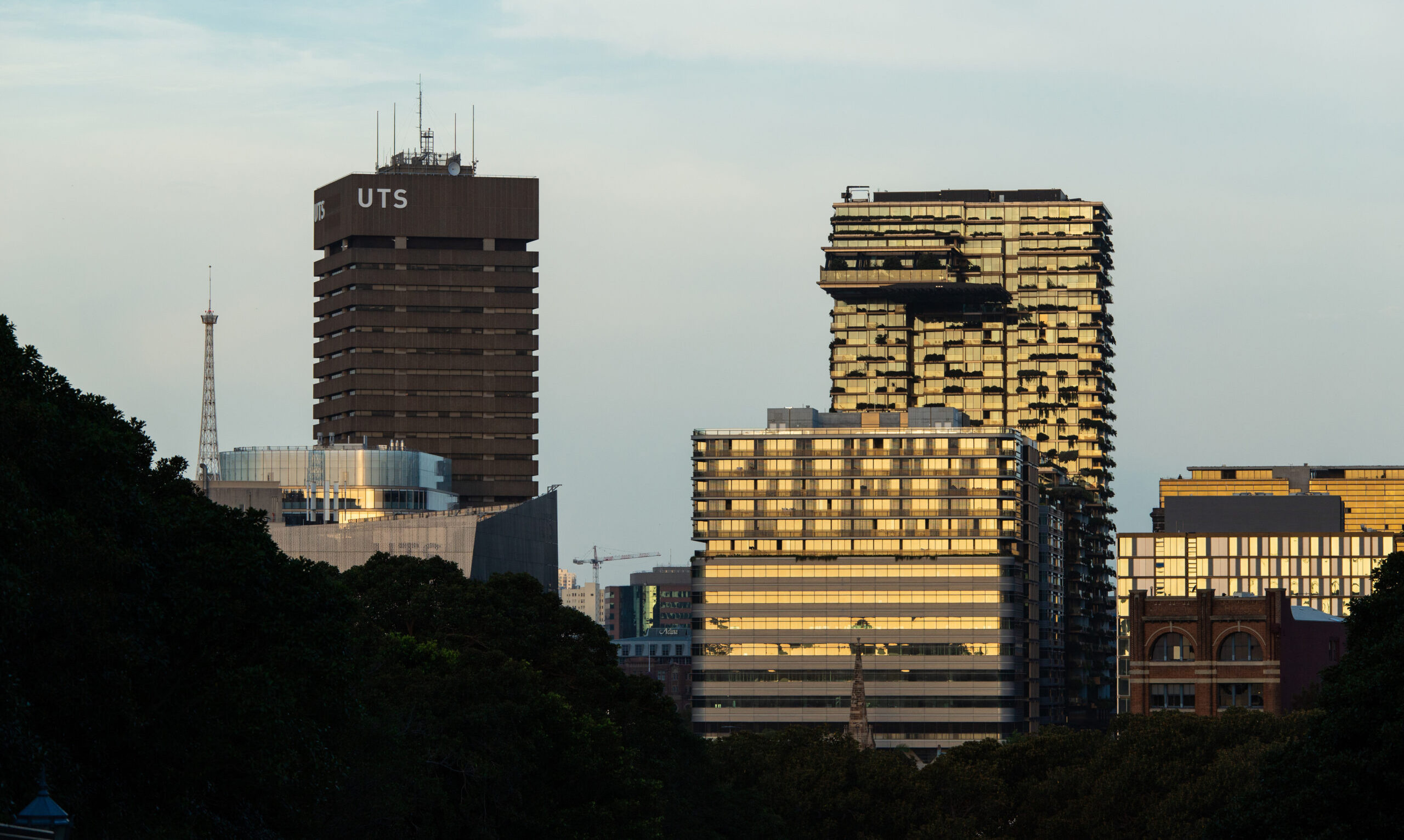
    The University of Technology Sydney (UTS) has given evidence to a federal senate inquiry that probed how cutting education and public health courses aligns with its public mission.

    Please login below to view content or subscribe now.

    Membership Login

    Source link

  • Smarter Support: How to Use AI in Online Courses and Teach Your Students to Use It Too – Faculty Focus

    Smarter Support: How to Use AI in Online Courses and Teach Your Students to Use It Too – Faculty Focus

    Source link

  • Smarter Support: How to Use AI in Online Courses and Teach Your Students to Use It Too – Faculty Focus

    Smarter Support: How to Use AI in Online Courses and Teach Your Students to Use It Too – Faculty Focus

    Source link

  • UTS cuts 400 jobs, suspends 140 courses – Campus Review

    UTS cuts 400 jobs, suspends 140 courses – Campus Review

    The University of Technology Sydney (UTS) has “temporarily suspended” new enrolments to more than 100 bachelor and postgraduate programs, with 400 staff jobs under threat.

    Please login below to view content or subscribe now.

    Membership Login

    Source link

  • Conservative Org. Requests Materials for 70 Chapel Hill Courses

    Conservative Org. Requests Materials for 70 Chapel Hill Courses

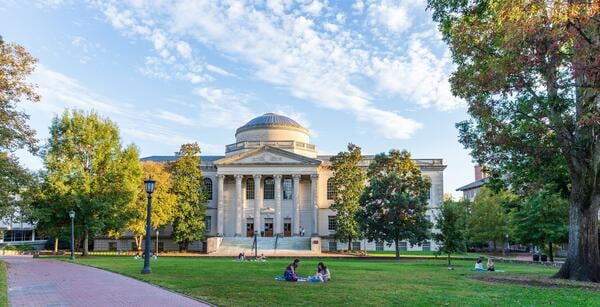
    The Oversight Project, a spinoff of the conservative Heritage Foundation known for deluging government agencies with public records requests, has set its sights on the University of North Carolina at Chapel Hill.

    According to Chapel Hill’s open records request database, Mike Howell, the Oversight Project’s president, submitted a sweeping request to the university on July 2, asking for syllabi and class materials presented to students in roughly 70 courses that contain “any of the following search terms, whether in titles, body text, footnotes, metadata, or hyperlinks.” He then listed 30 search terms he wanted Chapel Hill to use, including “Diversity, Equity, Inclusion, and Belonging”; “gender identity”; “intersectionality”; “white privilege”; “cultural humility”; “racial equity”; “implicit bias”; “microaggressions”; “queer”; and “sexuality.”

    The courses whose materials he asked the university to search included Gender and Sexuality in Islam, Increasing Diversity in STEM Research and Black Families in Social and Contemporary Contexts, as well as Right-Wing Populism in Global Perspective; First-Year Seminar: Mobility, Roads, NASCAR, and Southern Culture; and Introduction to the American Stage Musical.

    Howell also asked the university to waive any fees for searching for or providing these possibly voluminous records. His explanation for why the Oversight Project deserved to pay nothing suggested what he was seeking to do with the information.

    “Disclosure of these records will contribute significantly to the public’s understanding of university operations and student-facing programming, particularly considering ongoing public concern regarding institutional compliance with current Executive Orders issued by the President of the United States,” Howell wrote, specifically mentioning President Trump’s anti-DEI executive orders from January. The records “will shed light on potential inconsistencies between internal practices and public representations made by officials in a matter of substantial national importance,” he wrote.

    Government agencies that are subject to open records requests such as the one the Oversight Project has submitted often charge for such work; the State Department’s fees range from $21 to $76 per hour, depending on the personnel fulfilling the request, and $0.15 per page, for example.

    It’s another example of conservatives using open records laws to target what’s being researched or taught—or what they think is being taught—at public universities. And using keyword searches for terms such as “DEI” echoes the approach federal agencies under Trump have adopted to search grants to determine which might be canceled. Some universities have also conducted their own similar hunts to find content on internal websites and within courses that may run afoul of federal or state prohibitions related to DEI.

    In February, the UNC system ordered its 16 public universities to immediately stop requiring “course credits related to diversity, equity and inclusion,” without defining what that meant. Some university administrations used keyword searches of course descriptions, looking for terms such as “cultural” to choose which courses to review. The system allowed institutional chancellors to grant waivers for dozens of courses with diversity themes that remain necessary for certain degrees. A system administrator said about 95 percent of programs identified for exemptions “had accreditation and licensure requirements attached.”

    The request for syllabi is also another example of conservative groups targeting UNC system campuses for allegedly continuing to practice DEI, despite multiple efforts by the UNC system Board of Governors to stamp it out. Since April, another group, Accuracy in Media, has released undercover videos allegedly showing staffers at other UNC institutions still promoting DEI.

    Chris Petsko’s business course, Leading and Managing, was among those the Oversight Project requested records for. Petsko, an assistant professor of organizational behavior, said a small part of the course includes segments on stereotyping and prejudice as they relate to workplace outcomes, such as hiring.

    Petsko said the university notified him of the request, and he looked up what the Oversight Project was. Based on what he found, he won’t give up his course materials, he said. He didn’t like the request’s implication that he was violating executive orders and said those sympathetic to the Trump administration seem “perfectly willing to make outlandish legal arguments that they know will lose in lower courts simply to give their ideology some kind of legitimacy.” The Oversight Project has been accused of releasing misleading information before.

    Petsko said he didn’t want to give the Oversight Project something to “twist” in its mission to keep “targeting public universities for doing the work they need to do.”

    ‘Meant to Intimidate’

    Chapel Hill says it’s a faculty member’s right not to share their course information. Though the media relations office didn’t provide an interview Monday, a university spokesperson wrote in an email, “The University has not responded to this public records request and is still in the process of identifying what—if any—records will be produced. Course materials, including but not limited to exams, lectures, assignments and syllabi, are the intellectual property of the preparer and are owned by the preparer as non-traditional work.”

    The Oversight Project also didn’t provide an interview to Inside Higher Ed. In an email, Howell wrote, “UNC is a public school which has a long track record of discrimination. Syllabi are public records and belong to the public. We intend to let the public know what is being taught at a public school. That’s not intimidation, it’s good governance and transparency. If a professor is too much of a wimp to let me read his syllabus then he’s in the wrong business.”

    When asked to provide a list of donors to the Oversight Project, Howell responded, “And no of course I’m not sending you a list of donors but please do send donors to our website.”

    Petsko shared his research into the rules regarding responding to Howell’s group with other faculty on LinkedIn.

    “At many public universities, syllabi are considered intellectual property,” he wrote in a post. “As such, at many schools (mine included) professors are not required to share their syllabi in response to public records requests. My advice is to check what your university policy is prior to complying with requests in advance.”

    He also wrote that “at public universities, you have a legal right to decide how to teach your course and to decide what topics to include” if it’s relevant to the course.

    “Keep doing the work you were trained to do,” he wrote. “Keep educating others. Keep sharing your expertise. And don’t let vague references to executive orders make you question whether you have a right to be sharing your knowledge with the world.”

    Zach Greenberg, a First Amendment attorney at the Foundation for Individual Rights and Expression, said his organization advocates for narrow exemptions to open records laws to keep private faculty records, correspondence and other written materials for the purpose of scholarship, research and teaching.

    “These very broad and vague requests for faculty academic records such as syllabi and faculty communications about their academic pursuits chill free speech by putting a large burden on the faculty members and revealing private academic information they use to teach their classes,” Greenberg said. Forcing disclosure, he said, can result in altering these courses.

    Joan Scott, a member of the American Association of University Professors’ Committee A on Academic Freedom and Tenure and one of the founders of Chapel Hill’s women’s studies program, said this use of open records requests is “not a new tactic.” She said these requests are “meant to intimidate” and suggested the targeting of Chapel Hill is part of a pressure campaign on state legislators to overturn the Democratic governor’s veto of anti-DEI legislation.

    “Whatever they’re claiming the legal right is, it’s a violation of academic freedom, it’s a violation of individual free speech rights and it’s an intrusion into the teaching of university faculty in the name of, it seems to me, a right-wing ideological agenda,” Scott said.

    Source link

  • College Works to Reduce Failure Rates in Entry-Level Courses

    College Works to Reduce Failure Rates in Entry-Level Courses

    First-year students who perform poorly in a course are particularly at risk of dropping out. To help boost retention of such students, the University of the Pacific has made strategic investments in promoting their success, including by remodeling gateway courses.

    During an institutional data analysis, leaders at the California institution found that first-year students who earned a D or F grade or withdrew from a class (also called DFW rate) were less likely to persist into their second year, which affected the university’s overall attrition rate.

    In particular, students who didn’t pass their gateway classes in economics, math, biology, physics or chemistry were less likely to remain enrolled at the university.

    To improve student success, the university created top-down initiatives and structures to encourage student feedback, experimentation in the classroom and cross-departmental solutions to better support incoming students.

    What’s the need: A 2018 study by EAB found that, on average, three in 10 students enrolled in any given course don’t earn credit for it, leaving them with what are known as “unproductive credits.” Among the gateway courses analyzed—Calculus 1, General Biology, Chemistry 1 and General Psychology—some universities reported an unproductive-credit rate as high as 46 percent.

    A variety of factors can cause high DFW rates, including a lack of academic preparation or personal struggles experienced by first-year students, according to EAB’s report. Other research has shown that variability in the quality of instruction or in assessment tools can also increase DFW rates.

    Closing the gap: To address obstacles in the classroom, the provost and dean of the College of the Pacific, the university’s liberal arts college, which houses the gateway courses, meet regularly with department chairs who oversee those courses.

    Addressing DFW rates can be a challenge for institutions because it often focuses attention on the faculty role in teaching, learning and assessment, leaving instructors feeling targeted or on the hot seat. To address this, the provost is working to create a culture of innovation and experimentation for course redesign, encouraging new approaches and creating institutional support for trying something new or pivoting, even if it’s not successful.

    One of the opportunities identified involved embedding teaching assistants in classes to serve as tutors for students and provide feedback to instructors. The embedded TAs are students who successfully completed the course, enabling them not only to mentor incoming students but also to provide a unique perspective on how to change the classroom experience.

    The university has also created a retention council, which invites stakeholders from across the institution to break silos, identify structural barriers and discuss solutions; that has made a significant difference in addressing retention holistically, campus leaders said.

    The university also hired an executive director of student success and retention who meets weekly with academic success teams from every department.

    Another Resource

    Indiana University Indianapolis’s Center for Teaching and Learning developed a productive discussion guide to facilitate conversations around course redesign and addressing DFW rates. Read more about it here.

    How it’s going: Since implementing the changes, the university saw a 5 percent year-over-year drop in D’s, F’s and withdrawals among gateway courses. Retention of first-year, first-time students has also climbed from 86 percent in 2020 to 89 percent this past year.

    Demand for curriculum redesign has grown from about 20 courses in the past year to 50 courses this year, requiring additional investment and capacity from leadership, administrators said. Faculty also indicate that they’re feeling supported in the course redesign process.

    In the future, university leaders said, they will also redesign the first-year experience with a greater focus on integrating academic, experiential and student life along with academic advising to encourage belonging and a sense of community. For example, they plan to use data to identify students who may need additional support to navigate life challenges or financial barriers.

    We bet your colleague would like this article, too. Send them this link to subscribe to our newsletter on Student Success.

    Source link