Tag: Courts

  • How Federal Courts Are Blocking Trump’s Higher Ed Agenda

    How Federal Courts Are Blocking Trump’s Higher Ed Agenda

    In the nearly seven months since President Trump took office again, academic associations, faculty unions, researchers and other groups have used the legal system to push back on the administration’s efforts to reshape higher education and the federal government.

    So far, district and appeals courts have largely suggested that the executive branch’s actions are unconstitutional and ruled in favor of university advocates, handing down preliminary injunctions, restraining orders and a few final judgments that have blocked the Trump administration’s goals. But based on the few cases that have reached the Supreme Court, some higher education experts worry the tide may be turning, and the high court’s conservative majority will ultimately side with the president.

    The lawsuits challenged bans on diversity, equity and inclusion programs; the administration’s crackdown on international students; the termination of thousands of grants; and the dismantling of the Department of Education.

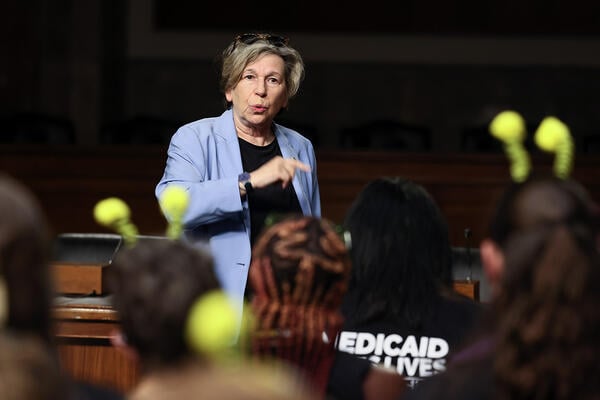
    “What we’re seeing is that when the administration tries to impose a whole new set of rules and regulations based upon their particular ideology … the courts are saying, ‘Wait’ or ‘No,’ until it gets to the Supreme Court,” said Randi Weingarten, president of the American Federation of Teachers, a teachers’ union that has filed multiple lawsuits against Trump and notched a few victories.

    An Inside Higher Ed analysis of more than 40 lawsuits against the administration that are related to higher ed found that district judges have ruled against the executive branch in nearly two-thirds of the cases. Almost a quarter have yet to be decided. Of those in which a judge has ruled, 18 have been appealed, and only two were overturned. In both instances when the district court was overruled, it had to do with reversing injunctions that prevented the Trump administration from canceling grants based in part on the president’s executive order against DEI. The Supreme Court ruled in favor of the Trump administration in a separate but similar case.

    Nine cases have yet to receive a decision from an appeals court.

    For more updates on litigation against the administration, go to Inside Higher Ed revamped lawsuit tracker. The searchable database will be updated regularly.

    Of the cases Inside Higher Ed analyzed, the most frequent issue at hand was grant cuts, at 14 cases, followed by the Education Department’s reduction in force at eight.

    “A lot of the actions the administration is taking are very clearly being defined by the courts as patently illegal. They’re outside of the established law and they exceed executive authority,” said Jon Fansmith, senior vice president for government relations at the American Council on Education, which has sued the administration several times to challenge a proposed cap on reimbursements for indirect research expenses that would cost universities millions.

    Few cases that Inside Higher Ed is tracking have reached the Supreme Court, but so far the justices have overturned lower court rulings in three, allowing the Education Department to proceed with mass layoffs and to cut millions in grants for teacher training. They haven’t reached a decision in the other two cases, which are challenging grant cuts at the National Institutes of Health.

    Some worry that rulings from the conservative majority on the Supreme Court could be driven by party alignment more than the law. Fansmith said he was certainly concerned by the court’s rulings so far but was hesitant to call them an “interjection of partisan politics.”

    He noted that the rulings have come from the court’s shadow docket. This means they have made their decisions outside of the traditional case procedures with limited briefings, no oral argument and often no detailed explanations.

    For example, when it comes to the case challenging the Education Department’s layoffs, Fansmith said that the lawyers he’s talked to are “sort of confounded by the decision.” The justices didn’t offer an opinion on whether the department can legally fire half its employees, but did allow the administration to proceed with the process while the courts work through the case.

    “So it’s sort of a split decision in some ways; the merits haven’t yet been resolved finally,” he said.

    But the odds of the court making a final judgment that brings back the employees seems unlikely, some legal experts have said. And Weingarten noted that even if they do hear the cases this fall and make a final decision next spring, the damage will have been done.

    “The problem is that when you start talking about medical and scientific research, the moment that those things get stopped, there is irreparable damage and it’s hard to recreate them,” she said. “The Trump administration is really hurting what was an anchoring principle of American enterprise and innovation … that research has really been suffocated and used as leverage for the Trump administration to get its ideological whims adopted.”

    Still, many different plaintiffs—including Democratic attorneys general—continue to push back against the Trump administration’s agenda.

    Massachusetts AG Andrea Joy Campbell, who has challenged the president in multiple suits, believes that Trump and his cabinet have repeatedly demonstrated a willingness to use “unlawful abuses of power” to limit academic freedom. And as long as they continue to do so, she added, Democratic leaders will keep taking matters to court.

    “State attorneys general have the power to fight back to uphold the rule of law and protect our young people—and that’s exactly what we’re doing,” Campbell wrote in an email to Inside Higher Ed. “We’ve achieved significant victories in the vast majority of our cases, and we will continue to hold the line because our children and the future of our democracy depend on it.”

    Democracy Forward, a nonprofit legal group that has represented plaintiffs in a number of cases, also chimed in, saying the Trump-Vance “assault” on education will continue to be “met with force.”

    “These victories show just how essential higher education is to our democracy and why protecting it from political interference will remain a core part of our work,” said Skye Perryman, the group’s president and CEO.

    She added that while the Supreme Court’s decision to overturn some cases was “incredibly disappointing,” it’s not the end.

    “We win a lot, but if we’re not experiencing some setbacks, we’re not pushing hard enough,” she said.

    However, major concerns still loom among many higher education advocates as Trump officials continue to fight back, pushing for lawsuits to reach the Supreme Court and lambasting the district and appellate judges that rule against the executive branch, calling them “activist[s]” for disagreeing with the president.

    “There is a troubling and dangerous trend of unelected judges inserting themselves into the presidential decision-making process,” White House press secretary Karoline Leavitt said during a press conference in May.

    Leavitt’s comments were related to court decisions blocking certain immigration policies, but Madi Biedermann, press secretary for the Education Department, has also criticized judges that rule against Trump.

    In May, Biedermann called a district court judge who blocked the department’s mass layoffs a “far-left judge,” adding that he “dramatically overstepped his authority” and had “a political ax to grind.”

    Weingarten, on the other hand, says it’s Trump and the conservative Supreme Court that are thwarting academic freedom and violating constitutional rights for political power.

    What we’ve seen is “more the sign of an autocrat that tries to control as opposed to people who believe in freedom,” she said. “It’s all very, very dangerous for the future of America.”
    Source link

  • The Supreme Court’s decision in Free Speech Coalition v. Paxton

    The Supreme Court’s decision in Free Speech Coalition v. Paxton

    FIRE staff responds to the Court’s decision in Free Speech
    Coalition v. Paxton that addresses a Texas law requiring age
    verification for accessing certain sexual material online.

    Joining us:

    Will
    Creeley
    — Legal director

    Bob Corn-Revere — Chief counsel

    Ronnie London — General counsel

    Timestamps:

    01:21 How the case wound up at the Supreme Court 06:57 Bob’s
    experience with arguing strict scrutiny in the courts 09:32
    Ronnie’s perspective on the ruling 10:22 Brick + mortar stores vs.
    online sites 12:07 Has the Court established a new category of
    partially protected speech? 13:36 What speech is still subject to
    strict scrutiny after the ruling? 15:55 What does it mean to
    address the “work as a whole” in the internet context? 17:24 What
    modifications to the ruling, if any, would have satisfied FIRE?
    18:06 What are the alternatives to address the internet’s risks
    toward minors? 20:16 For non-lawyer Americans, what is the best
    normative argument against the ruling? 22:38 Why is this ruling a
    “canary in the coal mine?” 23:36 How is age verification really
    about identity verification? 24:42 Why did the Court assume the
    need to protect children without citing any scientific findings in
    its ruling? 26:17 Does the ruling allow for more identity-based
    access barriers to lawful online speech? 28:04 Will Americans have
    to show ID to get into a public library? 29:30 Why does stare
    decisis seem to mean little to nothing to the Court? 32:08 Will
    there be a problem with selective enforcement of content-based
    restrictions on speech? 34:12 Could the ruling spark a patchwork of
    state laws that create digital borders? 36:26 Is there any other
    instance where the Court has used intermediate scrutiny in a First
    Amendment case? 37:29 Is the Court going to keep sweeping
    content-based statutes in the “incidental effect on speech” bucket?
    38:14 Is sexual speech considered obscene? 40:33 How does the
    ruling affect adult content on mainstream social media platforms
    like Reddit and X? 43:27 Where does the ruling leave us on age
    verification laws?

    Show notes:

    – Supreme Court ruling: https://www.supremecourt.gov/opinions/24pdf/23-1122_3e04.pdf

    – FIRE statement on FSC v. Paxton ruling: https://www.thefire.org/news/fire-statement-free-speech-coalition-v-paxton-upholding-age-verification-adult-content

    – FIRE’s brief for the Fifth Circuit: https://www.thefire.org/news/supreme-court-agrees-review-fifth-circuit-decision-upholding-texas-adult-content-age

    – FIRE’s amicus brief in support of petitioners and reversal:
    https://www.thefire.org/research-learn/amicus-brief-support-petitioners-and-reversal-free-speech-coalition-v-paxton

    Source link

  • HR and the Courts — June 2025 – CUPA-HR

    HR and the Courts — June 2025 – CUPA-HR

    by CUPA-HR | June 10, 2025

    Each month, CUPA-HR General Counsel Ira Shepard provides an overview of several labor and employment law cases and regulatory actions with implications for the higher ed workplace. Here’s the latest from Ira.

    Federal Court Allows Nationwide Class Action Alleging AI Age Discrimination To Proceed

    A federal court recently ruled that Workday’s artificial intelligence scoring algorithm for screening job applicants meets the standard to conclude that it may violate the Age Discrimination in Employment Act (ADEA) in discriminating against older job applicants. The court ruled that the nationwide class action may proceed (Mobley v. Workday (N.D. Cal. 3:23-cv-00770, 5/16/25)).

    While the court has not yet ruled on other allegations, the lawsuit also alleged that the algorithm has an unlawful disparate impact based on race and disability. President Trump has instructed the Equal Employment Opportunity Commission and the Department of Justice not to prosecute disparate impact cases, but this executive order does not apply to private lawsuits or state equal employment opportunity laws.

    Conflicting Federal Court Decisions on President Trump’s Executive Order Involving Mass Layoffs and Office Closings at the Education Department’s Office of Civil Rights

    On May 22, 2025, a federal court judge in Massachusetts issued a broad injunction prohibiting the mass layoffs and office closings at the Department of Education. The judge ordered the administration to reinstate all laid-off employees, and carry out all duties mandated by U.S. law, including managing student loans, aiding state educational programs and enforcing civil rights laws. The judge ruled that the personnel cuts would likely “cripple the department.” The judge concluded that the president lacked the power to effectively dissolve a federal agency created by Congress by getting rid of employees, closing offices and transferring duties to other agencies (Somerville Public Schools v. Trump (D. Mass. 25-cv-10667, 5/22/25)). The Trump administration will appeal the decision. Learn more.

    The day before, on May 21, 2025, a federal court judge in Washington, D.C. denied a private lawsuit to enjoin President Trump’s executive order, which resulted in placing nearly half of the Education Department’s Office for Civil Rights (OCR) staff on administrative leave and closing seven of the OCR’s 12 regional offices. The lawsuit was brought by a group of parents and students and the Council of Parent Attorneys and Advocates. The judge denied the request for a temporary injunction, holding that the plaintiffs lacked appropriate standing to sue and were unlikely to prevail on the merits (Carter v. United States Department of Education (D.D.C. No. 1:25-cv-007044, 5/21/25)).

    Presidential Executive Order Disfavors Criminal Enforcement of Federal Agency Rules

    An executive order signed by President Trump on May 9, 2025, advised all federal agencies that they should consider civil rather than criminal enforcement of their regulations. This could have a significant impact on the enforcement of federal laws and regulations in the HR field. The Employee Retirement Income Security Act (ERISA), Occupational Safety and Health Administration (OSHA) and the Fair Labor Standards Act (FLSA) all have an optional criminal enforcement capability, which is in addition to the standard civil enforcement typically pursued by the Department of Labor. The executive order also stated that agencies should avoid imposing a “strict liability” standard to their rules. Strict liability allows the government to pursue a person or entity in a situation regardless of intent.

    The executive order also requires all agencies to, within one year, provide the Department of Justice with a list of criminal regulatory offenses they are enforcing and the range of the criminal penalties for violation.

    Teacher Loses First Amendment Case Against School District After Firing

    A federal court recently ruled that the Unified Oakland School Board was immune from a lawsuit by a kindergarten teacher who refused to call a student by the pronouns they use, despite the student’s and parents’ wishes. The teacher claimed that to do so was inconsistent with her religious beliefs and to require her to do so violated her First Amendment right to freedom of religion. The school district had offered the plaintiff several accommodations before termination, including the option to call the student by their first name. The plaintiff refused and was ultimately terminated.

    The court dismissed the claim against the school district on sovereign immunity grounds and against individual officials on qualified immunity grounds (Ramirez v. Oakland Unified School District et al. (2025 BL 181443 N.D. Cal., No. 24-cv-09223, LB, 5/27/25)). The plaintiff was given 28 days to file an amended complaint against individual defendants.

    The judge also dismissed the teacher’s First Amendment free speech claim, holding that her refusal to use the pronoun the student uses was not protected free speech.

    Harvard Wins Temporary Reprieve From Presidential Executive Order Banning Its International Students From Entering the United States

    A federal judge issued a temporary restraining order (TRO) barring the government from enforcing a presidential executive order which would have banned Harvard from continuing to enroll foreign students. The judge ruled that it would cause Harvard irreparable harm and issued the TRO barring enforcement of the executive order and ordering that a hearing be held on the issue on June 16, 2025 (Harvard v. U.S. Department of Homeland Security (25-cv-11472, U.S. D Ct. Maa. (Boston) 6/5/25)).

    The TRO will be in effect until the June 16, 2025, hearing when the court will hear arguments over whether to extend the injunction. Learn more.

    NCAA and Power Five Conferences $2.8 Billion Settlement Proposal of Antitrust, NIL Suit Approved by Federal Judge

    On June 7, 2025, Judge Claudia Wilkens of the U.S. District Court for the Northern District of California approved the proposed NCAA and Power Five conferences (the ACC, Big 12, Big Ten, Pac-12, and SEC) settlement of the antitrust lawsuit brought against them for not allowing college athletes to receive payments for name, image and likeness (NIL) related to their college sports status. The judge approved a $2.8 billion settlement proposal to be distributed among student-athletes playing during the 2016-2024 seasons. In addition, the colleges are allowed to share up to 22% of revenue received annually from athletic programs with college athletes — capped at $20.5 million a year — going forward for 10 years. The cap will be adjusted upward by 4% during the first two years of the agreement.

    It is estimated that, of the $20.5 million annual cap, about 90% will go to football players and about 10% will go to male basketball players. In addition, NIL payments made by boosters and other sports-related entities are subject to outside review by the accounting firm Deloitte.

    Because of the unprecedented and fast-changing pronouncements of the new presidential administration and the intervening court challenges, the developments contained in this blog post are subject to change. Before acting on the legal issues discussed here, please consult your college or university counsel and, as always, act with caution.


    Source link

  • courts intensify effort to block Trump’s int’l enrolment ban

    courts intensify effort to block Trump’s int’l enrolment ban

    • District judge moves to take out an injunction on Trump administration’s Harvard international enrolment ban while the case moves through the legal system.
    • University’s international students report “emotional distress” as many cancel travel plans over fears they will not be allowed back into the US.
    • US Department of Homeland Security boss accuses Harvard of “disdain” for American people and spreading hate.

    Following on from her decision last week to temporarily block the move, district judge Allison Burroughs told a packed court that she wanted to “maintain the status quo” while Harvard’s case works its way through the legal system.

    It’s the latest twist in the university’s ongoing battle with the Trump administration, which has accused it of anti-semitism and stripped it of billions of dollars in funding. For its part, Harvard is coming out swinging against the directive, swiftly mounting a legal challenge – the latest step of which culminated in Burroughs’ judgement in a hearing yesterday.

    In court documents filed ahead of the hearing, Harvard’s director of immigration services at the institution’s international office, Maureen Martin, detailed the toll that the administration’s announcement is taking on the campus’s international students.

    She wrote that the revocation notice has caused both students and faculty to express “profound fear, concern, and confusion” – with the university “inundated” with queries from worried international students.

    “Many international students and scholars are reporting significant emotional distress that is affecting their mental health and making it difficult to focus on their studies,” said Martin, adding that some are too afraid to attend their own graduation ceremonies this week in case immigration-related action is taken against them.

    Meanwhile, others are cancelling international travel plans over concerns they will not be able to re-enter the US. “Some fear being compelled to return
    abruptly to home countries where they might not be safe due to ongoing conflicts or where they could face persecution based on their identity or background,” Martin wrote.

    Many international students and scholars are reporting significant emotional distress that is affecting their mental health and making it difficult to focus on their studies
    Maureen Martin, Harvard University

    While US stakeholders may be breathing a sigh of relief at Harvard’s temporary reprieve, Donald Trump’s government is showing no signs of backing down.

    In a letter sent to Harvard before Thursday’s hearing, US Immigration and Customs Enforcement (ICE) confirmed that it wanted to move ahead with revoking the university’s SEVP certification, which would mean it could no longer host international students. Notably, though, the letter did not repeat last week’s assertion that Harvard would have 30 days to challenge the decision and suggested the government would not look to immediately enact the directive.

    In a statement released yesterday, US secretary of the Department of Homeland Security, Kristi Noem, doubled down on accusations that Harvard has not complied with SEVP regulations, has “encouraged and allowed anti-semitic and anti-American violence to rage on its campus” and has been working with the Chinese Communist Party.

    “Harvard’s refusal to comply with SEVP oversight was the latest evidence that it disdains the American people and takes for granted US taxpayer benefits,” she said. “Following our letter to Harvard, the school attempted to claim it now wishes to comply with SEVP standards. We continue to reject Harvard’s repeated pattern of endangering its students and spreading American hate – it must change its ways in order to participate in American programs.”

    Harvard’s row with the Trump administration stems from the stand it took against a raft of government demands, including that it reform its admissions and hiring practices to combat antisemitism on campus, end DEI initiatives and hand over reports on international students.

    When the institution refused to comply with the demands, the government – seemingly in retaliation – froze $2.2 billion in the university’s funding, threatened to revoke its tax-exempt status, and demanded that international students’ records be handed over. If Harvard didn’t play ball, it was warned, it risked losing its SEVP certification. 

    Although Harvard did send over some student information on April 30, and maintained that it had provided the information it was legally bound to supply, this seems to have been insufficient for the Trump administration, which then moved to black the institution from hosting international students.

    In yet another blow to the US international education sector, the US government announced this week that it would pause all new study visa interviews at American consulates around the world – sparking dismay from stakeholders.

    And Chinese students studying in the US were plunged into uncertainty yesterday after – amid a trade war with Beijing – the government announced plans to “aggressively revoke” their visas. As yet, it remains unclear whether all Chinese students will be affected or just those with links to the Chinese Communist Party or studying in so-called key areas.

    Source link

  • HR and the Courts — May 2025 – CUPA-HR

    HR and the Courts — May 2025 – CUPA-HR

    by CUPA-HR | May 13, 2025

    Each month, CUPA-HR General Counsel Ira Shepard provides an overview of several labor and employment law cases and regulatory actions with implications for the higher ed workplace. Here’s the latest from Ira.

    Executive Orders Targeting Diversity, Equity and Inclusion Initiatives Are Subject to Conflicting Court Orders

    On May 2, 2025, a federal district court judge in D.C. denied a request from civil rights groups for an injunction precluding the Trump administration’s executive orders aimed at curtailing DEI initiatives and cutting protections for transgender people. The judge denied the plaintiffs’ attempt to curtail three Trump administration executive orders, concluding that the plaintiffs would not ultimately succeed (National Urban League v. Trump (D.D.C. 1:25-cv-00471, Prelim. Inj. denied, 5/2/25)).

    Separately, on April 14, 2025, a federal district court judge in Illinois issued a nationwide preliminary injunction, following his temporary restraining order of late March 2025, barring the U.S. Department of Labor from enforcing those parts of President Trump’s executive order that target diversity, equity and inclusion initiatives (Chicago Women in Trades v. Trump (2025 BL 125862, N.D. Ill. No. 1.25-cv-02005, 4/14/25)). This injunction is subject to appeal and possible modification by the U.S. Court of Appeals.

    The March 2025 temporary restraining order also barred enforcement of the executive order provision requiring grant recipients, like the plaintiff, from having to certify that they do not operate programs that advance DEI. The judge noted that part of the executive order could chill speech even beyond federally funded programs but few grant recipients are likely to sue the federal government. Learn more.

    Students File Multiple Lawsuits Contesting the Department of Homeland Security Cancellation of F-1 Status Without Due Process Hearings

    At least a dozen lawsuits have been filed asking federal judges to block the Department of Homeland Security’s attempts to cancel F-1 status without proper hearing and cause. One Dartmouth doctoral student from China won an emergency order restoring his F-1 student status. According to the American Immigration Lawyers Association, more than 4,700 foreign students have had their records terminated by U.S. Immigration and Customs Enforcement (ICE) without any hearings or other due process. Lawsuits have been filed in New York, California, Michigan, Pennsylvania, New Hampshire and Washington state contesting the termination of student records. The lawsuits are asking the courts to block DHS from terminating student records and targeting the students for removal.

    On April 4, CUPA-HR co-signed a letter with the American Council on Education and 14 other higher education associations seeking clarity on international student visa issues.

    U.S. Department of Labor To Lose 20% of Its Workforce Due to Voluntary Resignations

    More than 2,700 of the Department of Labor’s over 14,000 employees have accepted the department’s offer to receive pay and benefits through September if they voluntarily resign. The offer advised that there would be mandatory layoffs and job eliminations in the future. Commentators concluded that the staff resignations will decrease the DOL’s ability to perform on-site audits and enforcement of many worker protection laws that the department has the responsibility to enforce.

    This exodus follows the Trump administration’s attempt to terminate many DOL probationary employees who were later reinstated by a court order following a challenge to the probationary terminations.

    Trump Administration Issues Executive Order to Three Cabinet Agencies To Train 1 Million New Apprentices in Skilled Trades, Including Artificial Intelligence

    The Trump administration issued an executive order on April 23, 2025, to secretaries of education, commerce, and labor to conduct a full-scale review of federal apprenticeship programs to identify areas for realignment and address training for in-demand skills. The goal is to have the three agencies develop a plan to train 1 million new apprentices in skilled trades and emerging industries, including artificial intelligence.

    The executive order gives the three agencies 90 days to submit a report to the Office of Management and Budget. The report should include policy reforms and programs that could be retracted and consolidated between agencies. The order asks the agencies to identify ineffective programs and states that each “each identified program should be accompanied by a proposal to reform the program, redirect its funding, or eliminate it.”

    Trump Administration Issues Executive Order Barring the EEOC and DOJ From Prosecuting Disparate Impact Theory Discrimination Cases

    Federal agencies prosecuting discrimination bias cases are barred from using the disparate impact theory of unintentional discrimination under a new Trump administration executive order signed April 23, 2025. The order specifically directs the EEOC and DOJ to review their pending cases and investigations that rely on this legal theory and take appropriate action within 45 days (that is, drop or revise the case).

    The U.S. Supreme Court recognized the disparate impact legal theory as appropriate enforcement of the Civil Rights Act of 1964, in its 1971 landmark decision in Griggs v. Duke Power. Notwithstanding the Trump executive order, private individuals can still bring private claims of discrimination under Title VII using the disparate impact theory, until the Griggs case is reversed or modified.

    Because of the unprecedented and fast-changing pronouncements of the new presidential administration and the intervening court challenges, the developments contained in this blog post are subject to change. Before acting on the legal issues discussed here, please consult your college or university counsel and, as always, act with caution.


    Source link

  • HR and the Courts — April 2025

    HR and the Courts — April 2025

    by CUPA-HR | April 15, 2025

    Each month, CUPA-HR General Counsel Ira Shepard provides an overview of several labor and employment law cases and regulatory actions with implications for the higher ed workplace. Here’s the latest from Ira.

    NCAA and Critics Clash Over Proposed $2.8 Billion Settlement of Class Action College Athlete NIL Antitrust Settlement

    The proposed NCAA $2.8 billion settlement of the challenge to the NCAA’s past refusal to allow payment to college athletes for their name, image and likeness (NIL) was criticized in open federal court in California on April 7, 2025 (In re College Athlete NIL Litigation (N.D. Cal. No. 40:20-cv-03919)).

    The federal district court judge held an open hearing to consider the proposed settlement to include college athletes participating in Division I athletics from 2016 to the present. The proposed settlement would pay the athletes a total of $2.8 billion over a 10-year period. Participating colleges would share up to 22 percent of their annual athletic department revenue with athletes, which would be capped at $20 million for the 2025-26 academic year and increase from there in the future. The judge expressed concern over future athletes being bound by a 10-year agreement that they did not negotiate. We will follow future developments in this case as they unfold.

    Volunteer Baseball Coaches Settle $49.3 Million Antitrust Case With NCAA – Separate Case for Other Division I Volunteer Coaches Continues

    A class of former Division I volunteer baseball coaches have reached a proposed settlement of their antitrust claim against the NCAA for a proposed $49.3 million, which must be approved by the federal court handling the litigation (Smart v. NCAA (E.D. Cal. No. 2:22-cv-02125, 3/24/25)). The volunteer coaches argued that the NCAA enforced unfair anti-competitive rules which forced them to work for nothing while they often performed the same duties as paid coaches and worked more than 40 hours per week. The baseball coaches in this case included a class of 1,000 people who worked as volunteer baseball coaches in Division I from Nov. 29, 2018, to July 1, 2023.

    Under the proposed settlement, each class member would receive $36,000 for each year coached during the period. A hearing on this settlement will take place on April 28, 2025.

    A separate class action was recently certified and will move forward independently on behalf of 1,000 Division I, non-baseball coaches (Colon v. NCAA (E.D. Cal. No. 1:23-cv-00245, 3/11/25)). We will report on developments in this case as they unfold.

    Federal Court Rules for University and Rejects Claim That Anti-Racism Training Created a Hostile Work Environment – Professor’s Claim Dismissed on Summary Judgment

    A federal district court judge, who had previously denied Pennsylvania State University’s motion to dismiss hostile work environment claims related to anti-racism training and subsequent “negative” workplace comments, granted the university’s motion for summary judgment on the professor’s claims. The professor claimed that job-related anti-racism trainings and later discussions regarding anti-racism and White privilege made his work environment unlawfully hostile. The judge concluded that 12 alleged incidents over three and a half years of employment were not frequent enough to be pervasive under federal or state law (De Piero v. Pennsylvania State University (2025 BL 73228, E.D. Pa., No. 2:23-cv-02281, 3/6/25)).

    The plaintiff professor claimed that he was exposed to discriminatory comments and a hostile work environment during scholarly discussions, a campus-wide town hall meeting, a professional development meeting, and a guest lecture presentation. The plaintiff also alleged that he voiced discomfort with statements such as, “White teachers are a problem.” The judge noted that the professor was assured by an affirmative action officer that the statements were not an attack on him personally, that he does not “carry the burden” of the White race, and that he is not responsible for what White people have or have not done.

    Finally, the judge rejected the professor’s argument that this case would have been treated differently if the topic involved deriding Black people or Black privilege. The judge concluded that the 3rd Circuit precedent includes cases in which “equally offensive comments directed at Black employees have been found to be insufficiently pervasive.”

    Court of Appeals Reverses Federal Court Injunction Precluding Enforcing the Trump Administration Executive Order Ban on DEI Subject to Its Decision on Constitutionality

    The 4th Circuit Court of Appeals reversed a federal district court judge’s injunction precluding enforcement of the Trump administration executive orders banning DEI. The judge had issued the injunction, concluding that it was likely that the plaintiffs, the National Association of Diversity Officers in Higher Education, would prevail on their claim that the executive orders violated the First Amendment by chilling free speech rights without due process (National Association of Diversity Officers v. Trump (D. Md, No.21-cv-333, 3/10/25)).

    The initial injunction was issued on Feb. 21, 2025, and appealed by the Trump administration. The Court of Appeals stayed the injunction on March 14, 2025. The executive orders now remain enforceable subject ultimately to the Court of Appeals and possibly Supreme Court decisions on constitutionality.

    EEOC and DOJ Publish Guidance About DEI Plans and Discrimination

    On March 19, 2025, the EEOC and the U.S. Department of Justice (DOJ) published two technical assistance documents aimed at “unlawful discrimination” in workplace DEI programs. The first document is a short primer entitled, “What to Do If You Experience Discrimination Related to DEI at Work.” It describes the process of filing a discrimination claim under the Civil Rights Act and examples of actions that could be grounds for filing such charges.

    The second document is an FAQ entitled, “What You Should Know About DEI-Related Discrimination at Work.” One of the Q&As explains the circumstances under which DEI could be unlawful.

    Court Rejects Professor’s First Amendment Claim After Revised Lawsuit Fails to Address Earlier Dismissal Over Gender Slurs in Class

    A San Diego State University philosophy professor, who was suspended without pay following student complaints that he used gender-based slurs in his philosophy class in a way “unrelated” to his teaching, had his amended complaint dismissed. The federal district court judge in California concluded that the amended complaint did not satisfy the court’s original dismissal based on the conclusion that the slurs were unrelated to his teaching (Corlett v. Tong (2025 BL 110938 S.D. Cal. 4/1/25)). The professor had, prior to this incident, been reassigned classes following complaints that he used a race-based slur in another class.

    The professor claimed that he used the language in his philosophy class as a way to demonstrate to students that terms can have multiple meanings. His claims were dismissed by the court, citing a four-page comprehensive investigator report received by the university prior to imposing the suspension, which concluded that the “slurs” were inappropriate and also violated the California Education Code. The court concluded that his amended complaint did not establish a basis to conclude that the university’s reliance on the independent investigator’s report was unreasonable.

    Because of the unprecedented and fast-changing pronouncements of the new presidential administration and the intervening court challenges, the developments contained in this blog post are subject to change. Before acting on the legal issues discussed here, please consult your college or university counsel and, as always, act with caution.


    Source link

  • HR and the Courts — March 2025

    HR and the Courts — March 2025

    by CUPA-HR | March 11, 2025

    Each month, CUPA-HR General Counsel Ira Shepard provides an overview of several labor and employment law cases and regulatory actions with implications for the higher ed workplace. Here’s the latest from Ira.

    Federal Judge Orders a Halt to Part of the Trump Administration’s Executive Orders Targeting DEI Plans It Considers Illegal and Discriminatory

    A federal district court judge in Baltimore issued a preliminary injunction that temporarily halts enforcement of the Trump administration’s executive orders targeting government contractors’ DEI plans. The judge granted in part the petitioner’s request for an injunction, holding that several provisions of the executive orders are unconstitutionally vague. Other executive order provisions were held to violate the Constitution’s free speech provisions. The lead plaintiff is the National Association of Diversity Officers in Higher Education, who was joined by the American Association of University Professors, the Restaurant Opportunities Centers United, and the City of Baltimore (National Association of Diversity Officers in Higher Education, et al v. Trump, et al (D. Md., No. 1:25-cv-00333. 2/21/25)).

    The judge concluded that the challengers are likely to prevail on their allegations that the executive orders’ threatened enforcement, including contract termination, is “unconstitutionally vague on their face.” The injunction does not block the attorney general from pursuing investigations into allegedly illegal DEI programs.

    Education Department “Dear Colleague” Letter Broadly Interprets the Supreme Court Decision in SFFA v. Harvard to Apply to All Campus Activities

    The acting assistant secretary for the Department of Education’s Office for Civil Rights issued a “Dear Colleague” letter late Friday, February 14, that broadly interprets the Supreme Court decision outlawing the use of race in college admissions in Students for Fair Admissions v. Harvard to apply to all campus policies and activities. The letter warns colleges and universities against using race as a preference in any policy and activity, and encourages anyone believing that an institution has violated civil rights laws to contact the Office for Civil Rights (OCR).

    The letter directly criticizes the development of DEI activities on campus and warns that the department will not tolerate overt or covert race discrimination, which, it concluded, has become “widespread at our nation’s educational institutions.” The letter asserts that educational institutions have “toxically indoctrinated” students with the false premise that the U.S. is built upon “systemic and structural racism.” The letter indicates that the department would take appropriate steps to assess compliance with the civil rights laws no later than 14 days after the letter was issued.

    On March 1, the Education Department released an FAQ offering further guidance.

    Disparate Impact Legal Liability Being Targeted as Unlawful in Anti-DEI Litigation

    The disparate impact legal theory of employer liability allows plaintiffs to prevail in discrimination litigation without proving discriminatory intent. Under the disparate impact liability theory, an employer can be held liable for unlawful discrimination if a neutral policy applied to all employees has a statistically adverse impact on a minority group. In such a circumstance, the employer is held liable without the necessity to prove that the employer intended to discriminate against any particular group.

    The Supreme Court adopted the disparate impact liability theory in the landmark case Griggs v. Duke Power in 1971. Conservatives have long held that the disparate impact liability theory unfairly punishes employers for unintentional practices and overemphasizes protected traits in HR decision-making. It will take a Supreme Court decision to reverse current precedent. The Trump administration may adopt an enforcement position at the Department of Justice and elsewhere in which they do not prosecute disparate impact cases. Such an enforcement decision, should it be made, would likely be subject to court challenge.

    Collegiate Baseball Player Sues NCAA for Anti-Trust Violation Regarding Four-Year Eligibility Restriction

    A collegiate baseball player has sued the NCAA, claiming its four-year eligibility restriction on Division I baseball violates anti-trust laws (Sanchez v. NCAA (E.D. Tenn., No. 3:25-cv-00062 Comp Filed 2/12/25)). The plaintiff is seeking to play baseball at the University of Tennessee this spring. He previously played one year at a junior college and then the last three years at the University of North Carolina. Under NCAA rules, he is not allowed to play this spring because his junior college playing year used up one of his four eligibility years.

    In response to a similar lawsuit (Pavia v. NCAA), the NCAA granted a limited waiver of the four-year eligibility rule for the 2025-26 season for Division I football. That waiver, however, does not apply to spring sports such as baseball.

    Civil Rights Groups Sue Trump Administration to Stop Anti-DEI Initiatives and Elimination of Transgender Protection of Federal Government Employees

    A group of civil rights organizations lead by the National Urban League have sued the Trump administration in an attempt to stop the administration’s anti-DEI initiatives and its elimination of protection of transgender federal government employees (National Urban League v. Trump (D.D.C. 1:25-cv-00471, Complaint 2/19/25)). The lawsuit seeks to halt the enforcement of three Trump executive orders: “EO 14151: Ending Radical and Wasteful DEI Programs and Preferencing,” “EO 14168: Defending Women From Gender Ideology Extremism and Restoring Biological Truth to the Federal Government,” and “EO 14173: Ending Illegal Discrimination and Restoring Merit-Based Opportunity.”

    The lawsuit alleges that the executive orders are unconstitutional because they suppress free speech. The groups allege that the executive orders target specific “content” and “viewpoints” and use “vague and subjective terms.” The plaintiffs argue that this makes them “constitutionally void for vagueness” under past Supreme Court precedent.

    OFCCP Is Preparing to Cut Staff by Approximately 90% and Reduce Offices from 55 to 4

    The acting director of the Department of Labor’s Office of Federal Contract Compliance Programs announced on February 25 in a memo it is preparing to cut employees from 479 to 50 and reduce offices from 55 to four. The OFCCP has already halted audits and investigations of government contractors’ affirmative action plans pursuant to direction from the Trump administration’s executive orders. As a result of these executive orders eliminating much of the OFCCP’s responsibilities, the OFCCP will have statutory authority to enforce only Section 503 of the Rehabilitation Act and the Vietnam War Veterans Readjustment Act.

    Under the OFCCP reduction plan, the office would eliminate its Division of Enforcement, which is comprised of labor economists and statisticians who worked on enforcement and analysis of systemic cases, which will no longer be part of the OFCCP enforcement responsibilities.

    Because of the unprecedented and fast-changing pronouncements of the new presidential administration and the intervening court challenges, the developments contained in this blog post are subject to change. Before acting on the legal issues discussed here, please consult your college or university counsel and, as always, act with caution.


    Source link

  • HR and the Courts — February 2025

    HR and the Courts — February 2025

    by CUPA-HR | February 12, 2025

    Each month, CUPA-HR General Counsel Ira Shepard provides an overview of several labor and employment law cases and regulatory actions with implications for the higher ed workplace. Here’s the latest from Ira.

    EEOC Reports That It Collected a Record $700 Million for Workers in 2024 in Discrimination Claims

    The Equal Employment Opportunity Commission collected nearly $700 million for workers in 2024, eclipsing the previous record of $660 million collected in 2023. The agency reported that almost $470 million was collected for private sector, state and local workers through mediation, conciliation and administrative settlements. Nearly $200 million was collected through mediation, conciliation and administrative settlements for federal workers. An additional $40 million was collected for employees through litigation.

    Of the 111 lawsuits filed by the agency in fiscal year 2024, 40% involved claims under the Americans with Disabilities Act and 6% involved claims under the Age Discrimination in Employment Act. Most of the remainder involved Title VII claims of race, color, religion, sex, or national origin discrimination. More than a dozen of these lawsuits involved systemic allegations raised for multiple employees.

    Trump Administration Firing of NLRB and EEOC Members Leaves Agencies Without a Quorum to Do Business

    The Trump administration discharged, in unprecedented fashion, sitting members of the National Labor Relations Board and the Equal Employment Opportunity Commission, leaving both agencies without a quorum to do business. The Supreme Court has ruled that the NLRB cannot issue decisions without a quorum. This means that the NLRB cannot decide unfair labor practice cases or decide appeals of union election cases until it regains three members confirmed by the Senate. In addition, the Trump administration terminated the sitting independent NLRB general counsel who makes decisions on what cases to prosecute before the board.

    Without a quorum, the EEOC cannot issue new regulations or guidance, nor revoke or edit existing ones. In addition, without a quorum, the EEOC cannot vote to initiate new class action cases and is limited in taking on new enforcement litigation.

    Court of Appeals Revives Challenge to Fellowship Program — Case Dismissed After Mutual Settlement

    The 2nd U.S. Circuit Court of Appeals (covering Connecticut, New York and Vermont) reversed a trial judge’s decision dismissing a challenge to a fellowship program at Pfizer. To address challenges in recruitment, retention and promotion of diverse employees, Pfizer created and reserved its fellowship program for Black/African American, Latino/Hispanic, and Native American students. The plaintiffs contended that the fellowship program unlawfully discriminated against non-minority individuals (Do No Harm v. Pfizer Inc. (2nd Cir. No. 23-15, Opinion 1/10/25)). The three-judge panel remanded the case back to the trial judge to review whether the dismissal was proper.

    This case is another example of increased scrutiny of DEI programs in the wake of the Supreme Court’s decision on Students for Fair Admissions v. Harvard, which curtailed the use of race in college admissions. Bloomberg reported that the parties reached an agreement to settle the case. The full settlement is not available but it appears the fellowship program will end with the induction of the current year’s recipients.

    NLRB’s Authority to Impose Employee Remedial Orders for “Consequential” Damages Trimmed by Court of Appeals

    The 3rd U.S. Circuit Court of Appeals recently trimmed the scope of permissible remedial orders granted by the NLRB to employees who win unfair labor practice cases. The appeals court drew a distinction between traditional make-whole remedies for employees who are fired as a result of an unfair labor practice and traditional back pay and reinstatement. The latter continues to be permissible, but the NLRB’s authority to order “consequential” damages for reimbursement for late credit card fees, medical expenses and the like are not permissible (NLRB v. Starbucks (3rd Cir. No. 23-1953, 12/27/24)).

    As a practical matter, absent a decision on this issue by the Supreme Court, the NLRB will continue to assert its authority to render consequential damage awards, but the awards will not be enforceable in the states covered by the 3rd Circuit, which includes Delaware, New Jersey and Pennsylvania.

    Hostile Work Environment Challenges to DEI Training Pass Summary Judgment Stage — First Amendment Claims Have Been Filed on Both Sides

    Bloomberg reports that a number of challenges to DEI training — on the grounds that they create a hostile work environment for White employees — are surviving the summary judgment stage of initial litigation. Nonetheless, commentators conclude that most of that litigation will ultimately fail to clear the hurdle that requires the action to be “pervasive” in order to prove a hostile work environment case. Commentators also point out that the anti-DEI movement is likely to grow during the new Trump administration.

    In addition to hostile work environment cases, public employees have challenged public employers under the First Amendment for forcing the employee to listen to and affirm DEI concepts. However, employers that support DEI training have successfully used the First Amendment to challenge a Florida law restricting the use of certain workplace DEI training concepts (Honeyfund.com Inc. v. Florida (11th Cir. No. 22-13135, 3/4/24)).

    ACLU, NAACP and Professors Raise First and Fourteenth Amendment Challenge to Alabama Law Barring Public Funding of DEI Programs

    The Alabama chapter of the American Civil Liberties Union, the NAACP, and a group of Alabama professors have filed suit in federal court, alleging that the new Alabama state law barring public funding of DEI programs violates the First and Fourteenth Amendments of the U.S. Constitution (Simon v. Ivey (N.D. Ala. No. 2:25-cv-00057, complaint 1/14/25)). The complaint alleges that the Alabama law restricts the funding of teaching “academic viewpoints” deemed to be “divisive” and prohibits funding of student groups espousing such views in violation of the First and Fourteenth Amendments.

    The complaint further alleges that such viewpoint bans disproportionately affect Black students and Black faculty members. The complaint also alleges that the Alabama law violates minority students’ and professors’ right to equal protection from intentional discrimination and freedom of association under the First Amendment. The complaint further argues that the Alabama law should be struck down as “void for vagueness” under the applicable constitutional standard.

    U.S. Supreme Court Eases Standard for Employers to Prove Employees Are Not Entitled to Overtime Pay

    The U.S. Supreme Court rejected a heightened standard of proof needed to show that employees are exempt from the Fair Labor Standards Act overtime requirements (E.M.D. Sales v. Carrera (U.S. No. 23-217 Opinion 1/15/25)). This will make it somewhat easier for employers to show that employees are not entitled to overtime pay. The Supreme Court held in a unanimous decision written by Justice Kavanaugh that employers are subject to the regular “preponderance of the evidence” rule in proving that an employee is not subject to the applicable overtime rules rather than the higher “clear and convincing” standard.

    Justice Kavanaugh concluded on behalf of a unanimous court that, where a law is silent on the applicable standard of proof, as the FLSA is, the regular preponderance of the evidence rule applies. Under this standard, an employer must show that it is more likely than not that the employee is exempt from the overtime requirements.


    Source link

  • FIRE statement on Supreme Court’s ruling in TikTok v. Garland

    FIRE statement on Supreme Court’s ruling in TikTok v. Garland

    The Supreme Court today ruled that a federal law compelling TikTok’s parent company, ByteDance, to sell the social media platform or cease operations in the United States does not violate the First Amendment. The law functionally requires TikTok to shut down its operations by Jan. 19 absent some other accommodation.

    FIRE issued the following statement:

    Our unique national commitment to freedom of expression requires more caution than today’s ruling delivers. The unprecedented ban of a communication platform used by 170 million Americans demands strict judicial scrutiny, not the rushed and highly deferential review the Supreme Court instead conducted. 

    The Court explicitly notes the “inherent narrowness” of today’s decision. FIRE will hold it to that promise, and fight to contain the threat the ruling poses to our First Amendment rights. 

    Source link

  • The courts are slowly clarifying universities’ duty of care

    The courts are slowly clarifying universities’ duty of care

    Imagine you’re a student, a member of staff, a parent or even an MP trying to work out what type, level or nature of “duty of care” is owed by a university to students.

    The other day Janet Daby, whose day job is Minister for Children, Families and Wellbeing but who also moonlights as a kind of spokesperson for HE given that Jacqui Smith is in the Lords, was asked about duty of care.

    Her answer was as follows:

    The department’s position is that a duty of care in HE may arise in certain circumstances. Such circumstances would be a matter for the courts to decide, based on the specific facts and context of the case being considered, and will be dependent on the application by a court of accepted common law principles.

    That’s unhelpful enough – but the courts don’t seem to be very clear either. Of relevance down this rabbit hole, there’s a fairly lurid bit of press coverage doing the rounds on a case involving a law student at Cambridge who has sued the university for its refusal to award him a PhD.

    The Mail, with its usual insinuative air quotes, runs the headline as follows:

    Cambridge law student sues university after he failed his PhD, claiming it held up his career as a barrister because he was “less able” to write a thesis.

    The case itself is interesting because of the way in which the judge in a recent appeal has differentiated between different bits of law that are supposed to protect students.

    And in a context of disabled students routinely reporting problems with the way in which reasonable adjustments are delivered, there could be significant implications, depending on what happens next, for practice in the future.

    Background

    Jacob Meagher is a disabled PhD student at Cambridge who alleges that he was not provided with an adequate supervisor or advisor, and was denied certain scholarships – acts which he claims were acts of victimisation.

    He previously brought a claim against the university on those issues in 2017, and reached a settlement in 2019 which involved him restarting his PhD. But he alleges he was subjected to a number of detriments after the settlement – crucially, that in connection with his PhD examination, the university was aware of the adjustments he needed to avoid a disadvantage because of his disability, but failed to provide them.

    That’s partly because they had been recommended by the university’s Accessibility and Disability Resource Centre (ADRC) in a plan, but not implemented in the department, which is the sort of scenario that Disabled Students UK’s research suggests is common.

    That, Meagher claims, led to a suicide attempt and hospital admissions – things he claims the university was made aware of but refused to help or support him. Then following complaints, the university recognised the issues with the initial viva and is working to ensure a fair process for his re-examination.

    But even though the university agreed to let the student re-defend his thesis and implement reasonable adjustments, he took the university to court for several reasons:

    • The case includes additional claims beyond the failure to implement reasonable adjustments during the initial viva. He alleges various breaches of the Equality Act 2010, including victimisation and discrimination, stemming from incidents throughout his PhD program. These include claims of inadequate supervision, vetoing of scholarships, and mishandling of complaints.
    • Meagher is seeking compensation for damages already incurred. He claims that the university’s actions have caused him financial losses, including missed opportunities for a tenancy as a barrister due to the delay in completing his PhD. He is also seeking general damages for the distress and harm to his mental health caused by the university’s alleged actions.
    • He is seeking a legal declaration that the university unlawfully discriminated against him, validating his claims and potentially influencing future practice at the university. He is also seeking to clarify legal issues concerning the university’s obligations ahead of that agreed re-examination.

    The university or individuals?

    When he initially brought his claim in August 2023, he included six individuals as defendants in the case – all senior employees of the university that held specific leadership roles within the departments and committees relevant to his complaints.

    He argued that in addition to the liability of their employer under section 109, section 110 of the Equality Act 2010 allows individuals to be held personally liable for acts of discrimination committed in the course of their employment.

    Meagher’s argument was that these individuals, by virtue of their positions, were responsible for the university’s decisions and actions that he alleged were discriminatory and caused him harm. So he sought a declaration from the court that these individuals had discriminated against him, in addition to the declaration sought against the university.

    The university’s legal team argued that including these individuals as defendants provided no tangible benefit to Meagher as the university had acknowledged its liability for discriminatory acts committed by its employees, and that the claims against them were duplicative and unnecessarily increased the cost and complexity of the legal proceedings.

    The County Court Judge hearing the initial applications in the case agreed with the university’s arguments and struck out the claims against the individuals, citing the “Jameel principle” that allows the courts to strike out claims that are technically valid but considered an abuse of process due to the disproportionate costs and burden they impose on the defendants compared to the potential benefit to the claimant.

    And on appeal, a High Court judge has now agreed – hence the headlines. But it’s where the High Court has disagreed with the County Court where things get interesting.

    Breach of contract?

    In the County Court, Meagher argued that the university’s failure to implement adjustments recommended by the ADRC for his viva constituted not just breaches of the Equality Act 2010, but also breaches of contract and tort – and once you’re in that space the legal principles of foreseeability of harm, and the duty of care in providing services with reasonable skill and care, kick in.

    On the duty to avoid foreseeable harm, the principle basically means that individuals and organisations have a legal responsibility to take reasonable steps to prevent harm that is reasonably foreseeable as a consequence of their actions or omissions. If the Court determines that the harm Meagher experienced (e.g. psychological distress, academic setbacks) was a foreseeable consequence of the university’s failure to implement the adjustments, that would strengthen his claim for breach of contract and tort.

    Then there’s the duty of care in carrying out a service with reasonable skill and care issue. That’s enshrined in section 49 of the Consumer Rights Act 2015, and also applies under common law principles of negligence – and requires service providers, in this case, the university, to exercise reasonable skill and care in the provision of their services to consumers, in this instance, Meagher as a student.

    The question in this case is whether the university, by failing to implement the adjustments recommended by its own ADRC, breached this duty of care by not conducting his PhD viva with the requisite skill and care, considering his disability. Meagher argues that the university’s failure to implement the ADRC’s recommendations, which he says were specific to his needs and aimed at ensuring a fair and accessible assessment process, constitutes a breach of this duty.

    And at the heart of all that is the question of competence standards and how they intersect with reasonable adjustments for disabled students under the Equality Act 2010.

    Competence standards

    Competence standards are essentially the academic benchmarks used to assess whether a student has attained the necessary knowledge, skills, and abilities for a particular qualification. You’ll recall from the Natasha Abrahart case that there was disagreement about whether presenting in-person to a lecture theatre was itself a required competence, or merely a way of assessing competence that could be (reasonably) adjusted.

    The Equality Act doesn’t require universities to adjust competence standards to accommodate disabled students – but it does require universities to make reasonable adjustments to the assessment processes used to evaluate a student’s competence.

    This distinction is crucial in Meagher’s case because he argues that the university’s failure to implement certain adjustments, specifically those recommended by the ADRC, resulted in him being disadvantaged in demonstrating his competence during his viva.

    He argues that requiring him to take the viva in a standard format, without the recommended adjustments, placed him at a substantial disadvantage due to his disabilities, and that they were necessary to enable him to fairly demonstrate his understanding of the subject matter and meet the PhD competence standard.

    Meagher proposed that his PhD assessment be based on an analysis of his published academic papers, a method already used for university staff, rather than a traditional thesis. He requested a legally-qualified editor to proofread his thesis for aesthetic and presentation standards, along with significant restructuring or adjustments to the viva process. His proposed adjustments included written feedback from examiners on areas needing improvement, followed by revisions and reassessment, as well as receiving written questions and a detailed agenda seven days prior to the viva to reduce anxiety.

    To further support his needs, Meagher requested oral questions be linked to specific thesis sections in active voice, pauses and breaks after oral questions for cognitive processing, and the ability to write down questions for clarity. He also sought the option to clarify ambiguous questions with examiner explanations and breaks of at least ten minutes every hour to manage fatigue and maintain focus during the viva.

    The Student Support Document (SSD) created by the ADRC included much of that – but Meagher says that the university failed to provide it to the examiners before the viva, leaving them unaware of his disabilities and the necessary adjustments – only providing a list of adjustments. He also alleges that adjustments to the viva format were not made – the examiners, he says, failed to avoid unnotified topics, clearly signpost questions, and accommodate the thesis format.

    He was then granted an interim injunction against the university in July 2024 preventing it from taking any action over his PhD course or examination without consent from both parties pending the conclusion of the legal proceedings.

    Two big issues

    In other words, there are two things going on. On the one hand, in the discrimination arguments the student wants clarity over the reasonable adjustments/competence standards issue before that re-examination issue goes ahead.

    Depending on what happens next, there could be significant implications across the sector as it continues to try to wrangle reasonable adjustments to assessment and the differences between competence standards in a subject that shouldn’t change, and mere methods for assessing them that could.

    On the other hand, the potential compensation would be higher if Meagher was able to make the contract/tort arguments for a breach of contract and the implied duty to act with reasonable skill and care. Crucial there is whether, once it was agreed, the plan from the ADRC became part of the contract with the student – where if so we’re into avoiding foreseeable harm and so on. And that matters because it looks like it could create a form of duty of care.

    On that issue, in the County Court Meagher argued that the failure to implement adjustments for his viva constituted breaches of contract and tort – but the judge reasoned that that was an attempt to improperly import the statutory duty to make reasonable adjustments under the Equality Act 2010 into contractual and duties of care.

    But on appeal in the High Court, the contract and tort claims have been reinstated – the judge found that the County Court judge had got it wrong on “you’re trying to use two bits of law on one issue,” and argued that once it had agreed them, the university had separate contractual and tortious duties to implement the recommendations, irrespective of whether those recommendations aligned with the reasonable adjustments duty under the Equality Act.

    And so that’s where things now get very interesting – because of who the pressure goes on now in any tug of war between professional services and academics that disabled students often find themselves in.

    Where will the pressure fall?

    It is possible that the pressure goes onto academic departments. If universities face potential legal liability for breaches of contract or tort when they fail to implement their reasonable adjustment plans, that could strengthen the hand of frustrated disabled students, and strengthen the authority of disability services departments within universities to ensure that their recommendations are given due weight and followed through.

    It could also mean better training for academic staff on disability law, or clearer procedures for communicating and implementing reasonable adjustments so academic departments are aware of their obligations.

    But it’s also possible that the risk of legal action causes universities to pressure their professional disability staff to be more cautious in creating and publishing reasonable adjustment plans that they could later be held to account over. They may put in steps like ensuring relevant academics agree first, slowing down already slow processes. There may also be a chilling effect on adjustments that beleaguered staff know will be hard to get academic staff to agree to.

    And of course there’s more to run here – in the eventual potential outcome of the case – on what is and isn’t a reasonable adjustment to a PhD viva as a method of assessment.

    What is clear is that the chances of an individual student having the money, time or smarts to take a case as far as Meagher has so far are slim. It also remains the case that disabled students’ rights in areas like this are desperately unclear, that the legal frameworks surrounding them interact in potentially unhelpful ways, and their access to support is heavily restricted once at the end of their course.

    Someone, somewhere – perhaps OfS’ Disability in Higher Education Advisory Panel – needs to grip these issues properly. And next time Janet Daby is forced to issue an answer like “well it’s for the courts to decide”, perhaps she could remind herself and her boss in the other place that she’s a lawmaker.

    Source link