Tag: Cover

  • Will Financial Aid Cover Summer Classes? How To Know If Your Student Can Use Aid In Summer

    Will Financial Aid Cover Summer Classes? How To Know If Your Student Can Use Aid In Summer

    One of the most common questions we hear from parents and students at The College Planning Center is:
    “Will financial aid cover summer classes?”

    The honest answer is:
    👉 Yes, financial aid can cover summer classes—but not always.

    Whether financial aid for summer classes is available depends on:

    • How much aid the student has already used in fall and spring


    • How the college structures its academic year


    • Whether the summer classes count toward the degree


    • The student’s academic standing (especially SAP)


    In this guide, we’ll walk through when financial aid covers summer classes, common myths, real-life student stories, and the steps families should take before signing up.

    The #1 Misconception About Summer Financial Aid

    A huge source of confusion is this assumption:

    “FAFSA automatically gives us new aid for summer.”

    This leads to questions like:

    • Does financial aid cover summer classes the same way it does fall and spring?
    • Will my fall financial aid cover my summer classes if I already used it during the year?
    • Can you get financial aid for summer classes without submitting anything extra?


    Most families don’t realize:

    • Summer aid usually comes from the same academic year’s funds, not a brand-new pool.
    • Summer is often attached to the prior academic year, not treated as a fresh start.
    • Federal loans do not “refresh” for summer—annual limits still apply.
    • Colleges do not all treat summer the same. Each school sets its own policies.


    This is why families are often surprised when they ask, “Will my financial aid cover summer classes?” and the answer is “maybe—depending on what’s left.”

    Who We See Taking Summer Classes (and Why It Matters for Aid)

    At The College Planning Center, we most often advise:

    • Rising high school juniors and seniors taking dual-enrollment summer classes
    • College freshmen and sophomores who need to catch up, boost GPA, or stay on track
    • Students changing majors who must complete prerequisite courses quickly
    • Transfer students trying to finish missing credits before enrolling at a new school
    • Students targeting competitive programs (nursing, engineering, education, etc.)
    • Students trying to graduate early and reduce overall tuition and housing costs

    Our recommendations always depend on:

    • Academic readiness
    • Financial aid eligibility (including summer)
    • Long-term college goals

    When a family asks us, “Can you get financial aid for summer classes in this situation?”, we don’t just check one box—we look at the entire academic and financial picture.

    What Types of Financial Aid Can Cover Summer Classes?

    So, does financial aid cover summer classes at all? In many cases, yes—but with limits.

    Depending on the school and student, financial aid for summer classes may come from:

    1. Federal Aid (FAFSA-Based)

    • Pell Grants – If the student is Pell-eligible and hasn’t used their full annual amount, some may be available for summer.
    • Federal Direct Loans – If the student has not used their full annual loan limit in fall and spring, remaining eligibility may be applied to summer.

    This is often the real answer behind “Will my financial aid cover summer classes?”
    It depends on what’s left in the federal aid bucket.

    2. Institutional Aid

    Some colleges offer:

    • Summer scholarships or tuition discounts for students who stay on track in their major
    • Limited institutional grants for summer enrollment

    Policies vary widely, so you must ask each school directly.

    3. State Aid & Private Scholarships

    • State grants or scholarships sometimes apply to summer—but not always.
    • Private scholarships may or may not allow funds to be used in summer; this depends on the scholarship rules.

    4. Work-Study

    Some schools offer summer work-study positions, but slots are often limited and may require separate applications.

    Real-Life Example: When Summer Aid Was Approved

    Student A – Rising Sophomore at Clemson University

    Question they came in with:
    Can you get financial aid for summer classes if you still have some loans left?

    Situation:
    Student A had worked with The College Planning Center through high school. Strong merit scholarships (thanks to improved SAT scores and a standout application) reduced how much they needed to borrow.

    Summer Goal:
    Take two summer courses to stay ahead in their major.

    Why Summer Aid Was Approved:

    • They did not use their full federal loan eligibility in fall and spring.
    • The summer classes were degree-applicable, which is required for federal aid.
    • They were meeting SAP (Satisfactory Academic Progress) with strong grades.

    Outcome:

    The college approved:

    • A portion of their remaining federal loans for summer
    • A small amount of institutional scholarship aid tied to their major progress

    How CPC Helped:

    • Confirmed remaining loan eligibility
    • Verified that selected classes counted toward the degree
    • Compared the cost of taking those courses in summer vs. fall

    In this case, the answer to “Will financial aid cover summer classes?” was a clear yes—because funds and eligibility were still available.

    Real-Life Example: When Summer Aid Wasn’t Available

    Student B – First-Year at University of South Carolina

    Question their family asked:
    Will my fall financial aid cover my summer classes if we already used everything we were offered?

    Situation:
    Student B had some merit aid but needed maximum federal loans during the year to cover tuition and housing.

    Summer Goal:
    Take a required math class in summer to get back on track.

    Why Summer Aid Was Denied:

    • They had no remaining federal loan eligibility for that academic year.
    • Their merit scholarship applied to fall and spring only.
    • Their academic record triggered a SAP review, temporarily blocking federal aid eligibility.

    Outcome:

    • The financial aid office denied summer aid.
    • The student delayed the class until fall and focused on academic recovery.

    How CPC Helped:

    • Guided the family through a SAP appeal
    • Created a study and support plan
    • Restructured the fall course load to protect future aid

    Here, the honest answer to “Does financial aid cover summer classes?” was no—because the student had already used up the year’s resources and lost eligibility temporarily.

    Common Pitfalls That Block Financial Aid for Summer Classes

    We see the same problems over and over when families ask, “Why won’t my financial aid cover summer classes?”

    1. Using 100% of Loan Funds in Fall and Spring

    If a student maxes out their annual loan limit during the regular school year, there may be nothing left to apply toward summer.

    2. Dropping Below Half-Time Enrollment

    Many forms of aid require students to enroll at least half-time.
    If a student drops a class or withdraws, they can fall below half-time and lose summer aid they were counting on.

    3. SAP (Satisfactory Academic Progress) Problems

    Low GPA, too many withdrawals, or not completing enough credits can all cause SAP issues.
    If SAP isn’t met, even summer aid may be blocked.

    4. Assuming Scholarships Automatically Apply in Summer

    Most merit scholarships are fall/spring only, even if the letter doesn’t say “no summer” in big bold letters.

    5. Taking Classes That Don’t Count Toward the Degree

    Federal aid usually only covers degree-applicable courses.
    Random electives or “extra” classes may not qualify.

    6. Missing the Summer Aid Request Deadline

    Some colleges require:

    • A separate summer aid application, or
    • An earlier priority deadline

    Missing this can turn a possible yes into a no.

    When Are Summer Classes Financially Wise?

    • At The College Planning Center, we take a balanced, realistic approach. We don’t just ask, “Can you get financial aid for summer classes?” We ask:

      “Does it make academic and financial sense for your student?”

    Summer Classes Are Often Worth It When They:

    • Help a student graduate early, reducing an entire semester of tuition, housing, and fees
    • Protect or restore FAFSA eligibility by maintaining or improving SAP
    • Make a major change possible without delaying graduation
    • Improve GPA for selective programs

    Reduce fall/spring overload, decreasing burnout and grade risk

    Summer Classes May Not Be Wise When:

    • The student has no remaining aid and summer would mean high out-of-pocket costs
    • Tuition per credit is significantly higher in summer
    • The classes don’t count toward the degree

    The student is struggling academically and needs a break more than another course
    Source link

  • USDA will fully cover SNAP benefits for November

    USDA will fully cover SNAP benefits for November

    This audio is auto-generated. Please let us know if you have feedback.

    Dive Brief:

    • The U.S. Department of Agriculture said Friday in a memo that it has started issuing funds to states to fully cover SNAP benefits for November.
    • The department said it is complying with a Rhode Island court order from Thursday directing it to fully fund SNAP benefits after it initially said it would only fund the program at around 50% for the month. The Trump administration filed an appeal on that same day stating it does not want to tap the full amount of emergency funds. 
    • The memo marks a significant move in a touch-and-go fight to restore funding to EBT cards amid the government shutdown.

    Dive Insight:

    The USDA’s move is happening even as the Trump administration continues to resist directives on how to fund SNAP during the government shutdown. The 1st U.S. Circuit Court of Appeals is weighing the Trump administration’s request to pause the Rhode Island judge’s order, ABC News reported.  

    “Later today, FNS will complete the processes necessary to make funds available to support your subsequent transmittal of full issuance files to your EBT processor,” the USDA memo said, referring to the Food and Nutrition Service, its agency that oversees SNAP.

    Following the Thursday ruling, a handful of states said they told their SNAP vendors to issue full benefit amounts to program participants’ EBT cards.

    The California governor’s office on Thursday said that “benefits are now beginning to be available on recipients’ cards.” The Oregon Department of Human Services said SNAP recipients in the state will see “100% of their November benefit amount” starting today. Similarly, Wisconsin’s website notes that full November SNAP benefits are now available. 

    The USDA had previously told states on Wednesday that, based on new calculations, it could fund 65% instead of half of SNAP benefits for November. 

    At the start of this week, a senior USDA official said in court filings that procedural challenges with recoding systems in order to partially dole out benefits would likely result in weeks or even months of delays. The Rhode Island judge, who had initially urged the federal government to fund SNAP even if it could only partially do so, noted that key reasons for the Thursday ruling were those expected delays as well as the availability of other emergency funds, which the USDA had said it didn’t want to use. 

    Source link

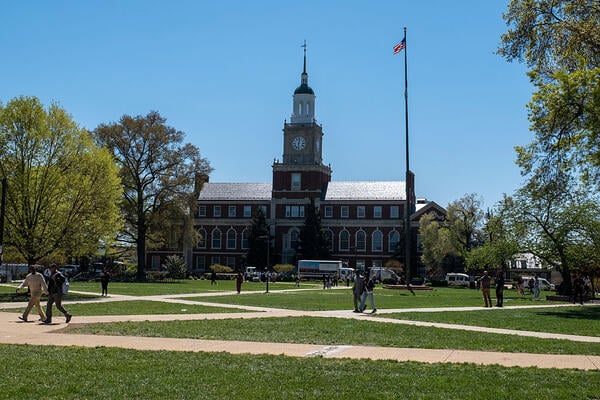
  • Howard Students Crowdsource to Cover Unpaid Balances

    Howard Students Crowdsource to Cover Unpaid Balances

    Howard University students have taken to social media to crowdsource funds after some found out they owe thousands of dollars to the institution following its transition to a new student financial platform, NBC News reported.

    The social media campaigns began after about 1,000 students received notice that the university put their accounts on hold because of unpaid balances. Some students received emails on June 4 saying that if the balances weren’t paid off by the end of the month, their bills would be sent to an external collections agency, according to The Root. Students in “pre-collection” have until the end of August to pay their bills. As long as a hold remains on their account, they can’t register for classes or student housing.

    Half of the cases have been resolved, according to a statement from Howard on Friday.

    “We are taking active steps to assist students experiencing challenges related to financial aid and account balances,” the statement read. “The University reaffirms its unwavering commitment to student success and to helping ensure that students are financially equipped to begin the academic year.”

    Howard officials also promised to offer virtual and in-person office hours, financial counseling, flexible payment plans, and, when possible, emergency support to affected students.

    On social media, students said they were blindsided by the news of how much they owed.

    “Myself included, many of us that have these balances on our account were not notified prior … which is why we’re struggling to pay them, because we had no idea,” said sophomore Makiah Goodman in one of multiple TikTok videos she made about the issue. She also said she discovered that a scholarship she earned couldn’t be applied to her debt. In another video, she noted that transferring out of Howard is “on the table” if she can’t pay.

    Alissa Jones, also a student, told NBC4 she was a few classes short of graduating when she found out she owed more than $57,000, despite only paying $15,000 per year for the last four years because of scholarship money.

    “Right now, it says I owe $57,540-something, like, I owe the whole thing,” Jones said. “If you have any type of hold, you cannot register for class, but with these, obsessive amounts of money that they’re saying we owe, it’s almost like, that’s not one semester’s worth of tuition, at all.”

    The breakdown in communication seems to have come as Howard transitioned from its old student financial platform, BisonWeb, to a new version, BisonHub. During the process, some student account updates were delayed between January and June of this year, according to Howard’s statement on Friday. (An earlier update from the university said between May and June.)

    Howard officials wrote in the statement that students were informed last October and November that their data would be transferred over to the new platform and that could come with “potential impacts.”

    Protests and Fundraisers

    A group of students has since launched a protest via an Instagram account called @whosehowardisit.

    The group came out with a set of demands, including an immediate in-person meeting with the Board of Trustees, more investment in financial aid and scholarships, and the resignations of some Howard administrators. They also called for student representatives to be added to hiring committees for various administrative positions going forward, particularly directors of student-facing departments. The group provided email templates for students, parents and other stakeholders to amplify their discontent.

    “For too long, students have raised concerns about communication failures, inaccessible leadership, and a lack of transparency around critical issues,” the group wrote in a “Get Involved Guide” shared on social media. “This movement is bigger than past due balances; it’s about how Howard University’s actions, or lack thereof, mirror the patterns of white supremacy, classism, and exclusion that oppress lower-income Black and brown students.”

    In their recent statement, Howard officials acknowledged students’ outspokenness about the issue.

    “While we are addressing the challenges related to the timing of the transition of students’ account data, we are also seeing an increase in the number of students who are publicly expressing frustration and concerns over rising financial pressures and the ability to continue their education,” they said, noting that Howard disproportionately serves low-income students.

    They added, “Recent federal cuts to research grants, education programs, and fellowships have compounded financial pressures on both students and faculty.”

    Students also shared to the @whosehowardisit Instagram account a central hub for the GoFundMe campaigns. Currently, about 70 students’ crowdsourcing campaigns are listed. (The site notes that the campaigns haven’t been “personally verified.”) Run by broadcast journalism student Ssanyu Lukoma, the site also features a GoFundMe submission form and a directory for possible scholarships and other financial resources.

    Some of the fundraising efforts have already paid off. Goodman’s GoFundMe campaign, for example, has so far raised more than $4,000 toward her $6,000 goal. Another campaign for Brandon Hawkins, a rising sophomore, hit $13,000, which is approaching his goal of $16,000. He said in a July 23 update that he’s now met his outstanding balance to Howard and any additional funds will go toward his tuition next year.

    “I hold a very personal and powerful mission: to be the first Black man in my family to graduate from college and create a new legacy for future generations,” Hawkins wrote on his GoFundMe page. “However, despite my academic achievements and unwavering passion, I face serious financial barriers that are threatening my ability to return to Howard and continue pursuing my degree.”


    Source link