

Tag: crack

  • As Feds Crack Down on Huge Ed Tech Data Breach, Parents and Students Left Out – The 74

    As Feds Crack Down on Huge Ed Tech Data Breach, Parents and Students Left Out – The 74

    School (in)Security is our biweekly briefing on the latest school safety news, vetted by Mark KeierleberSubscribe here.

    The Federal Trade Commission announced this month plans to crack down on technology company Illuminate Education over a massive 2021 data breach. The move added to a long list of government actions against the firm since hackers broke into its systems and made off with the sensitive information of more than 10 million students.

    Three state attorneys general have also now imposed fines and security mandates on the company following allegations it misled customers about its cybersecurity safeguards and waited nearly two years to notify some school districts of the widespread data breach.

    The ones that haven’t made progress in their efforts to hold Illuminate accountable are parents and students.

    Their pursuit hit a wall in September when the Ninth Circuit Court of Appeals dismissed a federal lawsuit filed by the breach victims. The court, ruling on a case filed in California, found that the theft of their personal data — including grades, special education information and medical records — didn’t constitute a concrete harm.


    In the news

    Students walkout of East Mecklenburg High School in protest of U.S.Border Patrol operations targeting undocumented immigrants on Nov. 18 in Charlotte, North Carolina. (Getty Images)

    The latest in President Donald Trump’s immigration crackdown: In many cities across the country, from New Orleans to Minneapolis, resisting federal immigration enforcement means keeping kids in school. | The 74

    • Trump’s mass deportation effort has had a particularly damaging effect on the child care industry, which is heavily reliant on immigrant preschool teachers — most of them working in the U.S. legally — who have found themselves “wracked by anxiety over possible encounters with ICE.” | The Associated Press
    • ‘Culture of fear’: Immigrant students across the country have increasingly found themselves targets of bullying since the beginning of Trump’s second term, according to a new survey of high school principals. | The Guardian

    A Kansas middle school will no longer assign Chromebooks to each student: Computers have had “a wonderful place in education,” the school’s principal said. But schools have “simply immersed students too much in technology.” | KWCH

    A Florida middle school went into lockdown after an automated threat detection system was triggered by a clarinet. A student was walking in the hallway “holding a musical instrument as if it were a weapon.” | News6

    Sign-up for the School (in)Security newsletter.

    Get the most critical news and information about students’ rights, safety and well-being delivered straight to your inbox.

    ‘Got what he deserved’: A California teacher has filed a federal First Amendment lawsuit against her school after she was suspended for a Facebook post calling right-wing political activist and Turning Point USA founder Charlie Kirk a “propaganda-spewing racist misogynist” a day after he was murdered. | NBC News

    • In Florida, two teachers have filed separate First Amendment lawsuits after they were punished for social media posts critical of Kirk after his death. | First Coast News
    • Texas Gov. Gregg Abbott announced a partnership with Turning Point USA to create local chapters of the group at every high school campus in the state, vowing “meaningful disciplinary action” against any educators who stand in the way. | The Texas Tribune
    • Kirk’s wife, Erika Kirk, will field questions from “young evangelicals, prominent religious leaders and figures across the political spectrum” during a live town hall Saturday on CBS News moderated by its new editor-in-chief, Bari Weiss. | CBS News
    • ICYMI: The Trump administration’s First Amendment crackdown in the wake of the activist’s violent death has left student free speech on even shakier ground. | The 74
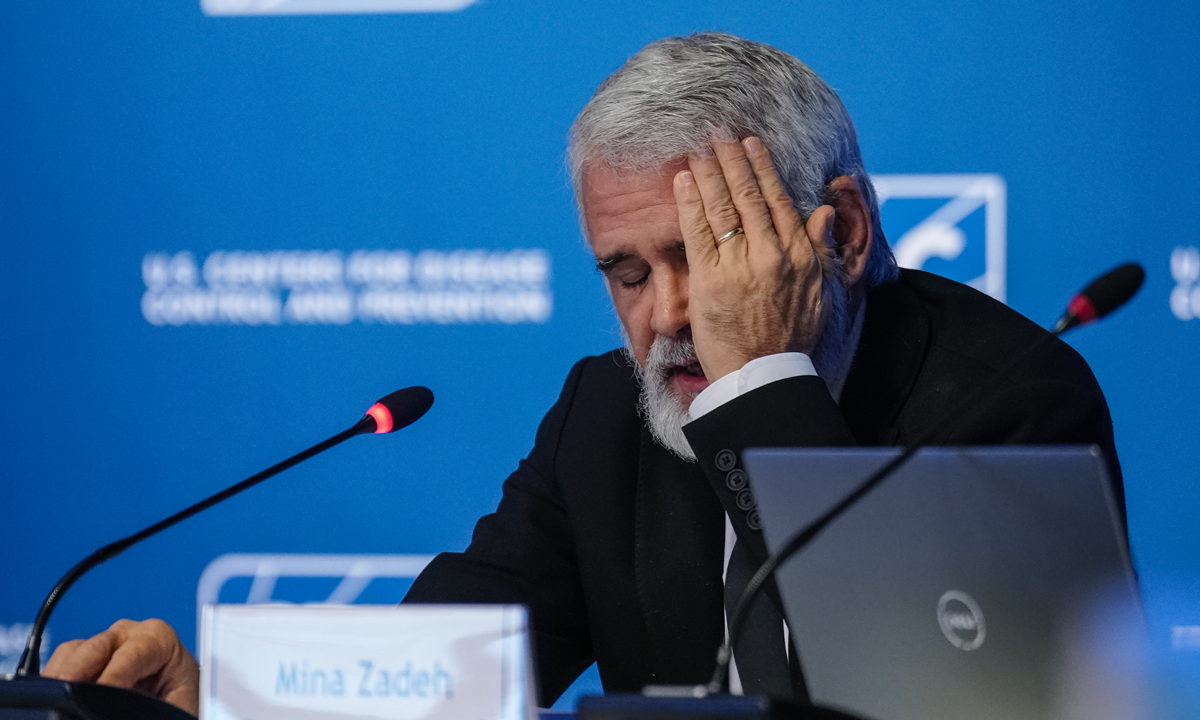
    Vice chair Robert Malone during a meeting of the CDC Advisory Committee on Immunization Practices on Dec. 5 (Getty Images)

    Following a shakeup in its ranks by vaccine skeptic and Health and Human Services Secretary Robert F. Kennedy Jr., a Centers for Disease Control and Prevention advisory committee voted to overturn a decades-long recommendation that newborn babies be immunized for hepatitis B — a policy credited with decimating the highly contagious virus in infants. | The 74

    • A measles outbreak in South Carolina schools is accelerating, with some unvaccinated students in a second 21-day quarantine since the beginning of the academic year. | NBC News  

    A photo that circulated online depicted California high school students lying in the shape of a swastika on the grass of a football field. Chaos ensued. | The Guardian

    ‘It feels nasty. It’s gross.’: Controversy has come to a head at a California high school after an adult film producer rented out the campus gym for a raunchy livestream. “The first thing I see is a full-grown adult, an adult man wearing a baby costume and being fed milk from a baby bottle,” one student observer noted. | NBC San Diego

    Two Texas teenagers allegedly conspired to carry out a school shooting at their high school but the plot was thwarted after classmates reported text messages with their plans to school police. “Don’t come to school on Monday,” one of the messages warned. | KHOU


    ICYMI @The74

    To Ease Civil Rights Backlog, McMahon Orders Back Staff She Tried to Fire
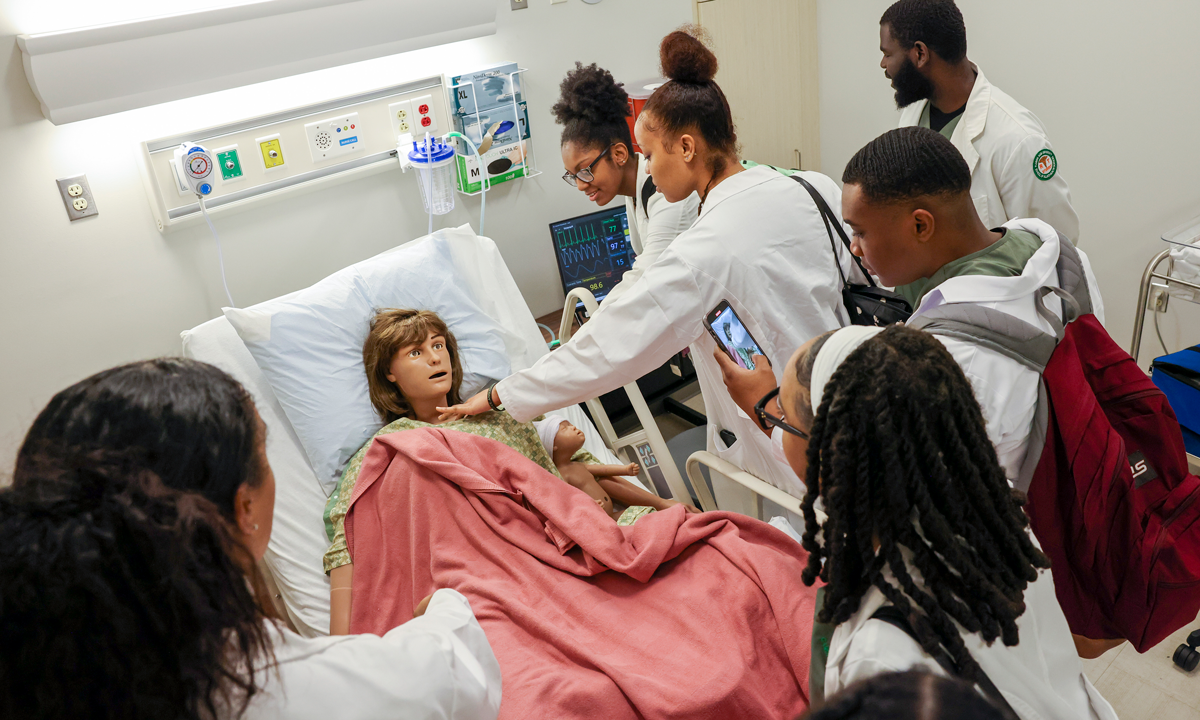
    A GOP push to limit public borrowing by graduate students could exclude many nursing students, as well as those training for several other professions. (Glenn Beil/Getty Images)

    Nurses, Social Workers Face ‘Bad Situation’ Under Proposed Loan Limits

    In New Mexico, Grandparents Caring for Grandkids Can Also Get Free Child Care Now(Co-published with The 19th)


    Emotional Support


    Did you use this article in your work?

    We’d love to hear how The 74’s reporting is helping educators, researchers, and policymakers. Tell us how


    Source link

  • US Congress urged to crack down on student overstays

    US Congress urged to crack down on student overstays

    Over 7,000 of these student and exchange visitors that overstayed their visas came from India, house representatives heard in a committee hearing on immigration enforcement in the US on January 22.  

    “Thirty-two countries have student/exchange visitor overstay rates of higher than 20%,” Jessica Vaughan, director of policy studies at the anti-immigration think-tank, the Center for Immigration Studies, told the committee.  

    However, sector leaders have argued that Vaughan’s testimony contained “some serious and inaccurate generalisations” and relied on “faulty statistics for her claim about the student visa overstay rate,” according to NAFSA‘s director of immigration policy, Heather Stewart.  

    “International students are the most tracked non-immigrants in the US and a clear and comprehensive understanding of student visa misuse is needed if the field is to arrive at effective and appropriate solutions,” said Stewart.  

    After India, Vaughan highlighted China, Colombia and Brazil as each having more than 2,000 of their citizens overstay student/exchange visas in 2023, urging Congress to eliminate OPT and impose penalties for institutional sponsors, among a host of regulations.  

    “The F and M visa categories have [the] highest overstay rates of any of the broad categories of temporary admission,” Vaughan told committee members, with F visas used for academic study and M visas for vocational study.  

    According to recent DHS figures, the total overstay rate for student and exchange visitors in 2023 was 3.67% with a suspected in-country overstay rate of 2.86%, dropping slightly to 2.69% solely for F-1 students, with all metrics excluding Mexico and Canada.  

    Countries with highest student/exchange overstay rates by numbers (2023): 

    Country  Suspected in-country overstays  Total overstays  Total overstay rate 
    India   5,818 7,081 4.67%
    China 3,012 5,255 2.1%
    Colombia 2,792 3,223 8.29%
    Brazil 1,692 2,198 4.6%
    Source: US Homeland Security Entry/Exit Overstay Report FY 2023 

    While India, China, Colombia and Brazil recorded the largest numbers of student overstays in 2023, their overstay rate as a percentage of overall student populations in the US were relatively low.  

    It is perhaps unsurprising that India and China, whose combined student populations made up 54% of total international enrolments at US institutions in 2023/24, also saw the highest levels of visa overstays. 

    Country Total overstay rate
    Equatorial Guinea  70.18% 
    Chad   55.64%
    Eritrea  55.43% 
    Congo (Kinshasa)  50.06%
    Djibouti 43.75% 
    Burma 42.17% 
    Yemen  40.92% 
    Sierra Leone 35.83%
    Congo (Brazzaville)  35.14% 
    Togo  35.05% 
    Global (excl. Mexico + Canada) 3.67% 
    Source: US Homeland Security Entry/Exit Overstay Report FY 2023 

    Notably, the ‘in-country overstay rate’ refers to the percentage of individuals suspected to still be physically present in the US after their visa expired, while the ‘total overstay rate’ includes both those still in the country and those who may have eventually left after overstaying their visa, but were not recorded as departing. 

    Sector members have raised concerns about the “troubling” scale of the problem uncovered by the report, ranging from benign violations of legitimate students to “cases of wilful fraud”, said Eddie West and Anna Esaki-Smith, two leading US educators.  

    NAFSA, however, has disputed the figures as “unreliable”, claiming that the report “overstates” the issue and urged stakeholders to take caution when taking the figures out of context.  

    Indeed, DHS concedes that “infrastructural, operational and logistical challenges” in the exit environment make it difficult to identify students who do not depart via air or who transition from F-1 status to H-1B, legal permanent residency and other statuses.  

    What’s more, DHS data revealed a 42% decline in the suspected overstay rate for student and exchange visitors across a 15-month period ending in January 2024, indicating a lag time for the system to register students’ changing situations. 

    “Not only do visa issuance policies need to be adjusted and interior enforcement boosted, in addition Congress should amend the law in several important ways,” Vaughan told the hearing.  

    In a statement raising some concern about Vaughan’s testimony, she recommended that “the concept of dual intent should not apply to student visa applicants”. 

    Under current law, it does not.  

    While the Optional Practical Training (OPT) program has been widely proven to benefit American workers as well as international graduates, Vaughan blamed the initiative for spawning “an industry of diploma mills and fake schools”, calling for it to be eliminated or “much, much more closely regulated”.  

    Vaughan also recommended stricter regulations on H1-B specialty occupation visas, a move which Stewart warned would “immediately” make the US look less attractive to international students who “strongly consider” post-study employment opportunities when deciding where to study abroad.  

    During Donald Trump’s presidential campaign, he surprised some of the sector.

    The second-time US president spoke out in support of the H1-B visa during his presidential campaign amid a row about the work pathway among prominent Republicans.

    The US is the only one out of the ‘Big Four’ study destinations – US, UK, Australia and Canada – to publish data on international student overstay rates.

    Source link

  • A matter of time: why our universities can’t crack the part-time postgrad code

    A matter of time: why our universities can’t crack the part-time postgrad code

    A preliminary analysis of UK university websites finds gaps in the practical information on how postgraduate part-time study actually works, combined with inconsistent acknowledgement of the challenges faced by these learners. Ewan Fairweather, Postgraduate Student Recruitment Manager at The University of Edinburgh asks: ‘Should we really be surprised that many universities find it challenging to recruit part-time postgraduate students?’

    ‘New Year, New You’. It’s January, the month when ambitions and aspirations take shape. Right now, those of us working in university marketing and recruitment are capitalising on this self-improvement trend, targeting potential postgraduate learners and helping them navigate the labyrinth of course choice, affordability and time commitments.

    With more than 13,000 part-time Master’s options listed on Findamasters.com, learners are spoiled for choice; there’s a strong chance they’ll find something relevant out there.  But can they afford postgraduate study? And crucially, can they find the time to do it?

    Busy lives

    For those fortunate enough to be able to fund a part-time Master’s, it will require the considerable investment of another increasingly scarce commodity: time.  And this is particularly the case among the largest segment of potential domestic postgraduate students, those aged 30+. This mature audience of prospective learners inevitably carries more personal and professional baggage – careers, relationships, families, caring responsibilities, community and volunteering roles, mortgages and loans.

    That is why they are more likely to be considering part-time postgraduate study and so need to work out in very practical terms how to balance learning and living; to picture precisely what it will actually mean.

    Drilling down into the detail

    I know that universities do so much behind the scenes to address the needs of all types of learners, but sadly this does not come across in the following statements, the likes of which I frequently encountered when searching for part-time postgraduate course details online:

    • As the School timetable changes from year to year and is not finalised until August, we are unable to confirm this information in advance.
    • Part-time students are strongly advised to wait until the timetable is available before finalising their other commitments.  
    • Classes can be timetabled Monday-Friday between 9am-6pm. We cannot give timetables in advance of enrolment unfortunately.  

    With such logistical and chronological vagueness, is it realistic to expect busy people to make life-changing decisions? Certainly timetabling is complicated but we need a clearer answer to the question, ‘So I can plan my life, can you give me an idea of what my timetable will look like?’

    Postgraduate part-time learning may not generate the short-term financial boost that the sector needs right now, but we have to plan for today and tomorrow, especially if there is, ‘a need for more people with postgraduate skills in the workforce’. And if the largest segment of domestic students is older, we can assume that many will be looking at part-time in all its glorious forms (online, blended, block, burst, evenings, distance) as their preferred study mode. We have to up our game; timetabling challenges may pose us major headaches, but for prospective students, they are less relevant.

    What I did

    With a view to improving the information and guidance online for prospective part-time postgraduate students considering the University of Edinburgh, I carried out some exploratory analysis. I sought to understand how UK universities articulated the benefits and practicalities of part-time postgraduate study during the traditional core search period of early January. Typing ‘part time masters’ followed by the institution name into Google, I clicked on the most appropriate results, then evaluated these pages according to two categories:

    1. Coverage: Whether part-time study was included, or contextualised, on the page and the extent to which this was done with empathy and understanding.
    2. Specifics: The level of deeper detail provided (the ‘how, where, who and when’ of part-time delivery).

    Pockets of best practice

    I gathered the information to improve the content on my own institution’s website with a focus on these busy learners who are looking to successfully juggle high-level study with busy lives. It’s clear that collectively we must do better to address their requirements but there are nonetheless pockets of best practice I believe we can learn from:

    • Leeds: offers a blueprint for the provision of specific timetable information for each part-time course. It may not look beautiful but when you eventually get there, you find the details you need, combined with a helpful disclaimer
    • Bedfordshire: From a dedicated part-time page, you navigate to a list of what’s available part-time. From here, you find a course schedule and timetable of exactly when and where the units take place presented in a user-friendly format.
    • Birkbeck, RVC and Brighton provide extensive details of when and where teaching takes place so you can better manage your time.
    • Birmingham City University, scores strong on empathy, thinking deeply about the profile and specific needs of their prospective part-time learners
    • The Open University lives and breathes part-time. The ‘how’ section is fabulous, but I was expecting more on the ‘when and  how do I study/attend classes?’
    • Some institutions promise innovative delivery models designed to support part-time learners’ needs, including De Montfort (‘Block Teaching’) and the RCA (‘Burst Mode’)
    • Kent is launching a new curriculum and a progressive approach to timetabling this year, designed to help busy people manage their lives better.

    Universities with high or medium part-time learning coverage and/or specifics on their website

    My recommendations

    In concluding, here are some (relatively) easy-to-implement recommendations that will give postgraduate part-time students a clearer idea of the time they need to commit to their studies:

    1. Publish sample timetables: definitive times and locations may not be possible, but is there a way of providing a sample timetable or sharing last year’s timetables?  
    2. Consolidate information on part-time study: consider bringing together all information on part-time learning into an easily findable resource or section
    3. Provide bespoke part-time course structure details: interrogate the curriculum from a part-time learner’s perspective, then re-write and update
    4. Show that we care: acknowledge that part-time learners have specific needs. Ideally, do this in a warm and welcoming tone.

    It is complicated, but let’s aim to do part-time better – we owe it to our learners!

    Source link