As we start the new year, my leadership team, like many others across the country, is confronting the financial fallout from the Department of Education’s decision to end grant programs for certain minority-serving institutions, including ours. The department has framed its September shift of funds away from MSIs and toward historically Black colleges and universities and tribal colleges and universities (TCUs) as an expansion of opportunity. Yet as an Indigenous education scholar and a college president, I see it creating new barriers for Indigenous learners. This decision is complex and requires deeper analysis to understand its lasting impacts.
Federal support for Native education is a part of the federal trust responsibility, codified by at least 150 treaties, as well as various statutes and court decisions. Those treaties provide explicit provisions for various services, including education, that were guaranteed to Tribal Nations and their citizens by the United States government in exchange for land. This trust responsibility follows both Tribal Nations and individual tribal citizens. Ultimately, the federal trust responsibility is both a legal and moral obligation.
In 2008, Congress created Native American–serving nontribal institutions (NASNTIs), a new category of MSI, to ensure federal grant support for institutions educating Native students outside of tribal colleges and universities. Only about 12 percent of Native students attend TCUs. Stripping more than $54 million away from the other institutions that serve large numbers of Native students effectively undermines the federal government’s trust responsibility. Furthermore, this funding, which went not to just NASNTIs, but also but to Asian American and Native American Pacific Islander–serving institutions (AANAPISIs) and Alaska Native and Native Hawaiian–serving institutions (ANNHs)—typically supported programs open to all students at these institutions who qualified, not just Native learners.
This loss is not abstract. At Fort Lewis College in Durango, Colo., where I am president, 37 percent of our students are Native American, representing more than 128 Tribal Nations and Alaska Native villages. We are the only NASNTI in the state. Recent federal cuts will mean a $2.27 million loss in critical grant support—dollars that have historically funded things like our peer educator tutoring, peer mentoring and summer bridge programs, all essential academic supports aimed at increasing student retention and graduation.
In my role, I meet students every week who tell me that the support they received through these programs gave them the academic confidence to formally enroll or stay in school and a community to belong to on campus. For many students, these programs are the difference between continuing on the track toward graduation or leaving higher education altogether. Cutting this funding pulls away the very safety nets that level the playing field.
Funding the institutions that support these students is also critical for boosting graduation rates, preparing a strong workforce and overall Tribal Nation building. Higher education access and success is a long-standing issue for Native communities, where only 42 percent of Native students graduate within six years, compared to 64 percent nationally, and only 17 percent of Native adults hold a bachelor’s degree. At a time when many communities are facing shortages of teachers, health-care providers and public servants, undermining critical pathways to higher education hurts our economy. Investing in these institutions is not only moral but profoundly practical.
Finally, the decision to reallocate funding away from NASNTIs is especially damaging because it frames Native-serving institutions as competitors with TCUs, instead of partners in the shared mission of educating historically underserved students. There is no question that TCUs and HBCUs have both been woefully underfunded for decades. These institutions serve critical historical and present-day roles, providing access to higher education and meeting community and tribal needs. They deserve robust, sustained federal investment. TCUs, in particular, play an essential role in rural areas and tribal communities. That said, needed investments in these institutions should not come at the expense of the NASNTIs and other MSIs that educate vast numbers of Native students.
By shifting this money, the Department of Education forces communities that are deeply aligned in our commitment to serving Native students and communities to fight for scarce resources, all while the department fails to meet its federal trust responsibility. NASNTIs and TCUs do not succeed at the expense of one another; we succeed together when federal policy recognizes the full breadth of our contributions.
The Department of Education has an opportunity to reaffirm, not retreat from, its responsibility to Native students. That means sustaining investment in TCUs and HBCUs and restoring support for the NASNTIs that educate large numbers of Indigenous learners. When we fund the full ecosystem of Native-serving colleges and universities, we strengthen Native communities and the nation as a whole. True recognition of Native heritage lies in a commitment that honors the promises made and ensures that every Native student has the educational resources to thrive.
Heather J. Shotton is president of Fort Lewis College.
This audio is auto-generated. Please let us know if you have feedback.
Beatrice Viramontes is the executive director of Teach For America Bay Area in California, a nonprofit that prepares diverse, talented individuals to become teachers.
There’s no shortage of polling or think pieces trying to wrap our collective heads around the youngest group of American adults: Gen Z. While those efforts provide myriad valuable insights, one thing in particular sticks out — members of Gen Z bring to the table unique perspectives on working, careers and what they’re looking for in a job.
Beatrice Viramontes
Permission granted by Beatrice Viramontes
While conversations about the role of the American teacher have long been happening, the arrival of Gen Z to the workplace has forced the conversation to the forefront of priorities for those of us in education. That conversation overlaps with another long-running crisis in education: a shortage of teachers, especially in the most underserved public schools.
In a 2024 poll, Educators for Excellence found that only 16% of teachers said they would recommend the profession to others. On top of that, the percentage of teachers who said they planned to stay in the classroom for their entire career was 77%, down nine percentage points from 2022.
At Teach For America Bay Area, which I lead, we’ve created a collaborative alongside local partners to tackle a key question: How can we create the conditions to inspire young leaders to say yes to a career in teaching and sustain great teachers — of many generations — in the profession?
We are not the first to begin engaging with this important question. In fact, we’re learning from examples from across the country in the hopes that we can bring to our own community solutions that are working elsewhere.
In reimagining the role of the classroom teacher, we can connect with what Gen Z folks are looking for in a job, ignite their spark for education, improve staffing and teacher retention in our schools and, most importantly, best serve our students.
Here’s one way we can do this.
If you were to walk into most American public elementary school classrooms today, you’d likely see the following: one elementary school teacher, in front of her roster of maybe about 30 children. She’d likely be with that group of children all day — leading their lessons in math, reading, writing, science and social studies. She’d accompany them to lunch and recess, and perhaps would get a break when they went to music, art or PE for an hour.
Each day, she has to prepare, internalize and execute those lessons and adjust them to meet all of her students’ various needs — in math, reading, writing, science and social studies.
This is probably the elementary school model you grew up with. I know I did. But this “one teacher, one classroom” model, while surely effective for some, doesn’t mesh well with the interests of the next generation entering the workforce, or with the learning needs of all students.
There is limited agency and flexibility — in many cases, it’s pretty rigid. It’s linked with fewer people entering the education profession and more people leaving it.
It also hasn’t seen a “refresh” in decades. Additionally, it contributes to the burnout of teachers from many generations, not to mention the impact on students. Meanwhile, our world is rapidly evolving and changing. We need to rethink this model in order to accelerate outcomes for students and attract great talent into the teaching profession.
In 2019, the Next Education Workforce initiative at Arizona State University created a pilot team-based approach at a single school to try to tackle this workforce design challenge in traditional education. In 2022, they launched a learning cohort for schools interested in exploring new types of staffing models — working with 100 educator teams across 10 school systems in Arizona and California.
The Center on Reinventing Public Education has been examining the progress along the way.
ASU NEW developed an innovative staffing strategy — allowing multiple teachers to work together across different subjects within a single school, rather than one teacher instructing one classroom of students. In this approach, four to five teachers are taking responsibility for about 100 students, depending on the grade level.
The teachers have differentiated roles and responsibilities, which can include specializing in a subject area. We think this can help address Gen Zers desire for personal identity development and purpose-driven careers. We also think this can reduce the complexity and workload for all teachers, which can help with retention.
For example, in kindergarten, one teacher may focus on phonics, changing the groups of students she’s working with all throughout the day rather than spending all day with the same 30 students. Meanwhile, another teacher may focus on math, also rotating student groups throughout the day.
That team of teachers collectively plans their teaching program, designing and implementing as they deem best meets the needs of their students and team. And those teachers, through specialization, can better internalize, prepare and teach their respective content. They can differentiate for students and create more tailored lessons to meet students at their level, providing the right interventions along the way.
This allows for specialization and collaboration and maximizes teachers’ strengths, better targeting student needs. It also creates a sense of collective responsibility and community — a helpful counterbalance to Gen Z’s reports of feeling disconnected in the workplace. This approach has shown some promising results: Teachers are more likely to report they have authority, and they’re less likely to depart their job.
Learnings from this are being brought to the Bay Area in a pilot program that’s under design right now. Five teacher teams across five different school sites are co-designing solutions that create different types of staffing models, to be launched this spring.
We’re embarking on this journey alongside local partners, including Thrive, a nonprofit supporting teachers and school teams, and Educators Thriving, a nonprofit helping to measure teacher well-being along the way.
In reimagining the role of the teacher, we draw inspiration from what Gen Z desires from the future of work, which we maintain will ultimately benefit all teachers and students. We’ll closely track the results of this pilot — an urgent task, given what we know about student achievement and teacher shortages.
But we believe, and we hope you will too, that now is the time to create the conditions to inspire more young leaders to pursue a career in teaching and keep some of our best teachers working with our students.
This audio is auto-generated. Please let us know if you have feedback.
Dive Brief:
Coursera is acquiring fellow MOOC provider Udemy to create an online education and upskilling giant valued at$2.5 billion, the companies announced Wednesday.
The combined company is poised to generate $1.5 billion in annual revenueand eliminate some $115 million in costs,Coursera and Udemy said in a press release.
In explaining the deal — expected to close in the second half of 2026 — the companies pointed to their complementary consumer-facing and business-to-business offerings, as well as rising demand for artificial intelligence skills training.
Dive Insight:
Coursera and Udemy featured AI prominently in their merger rationale, saying that their combination would provide skills training for the emerging technology to the global workforce.
Elaborating, the companies said the combination would enhance “capacity for sustained investment in AI-driven platform innovation, rapid product development, and durable growth initiatives.”
The messaging tracks with each company’s emphasis on the technology prior to the merger announcement.
AI was mentioned over 50 times on an outlook and strategy call with Coursera executives in November. On the call, CEO Greg Hart touted Coursera’s “AI-enabled platform,” which includes an AI tutor called Coursera Coach.
“We need to continue to accelerate our development cycles to leverage AI and data to improve the learner experience and continuously enhance our capabilities across all areas of the platform,” Hart said.
On the company’s latest earnings call, Hart described generative AI as “the most in-demand skill in Coursera’s history.”On average, 14 users per minute were enrolling in one of the company’s roughly 1,000 generative AI courses, he said.
Meanwhile, Coursera recently partnered with OpenAI to embed the MOOC provider’s platform directly into ChatGPT, making its videos and information available to the AI platform.
Likewise, Udemy CEO Hugo Sarrazin emphasized AI’s importance to the company’s business on its latest earnings call in October.
Framing AI as a demand driver for Udemy’s offerings, he said that “companies are heavily invested in AI transformation” but are “struggling to demonstrate ROI because many haven’t developed the core workforce capabilities required to extract value from their investments.”
At the same time, both companies also acknowledge potential downsides to AI. In Coursera’s latest earnings report with the U.S. Securities and Exchange Commission, its list of risk factors pointed to the novelty of AI andcautioned that the market for AI skills and Coursera’s own AI products may not grow as planned.
Moreover, the company said, AI could “displace or otherwise adversely impact the demand for online learning solutions, including our offerings.”
That is exactly what has happened to ed tech specialist Chegg, which operates in an adjacent space with online learning tools.The company recently announced it would lay off nearly half its staff after multiple quarters of cratering revenue, which Chegg executives have attributed to loss of traffic — and thus subscribers — with the release of Google’s AI summaries in the search giant’s results.
For now, Coursera and Udemy are relatively stable financially for tech companies in a dynamic, ever-changing market. Both companies logged over $550 million in revenue for the first nine months of their fiscal years. In both cases, that represented growth from the previous year.
While Coursera is historically unprofitable, Udemy made $6.1 million in net income for the first three quarters of its fiscal year after a $75.4 million loss for the same period last year.
Coursera is valued more highly, with a market cap of $1.3 billion to Udemy’s $948.7 million as of Wednesday afternoon. Under the transaction, which requires regulatory and shareholder approvals, Udemy shareholders will receive 0.8 shares of Coursera stock for each of their Udemy shares.
In the aftermath of each new outrage involving Nick Fuentes, pundits scramble to explain how a 20-something suburban Catholic kid became one of the most influential white supremacists in America. Many insist Fuentes is an anomaly, a glitch, a fringe figure who somehow slipped through the cracks of democracy and decency. But this narrative is both comforting and false.
Fuentes is not an anomaly. He is the logical product of the systems that shaped him—especially American higher education.
While institutions obsess over rankings, fundraising, and branding campaigns, they have quietly abandoned entire generations of young people to debt, alienation, status anxiety, and a digital culture that preys on male insecurity. In this vacuum, extremist networks thrive, incubating figures like Fuentes long before the public notices.
HEI warned about this trend years ago. Since 2016, the publication tracked the rise of Charlie Kirk and Turning Point USA, noting how TPUSA used campus culture wars to radicalize disaffected young men. HEI saw that for-profit-style marketing, donor-driven politics, and relentless culture-war agitation were creating an ecosystem where reactionaries could build both influence and profit. Fuentes did not arise outside that ecosystem—he evolved from it, even as he later turned on Kirk as insufficiently extreme.
What fuels this pipeline? A generation of young men raised on the promise of meritocracy but delivered a reality of spiraling costs, precarious futures, and institutional betrayal. Many arrive at college campuses burdened by debt, anxious about their place in an unforgiving economy, and deeply online. They bear the psychological bruises of a culture that has replaced community with competition and replaced meaning with metrics.
This is also the demographic most vulnerable to incel ideology, a misogynistic worldview built around grievance, rejection, humiliation, and resentment. Incel communities overlap heavily with the digital spaces where Fuentes built his early audience. The mix is combustible: sexually frustrated young men who feel mocked by mainstream culture, priced out of adulthood, and invisible to institutions that once guided them. The result is a fusion of white nationalism, male resentment, Christian nationalism, ironic fascism, and livestream entertainment—perfectly tailored to a generation raised on Twitch and YouTube.
And yet the higher-education establishment insisted for years that white supremacists were primarily rural “rednecks”—poor, uneducated, easily dismissed. This stereotype blinded journalists, academics, and administrators to the reality developing right in front of them. Higher Education Inquirer knew better because we corresponded for years with Peter Simi, one of the country’s leading scholars of extremism. Simi’s research demonstrated clearly that white supremacists were not confined to rural backwaters. They were suburban, middle-class, sometimes college-educated, often tech-savvy, and deeply embedded in mainstream institutions.
Simi’s work showed that white supremacist movements have always thrived among people with something to lose, people who feel their status slipping. They recruit in fraternities, gaming communities, campus political groups, military circles, and online spaces where young men spend their most lonely hours. They build identities around grievance and belonging—needs that universities once helped students navigate but now too often ignore.
This is the world that produced Nick Fuentes.
Fuentes entered higher education during a moment of fragmentation and distrust. Tuition was skyrocketing. Campuses were polarizing. Students were increasingly treated as revenue streams rather than whole human beings. Administrators were more focused on donor relations and culture-war optics than on the psychological welfare of their students. And universities outsourced so many vital functions—to police, to lobbyists, to tech platforms—that they ceded responsibility for the very students they claimed to educate.
Into that void stepped extremist influencers who offered simple answers to complex problems, validation for resentment, and a community that cared—if only in the performative, transactional sense of internet politics.
The tragedy is not simply that Fuentes emerged. The tragedy is that the conditions to generate many more like him remain firmly in place.
American higher education created the environment: hyper-competition, abandonment of the humanities, the collapse of community, the normalization of precarity, and a relentless emphasis on personal failure over systemic dysfunction. It created the audience: anxious, isolated, indebted young men looking for meaning. And it created the blind spot: a refusal to take extremism seriously until it reaches mainstream visibility.
Fuentes is not a glitch in the system. He is the system’s mirror held up to itself.
Unless universities confront their complicity in this radicalization pipeline—economically, culturally, and psychologically—the next Nick Fuentes is already in a dorm room somewhere, streaming at 2 a.m., finding thousands of followers who feel just as betrayed as he does.
Sources
Angela Nagle, Kill All Normies: Online Culture Wars from 4chan and Tumblr to Trump and the Alt-Right (2017).
Peter Simi & Robert Futrell, American Swastika: Inside the White Power Movement’s Hidden Spaces of Hate (2010, updated 2015).
Kathleen Belew, Bring the War Home: The White Power Movement and Paramilitary America (2018).
Joan Donovan & danah boyd, “Stop the Presses? The Crisis of Misinformation” (Harvard Kennedy School).
Cynthia Miller-Idriss, Hate in the Homeland: The New Global Far Right (2020).
Michael Kimmel, Healing from Hate: How Young Men Get Into—and Out of—Violent Extremism (2018).
Whitney Phillips, “The Oxygen of Amplification: Better Practices for Reporting on Extremists.”
Brian Hughes & Cynthia Miller-Idriss, “Youth Radicalization in Digital Spaces.”
David Futrelle, We Hunted the Mammoth archive on incel ideology.
Higher Education Inquirer (2016–2024 coverage of TPUSA, Charlie Kirk, and campus extremism).
Educators tap two tech firms to create NYC Childcare Navigator, a free platform that cuts through the chaos.
A one-stop shop
Frustrated by the maze of agencies, websites, and applications families face to find childcare and possible financial support, New York City teachers said, “Enough!”
The United Federation of Teachers, the union that represents more than 200,000 educators and professionals in New York City, teamed up with two tech firms to build a better approach: NYC Childcare Navigator.
Navigator is a platform that connects New York City families to upwards of 12,000 childcare options across the five boroughs. It offers instant eligibility checks for money-saving programs, step-by-step application support, and the most comprehensive directory of childcare providers in the city — all in one free, easy-to-use website.
The union created the tool as a benefit for its own members, but it was so successful that the union opened it up to all New York City residents in October.
“We couldn’t gatekeep something that we knew so many New York City families needed,” said Michael Mulgrew, president of the United Federation of Teachers.
Centralizing tailored childcare
The union partnered with Mirza, a city-based tech firm that builds platforms to connect low-wage workers with local, state, and federal benefits, including for childcare.
“We wanted to get meaningful benefits to parents, but there wasn’t a single place that would allow a parent to see all the options available. That felt like a big missing piece. But it also pointed toward a solution,” said Siran Cao, CEO and Co-Founder of Mirza, who said she was inspired by how her own mother navigated a new country and the impact that a few well-timed bits of financial support had on her own family.
The union then introduced Upfront, a software company that consolidates multiple sources of childcare providers into a single, centralized database. The result: parents using the NYC Childcare Navigator can see every licensed program in NYC (center, home, and school-based), searchable by zip code, child’s age, availability, languages spoken, special needs, and many other filters. For the first time, childcare providers can claim a dedicated page to share current information about their specific childcare services.
“It’s everything in a single location instead of having to make dozens of calls and scour multiple, incomplete websites,” said Levin-Robinson, who said she was motivated by how challenging it was to find care for her own children.
While generative artificial intelligence tools have proliferated in education and workplace settings, not all tools are free or accessible to students and staff, which can create equity gaps regarding who is able to participate and learn new skills. To address this gap, San Diego State University leaders created an equitable AI alliance in partnership with the University of California, San Diego, and the San Diego Community College District. Together, the institutions work to address affordability and accessibility concerns for AI solutions, as well as share best practices, resources and expertise.
In the latest episode of Voices of Student Success, host Ashley Mowreader speaks with James Frazee, San Diego State University’s chief information officer, about the alliance and SDSU’s approach to teaching AI skills to students.
An edited version of the podcast appears below.
Q: Can you give us the high-level overview: What is the Equitable AI Alliance? What does it mean to be equitable in AI spaces?
James Frazee, chief information officer at San Diego State University
A: Our goal is simple but ambitious: to make AI literacy and access available as opportunities to all of our students, and I mean every student, whether they started at a community college, a California State University like ours or at a University of California school. We want to make sure they all have that same foundation to understand and apply AI responsibly in their lives, in their careers and during their academic journey.
Through this alliance, we’re trying to align resources and expand access to institutionally supported AI tools. So when people are using the free tools, they’re not free, right? They’re paying for them with their privacy, with their intellectual property. We want to make sure that they have access, not only to the training they need to use these tools responsibly, but also to the high-quality tools that are more accurate and that have commercial data protection so that they can rest assured that their intellectual property isn’t being used to train the underlying large language models.
Q: The alliance strives to work across institutions, which is atypical in many cases in higher ed. Can you talk about that partnership and why this is important for your students?
A: The Equitable AI Alliance emerged from survey results. We have this listening infrastructure we’ve created here at San Diego State—we launched an AI survey in 2023, within months of ChatGPT going public. We really wanted to establish a baseline and determine what tools our students were using, what opinions did they have about AI and maybe, most importantly, what did they expect from us institutionally in order to help them meet the moment?
During the analysis of those survey findings, we discovered evidence of a growing digital divide. For instance, we asked students about how many devices they had. If you have a smartphone, a tablet, a desktop and a laptop, you would have four smart devices.
What we found was more devices led to people being more likely to say that AI had positively affected their education, and more devices meant that they were more likely to be paying for the paid versions of these tools. We also saw in the open-ended responses … people being concerned about fee increases as a result of AI, people being concerned about students who didn’t have access to these tools or fluency with these tools being disadvantaged.
People were saying, “The people who are using these have an unfair advantage,” right? Students were asking questions about, is everybody going to be able to afford what they need in order to keep up with AI? So that really was a key driver in forming this alliance.
Q: When it comes to consolidating those resources or making sure that students have access, what does that look like? And how do you all share?
A: The Equitable AI Alliance is really two things. First, it’s a consortium that’s all about saving time and saving money and having universities and colleges come together to really look at ways to form these partnerships to democratize access to these high-quality tools. And also to provide the training that people need. So that’s kind of the first part of it, and that’s much larger than the regional consortium.
But we have a regional consortium between our San Diego Community College District, San Diego State University and the University of California at San Diego, which is also dubbed the Equitable AI Alliance. And the mission there is to ensure that every student, no matter where they begin their journey, has access to AI literacy, to those high-quality tools and opportunities to leverage those to help them succeed, both inside and outside of the classroom.
It’s really, ultimately about responding to the workforce needs that we’re seeing. Employers today are demanding students come to them with fluency using these tools, and if they don’t have that fluency, they’re not going to get that internship or that job interview. So it’s really important. That’s where those microcredentials that we’re sharing across our institutions are really powerful, because they can put that badge on their LinkedIn profile, which may make the difference between them getting the interview or not, just having that little artifact there that demonstrates that they have some skills and knowledge can really make an impact.
Q: What is the microcredential? How are students engaging with that?
A: The microcredentials themselves are really powerful because they’re basically mini courses in our learning management system. We try and make them bite-size enough to where people actually get through them.
There are five modules. The first module is really kind of demystifying AI—this is not some dark art. We try to explain, at a high level, how does AI work?
The second module, which is arguably the most important one, is all about responsible use. The fact that these models are built on information from human beings, which is inherently biased. How to be critical consumers of that information, the environmental costs, the human costs, talking about how to cite the use of these tools in your work, both academically and professionally.
Then there’s a module on what AI can do for you. And so we have different microcredentials, a microcredential for faculty, there’s microcredentials for students. For instance, in the microcredential for students, it’s focusing on using AI to find jobs, prepare for jobs, tailor your résumé for a particular job or internship, how to do role-playing—to practice for an interview, let’s say.
And then there’s finding apps, finding generative AI tools, how to do that, because there’s different AI tools you might want to use for certain things, like maybe you want to create some sort of graphic—you might want to use Midjourney or DALL-E, or whatever it might be.
And then there’s the activities. Part of the idea with the activities, which they have to do in order to earn the badge, is that we’re designing activities that try and keep the microcredential evergreen. So for instance, when we first rolled out the microcredential, nobody had heard of DeepSeek, because it didn’t exist. So now we have an activity that has people going out and looking for the latest large language models that are emerging. Every day, there’s some new model, it seems—that is something to be aware of.
And then bringing it back to again, why it’s important for them to be able to be in the loop, pointing out the fact that these models are often very sycophantic, right? They want to tell you what they think you want to hear. And so you really have to go back and forth and ideate with the tools, which requires a little practice, a little coaching, and you have to fact-check everything. And so that’s a really big part of this idea of, what does it mean to be literate when it comes to using these tools?
Q: When it came to developing the microcredential, who were the stakeholders at the table?
A: We have a long history of engaging with faculty and providing fellowships to faculty. That’s a way for us to incentivize engagement with faculty.
That manifests itself in the form of course release. So, in other words, we provide them with reassigned time, buy them out of teaching a course, so that they can come and work with us and consult with us. We have a long history of doing that, and this goes back decades, first helping us with faculty development around moving courses online.
We wanted that to be done by faculty for faculty. Yes, we have instructional designers who are staff, but we really wanted the faculty to be driving that. We identified in 2023 our first AI faculty fellows, and we got a faculty member from information systems and a faculty member from anthropology—very different in terms of their skill sets and their orientation to research. One a qualitative ethnographic researcher, another more of a quantitative machine learning focus. Very complementary in terms of just balancing each other out.
Twenty twenty-three was the first time we had ever provided fellowships to students. We provided fellowships to two students. One was an engineering student and another was an Africana studies student. Again, very different in terms of the academic domain and the discipline they were in, but again, very balanced.
So those two AI student fellows and the two AI faculty fellows helped us design the survey instrument, get the IRB [institutional review board] approvals, launch the survey, promote the survey. I really want to give credit where credit is due: We got an incredible response rate. We’re lucky if we usually get like a 3 percent response rate from a student survey. We got a 21 percent response rate in 2023; 7,811 students responded to that survey.
The credit for that goes to Associated Students, our student government. The president of Associated Students that year ran on a platform of getting students high-paying jobs, and he knew for students to get high-paying jobs, they needed to be conversant with AI. So he helped us promote that survey, and the whole campaign was around “your voice matters.” So thanks to his help and the help of these AI student fellows, we got this incredible response from our students.
So anyway, the students and the faculty fellows helped us analyze those results and then use that data to build these microcredentials. So very much involving faculty and students and our University Senate, our library. I mean, the library knows a thing or two about information literacy, right? They absolutely have to be at the table. Our Center for Teaching and Learning, which is responsible for providing faculty with professional development on campus, they were also very involved from the very outset, so very much of a collaborative effort.
Q: I wanted to ask about culture and creating a campus culture that embraces AI. How are you all thinking about engaging stakeholders in these hard conversations and bringing different disciplines to the playing field?
A: I think it’s really important. That’s what the data has done for us. It’s really created space for these conversations, because faculty will respond to evidence. If you have data that is from their students, who they care about deeply, that creates space for these conversations.
For instance, one of the things that emerged from the survey findings was inconsistency. In the same course, maybe taught by different instructors, there would be different expectations and policies with regard to AI.
In multiple sections of Psychology 101—and that’s not a real example, I’m just using that as a fictitious example—one instructor might completely forbid the use of AI and another one might require it, and that’s stressful for students because they didn’t know what to expect.
In fact, one of the comments that really resonated with me from the survey was, and this is a verbatim quote, “Just tell us what you expect and be clear about it.” Students were getting mixed messages.
So that led to conversations with our University Senate about the need to be clear with our students. I’m happy to report, just this past May, our University Senate unanimously passed a policy that requires an AI … statement in every syllabus. That was an important step in the right direction.
The University Senate also created guidelines for the use of generative AI in assessments and deliverables. You know, it’s important that you not be prescriptive with your faculty. You need to provide them with lots of examples of language that they can use or tweak, because they own the curriculum, and knowing that you don’t have to take a one-size-fits-all approach.
Maybe one assignment, it’s restricted; in another assignment, it’s unrestricted, right? You can do that. And they’re like, “Oh yeah, I can do that.” Giving them examples of language they can use, and also encouraging them to use this as an opportunity to have a conversation with their students.
The students want more direction on how to use these tools appropriately. And I think if you race to a policy that’s all about academic misconduct, it’s frankly insulting to the students, to just assume everybody’s cheating, and then when they leave here and go into their place of business, they’re going to be expected to use these tools. So, really powerful conversations.
That’s been key here—just talking about [AI]. I mean, it’s this seismic kind of epistemic shift for our faculty and how knowledge is created, how we acquire knowledge, how we represent knowledge, how we assess knowledge. It’s a stressful time for our faculty—they need to be able to process that with other faculty, and that’s super important.
Q: It’s also important that you’re having that conversation collegewide, because if this is a career competency and students do need AI skills, it needs to happen in every classroom, or at least be addressed in every classroom.
A: That’s a really good point, Ashley. In fact, we’re launching a program this year that we’re calling the AI-ready course design workshop, and the idea for that is that we’re identifying a faculty member from every major and we are paying them—and this is super important, too: It’s really a sign of respect, in terms of acknowledging the labor required to reimagine an assignment, to weave AI into the fabric of that assignment.
The goal is to have a faculty member from every major who teaches a required course in that major at least two times. We want to make sure that they have an opportunity to do this and then refine it and do it again. They’re being paid over break this winter to reimagine an assignment that leverages AI, and it is a deliverable. They will produce a three- to five-minute introspective video where they reflect on what they did, why they did it and what were the learning outcomes, both for them and for their students.
That is great because we will have an example from every major of how you can use AI in the fabric of your teaching. And I think that’s what faculty need right now. Again, they need lots of examples, and we’re incentivizing that through this program. We already have something we call the “AI in action” video series, so we already have some examples, but we don’t have examples from every major.
For us right now, I think you’re seeing a lot of engagement from faculty in engineering and sciences. We’re concerned that our humanities faculty need to engage; we need to engage the political scientists. We need to engage the philosophers and the historians. They can’t just sit this out. They’re really going to be key players in moving this forward, to prepare our students, regardless of major, for this AI-augmented world that we’re living in.
Q: What are some of the lessons that you’ve learned that you hope higher education can learn from? How do you all hope to be a model to your peers across the sector?
A: I think key is the importance of data and using data to inform the choices you’re making, whether it’s in the classroom, whether it’s in the cabinet. I report to the president, and using data to really drive those conversations, and using that to make sure that you’re engaging all of those stakeholders.
For instance, we’re looking at the survey data. That survey that we did in 2023 and repeated in 2024, we’ve now scaled up to the entire California State University system, and that is underway right now. In fact, I was just looking at the latest response rates. We have had, as of this morning, 77,714 people responding to the survey … which is about a 15 percent response rate. We’ve got half a million students in the CSU, so it’s a big number.
I was looking at [the data] with the council of vice presidents and my colleague … the provost, and I said, “When you look at the numbers for San Diego State, we’ve had 10,682 responses from students. We’ve had 406 responses from faculty and 556 responses from staff. But relative to the students, the response rate from faculty is pretty low.” So I talked with [the provost] about sending a message out to our academic leaders—the deans and the department chairs and the school directors—encouraging their faculty to respond to the survey, so that we have a balanced perspective.
Everybody has a voice. That is certainly something that I want to encourage; this whole idea of incentivizing faculty engagement, I think, is important. I think you really need to provide that encouragement for faculty to experiment, to show off, and then to really use that as an opportunity to recognize those faculty and celebrate them. That does a couple things. One, it honors them for taking the risk to do this work. Then it might inspire another faculty [member] to build on that work, or have coffee with that person and talk about what they wish they would have known that they could advise this person on who maybe is early career and would appreciate their advice. I think that idea of incentivizing faculty engagement is another thing that I would encourage the audience to consider.
Q: What’s next for you all? Are there other cool interventions or programs that are coming out?
A: That survey data is going to do quite a few things for us. It’s going to help us to not only refine the microcredentials and the work we’re doing with the microcredentials, but it’s also going to allow us to scaffold conversations with industry and our industry partners in terms of being responsive to the competencies they’re going to need in their industry.
I think it’s something like 35 out of the top 50 AI companies are housed here in California, but they can’t find the talent they need in California, let alone the United States, so they’re having to go abroad to get the people they need to continue to innovate. So using this as an opportunity to work with our industry partners to make sure we’re preparing this workforce that they need to continue to innovate, that’s a key element of it, and then using this data also to help us get additional resources and use that data to say, “Hey, here’s a gap we’ve identified. We need to fill this gap,” and using that data to make the case for that investment.
Back-to-school season arrives every year with a mixed bag of emotions for most educators, including anticipation and excitement, but also anxiety. The opportunity to catch up with friendly colleagues and the reward of helping students connect with material also comes with concern about how best to present and communicate that material in a way that resonates with a new classroom.
An annual challenge for K-12 educators is creating a syllabus that engages students and will be used throughout the year to mutual benefit rather than tucked in a folder and forgotten about. Today’s digital transformation can be a means for educators to create a more dynamic and engaging syllabus that meets students’ and parents’ needs.
While it can be overwhelming to think about learning any new education technology, the good news about a digital syllabi is that anyone who’s sent a digital calendar invite has already done most of the technical-learning legwork. The more prescient task will be learning the best practices that engage students and enable deeper learning throughout the year.
Step one: Ditch the PDFs and print-outs
Creating a syllabus that works begins with educators stepping into the shoes of their students. K-12 classrooms are full of students who are oriented around the digital world. Where textbooks and binders were once the tools of the trade for students, laptops and iPads have largely taken over. This creates an opportunity for teachers to create more dynamic syllabi via digital calendars, rather than printed off or static PDFs with lists of dates, deadlines, and relevant details that will surely change as the year progresses. In fact, many learning management systems (LMS) already have useful calendar features for this reason. Again, teachers need only know the best way to use them. The digital format offers flexibility and connectivity that old-school syllabi simply can’t hold a candle to.
Tips for creating an effective digital syllabus
Classroom settings and imperatives can vary wildly, and so can the preferences of individual educators. Optimization in this case is in the eye of the beholder, but consider a few ideas that may wind up on your personal best practices list for building out your digital syllabus every year around this time:
Make accessing the most up-to-date version of the syllabus as frictionless as possible for students and parents. Don’t attach your syllabus as a static PDF buried in an LMS. Instead, opt-in to the calendar most LMS platforms offer for the mutual benefit of educators, students, and parents. To maximize engagement and efficiency, teachers can create a subscription calendar in addition or as an alternative to the LMS calendar. Subscription calendars create a live link between the course syllabus and students’ and/or parents’ own digital calendar ecosystem, such as Google Calendar or Outlook. Instead of logging into the LMS to check upcoming dates, assignments, or project deadlines, the information becomes more accessible as it integrates into their monthly, weekly, and daily schedules, mitigating the chance of a missed assignment or even parent-teacher conference. Students and parents only have to opt-in to these calendars once at the beginning of the academic year, but any of the inevitable changes and updates to the syllabus throughout the year are reflected immediately in their personal calendar, making it simpler and easier for educators to ensure no important date is ever missed. While few LMS offer this option within the platform, subscription calendar links are like any hyperlink–easy to share in emails, LMS message notifications, and more.
Leverage the calendar description feature. Virtually every digital calendar provides an option to include a description. This is where educators should include assignment details, such as which textbook pages to read, links to videos or course material, grading rubrics, or more.
Color-code calendar invitations for visual information processors. Support different types of information processors in the classroom by taking the time to color-code the syllabus. For example, purple for project deadlines, red for big exams, yellow for homework assignment due dates. Consistency and routine are key, especially for younger students and busy parents. Color-coding, or even the consistent naming and formatting of events and deadlines, can make a large impact on students meeting deadlines.
Encourage further classroom engagement by integrating digital syllabus “Easter eggs.” Analog syllabi often contain Easter eggs that reward students who read it all the way through. Digital syllabi can include similar engaging surprises, but they’re easy to add throughout the year. Hide extra-credit opportunities in the description of an assignment deadline or add an invitation for last-minute office hours ahead of a big quiz or exam. It could be as simple as a prompt for students to draw their favorite animal at the bottom of an assignment for an extra credit point. If students are aware that these opportunities could creep up in the calendar, it keeps them engaged and perhaps strengthens the habit of checking their classroom syllabus.
While the start of the new school year is the perfect time to introduce a digital syllabus into the classroom, it’s important for educators to keep their own bandwidth and comfortability in mind. Commit to one semester with a digital syllabus and spend time learning the basic features and note how the classroom responds. From there, layer in more advanced features or functionality that helps students without being cumbersome to manage. Over time, educators will learn what works best for them, their students and parents, and the digital syllabus will be a classroom tool that simplifies classroom management and drives more engagement year-round.
Joep Leussink, AddEvent
Joep Leussink is the Head of Growth at AddEvent, a San Francisco-based platform that provides event and calendar marketing solutions. With a proven track record in driving growth for B2B SaaS companies from Series B to post-IPO, Joep leverages his expertise in demand generation and growth marketing to make AddEvent known and accessible to everyone.
Latest posts by eSchool Media Contributors (see all)
Some university systems are letting their existing faculty senates lapse while others are reshaping them to comply with SB 37.
Photo illustration by Justin Morrison/Inside Higher Ed | BraunS, malerapaso and vi73777/iStock/Getty Images
The University of Texas System Board of Regents voted Thursday to disband the system’s long-standing faculty senates in compliance with Senate Bill 37, the sweeping Texas higher education law that gives university boards and presidents control over faculty governing bodies.
The UT board also voted Thursday to create faculty advisory groups, which will “perform the work of faculty governance bodies”—such as reviewing degree requirements, suggesting curricular changes, coordinating campus events and revising the faculty handbook—while keeping all decision-making power in the hands of the administration.
The University of Houston system Board of Regents did the same Thursday, voting to create faculty councils that will “provide structured, meaningful avenues for faculty to help shape academic priorities, strengthen excellence and contribute to decisions that guide our future,” a university spokesperson said in a statement.
But the groups won’t give the faculty independent representation or any real power. In accordance with SB 37, the board bylaws now state, “a faculty council is advisory only and may not be delegated the final decision-making authority on any matter.”
As of June 20, any faculty governing body in Texas—whether it’s a senate, council or advisory group—may not exceed 60 members unless otherwise decided by the board, and every college or school within the university must be represented by at least two members, SB 37 dictates. The university president will appoint at least one of the representatives from each college or school within the institution, while the faculty elects the others, meaning that as many as 30 members could be chosen by the president.
The president will also choose the presiding officer, associate presiding officer and secretary for each group. Appointees may serve for six years before taking a mandatory two-year break from the group, while faculty-elected representatives may only serve for two years before the two-year break.
While the new groups are still faculty bodies, they won’t “authentically speak with the faculty voice,” said Mark Criley, a senior program officer in the department of academic freedom, tenure and governance at the American Association of University Professors. “No matter who is selected, the process by which they’re selected matters. We learned when we’re in elementary school—the teacher didn’t appoint the class president, the principal didn’t appoint them, this was one of our first exercises in representation. You choose the people who will speak for you in an institutional body.”
Across the state, college and university system boards are taking different approaches to scrapping and reshaping their faculty senates. The Alamo Colleges District Board of Trustees voted earlier this month to consolidate the faculty senates at each of the five campuses into one group of up to 35 members. Previously, the five senates comprised 114 voting members.
While the Texas State University system board gave presidents the ability to create new faculty groups, it did not approve a new faculty governing body at its Aug. 14 meeting and will let the existing senate lapse on Sept. 1, the deadline set by SB 37. Texas A&M University regents are expected to vote on their approach to the new law at their Aug. 27 board meeting, The Austin American-Statesman reported.
Even as university governing boards design their toothless, SB 37–compliant groups, two professors at the University of Houston on Monday unveiled what they’re calling the Faux Faculty Senate. “I know that people feel that faculty senates are kind of arcane … but it’s a part of civil society,” said David Mazella, an associate professor in the English Department at the University of Houston and president-elect of the faux senate. “[SB 37] is an antidemocratic bill that essentially eliminates the faculty voice in order for the state to directly control what we do.”
The faux senate is largely symbolic; it won’t replicate any of the governing functions of the now-defunct 100-member senate, Mazella said. Instead, it will serve as an off-campus meet-up for faculty to socialize and talk about ongoing issues in Texas higher education. “Even getting to a faculty cafe is really difficult, so giving people an opportunity [to talk] that is not in a university space feels really important to us,” Mazella said.
He and his co-creator, María González, also an associate professor of English at Houston, plan to start hosting events in October, though nothing concrete has been scheduled. Without support from the university, the money to host these events will come from Mazella’s and González’s own pockets. They’re looking for a space in the Houston area that’s “not too gross, but not too expensive,” said Mazella, for their first faux senate convening.
“Have you ever considered you might have ADHD?” My therapist asked me that during my second year of Ph.D. studies at Cornell University. I had just mentioned my 8-year-old nephew’s diagnosis, adding that both my brother and father had it too. She explained how attention deficit hyperactivity disorder manifests differently in women—less hyperactivity, more internal struggle—and why men and children with more recognizable symptoms are diagnosed earlier.
The diagnosis, when it finally came, illuminated a lifetime of confusion: why simple tasks felt insurmountable, why my brilliance arrived in unpredictable bursts, why I could hyperfocus for 12 hours on coding but couldn’t remember to pay rent. Then the pandemic hit. Isolated in my apartment, stripped of external structure, I watched my symptoms spiral out of control. My dissertation research stalled. My carefully constructed coping mechanisms crumbled. I wasn’t just struggling with ADHD—I was drowning in it.
I had been thinking about creating a space specifically for academics with ADHD. In a therapy group, I met another graduate student silently battling the same demons. When I shared my idea, she immediately understood its value. Together, we organized our first meeting, gathering a few friends via Zoom. Our numbers grew after I took a calculated risk during a department seminar—openly discussing my diagnosis and the unique challenges it created in academic life. Private messages trickled in from students across departments, each one a confession of silent, similar struggles.
My courage to speak openly came from an unexpected source. Months earlier, a successful visiting professor had casually mentioned getting diagnosed with ADHD after their first year on the faculty. Seeing someone in a position I aspired to reach discuss their diagnosis so matter-of-factly gave me hope. This cascade effect—from the professor to me, from me to others—became how our community grew.
Four years later, our weekly meetings continue, even as many of us have graduated and moved to new institutions. What began as a survival mechanism during isolation has evolved into a sustainable community that transcends institutional boundaries.
The Challenges of Being an Academic With ADHD
Academia presents unique challenges for individuals with ADHD that differ from those found in other professional environments. Research requires sustained focus over months or years with minimal external structure—a particularly difficult task for the ADHD brain that thrives on novelty and immediate feedback. Grant deadlines, publication timelines and research planning demand executive functioning skills that many of us struggle with, despite high intelligence and creativity.
But ADHD’s effects on academic life extend far beyond issues of executive function. Rejection sensitive dysphoria—the intense emotional response to perceived criticism—can make grant rejections and peer review feedback devastating rather than constructive. What neurotypical colleagues might process as routine academic critique can trigger profound emotional responses that interrupt work for days or weeks.
Time blindness affects how we manage projects and deadlines in significant ways. The inability to accurately perceive how much time has passed or how long tasks will take creates a pattern of either last-minute panic work or paralysis when deadlines feel abstractly distant. Poor working memory impacts our ability to hold multiple concepts in mind during writing and research, often leading to fragmented work processes that others misinterpret as lack of focus or commitment.
Many of us also struggle with auditory processing issues that make departmental meetings, lectures and conferences particularly taxing. The cognitive effort required simply to process spoken information in these settings depletes mental energy.
Traditional academic support resources rarely address these specific challenges. Time management workshops typically assume neurotypical brain functioning and don’t account for the variable attention and motivation that characterizes ADHD. Productivity advice often focuses on willpower and discipline rather than taking into account neurodivergent traits. Even when disability services are available on campus, they tend to focus on classroom accommodations rather than the holistic challenges of academic life with ADHD, particularly the unstructured aspects of research and writing that often cause the greatest difficulty.
Building Our Community
Our initial meetings were simply virtual gatherings to validate frustrations and share strategies. The pandemic actually provided an unexpected advantage—virtual meetings allowed us to participate from our most comfortable environments, pacing or fidgeting as needed.
While we first attempted a highly structured approach with designated facilitators, we quickly discovered this created more pressure than relief. What worked better was a simple pattern: rounds of updates in which each person shares recent struggles and wins, plus spontaneous advice sharing and time spent setting intentions for what we’ll accomplish next.
Creating psychological safety was paramount. We established clear confidentiality guidelines—what’s shared in the group stays in the group. Group norms evolved organically: no shame for forgetfulness, no competitiveness with one another, and a focus on solutions rather than just venting. We emphasized how ADHD traits such as hyperfocus and creative thinking can become significant strengths when properly channeled.
Starting Your Own Group
Based on our experience, here’s how to create an effective ADHD academic community:
Start small with trusted connections. Begin with three to five people you already know to establish psychological safety before expanding.
Consider independence from institutional structures. Our unofficial status meant less administrative hassle and allowed continuity as members graduated.
Implement minimal structure. Our simple meeting format provided enough structure to be productive while allowing flexibility. A rotating notetaker helped members with memory challenges revisit past discussions.
Embrace accessible, virtual options. We created a shared calendar and Slack channel for regular meetings, but also allowed members to add impromptu co-working sessions.
Share resources collaboratively. Regularly exchange tools and strategies—from productivity apps to therapist recommendations to successful accommodation requests.
Prioritize confidentiality. Some members may not have disclosed their diagnosis in their departments, making the group their only space for open discussion.
Impact Beyond Expectations
Members of our group have reported significant improvements in completing dissertations, meeting deadlines and navigating the job market with ADHD. The psychological benefits have been equally profound. Academia’s competitive nature breeds imposter syndrome, amplified for those with ADHD. When peers appear to effortlessly juggle multiple responsibilities while you struggle with basic tasks, the comparison can be crushing.
In our group, however, we found role models who shared our challenges. Watching fellow ADHD academics successfully defend dissertations or secure positions created a powerful ripple effect of inspiration. These visible successes provided concrete evidence that academic milestones were achievable with ADHD, motivating others to persevere through their own struggles.
While consistent attendance can be challenging (unsurprisingly, given our shared attention difficulties), we’ve found that maintaining a no-pressure atmosphere works better than strict accountability—members drift in and out as needed, returning without shame.
Finding Connection Through Shared Neurodiversity
What I’ve learned through this journey is that sometimes the most powerful communities form around shared neurological experiences rather than departmental affiliations. The regular connection with others who understand your specific challenges can be transformative for wellbeing, productivity and career development.
By creating these supportive micro-communities, we not only help ourselves navigate existing structures but gradually transform academic culture to better accommodate diverse cognitive styles—ultimately enriching scholarship for everyone.
If you’re an academic with ADHD, consider initiating a similar group. The effort to create connection amid the isolation of both academia and neurodivergence yields returns far beyond what we initially imagined.
Maria Akopyan is a National Science Foundation postdoctoral research fellow in the Department of Evolution, Ecology and Organismal Biology at the University of California, Riverside. She uses genomic tools to study how species diverge, adapt and persist across environments through time.
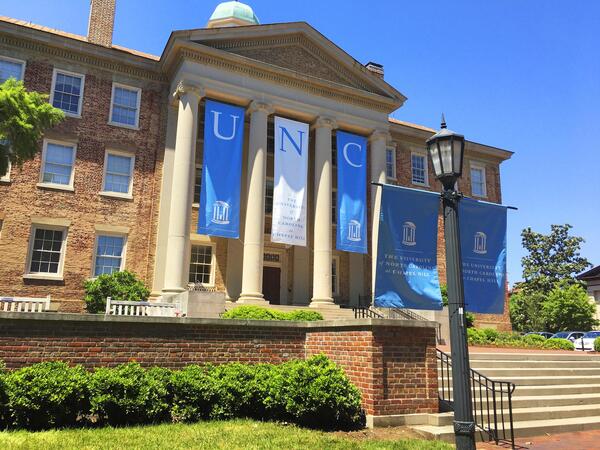
Last month, Peter Hans, president of the University of North Carolina system, casually dropped a bombshell announcement that the system and others were in talks to launch a new accreditor.
“We’ve been having a number of discussions with several other major public university systems, where we’re exploring the idea of creating an accreditor that would offer sound oversight,” Hans said at a UNC system Board of Governors meeting last month, The News & Observer reported.
Since then, no additional details have emerged, though Hans teased an update to come in July.
But public records obtained by Inside Higher Ed show UNC system officials have been quietly engaged in conversations about launching a new accreditor for at least a year, including discussions with unnamed collaborators in Florida, where the effort could be headquartered. UNC officials have also spoken with officials at the U.S. Department of Education, even getting a heads-up on what an April 23 executive order from the Trump administration on accreditation would entail.
Here’s what those documents show.
‘The Florida Project’
In early April, UNC officials appeared ready to tell the world about their plans for a new accreditor that “would be publicly accountable, outcomes-based, and more efficient and effective in its reviews,” according to the draft of a statement that was never publicly released.
“We believe it is past time for the creation of a new accreditor focusedon the unique needs of public colleges and universities,” the statement said. “We have worked collaboratively over the past year to explore and develop such a cross-state partnership.”
Andrew Kelly, a senior adviser to Hans, sent a draft of the statement to other UNC officials. The statement argued that accreditors “wield enormous power, but too often have opaque and counterintuitive governance” and fail to “focus on matters that are significant to students.” He argued in the statement that the current model “creates unnecessary duplication and cost, conflicts with the authority of state governments, and does little to ensure educational quality.”
An unidentified number of state systems of higher education were supposed to sign the statement, according to the draft.
Kelly drafted the statement in response to the Trump administration’s anticipated changes to accreditation, which included streamlining the processes for ED to recognize accreditors and for institutions to switch agencies, among other changes to the system that serves as gatekeeper to federal financial aid.
But the public did not hear about the UNC system’s quiet effort to launch a new accreditor until Hans spoke up at the May board meeting.
Other emails yielded some insights into whom the UNC system might be partnering with.
Daniel Harrison, vice president for academic affairs at the UNC system, sent an email on April 23 to fellow officials recapping a call with the U.S. Department of Education and what could be expected in the coming executive order on accreditation (which was issued shortly after his email).
In that email, Harrison also pointed to potential partners in the accreditation effort.
“An update on the Florida project—we met with the new entities [sic] attorneys and made substantial progress toward determining the legal structure of the new accreditor. It is likely to be a single member Florida nonprofit corp. Florida would be the sole member, but would delegate all delegable powers to a Board of Directors made up of the participating states,” Harrison wrote.
But despite having met with potential partners, UNC considered going its own way.
In a response to Harrison, Hans asked him to convene several system officials involved with the effort to weigh the pros and cons of “joining [a] multi-state coalition” or “forming a NC entity.” Email records obtained by Inside Higher Ed don’t show what the group recommended, but remarks made by Hans at May’s meeting indicate the system opted for the coalition approach.
UNC system officials did not respond to requests for comment from Inside Higher Ed.
System leaders also appear to have discussed the effort with state legislators in private. On May 15, Hans asked senior vice president of government relations Bart Goodson to set up a meeting with Michael Lee, the Senate majority leader in the Republican-dominated Legislature. When Goodson asked about the topic, Hans replied, “accreditation update with good news.”
Lee did not respond to a request for comment from Inside Higher Ed.
Potential Partners?
Like their UNC counterparts, other public systems are staying quiet on the effort.
Inside Higher Ed contacted a dozen public university systems, all in red states, to ask if they are partnering with UNC or others in an effort to launch a new accreditor, or if they participated in such discussions. Only two replied: the Arkansas State University system and the University of Alabama system. Both noted they had not been involved in those accreditation discussions.
The State University System of Florida—which did not reply to media inquiries—is the most likely potential partner, given the details in Harrison’s email and the governor’s recent political fury with accreditors.
In 2022, Florida’s dark-red Legislature passed a law requiring state institutions to switch accreditors regularly. That move came after the Southern Association of Colleges and Schools Commission on Colleges, which accredited all 40 of Florida’s public institutions, inquired about a potential conflict of interest at Florida State University, which was considering Richard Corcoran for its presidency despite his role on the Florida Board of Governors. (He now leads New College of Florida.)
SACS also raised questions about an effort by the University of Florida to prevent professors from testifying against the state in a legal case challenging voting-rights restrictions. (UF later dropped that policy amid a torrent of criticism.) Both incidents occurred in 2021.
Florida governor Ron DeSantis has been a vocal critic of the federal accreditation system.
Joe Raedle/Getty Images
Following the 2022 law, some institutions began the process of switching accreditors,though state officials argued that the Biden administration slowed down that effort and Florida tried unsuccessfully to get a federal judge to rule the current system of accreditation unconstitutional.
Outside of Florida, North Carolina is the only other state with a similar law. In 2023, legislators quietly slipped a provision into a state budget bill that required state institutions to change accreditors every cycle. The law was passed with no debate among North Carolina lawmakers. The change came after UNC clashed with SACS in early 2023 over shared governance.
Florida governor Ron DeSantis did not confirm to Inside Higher Ed whether the state is launching a new accreditor, but recent remarks from the GOP firebrand suggest, albeit vaguely, that something is in the works.
“For too long, academic accreditors have held our colleges and universities hostage,” DeSantis said in an emailed statement. “These accreditation cartels have worked behind the scenes to shape university behavior, embedding ideological concepts like Diversity, Equity, and Exclusion Indoctrination into the accreditation process. If you weren’t meeting politically motivated standards, like enthusiastic participation in DEI, they would hamper your accreditation and access to federal funding. In Florida, we refuse to let academic accreditation cartels hold our colleges and universities hostage to ideology at the expense of academic excellence. Stay tuned.”
Wade Maki, Faculty Assembly chair and a philosophy professor at UNC Greensboro, said he and other faculty members recently met with system officials to share their thoughts on the plan.
“We had a very open conversation with the system office and shared our hopes that we get an accreditor that is independent, that maintains the strong reputation of the UNC system and helps keep the politics out of higher ed and the curriculum, whether that’s from the politicians or the accreditors themselves,” Maki said. “We’ve seen it come from both directions over the years.”
He also thinks the narrow focus of such an accreditor could be a positive.
“My leadership team, the Faculty Assembly Executive Committee and the faculty that we’ve talked to on campuses, we see the potential benefits of trying something like this, of having an accreditor that focuses just on the accrediting of state-supported public institutions,” Maki said.
Outside observers were more critical of the UNC system’s plans.
Accreditation expert Paul Gaston III, an emeritus trustees professor at Kent State University, argued that building an accreditor composed only of public institutions would omit valuable perspectives in review processes. He argued that colleges undergoing accreditation reviews benefit from the diversity of experiences from evaluators working at a broad range of institutions.
“What would be the advantage of, in a sense, separating classes of institutions for accreditation? I think one of the strengths of accreditation has been that it brings a variety of perspectives to the evaluation of a particular institution,” Gaston said.
Then there’s the arduous process of getting a new accrediting agency up and running; gaining federal recognition, which is required, takes years. Although Trump’s executive order on accreditation promised a smoother pathway to recognition for new entrants, it does not supersede federal regulations.
“Becoming federally recognized, typically, is a five-plus-year process,” said Edward Conroy, a senior policy manager at the left-leaning think tank New America. Under current federal regulations, Conroy doesn’t expect the new accreditor to be recognized until 2030 or so.
Conroy also questioned whether the effort to create a new accreditor is about institutional quality assurance or political control.
“Everything Florida has done on accreditation over the past few years appears to be politically and ideologically driven, rather than about what is best for students and ensuring that they go to high-quality institutions and get a good education when they’re paying a lot of money for it and when taxpayers are investing a lot of money in public funding for higher education,” he said.
Conroy worries that state lawmakers in either Florida or North Carolina would require public colleges in their state to be accredited by their new accreditor. That would undermine the current requirement that colleges get to choose their own accreditor.
“It undercuts the principle of the higher education accountability triad, where states, accreditors and the Department of Education are all meant to do different things,” Conroy said. “If you have a state that becomes both, to some degree or another, the accreditor, as well as the state authorizing entity, then we’ve combined two legs of a three-legged stool.”