Tag: Creating

  • Creating a classroom built for success

    Creating a classroom built for success

    Key points:

    For decades, curriculum, pedagogy, and technology have evolved to meet the changing needs of students. But in many schools, the classroom environment itself hasn’t kept pace. Classic layouts that typically feature rows of desks, limited flexibility, and a single focal point can often make it harder for educators to support the dynamic ways students learn today.

    Classrooms are more than places to sit–when curated intentionally, they can become powerful tools for learning. These spaces can either constrain or amplify great teaching. By reimagining how classrooms are designed and used, schools can create environments that foster engagement, reduce stress, and help both teachers and students thrive.

    Designing a classroom for student learning outcomes and well-being

    Many educators naturally draw on their own school experiences when shaping classroom environments, often carrying forward familiar setups that reflect how they once learned. Over time, these classic arrangements have become the norm, even as today’s students benefit from more flexible, adaptable spaces that align with modern teaching and learning needs.

    The challenge is that classic classroom setups don’t always align with the ways students learn and interact today. With technology woven into nearly every aspect of their lives, students are used to engaging in environments that are more dynamic, collaborative, and responsive. Classrooms designed with flexibility in mind can better mirror these experiences, supporting teaching and learning in meaningful ways, even without using technology.

    To truly engage students, the classroom must become an active participant in the learning process. Educational psychologist Loris Malaguzzi famously described the classroom as the “third teacher,” claiming it has just as much influence in a child’s development as parents or educators. With that in mind, teachers should be able to lean on this “teacher” to help keep students engaged and attentive, rather than doing all the heavy lifting themselves.

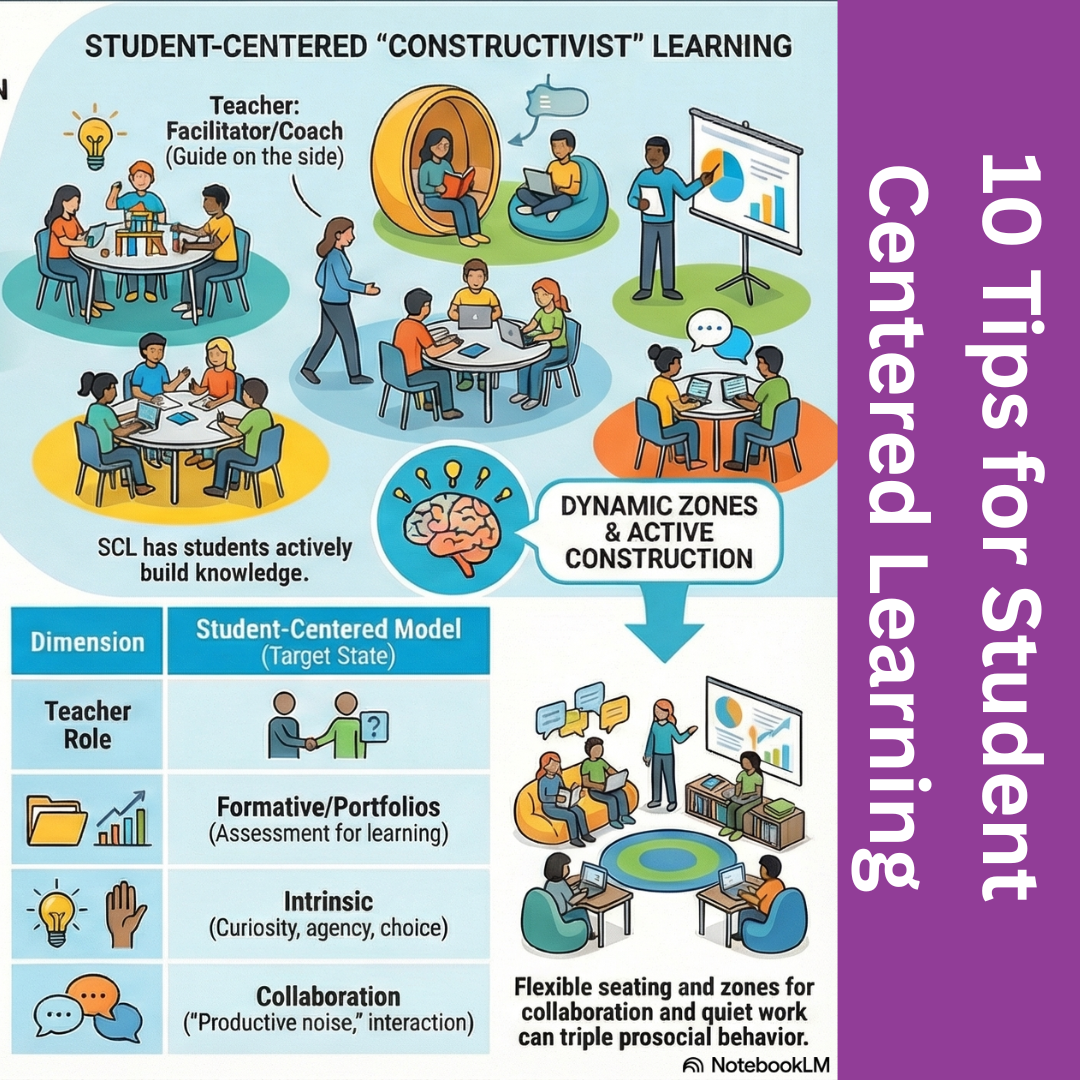
    For example, rows of desks often limit interaction and activity, forcing a singular, passive learning style. Flexible seating, on the other hand, encourages active participation and peer-to-peer learning, allowing students to easily move and reconfigure their learning spaces for group work or individual work time.

    I saw this firsthand when I was a teacher. When I moved into one of my third-grade classrooms, I was met with tables that quickly proved insufficient for the needs of my students. I requested a change, integrating alternative seating options and giving students the freedom to choose where they felt most comfortable learning. The results exceeded my expectations. My students were noticeably more engaged, collaborative, and invested in class discussions and activities. That experience showed me that even the simplest changes to the physical learning environment can have a profound impact on student motivation and learning outcomes.

    Allowing students to select their preferred spot for a given activity or day gives them agency over their learning experience. Students with this choice are more likely to engage in discussions, share ideas, and develop a sense of community. A comfortable and deliberately designed environment can also reduce anxiety and improve focus. This means teachers experience fewer disruptions and less need for intervention, directly alleviating a major source of stress by decreasing the disciplinary actions educators must make to resolve classroom misbehavior. With less disruption, teachers can focus on instruction.

    Supporting teachers’ well-being

    Just as classroom design can directly benefit student outcomes, it can also contribute to teacher well-being. Creating spaces that support collaboration among staff, provide opportunities to reset, and reduce the demands of the job is a tangible first step towards developing a more sustainable environment for educators and can be one factor in reducing turnover.

    Intentional classroom design should balance consistency with teacher voice. Schools don’t need a one-size-fits-all model for every room, but they can establish adaptable design standards for each type of space, such as science labs, elementary classrooms, or collaboration areas. Within those frameworks, teachers should be active partners in shaping how the space works best for their instruction. This approach honors teacher expertise while ensuring that learning environments across the school are both flexible and cohesive.

    Supporting teacher voice and expertise also encourages “early adopters” to try new things. While some teachers may jump at the opportunity to redesign their space, others might be more hesitant. For those teachers, school leaders can help ease these concerns by reinforcing that meaningful change doesn’t require a full-scale overhaul. Even small steps, like rearranging existing furniture or introducing one or two new pieces, can make a space feel refreshed and more responsive to both teaching and learning needs. To support this process, schools can also collaborate with learning environment specialists to help educators identify practical starting points and design solutions tailored to their goals.

    Designing a brighter future for education

    Investing in thoughtfully designed school environments that prioritize teacher well-being isn’t just about creating a more pleasant workplace; it’s a strategic move to build a stronger, more sustainable educational system. By providing teachers with flexible, adaptable, and future-ready classrooms, schools can address issues like stress, burnout, and student disengagement. When educators feel valued and empowered in their spaces, they create a better work environment for themselves and a better learning experience for their students. Ultimately, a supportive, well-designed classroom is an environment that sets both educators and students up for success.

    Latest posts by eSchool Media Contributors (see all)

    Source link

  • Creating a campus where all accents are welcome

    Creating a campus where all accents are welcome

    This blog was kindly authored by Dr Gisela Tomé Lourido (@gisetomelourido.bsky.social), Associate Professor in Sociophonetics at the University of Leeds and Niamh Mullen, Associate Professor in English for Academic Purposes at the University of Leeds.

    ‘All Accents Welcome’ campaign launch

    Everyone has an accent – a way of speaking that reflects different aspects of our identities

    Accent variation is a natural feature of spoken language, shaped by our social, geographical, and cultural backgrounds. This diversity enriches our academic and professional environments by bringing a wider range of perspectives and ways of thinking.

    Despite this, the linguistic diversity of staff and students is typically overlooked in higher education strategies, discourse and practices. Additionally, accent bias – the automatic associations we make based on how someone speaks – is rarely discussed in academic settings.

     Yet, in the UK, 30% of university students report having their accent mocked or criticised in academic contexts. Similarly, 25% of professionals report experiencing accent-related bias in workplace settings. Recent research conducted by the first author and Professor Julia Snell, and reported in an earlier HEPI blog, has shown that these forms of microaggressions can damage university students’ confidence, reduce participation, and affect their sense of belonging and wellbeing.

    At the University of Leeds, we have launched the “All Accents Welcome” campaign: an initiative designed to raise awareness of the importance of accents to individuals’ identities. It highlights how accent bias can affect students’ and colleagues’ experiences and opportunities at university, while promoting the value of the diverse voices that strengthen our community, from all corners of the UK and the world.  

    As one contributor to the campaign put it:

    My accent is an integral part of who I am. It’s like my cultural identity, my roots.

    A campaign amplifying the voices of our community

    At the heart of the campaign is a video featuring staff and students sharing what their accents mean to them, and reflecting on the biases they have encountered. 

    Through the campaign, we present the University’s new Accent Equality Statement, a policy commitment to welcoming and respecting all accents, the statement aligns with broader institutional efforts to address class, race, gender, and other forms of inequality.

    Why accent bias should be on every higher education institutions’s agenda

    In the UK, self-consciousness and anxiety about accent bias are highest during university, more than at any other life stage. Judgements about accents are rarely about how someone speaks; they’re about who is speaking. Accent bias is deeply entangled with perceptions of class, race, nationality, gender, sexuality, and disability. It disproportionately affects students who are already navigating structural barriers, particularly those from working-class, racially minoritised, or multilingual backgrounds.

    Another contributor to the “All Accents Welcome” campaign said: “I thought twice before speaking in class because I thought I would be mocked at just because the way I spoke.” 

    For many students, accent bias adds another layer of complexity to their university experience. It influences how they are heard, how they participate, and how they succeed, not just at university, but in their future careers. While this is fundamentally an equity issue, it also affects key institutional metrics, including student satisfaction, outcomes, continuation, and employability. Yet, it remains under-recognised in most institutional equity and inclusion strategies.

    We believe that tackling accent bias must become a sector-wide priority. That means taking a collaborative, interdisciplinary, and holistic approach to create a cultural change where linguistic diversity is recognised as an asset and mocking, and questioning someone’s accent is de-normalised. In our earlier HEPI blog, we outlined four actionable recommendations for higher education institutions:  

    1. Raise awareness of the value of linguistic diversity and the impact of accent bias in Higher Education. Deliver campaigns, workshops, and talks using real stories, data, and interactive activities.
    2. Embed action to tackle accent bias into policy and practice. Revise institutional policies to include linguistic diversity and accent bias explicitly; incorporate training on accent bias into students and staff induction, and teaching, tutoring, and leadership development; and ensure assessment criteria and feedback are inclusive.
    1. Create report and support routes for students and staff who are the target of linguistic discrimination. Complement these with training staff providing support to students.
    2. Evaluate impact and identify areas for further change to ensure that efforts to tackle accent bias are effective, sustainable, and responsive to their specific contexts.

    From statement to action

    At the University of Leeds there is a growing community of staff and students committed to addressing accent bias and embedding this work into institutional practice. The campaign was co-designed with students, academic and professional services staff, and representatives from Leeds University Union, ensuring it reflects a wide range of lived experiences. It forms part of the work of the University’s institutional working group “Tackling Accent Bias”, which is focused on translating the statement into policy and practice, guided by the recommendations outlined above.

    Join the conversation

    We invite colleagues across the sector to watch our “All Accents Welcome” video and join us in reflecting on how accent bias may be operating in their own institutions. What assumptions do we make based on how someone speaks? How do those assumptions shape our interactions, decisions, and environments?

    Source link

  • Fla. Board of Governors to Vote on Creating New Accreditor

    Fla. Board of Governors to Vote on Creating New Accreditor

    Photo illustration by Justin Morrison/Inside Higher Ed | Joe Raedle/Getty Images | ricul/iStock/Getty Images 

    The governing board of the State University System of Florida is set to vote Friday on whether to form a new accrediting agency focused on public universities, known as the Commission for Public Higher Education. While some accreditation experts say the move could be a positive development, they also worry it may lead to undue political influence in the accreditation process.

    If the vote goes as planned, the Florida governing board will create the proposed agency along with five other public university systems: the University System of Georgia, University of North Carolina system, University of South Carolina, University of Tennessee system and the Texas A&M University system.

    “The launching of a new institutional accreditor is a major undertaking, and CPHE’s Founding University Systems have not undertaken it lightly,” reads the business plan for the Commission for Public Higher Education. “Growing dissatisfaction with current practices among the existing institutional accreditors and the desire for a true system of peer review among public institutions have led to this endeavor.” The plan accuses some existing accreditors of “bureaucratic bloat, delays, and increased costs.”

    University of North Carolina system president Peter Hans dropped the news in May that UNC was in talks with other public university systems to launch a new accrediting agency—an idea Inside Higher Ed discovered they’d been discussing for at least a year. The project has taken on distinct political undertones; last month Florida governor Ron DeSantis announced the effort in a speech largely focused on what he calls “woke ideology.”

    “What we’ve seen develop is an accreditation cartel,” he said in his address. “And the accreditors by and large are all singing from the same sheet of music, and it’s not what the state of Florida wants to see reflected in its universities in many different respects.”

    According to the business plan, the new agency “will laser-focus on student outcomes, streamline accreditation standards, focus on emerging educational models, modernize the accreditation process, maximize efficiency without sacrificing quality, and ensure no imposition of divisive ideological content on institutions.”

    How It Would Work

    The Commission for Public Higher Education would be incorporated as a nonprofit organization in Florida, initially funded by a $4 million appropriation from the Florida State Legislature, according to the business plan. Other involved higher ed systems are expected to cough up similar funds. A board of directors representing each of the founding systems would oversee the new accreditor.

    The goal is to accredit six institutions by next summer and secure Department of Education recognition by June 2028, according to the business plan. (A new accreditor typically has two years to prove it is operating in accordance with federal regulations to receive federal approval.)

    In the meantime, higher ed institutions pursuing accreditation from CPHE can retain their current accreditors, the plan notes. Later, when CPHE gains department recognition, they can adopt CPHE as their primary accreditor.

    Accreditation experts say that the time frame is doable but optimistic if the Department of Education maintains the rigor of its current recognition process for new accreditors.

    “The timeline proposed by Florida seems aggressive since in the past, it usually took the [Education Department] more time to approve new accreditors,” Cynthia Jackson Hammond, president of the Council for Higher Education Accreditation, wrote in a statement to Inside Higher Ed.

    But the Trump administration has shown interest in making it easier for new accreditors to form. President Trump signed an executive order in April that spoke of “recognizing new accreditors” among other reforms.

    Mixed Views

    Jackson Hammond said CHEA isn’t against new accreditors, as long as they go through the standard recognition process and show they’re following federal regulations for ensuring institutions’ quality. But she and her colleagues have qualms about the idea of state-sponsored accrediting bodies like the Commission for Public Higher Education.

    “CHEA does not believe that states are likely to be effective accreditors,” she wrote. “Historically, states have not had the staff, experience, or knowledge necessary to create a higher education accreditor. It is critically important that higher education reflects an impartial and unbiased accrediting review process that is focused on student learning outcomes. To date, there has not been a state that has accomplished this.”

    Robert Shireman, a senior fellow at the Century Foundation, a progressive think tank, worries the structure of the new accrediting agency may make unbiased evaluations more challenging, given the involvement of state policymakers.

    State university systems are “essentially run by the governors and their appointees,” said Shireman, who was a deputy under secretary at ED during the Obama administration. So “it really detracts from the independence of public institutions from political meddling. This feels like it’s part of an effort for closer political control over colleges and that would just embroil them in culture war issues and sort of the political issue of the day.”

    But he doesn’t rule out the potential positives of having an accreditor focused on public universities. He said such an agency could emphasize college access and affordability in ways that accreditors that oversee private colleges don’t.

    As state higher ed systems, “they’re all government actors,” he said. In an ideal scenario, “they can work together [to say], ‘Let’s be affordable. Let’s make sure students get served.’”

    Jamienne Studley, former president of the WASC Senior College and University Commission, also emphasized that agencies that accredit “like-type” institutions can benefit from their similarities—“as long as the federal oversight of agencies is consistent, the standards are solid and their application is rigorous.”

    Source link

  • Steps Toward Creating a More Accessible and Inclusive College Classroom – Faculty Focus

    Steps Toward Creating a More Accessible and Inclusive College Classroom – Faculty Focus

    Source link

  • Steps Toward Creating a More Accessible and Inclusive College Classroom – Faculty Focus

    Steps Toward Creating a More Accessible and Inclusive College Classroom – Faculty Focus

    Source link

  • Creating Human-Centered Workplaces: Takeaways From CUPA-HR’s Spring Conference – CUPA-HR

    Creating Human-Centered Workplaces: Takeaways From CUPA-HR’s Spring Conference – CUPA-HR

    by Christy Williams | May 7, 2025

    At the 2025 CUPA-HR Spring Conference in Seattle, our keynote speakers shared their insights into the future of the higher ed workplace. They encouraged HR practitioners to step boldly into brave leadership, to investigate neuroscience’s insights into human behavior, to embrace advances in artificial intelligence, and to use data to enhance the employee experience.

    But the key message was that innovation should be people-centered and align with HR’s fundamental goal: creating workplaces where people feel safe, valued and free to thrive.

    The Brain Needs to Belong 

    The brain is a social organ, Dr. Jessica Sharp stressed in her opening keynote. Whether or not we’re conscious of it, we’re always searching for connection and belonging — for psychological safety.

    “Our brains need affirmation that we belong. Without it, we don’t feel safe,” Dr. Sharp said.

    Because our brains interpret emotional threats in the same way as physical threats, feeling unsafe at work can provoke a similar feeling to walking alone in a dark parking garage or seeing a snake on a hiking trail. But when we feel a sense of psychological safety and social belonging, our brains shift into connected mode. When we feel safe, we’re more likely to collaborate with our team, be less resistant to change and feel creative.
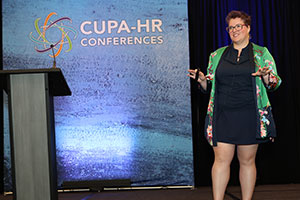

    Dr. Sharp invited higher ed HR to step into the future of work through neuroleadership. Neuroleadership is a model of talent management that understands the connection between the brain’s inner workings and people’s best work.

    Takeaway: The brain can’t be inspired when it’s in survival mode. Prioritize safety and belonging to encourage creativity.

    Further reading: Explore more ways to strengthen resilience and enhance psychological safety.

    AI Is Your Time-Saving HR Assistant

    AI is the future of work, said Jennifer Parker, the assistant director of HR operations at Colorado Community College System. While this may sound intimidating, it’s important to know that AI won’t replace you, but rather free up time and mental energy so that you can focus on strategy and long-term projects.

    Here’s how Parker uses AI to simplify routine HR tasks:

    • As a brainstorming partner. For example, you can say to AI, “help me write my leadership statement.” Provide context about your career to enhance the responses.
    • To write or revise emails. Parker’s communication mode tends to be folksy, so she has ChatGPT rewrite her emails to be more formal in tone.
    • As a software coach. Ask AI to give you step-by-step directions on creating an Excel formula.
    • To develop presentations, trainings and professional development sessions. ChatGPT helped Parker write microsessions for an online civility campaign, create slide decks and a video explaining benefits to employees.
    • As an employee engagement assistant. Tell AI the dynamics of your culture and ask how you can help foster a healthy workplace.
    • As an event planner. Ask AI to create a training calendar or other complex timeline. For events like open enrollment, ask it for an invitation to the health fair or to craft an inspiring message to remind employees to review their benefits.

    AI can also summarize complex information, break down survey results, act as a career coach or problem solver, offer advice, and more. Get creative! But always review what AI generates for accuracy, and make it your own.

    Takeaway: AI can simplify HR’s daily tasks and free up time for strategic thinking.

    Further reading: Read this step-by-step guide to learn how Parker used ChatGPT as her assistant in creating a virtual civility training program.

    Benchmark Your Employee Experience Using CUPA-HR’s Data 

    What does it take to attract top talent to higher ed? CUPA-HR’s new survey — the Benefits, Employee Experience, and Structure Survey — gives higher ed a snapshot of what it takes to be an employer of choice in a competitive employment landscape, explained Melissa Fuesting, associate director of research at CUPA-HR.

    Using the BEES Survey, colleges and universities can benchmark traditional benefits. And now, for the first time, explore data on:

    • Flexible work
    • Professional development
    • Campus and community engagement
    • Hiring metrics
    • Performance reviews
    • Institutional structure (such as where HR is housed)
    • Policies

    The BEES survey also allows you to take a deep dive on these topics. For example, when it comes to flexible work, you can find answers to questions such as: Which employees have the ability to work flexible schedules or flexible hours? Who determines the policies around hybrid and remote work? Which employee groups can be hybrid or remote?

    Takeaway: To enhance your employee value proposition, benchmark your benefits and employee experience using data from CUPA-HR’s new BEES Survey with DataOnDemand.

    Further reading: For more on attracting and retaining talent, check out the results of the 2023 Employee Retention Survey and stay tuned for the results of the 2025 survey coming this fall.

    “Who We Are Is How We Lead” 

    Cheryl Cofield closed this year’s spring conference with a compelling message: “Who we are is how we lead.” In her powerful keynote, Cofield challenged higher ed HR professionals to examine the leadership armor we wear — the protective behaviors that keep us from leaning into vulnerability and courage. Instead of avoiding difficult conversations or striving for unattainable perfection, brave leaders must be willing to get uncomfortable, speak honestly and model the values they profess.

    Drawing from Brené Brown’s research, Cofield identified four key skill sets that support courageous leadership: vulnerability, values, trust and learning. She described how emotional armor — such as perfectionism, detachment, or a need to always be right — gets in the way of connection, inclusion and growth.

    Through self-reflection and practical tools like emotional literacy, empathy and curiosity-based conversation cues, Cofield encouraged attendees to identify their own “call to courage.” She reminded us that courage in leadership is not only a personal practice but a collective force. When one person shows up bravely, others are more likely to do the same.

    Takeaway: Courage is contagious. When leaders remove their armor and lead with vulnerability, they create more inclusive, trusting and human-centered workplaces.

    Further reading: Learn why leadership development is essential in higher ed and how it strengthens engagement, inclusion and institutional resilience.


    Source link

  • Creating learning environments that work for BTEC entrants to higher education

    Creating learning environments that work for BTEC entrants to higher education

    We know that past learning experiences directly correlate to progress and preparedness for higher education study. But are we to accept that the adverse relationship with outcomes for different students’ entry routes is driven by academic performance at university?

    There is evidence that students who enter with vocational qualifications are more likely to drop out or get a lower degree classification because of poorer academic performance. This lack of progression is alarming, and initiatives steered to increase progression opportunities that support better overall performance remain both a challenge and a strategic priority for the university sector. HESA statistics for the 2021–22 academic year show the “dropout rate” for first year students with vocational qualifications continues to increase by one percentage point across the sector year on year.

    Furthermore, there remains a consistent four percentage point awarding gap between those with vocational and those with traditional qualifications. Despite their higher dropout and non-progression rates, students progressing from vocational qualifications represent a significant growing pathway into HE and many who progress, go on to graduate with at least a 2.1.

    A 2022 Nuffield report on the relationship between 16-19 subject, higher education choices and graduate outcomes found “…a weakening of the relationship between entry qualifications and outcomes once comparing individuals with similar module scores.” This implies that educators have a significant part to play in ensuring approaches to setting, measuring and enhancing performance are fair and equitable. Specifically, inclusive assessment design should be central to the educational experience, ensuring all students can fulfil their potential irrespective of their route to HE.

    A very particular set of skills

    Ongoing work on student engagement such as this 2023 framework for inclusive and effective student engagement from QAA, has demonstrated clear benefits from creating communities that build identity and belonging though adopting inclusive approaches, enhancing student engagement, motivation and progression. Applying these principles means recognising that students entering HE from vocational routes like BTECs possess unique skills.

    Through their studies they have developed hands-on learning and real-world application, giving them practical skills directly relevant to their chosen field. Additionally, they engage in self-directed projects and coursework, fostering independence and time management skills essential for managing university workloads. Many vocational courses offer work placements, providing valuable career insights that foster a professional mind-set from day one. Unlike traditional A levels, BTECs are assessed through coursework and practical assessments, helping students develop strong research, critical writing, and project management skills.

    All of the above combines with a wealth of lived experience – BTEC students often come from diverse educational backgrounds – which enhances these students’ adaptability and resilience. Furthermore, the emphasis on practical achievements and continuous assessment fosters a positive mindset and a sense of belonging and community. These skills provide vocational students with a solid foundation for success in HE. So what are we not getting right?

    Like many other universities, we recognise each cohort is unique and a one size fits all approach may not have sustained impact. Learning, teaching, and assessment design should provide an equitable experience for all students regardless of prior learning experiences and route into HE. We have streamlined our approaches, drawing on evidence of what is “working” to enable us to embed efficient and effective approaches to being intentionally inclusive within assessment design.

    Five ways to inclusion

    It’s early days, but we are already seeing improvements in the number of students that are passing all modules first time from a variety of entry routes and through approaches that celebrate and embrace the unique skillsets of all students. Through five interconnected themes we are making steady and sustained progress through exploring inclusive assessment practices and reviewing the narrative of learning.

    Supporting student confidence is foundational to academic success. We have found that developing shared assessment literacies can help students recognise their capabilities and potential. This can directly speak to the unique skillset that students bring from a range of diverse routes: for example, creating Hidden Curriculum Guides that unpack unfamiliar language and concepts, drawing from past experiences to socialises the unknown so that students can feel confident in their understanding and learning journey.

    Embedding effective pedagogical approaches employs a blend of student-centred and humanistic methods to create dynamic and responsive learning environments. These approaches are tailored to meet the specific needs of students. Evidence-based approaches include empowering students to bridge the gap between theoretical knowledge and practical application for life-wide learning and preparedness for the journey ahead. These examples not only integrate effective pedagogical approaches but support a range of skillsets, positioning the educational experience through empathy and compassion in developing supportive transition and orientation interventions and deepening the shared understanding of lived experiences.

    Assessment diversity and timely feedback are crucial. Our commitment to inclusive assessment practices creates space where all students can demonstrate their knowledge and skills effectively. Through co-created integrated approach to inclusive assessment, we have produced a set of inclusive assessment and feedback principles: clear, understood, authentic, robust and personalised.

    Creating a sense of belonging is vital for student engagement and retention. Inclusive classroom environments that celebrate diversity and foster community connections help students feel valued and supported. Harnessing the practice elements will bring a newfound confidence to the forefront of the learning experience. Flipping the classroom, so students have a more meaningful experience creates a sticky campus, and a strong sense of togetherness which particularly suit students that have entered HE via a vocational route. Initiatives such as peer mentoring and collaborative projects have been successful in creating a welcoming and inclusive atmosphere.

    Recognising and valuing the diverse entry backgrounds of students not only enhances learning but also promotes equity and inclusion by drawing on the value of their individual learning experiences to enhance their learning journey. We identified the need for targeted support mechanisms that bolster student confidence during the transition to and through HE. Our emphasis on the importance of diverse pedagogical approaches, inclusive assessment practices, and feedback mechanisms provided solid foundations.

    Learning from programme teams about what works to maximise real-world learning from current practice is essential to building trust. Our five-phase approach provides a scaffolding based on our unique learning journey. The challenge remains for us as a sector to address and share knowledge holistically, which draws from evidence-based practice with the aim of enhancing student outcomes. Working collegiately with the student body, this is both an urgent and important issue to address with the growing number of students joining universities from vocational routes. There is a government push to increase capacity for vocational routes in HE and so if universities are to stay relevant in this space, there is an urgency to find solutions, learning from programme leaders who are passionate and best placed to know students. Together and collaboratively, we can drive forward real intervention with sustained impact, it matters for student success.

    For more about the authors’ work to create inclusive learning environments see the special editions of Innovative practice in higher education and Pedagogy collating evidence shared at our learning and teaching festivals in 2023 and 2024.

    Source link

  • More colleges are creating homeless liaison roles. Here’s why.

    More colleges are creating homeless liaison roles. Here’s why.

    When students at Monroe Community College experience homelessness, they often meet with Nicole Meyer. Since 2023, Meyer has been the homeless liaison at the two-year public institution in Rochester, New York, which is within the State University of New York system. 

    Nearly two years ago, SUNY required each of its 64 colleges to designate a person to serve as homeless liaison on their campuses — part of a nationwide movement to create such a position at higher education institutions. 

    Higher ed institutions and states throughout the U.S. have passed laws and implemented policies over the past decade or so designating homeless liaisons on campuses. The movement has been fueled by a growing recognition that many students experience homelessness during their college years, experts say.

    Around 8% of undergraduates and nearly 5% of graduate students reported experiencing homelessness in a 2020 survey that was published in 2023 from National Center for Education Statistics.

    “There has long been an assumption that if someone was in college, that they had the financial well-being to cover all their expenses,” said Rashida Crutchfield, executive director of the Center for Equitable Higher Education at California State University, Long Beach. “As higher education has learned that [homelessness] is part of the student experience, you’re seeing a lot more responsiveness to our responsibility to address it.”

    Students experiencing homelessness typically don’t have family or friends who have attended college and therefore lack a network to help them navigate the financial aid system, campus life and important resources, said Barbara Duffield, executive director of the nonprofit SchoolHouse Connection. 

    A homeless liaison thus becomes a point person on campus who can connect these students with resources that will help them remain enrolled through graduation, Duffield said. 

    In fact, a lack of housing can hinder students’ ability to focus on their studies, causing them to drop out, Duffield said. Additionally, such students often grapple with mental health issues, a sense of isolation and family-related issues, she said. On top of all that, they often must balance jobs with their classes, she said. 

    In Meyer’s case, by fall 2024 she had worked with 173 Monroe students experiencing housing insecurity or homelessnessroughly 2% of the college’s student population. A disproportionate share of those students are Black, Brown and women, Meyer said. 

    Meyer helps students find sustainable on- or off-campus housing — a challenging task given surging rental costs in Rochester. She works with the financial aid office and other administrators to help the students access scholarships, grants and the college’s emergency funds. 

    In addition, Meyer said she connects with school districts to help prepare high schoolers experiencing homelessness for the transition to college and partners with local organizations to help Monroe students navigate health insurance, transportation, child care and a host of other needs. Essentially, she’s the designated point person for all those students. 

    “I’m a one-stop-shop for basic needs, and housing and security,” said Meyer


    The origins of homeless liaisons

    The homeless liaison role emerged at the higher ed level following the 2007 passage of the federal College Cost Reduction Access Act a bill that increased funding for Pell Grants, made reforms to the financial aid system such as expanding repayment options for borrowers, and gave unaccompanied homeless youth independent student status when applying for financial aid, Duffield said

    That meant youths living in shelters, outside, in cars, in hotels, or on couches could apply for federal financial aid without their parents’ signatures, she said. 

    “This was really important because for so many young people, they are not in touch with their parents, they’re not being supported by their parents, and it’s just barrier after barrier after barrier to getting financial aid,” Duffield said

    At the time, Duffield said, colleges lacked knowledge about unaccompanied homeless youth, as well as training to identify those students and address the barriers they face. 

    Following the 2007 law, Colorado policymakers tried to rectify that knowledge gap by organizing a task force composed of students and higher ed and K-12 administrators. One of the task force’s recommendations called for establishing a single point of contact at every college and university in Colorado, based on a liaison model already used in K-12 districts. 

    Colorado colleges appointed homeless liaisons in 2009, establishing a first-of-its-kind model in the U.S., according to a fact sheet from the state’s education department. 

    Source link

  • Recent Executive Orders and Higher Ed HR’s Role in Creating and Sustaining an Inclusive Campus Community

    Recent Executive Orders and Higher Ed HR’s Role in Creating and Sustaining an Inclusive Campus Community

    by Andy Brantley | January 30, 2025

    In the wake of the recent Executive Orders on DEI, gender identity and immigration, higher ed institutions, like so many other organizations, are assessing the impacts and formulating next steps.

    Amid the inevitable changes that lie ahead, it’s important to remember that the role of HR in creating and sustaining a higher ed workplace that provides access and opportunity for all employees hasn’t changed. The programs, policies, processes and language we use to support this work may need to evolve, but the work and the institutional values it supports remain the same.

    We can still:

    • Promote equitable work and career pathing opportunities and pay for all employees.
    • Cultivate inclusive learning and working communities.
    • Create a workplace culture that embraces respect and civil discourse.
    • Level the playing field for everyone by working to remove bias, reviewing outdated policies, and creating transparency.
    • Reinforce institutional values by ensuring that all employees feel connected and supported.

    However, as we review and evaluate the work we’re doing, we have the opportunity to do so with fresh eyes, reframing it in ways that are both purpose-driven and inclusive. For example:

    • Communities of people with diverse backgrounds and life experiences create opportunities for community members to grow, both personally and professionally. To support a diverse workforce, institutions must explore ways to generate a more diverse applicant pool.
    • Access, opportunity and equitable pay for all employees promote job satisfaction, recruitment and retention. To support access and opportunity, institutions must identify and remove roadblocks to opportunity. To support equity in pay, institutions must ensure their compensation structures support these efforts.
    • A safe and welcoming work environment fosters community and collaboration. To create a work environment that’s welcoming and psychologically safe, institutions must ensure that systems, policies and processes are free from discriminatory practices.

    If you have resources or ideas to share with other CUPA-HR members regarding ways that you and your HR colleagues are refining your approach to creating and sustaining an inclusive campus community, please email them to [email protected]. Your submission will be treated as confidential and, if shared, will be described in terms that will not identify your institution.

    You’re Not Alone

    We know that HR leaders are often caught in the middle as different groups of employees and administrators express strong opinions and feelings regarding changes we must implement. In the coming weeks, CUPA-HR will share guidance and support to help you make changes to programs, policies and procedures and communicate these changes to the campus community.

    We are also hosting webinars focused on the recent Executive Orders, as well as the rollback of the Title IX regulations. And we’ll continue to keep you informed about future Executive Orders and legislation, as well as potential actions we should take as higher education HR leaders.

    The higher ed HR community has proved time and again how strong and resilient it is. Thanks for all the ways you lead and support your organizations, your employees and your CUPA-HR community.


    Source link

  • Connect more: creating the conditions for a more resilient and sustainable HE sector in England

    Connect more: creating the conditions for a more resilient and sustainable HE sector in England

    Despite it being the season of cheer, higher education in England isn’t facing the merriest of Christmases.

    Notwithstanding the recent inflationary uplift to the undergraduate fee cap, the financial headwinds in higher education remain extremely challenging. Somehow, in the spring/summer of next year, the Secretary of State for Education is going to have to set out not only what the government expects from the sector in terms of meeting the core priority areas of access, quality and contribution to economic growth, but how it will deliver on its promise to put the sector on a long-term sustainable financial footing.

    The overall structure of the sector in terms of the total number of providers of higher education and their relationships to each other might arguably be considered a second-order question, subject to the specifics of the government’s plans. But thinking that way would be a mistake.

    The cusp of change

    There are real and present concerns right now about the short term financial stability of a number of providers, with the continued increased risk that a provider exits the market in an unplanned way through liquidation, making the continued absence of a regime for administering distressed providers ever more stark.

    But on a larger scale, if, as some believe, the sector is on the cusp of entering into a new phase of higher education, a much more connected and networked system, tied more closely into regional development agendas, and more oriented to the collective public value that higher education creates, then the thinking needs to start now about how to enable providers to take part in the strategic discussions and scenario plans that can help them to imagine that kind of future, and develop the skills to operate in the new ways that a different HE landscape could require. It is these discussions that need to inform the development of the HE strategy.

    The Office for Students (OfS) has signalled that it considers more structural collaboration to be likely as a response to financial challenge:

    Where necessary, providers will need to prepare for, and deliver in practice, the transformation needed to address the challenges they face. In some cases, this is likely to include looking externally for solutions to secure their financial future, including working with other organisations to reduce costs or identifying potential merger partners or other structural changes.

    Financial challenge may be the backdrop to some of this thinking; it should not be the sole rationale. Looking ahead, the sector would be planning change even if it were in good financial health: preparing for demographic shifts and the challenge of lifelong learning, the rise of AI, and the volatile context for international education and research. Strategic collaboration is rarely an end in itself – it’s nice to work together but ultimately there has to be a clear strategic rationale that two or more providers can realise greater value and hedge more readily against future risks, than each working individually.

    There’s no roadmap

    In the autumn of 2024, Wonkhe and Mills & Reeve convened a number of private and confidential conversations with heads of institution, stakeholders from the sector’s representative bodies, mission groups, and regional networks, Board chairs, and a lender to the sector. We wanted to test the sector’s appetite for structural change; in the first instance assessing providers’ appetite for stepping in to support another provider struggling, but also attitudes to merger and other forms of strategic collaboration short of full merger. Our report, Connect more: creating the conditions for a more resilient and sustainable higher education system in England sets out our full findings and recommendations.

    There is a startling dearth of law and policy around structural collaboration for HE; some issues such as the VAT rules on shared services, are well established, while others are more speculative. What would the regulatory approach be to a “federated” group of HE providers? What are merging providers’ legal responsibilities to students? What data and evidence might providers draw on to inform their planning?

    We found a very similar set of concerns, whether we were discussing a scenario in which a provider is approached by DfE or OfS to acquire another distressed provider, or the wider strategic possibilities afforded by structural collaboration.

    All felt strongly that the driving rationale behind any such structural change – which takes considerable time and effort to achieve – should be strategic, rather than purely financial. Heads of institution could readily imagine the possibilities for widening access to HE, protecting at-risk subjects; boosting research opportunities, and generally realising value through the pooling of expertise, infrastructure and procurement power. The regional devolution and regional economic growth agendas were widely considered to be valued enablers for realising the opportunities for a more networked approach.

    But the hurdles to overcome are also significant. Interviewees gave examples of failed collaboration attempts in other sectors and the negative cultural perceptions attached to measures like mergers. There was a nervousness about competition law and more specifically OfS’ attitude to structural change, the implications for key institutional performance metrics, and a general sense that no quarter would be given in accommodating a period of adjustment following significant structural change. The risks involved were very obvious and immediate, while the benefits were more speculative and would take time to realise.

    Creating conditions

    We have arrived at two broad conclusions: the first being that government and OfS, in tandem with other interested parties such as the Competition and Markets Authority could adopt a number of measures to reduce the risks for providers entering into discussions about strategic collaboration.

    This would not involve steering particular providers or taking a formal view about what forms of collaboration will best serve public policy ends, but would signal a broadly supportive and facilitative attitude on the part of government and the regulator. As one head of institution observed, a positive agenda around the sector’s collaborative activity would be much more galvanising than the continued focus on financial distress.

    The second is that institutions themselves may need to consider their approach to these challenges and think through whether they have the right mix of skills and knowledge within the executive team and on the Board to do scenario planning and strategic thinking around structural change.

    In the last decade, the goal for Boards has been all about making their institution stronger, and more competitive. While that core purpose hasn’t gone away, it could be time to temper it with a closer attention to the ways that working in a more collective way could help higher education prepare itself for whatever the future throws at it.


    This article is published in association with Mills & Reeve. View and download Connect more: creating the conditions for a more resilient and sustainable higher education system in England here.

    Source link