Tag: Crisis

  • Higher Education Leadership in Times of Crisis – Edu Alliance Journal

    Higher Education Leadership in Times of Crisis – Edu Alliance Journal

    First in Leadership Series by Barry Ryan, PhD, JD August 11, 2025

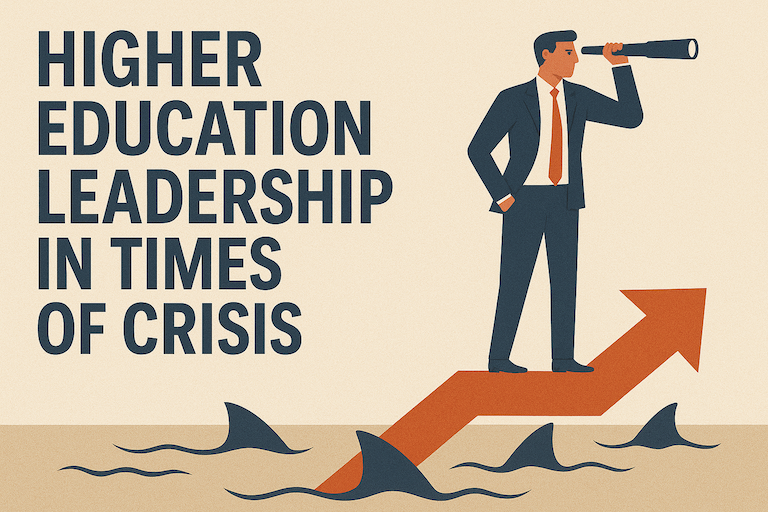
    It is hard to think of a time when higher education was swimming in a pool filled with a greater number of shark-like threats than at present.

    Some of these were predictable (in hindsight), some not so much. Let’s set aside blame, however, on either an institutional level or on a more global basis. The vital thing now is for genuine leaders to help chart courses that will lead higher education, not just to mere survival, but to new and meaningful purposes that will benefit this generation and the next.

    When situations are “normal,” we may be tempted to imagine that we need leadership that can keep the legacy intact, turn the crank, not rock the boat. But normal no longer exists, does it?

    I remember a senior university leader, who admonished me, as I began a new presidency: “everything’s going great—just don’t mess it up” (using slightly more colorful language). One year later, seismic changes in higher ed created an unexpected crisis and necessitated major changes in the institution. Almost everything that had contributed to its prior success turned, overnight, into a liability.

    There is, of course, more than one crisis in which higher ed is being buffeted. The sheer number of colleges and universities that have ceased to exist at all, or have been merged to various extents with others, or are currently teetering on the brink, appears in news stories almost every day. The root causes are legion and often woven together: financial shortfalls, a shrinking number of students, reductions in state and federal support, the disappearance of many international students, families, and prospective students increasingly unable to justify the cost of a degree, the “value” of which is seriously questioned. The list goes on.

    Of the three large “types” of higher education in the United States—public (state) colleges and universities, private not-for-profit colleges and universities, and for-profit entities—the vast majority are struggling in meaningful ways.

    If you find yourself in a leadership role in this age of crisis, what are some key things you can do to keep becoming a better leader and more effectively serve your institution and your colleagues? Here are three suggestions that you may find helpful.

    First, don’t panic.

    And even if you do feel panic welling up inside you, do your best to keep it from becoming obvious. Phil Slott, who was involved in the Dry Idea marketing campaign in the 1980s, seems to have coined a relevant phrase: “Never let them see you sweat.” It just stresses you out more and does little to inspire confidence in those who are looking to you for leadership.

    Once you’ve steadied yourself, the next critical realization is that leadership in crisis cannot be solitary work.

    Second, remember every day, you can’t do this alone.

    A 19th-century lawyer by the name of Abe Lincoln is credited with the adage: “A person who represents himself in court has a fool for a client.” That rings true for any leader who tries to do everything and assumes they have sufficient knowledge (or wisdom or experience or insight) to solve every problem on their own. No one does—no matter how experienced.

    So where do you turn for help? The answer is two-fold: internally and externally. You need to draw on both circles and find confidential, experienced, and reliable counsel.

    Choose very carefully with whom you share the issues internally. Depending on the nature of the problem you’re trying to address, success might well be thwarted if there is a lapse of absolute confidentiality. At the starting point of the process, you need to be able to rely on one other person, or perhaps a very small circle, with which you will be able to expand bit by bit as the timeline moves along.

    There are difficult audiences and stakeholders in the life of an academic institution, and ultimately, all must be included in the process of working through a crisis. The sequencing of sharing information and inviting input, though, must be very carefully structured. If you’re a president, oftentimes the first person you seek is a senior member of the administration—a provost, vice president, or someone in a similar position. At times, it could be the chair of the board or a wise and thoughtful alum. But whoever the person(s) may be, the timing of sharing the situation and seeking input for solutions is everything.

    It’s very important not to neglect external assistance as well. It is all but impossible to generate a sufficient perspective on a crisis from only one (your) vantage point, or even from that of your small, trustworthy group. You’re very likely not the first institution to face these problems, and consulting with trusted external leaders can provide not only perspective but also ideas you may not have thought of on your own.

    Some of these leaders may be in academic institutions, but not necessarily. It is always helpful to have relationships with leaders in other professional fields as well, who may be particularly helpful in providing fresh perspectives and ideas. For example, in my own experience, I’ve found such people in leadership of non-profit organizations or boards, key corporate positions, government at various levels, and experienced friends with whom I served long ago, and could provide input on both my institution’s situation and also my own strengths and weaknesses. In addition, external folks don’t have the same emotional investment as someone internal, so the chances of a more neutral observation point are increased significantly.

    There is a temptation—and often a prudent one—to seek external input from lawyers. There are, of course, a fair number of attorneys and firms with expertise in higher education, which can be a plus. Higher education is a very specialized field, and, frankly, most lawyers have a huge knowledge deficit in terms of the operational realities of a college or university. Their tendency is to think, “Well, I know higher ed—after all, I went to college and law school” (or maybe even taught a course or two). Beware the well-intentioned lawyer who does not have directly relevant practice experience.

    This, of course, does not at all preclude seeking competent legal advice for certain aspects of the problems you may be facing. For example, most institutions have or will need counsel in employment matters. Even if not the center of your challenge, these issues will likely arise as part of the need for a solution to your challenges. If it appears you will have to make difficult financial decisions that might impact faculty or staff, you should seek excellent employment counsel much sooner rather than later. With students, Title IX requirements, for example, may dictate the need for specialized counsel, as might certain types of accreditation issues.

    Third, leadership is not “one size fits all.”

    Every leader has different abilities and personalities. Even though many institutions experience similar types of crises, the circumstances of each call for a bespoke solution.

    However, some very important leadership characteristics can increase the probability of success in these situations. In part two, we’ll examine these and how to cultivate them.


    Dr. Barry Ryan invested the first half of his career in higher education in teaching and the second half in administration. During that same timeframe, he pursued a parallel career in law and legal education. He​ served as the Supreme Court Fellow in the chambers of Chief Justice William H. Rehnquist and is a​ member of numerous federal and state bars. He has been appointed as the president of five universities and provost and chief of staff at three others. Among the institutions he served have been state, private non-profit, and private for-profit universities. Included in his academic experience were two terms as a Commissioner of the regional accreditor WASC​ (WSCUC).

    He has been appointed as the president of five universities and provost and chief of staff at three others. Among the institutions he served have been state, private non-profit, and private for-profit universities. Included in his academic experience were two terms as a Commissioner of the regional accreditor WASC​ (WSCUC). Dr. Ryan has led institutions through mergers, acquisitions, and affiliations that have preserved academic​ quality, expanded access, and strengthened long-term viability. His leadership has been marked by​ transparency, shared governance, and a commitment to stakeholder engagement at every stage of these processes.

    He earned his Ph.D. from the University of California, Santa Barbara, his J.D. from the University of​ California, Berkeley, and his Dipl.GB in international business from the University of Oxford.


    Edu Alliance Journal provides expert commentary and practical insights on U.S. and international higher education, focusing on innovation, policy, and institutional growth. Published by Edu Alliance, a consulting firm with offices in the United States and the United Arab Emirates, the Journal reflects the organization’s mission to help colleges, universities, and educational organizations achieve sustainable success through strategic partnerships, market intelligence, and program development.

    Source link

  • Northwestern University Announces Major Staff Cuts Amid Federal Funding Crisis

    Northwestern University Announces Major Staff Cuts Amid Federal Funding Crisis

    Northwestern University is moving forward with plans to eliminate more than 400 staff positions as it confronts significant financial challenges stemming from a $790 million federal funding freeze implemented by the Trump administration, according to multiple sources familiar with internal discussions.

    The cuts will affect staff across multiple schools within the university system, including the Weinberg College of Arts and Sciences and the McCormick School of Engineering. Administrators have begun notifying affected departments of the impending workforce reductions.

    In a university-wide communication released earlier this week, Northwestern leadership confirmed the elimination of approximately 425 positions throughout the institution. Half of these positions are currently vacant, while the remainder will result in actual job losses. The reductions are expected to decrease the university’s staff-related budget by roughly 5 percent.

    The administration characterized the decision as necessary to address what they termed a “significant budget gap” that cannot be resolved without reducing personnel expenses, which represent 56 percent of Northwestern’s total annual operating costs.

    Prior to implementing the staff reductions, university leadership directed schools and administrative units to approach the cuts strategically, with instructions to “think strategically about how to minimize the impacts to their units, our workforce, students, and the University.”


    Source link

  • Intl students not behind rent crisis: RBA – Campus Review

    Intl students not behind rent crisis: RBA – Campus Review

    A Reserve Bank of Australia (RBA) analysis has found the post-pandemic international student boom only marginally drove up the price of rent and inflation.

    Please login below to view content or subscribe now.

    Membership Login

    Source link

  • Welcome to Mississippi Child Care Crisis – The 74

    Welcome to Mississippi Child Care Crisis – The 74


    Get stories like this delivered straight to your inbox. Sign up for The 74 Newsletter

    Child care worries have been made worse this summer by federal cuts and depleting pandemic funds, and they aren’t expected to ease by the first day of school. While their kids might have gotten a rest, parents reported longer commutes and newfound stress.

    A dozen parents from across the state told Mississippi Today about summer child care plans for their toddlers and elementary school-aged children. They shared a mix of anxiety about finding care and frustration with existing options.

    Parents have had more reasons to be anxious about those options this summer than in previous ones. A loss of federally funded summer programming for youth, added fees for day care tuition and the loss of vouchers to subsidize tuition costs have changed the landscape of child care.

    Shequite Johnson poses with newborn Noah on a work trip in Jackson, Miss., on Feb. 12, 2025. (Shequite Johnson)

    For Shequite Johnson, a professor at Mississippi Valley State University, it has meant driving 45 minutes in the opposite direction of her job for day care.

    “I’ve had to leave my 13-year-old with my 4-year-old,” she said. “And you’re put in a situation where you have to make these decisions. Some are even leaving their babies at home by themselves for five hours and checking on them during lunch hour.”

    She had to pull her 4-year-old boy from a day care in her hometown because of excessive fees. She was charged a $20 late fee at pickup, a $100 registration fee for each of her two boys, and a $150 supplies fee that was announced in June on top of the $135 weekly fee.

    The Mississippi Department of Human Services recently announced a cutback on vouchers that subsidize child care costs. Without Johnson’s child care voucher, her nearby options were limited to a city-run program in an unsafe neighborhood and three programs in aging facilities.

    Delta Health Alliance runs free and reduced summer programming for elementary-aged children. But Johnson makes more than the income cut-off.

    “It’s a crisis right now in Mississippi,” said Carol Burnett, executive director of Mississippi Low-Income Child Care Initiative. “The lack of affordable child care prevents employers from keeping their workforce. And yet the state of Mississippi wants people to go back to work.”

    “Parents are having to make choices. And none of them are good,” she added.

    The Child Care Initiative operates a program that connects single moms with higher-paying jobs and covers the costs of child care during the transition. The organization is also advocating for the Mississippi Department of Human Services to spend some of the $156 million in unspent Temporary Assistance for Needy Families on Mississippi’s Child Care Payment Program.

    The Child Care Development Fund, which nationally supports these voucher state programs, relied on pandemic-era funding that ran out in September. The Department of Human Services asked the Legislature for $40 million to continue serving the same number of families – but received $15 million.

    In April, the department put a hold on renewals for child care vouchers except for deployed military parents, parents who are TANF recipients, foster children guardians, teen parents, parents of special needs children and homeless parents. As a result, 9,000 parents lost child care assistance.

    The department will keep the hold until the number of enrollees drops to 27,000 or its budget goes below $12 million in monthly costs. As of Friday, it had no further update but said it will have an announcement in the next couple of weeks.

    Using TANF funds unspent from past years regardless of whether they were allocated for child care assistance is prohibited, according to federal guidance. However, the TANF state office can use the leftover funds to form a direct payment program. Ohio and Texas enacted this policy.

    U.S. Department of Health and Human Services regional manager Eric Blanchette shared this idea with Mississippi Department of Human Services Early Childhood Director Chad Allgood, according to an email obtained as part of a records request filed by Mississippi Today into communication regarding TANF funds. As of Friday, there were no plans to enact a similar policy in Mississippi.

    A second rent

    Monica Ford pays nearly $1,600 in monthly child care costs for three kids. She works as a Shipt delivery driver in addition to her day job as a Magnolia Guaranty Life Insurance Co. auditor. She, her husband and their children recently had to move in with his parents.

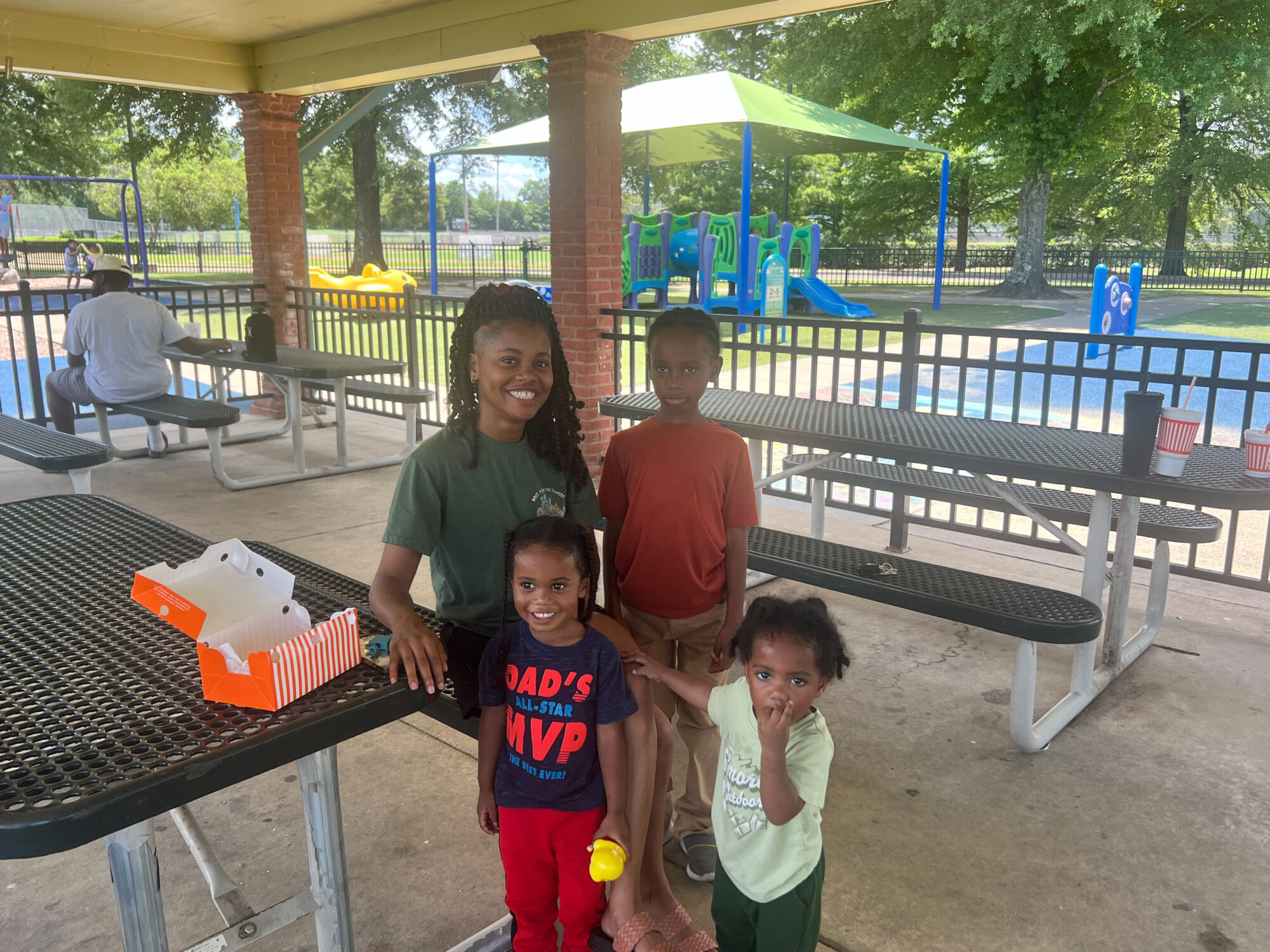
    Monica Ford poses with children Tahir, 7, Kian, 4, Nuri, 1, at Freedom Ridge Park in Ridgeland, Miss., July 19, 2025. (Monica Ford)

    “It’s more than I’ve paid in rent,” she said. “It’s why I live with my family now.”

    She uses a Jackson day care that charges $10 per minute for late pickup. The fees must be paid by the next morning.

    Nearly all of the single mothers interviewed said they take on extra work to cover the rising costs of child care in their area. It’s extra work that sees them spending less time with their children.

    Ashley Wilson’s child care voucher wasn’t renewed in the spring. She works 55 hours a week at a bingo hall and at Sonic Drive-In.

    “We don’t get help. That’s what I don’t understand,” said Wilson, an Indianola parent.

    Her preferred day care option in Indianola charged $185 per week and $20 late fees, which Wilson could not afford. Her sister was able to afford monthly costs because of an arrangement with an Angel – a benefactor who helps local families with tuition at day care providers.

    Wilson tried other day cares in town. Several were in dangerous neighborhoods with staff that left milk bottles to spoil. Her toddler came home wet some afternoons and with cuts another. She gets help from family when she can.

    Whitney Harper lost her child care voucher in April. She is lucky when a relative is willing to watch her 2-year old. Lately, she has considered hiring a sitter off care.com, a website that connects parents with local babysitters. In Jackson, where she lives, the hourly rate is $14 per hour.

    Most of the day cares in the Jackson metro area charge between $150 and $250 per week, which is more than she can afford as a sales associate at Home Depot.

    “It has been harder this year. They won’t work around my schedule, but I need the job,” she said of her employer.

    ‘This is the worst I have seen it’

    Day care centers are left on the brink when families lose child care vouchers. Making up the lost revenue has meant higher tuition and fees for some centers and reaching out to private donors for others.

    “These are small businesses,” Burnette said. “The big story in child care is how much it costs to run it. It requires adequate public investment.”

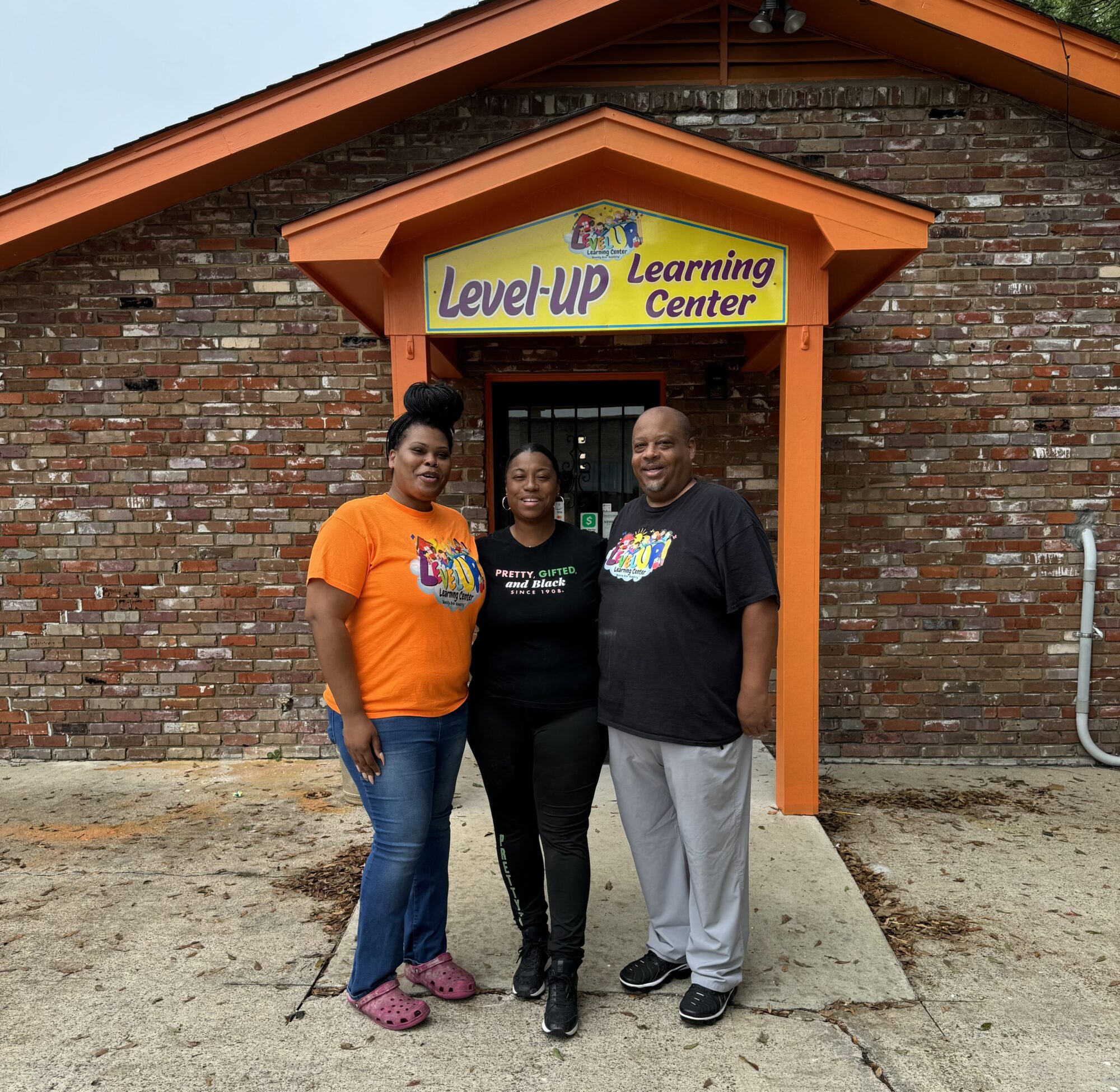
    Level-Up Learning Center leadership team poses in front of their Greenville, Miss., location on July 26, 2024. Left to right are Chief Operating Officer Adrienne Walker, CEO Kaysie Burton and COO/Athletic Director Kwame Malik Barnes. (Level Up Learning Center)

    This week, Level Up Learning Center owner and CEO Kaysie Burton visited Greenville’s Walmart, seeking to persuade the manager to sponsor his employees’ child care tuition. She submitted two grant applications and is working on at least three others. Burton’s business survived flooding and relocation. But the latest voucher cutback could shut her banner-adorned doors to the community

    At Level Up Learning Center, 75% of parents rely on child care vouchers. In the last three months, 20 Learning Center parents have lost their child care vouchers yet most have stayed. Burton has a policy of not turning parents away if they are willing to contribute a portion of the weekly rate. She has not increased her tuition or instituted punishing fees.

    But making up the lost revenue can be a challenge. Since the cutback, she has let seven teachers go, or roughly a third of her staff.

    “We’re down to skin and bones right now,” Burton said. “I am willing to take anybody that is willing to come partner with us and help us help parents so that their kids can keep coming in.”

    When Burton started her business during the COVID-19 pandemic, she saw the need in the Mississippi Delta for affordable, quality child care. She remains committed to helping prepare a future generation of Greenville leadership.

    “We’re in the thick of it with our parents,” Burton said. “And we all just need help and we need prayer.”

    SunShine Daycare owner Barbara Thompson has greeted each parent at the door since she started babysitting neighbors’ kids in her living room. The former banker has long had a passion for raising neighborhood children regardless of their parents’ status or income. She raised her seven siblings when her mother died when Thompson was 12.

    But for the first time in 30 years of running a business in Greenville, Thompson is losing families by the dozen as well as longtime staff. She has leaned heavily on prayer and has reached out to state representatives for help. She fears more departures and the downsizing of her business.

    In the last two months, 12 parents pulled their kids from SunShine. She will have to let three teachers go as a result.

    “We won’t have any children if this continues,” Thompson said.

    She regularly informs parents of the child care voucher waitlist and of the process for renewals. Besides caring for children, Thompson advises many young parents in her community. She noticed that state agencies communicate primarily through email, which a lot of her parents don’t check regularly.

    Children who leave her stoop festooned with cartoon characters can face hours alone without parental supervision. Some children will sit and watch television with their grandparents. For Thompson, child care is about raising children to be “productive citizens.” The youngest years are some of the most important, she stressed.

    “They didn’t take it from us,” Thompson said. “They took from the children. That’s the world’s future.”

    Waitlisted

    Vennesha Price is waitlisted at nearly every day care in Cleveland, where she lives. She’s been on some of the lists for eight months.

    “If you haven’t been a resident for five years and you haven’t navigated the waiting list for five years, it’s harder to find a spot,” she said.

    She found it difficult to both have a productive work day and watch her elementary-aged children. Eventually, she found a day care that was 40 minutes away. She wakes up an hour earlier to make the commute in time before work.

    “I’m a single mother so it’s very difficult,” Price said. “After my grandmother went on to the Lord, it became a struggle trying to get to the day care in time.”

    She started factoring late fees into her monthly budget. She’s also including the gas money needed for the extra legs of her commute. Her child care costs doubled for June and July.

    “It’s almost like private school tuition now,” she said.

    This article first appeared on Mississippi Today and is republished here under a Creative Commons Attribution-NoDerivatives 4.0 International License.


    Get stories like these delivered straight to your inbox. Sign up for The 74 Newsletter
    Source link

  • Senator Murray Blocks Trump Education Nominee as Funding Crisis Deepens

    Senator Murray Blocks Trump Education Nominee as Funding Crisis Deepens

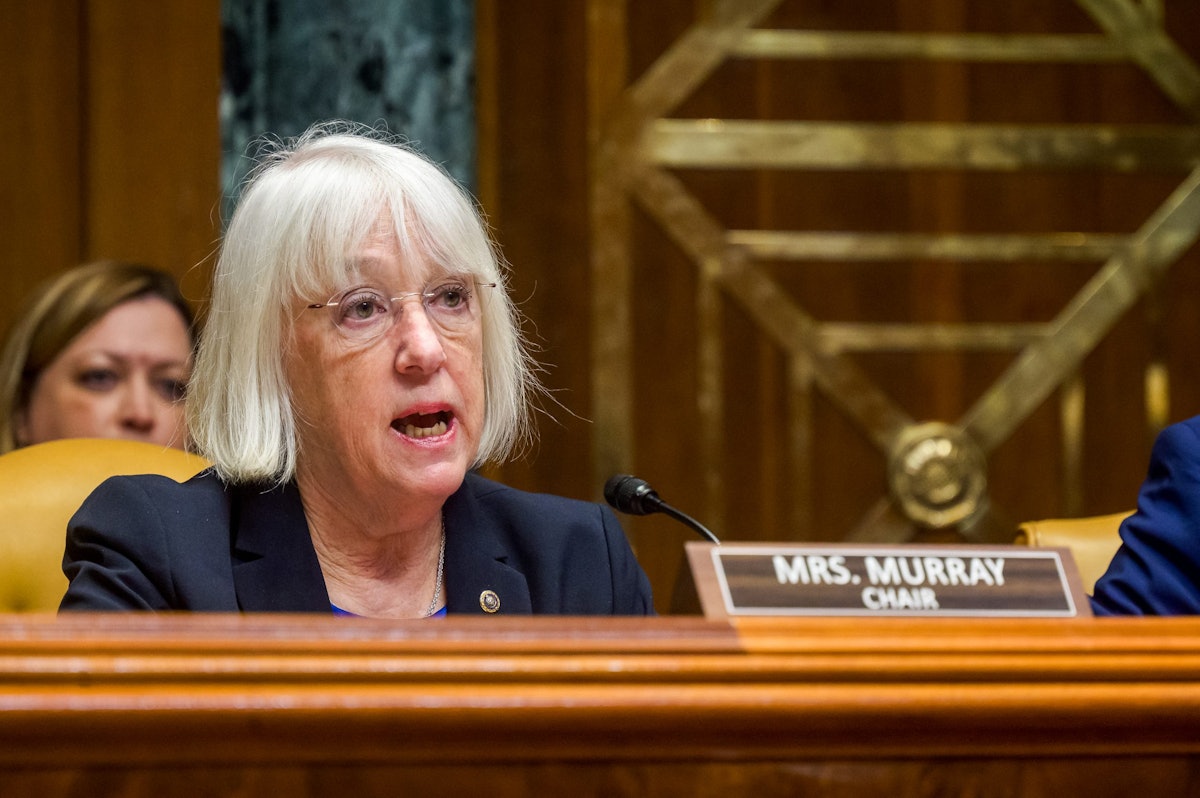
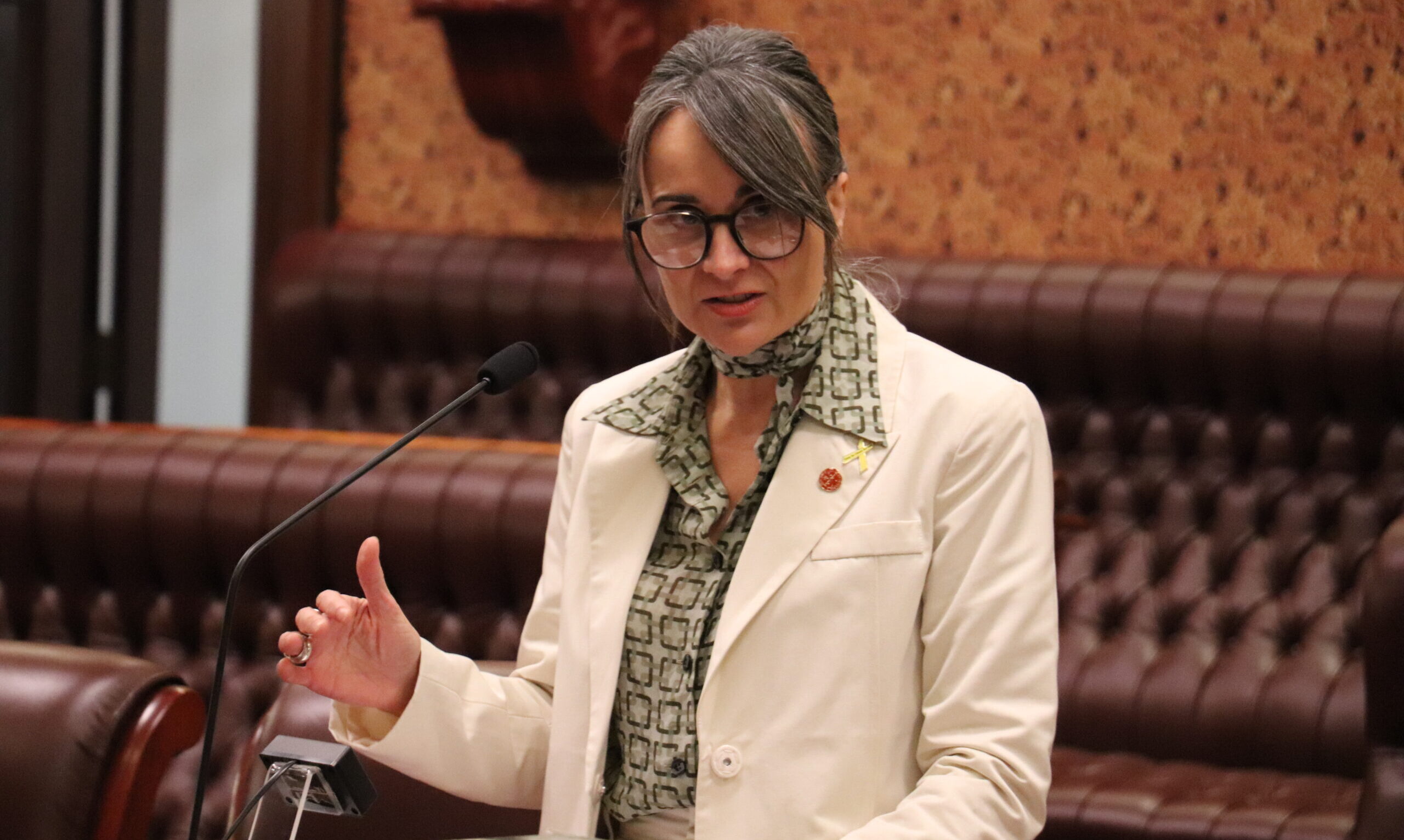
    U.S. Senator Patty Murray U.S. Senator Patty Murray (D-WA) has blocked the fast-track consideration of Mary Christina Riley, President Trump’s nominee to serve as Assistant Secretary for Legislation and Congressional Affairs at the Department of Education, as the administration continues to withhold nearly $7 billion in funding for K-12 schools and adult education programs nationwide.

    The move by Murray, Vice Chair of the Senate Appropriations Committee, forces Riley’s nomination to undergo full committee review rather than skipping directly to Senate floor consideration. The action comes just weeks before the new school year begins, with school districts across the country scrambling to address massive budget shortfalls created by the Trump administration’s funding freeze.

    “As schools nationwide scramble to figure out how many teachers they need to lay off and afterschool programs warn parents to make back up plans—all because President Trump is blocking over $6 billion in education funding he himself signed into law—there is no reason for any Department of Education nominee to skip committee consideration and get fast-tracked for confirmation,” Murray said in a statement.

    The senator’s parliamentary maneuver reflects growing Democratic frustration with the Trump administration’s decision to withhold funding that was previously approved by Congress. The administration notified states on July 1—the traditional deadline for fund distribution—that it was placing the money under review “given the change in Administrations.”

    The funding freeze affects six critical federal education programs that support teacher professional development, English language learning, after-school programs, and services for migrant children. The largest portion consists of $2.2 billion for Supporting Effective Instruction State Grants, which fund professional development and activities to improve teacher effectiveness.

    Twenty-four states and the District of Columbia have already filed a lawsuit against the Trump administration over the frozen funds, with California Attorney General Rob Bonta calling the move one with “no rhyme or reason” that came “abruptly” just weeks before the school year begins.

    The consequences are being felt immediately across the education landscape. The Afterschool Alliance warned that without the funds, “we will quickly see more children and youth unsupervised and at risk, more academic failures, more hungry kids, more chronic absenteeism, higher dropout rates, more parents forced out of their jobs, and a less STEM-ready and successful workforce.”

    The Trump administration’s Office of Management and Budget, led by Russell Vought, has suggested the funding freeze is part of an investigation into whether money has been used for what it calls a “radical leftwing agenda,” including scholarships for undocumented students or teachings on LGBTQ topics.

    Murray rejected these justifications, arguing that the administration has provided no clear explanation for the delay and no timeline for when funding might be released. Even some Republican senators have criticized the move, with Senator Susan Collins (R-Maine) telling Education Week she “strongly oppose[s] the administration’s decision to pause the delivery of education formula grant funding.”

    The funding freeze represents part of a broader Trump administration effort to reshape federal education policy. The administration’s proposed fiscal year 2026 budget would eliminate all six of the grant programs currently under review, as part of a 23 percent cut to domestic spending.

    Murray, a former teacher and longtime education advocate, has been a vocal critic of the administration’s education policies. She has previously blasted Trump’s plans to dismantle the Department of Education, calling the idea “terrible” and arguing that “Trump and Musk don’t know what it’s like to count on their local public school having the resources to get their kids the education they deserve.”

    The affected programs serve some of the nation’s most vulnerable student populations, including:

    • Supporting Effective Instruction State Grants (Title II-A) for teacher professional development
    • 21st Century Community Learning Centers (Title IV-B) for after-school programs
    • Student Support and Academic Enrichment Grants (Title IV-A) for STEM education and school mental health
    • English Language Acquisition (Title III-A) for English language learners
    • Migrant Education (Title I-C) for children of migrant workers
    • Adult Basic and Literacy Education State Grants for adult education programs.


    Source link

  • Capitalism and Culture, Their Connection in Crisis Now (Richard Wolff with Henry Giroux)

    Capitalism and Culture, Their Connection in Crisis Now (Richard Wolff with Henry Giroux)

    On this week’s episode of Economic Update, Professor Wolff provides updates on Medicare advantage and “pre-authorization” as a way to reduce Medicare payments, liberals and radicals split over Mamdani, Trump’s current budget further deepens the inequality of wealth across the US, and Mexico attends the BRICS meeting in Rio de Janeiro. In the second part of today’s show, Professor Wolff interviews Professor Henry Giroux from McMaster University, Canada, on capitalism, culture, and fascism in the U.S. today.

    Source link

  • The crisis in the youth sector is a big problem for universities

    The crisis in the youth sector is a big problem for universities

    It is hard for universities to see beyond their own sector crisis right now, but the crisis facing the youth sector today will be the problem of universities tomorrow.

    The youth sector in the UK greatly contributes towards supporting students and graduates of the future, but it is currently under threat and the deepest impact will come for those young people who face the highest barriers to accessing higher education.

    The youth sector engages young people to develop their critical skills for life, including how to build relationships with peers; resilience and developing social and emotional skills; and how to integrate into a community. Many within the higher education sector will recognise these as areas which students and graduates are also struggling with.

    At a time where universities are being called upon to widen access for young people, the reality is young people are facing narrower opportunities than ever. The challenge for widening participation teams will be multifaceted, including supporting attainment raising in schools; tackling entrenched views from schools and families of expectations of what their children can achieve; and providing the support needed for widening participation students to progress well once in higher education.

    So how can the higher education sector help ensure that the challenges the youth sector are facing today don’t become a nightmare for widening participation teams to tackle in the future?

    What is happening in the youth sector?

    The youth sector includes large organisations such as UK Youth, Scouts and Girlguiding, to smaller grassroots organisations who run clubs and activities in and out of schools and community centres across the country.

    There are many similarities between the crises facing the higher education sector and that of the youth sector. Much like universities, the youth sector has faced years of substantial defunding. A YMCA England and Wales report on The state of funding for youth services found that “local authority expenditure on youth services has fallen 73% in England and 27% in Wales since 2010-11” which “represents a real-term cut of £1.2bn to youth services between 2010-11 to 2023-24 in England, and £16.6m in Wales.”

    At the same time as these cuts, the rate of young people who are NEET (not in education, employment or training) is growing, with 13.2 per cent of 16-24 year olds reported as NEET in 2024, and 15.6 per cent of 18-24 year olds NEET. Both figures have increased compared to previous years, particularly in young men. These young people need support and youth services are increasingly unable to provide it.

    Organisations and charities who have been supporting the youth sector are closing at a rapid rate. The National Citizen Service (NCS), a national youth social action programme which has been running since 2009, has been cut by the Labour Government. Student Hubs, the social action charity I worked with which supported students to engage in social and environmental action, has closed. YMCA George Williams College, an organisation which supported the youth sector to improve monitoring, evaluation and impact of their activities closed on 31 March 2025 to the shock of many across the youth sector.

    Whilst the Government’s National Youth Strategy announced in November 2024 is welcome, it will not fix years of systematic underfunding of youth sector services.

    How will this crisis impact universities?

    David Kernohan’s analysis of the UCAS 2025 application figures shows that applications are down, with only applicants from the most advantaged quintile, IMD quintile 5, having improved. We are in the midst of what could be a big decline in the rate of students coming from disadvantaged backgrounds entering higher education, despite the transformative opportunities it provides.

    This comes at a time where there is greater expectation by the government and the regulator for universities to be proactive in supporting students’ and young people’s skills, learning and access to opportunity. In February the Office for Students announced successful providers in their latest funding round to deliver projects which tackle Equality of Opportunity Risk Register areas. The register supports universities to consider barriers in the student life cycle and how they might mitigate against these.

    Seeing the range of projects which have been awarded funding, it is clear that universities are being pushed to go further in imagining what their role is in shaping the lives of the students they engage, and it starts significantly earlier than freshers’ week. This funding shows that more emphasis is being put on universities to address barriers to participation by the Office for Students, and with the youth sector in crisis, this may need to become even wider if universities are to fulfil their access missions.

    Thankfully, there are actions universities can take now which will make a difference both to young people and widening participation teams.

    Tackling the problems together

    The youth sector cannot afford to wait. If universities want to be ready to meet the challenges of tomorrow, they need to build strong collaborative relationships with organisations already situated in communities whilst they are still here. Partnership with the youth sector offers an opportunity to enhance university strategic activity whilst making genuine social and economic impact.

    Universities could be doing more to provide expertise on monitoring and evaluation of youth activities, enhancing quality of local activities, and conducting research to support future outcomes. There’s an opportunity for universities to learn from these partnerships too, particularly because the youth sector has a range of expertise which is highly applicable to the work the sector is doing in broadening their widening participation and civic strategies. These partnerships will sometimes be informal and sometimes they might be formalised through knowledge exchange programmes like student consultancy.

    Students can play a big role in linking universities and youth services. Research conducted by the National Youth Agency in 2024 found “that fewer than seven per cent of respondents to a national survey of youth workers are under 26 years old”. There is a desperate need for youth workers and particularly under-30s to support the sector. Student Hubs’ legacy resources detail the approach we took to supporting students to volunteer in local schools, libraries and community centres to provide free support to young people as part of place-based programmes with universities.

    Universities and students’ unions have spaces they are looking to commercialise, whilst also trying to give students jobs on campus. Universities and students’ unions could work collaboratively with community groups to use spaces on campus, provide student work through staffing them, and in turn support young people and families to access campus facilities.

    The time is now

    One of the hallmarks of a crisis is communities coming together to meet challenges head on, and universities shouldn’t wait to be invited. Trust will need to be built and relationships take time to forge.

    The best time to start is now. Universities should mobilise whilst there is still a youth sector left to support, or the void left by the lack of youth services means universities’ involvement in young people’s lives is going to become even larger.

    Source link

  • The identity crisis of teaching and learning innovation

    The identity crisis of teaching and learning innovation

    Universities love to talk about innovation. Pedagogical innovation is framed as a necessity in an era of rapid change, yet those expected to enact it – academics – are caught in an identity crisis.

    In our research on post-pandemic pedagogical innovation, we found that the decision to engage with or resist innovation is not just about workload, resources, or institutional strategy. It’s about identity – who academics see themselves as, how they are valued within their institutions, and what risks they perceive in stepping beyond the status quo.

    Academics are asked to be both risk-taking pedagogical entrepreneurs and compliant employees within increasingly bureaucratic, metric-driven institutions. This paradox creates what we call the moral wiggle room of innovation – a space where educators justify disengagement, not necessarily because they oppose change, but because their institutional environment does not meaningfully reward it.

    The paradox of pedagogical innovation

    During the pandemic, universities celebrated those who embraced new digital tools, hybrid learning, and flexible teaching formats. “Necessity breeds innovation” became the dominant narrative. Yet, as the crisis has subsided, many of these same institutions have reverted to rigid processes, managerial oversight, and bureaucratic hurdles, making innovation feel like an uphill battle.

    On paper, universities support innovation. Education strategies abound with commitments to “transformative learning experiences” and “sector-leading digital education.” However, in practice, academics face competing pressures – expectations to drive innovation while being weighed down by institutional inertia.

    The challenge is not just about introducing innovation but sustaining it in ways that foster long-term change. While institutions may advocate for pedagogical innovation, the reality for many educators is a system that does not provide the necessary time, support, or recognition to make such innovation a viable, sustained effort.

    The result? Many feel disillusioned. As one academic in our research put it:

    I definitely think there’s a drive to be more innovative, but it feels like a marketized approach. It’s not tangible – I can’t say, ‘Oh, they’re really supporting me to be more innovative.’ There’s no clear pathway, no structured process.
    Academic at a post-92 university

    For some, engaging in pedagogical innovation is a source of professional fulfilment. For others, it is a career gamble. Whether academics choose to innovate or resist depends largely on how their identity aligns with institutional structures, career incentives, and personal values.

    Three identity tensions shaping pedagogical innovation

    Regulated versus self-directed identity Institutions shape identity through expectations: teaching excellence frameworks, fellowship accreditations, and workload models dictate what “counts” in an academic career. Yet, many educators see their professional identity as self-driven – rooted in disciplinary expertise and a commitment to students. When institutional definitions of innovation clash with personal motivations, resistance emerges.

    As one participant put it:

    When you’re (personally) at the forefront of classroom innovation…you’re constantly looking outwards for ideas. Within the institution, there isn’t really anyone I can go to and say, ‘What are you doing differently?’ It’s more about stumbling upon people rather than having a proactive approach to being innovative. I think there’s a drive for PI, but it feels like a marketised approach.
    Academic at a post-92 university

    For some, innovation is an extension of their identity as educators; for others, it is a compliance exercise – an expectation imposed from above rather than a meaningful pursuit.

    This tension is explored in Wonkhe’s discussion of institutional silos, which highlights how universities often create structures that inadvertently restrict collaboration and cross-disciplinary innovation, making it harder for educators to engage with meaningful change.

    Risk versus reward in academic careers Engaging in pedagogical innovation takes time and effort. For those on teaching and scholarship contracts, it is often an expectation. For research and scholarship colleagues, it is rarely a career priority.

    Despite strategic commitments to pedagogical innovation, career incentives in many institutions still favour traditional research outputs over pedagogical experimentation. The opportunity cost is real – why invest in something that holds little weight in promotions or workload models?

    As one academic reflected:

    I prioritise what has immediate impact. Another teaching award isn’t a priority. Another publication directly benefits my CV.

    Senior leader at a Russell Group university

    Until pedagogical I is properly recognised in career progression, it will remain a secondary priority for many. As explored on Wonkhe here, the question is not just whether innovation happens but whether institutions create environments that allow it to spread. Without clear incentives, pedagogical innovation remains the domain of the few rather than an embedded part of academic practice.

    Autonomy versus bureaucracy Academics value autonomy. It is one of the biggest predictors of job satisfaction in higher education. Yet pedagogical innovation is often entangled in institutional bureaucracy (perceived or real) through slow approval processes, administrative hurdles, and performance monitoring.

    The pandemic showed that universities can be agile. But many educators now feel that flexibility has been replaced by managerialism, stifling creativity.

    I’ve had people in my office almost crying at the amount of paperwork just to get an innovation through. People get the message: don’t bother.

    Senior leader at a Russell Group university

    To counteract this, as one educator put it:

    It’s better to ask forgiveness afterwards than ask permission beforehand.

    Senior leader at a Russell Group university

    This kind of strategic rule-bending highlights the frustration many educators feel – a desire to innovate constrained by institutional red tape.

    Mark Andrews, in a Wonkhe article here, argues that institutions need to focus on making education work rather than simply implementing digital tools for their own sake. The same logic applies to pedagogical innovation – if the focus is solely on regulation, innovation will always struggle to take root.

    Beyond the rhetoric: what needs to change

    If universities want sustained innovation, they must address these identity tensions. Pedagogical innovation needs to be rewarded in promotions, supported through streamlined processes, and recognised as legitimate academic work – not an optional extra.

    This issue of curriculum transformation was explored on Wonkhe here, raising the critical question of how universities can move beyond rhetoric and make change a reality.

    The post-pandemic university is at a crossroads. Will pedagogical innovation be institutionalised in meaningful ways, or will it remain a talking point rather than a transformation? Academics are already navigating an identity crisis – caught between structural constraints, career incentives, and their own motivations. Universities must decide whether to ease that tension or allow it to widen.

    Source link

  • From crisis to community: engaging students in post-pandemic classrooms

    From crisis to community: engaging students in post-pandemic classrooms

    School and other learning environments are often a safe place for students who have difficult home lives.

    I know, I was one of those students. I take that knowledge into every classroom that I enter, and my understanding of student engagement and student experience are woven into my pedagogy of care and teaching to transgress.

    I cannot, (and do not wish to!) separate my lived experience from my teaching. As someone who dropped out of the university that I now work at, I do have an interesting insight into building community and belonging into the curriculum.

    As I wrote here with Lisa Anderson, we require a radical shift in how we consider the needs of students. I want every student in my classroom to experience it as a safe and welcoming space.

    These are not buzzwords or trends, it is how I ensure that students are able to learn – I want them to be in the room. Teaching is a relational activity that requires commitment, experience, honing our craft and being willing to adapt.

    The university sector is not in a good place, and as committed as I am to my research, it is teaching that brings me joy and new ideas every single time I enter the classroom. When we teach to transgress, it is for us as much as it is for the students.

    The classroom reminds me of what is possible. Engaging strongly with the literature of the UK’s leading emergency and disaster planner, Lucy Easthope, I recognise the education will be impacted forever by the pandemic, and I want to play my part in the recovery.

    Crime, justice and the sex industry

    I lead the largest optional final year module in my department, with 215 registered students, based on my 23 years’ experience of the sex industry. It was a community of care that got me here, with colleagues from around the country (and globe!) sharing material and ideas with me when I launched this module in 2020. Collaboration and teaching go hand-in-hand and we must allow time for this.

    The module is underpinned by my nonlinear pedagogy which I write about here. The design empowers students to have control over the direction and pace of their learning. All content is uploaded to our virtual learning environment Canvas in week one. There are weekly recorded lecture summaries, and 2-hour weekly workshops.

    The content also includes a comprehensive library reading list, weekly reading folders, watch folder and collaborative tools.

    This year the module is celebrating its fifth birthday and the student engagement is better than ever before. Here are some things that I have learned and that I am reflecting on.

    A welcoming classroom and learning names

    Where possible, I always enter the classroom ten minutes before class begins (this is definitely not always possible in a large and busy campus with extreme demands on estates and our time) to provide a prepared and calm setting for students to arrive. This is also helpful for me as a neurodiverse teacher.

    I like to greet students as they arrive, and learn names wherever possible (photo class lists are your friend).This sets the tone for our warm and welcoming teaching community. It demonstrates the way in which we will invite peers to contribute and talk through the content. It may seem a small thing, but it makes a huge difference to teaching and learning.

    Front-loaded prep

    As a dyslexic I need to be prepared. This is a large module, and a busy teaching load. I spend the weeks before semester begins frontloading my prep so that I am ready to go. This involved re-recording the summary E lectures, updating workshop materials, sheets, reading folders, module guides, etc.

    Visitors to my office are surprised to see a row of 12 piles along the floor- with each week’s content printed out, highlighted, and ready to go. I am always very grateful once semester starts that I took the time to do this. It creates a calm tone to classes that students explicitly comment on.

    Lesson plans

    This year I went old-school in multiple ways, including buying a hardback lesson planner, in which I mapped out the learning objectives for every workshop – mapping against learning outcomes for the module.

    Physically mapping these out, with prompts, links to the readings and case studies, was something that students positively picked up on. This also ensured adaptability and that I was reflecting upon and updating my material. Students need calm and expert guidance; experienced teachers are key.

    Workbooks

    Acting on student feedback from the previous year, I designed a workbook that students can print out or use digitally. Students always make a lot of notes on this module, and the workbook helps them with organising those thoughts. In class, I was very pleased to see rows of pink workbooks looking back at me.

    The workbook also includes space for questions, and learners can bring this to my student support hours. I have been learning a lot from school teachers, and recognising how much extra structure students need post-pandemic.

    Learning through tempo

    I made an active decision this year to experiment with the tempo of each workshop class, with differences even between some workshop groups. This was in response to student feedback who wanted some slower sessions in order to read in class, and more time to talk with their groups/peers.

    This was music to my ears (pun absolutely intended) and it made me reflect on the pace and rhythm of my classes. I am a high-energy teacher and I like to pack a lot into classes, but stripping (pun not intended!) some of this back to create quieter time (for class reading) and slower sessions with more time for groups to talk, has been a game-changer. Students actively requesting some slower workshops so they could read together in class, was amazing to witness. Students reacted overwhelmingly positively to my ability to respond and adapt.

    Learning through play

    It is interesting in this post-disaster period of the pandemic to witness students enjoying, and requesting, playful activities in class. As I argue here, we need to build community into the curriculum to boost attendance.

    Poster paper and felt tip pens might have attracted horrified faces a few years ago and a low uptake, but this year, every single “play” activity that I have offered has been taken up by almost every student. I always offer a range of engagement tools, with non-verbal options such as our collaborative google doc, padlet, and other online tools, and I offer the option for sheets, paper, pens etc.

    A welcoming, hospitable classroom where students know they are being considered, pays dividends in engagement and mutual respect. Once students feel safe and able to take risks, no matter how low-stakes, they open up, and engage in difficult and complex debates.

    One group activity looked at sexual entertainment venue closures using five different pieces of coloured card to map out key findings from two different journal articles, identify and apply concepts from earlier weeks in the module, examples of venue closures, and examples of campaign group discourse.

    A “fun” activity that involves deep critical thinking and the ability to successfully weave together multiple forms of evidence to formulate a convincing argument. I then took a photo of the giant map we all created across the module. Every single student wanted to take part; students are actively seeking community and togetherness within the classroom.

    As Treasa Kearney and I argue here, campus should be a treasured space that offers valuable connections to students.

    The activity with foam stickers, which I thought students would resist, was the most popular activity of the semester (after the guided walk, below). Through the mechanism of light-hearted play, students successfully navigated a tricky and sensitive topic examining the harms, dangers and exploitation associated with online sex work. We ended up with students stickering their laptops, phones, their workbooks, and themselves! We cannot forget that these are all students of the pandemic, they missed out on so many opportunities to interact with peers. They are embracing every opportunity to connect with each other within timetabled sessions.

    Guided walk

    Another activity on the module (and the one that students most favourably comment on) is our guided walk of sexual entertainment venues in Liverpool city centre. I provide online material for accessibility purposes recognising that not all students can walk around the city, or may not wish to.

    For students who attend, we map out the city in terms of gendered harm and risk, and I give a lecture inside of a sexual entertainment venue that opens exclusively for our class. This brings the Policing and Crime Act 2009 to life, and gives students a unique insight into what the key texts are discussing. It is also very much a community building exercise, with a large proportion of our module cohort in attendance. Learning outside of the classroom is very important for student engagement.

    Scaffolding learning

    I intentionally choose to layer texts: curating texts of various complexity, using tools such as padlet. Students choose what texts to access based on their own areas of interests and confidence, as they progressively build up skill and academic knowledge of the area. This ensures that the module is accessible to all students, with learners challenged at a point which feels appropriate for them.

    It also means that students always have supported content to work with. In week ten, we looked at the media, and we returned to a key text from week eight, to apply three media myths from a journal article to three documentary clips. Using worksheets, the students demonstrated a sophisticated ability to apply a criminological concept to media sources.

    Responding to ongoing feedback

    Building a rapport with students through modelling a pedagogy of care and inclusion, equips students with the ability to provide feedback throughout the semester. Students appreciate the wealth of resources available from the beginning of semester, but others may feel overwhelmed with choice.

    In rapid response to student feedback, I started to provide recommended readings in addition to the large selection. Students appreciated this speedy closing of the feedback loop, and being valued co-producers of the module approach. The student feedback for the module was the best yet.

    Accessible assessment as the default position

    With growing numbers of students experiencing health issues, it is good practice to think of accessibility as the default position, not an additional bolt-on. I am in favour of different modes of assessment that students can choose from, or developing an assessment that can be approached in different ways. I have written here about my letter assessment, inspired by the work of Katie Tonkiss. Students often feel worried about “academic writing”, and this assessment allows students to use the first person, and to use a more colloquial writing tone if desired. The students develop a nuanced, convincing and influential writing style, with the ability to hold conflicting and competing harms in tension.

    Ultimately, it is about remembering that teaching is a huge privilege and blessing. We get to have an impact on so many people and play a part in shaping ideas and innovations of the future. I will never lose the gratitude for getting to do this job and remembering where I come from.

    Source link

  • Practical Lessons for Leaders in Crisis (opinion)

    Practical Lessons for Leaders in Crisis (opinion)

    Crises are an inevitable part of leadership, challenging the resilience of both leaders and institutions. In these moments, leaders must make tough decisions under immense pressure, and how we respond can shape the outcome of the crisis and the legacy we leave behind. It’s not just about surviving the storm but also about learning from it, adapting and coming out stronger on the other side.

    The lessons shared in this essay provide practical guidance to help higher education leaders face crises with clarity and purpose, from fostering open communication to prioritizing the well-being of your team. These insights reflect hard-earned experiences and are grounded in the values that carry us forward, even when the path feels uncertain.

    Be the Buffalo

    Have you heard the story of the buffalo? When a storm approaches, many animals instinctively run away from the storm. But because storms move swiftly, by running away, they can prolong their exposure when the storm catches up to them. Buffalo, however, face storms head-on, running into them instead of away from them, minimizing their time in adversity.

    In crisis leadership, this means confronting the situation directly often resolves it faster and builds resilience. Sometimes, that means intentionally thinking about what is happening, giving yourself time to process it and trying to accept the reality. Avoid the temptation to ignore problems or hope they dissipate on their own. Acknowledge reality, process the pain and release its grip on your focus. Facing a crisis with courage and clarity accelerates recovery and strengthens leadership.

    Keep the End in Mind

    From the moment the crisis begins, envision what recovery looks like. Protect your institution and team while safeguarding critical relationships. This mindset helps you pivot from managing the immediate challenges to laying the groundwork for a return to normalcy and stability. Avoid impulsive decisions that can have long-term consequences.

    Equally important is how you support your team, particularly those who are on the front lines of the crisis, feeling its weight acutely. By keeping the end in mind, you can better prioritize your team’s well-being. For instance, ensure they have the resources, communication and guidance they need to navigate the storm. Protect them from unnecessary fallout by taking on more external pressure when possible. A team that feels supported and valued during a crisis will emerge better and more unified in its aftermath.

    Also stay mindful of your future self—the leader who will look back on this period and assess the outcomes and the approach. Treat every interaction carefully, knowing that future collaboration often depends on how you conduct yourself during difficult times.

    Do the Next Right Thing

    In a crisis, the path forward often feels murky and overwhelming and the pressure to anticipate every possible scenario can be paralyzing. Simplify your focus: Break the challenge into manageable steps and identify the next critical decision. For instance, in a financial crisis, the next right thing might be to prioritize cost-cutting measures. Ask, “What is the next right thing?” and then focus on that.

    In other words, break the challenge into manageable steps and identify the next critical decision. Not every decision carries the same weight; some choices will matter more than others in the short term. Taking a moment to identify what requires immediate action versus what can wait is essential. Trust your instincts and lean on your values.

    Remember, no single decision will end a crisis, but a series of thoughtful, well-executed actions can. By consistently doing the next right thing, you’ll build momentum, foster confidence and guide your institution toward recovery.

    Rise Above the Fray

    Crises test your composure. When you’re down and out and your back is against the wall, it is natural to want to fight back—to stand up for yourself or defend your organization. While the instinct to protect or retaliate can be strong, rising above the fray—staying calm, measured and professional—reflects well on you and your organization. Your actions during a crisis set the tone for your team and how external stakeholders perceive your leadership. By maintaining your composure, you can instill a sense of control and confidence in your team and stakeholders.

    During a crisis, emotions often run high and others may act in ways that disappoint or frustrate you. These moments are as much a reflection of their character as they are a test of your own. Respond with integrity and intention, ensuring actions align with your values. Anchor yourself fairly and professionally, leading by example. How you act in these moments defines your leadership and shapes your legacy.

    Seek Help Early

    No leader faces a crisis alone. When a storm comes, take a moment to think, “Who might be able to help me?” Asking for help from legal counsel, crisis communication experts or trusted advisers is essential. These professionals offer critical perspectives and solutions. By involving them early, you give yourself and your team the advantage of informed, strategic guidance.

    Equally important is leaning on your network and reaching out to colleagues who have faced similar challenges for their lessons learned, moral support and practical insights to help you navigate the complexity of the crisis. Asking for help is a strength, not a weakness, and ensures you emerge from the crisis with relationships and trust intact.

    Rethink Public Relations in the Age of Social Media

    There was a time when saying “no comment” or ignoring a media inquiry was the worst kind of public relations. Traditional public relations strategies may not apply in today’s social media–driven world. Not every media inquiry or rumor warrants a response. Prioritize credible sources and local media relationships critical to your institution’s reputation.

    Avoid the trap of engaging with nonconstructive voices. Strategic silence can sometimes be the best action, allowing your focus to remain on the broader recovery effort.

    Support the Core and Reassure the Whole

    Crises often pressure a core team—typically leadership and crisis managers. Support these individuals with clear communication, resources and guidance. A supported core team can act decisively and confidently, which is essential for effective crisis management.

    At the same time, safeguard your broader community—your students, employees and other stakeholders—by shielding them from unnecessary distractions, allowing them to stay focused on the institution’s vision and mission. Clear, empathetic communication reassures stakeholders and sustains trust, morale and well-being.

    This Too Shall Pass—Find the Lessons

    Crises feel all-encompassing at the moment—when you’re in the thick of it, it is easy to think life will never be the same again—but they are temporary. Remind yourself that leadership and life will return to normal.

    Once the storm passes, reflect on the experience. Adversity shapes us, often in ways we don’t immediately recognize. What lessons has this crisis taught you about leadership, resilience and institutional dynamics? Growth frequently emerges from adversity, preparing you for future challenges.

    Take Care of Yourself

    When a crisis hits, dealing with that crisis becomes your sole focus. Self-care during a crisis is both essential and challenging. Your capacity to lead diminishes without rest, nutrition and mental reprieve. Prioritize habits that sustain you while giving yourself grace. Some things—like a full inbox or a missed task—can wait.

    Strong habits built before crises ensure you have the reserves needed for long-term endurance. Leadership, like endurance, depends on maintaining your strength for the long haul.

    Manage Stakeholders Thoughtfully and Lead With Humility

    Crises reshuffle priorities; stakeholder needs will inevitably shift. Identify the most impacted and influential, tailoring communication to meet their needs. Internal stakeholders often need reassurance, while external groups may require clarity, particularly when misinformation or media scrutiny complicates the narrative.

    Crises also remind us of our fallibility. Adopt humility and seek diverse perspectives to uncover blind spots and improve decision-making. Leading with humility signals strength, not weakness. It demonstrates that you value thoughtful, intentional leadership over impulsive reactions and earns the trust and respect of those you serve.

    Final Thoughts

    Crisis leadership is both a test and a teacher. The lessons it imparts— about resilience, humility and strategic focus—are hard-earned but invaluable. By embracing these principles, leaders can survive crises and emerge more self-aware and better prepared for future challenges.

    Janet N. Spriggs, Ed.D., is president of Forsyth Technical Community College in North Carolina. Paula Dibley, Ed.D., is chief officer of student success and strategic innovation at Forsyth Technical Community College.

    Source link