Tag: Crusade

  • Texas Drops ABA Oversight of Lawyers Amid Anti-DEI Crusade

    Texas Drops ABA Oversight of Lawyers Amid Anti-DEI Crusade

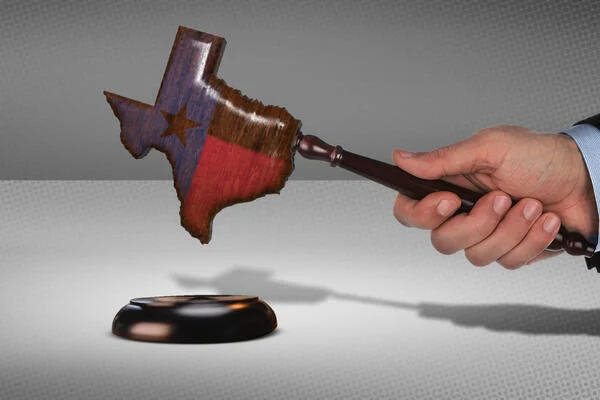
    For the first time in 43 years, lawyers who want to practice in Texas will no longer be required to hold a degree from a law school accredited by the American Bar Association, the Texas Supreme Court decided last week.

    While the ABA is “continuing to work with the Texas Supreme Court—and all other state supreme courts and bar admitting authorities—to help preserve the portability of law school degrees throughout the country,” the policy “reinforces the authority that the Supreme Court of Texas has always had over the licensure of JD graduates,” Jenn Rosato Perea, managing director of the ABA’s accrediting arm, wrote in an email to Inside Higher Ed.

    Since 1983, Texas has ceded some of that authority to the ABA, whose Section of Legal Education and Admissions to the Bar accredits the majority of law schools in the United States. Most other states have similar ABA oversight in place; it became a popular move in the 1980s because law was becoming increasingly national business. Widespread adoption of ABA accreditation as a licensure standard offered more uniformity and has made it easier for lawyers to practice in multiple states.

    The new Texas policy comes amid the broader crackdown on higher education accreditors by the Trump administration and its allies, and specifically on the ABA, which has become a target of the Republican-led anti-DEI crusade in recent years. Indeed, the ABA suspended its diversity, equity and inclusion standards last year. Now Texas has become the first state to say it will no longer rely on the accreditor to help to set law licensure standards.

    “[The Court] intends to provide stability, certainty, and flexibility to currently approved law schools by guaranteeing ongoing approval to schools that satisfy a set of simple, objective, and ideologically neutral criteria (such as bar exam passage rate) using metrics no more onerous than those currently required by the ABA,” read a Jan. 6 order signed by all nine justices of the Texas Supreme Court. “[It] does not intend to impose additional accreditation, compliance, or administrative burdens on currently approved law schools.”

    While the policy likely won’t change much in the short term, critics say it invites the creation of alternative law school accreditors, which could make it harder for lawyers to move their practice across state lines.

    Republican-controlled Florida, Ohio and Tennessee are weighing similar measures.

    “This could be the beginning of the end of the ABA as the accreditor of choice for law schools nationally,” Peter Lake, a law professor at Stetson College of Law’s Center for Excellence in Higher Education Law and Policy, told Inside Higher Ed. “It’s a little too early to call the game, but this is a significant step toward a goal the Trump administration and many states want to see happen.”

    Part of that goal involves asserting more control over higher education accreditors.

    In April, Trump issued an executive order directing the Department of Education to suspend or terminate the federal recognition of accreditors found “to engage in unlawful discrimination in accreditation-related activity under the guise of ‘diversity, equity, and inclusion’ initiatives.” It specifically called for an investigation of the ABA and the Liaison Committee on Medical Education, which accredits medical schools. In June, six states—Florida, Georgia, North Carolina, South Carolina, Tennessee and Texas—announced the launch of a new regional accreditor, the Commission for Public Higher Education; at the time, Florida governor Ron DeSantis described it as part of an effort to root out “woke ideology” in higher education and break up the “accreditation cartel.”

    The federal government made adjacent arguments in supporting the Texas Supreme Court’s plan to minimize the ABA’s oversight of legal education, also announced last April. In December, the Federal Trade Commission submitted a public comment letter in support of the policy, accusing the ABA of having a “monopoly on the accreditation of American law schools” and of imposing “rigid and costly requirements” mandating “every law school follow an expensive, elitist model of legal education.”

    Texas Open to ABA Alternative

    While the Texas court stopped short of establishing a new law school accreditor, it acknowledged that it might in the future consider “returning to greater reliance on a multistate accrediting entity other than the ABA should a suitable entity become available,” according to the final version of the policy.

    Lake said that could happen eventually, especially if other states decide to follow Texas and ditch the ABA’s oversight. “This is an open invitation to form a [new law school–accrediting] organization,” he said. “And I suspect that whatever group forms will probably be a little more aligned with the Trump administration’s goals and ideas.”

    Educators and experts believe such a move will only impede the goals of legal education and practice.

    “ABA accreditation provides a nationally recognized framework for quality assurance and transparency; portability of licensure through recognition of ABA accreditation by all 50 states, which is critical for graduates’ career flexibility; consumer protections and public accountability through disclosure standards; and a baseline of educational quality that correlates with higher bar passage rates and better employment outcomes,” the deans of eight of the state’s 10 ABA-accredited law schools wrote in a letter to the Texas Supreme Court in June.

    The dean of South Texas College of Law Houston was among those that objected to minimizing the ABA’s oversight of law licenses in the state.

    JHVEPhoto/iStock/Getty Images

    A degree from an ABA-accredited law school is generally required to pursue a career as a lawyer, said Oren R. Griffin, a law professor at the University of Tulsa College of Law.

    “ABA accreditation is a national stamp of approval,” he said. “Law schools may differ on what they prioritize, such as curriculum or clinics they offer, but the standards have identified some basic requirements that allow all law schools to operate at an efficient, effective level.”

    And even if a state says it will license lawyers who didn’t graduate from an ABA-accredited law school, graduates from such institutions may still face limited opportunities.

    “Law schools have been very well served by these standards,“ Griffin said. “If other states were to follow suit and begin to not require ABA accreditation as a national standard, you could end up with some real disparities or differences among the 50 states, which could increase the complexities for students who are graduating and want to be able to practice in multiple states.”

    Regardless of the Texas Supreme Court’s new policy, law schools won’t likely abandon ABA accreditation anytime soon, said Austen L. Parrish, dean of the University of California, Irvine, School of Law and president of the Association of American Law Schools.

    “For example, a school like the University of Texas—where about 40 percent of students come from out of state and some 30 percent of graduates are placed out of state—cannot afford to not be ABA accredited. And I suspect that’s true for all of the ABA-accredited schools,” he said, adding that any school that eventually gives up ABA accreditation would be charting “a very dangerous path.”

    Students who are not held to the ABA’s national accreditation standards are less likely to receive a quality legal education, Parrish said—a result long demonstrated by the poor outcomes at California’s handful of non-ABA-accredited law schools, which have high attrition and low bar-passage rates, he added.

    “The unraveling of the national accreditation system would be really harmful to students and law schools,” Parrish said. “We’re in a world where schools need to recruit from all over and students end up practicing all over. To have a school that doesn’t do that makes them less attractive to students and more likely to create some of the problems at some of the unaccredited schools in California.”

    And even if Texas and other states do band together to form their own law school accreditor, rivaling the ABA’s influence would be a challenge.

    First, “it’s very difficult to set up an accrediting body and takes quite a bit of money,” Parrish said. “They could set up a regional accreditor, but it’s not necessarily clear who will see that as sufficient for licensing eligibility, which means the schools in those states will still have to go with ABA accreditation … I’m skeptical that more progressive states are going to buy into something that’s blatantly political.”

    For now, he interprets the Texas order as a placeholder.

    “There probably won’t be many changes right now,” he said, “other than keeping the pressure on the ABA, because [Texas] has signaled a willingness to move to a different approach, though it’s not clear what that is right now.”
    Source link

  • Colleges May Lose State Dept. Partnership in Anti-DEI Crusade

    Colleges May Lose State Dept. Partnership in Anti-DEI Crusade

    Drew Angerer/AFP/Getty Images | Lance King, Mario Tama and Justin Sullivan/Getty Images | Liz Albro Photography/iStock/Getty Images

    The State Department’s Diplomacy Lab program says it enables students to work on real policy issues, benefitting both their careers and American foreign policy through their research and perspectives. It’s meant to “broaden the State Department’s research base in response to a proliferation of complex global challenges,” according to the program website.

    But now the Trump administration’s domestic policy fight against diversity, equity and inclusion could upend this partnership between the State Department and universities. The Guardian reported last week that the department is planning to suspend 38 institutions from the program, effective Jan. 1, because they had what the department dubbed a “clear DEI hiring policy.” It’s unclear how the department defines that phrase or how it determined these institutions have such policies.

    On Tuesday, The Guardian—citing what it called an unfinalized “internal memo and spreadsheet”—published the list of institutions that State Department plans to kick out, keep in or add to the program. A State Department spokesperson didn’t confirm or deny the list to Inside Higher Ed or provide an interview, but sent an email reiterating the administration’s anti-DEI stance.

    “The Trump Administration is very clear about its stance on DEI,” the unnamed spokesperson wrote. “The State Department is reviewing all programs to ensure that they are in line with the President’s agenda.”

    The institutions to be ousted, per The Guardian’s list, range from selective institutions such as Northeastern, Stanford and Yale universities to relatively small institutions including Colorado College, Gettysburg College and Monmouth University. The 10 universities to be added include Gallaudet University, which specializes in educating deaf and hard-of-hearing students, Liberty University, a conservative Christian institution, and the St. Louis and Kansas City campuses of the University of Missouri system. In all, the list shows plans for 76 institutions.

    The shakeup appears to be yet another consequence of the Trump administration’s now nearly year-long campaign to pressure universities to end alleged affirmative action programs or policies. The day after his inauguration, Trump signed an executive order mandating an end to “illegal DEI” and calling for restoring “merit-based opportunity.” But Trump’s order didn’t define DEI.

    Through cutting off federal research funding and other blunt means, the administration has tried to push universities to end alleged DEI practices. A few have settled with the administration to restore funding; Columbia University agreed this summer to pay a $221 million fine and to not, among other things, “promote unlawful DEI goals” or “promote unlawful efforts to achieve race-based outcomes, quotas, diversity targets, or similar efforts.” Columbia is among the institutions that the State Department intends to keep in the program, according to The Guardian’s list.

    Inside Higher Ed reached out Tuesday to the institutions listed to be ousted. Those who responded suggested the program didn’t provide much, or any, funding, and said they didn’t engage in any illegal hiring practices.

    The University of Southern California said in a statement that it “appreciated travel funding provided by the Diplomacy Lab program to two USC students in 2017 and looks forward to future opportunities to collaborate.” The university said that was the last time it received funding, and said it “complies with all applicable federal nondiscrimination laws and does not engage in any unlawful DEI hiring practices.”

    Oakland University political science department chair and Diplomacy Lab campus coordinator Peter F. Trumbore said through a spokesperson that he hasn’t received notice of a change in status as a partner institution. He also said his university received no funding from the State Department for the program, though “our students have had invaluable experiences conducting research on behalf of State, and working with State Department stakeholders in producing and presenting their work.”

    Georgia Institute of Technology spokesperson Blair Meeks said his university also never received funding from the State Department for the program. He also said “Georgia Tech does not discriminate in any of its functions including admissions, educational, and employment programs. We have taken extensive actions over time to eliminate any programs, positions, or activities that could be perceived as DEI in nature.”

    Meeks further wrote that the State Department “communicated that cuts or halts to the program were associated with the federal government shutdown” that ended earlier this month. Sarah Voigt, a spokesperson for St. Catherine University, said in an email that the State Department told her university back on Jan. 31 that it was pausing Diplomacy Lab activities, so the institution didn’t apply for research opportunities this semester. Then, last week, the State Department told the university that “‘due to the delays caused by the shutdown,’ they were again pausing Diplomacy Lab activities.”

    “Our understanding is that the program was shut down due to a lack of government funding,” she wrote.

    “The University had been participating as a Diplomacy Lab Partner Institution since early 2020, and we appreciated the opportunities to offer our students and faculty members very timely research topics through this program,” she added. “If the Department of State were to resume Diplomacy Lab activities, we would review what opportunities were available.”

    Source link

  • LAWSUIT: FIRE challenges unconstitutional provisions Rubio uses in crusade to deport legal immigrants over protected speech

    LAWSUIT: FIRE challenges unconstitutional provisions Rubio uses in crusade to deport legal immigrants over protected speech

    • The First Amendment trumps the statutes that the government is abusing to deport people for speech alone
    • This lawsuit seeks a landmark ruling that the First Amendment forbids the government from deporting lawfully present noncitizens for constitutionally protected speech
    • FIRE attorney: ‘In a free country, you shouldn’t have to show your papers to voice your opinion’

    SAN JOSE, Calif., Aug. 6, 2025 — Today, the Foundation for Individual Rights and Expression sued Secretary of State Marco Rubio, challenging two federal immigration law provisions that give him unchecked power to revoke legal immigrants’ visas and deport them for protected speech.

    “In the United States of America, no one should fear a midnight knock on the door for voicing the wrong opinion,” said FIRE attorney Conor Fitzpatrick. “Free speech isn’t a privilege the government hands out. Under our Constitution it is the inalienable right of every man, woman, and child.” 

    But since March, Rubio and the Trump administration have waged an assault on free speech, targeting foreign university students for deportation based on bedrock protected speech like writing op-eds and attending protests. Their attack is casting a pall of fear over millions of noncitizens, who now worry that voicing the “wrong” opinion about America or Israel will result in deportation.

    Noncitizens in the United States have First Amendment rights. Despite that, Rubio is wielding two provisions of the Immigration and Nationality Act to target lawfully present noncitizens for their opinions.

    • The first allows the secretary of state to initiate deportation proceedings against  any noncitizen for protected speech if the secretary “personally determines” the speech “compromises a compelling foreign policy interest.”
    • The second enables the secretary of state to revoke the visa of any noncitizen “at any time” for any reason. 

    As FIRE’s lawsuit explains, the provisions are unconstitutional when used to revoke a visa or deport someone for speech the First Amendment protects. 

    The Trump administration is proudly using the provisions to revoke the visas of and deport lawfully present noncitizens for their speech if the government deems it anti-American or anti-Israel. Rubio used the first provision to target Columbia University student Mahmoud Khalil for protected pro-Palestinian speech and the second to target Tufts University student Rümeysa Öztürk for coauthoring an op-ed.

    Rubio and the Trump administration claim — as all censors do — that this time is different. They claim that this political speech comes from noncitizens, which therefore warrants setting aside America’s protection of free speech.

    That’s wrong. America’s founding principle is that liberty comes not from the government, but is an inherent right of every individual. Every person — whether they’re a U.S. citizen, are visiting for the week, or are here on a student visa — has free speech rights in this country.

    “Two lawful residents of the United States holding the same sign at the same protest shouldn’t be treated differently just because one’s here on a visa,” said FIRE Legal Director Will Creeley. “The First Amendment bars the government from punishing protected speech — period. In our free country, you shouldn’t have to show your papers to speak your mind.”

    Plaintiffs in FIRE’s lawsuit represent the wide range of groups and individuals whose speech is threatened by the continued assault on noncitizens’ protected speech:

    • The Stanford Daily, the independent, student-run newspaper at Stanford University, where writers with student visas are declining assignments related to the conflict in the Middle East, worried that even reporting on the war will endanger their immigration status
    • Jane Doe and John Doe, two legal noncitizens with no criminal record who engaged in pro-Palestinian speech and now fear deportation and visa revocation because of their expression

    “There’s real fear on campus and it reaches into the newsroom,” said Greta Reich, editor-in-chief of The Stanford Daily. “I’ve had reporters turn down assignments, request the removal of some of their articles, and even quit the paper because they fear deportation for being associated with speaking on political topics, even in a journalistic capacity. The Daily is losing the voices of a significant portion of our student population.”

    There’s also historical context that should give the government pause. Congress passed the Alien and Sedition Acts 225 years ago. One of those acts allowed President John Adams to deport noncitizens if he thought they posed a “danger” to the country. It was one of the most unconstitutional laws in our nation’s history and died a quick death two years later, after the acts contributed to Adams’ resounding loss in the 1800 presidential election to Thomas Jefferson. 

    FIRE aims to stop the government’s use of the two provisions that stand counter to our ideals as a nation: Provisions that — in their expansive scope and unchecked authority — are more at home in countries like China and Russia than in a free America. By defeating these provisions, no administration of any party will be able to weaponize them against individuals for expression disfavored by the government.

    FIRE moved for a preliminary injunction to stop the government from abusing the visa provision while the case is ongoing.

    Marc Van Der Hout, Johnny Sinodis, and Oona Cahill at Van Der Hout LLP are serving as local and advisory counsel on the case.

    From today’s lawsuit: “Our First Amendment stands as a bulwark against the government infringing the inalienable human rights to think and speak for yourself.”

    The Foundation for Individual Rights and Expression (FIRE) is a nonpartisan, nonprofit organization dedicated to defending and sustaining the individual rights of all Americans to free speech and free thought — the most essential qualities of liberty. 

    CONTACT:

    Daniel Burnett, Senior Director of Communications, FIRE: 215-717-3473; [email protected]

    Source link