Tag: culture

  • We need to talk about culture

    We need to talk about culture

    For a few years now when touring around SUs to deliver training over the summer, me and my colleague Mack (and in previous years, Livia) have been encountering interesting tales of treatment that feel different but are hard to explain.

    We tend to kick the day off with a look at the educational journey of student leaders – the highs and lows, the setbacks and triumphs, all in an attempt to identify the aspects that might have been caused (or at least influenced) by institutional or wider higher education policy.

    And while our daft and dated student finance system, the British obsessions with going straight in and completing at top speed, or local policies on assessment or personal tutoring or extenuating circumstances all get a look in, more often than not it’s something else that has caused a problem.

    It’s the way a member of staff might have responded to a question; the reaction to a student who’s loaded up with part-time work or caring responsibilities; the way in which extracurriculars are considered in a meeting on study progress; the background discussions in a misconduct panel (which, for some reason, the sector still routinely forces student leaders on to); or the way in which departmental or local discretion in policy implementation might have been handled by a given school or department.

    Sometimes the differences are apparent to a student that’s well-connected, or one that’s experienced a joint award, or one that’s ended up winning their election having completed their PGT at another university (often in another country) to those who haven’t. Often, the differences are invisible.

    It was especially obvious in the years that followed those “no detriment” policies that popped up during Covid. Not all ND policies were the same, but just for a moment we seemed to have moved into an era where the pace at which someone completed and the number of attempts they’d had at doing so seemed less important than whether they’d reached the required standard.

    The variable speed and enthusiasm accompanying the introduction of “no detriment” policies was telling in and of itself – but more telling was the snapping back and abolition of many of the measures designed to cope with student difference and setbacks just as soon as the masking mandates were over.

    Sometimes the differences are about the nuts and bolts of policies that can be changed and amended through the usual round of committee work. Sometimes they’re about differences in volumes of international students, or wild differences in the SSR that central policies pretend aren’t there. But often, especially the ones that are apparent not to them but to us, they’re differences that seem to say something about the way things are done there.

    They are, in other words, about culture.

    Aqui não se aprende, sobrevive-se

    I’d been trying to put my finger on a way to describe a particular thread in the explanations for years – was it a misplaced notion of excellence? Something about the Russell Group, or STEM? Something about those subjects that are externally accredited, or those that fall into the “higher technical” bracket? Or was it about working with the realities of WP?

    But earlier this year, I think I got close. We’d accidentally booked a cheap hotel in Lisbon for one of our study tours that just happened to be opposite Tecnico – the “higher technical” faculty of the University of Lisbon (“Instituto Superior Técnico”) that has been turfing out Portugal’s most respected engineers (in the broadest sense of the term) since 1911.

    And buried in one of those strategy documents that we tend to harvest on the trips was a phrase that said it all – what students had described back in 2019 as a “meritocracia da dificuldade”, or in English, a “meritocracy of difficulty”.

    Courses at Técnico were known to be hard – even one of our Uber drivers knew that – but that had in and of itself had become the institution’s defining currency. Students, staff, and alumni alike described an environment where gruelling workloads, high failure rates and dense, encyclopaedic syllabi were worn as badges of honour.

    Passing through that kind of system was not just about acquiring knowledge – but about proving your ability to endure and survive, with employers reinforcing the story by recruiting almost unquestioningly on the basis of survival.

    Se os alunos não aguentam, não deviam estar aqui

    Academic staff featured prominently in sustaining that culture. Having themselves been shaped by the same regime, many prided themselves on reproducing it for the next generation.

    Any move to reduce content, rebalance workloads, or broaden learning was interpreted as an unacceptable form of “facilitation”, “spoon feeding”, “dumbing down” or pandering. What counted, in their eyes, was difficulty itself – with rigour equated less with the quality of learning than with the sheer weight of what had to be endured.

    The insistence on difficulty carried consequences for students. Its emphasis on exams, for example, meant that learning became synonymous with “studying to pass”, rather than a process of deep engagement.

    The focus often fell on maximising tactics to get through, rather than on cultivating lasting understanding. In turn, students grew risk-averse – seeking out past papers, recycling lab work, and avoiding uncertainty, rather than developing the capacity to tackle open-ended problems.

    O Técnico orgulha-se das reprovações

    Non-technical subjects were also undervalued and looked down upon in that climate. Humanities and social sciences were frequently dismissed by staff and students alike as “soft” or “fluffy”, in contrast with the “seriousness” of technical content. That hierarchy of value both narrowed students’ horizons and reinforced the sense that only subjects perceived as hard could be respected.

    It left little room for reflection on social, ethical, or cultural dimensions of high level technical education – and contributed in turn to a broader lack of extracurricular and associative engagement that caused problems later in the workplace.

    And underlying all of that was the sheer pressure placed on students. The combination of high workload, repeated failure, and a culture that equated merit with suffering created an environment where wellbeing was routinely sacrificed to performance.

    Scattered timetables, heavy workloads, and complex commuting patterns left little space for students to build social connections or help each other to cope. And those demanding schedules and long travel times also discouraged students from building a connection with the institution beyond the academics assessing them.

    Staff, proud of having survived themselves, were routinely unsympathetic to students who struggled, and the system’s inefficiency – with many repeating units year after year – was both demoralising and costly. For some, the relentless pressure became part of their identity – for others, it was simply crushing.

    As humanidades são vistas como perda de tempo. Só conta o que dói

    I recognise much of what’s in the Committee on Review of Education, and Pedagogical Practices of the IST CAMEPP report in the discussions we’ve had with student leaders. We may not have the non-continuation or time-to-complete issues (although a dive into OfS’ dashboards suggests that some departments very much do) – but the “culture” issues in there very much sound familiar.

    One officer told me about an academic who, when they explained they’d had to pick up more shifts in their part-time job to cover rent, sniffed and said that university “wasn’t meant for people who had to work in Tesco.”

    The implication wasn’t subtle – success was contingent on being able to study full-time, with no distractions, no commitments, and no compromises. The message was that working-class students were in the wrong place.

    Another described a personal tutor meeting where extracurricular involvement was treated as a sign of distraction – a dangerous indulgence. A student who had been pouring energy into running their society was solemnly advised to “park the hobbies” until after graduation, as though the skills, friendships, and confidence gained outside the classroom were worth nothing compared to a clean transcript.

    The sense of suspicion towards student life beyond the lecture theatre was as striking as it was disheartening for a commuter student who’d only found friends in this way.

    We’ve heard countless variations of staff dismissing pleas for help with mental health, reframing them as either “just stress” or, worse, a valuable rite of passage. One student leader said they’d been told by a tutor that “a bit of pressure builds character,” as if panic attacks were proof of academic seriousness. In that culture, resilience was demanded, but never supported.

    We’ve also heard about students being told that missing a rehearsal for a hospital appointment would “set the wrong precedent,” or that seeking an extension on a piece of groupwork after a bereavement was “unfair on others.”

    Others describe the quiet pressure to keep going after failing a module – not with support to improve, partly because the alternative offered was repeating the year, all with the subtle suggestion that “some people just aren’t cut out for this.” Much suggests a yearning for the students of the past – rather than a view on what the actual students need in the future.

    Quando pedimos ajuda, dizem-nos que todos já passaram por isto

    There are tales of students told that asking questions in lectures shows they “haven’t done the reading,” or that group work is best approached competitively rather than collaboratively – each message subtly reinforcing a culture of endurance, suspicion, and survival rather than one of learning and growth.

    Then there are the stories about labs where “presenteeism” rules supreme – students dragging themselves in while feverish because attendance is policed so tightly that missing a practical feels like academic self-sabotage.

    Or the sense, especially in modules assessed exclusively (or mainly) through a single high-stakes exam, that students are competing in a kind of intellectual Hunger Games – one chance, one shot, no mistakes – a structure that turns learning into a gamble, and turns peers into rivals.

    Some of it is structural – student finance systems in the UK are especially unforgiving of setbacks, reductions in intensity and differences in learning pace. Some of it is about UK perceptions of excellence – the ingrained idea that second attempts can only be granted if a student fails, and even then capped, or the idea that every assessment beyond Year 1 needs to be graded rather than passed or failed, or it can’t be “excellent”.

    But much of it was just about attitudes.

    Facilitar seria trair a tradição do Técnico

    Again and again, what has struck me hasn’t been the formal policy frameworks, but the tone of the replies students received – the raised eyebrow when someone asked about getting an extension, the sigh when a caring responsibility was mentioned, the laugh when a student suggested their part-time job was making study harder, the failure to signpost when others would.

    It was the quick dismissal of a concern as “excuses,” the insistence that “everyone’s under pressure,” or the sharp rebuke that “the real world doesn’t give second chances.” To those delivering them, they may have just been off-hand comments from those themselves under pressure – but to students, they were signals, sometimes subtle, sometimes stark, about who belonged, who was valued, and what counted as legitimate struggle.

    And worse, for those student leaders going into a second year, it was often a culture that was hidden. Large multi-faculty universities in the UK tend to involve multiple faculties, differing cultures and variable levels of enthusiasm towards compliance with central policies or improvement initiatives.

    Almost every second-year student leader I’ve ever met can pick out one part of the university that doesn’t play ball – where the policies have changed, but the attitudes haven’t.

    And they seem to know someone who was a champion for change, only to leave when confronted with the loudest voices in a department or committee that seem determined to participate only to resist it.

    Menos carga lectiva, mas isso é infantilizar o ensino

    Back at Tecnico, the CAMEPP commission’s diagnosis was fascinating. It argued that while Técnico’s “meritocracy of difficulty” had historically served as a guarantee of quality and employability, it had become an anachronism.

    Curricula were monolithic and encyclopaedic, often privileging sheer quantity of content over relevance or applicability. The model encouraged competition over collaboration, generated high failure rates, and wasted talent by grinding down those without the stamina — or privilege — to withstand its demands.

    The report argued that the culture not only demoralised students – but also limited Técnico’s global standing. In an era of rapid change, interdisciplinarity, and international mobility, the school’s rigidity risked undermining its attractiveness to prospective students and its capacity for innovation.

    Employers still valued Técnico graduates, but the analysis warned that the institution was trading on its past reputation, rather than equipping students for uncertain futures.

    For students, the practical impact was devastating. With teaching dominated by lectures and assessment dominated by exams, learning was often reduced to tactical preparation for high-stakes hurdles. A culture that equated merit with suffering left little space for curiosity, creativity, or critical reflection.

    Non-technical subjects were trivialised, narrowing graduates’ horizons and weakening their ability to engage with the ethical, political, and social contexts in which engineers inevitably operate.

    For staff, the culture had become self-perpetuating. Academics were proud of having endured the same system, and resistant to change that looked like dilution. Attempts to rebalance workloads or integrate humanities were dismissed as spoon-feeding, and student pleas for support were reframed as evidence of weakness. What looked like rigour was, in practice, an institutionalised suspicion of anything that might reduce pressure.

    Temos de formar pessoas, não apenas engenheiros

    Against that backdrop, the Técnico 2122 programme was deliberately framed as more than a curriculum reform. The commission argued that without tackling the underlying values and assumptions of the institution, no amount of modular tinkering would deliver meaningful change.

    It set out a vision in which Técnico would be judged not only by the toughness of its courses but by the quality of its culture, the richness of its environment, and the breadth of its graduates’ capacities. The emphasis was on moving from a survival ethos to a developmental one — a school where students were expected to grow, not simply endure.

    One strand of the proposals was the deliberate insertion of humanities, arts and social sciences into the heart of the curriculum. It introduced nine credits of HASS in the first cycle, including courses in ethics, public policy, international relations and the history of science – all to to disrupt the hierarchy that had long placed technical content above all else.

    It was presented not as a softening of standards but as an enrichment, equipping future engineers with the critical, ethical and societal awareness to operate in a world where technical solutions always have human consequences. The language of “societal thinking” was used to capture that broader ambition — an insistence that engineering could no longer be conceived apart from the contexts in which it is deployed.

    Preparado para colaborar, não apenas competir

    Another aspect was a rebalancing of assessment. Instead of relying almost exclusively on high-stakes examinations, the proposals argued for a model in which exams and continuous assessment carried roughly equal weight. The aim was to break the cycle of cramming and repetition, and to create incentives for sustained engagement across the semester.

    Via rewarding consistent work and collaborative projects, reforms intended to shift students away from tactical “study to pass” behaviour towards deeper and more creative forms of learning. A parallel ambition was to build more interdisciplinarity — using integrated projects and cross-departmental collaboration to replace competitive isolation with teamwork across different branches of engineering.

    Just as important was the recognition that culture is shaped beyond the classroom. The plan envisaged new residences and more spaces for social, cultural and recreational activity, developed in partnership with the wider university. These weren’t afterthoughts – but central to the project, a way of countering the lack of associative life that the workload and commuting patterns had made so difficult.

    And alongside new facilities came the proposal to give formal curricular recognition to extracurricular involvement — a statement that student societies, voluntary projects and civic engagement mattered as part of the Técnico experience.

    The review committed to embedding both extracurricular credit and communal spaces into the fabric of the institution, all with an aim of generating a more balanced, human environment – one in which students could belong as well as perform.

    And in conjunction with the SU, every programme has an academic society that students can access and get involved in – combining belonging, careers, study skills and welcome activity in a way that gives every student a community they can serve in, as well as both a representative body (rather than just a representative) at faculty and university level to both develop constructive agendas for change and bespoke student-led interventions at the right level.

    At every stage, the commission stressed that this was a cultural and emotional transformation as much as it was a structural one – requiring staff and students alike to accept that the old ways no longer served them best.

    Change management was presented as a challenge of mindset as much as of design. It was not enough to alter syllabi or redistribute credits – the ambition was to cultivate an atmosphere where excellence was defined by collaboration, creativity and societal contribution rather than by survival alone.

    I don’t know how successful the reforms have been, or whether they’ve met the ambitions set in the astonishingly long review document. But what I do know is they found inspiration from higher technical universities and faculties from around the world:

    • Delft University of Technology in the Netherlands had been experimenting with “challenge-based” learning, where interdisciplinary teams of students work on open-ended, real-world problems with input from industry and civic partners.
    • ETH Zurich in Switzerland had sought to rebalance its exam-heavy culture by integrating continuous assessment and project work, with explicit emphasis on collaboration and reflection rather than competition alone.
    • Aalto University in Finland had deliberately merged technology, business, and arts to break down disciplinary silos, embedding creativity and design into engineering programmes and fostering a stronger culture of interdisciplinarity.
    • Chalmers University of Technology in Sweden had restructured large parts of its curriculum around project-based learning, placing teamwork and sustained engagement at the centre of assessment instead of single high-stakes hurdles.
    • Technical University of Munich (TUM) had introduced entrepreneurship centres, interdisciplinary labs, and credit for extracurricular involvement to underline the learning and innovation often happen outside formal classrooms.
    • And École Polytechnique in Paris had sought to rebalance its notoriously demanding technical curriculum with a stronger grounding in humanities and social sciences, aiming to cultivate graduates able to navigate the societal dimensions of scientific and technological progress.

    Criatividade e contributo, não apenas sobrevivência

    There are real lessons here. I’ve talked before about the way the autonomous branding and decision-making in the faculty at Lison surfaces higher technical in a way that those who harp on about 1992 and the abolition of polytechnics can’t see back in the UK.

    But the case study goes further for me. On all of the “student focussed” agendas – mental health, disability, commuters, diversity, there’s invariably a working group and a policy review where one or more bits of a university won’t, don’t and never will play ball.

    A couple of decades of focus on the “student experience” have seen great strides and changes to the way the sector supports students and scaffolds learning. But most of those working in a university know that yet another review won’t change that one bit – especially if its research figures are strong and it’s still recruiting well.

    Part of the problem is the way in which student culture fails to match up to the structures of culture in the modern UK university. 1,500 course reps is a world of difference to associative structures at school, faculty or department level. Both universities and SUs have much to learn from European systems about the way in which the latter cause issues of retention, or progression or even just recruitment to be “owned” by student associations.

    Some of it is about course size. What we think of as a “course” would be one pathway inside much bigger courses with plenty of choice and optionality in Europe. The slow erosion of elective choice in the UK makes initiatives like those seen elsewhere harder, not easier – but who’s brave enough to go for it when every other university seems to have 300 programme leaders rather than 30?

    But it’s the faculty thing that’s most compelling. What Técnico’s review shows is that a faculty can take itself seriously enough to undertake a searching cultural audit – not just compliance with a curriculum refresh, but a root-and-branch reflection on what it means to be educated there, in the context of the broader discipline and the way that discipline is developing around the world.

    It raises an obvious question – why don’t more faculties here do the same? Policy development in the UK almost always happens at the university level, often driven by external regulatory pressure, and usually framed in language so generic that it misses the sharp edges of disciplinary culture.

    But it’s the sharp edges – the tacit assumptions about what counts as “hard” or “serious”, the informal attitudes of staff towards struggling students, the unspoken hierarchies of value between technical and social subjects – that so often define the student experience in practice.

    A review of the sort that Técnico and others undertook forces the assumptions into the open. It makes it harder for a department to dismiss humanities as “fluffy” or to insist that wellbeing struggles are just rites of passage when the evidence has been gathered, collated, and written down.

    It gives students’ unions a reference point when they argue for cultural change, and it creates a shared vocabulary for both staff and students to talk about what the institution is, and what it wants to be. That kind of mirror is uncomfortable – but it’s also powerful.

    And if nothing else, the review reminds us that culture is not accidental. It is constructed, transmitted, and defended – sometimes with pride, sometimes with inertia. The challenge is whether faculties here might be brave enough to interrogate their own meritocracies of difficulty, to ask whether the traditions they prize are really preparing students for the future, or whether they are just reproducing a cycle of survival.

    That’s a process that can’t be delegated up to the university centre, nor imposed by a regulator. It has to come from within – which makes me wonder whether finding those students and staff who find the culture where they work oppressive need to be surfaced  and connected – before the usual suspects (that are usually suspect) do the thing they always do, and preserve rather than adapt.

    Source link

  • Look to Your Culture (American Indian College Fund)

    Look to Your Culture (American Indian College Fund)

    Cheryl Crazy Bull, President and CEO of the American Indian College Fund, was the 2025 keynote speaker for Oglala Lakota College’s graduation ceremony. She acknowledges the difficulties Native communities are facing with the new administration’s budgets. Native experiences in the sixties and seventies led to a renaissance in Native communities and education and she cites the lessons they provide, based on Lakota culture, for surviving and thriving.

    Source link

  • Capitalism and Culture, Their Connection in Crisis Now (Richard Wolff with Henry Giroux)

    Capitalism and Culture, Their Connection in Crisis Now (Richard Wolff with Henry Giroux)

    On this week’s episode of Economic Update, Professor Wolff provides updates on Medicare advantage and “pre-authorization” as a way to reduce Medicare payments, liberals and radicals split over Mamdani, Trump’s current budget further deepens the inequality of wealth across the US, and Mexico attends the BRICS meeting in Rio de Janeiro. In the second part of today’s show, Professor Wolff interviews Professor Henry Giroux from McMaster University, Canada, on capitalism, culture, and fascism in the U.S. today.

    Source link

  • Student Veteran Culture and Supports in Higher Ed

    Student Veteran Culture and Supports in Higher Ed

    Over 820,000 undergraduates are connected to the U.S. military, including those who are actively serving or enlisted in the National Guard, former service members and spouses, or dependents of military service members.

    The University of Texas at San Antonio, located in Military City USA, serves over 5,000 military-affiliated students, including veterans, service members and their families, in a region that has the largest concentration of military bases in the country.

    In the most recent episode of Voices of Student Success, host Ashley Mowreader speaks with Michael Logan, UTSA’s senior director for veteran and military affairs and a U.S. Marine Corps veteran, about supporting military-affiliated students through their transition into higher ed and the role of community in student veteran retention.

    An edited version of the podcast appears below.

    Q: Can you set the playing field for people who might not be familiar with San Antonio and the region and how that impacts your military-affiliated students?

    Michael Logan, senior director for veteran and military affairs.

    University of Texas San Antonio

    A: It’s interesting, because the branding of the city, or the trademark, is Military City USA, and that’s not hyperbole when you consider not just the active-duty components that are here, but how many veterans retire to this area.

    It’s not just the folks that are here because [the Department of Defense] is making them be here, but it’s a destination. In the county alone, there are about 100,000 veterans. If you expand into the Alamo area, Council of Governments region, it gets up to about 250,000 veterans. So you have to think, it’s not just the veterans, it’s the veterans’ spouses, all the dependents, all the family members. And so the number is probably three times that that we’re actually serving.

    Q: That’s crazy, just the sheer number of people. I wonder if you can tie into this population of military-affiliated students at the university. Obviously you have veterans and then those, like you mentioned, family members, dependents. But then there’s also students who are currently engaged in the military.

    A: You’ll notice if you look at our website, we lean away from using “veteran” in our terminology even in our center for military-affiliated students, and that’s intentional. Because we have so many different military-connected students that are not specifically in that veteran category. We do have a lot of National Guard and military reserve members; we do have a lot of activity duty. In fact, the family members probably outnumber the veterans and active duty two to one.

    So for us, it was very important that the entire military-connected population understood that we were here to support everybody and not just that narrow swath of just those who had previously worn the uniform.

    Q: When we are thinking about those students who are associated more directly with military service, so student veterans, ROTC or currently enlisted, can you talk a little bit about some of those challenges or opportunities when military-affiliated learners engage with higher education and how they look different from maybe your traditional learner on campus?

    A: That’s a very good question, and I learn something every day, too. Even as someone who did time on active duty, I wasn’t doing those things simultaneously.

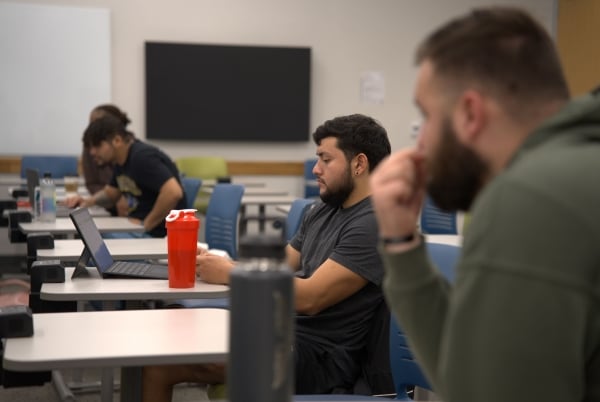
    But what’s very interesting to me is having to articulate to folks who are not vets or not military-connected that military is a culture. So when we’re talking about validating everybody’s experiences in the classroom and making sure that we’re digging into the full richness and depth of experiences to really give everyone the best possible collegiate experience, we can’t discount military service as a separate and distinct culture.

    I think what has happened previously is that there was concern where maybe a student was reframing things they were learning in their military context, and the instructor might have been thinking, “Well, you’re not getting it. I’m trying to get you to think this certain way, but you keep defaulting it back to your military context.” And then that leads to a conversation that I’ll eventually have with the instructor that talks about, “Well, the reason why this is happening is because categorically and demonstrably military service is a culture.”

    I actually did research on that back in 2019, and again in 2024, we did a quantitative study. I did it with some student veterans who were graduate students here at the university, where we were able to empirically demonstrate that veteran itself is a culture.

    You are all your intersectional identities, but once you’ve served and once you’ve had that military service experience, you experience all of those pieces of yourself through the lens of that military service. And so of course, when you’re teaching somebody something, when they contextualize it, it’s going to be through the lens that they see everything else, including their own identity.

    Q: I’m the daughter of two veterans, and it’s funny, I remember being in high school, and the word “squad” was really trendy with young people at that time, and my mom was like, “Squad? That’s a military term. Like, what do you mean, your squad? Like, your squadron? What’s happening?” Even in the daily words that we use, there’s this affiliation that’s always going to come back to people.

    So when we talk about supporting students that are military affiliated on campus, can you walk us through some of the programs and offerings that you all have?

    A: There’s many, and some of them are more focused on traditional academic outcomes; we’ve got resources specific for individual tutoring.

    We recognize that we have a very large relative population of veterans using what’s called veteran readiness and employment, which means they’re disabled veterans. We have over 430 of those on our campus, so we have more just from that group than most campuses have veterans. So we’re very intentional about providing services that are, first of all, diverse enough to cover all the different conditions, visible and invisible, that might be barriers to success academically.

    The activities that I’m most proud of are the ones that are more impactful and [contribute] directly toward sense of belonging and community building. Because I think if you don’t have a strong sense of belonging, and you don’t have a visible and established community, then you’re not going to get true engagement. You’re just going to get a veteran or a family member that shows up, goes to the class, absorbs the information, goes home, but they’re not really engaging with their peers on campus, or campus culture. They’re not getting the other 50 percent of why you go to college, which is to develop social capital and be exposed to ideas that are new and different than your own.

    Some of the programs that we’ve put together on that front are something we call Coffee With Vets, which is a very informal mixer that we do every second Wednesday of the month. When I say Coffee With Vets, you’ll notice I didn’t say with student vets, right? Because it’s for the entire veteran community. We have over 200 employees that wore the uniform as well, and it’s not uncommon to see students, employees, people from the community, stakeholders, that use that event as an opportunity to just be seen and get to know people.

    I think what we’re guilty of, myself included, is that a veteran might look at a resource and think, “I don’t need that today, so it’s not relevant to me,” and then when they do need it, then there’s this issue with trust: “I’m only going to engage with something I trust.” And so Coffee With Vets is an opportunity for someone like me to maybe engage with VA [U.S. Department of Veterans Affairs] staff. And even though I may not need what they’re doing right now, I may need it in six months or a year, and I’m going to remember that person that I commiserated with over a bacon-covered doughnut and some Black Rifle coffee. I’m much more willing to engage in whatever that support is.

    That’s just one example. And the reason why we do that, the reason why we emphasize community building and building that trust is because when you look at some of the barriers to completion and matriculation, a lot of them are vets putting something off or not engaging with something. So if we can minimize hesitation and maximize trust, then we can get those vets to fully utilize the wraparound services that we provide and ultimately be successful, not just in school, but beyond school, because they’re only here for a little while. And what we’re trying to do is set them up for success in the future.

    Q: I’m so glad that you mentioned that role of helping students see that resources might be useful later on. Because one of the common barriers that we hear from student veterans is that the military is so structured and that there’s so much told to them about what your next step is and where you’re going to go and what your job is, that when you come to higher ed, you really have to find a sense of self-advocacy and start finding things on your own that might just be unfamiliar or different.

    I love that you all provide a space for students to explore but also be connected with people who think like they do and understand that it might be a totally different culture change to have somebody like you have to ask for help sometimes.

    A: The two things you bring up are advocacy and what I like to call cultural considerations. I don’t like to say cultural competency, because that implies incompetency. It’s not incompetency, it’s just cultivated.

    Advocacy is a big thing. There’s a significant amount of my time spent doing that, sometimes at the request of veterans, sometimes not. Sometimes it’s because I need to help the veteran figure out how to learn to live in the world that they’re in now. But it’s not uncommon for me to have a veteran reach out and say, “I want to have this conversation with an instructor, but I don’t know how to do it without coming across as just super aggressive or knife handing or using the F-word as a comma,” which sometimes they’re still in the habit of doing. But they’re self-aware, right? So they’re coming in, they’re asking, “I don’t want the message to get lost in how I’m delivering it. So please help me.” And we’ll do that.

    But the other side of that is also the self-advocacy piece, which I’m glad you mentioned, too, because there’s just, like you said, when you’re on active duty, there’s somebody who’s responsible for you. As you mentioned, you’ve got a squad leader, you’ve got a battle buddy, you’ve got somebody, even when you check into a base, somebody walks you around and shows you everything. And that’s just not the case in higher ed.

    You may not know what Student Disability Services is. You may not know that if you have a 50 percent or higher [disability] rating, you get free [ADA] surface parking. So here you are paying for it. Or testing accommodations—just all these different things that vets are leaving on the table, and it’s hurting them in some form or fashion, because they’re not able to maximize their potential.

    It’s a weird tightrope where we’re trying to figure out, “How do we give them all this information, but in a way where it’s not like sipping water from a fire hose or this is going to be information dumped five minutes later?” We have to be very, very intentional about parceling out that information.

    We kind of do it in layers. First, here’s who we are, then if you have an interest in these things categorically, and then it eventually it gets into the into the weeds of things. But that’s actually been very successful for us.

    As a matter of fact, we asked some of our vets, “Hey, what do you wish you would have known the first day, now that you’re here towards the end, what do you wish you would have known?” And they actually put together a booklet that has everything that they all said: “Here’s what would have been super helpful on day one to know.” So now that’s turned into something that our student vets maintain.

    My transition off of active duty was—I’m going to date myself here—over 20 years ago, probably over 25 years ago. My experiences and my needs are very, very different than a service member becoming a veteran in the year 2025. So it’s very important that we maintain that close connection with these subsequent cohorts of veterans that are showing up on our campus and giving them the agency to drive—“Here’s the information we need, so hey, please provide it.”

    That requires a lot of psychological safety on behalf of my staff, because you get that thought about, “if it ain’t broke, don’t fix it.” But at the same time, something that was relevant two years ago may not be relevant to the folks that are getting out in a very different environment.

    Q: You touched on this a little bit earlier, but I think just having that staff that has military experience or military affiliation as well can be really helpful. And like you said, translating to higher education, but also understanding, like, even if it’s not right now, what service members might need, but having a little bit of empathy for that circumstance and what they might be transitioning through.

    A: I agree with that 100 percent. All of the staff members that I have today in summer of ’25 I had in fall of 2018, every single one of them. I haven’t lost anybody through COVID—if you’re in Texas, Snowvidor the great resignation.

    I think that is a very clear indicator of the orientation of my staff. We’re all military connected, either veterans or family members themselves, and they’re here because the work that we do here is what fills our cup.

    As a matter of fact, we have a purpose statement that is taped up everywhere, and it’s derived from an old story about President Kennedy visiting NASA. He sees a janitor, and he asks the janitor, “Hey, what do you do here?” And the janitor says, “I’m helping put someone on the moon.”

    We’ve adapted that, and if you were to walk into UTSA Center for Military Affiliated Students and you see somebody shredding paper or filing or helping a student all across the range of things we could be doing, and you ask them, “Hey, what are you doing here?” The answer is going to be “I’m trying to provide a level of support for students that I wish I would have had for myself.”

    Q: I wanted to talk a little bit about careers, because military students often come in with lots of life and career experience, but often enter higher education as a pivot or as an exploration of doing something else. I wonder if you can talk about navigating that space and understanding where higher education is a bridge for military-affiliated students.

    A: That’s a tricky one in that you’re right, some of them come in and that pivot sometimes is intentional. If you look at our chief information officer [Kendra Ketchum], who was a Navy corpsman, and then postmilitary pivoted into, she’s our CIO.

    But I think what’s very important when trying to help a service member navigate what they’re going to do with their higher education experience is you have to ask almost the five whys. If you’re familiar with Lean, you know what the five whys are. If you have a toddler, you know what five whys are.

    But if you ask a vet, “Hey, why are you here?” The first answer you’re probably going to get is, “Because you’re supposed to use the GI Bill.” That’s what you’re told. You leave active duty, you go to college, you use the GI Bill.

    “So what do you want to get out of it?”

    “I wanted to get a degree and get a good job.”

    But really, what it comes back to is trying to get them to be reflective on who it is you want to be, rather than what it is you want to do. What we uncover is that most veterans are looking for two things: to continue serving and community.

    So once we figure out what that piece is for them, it’s a lot easier to guide them through the process and not just tell them all, “Here’s the major you should take, or which classes or which instructor,” but actually provide opportunities for academic inquiry.

    I mentioned earlier that we did research for sense of belonging and identity. It started years ago when a veteran came to me, and she was frustrated because she had this great idea for doing a study to create a rubric based on positive psychology to figure out what motivates a veteran, what makes them tick, what fills their cup. Because she wanted to focus on that, not on the deficit discourse: What’s wrong with you and how do we address your problem today?

    She had gone to different places and couldn’t get any traction because nobody was studying that; that wasn’t a topic that anyone was researching. And I said, “Well, I’m not a psychologist, but I’ll do everything I can to help you.”

    Fast-forward to the end of that story: She did the study, and then she got accepted to two national conferences to talk about it, and she graduated with her master’s in social work and has returned to our university as an internship coordinator to start our first-ever veteran case management program. We’re going to pilot it under her watch. She invented the rubric.

    That’s one example and I can give you many more. But again, it’s very nontraditional. We’re not just talking about advising students, we’re talking about providing opportunities for students to develop and cultivate their inquiry so they don’t lose that through the college process and then end up being something other than what they intended when they graduate.

    Q: Regarding sense of belonging, I think it’s natural for student veterans to fall in step with each other. But then there’s also the wider campus community and finding that sense of belonging just on campus as well. I wonder if you can talk about those two avenues, one connecting like-minded, military-affiliated students, and the other encouraging them to get out, explore and see what else the campus has to offer?

    A: That’s an excellent point, and it is a strange kind of rut that we fall into where we want to gravitate towards what we know. We show up on a campus and everything’s weird, and people are different, and so we’re looking for other people that are like us, and that’s kind of missing the point.

    What I do to try and encourage engagement outside of just vets hanging out with vets is I will encourage vets to cultivate the thing that they want to keep doing, which is continue serving, but expand that vision beyond vets.

    For example, our local Student Veteran Association chapter, they were doing a lot of programming that was vet-focused, vet-centric. And I said, “You know who doesn’t have a lot of support on this campus is military family members, like the kids in the center for military families. So maybe we connect with them and we look for a broader opportunity to support where there’s a gap.”

    We had vets that would ask me, “How come I’m having trouble getting nonvets to see the value in us, or not look at us sideways or appreciate our presence in the classroom?” And I said, “Well, why don’t we look at service projects that benefit them, and not necessarily just y’all?”

    So a group of vets got together, and they came up with this great idea to provide golf cart shuttle service for folks with mobility issues. It was the vet group that was like, “All right, we’re going to write the grant, we’re going to get the golf cart, we’re going to drive it, but it’s going to be available to anyone who’s got any kind of mobility issue.” They didn’t even say disability, just mobility. It could be a sprained ankle.

    And it’s a service that they were going to leverage their capital. Because vets can go and they can ask for these things and get these donations, but [they] make it available to the entire campus population and that lines up exactly with their values. They enlisted to serve, and they served folks. This was kind of a microcosm of that.

    It’s great to see how, when they’re thinking it through and they’re ideating, all of a sudden, that light bulb goes off, and it makes sense that we don’t have to circle the wagons because we’re in a strange environment. What we need to do is do what we’ve always been doing and leverage everything that we bring to the table to lift everyone else around us.

    Q: You’re a veteran and a veteran in this space in higher education. For those who might be unfamiliar with working with military-affiliated students or looking to do more on their campus to support these students, what’s a point or two you would give for someone who wants to do better?

    A: First and foremost, I think that there might be a misconception out there that vets maybe see themselves as apart from or maybe even above [others]. You hear about Billy Madison syndrome: “I’m older and I know more things.”

    While that might be true for some vets, vets are typically not looking for differential treatment—especially in the classroom or among their peers or from instructors or even from staff; they’re just looking for their experiences to be as validated as anybody else’s. So it’s very important that we’re aware that there are some things we can do and say that will be received as microaggressions. The issue is, when a vet experiences a microaggression, they don’t get aggressive. I think some people think, “Oh, man, they’re about to snap and lose their minds,” and that’s not what they’re going to do. What the vet’s gonna do is absolutely shut down, and they will disengage, and you will have lost any opportunity going forward to regain their trust and to have them feel a part of the community.

    So first and foremost, just if one could shift their mindset and understand veteran [experiences] is a culture, and think of it as any other culture you support on campus. No. 1, that’s going to help you as the nonvet to really inform your perspective.

    Then second of all is listen and don’t be prescriptive. And that applies not just for nonvets, but for people like me as well. Like I mentioned, my [military] experience was a long time ago versus what people are experiencing now. And as much as I’m tempted all the time to say, “I know what you’re going to need, I know what’s going to happen to you in six months and in two years, and the stages of going from active duty to civilian and the wall you’re going to hit. I know all these things are coming, so I’m going to set all these things up, and I’m gonna expect you to do them.” Every vet is sitting there saying, “Oh, that’s not me. You don’t know me.” And I know, because I was that guy that did the same thing.

    It’s important to kind of push down my own impulses and stay very, very actively engaged and just constantly ask, “What is it you need? What is it I can do to support you?” By doing that, you’re building that trust, so that when those other [challenges] inevitably do happen, you don’t have to go find them and save them from it. They’re going to come to you and ask you, “Hey, can you help me through it?”

    That’s the difference between, I think, being effective and going through the motions, is when they’re asking for it and they want to engage with it. But those are the two biggest things. Vets aren’t all that different. They’re just actually, weirdly, looking to be part of the crowd.

    Get more content like this directly to your inbox. Subscribe here.

    Source link

  • We have to work together to improve school culture and make our public schools great places to teach, work and learn

    We have to work together to improve school culture and make our public schools great places to teach, work and learn

    A torrent of controversy has erupted over the Trump administration’s decision to shutter the federal Department of Education. Critics howl that it will destroy public education in America. Supporters insist it will somehow make things better.

    The only thing that’s clear is that our public education system is broken. It’s time for politicians to stop using education as a political football, with blue and red teams competing for control rather than sharing the responsibility to prepare our children for their futures.

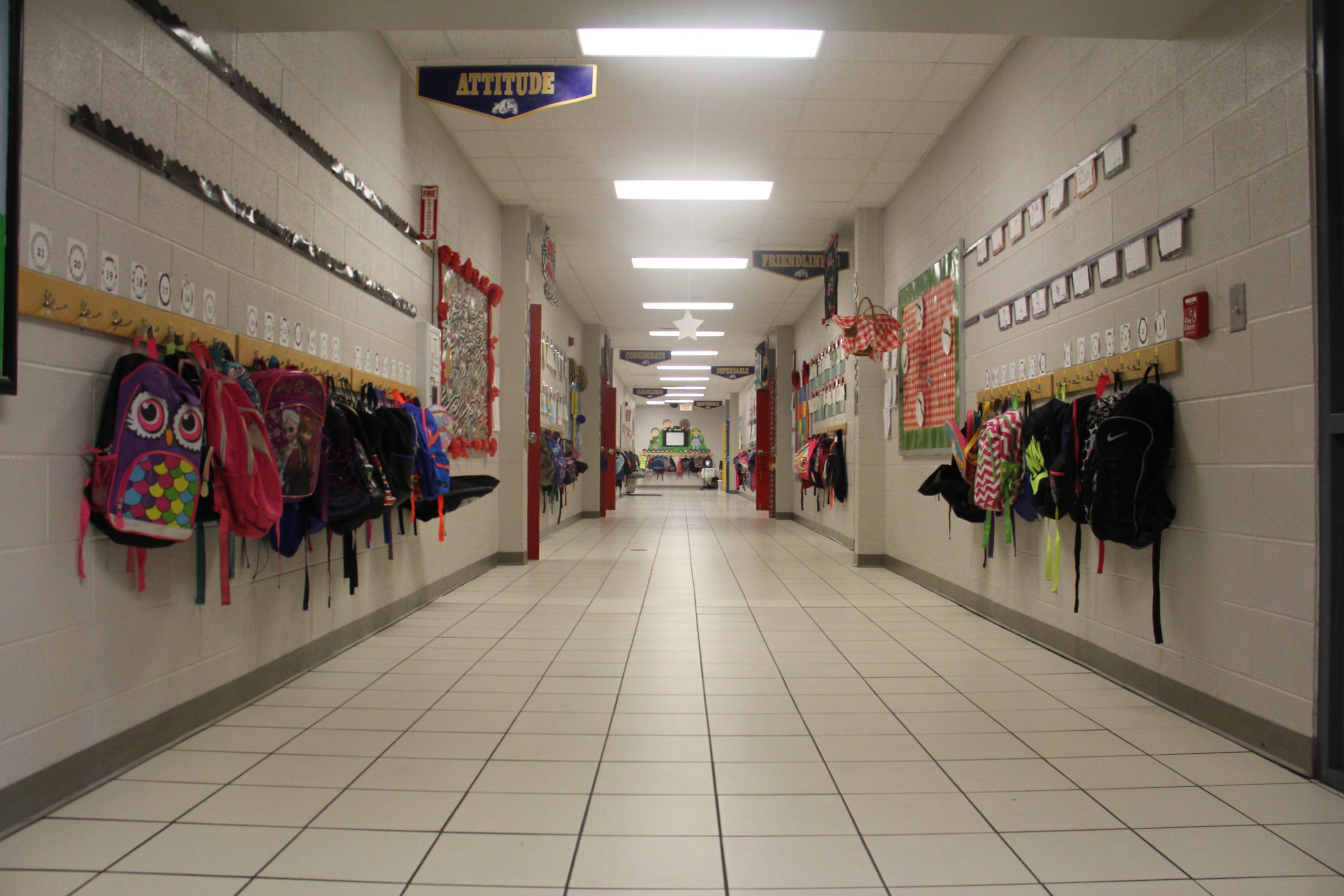
    The resulting chaos and confusion and rigid policies choke the joy out of learning and of working in our schools. Insufficient attention by leaders to education culture can result in fear and distrust, turf wars and a tendency to blame and make excuses for a lack of progress.

    Such behaviors produce a toxicity that disables learning and disempowers leadership. Instead of increasing our nation’s economic prosperity, we’re deepening inequality, limiting opportunity and sadly wasting the potential of many children, on whose ability to thrive our country depends.

    Poor work conditions, insufficient support, inadequate pay and limited career opportunities are among some of the reasons teachers are leaving and schools are struggling to attract top talent. Reductions in funding from the Great Recession through the present render our facilities dangerous in some instances and unwelcoming in others. Would you buy a house with barbed wire fencing and unkempt grounds that make you wonder whether the aim is to keep something out or in?

    Related: A lot goes on in classrooms from kindergarten to high school. Keep up with our free weekly newsletter on K-12 education.

    What should we do to change what is going on inside our schools?

    We must first of all start working together to make our public schools great places to teach and learn.

    Great places to work and learn are places that are well led, fueled by purpose and guided by shared, positive behaviors that advance learning goals and serve as “rules of the road” for how employees and students are expected to behave.

    In great schools, employees, students and families are respected and valued. Leaders in great schools inspire their employees — all of them — to do more than they think they can. Employees align behind the purpose of enabling learning, which creates momentum and camaraderie for what they are working to attain together.

    In great schools, leaders inspire their communities to join them in cheering for and supporting kids’ future successes. Families, no matter their socioeconomic status, feel a sense of belonging.

    Problems are perceived as opportunities to get better, not sources of indiscriminate blame. Solutions are found by looking in the mirror first. External threats to learning, such as poverty or parents’ underemployment, are acknowledged and addressed. Schools don’t dodge their responsibility to educate all kids.

    In great schools, kids are known by caring employees; they feel seen and heard and are deeply engaged and invested in their learning.

    Every employee working in a great school district feels responsible for achieving the district’s mission, no matter whether they work inside or outside of the classroom.

    When kids return after being absent, employees welcome them back, tell them they were missed and focus on catching them up. They do not judge the constraints of their families’ lives or mete out punishment as though missing school is a crime.

    Related: Horticulture, horses and ‘Chill Rooms’: One district goes all-in on mental health support

    Great places to learn must also be great places to work. We must reframe our concept of schools as not just places where kids learn. Great places to work care about the needs of all the human beings in their care, including and especially their employees.

    “To win in the marketplace, you must first win in the workplace,” Douglas R. Conant, former Campbell Soup Company CEO famously said. He knew what is becoming clearer within our public school systems — that unhappy, unfulfilled employees lead to high turnover, disengagement by students and staff and disaffected families turning to alternative educational offerings.

    It is no secret that attracting and retaining top talent to work in our schools is increasingly difficult as employees seek more stability. Attracting younger workers is even more difficult.

    Many of those who currently work in schools, especially teachers, are stressed, burned out and dissatisfied. Being stressed and burned out is not a normative experience; it’s a symptom of a weak culture, and an organizational problem to be solved. And employee turnover is no longer limited to teachers. There are increasing vacancies among principals, bus drivers and food service and facilities staff.

    The quality of the experiences of employees working in our schools must be higher. Every point along the employee experience continuum, from applying for a job to choosing to leave, is an opportunity to deepen employee engagement and commitment to being a high performer.

    We can fix what we have broken. Thinking differently about making our public schools great places to work and learn is a good place to start. No policy changes are required to demonstrate concern for the human beings the system employs and seeks to educate.

    Etienne R. LeGrand is a thought leader, writer and culture-shaping strategist and adviser at Vivify Performance.

    Contact the opinion editor at [email protected].

    This story about school culture was produced by The Hechinger Report, a nonprofit, independent news organization focused on inequality and innovation in education. Sign up for Hechinger’s weekly newsletter.

    The Hechinger Report provides in-depth, fact-based, unbiased reporting on education that is free to all readers. But that doesn’t mean it’s free to produce. Our work keeps educators and the public informed about pressing issues at schools and on campuses throughout the country. We tell the whole story, even when the details are inconvenient. Help us keep doing that.

    Join us today.

    Source link

  • Coaching can be a strategic act of research culture

    Coaching can be a strategic act of research culture

    In higher education institutions, we often speak of “developing talent,” “building capacity,” or “supporting our people.” But what do those phrases really mean when you’re a researcher navigating uncertainty, precarity, or a system that too often assumes resilience, but offers limited resources?

    With the renewed focus of REF 2029 on people, culture and environment, and the momentum of the Concordat to Support the Career Development of Researchers, there’s a growing imperative to evidence not only what support is offered, but how it’s experienced.

    That’s where I believe that coaching comes in – as a strategic, systemic tool for transforming research culture from the inside out.

    At a time when UK higher education is facing significant financial pressures, widespread restructuring, and the real threat of job losses across institutions, it may seem counterintuitive to invest in individuals’ development. But it is precisely because of this instability that our commitment to people must be more visible and deliberate than ever. In moments of systemic strain, the values we choose to protect speak volumes. Coaching offers one way to show – through action, not just intention – that our researchers matter, that their growth is not optional, and that culture isn’t a casualty of crisis, but a lever for recovery.

    By coaching, I mean a structured, confidential, and non-directive process that empowers individuals to reflect, identify goals and navigate challenges. Unlike mentoring, which often involves sharing advice or experience, coaching creates a thinking space led by the individual, where the coach supports them to surface their own insights, unpick the unspoken dynamics of academia, build confidence in their agency, and cultivate their personal narrative of progress.

    Coaching is not just development – it’s disruption

    We tend to associate coaching with senior leadership, performance management, or executive transition. But over the last seven years, I’ve championed coaching for researchers – especially early career researchers – as a means of shifting the developmental paradigm from “this is what you need to know” to “what do you need, and how can we co-create that space?”

    When coaching is designed well – thoughtfully matched, intentionally scaffolded, and thoughtfully led – it becomes a quiet form of disruption. It gives researchers the confidence to think through difficult questions. And it models a research culture where vulnerability is not weakness but wisdom.

    This is especially powerful for those who feel marginalised in academic environments – whether due to career stage, background, identity or circumstance. One early career researcher recently told me that coaching “helped me stop asking whether I belonged in academia and start asking how I could shape it. For the first time, I felt like I didn’t have to shrink myself to fit in.” That’s the kind of feedback you won’t find in most institutional KPIs – but it says a lot about the culture we’re building.

    Why coaching belongs in your research strategy

    Coaching still suffers from being seen as peripheral – a nice-to-have, often under-resourced and siloed from mainstream provision. Worse, it’s sometimes positioned as remedial, offered only when things go wrong.

    As someone who assesses UK institutions for the European Commission-recognised HR Excellence in Research Award, I’ve seen first-hand how embedding coaching as a core element of researcher support isn’t just the right thing to do – it’s strategically smart. Coaching complements and strengthens the implementation of institutional actions for the Concordat to Support the Career Development of Researchers, by centring the individual researcher experience – not just a tick-box approach to the principles.

    What’s striking is how coaching aligns with the broader institutional goals we often hear in strategy documents: autonomy, impact, innovation, wellbeing, inclusion. These are not incidental outcomes; they’re the foundations of a healthy research pipeline, and coaching delivers on these – but only if we treat it as a central thread of our culture, not a side offer.

    Crucially, coaching is evidence of how we live our values. It offers a clear, intentional method for demonstrating how people and culture are not just statements but structures – designed, delivered, and experienced.

    In REF 2029 institutions will be asked to evidence the kind of environment where research happens. Coaching offers one of the most meaningful, tangible ways to demonstrate that such an environment exists through the lived experiences of the people working within it.

    Culture is personal – and coaching recognises that

    In higher education, we often talk about culture as though it’s something we can declare or design. But real culture – the kind that shapes whether researchers thrive or withdraw – is co-created, day by day, through dialogue, trust, and reflection.

    Culture lives in the everyday, unrecorded interactions: the invisible labour of masking uncertainty while trying to appear “resilient enough” to succeed; the internal negotiation before speaking up in a lab meeting; or the emotional weight carried by researchers who feel like they don’t belong.

    Coaching transforms those invisible moments into deliberate acts of empowerment. It creates intentional, reflective spaces where researchers – regardless of role or background – are supported to define their own path, voice their challenges, and recognise their value. It’s in these conversations that inclusion is no longer an aspiration but a lived reality where researchers explore their purpose, surface their barriers, and recognise their value.

    This is especially needed in environments where pressure to perform is high, and space to reflect is minimal. Coaching doesn’t remove the pressures of academia. But it builds capacity to navigate them with intention – and that’s culture work at its core.

    Embedding a coaching culture as part of researcher development shouldn’t be a fringe benefit or pilot project – it should be an institutional expectation. We need more trained internal coaches who understand the realities of academic life and more visibly supported coaching opportunities aligned with the Researcher Development Concordat. The latter encourages a minimum of ten days’ (pro rata) professional development for research staff per year. Coaching is one of the most impactful ways those days can be used – not just to develop researchers, but to transform the culture they inhabit.

    A call to embed – not bolt on

    If we’re serious about inclusive, people-centred research environments, then coaching should be treated as core business. It should not be underfunded, siloed, or left to goodwill. It must be valued, supported, and embedded – reflected in institutional KPIs, Researcher Development Concordat and Research Culture Action Plans, and REF narratives alike.

    And in a sector currently under intense financial pressure, we should double down on culture as a lived commitment to those we ask to do difficult, meaningful work during difficult, uncertain times. Coaching is a strategic lever for equity, integrity, and excellence.

    Source link

  • Empowering school staff with emergency response protocols

    Empowering school staff with emergency response protocols

    Key points:

    Safety response protocols are foundational to creating a culture of safety in schools. District leaders should adopt and implement response protocols that cover all types of emergencies. Schools should have building-level response protocols and protocols for incidents when first responders are needed. These practices are critical to keeping the community safe during emergencies.

    When staff members are empowered to participate in emergency planning and response, their sense of safety is improved. Unfortunately, many staff members do not feel safe at school.

    Thirty percent of K-12 staff think about their physical safety when at work every day, and 74 percent of K-12 staff said they do not feel supported by their employer to handle emergency situations at work.

    Staff disempowerment is a “central problem” when it comes to district emergency planning, said Dr. Gabriella Durán Blakey, superintendent of Albuquerque Public Schools: “What does safety mean for educators to really be able to feel safe in their classroom, to impact student achievement, the well-being of students? And how does that anxiety play with how the students feel in the classroom?”

    School leaders should implement response protocols that empower staff to understand and participate in emergency response using a two-tiered system of emergency response:

    • A building-level emergency planning and response team should develop an Emergency Operations Plan, which includes an emergency response protocol
    • Administrators should adopt protocols to follow when they need first responders to intervene

    For guidance on crafting emergency response protocols and plans, click here.

    Laura Ascione
    Latest posts by Laura Ascione (see all)

    Source link

  • Student-created book reviews inspire a global reading culture

    Student-created book reviews inspire a global reading culture

    Key points:

    When students become literacy influencers, reading transforms from a classroom task into a global conversation.

    When teens take the mic

    Recent studies show that reading for pleasure among teens is at an all-time low. According to the National Assessment of Educational Progress (NAEP), only 14 percent of U.S. students read for fun almost every day–down from 31 percent in 1984. In the UK, the National Literacy Trust reports that just 28 percent of children aged 8 to 18 said they enjoyed reading in their free time in 2023.

    With reading engagement in crisis, one group of teens decided to flip the narrative–by turning on their cameras. What began as a simple classroom project to encourage reading evolved into a movement that amplified student voices, built confidence, and connected learners across cultures.

    Rather than writing traditional essays or book reports, my students were invited to create short video book reviews of their favorite titles–books they genuinely loved, connected with, and wanted others to discover. The goal? To promote reading in the classroom and beyond. The result? A library of student-led recommendations that brought books–and readers–to life.

    Project overview: Reading, recording, and reaching the world

    As an ESL teacher, I’ve always looked for ways to make literacy feel meaningful and empowering, especially for students navigating a new language and culture. This video review project began with a simple idea: Let students choose a book they love, and instead of writing about it, speak about it. The assignment? Create a short, personal, and authentic video to recommend the book to classmates–and potentially, to viewers around the world.

    Students were given creative freedom to shape their presentations. Some used editing apps like Filmora9 or Canva, while others recorded in one take on a smartphone. I offered a basic outline–include the book’s title and author, explain why you loved it, and share who you’d recommend it to–but left room for personal flair.

    What surprised me most was how seriously students took the project. They weren’t just completing an assignment–they were crafting their voices, practicing communication skills, and taking pride in their ability to share something they loved in a second language.

    Student spotlights: Book reviews with heart, voice, and vision

    Each student’s video became more than a book recommendation–it was an expression of identity, creativity, and confidence. With a camera as their platform, they explored their favorite books and communicated their insights in authentic, impactful ways.

    Mariam ElZeftawy: The Fault in Our Stars by John Green
    Watch Miriam’s Video Review

    Mariam led the way with a polished and emotionally resonant video review of John Green’s The Fault in Our Stars. Using Filmora9, she edited her video to flow smoothly while keeping the focus on her heartfelt reflections. Mariam spoke with sincerity about the novel’s themes: love, illness, and the fragility of life. She communicated them in a way that was both thoughtful and relatable. Her work demonstrated not only strong literacy skills but also digital fluency and a growing sense of self-expression.

    Dana: Dear Tia by Maria Zaki
    Watch Dana’s Video Review

    In one of the most touching video reviews, Dana, a student who openly admits she’s not an avid reader, chose to spotlight “Dear Tia,” written by Maria Zaki, her best friend’s sister. The personal connection to the author didn’t just make her feel seen; it made the book feel more real, more urgent, and worth talking about. Dana’s honest reflection and warm delivery highlight how personal ties to literature can spark unexpected enthusiasm.

    Farah Badawi: Utopia by Ahmed Khaled Towfik
    Watch Farah’s Video Review

    Farah’s confident presentation introduced her classmates to Utopia, a dystopian novel by Egyptian author Ahmed Khaled Towfik. Through her review, she brought attention to Arabic literature, offering a perspective that is often underrepresented in classrooms. Farah’s choice reflected pride in her cultural identity, and her delivery was clear, persuasive, and engaging. Her video became more than a review–it was a form of cultural storytelling that invited her peers to expand their literary horizons.

    Rita Tamer: Frostblood
    Watch Rita’s Video Review

    Rita’s review of Frostblood, a fantasy novel by Elly Blake, stood out for its passionate tone and concise storytelling. She broke down the plot with clarity, highlighting the emotional journey of the protagonist while reflecting on themes like power, resilience, and identity. Rita’s straightforward approach and evident enthusiasm created a strong peer-to-peer connection, showing how even a simple, sincere review can spark curiosity and excitement about reading.

    Literacy skills in action

    Behind each of these videos lies a powerful range of literacy development. Students weren’t just reviewing books–they were analyzing themes, synthesizing ideas, making connections, and articulating their thoughts for an audience. By preparing for their recordings, students learned how to organize their ideas, revise their messages for clarity, and reflect on what made a story impactful to them personally.

    Speaking to a camera also encouraged students to practice intonation, pacing, and expression–key skills in both oral language development and public speaking. In multilingual classrooms, these skills are often overlooked in favor of silent writing tasks. But in this project, English Learners were front and center, using their voices–literally and figuratively–to take ownership of language in a way that felt authentic and empowering.

    Moreover, the integration of video tools meant students had to think critically about how they presented information visually. From editing with apps like Filmora9 to choosing appropriate backgrounds, they were not just absorbing content, they were producing and publishing it, embracing their role as creators in a digital world.

    Tips for teachers: Bringing book reviews to life

    This project was simple to implement and required little more than student creativity and access to a recording device. Here are a few tips for educators who want to try something similar:

    • Let students choose their own books: Engagement skyrockets when they care about what they’re reading.
    • Keep the structure flexible: A short outline helps, but students thrive when given room to speak naturally.
    • Offer tech tools as optional, not mandatory: Some students enjoyed using Filmora9 or Canva, while others used the camera app on their phone.
    • Focus on voice and message, not perfection: Encourage students to focus on authenticity over polish.
    • Create a classroom premiere day: Let students watch each other’s videos and celebrate their peers’ voices.

    Literacy is personal, public, and powerful

    This project proved what every educator already knows: When students are given the opportunity to express themselves in meaningful ways, they rise to the occasion. Through book reviews, my students weren’t just practicing reading comprehension, they were becoming speakers, storytellers, editors, and advocates for literacy.

    They reminded me and will continue to remind others that when young people talk about books in their own voices, with their personal stories woven into the narrative, something beautiful happens: Reading becomes contagious.

    Latest posts by eSchool Media Contributors (see all)

    Source link

  • Choice, culture and commitment in learning, part two

    Choice, culture and commitment in learning, part two

    As I explored in part 1, the implications of Michael Godsey’s article for higher education are profound, particularly in the way it highlights disparities in student motivation, engagement and academic culture between different types of institutions.

    His observations about the buy-in effect at private K-12 schools—where students and their families actively choose and invest in the educational experience—find a parallel in higher education, where the most selective colleges tend to foster stronger academic engagement, often by self-selecting for motivation as much as talent.

    Selective Colleges and the Culture of Academic Commitment

    Just as Godsey observes that students at private schools like his daughter’s exhibit greater enthusiasm and self-discipline, students at elite colleges and universities often display a higher level of academic investment. This is not necessarily because they are inherently more talented but because they have been filtered through a selection process that prioritizes motivation, work ethic and demonstrated academic dedication.

    • Students at these institutions expect rigorous coursework and embrace the challenge rather than resisting it.
    • Faculty are less preoccupied with maintaining order and more focused on deep intellectual engagement because the students themselves uphold a culture of academic seriousness.
    • The peer effect reinforces engagement—when all students around you are driven, it’s harder to disengage without standing out.

    This dynamic is similar to tracking in K-12 schools, where students deemed more academically capable are placed in advanced or honors programs, shielding them from the distractions of less engaged peers. The difference is that in higher education, this sorting happens through admissions rather than within schools.

    The Motivation Gap Across Different Types of Colleges

    At broad-access institutions, such as regional public universities or community colleges, faculty often encounter a wide spectrum of student engagement—some highly dedicated, others struggling with external obligations and some with little intrinsic motivation for academic work. This presents a challenge similar to what Godsey describes in public high schools:

    • Many students don’t see themselves as having bought in to the academic experience. They may be there out of necessity (to qualify for a better job or a chance to participate in athletics) rather than a deep commitment to intellectual growth.
    • External distractions—jobs, family responsibilities, financial pressures—compete with academic priorities, making it harder to sustain focus and engagement.
    • A culture of disengagement can take hold, just as in the public school classrooms Godsey describes, making it difficult for even motivated students to thrive.

    Should Higher Education Track Students More Explicitly?

    One implicit takeaway from Godsey’s argument is that students benefit when they are surrounded by peers who share their academic enthusiasm. This raises a controversial but important question for higher education: Should colleges do more to track students into different learning environments based on motivation and engagement, rather than simply ability?

    In some ways, this already happens:

    • Honors programs at public universities function as internal selective institutions, grouping together highly motivated students and giving them smaller, discussion-driven courses with top faculty.
    • Gated entry into high-demand majors is widespread, often driven to enhance a particular college’s rankings.
    • Specialized cohorts and living-learning communities create subgroups of engaged students who reinforce each other’s academic commitment.
    • Highly structured programs (such as those in STEM and pre-professional tracks) implicitly filter for motivation by their demanding course sequences.

    Yet, tracking within higher education is far less explicit than in K-12 schools. At many institutions, faculty find themselves teaching classes with highly diverse levels of motivation, which can lead to tensions:

    • Should professors lower expectations to accommodate less prepared or less motivated students?
    • Should they hold firm on rigor and risk alienating or failing a significant portion of their class?
    • How can institutions better cultivate a culture of academic commitment, particularly in settings where students do not automatically arrive with strong buy-in?

    Bridging the Motivation Gap in Higher Education

    Rather than creating rigid tracking systems that could exacerbate educational inequalities, colleges need to find ways to embed buy-in within all types of institutions. Possible strategies include:

    • Creating more cohort-based learning models: Small, high-impact learning communities, similar to honors programs but available to all students, can cultivate shared academic identity and accountability.
    • Rethinking advising and orientation: Encouraging intentional major selection and career goal setting early on can help students see education as a personal investment rather than an obligation.
    • Using pedagogical strategies that reinforce engagement: Active learning, project-based work and immersive real-world applications can encourage students to see their studies as meaningful.
    • Reinforcing faculty-student relationships: At elite institutions, students benefit from close faculty mentorship; replicating this at other colleges through structured faculty-student interactions could increase motivation and accountability.

    The Best Schools Don’t Just Teach—They Create a Culture of Learning

    At first glance, the purpose of education seems straightforward: Schools exist to teach students knowledge and skills. But the most effective institutions do far more than simply deliver content. The best schools create an intellectual culture—a shared commitment to curiosity, critical thinking and lifelong learning.

    This distinction is especially relevant in higher education, where student engagement, institutional culture and faculty mentorship shape not just what students learn, but how they learn and apply knowledge beyond the classroom.

    The Difference Between Teaching and Cultivating a Learning Culture

    This distinction is critical. If universities merely teach, students may approach their studies passively, checking off degree requirements with minimal engagement. But when institutions create a vibrant learning culture, students take ownership of their education. They become active participants in discussions, independent researchers and engaged citizens who seek knowledge not just for grades, but for its intrinsic value.

    How a Learning Culture Manifests in Higher Education

    A learning culture is shaped by many factors, including institutional values, faculty engagement, student expectations and extracurricular opportunities. The best colleges and universities foster this culture in several ways:

    1. High-impact educational practices: Research has shown that certain experiences—such as undergraduate research, study abroad, service learning and collaborative projects—dramatically enhance student learning. Institutions that embed these practices into coursework ensure that students don’t just passively absorb information but engage with real-world applications of knowledge. For example:
      1. Portland State University incorporates service learning into its capstone courses, requiring students to work on community-based projects.
      2. CUNY’s Macaulay Honors College integrates research experiences into its curriculum, ensuring students engage in inquiry-driven learning from their first year.
    2. Faculty as mentors, not just lecturers: At institutions with strong learning cultures, faculty members do more than deliver lectures—they mentor students, involve them in research and challenge them to think critically. Close faculty-student relationships create opportunities for intellectual exchange outside the classroom. Some universities institutionalize this by:
      1. Encouraging faculty-student lunches or informal discussion groups (e.g., the University of Michigan’s M-PACT mentoring program).
      2. Embedding research experiences in first-year courses (e.g., the University of Texas at Austin’s Freshman Research Initiative).
    3. Intellectual curiosity beyond the classroom: The best colleges cultivate a campuswide intellectual atmosphere. This happens through:
      1. Public lectures, symposia and visiting scholar programs that expose students to ideas beyond their coursework.
      2. Student-driven initiatives like debate societies, interdisciplinary discussion groups and maker spaces.
      3. Engagement with the arts and humanities, ensuring that even students in technical fields experience creative and philosophical inquiry.
    4. Challenging, not just accommodating, students. Many institutions focus heavily on student retention and satisfaction, sometimes at the cost of intellectual rigor. A true culture of learning, however, challenges students. The best universities set high academic expectations while providing the support needed to meet them. Examples include:
      1. Honors programs and cohort-based learning communities that create rigorous academic environments within broader universities.
      2. Writing-intensive courses across all disciplines, reinforcing analytical skills that extend beyond students’ majors.
      3. Project-based and interdisciplinary coursework that requires synthesis of ideas rather than rote memorization.

    Implications for Colleges and Universities

    If higher education institutions want to cultivate a true learning culture, it must move beyond simply delivering content and reimagine how it engages students. Some key implications include:

    • Rethinking how we measure success: Universities often emphasize graduation rates, job placement and standardized learning outcomes. While these metrics are important, they do not necessarily reflect a thriving intellectual culture. Institutions should also assess engagement: Are students participating in meaningful discussions? Are they involved in research? Are they developing the habits of lifelong learners?
    • Ensuring high-impact practices are accessible to all students: Many transformative experiences—such as study abroad and research opportunities—are disproportionately available to students at elite institutions. Public universities and community colleges must find ways to embed these experiences into the curriculum, making them accessible to part-time, commuter and first-generation students.
    • Prioritizing faculty-student interaction: Universities must incentivize mentorship by valuing faculty engagement with students in promotion and tenure decisions. Large lecture-based institutions should integrate more small-group learning experiences to facilitate faculty-student connections.
    • Encouraging intellectual risk-taking: A culture of learning is not about teaching students to parrot back information but about encouraging them to take intellectual risks. This means fostering open debate, embracing interdisciplinary inquiry and encouraging creative problem-solving.
    • Creating a campus climate that values inquiry: Universities must ask themselves: Do students feel that intellectual curiosity is encouraged? Are there informal spaces for discussion and debate? Are students challenged to think critically about complex issues rather than being shielded from uncomfortable ideas?

    The University as a Catalyst for Lifelong Learning

    A true learning culture does not end at graduation. The best colleges and universities equip students with the intellectual tools to continue learning throughout their lives. This means fostering habits of critical inquiry, a passion for ideas and the ability to adapt to new knowledge.

    The best schools, like the most impactful professors, don’t just teach; they inspire curiosity, cultivate resilience and shape the way students engage with the world. If higher education is to fulfill its democratic and intellectual promise, it must embrace this mission—not just to produce degree holders, but to create lifelong learners.

    Steven Mintz is professor of history at the University of Texas at Austin and the author, most recently, of The Learning-Centered University: Making College a More Developmental, Experiential and Equitable Experience.

    Source link

  • Is cancel culture dead? | The Foundation for Individual Rights and Expression

    Is cancel culture dead? | The Foundation for Individual Rights and Expression

    The co-authors of “The Canceling of the American Mind”
    discuss its new paperback release and where cancel culture stands a
    year and a half after the book’s original publication.


    Greg Lukianoff

    Rikki Schlott

    Timestamps:

    00:00 Intro

    04:35 Origin of book

    07:56 Definition of cancel culture

    17:55 Mike Adams, canceled professor

    23:51 Alexi McCammond, former Teen Vogue
    editor-in-chief

    31:57 Echo chambers on social media

    35:09 Trump administration ‘canceling’ law firms and
    higher ed institutions

    44:02 Rikki’s libertarian political identity

    51:02 Is cancel culture dead?

    54:26 Outro


    Read the transcript.

    Enjoy listening to the podcast? Donate to FIRE today and
    get exclusive content like member webinars, special episodes, and
    more. If you became a FIRE Member
    through a donation to FIRE at thefire.org and would like access to
    Substack’s paid subscriber podcast feed, please email [email protected].

    Show notes:

    Source link