Tag: culture

  • Book bans draw libraries into damaging culture wars that undermine their purpose

    Book bans draw libraries into damaging culture wars that undermine their purpose

    For the last four years, school and public libraries have been drawn into a culture war that seeks to censor, limit and discredit diverse perspectives.

    Yet time and time again, as librarians have been encouraged or even directed to remove books that include LGBTQ+, Black, Latino and Indigenous characters or themes or history from their collections, they have said no.

    When librarians said no, policy changes were submitted and laws were proposed — all in the name of controlling the library collection.

    Some librarians lost their jobs. Some had their lives threatened. Legislators proposed bills that attempt to remove librarians’ legal protections, strive to prevent them from participating in their national professional associations, seek to limit some materials to “adults only” areas in public libraries and threaten the way library work has been done for decades.

    Here’s why this is wrong. For generations, libraries have been hubs of information and expertise in their communities. Librarians and library workers aid in workforce development, support seniors, provide resources for veterans, aid literacy efforts, buttress homeschool families —among many other community-enriching services. Your public library, the library in your school and at your college, even those in hospitals and law firms, are centers of knowledge. Restrictions such as book bans impede their efforts to provide information.

    Related: Become a lifelong learner. Subscribe to our free weekly newsletter featuring the most important stories in education. 

    Professional librarians study the First Amendment and understand what it means to protect the right to read. We provide opportunities for feedback from our users so that they have a voice in decision-making. We follow a code of ethics and guidelines to make the best selections for our communities.

    It is illegal for a library to purchase pornographic or obscene material; we follow the law established by the Supreme Court (Miller v. California, 1973). That decision has three prongs to determine if material meets the qualifications for obscenity. If the material meets all three, it is considered obscene and does not have First Amendment protection.

    But our procedures have been co-opted, abused and flagrantly ignored by a small and vocal minority attempting to control what type of information can be accessed by all citizens. Their argument, that books are not banned if they are available for purchase, is false.

    When a book or resource is removed from a collection based on a discriminatory point of view, that is a book ban.

    Librarians follow a careful process of criteria to ensure that our personal biases do not intervene in our professional work. Librarians have always been paying attention. In 1939, a group of visionary librarians crafted the Library Bill of Rights to counter “growing intolerance, suppression of free speech and censorship affecting the rights of minorities and individuals.” In 1953, librarians once again came together and created the Freedom to Read Statement, in response to McCarthyism.

    You may see a similar censorship trend today — but with the advent of the internet and social media, the speed at which censorship is occurring is unparalleled.

    Much of the battle has focused on fears that schoolchildren might discover books depicting families with two dads or two moms, or that high school level books are available at elementary schools. (Spoiler alert: they are not.)

    Related: The magic pebble and a lazy bull: The book ban movement has a long timeline

    The strategy of this censorship is similar in many localities: One person comes to the podium at a county or school board meeting and reads a passage out of context. The selection of the passage is deliberate — it is meant to sound salacious. Clips of this reading are then shared and re-shared, with comments that are meant to frighten people.

    After misinformation has been unleashed, it’s a real challenge to control its spread. Is some subject matter that is taught in schools difficult? Yes, that is why it is taught as a whole, and not in passages out of context, because context is everything in education.

    Librarians are trained professionals. Librarians have been entrusted with tax dollars and know how to be excellent stewards of them. They know what meets the criteria for obscenity and what doesn’t. They have a commitment to provide something for everyone in their collections. The old adage “a good library has something in it to offend everyone” is still true.

    Thankfully, there are people across the country using their voices to fight back against censorship. The new documentary “Banned Together,” for example, shows the real-world impact of book banning and curriculum censorship in public schools. The film follows three students and their adult allies as they fight to reinstate 97 books pulled from school libraries.

    Ultimately, an attempt to control information is an attempt to control people. It’s an attempt to control access, and for one group of people to pass a value judgment on others for simply living their lives.

    Libraries focus on the free expression of ideas and access to those ideas. All the people in our communities have a right to read, to learn something new no matter what their age.

    Lisa R. Varga is the associate executive director, public policy and advocacy, at the American Library Association.

    Contact the opinion editor at [email protected].

    This story about book bans was produced by The Hechinger Report, a nonprofit, independent news organization focused on inequality and innovation in education. Sign up for Hechinger’s weekly newsletter.

    The Hechinger Report provides in-depth, fact-based, unbiased reporting on education that is free to all readers. But that doesn’t mean it’s free to produce. Our work keeps educators and the public informed about pressing issues at schools and on campuses throughout the country. We tell the whole story, even when the details are inconvenient. Help us keep doing that.

    Join us today.

    Source link

  • Trump’s Higher Education Crackdown: Culture War in a Cap and Gown

    Trump’s Higher Education Crackdown: Culture War in a Cap and Gown

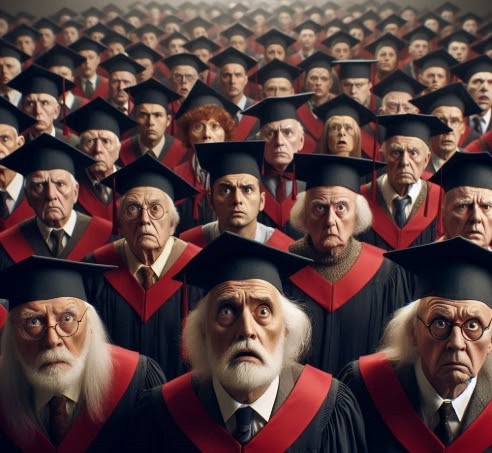
    In a recent flurry of executive orders, former President Donald Trump has escalated his administration’s long-running war on American higher education, targeting college accreditation processes, foreign donations to universities, and elite institutions like Harvard and Columbia. Framed as a campaign for accountability and meritocracy, these actions are in reality part of a broader effort to weaponize public distrust, reinforce ideological purity tests, and strong-arm colleges into political obedience.

    But even if Trump’s crusade were rooted in good faith—which it clearly is not—his chosen mechanism for “fixing” higher education, the accreditation system, is already deeply flawed. It’s not just that Trump is using a broken tool for political ends—it’s that the tool itself has long been part of the problem.

    Accreditation: Already a Low Bar

    Accreditation in U.S. higher education is often mistaken by the public as a sign of quality. In reality, it’s often a rubber stamp—granted by private agencies funded by the very schools they evaluate. “Yet in practice,” write economists David Deming and David Figlio, “accreditors—who are paid by the institutions themselves—appear to be ineffectual at best, much like the role of credit rating agencies during the recent financial crisis.”

    As a watchdog of America’s subprime colleges and a monitor of the ongoing College Meltdown, the Higher Education Inquirer has long reported that institutional accreditation is no sign of academic quality. Worse, it is frequently used by subprime colleges as a veneer of legitimacy to mask predatory practices, inflated tuition, and low academic standards.

    The Higher Learning Commission (HLC), the nation’s largest accreditor, monitors nearly a thousand institutions—ranging from prestigious schools like the University of Chicago and University of Michigan to for-profit, scandal-plagued operations such as Colorado Technical University, DeVry University, University of Phoenix, and Walden University. These subprime colleges receive billions annually in federal student aid—money that flows through an accreditation pipeline that’s barely regulated and heavily compromised.

    On the three pillars of accreditation—compliance, quality assurance, and quality improvement—the Higher Learning Commission often fails spectacularly when it comes to subprime institutions. That’s not just a bug in the system; it’s the system working as designed.

    Who Watches the Watchers?

    Accreditors like the HLC receive dues from member institutions, giving them a vested interest in keeping their customers viable, no matter how exploitative their practices may be. Despite objections from the American Association of University Professors, the HLC has accredited for-profit colleges since 1977 and ethically questionable operations for nearly two decades.

    As Mary A. Burgan, then General Secretary of the AAUP, put it bluntly in 2000:

    “I really worry about the intrusion of the profit motive in the accreditation system. Some of them, as I have said, will accredit a ham sandwich…”

    [Image: From CHEA: Higher Learning Commission dues for member colleges. Over the last 30 years, HLC has received millions of dollars from subprime schools like the University of Phoenix.]

    The Council for Higher Education Accreditation (CHEA), which oversees accreditors, acts more like a trade association than a watchdog. Meanwhile, the U.S. Department of Education—the only federal entity with oversight responsibility—has done little to ensure quality or accountability. Under the Trump-DeVos regime, the Department actively dismantled what little regulatory framework existed, rolling back Obama-era protections that aimed to curb predatory schools and improve transparency.

    In 2023, an internal investigation revealed that the Department of Education was failing to properly monitor accreditors—yet Trump’s solution is to hand even more power to this broken apparatus while demanding it serve political ends.

    Harvard: Not a Victim, But a Gatekeeper of the Elite

    While Trump’s attacks on Harvard are rooted in personal and political animus, it’s important not to portray the university as a defenseless bastion of the common good. Harvard is already deeply entrenched in elite power structures—economically, socially, and politically.

    The university’s admissions policies have long favored legacy applicants, children of donors, and the ultra-wealthy. It has one of the largest endowments in the world—over $50 billion—yet its efforts to serve working-class and marginalized students remain modest in proportion to its vast resources.

    Harvard has produced more Wall Street bankers, U.S. presidents, and Supreme Court justices than any other institution. Its graduates populate the upper echelons of the corporate, political, and media elite. In many ways, Harvard is the establishment Trump claims to rail against—even if his own policies often reinforce that very establishment.

    Harvard is not leading a revolution in equity or access. Rather, it polishes the credentials of those already destined to lead, reinforcing a hierarchy that leaves most Americans—including working-class and first-generation students—on the outside looking in.

    The Silence on Legacy Admissions

    While Trump rails against elite universities in the name of “meritocracy,” there is a glaring omission in the conversation: the entrenched unfairness of legacy admissions. These policies—where applicants with familial ties to alumni receive preferential treatment—are among the most blatant violations of meritocratic ideals. Yet neither Trump’s executive orders nor the broader political discourse dare to address them.

    Legacy admissions are a quiet but powerful engine of privilege, disproportionately benefiting white, wealthy students and preserving generational inequality. At institutions like Harvard, Yale, and Princeton, legacy applicants are admitted at significantly higher rates than the general pool, even when controlling for academic credentials. This practice rewards lineage over talent and undermines the very idea of equal opportunity that higher education claims to uphold.

    Despite bipartisan rhetoric about fairness and access, few politicians—Democratic or Republican—have challenged the legitimacy of legacy preferences. It’s a testament to how deeply intertwined elite institutions are with the political and economic establishment. And it’s a reminder that the war on higher education is not about fixing inequalities—it’s about reshaping the system to serve different masters.

    A Hypocritical Power Grab

    Trump’s newfound concern with educational “results” is laced with hypocrisy. The former president’s own venture into higher education—Trump University—was a grift that ended in legal disgrace and financial restitution to defrauded students. Now, Trump is posing as the savior of academic merit, while promoting an ideologically-driven overhaul of the very system that allowed scams like his to thrive.

    By focusing on elite universities, Trump exploits populist resentment while ignoring the real scandal: that billions in public funds are siphoned off by institutions with poor student outcomes and high loan default rates—many of them protected by the very accrediting agencies he now claims to reform.

    Conclusion: Political Theater, Not Policy

    Trump’s latest actions are not reforms—they’re retribution. His executive orders target symbolic elites, not systemic rot. They turn accreditation into a partisan tool while leaving the worst actors untouched—or even empowered.

    Meanwhile, elite institutions like Harvard remain complicit in maintaining a class hierarchy that benefits the powerful, even as they protest their innocence in today’s political battles.

    Real accountability in higher education would mean cracking down on predatory schools, reforming or replacing failed accreditors, and restoring rigorous federal oversight. But this administration isn’t interested in cleaning up the swamp—it’s repurposing the muck for its own ends.

    The Higher Education Inquirer remains committed to pulling back the curtain on these abuses—no matter where they come from or how well they are disguised.

    Source link

  • Understanding why students cheat and use AI: Insights for meaningful assessments

    Understanding why students cheat and use AI: Insights for meaningful assessments

    Key points:

    • Educators should build a classroom culture that values learning over compliance
    • 5 practical ways to integrate AI into high school science
    • A new era for teachers as AI disrupts instruction
    • For more news on AI and assessments, visit eSN’s Digital Learning hub

    In recent years, the rise of AI technologies and the increasing pressures placed on students have made academic dishonesty a growing concern. Students, especially in the middle and high school years, have more opportunities than ever to cheat using AI tools, such as writing assistants or even text generators. While AI itself isn’t inherently problematic, its use in cheating can hinder students’ learning and development.

    More News from eSchool News

    Many math tasks involve reading, writing, speaking, and listening. These language demands can be particularly challenging for students whose primary language is not English.

    As a career and technical education (CTE) instructor, I see firsthand how career-focused education provides students with the tools to transition smoothly from high school to college and careers.

    As technology trainers, we support teachers’ and administrators’ technology platform needs, training, and support in our district. We do in-class demos and share as much as we can with them, and we also send out a weekly newsletter.

    Math is a fundamental part of K-12 education, but students often face significant challenges in mastering increasingly challenging math concepts.

    Throughout my education, I have always been frustrated by busy work–the kind of homework that felt like an obligatory exercise rather than a meaningful learning experience.

    During the pandemic, thousands of school systems used emergency relief aid to buy laptops, Chromebooks, and other digital devices for students to use in remote learning.

    Education today looks dramatically different from classrooms of just a decade ago. Interactive technologies and multimedia tools now replace traditional textbooks and lectures, creating more dynamic and engaging learning environments.

    There is significant evidence of the connection between physical movement and learning.  Some colleges and universities encourage using standing or treadmill desks while studying, as well as taking breaks to exercise.

    This story was originally published by Chalkbeat. Sign up for their newsletters at ckbe.at/newsletters. In recent weeks, we’ve seen federal and state governments issue stop-work orders, withdraw contracts, and terminate…

    English/language arts and science teachers were almost twice as likely to say they use AI tools compared to math teachers or elementary teachers of all subjects, according to a February 2025 survey from the RAND Corporation.

    Want to share a great resource? Let us know at [email protected].

    Source link

  • Body cams, staff to carry ID, change of culture: TEQSA draft rules for protests, student complaints

    Body cams, staff to carry ID, change of culture: TEQSA draft rules for protests, student complaints

    Security stand in front of a pro-Israel protest at the University of Sydney on May 3, 2024. Picture: David Swift

    Universities will be expected to publish de-identified complaints data publicly, make student complaints processes clearer, and analyse the data twice a year if the university regulator’s interim guidelines for student complaints mechanisms are adopted.

    Please login below to view content or subscribe now.

    Membership Login

    Source link

  • Lawmakers Advance Bill Requiring SD Schools to Teach Native American History, Culture – The 74

    Lawmakers Advance Bill Requiring SD Schools to Teach Native American History, Culture – The 74


    Get stories like this delivered straight to your inbox. Sign up for The 74 Newsletter

    South Dakota public schools would be required to teach a specific set of Native American historical and cultural lessons if a bill unanimously endorsed by a legislative committee Tuesday in Pierre becomes law.

    The bill would mandate the teaching of the Oceti Sakowin Essential Understandings. The phrase “Oceti Sakowin” refers to the Lakota, Dakota and Nakota people. The understandings are a set of standards and lessons adopted seven years ago by the South Dakota Board of Education Standards with input from tribal leaders, educators and elders.

    Use of the understandings by public schools is optional. A survey conducted by the state Department of Education indicated use by 62% of teachers, but the survey was voluntary and hundreds of teachers did not respond.

    Republican state Sen. Tamara Grove, who lives on the Lower Brule Reservation, proposed the bill and asked legislators to follow the lead of Sisseton Wahpeton Oyate Chairman J. Garret Renville. He has publicly called for a “reset” of state-tribal relations since the departure of former Gov. Kristi Noem, who was barred by tribal leaders from entering tribal land in the state.

    “What I’m asking you to do today,” Grove said, “is to lean into the reset.”

    Joe Graves, the state secretary of education and a Noem appointee, testified against the bill. He said portions of the understandings are already incorporated into the state’s social studies standards. He added that the state only mandates four curricular areas: math, science, social studies and English-language arts/reading. He said further mandates would “tighten up the school days, leaving schools with much less instructional flexibility.”

    Members of the Senate Education Committee sided with Grove and other supporters, voting 7-0 to send the bill to the full Senate.

    The proposal is one of several education mandates that lawmakers have considered this legislative session. The state House rejected a bill this week that would have required posting and teaching the Ten Commandments in schools, and also rejected a bill that would have required schools to post the state motto, “Under God the People Rule.”

    South Dakota Searchlight is part of States Newsroom, a nonprofit news network supported by grants and a coalition of donors as a 501c(3) public charity. South Dakota Searchlight maintains editorial independence. Contact Editor Seth Tupper for questions: [email protected].


    Get stories like these delivered straight to your inbox. Sign up for The 74 Newsletter

    Source link

  • Podcast: REF people and culture, spending review, apprenticeships

    Podcast: REF people and culture, spending review, apprenticeships

    This week on the podcast universities failing to promote diversity will face funding cuts – so said The Times. We chat through the controversy building around the REF.

    Plus we look at what the sector is asking for in the spending review, and consider the government’s push for lower-level, shorter apprenticeships.

    With Shitij Kapur, Vice Chancellor and President at King’s College London, Jess Lister, Director (Education) at Public First, Debbie McVitty, Editor at Wonkhe and presented by Mark Leach, Editor-in-Chief at Wonkhe.

    Read more:

    Universities UK submits to spending review

    The barriers that must be removed for degree apprenticeships to meet NHS workforce targets

    Higher education institutions have invested time, effort and money in level 7 apprenticeships

    Societies that are humane are thoughtful about promoting equality, diversity and inclusion

    Predictably bad education


    Source link

  • Cancel culture, legal education, and the Supreme Court with Ilya Shapiro

    Cancel culture, legal education, and the Supreme Court with Ilya Shapiro

    Over the years, elite institutions shifted from
    fostering open debate to enforcing ideological conformity. But as
    guest Ilya Shapiro puts it, “the pendulum is swinging back.” He
    shares his firsthand experience with cancel culture and how the
    American Bar Association’s policies influence legal education.
    Shapiro also opines on major free speech cases before the Supreme
    Court, including the TikTok ownership battle and Texas’ age
    verification law for adult content.

    Shapiro is a senior fellow and director of
    constitutional studies at the Manhattan Institute. He previously
    (and briefly) served as executive director and senior lecturer at
    the Georgetown Center for the Constitution and as a vice president
    at the Cato Institute. His latest book, “Lawless:
    The Miseducation of America’s Elites
    ,” is out now.

    Enjoy listening to our podcast? Donate to FIRE today and
    get exclusive content like member webinars, special episodes, and
    more. If you became a FIRE Member
    through a donation to FIRE at thefire.org and would like access to
    Substack’s paid subscriber podcast feed, please email
    [email protected].


    Read the transcript.

    Timestamps:

    00:00 Intro

    02:58 Shapiro’s Georgetown controversy

    15:07 Free speech on campus

    26:51 Law schools’ decline

    40:47 Legal profession challenges

    42:33 The “vibe shift” away from cancel culture

    56:02 TikTok and age verification at the Supreme
    Court

    01:03:37 Anti-Semitism on campus

    01:09:36 Outro

    Show notes:

    – “The
    illiberal takeover of law schools
    ” City Journal (2022)

    – “Poll
    finds sharp partisan divisions on the impact of a Black woman
    justice.
    ” ABC News (2022)

    – “Why
    I quit Georgetown.
    ” Ilya Shapiro, The Wall Street Journal
    (2022)

    – “Georgetown’s
    investigation of a single tweet taking longer than 12 round-trips
    to the moon.
    ” FIRE (2022)


    Students for Fair Admissions v. Harvard
    (2023)


    Lamont v. Postmaster General
    (1965)

    TikTok Inc
    v. Garland
    (2025)


    Free Speech Coalition v. Paxton
    (2024)

    Ginsberg
    v. New York
    (1968)


    International Holocaust Remembrance Alliance (IHRA) working
    definition of antisemitism
    (last updated 2025)

    Source link

  • Another way of thinking about the national assessment of people, culture, and environment

    Another way of thinking about the national assessment of people, culture, and environment

    There is a multi-directional relationship between research culture and research assessment.

    Poor research assessment can lead to poor research cultures. The Wellcome Trust survey in 2020 made this very clear.

    Assessing the wrong things (such as a narrow focus on publication indicators), or the right things in the wrong way (such as societal impact rankings based on bibliometrics) is having a catalogue of negative effects on the scholarly enterprise.

    Assessing the assessment

    In a similar way, too much research assessment can also lead to poor research cultures. Researchers are one of the most heavily assessed professions in the world. They are assessed for promotion, recruitment, probation, appraisal, tenure, grant proposals, fellowships, and output peer review. Their lives and work are constantly under scrutiny, creating competitive and high-stress environments.

    But there is also a logic (Campbell’s Law) that tells us that if we assess research culture it can lead to greater investment into improving it. And it is this logic that the UK Joint HE funding bodies have drawn on in their drive to increase the weighting given to the assessment of People, Culture & Environment in REF 2029. This makes perfect sense: given the evidence that positive and healthy research cultures are a thriving element of Research Excellence, it would be remiss of any Research Excellence Framework not to attempt to assess, and therefore incentivise them.

    The challenge we have comes back to my first two points. Even assessing the right things, but in the wrong way, can be counterproductive, as may increasing the volume of assessment. Given research culture is such a multi-faceted concept, the worry is that the assessment job will become so huge that it quickly becomes burdensome, thus having a negative impact on those research cultures we want to improve.

    It ain’t what you do, it’s the way that you do it

    Just as research culture is not so much about the research that you do but the way that you do it, so research culture assessment should concern itself not so much with the outcomes of that assessment but with the way the assessment takes place.

    This is really important to get right.

    I’ve argued before that research culture is a hygiene factor. Most dimensions of culture relate to standards that it’s critically important we all get right: enabling open research, dealing with misconduct, building community, supporting collaboration, and giving researchers the time to actually do research. These aren’t things for which we should offer gold stars but basic thresholds we all should meet. And to my mind they should be assessed as such.

    Indeed this is exactly how the REF assessed open research in 2021 (and will do so again in 2029). They set an expectation that 95 per cent of qualifying outputs should be open access, and if you failed to hit the threshold, excess closed outputs were simply unclassified. End of. There were no GPAs for open access.

    In the tender for the PCE indicator project, the nature of research culture as a hygiene factor was recognised by proposing “barrier to entry” measures. The expectation seemed to be that for some research culture elements institutions would be expected to meet a certain threshold, and if they failed they would be ineligible to even submit to REF.

    Better use of codes of practice

    This proposal did not make it into the current PCE assessment pilot. However, the REF already has a “barrier to entry” mechanism, of course, which is the completion of an acceptable REF Code of Practice (CoP).

    An institution’s REF CoP is about how they propose to deliver their REF, not how they deliver their research (although there are obvious crossovers). And REF have distinguished between the two in their latest CoP Policy module governing the writing of these codes.

    But given that REF Codes of Practice are now supposed to be ongoing, living documents, I don’t see why they shouldn’t take the form of more research-focussed (rather than REF-focussed) codes. It certainly wouldn’t harm research culture if all research performing organisations had a thorough research code of practice (most do of course) and one that covers a uniform range of topics that we all agree are critical to good research culture. This could be a step beyond the current Terms & Conditions associated with QR funding in England. And it would be a means of incentivising positive research cultures without ‘grading’ them. With your REF CoP, it’s pass or fail. And if you don’t pass first time, you get another attempt.

    Enhanced use of culture and environment data

    The other way of assessing culture to incentivise behaviours without it leading to any particular rating or ranking is to simply start collecting & surfacing data on things we care about. For example, the requirement to share gender pay gap data and to report misconduct cases, has focussed institutional minds on those things without there being any associated assessment mechanism. If you check out the Higher Education Statistics Agency (HESA) data on proportion of male:female professors, in most UK institutions you can see the ratio heading in the right direction year on year. This is the power of sharing data, even when there’s no gold or glory on offer for doing so.

    And of course, the REF already has a mechanism to share data to inform, but not directly make an assessment, in the form of ’Environment Data’. In REF 2021, Section 4 of an institution’s submission was essentially completed for them by the REF team by extracting from the HESA data, the number of doctoral degrees awarded (4a) and the volume of research income (4b); and from the Research Councils, the volume of research income in kind (4c).

    This data was provided to add context to environment assessments, but not to replace them. And it would seem entirely sensible to me that we identify a range of additional data – such as the gender & ethnicity of research-performing staff groups at various grades – to better contextualise the assessment of PCE, and to get matters other than the volume of research funding up the agendas of senior university committees.

    Context-sensitive research culture assessment

    That is not to say that Codes of Practice and data sharing should be the only means of incentivising research culture of course. Culture was a significant element of REF Environment statements in 2021, and we shouldn’t row back on it now. Indeed, given that healthy research cultures are an integral part of research excellence, it would be remiss not to allocate some credit to those who do this well.

    Of course there are significant challenges to making such assessments robust and fair in the current climate. The first of these is the complex nature of research culture – and the fact that no framework is going to cover every aspect that might matter to individual institutions. Placing boundaries around what counts as research culture could mean institutions cease working on agendas that are important to them, because they ostensibly don’t matter to REF.

    The second challenge is the severe and uncertain financial constraints currently faced by the majority of UK HEIs. Making the case for a happy and collaborative workforce when half are facing redundancy is a tough ask. A related issue here is the hugely varying levels of research (culture) capital across the sector as I’ve argued before. Those in receipt of a £1 million ‘Enhancing Research Culture’ fund from Research England, are likely to make a much better showing than those doing research culture on a shoe-string.

    The third is that we are already half-way through this assessment period and we’re only expected to get the final guidance in 2026 – two years prior to submission. And given the financial challenges outlined above, this is going to make this new element of our submission especially difficult. It was partly for this reason that some early work to consider the assessment of research culture was clear that this should celebrate the ‘journey travelled’, rather than a ‘destination achieved’.

    For this reason, to my mind, the only thing we can reasonably expect all HEIs to do right now with regards to research culture is to:

    • Identify the strengths and challenges inherent within your existing research culture;
    • Develop a strategy and action plan(s) by which to celebrate those strengths and address those challenges;
    • Agree a set of measures by which to monitor your progress against your research culture ambitions. These could be inspired by some of the suggestions resulting from the Vitae & Technopolis PCE workshops & Pilot exercise;
    • Describe your progress against those ambitions and measures. This could be demonstrated both qualitatively and quantitatively, through data and narratives.

    Once again, there is an existing REF assessment mechanism open to us here, and that is the use of the case study. We assess research impact by effectively asking HEIs to tell us their best stories – I don’t see why we shouldn’t make the same ask of PCE, at least for this REF.

    Stepping stone REF

    The UK joint funding bodies have made a bold and sector-leading move to focus research performing organisations’ attention on the people and cultures that make for world-leading research endeavours through the mechanism of assessment. Given the challenges we face as a society, ensuring we attract, train, and retain high quality research talent is critical to our success. However, the assessment of research culture has the power both to make things better or worse: to incentivise positive research cultures or to increase burdensome and competitive cultures that don’t tackle all the issues that really matter to institutions.

    To my mind, given the broad range of topics that are being worked on by institutions in the name of improving research culture, and where we are in the REF cycle, and the financial constraints facing the sector, we might benefit from a shift in the mechanisms proposed to assess research culture in 2029 and to see this as a stepping stone REF.

    Making better use of existing mechanisms such as a Codes of Practice and Environment and Culture data would assess the “hygiene factor” elements of culture without unhelpfully associating any star ratings to them. Ratings should be better applied to the efforts taken by institutions to understand, plan, monitor, and demonstrate progress against their own, mission-driven research culture ambitions. This is where the real work is and where real differentiations between institutions can be made, when contextually assessed. Then, in 2036, when we can hope that the sector will be in a financially more stable place, and with ten years of research culture improvement time behind us, we can assess institutions against their own ambitions, as to whether they are starting to move the dial on this important work.

    Source link

  • Daring students to take risks and be wrong is key to solving the campus culture wars

    Daring students to take risks and be wrong is key to solving the campus culture wars

    Goodbye then, the Higher Education (Freedom of Speech) Act parts A3, A4, A7 and parts of A8 – we hardly knew you.

    The legal tort – a mechanism that seemed somehow to be designed to say “we’ve told the regulator to set up a rapid alternative mechanism to avoid having to lawyer up, but here’s a fast track way to bypass it anyway”, is to be deleted.

    The complaints scheme – a wheeze which allowed an installed Director for Freedom of Speech and Academic Freedom to rapidly rule on whatever it was that the Sunday papers were upset about that week – will now be “free” (expected) to not take up every dispute thrown its way.

    Students themselves with a complaint about a free speech issue will no longer have to flip a coin between a widely respected way of avoiding legal disputes and an untested but apparently faster one operated by the Director which was to be flagged in Freshers’ handbooks. The OIA it is.

    Foreign funding measures – bodged into the act by China hawks who could never work out whether the security services, the Foreign Office or the Department for Education were more to blame for encouraging universities to take on Chinese students – will now likely form part of the revised “Foreign Influence Registration Scheme” created by the National Security Act 2023.

    A measure banning universities from silencing victims of harassment via a non-disclosure agreement will stay, despite OfS saying it was going to ban NDAs anyway – although nobody seems able to explain why their use will still be fine for other victims with other complaints.

    And direct regulation of students’ unions – a measure that had somehow fallen for the fanciful idea that their activities are neither regulated nor controlled by powerless university managements and the Charity Commission – will also go. The “parent” institution will, as has always been the case, revert to reasonably practicable steps – like yanking its funding.

    As such, save for a new and vague duty to “promote” free speech and academic freedom, the new government’s intended partial repeal of legislation that somehow took the old one two parliaments to pass – a period of gestation that always seemed more designed to extend the issue’s prevalence in the press than to perfect its provisions – now leaves the sector largely back in the framework it’s been in for the best part of 40 years.

    That the Secretary of State says that all of the above is about proceeding in a way that “actually works” will raise an eyebrow from those who think a crisis in the academy has been growing – especially when the government’s position is that the problem to be fixed is as follows:

    In a university or a polytechnic, above all places, there should be room for discussion of all issues, for the willingness to hear and to dispute all views including those that are unpopular or eccentric or wrong.

    Actually, that was a quote from Education Secretary Keith Joseph in 1986, writing to the National Union of Students over free speech measures in the 1986 act. But Bridget Phillipson’s quote wasn’t much different:

    These fundamental freedoms are more important—much more important—than the wishes of some students not to be offended. University is a place for ideas to be exposed and debated, to be tried and tested. For young people, it is a space for horizons to be broadened, perspectives to be challenged and ideas to be examined. It is not a place for students to shut down any view with which they disagree.

    The message for vice chancellors who fail to take this seriously couldn’t have been clearer – “protect free speech on your campuses or face the consequences”. But if it’s true that for “too long, too many universities have been too relaxed about these issues”, and that “too few took them seriously enough” – what is it that that must now change?

    Back to the future

    There is no point rehearsing here the arguments that the “problem” has been overblown, centring on a handful of incidents in a part of the sector more likely to have been populated by the lawmakers and journalists whose thirst for crises to crack down on needs constant fuel. And anyway, for those on the wrong end of cancellation, the pain is real.

    There is little to be gained here from pointing out the endless inconsistencies in an agenda that seemed to have been designed to offer a simplistically minimalist definition of harassment and harm and a simplistically maximalist definition of free speech – until October 7th 2023 turned all that on its head.

    There isn’t a lot of benefit in pointing out how unhelpful the conflation between academic freedom and freedom of speech has been – one that made sense for gender-critical academics feeling the force of protest, but has been of no help for almost anyone involved in a discipline attempting to find truth in historic or systemic reasons for other equality disparities in contemporary society.

    Others write better than me, sometimes in ways I don’t recognise, sometimes in ways I do, about the way in which the need to competitively recruit students, or keep funders happy, or to not be the victim of a fresh round of course cuts inhibits challenge, drains the bravery to be unpopular, and is the real cause of a culture of “safetyism” on campus.

    And while of course it is the case that higher education isn’t what it was – which even in its “new universities” manifestations in the 1960s imagined small parts of the population engaging in small-group discussions between liberal-minded individuals able to indulge in activism before a life of elitism – I’ve grown tired of pointing out that the higher education that people sometimes call for isn’t what it is, either.

    What I’m most concerned about isn’t a nostalgic return to elite HE, or business-as-usual return to whatever it was or wasn’t done in the name of academic freedom or freedom of speech in a mass age – and nor is it whatever universities or their SUs might do to either demonstrate or promote a more complex reality. I’m most concerned about students’ confidence.

    The real crisis on campus

    Back in early 2023, we had seen surveys that told us about self-censorship, pamphlets that professed to show a culture of campus “silent” no platforming, and polling data that invited alarm at students’ apparent preference for safety rather than freedom.

    But one thing that I’d found consistently frustrating about the findings was the lack of intelligence on why students were responding the way they apparently were.

    For the endless agents drawing conclusions, it was too easy to project their own assumptions and prejudices, forged in generational memory loss and their own experiences of HE. Too easy to worry about the 14 per cent of undergrads who went on to say they didn’t feel free to express themselves in the NSS – and too easy to guess “why” that minority said so.

    As part of our work with our partners at Cibyl and a group of SUs, we polled a sample of 1,600 students and weighted for gender and age.

    We found that men were almost ten percentage points higher than women on “very free”, although there was gender consistency across the two “not free” options. Disabled students felt less free than non-disabled peers, privately educated students felt more free than those from the state system, and those eligible for means-tested bursaries were less confident than those who weren’t.

    In the stats, those who felt part of a community of students and staff were significantly more likely to feel free to express themselves than those who didn’t – and we know that it’s the socio-economic factors that are most likely to cause feelings of not “fitting in”.

    But it was the qualitative comments that stuck with me. Of those ticking one of the “not free” options, one said that because the students on their course were majority white students, they “often felt intimidated to speak about certain things”.

    Another said that northern state school students are minorities – and didn’t really have voices there:

    Tends to be posher middle class private school educated students who are heard.

    Mature students aren’t part of the majority and what I have said in the past tends to get ignored.

    Many talked about the sort of high-level technical courses that policymakers still imagine universities don’t deliver. “Engineering doesn’t leave much room for opinion like other courses”, said one. “Not a lot of room in my degree for expression” said another.

    And another gave real challenge to those in the culture wars that believe that all opinions are somehow valid:

    My course doesn’t necessarily allow me to express my freedom as everything is researched based with facts.

    Ask anyone that attempted to run a seminar on Zoom during Covid-19, and you get the same story – switched-off cameras, long silences, students seemingly afraid to say something for fear of being ostracised, or laughed at, or “getting it wrong”.

    As a former SU President put it on the site in 2023:

    This year there have been lecture halls on every campus stacked with students who don’t know how to start up a conversation with the person sat next to them. There were emails waiting to be sent, the cursor flashing at the start of a sentence, that the struggling student didn’t know how to word… This question is whether or not the next generation is actually being taught how to interact and be comfortable in their own skin… They have to if they’re claiming to.

    Freedom from fear?

    The biggest contradiction of all in both the freedom of speech and academic freedom debates that have engulfed the sector in recent years was not a lack of freedom – it was the idea that you can legislate to cause people to take advantage of it:

    In lectures and seminars there is often complete silence. The unanimity of asking a question or communicating becomes daunting when you’re the only one.

    Fear you’ll be laughed at or judged if you get it wrong

    In terms of lectures, the students in my class feel shy to share opinions which affects me when I want to share.

    Again this is a personal thing I don’t often like expressing my points of view in person to people I don’t know very well. Also they probably won’t be listened to so I don’t see the point.

    I feel very free amongst my other students in our WhatsApp groups (not governed by the university). However, freedom of expression in support sessions often ends up not occurring as everyone is anxious due to how the class has been set up.

    Once in class I simply got one word mixed up with another and the lecturer laughed and said. ‘yes…well…they do mean the same thing so that has already been stated.’ Making me and also my fellow students reluctant to ask any questions at all as we then feel some questions are ridiculous to ask. How are we to express our thoughts if we feel we will be ridiculed or made to feel ridiculous?

    For those not on programmes especially suited to endless moral and philosophical debates, a system where the time to take part in extracurriculars is squeezed by part-time work or public transport delays is not one that builds confidence to take part in them.

    The stratification of the sector – where both within universities and between them, students of a particular type and characteristic cluster in ways that few want to admit – drives a lack of diversity within the encounters that students do have in the classroom.

    And even for those whose seminars offer the opportunity for “debate”, why would you? Students have been in social media bubbles and form political opinions long before they enrol. And Leo Bursztyn and David Yang’s paper demonstrates that people think everyone in their group shares the same views, and that everyone in the outgroup believes the opposite.

    As Harvard political scientist David Deming argues here:

    Suppose a politically progressive person offers a commonly held progressive view on an issue like Israel-Palestine, affirmative action, or some other topic. Fearing social sanction, people in the out-group remain silent. But so do in-group members who disagree with their group’s stance on that particular issue. They stay silent because they assume that they are the only ones in the group who disagree, and they do not want to be isolated from their group. The only people who speak up are those who agree with the original speaker, and so the perception of in-group unanimity gets reinforced.

    Deming’s solution is that universities should tackle “pluralistic ignorance” – where most people hold an opinion privately but believe incorrectly that other people believe the opposite.

    He argues that fear of social isolation silences dissenting views within an in-group, and reinforces the belief that such views are not widely shared – and so suggests making use of classroom polling tech to elicit views anonymously, and for students to get to know each other privately first, giving people space to say things like “yes I’m progressive, but my views differ on topic X.”

    Promoting free speech?

    Within that new “promote” duty, it may be that pedagogical innovation of that sort within the curriculum will make a difference. It may also be that extracurricular innovation – from bringing seemingly opposed activist groups on campus together to listen to each other, through to carefully crafted induction talks on what free speech and academic means in practice – would help. Whether it’s possible to be positive about EDI in the face of the right to disagree with it remains to be seen.

    Upstream work on this agenda might help too – it’s odd that a “problem” that must be partly about what happens in schools and colleges is never mentioned in the APP outreach agenda, just as it’s frustrating that the surface diversity of a provider is celebrated while inside, the differences in characteristics between, say, medical students and those studying Business and Management are as vast as ever.

    Students unions – relieved of direct scrutiny on the basis that they are neither “equipped nor funded” to navigate such a complex regulatory environment – might argue that the solution is to equip them and fund them, not remove the regulation. They might also revisit work we coordinated back in 2021 – much of which was about strengthening political debate in their own structures as a way to demonstrate that democracy can work.

    Overall, though, someone somewhere is going to get something wrong again. They’ll fail to act to protect something lawful; or they’ll send a signal that something was OK, or wrong, when they should have decided the opposite.

    As such, I’ve long believed that the practice of being “wrong” needs to be role-modelled as strongly as that of being right. If universities really are spaces of debate and the lines between free speech and harassment are contested and context-specific, the sector needs to find a way to adjudicate conflict within universities rather than leaving that to the OIA, OfS, the courts or that other court of public opinion – because once it gets that far, the endless allegations of “bad faith” on both sides prevent nuance, resolution and trust.

    Perhaps internal resolution can be carried out in the way we found in use in Poland on our study tour, using trusted figures appointed from within – and perhaps it can be done by identifying types of democratic debate within both academic and corporate governance that give space to groups of staff and students with which one can agree or disagree.

    If nothing else, if Arif Ahmed is right – and “speech and expression were essential to Civil Rights protestors, just as censorship was their opponents’ most convenient weapon”, we will have to accept that “nonviolent direct action seeks to… dramatize an issue that it can no longer be ignored” – and it has as much a place on campus as the romantic ideals of a seminar room exploring nuance.

    Lightbulb moments need electricity

    But even if that helps, I’m still stuck with the horse/water/drink problem – that however much you promote the importance of something, you still need to create the conditions to take up what’s on offer. What is desired feels rich – when the contemporary student experience is often, in reality, thin. What if the real problem isn’t student protest going too far, but too few students willing to say anything out loud at all?

    Students (and their representatives) left Twitter/X/Bluesky half a decade ago, preferring the positivity of LinkedIn to being piled-onto for an opinion. Spend half an hour on Reddit’s r/UniUK and you can see it all – students terrified that one wrong move, one bad grade, one conversation taken the wrong way, one email to a tutor asking why their mark was the way it was – will lead to disaster. The stakes are too high, and the cushion for getting anything wrong too thin, to risk anything.

    Just as strong messages about the importance of extracurricular participation don’t work if you’re holding down a full-time job and live 90 minutes from campus, saying that exploring the nuances of moral and political debate is important will fall flat if you’re a first-in-family student hanging on by a thread.

    Much of this all, for me, comes back to time. Whatever else people think higher education is there to do, it only provides the opportunity to get things wrong once the pressure is off on always getting things right. Huge class sizes, that British obsession with sorting and grading rather than passing or failing, precarious employment (of staff and students) and models of student finance that render being full-time into part-time are not circumstances that lead anyone to exploring and challenging their ideas.

    Put another way, the government’s desire that higher education offers something which allows horizons to be broadened, perspectives to be challenged and ideas to be examined is laudable. But if it really wants it happen, it does have to have a much better understanding of – and a desire to improve – the hopeless precarity that students find themselves in now.


    Source link