You’ve heard a version of this story before.
The 16 days against gender-based violence campaign has been running around the world for over 30 years now, and manifestations on campus can include everything from assertiveness and self-defense workshops to panels on violence, discrimination and harassment in student life.
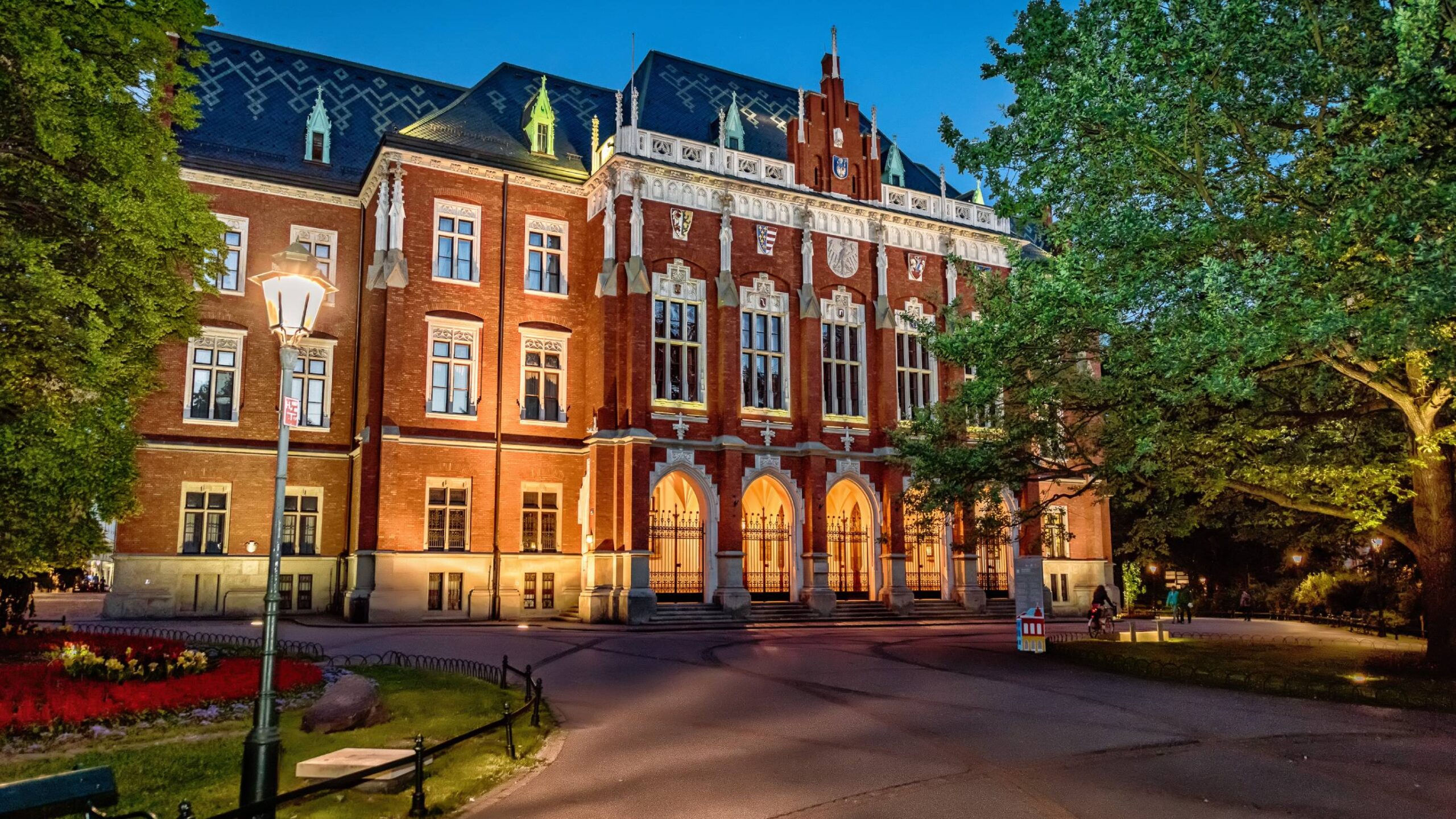
Back in 2021, students at the oldest university in Poland had put together a programme of activity for the campaign that included a lecture on the criminological aspects of the murders of women from a lecturer in the Department of Criminology.
But days before she was due to give the talk, the Forensic Psychology Section of the Scientific Association of Psychology Students at Jagiellonian University in Krakow (one of the co-organisers alongside the LGBTQ+ society and the SU) announced that the lecture had been cancelled:
When inviting Dr. Magdalena Grzyb to give a lecture, we were not aware of the views she represents. We would also like to point out that we absolutely do not agree with the opinions she expresses, and we do not consent to any manifestations of transphobia in the university space.
The previous year, Grzyb had penned a piece in Kultura Liberalna – a weekly Polish magazine focusing on liberal values, intellectual debate, and cultural analysis – critiquing the acceptance of non-binary and queer identities in liberal and progressive circles, suggesting that prioritising individual self-identification over systemic efforts to deconstruct stereotypes and achieve real gender equality was a problem:
Does every man, even a serial rapist or a domestic torturer, if he says he feels like a woman, have the right to demand to be placed in a cell with women, often victims of such men? (…) A woman who repairs a dishwasher at home is also non-binary. Heck, a woman who earns more than her husband is also non-binary. A man who irons his clothes and washes the floor with a mop is also non-binary. (…) Do they deserve special treatment and a place in a cell with women because of this?
A few days later Jerzy Pisuliński, Dean of the Faculty of Law and Administration at Jagiellonian, issued a statement making clear that the lecture would take place after all, on the basis that the university should be a place for “debate on important social problems” and that it “cannot avoid controversial topics”.
Setting an example
That was an announcement welcomed by HE minister Przemysław Czarnek, whose conservative and nationalist Law and Justice Party (Prawo i Sprawiedliwość, PiS) had only months previously, egged on by the Ordo Iuris Institute for Legal Culture, proposed an amendment to the Law on Higher Education that sought to tackle wokery and cancel culture:
I welcome with satisfaction the decision of the Rector of the Jagiellonian University to restore the lecture of Ms. Dr. Magdalena Grzyb. The Jagiellonian University is setting an example.
A year previous a sociology lecturer at the University of Silesia in Katowice resigned in protest after students accused her of promoting intolerant anti-choice and homophobic views in her classes. The university’s disciplinary official found evidence of intolerance – prompting Czarnek’s predecessor Jarosław Gowin to condemn what he termed “ideological censorship”:
The Bill will be intended to help the university community and the rector to ensure that these freedoms are not violated, that the university is a temple of freedom of speech, freedom of exchange of views and discussion.
When it eventually appeared a few months later, it proposed to guarantee academic teachers’ freedoms in teaching, speech, research, and publication; protect the expression of religious, philosophical, or worldview beliefs, ensuring they would not constitute disciplinary offenses; and oblige university rectors to uphold respect for these freedoms, all aimed at guaranteeing an environment of “ideological pluralism” within academic institutions.
Campaign groups weren’t happy – arguing that student organisations should be able to invite or not invite lecturers to their events:
…that is their sacred right, just as it is not a restriction of freedom of speech that I or any other person was not invited. Other people may not like it and may criticise this decision.
Just as in the UK, some argued that the reforms could undermine the independence of academic institutions – allowing government influence over academic discourse and research priorities, and discouraging open discussion and critical analysis on topics that might conflict with the government’s conservative stance.
Others puzzled over the practical differences between not refusing a speaker and forcing a voluntary student group to go ahead with one even if it didn’t want to – the sort of detail lost in the noise in cases like this.
But back at Jagiellonian, there was the thorny issue of Ernest Figiel to resolve.
Enemies of the people
Figiel, a trans activist student at Jagiellonian had accused Grzyb of being a Trans-Exclusionary Radical Feminist, and in the process had called for TERFs to be “thrown into a sack and into a lake”, disposed of “in lime pits” and had praised Stalin’s methods of dealing with “enemies of the people” – which he thought should apply to Grzyb and her ilk.
And as disciplinary proceedings against Figiel ensued and a counter campaign kicked off, it was down to Beata Kowalska, who in 2020 became the university’s first Advocate [Ombusperson] for Academic Rights and Values, to chart a way through:
It does not matter who the hate speech comes from. Allegations of hate speech are carefully investigated in the case of any member of the university community. As is well known, hate speech can have disastrous consequences when used publicly, sometimes contrary to the original intentions of the sender… Figiel publicly used polemical statements of a dehumanizing nature against his opponents, using extermination and genocidal metaphors…
Such statements are unacceptable in the academic community. Trivializing the extermination or using in an allegedly humorous way images of genocide, which Mr. Figiel publicly wished for his opponents, constitute a flagrant transgression of the boundaries of freedom of speech.
The full statement is excellent – carefully integrating concerns that discrimination against non-heteronormative people had intensified with the need to uphold freedom of speech as a “pillar of democratic debate”. And while that was not a universally popular intervention, it pretty much doused the flames and helped the university community move on. The question is how and why.
What goes on tour
Jagiellonian in Krakow and Silesia in Katowice were two of the universities we visited on this year’s Wonkhe SUs January bus tour of students’ unions – which took in the Visegrad countries of Hungary, Slovakia, Czechia and Poland.
Over the past few years, we’ve been assembling groups of SU officers (and the staff that support them) to meet with students’ unions, guilds, associations across countries in Europe – and we’ve seen any number of fascinating projects, initiatives, buildings, services and schemes that students deliver in the student interest.
But on the long (and often winding) roads between university towns and cities across Europe, we’ve also been trying to work out what it is that underpins all of the impressive stuff that we’ve seen.
Much like the other three countries’ systems, Polish higher education’s governance is effectively a communitarian power-sharing arrangement that “combines the preferences of policymakers towards the market model” with the legacy of the “institutionalized, deeply-entrenched, and change-resistant academic self-governance model” that was reintroduced in 1990 after communist rule.
The Law on Higher Education has an extensive section on student rights – setting out a positive role for students’ unions to deliver training on those rights to students, as well as recognising their role in giving voice to student concerns, and organising activities aimed at the social integration and cultural development of students.
Built almost entirely on pyramids of faculty-based student involvement that start with summer student integration camps and talks for new students on rights and obligations, we met any number of impressive, unpaid student leaders who were keen to support other students because they themselves had experienced being supported by others.
The law also provides for state universities to be partially democratically run both at faculty and institutional level – with students given at least 20 per cent of seats and veto power over key decisions like who gets to be Dean or Rector, and what goes into study programmes.
At Silesia, the SU President – who started his talk with a slide quoting from the law – concluded by turning to the Vice-Rector for Student Affairs to say that “we often argue, but we couldn’t wish for anyone better for the job”. That’s partly because to get elected, she had to command the confidence of those electing her. And it’s partly because him and his colleagues obviously thought they had real power in the process.
He, like all the other SUs we had met in Poland, had mentioned the Ombudsperson at the university as a key figure that students had the right to access – and as we burned through SIM data between visits, we set about trying to understand why.
Law 2.0
In 2018, ruling party PiS had enacted a new Law on Higher Education and Science, commonly known as Law 2.0, to modernize higher education. University councils (as opposed to Senates) were given external stakeholders, funding mechanisms were modernised to promote research excellence, universities were given more flexibility in financial management, and toughened duties were placed on universities to uphold ethical standards, including those related to freedom of speech and debate.
A handful of academic ombudspeople were already in place at the University of Warsaw, the Nicolaus Copernicus University in Toruń, the Catholic University in Lublin and the Medical University of Warsaw – but Law 2.0 gave a group of universities the opportunity to integrate democratic governance and student rights and obligations into an optional model charter for universities, Section V of which provided for the appointment of an ombudsman for academic rights and values.
Jagiellonian’s students and staff were among those who’d spotted a need to be seen to be both integrating and providing leadership on EDI and freedom of speech – and the job spec for their first ombuds oozes a need to command confidence.
They have to be an academic teacher who has been employed at the university for at least ten years and holds a professor or university professor position. They can’t hold any managerial or governing roles and should be widely respected within the university community, demonstrating strong social sensitivity.
Candidates can be nominated by various groups, including the Senate, university employees, both the UG and doctoral SUs, and the trade unions. Their job is to monitor and address violations of academic rights and values, provide support to affected parties, mediate disputes, and collaborate with university entities to create a respectful academic environment.
They investigate reported violations, recommend corrective measures to university bodies, and advocate for affected individuals during proceedings. They also have the authority to advise on initiating disciplinary or mediation processes and can request information or documentation from university bodies as needed. And every year, they submit a comprehensive report to the Senate detailing their activities and cases handled – which is subsequently made publicly available.
No to parameterization
This interview with the inaugural postholder Beata Kowalska – a feminist sociologist involved in the Scholars at Risk Network – is inspiring:
A university is not a place where we collect points and are subjected to parameterization, but rather a community of people who work together. They do not work only individually to build their own careers, the mission of the university is much broader.
Universities are spaces where academic freedom and equality should flourish. This means identifying solutions, sharing good practices, and creating tools that will support these goals. I plan to hold discussions on topics like climate change and academic integrity. Recently, we even used sociological “teams” during the pandemic lockdown to address social isolation among students.
One challenge is bridging the gap between academic life and society. Universities must be critical spaces where ideas are debated freely and without fear of discrimination or exclusion. This applies not only to faculty and students but to the broader society they serve.
In year one, Kowalska’s office handled 236 cases involving staff, students, and doctoral candidates, addressing issues like academic ethics, workplace conditions, and conflict resolution, as well as the promotion of academic values, mediation efforts, and educational programmes to support a culture of respect and dialogue within the university.
And since then her office and team of mediators have gone on to tackle violations of students’ rights by academics, wider academic values, workplace conditions, unwanted behaviours and harassment, complaints about study organisation, anti-discrimination training and cultural events – as well as collaborating internationally.
Somehow we know more about how the University of Jagiellonian has been handling disputes between students, staff and the university by using Google Translate on a couple of PDFs than pretty much any university in the UK with their bulletproof PR processes and bland press statements when a row ensues.
And so successful have the institutional ombudspeople been at commanding confidence that PiS backed off on further reforms – and now, along with announcements on encouraging mergers (federalisation first), financial aid for doctoral students, a plan to build more places in dorms and scholarships for students engaged in running activities for others, last September the new government announced that it would strengthen the powers of student and doctoral student ombuds.
In December HE minister Dariusz Wieczorek ended up embroiled in some kind of whistleblowing scandal, but you get a real sense that the Donald Tusk-led coalition has students’ concerns at heart:
According to the Central Statistical Office, there are over a million students in Poland. I really want each of you to have the best possible conditions for learning and pursuing your passions, so that your studies are a chance for you to deepen your knowledge, acquire new skills, but also a time for making friends and comprehensive development. That is why at the Ministry of Science and Higher Education we consistently introduce solutions that will ensure high quality of education at Polish universities, we transfer funds for investments related to the teaching activities of universities, and we also co-finance the construction and modernization of dormitories.
In addition, a student culture support program will be launched in the first quarter of 2025, aimed at clubs, teams and organizations operating in higher education institutions. I am convinced that it will allow for the activation and integration of the environment, and above all, it will contribute to the development of student culture in Poland.
Commanding confidence
As ever on our study tours, back on the bus we tended to conclude that there’s lots to be proud of in the UK – in particular, for all of the issues that present, we figure that our sector’s work on mental health and the progress being made on harassment and sexual misconduct and access and participation really is streets ahead of many other countries’ efforts.
But when it comes to treating students as real stakeholders, it’s not the size of the SU’s block grant that matters – and when it comes to the tensions between academic freedom and EDI, the pausing of the implementation of the Higher Education (Freedom of Speech) Act is less a defeat or victory, and more a reflection of the “jury’s out” position that pretty much everyone has on the sector’s ability to reconcile the tensions in a way that will command real confidence.
Democracy in universities – real democracy, not events where you can scrawl ideas that consultants ignore on sheets of flipchart paper – is in pretty short supply in a UK sector that has largely abolished it in universities and only really turns to it for a popularity contest for leaders in March in SUs. And universities back home are never wrong – at least not in public.
If nothing else, what we saw in various forms across the Visegrad group this year was real democracy in action – imperfect, messy, bureaucratic and uncomfortably open, but powerfully symbolic of the sort of society that universities hope their graduates will want to build in the future.
Back on the academic freedom and freedom of speech issue, the truth is that there have always been and always will be tensions and conflicts – between freedom from harm and freedom to speak, between supporters of Israel and Palestine, between protecting the university and protecting students, between the young keen to be on the right side of history and an older generation defensive of it, and between the role that universities play both critiquing society and being a part of it. Conflicts require resolution.
Having the confidence to take the national widespread credibility of the OIA and establish local versions of it like that exemplified by Beata Kowalska at Jagiellonian – commanding the confidence of students, staff, management, politicians and the wider public by being somewhere independent where folk can raise and resolve disputes – wouldn’t be a defeat for the UK sector, and nor would it represent a risk.
It would be a reflection of what higher education in the UK often says it is – an open, reflective, capable and self-critical community of students and staff – but all too often is too defensive and too proud to trust its own people to make it a reality.