Tag: CUPAHR

  • HR and the Courts – May 2022 – CUPA-HR

    HR and the Courts – May 2022 – CUPA-HR

    by CUPA-HR | May 11, 2022

    Each month, CUPA-HR General Counsel Ira Shepard provides an overview of several labor and employment law cases and regulatory actions with implications for the higher ed workplace. Here’s the latest from Ira.

    Anxiety and PTSD Driving Increase in Both Accommodation Requests and Mental Health Discrimination Bias Claims Under the Americans With Disabilities Act

    The EEOC recently reported a substantial increase in the number of mental health-related accusations of employer discrimination in the workplace filed under the Americans with Disabilities Act (ADA). Mental health-related discrimination claims in the past year accounted for 30 percent of all of the ADA claims filed. That is a 20 percent increase in mental health ADA claims filed over the past 10 years. The rise is partially attributable to the pandemic. Anxiety and post-traumatic stress disorder (PTSD)-related claims appear to be driving the increase and account for nearly 60 percent of all mental health ADA claims filed in the past year. Anxiety and PTSD claims now amount to 17.6 percent of all ADA charges filed in fiscal year 2021 according to the Equal Employment Opportunity Commission (EEOC).

    The EEOC will likely be ramping up its publicity efforts emphasizing employer obligations to enter into the interactive accommodation request process with regard to employee requests for accommodation for mental health ADA claims.

    Maryland Legislature Overrides Governor’s Veto and Becomes Tenth State to Mandate Paid Family Leave Through a State Funded Program of Employer and Worker Payroll Taxes

    Maryland, plus the District of Columbia, recently became the tenth state to mandate paid family leave among all private sector employees through a program funded by employer and worker payroll taxes. The program will guarantee all workers up to 12 weeks of paid leave benefits annually (up to a maximum of $1,000 per week) for care for the birth of a new child, their own medical issue, a family member’s serious illness or military deployment. The benefits will begin January 1, 2025. The payroll tax to fund the program is split between employers and workers and is scheduled to begin October 1, 2023. The tax rate will be determined through a Maryland Department of Labor study. The state of Delaware is also considering similar legislation.

    Gay Married Couple Files Class Action Lawsuit Alleging Discrimination From Employer’s Denial of IVF Benefits

    A former gay male employee of the City of New York has filed a class action lawsuit alleging that the City of New York illegally discriminated against gay male employees in its denial of in vitro fertilization (IVF) benefits available to other employees. The plaintiff, who was an assistant district attorney, and his husband, filed the charge with the EEOC alleging a Title IV violation as well as violations of applicable city and state civil rights laws. They allege that the city has unlawfully denied IVF benefits to 100s of gay males who work for the city and have been denied the insurance coverage for these benefits (Benefits Law 360 4/13/22).

    California Legislature Considers Law to Protect Workers’ Off Hours Marijuana Use

    The California Assembly will consider passing a law protecting employees’ off hours marijuana use from the workplace or applicant discrimination. California lawmakers may fill in the gap that exists in 37 states plus the District of Columbia that have legalized medical marijuana use, and 18 states plus the District of Columbia which have legalized recreational use of marijuana. California and other states have long legalized marijuana for medical and recreational use but have not added its legal use to a protected class under the applicable state employer non-discrimination statute. This could be the first state to do so and the beginning of a growing trend.

    Second Opinion Not Enough to Discontinue Family and Medical Leave Act

    Discontinuing Family and Medical Leave (FMLA) solely on the basis of a contrary second opinion rendered by a doctor chosen by the employer is not enough under the FMLA to terminate intermittent leave status. A federal judge in Pennsylvania denied summary judgment to Pennsylvania State University and held that the employee may present evidence at her upcoming FMLA interference trial that the university unlawfully subjected her to a second opinion rendered by a doctor of the university’s choosing. The court held in such circumstances where there is a difference of opinion between the claimant’s doctor and the doctor chosen to review the situation by the employer, a third doctor acceptable to both parties must review the situation (Wert v. Pa. State Univ. ( 2022 BL 132451 M.D. Pa. No. 4-19-cv-00155, 4/15/22).

    The plaintiff had been on intermittent FMLA leave for about four months as her doctor certified she had been suffering from migraines and needed one day of leave per week. When her doctor upped her authorized medical leave to as many as four days a week the university consulted its own physician who disagreed with the employee’s doctor. The court held that in such situations the FMLA does not allow the employer to simply disregard the original doctor’s conclusions but requires the parties to agree on a third doctor to review the situation.


    Source link

  • CUPA-HR Participates in Hill Meetings With House Ways and Means Committee Member Offices – CUPA-HR

    CUPA-HR Participates in Hill Meetings With House Ways and Means Committee Member Offices – CUPA-HR

    by CUPA-HR | May 10, 2022

    Over the last month, CUPA-HR’s government relations team joined the American Council on Education (ACE) and other higher education organizations in virtual Capitol Hill meetings to discuss tax priorities for the higher education community. Meetings have been held with staffers of Members of the House Ways and Means Committee to advocate for tax policies and proposals to alleviate various burdens placed on students, employees and institutions alike.

    Specifically, the meetings have allowed the higher education community to encourage members’ action on the following issues:

    • Supporting the extension and expansion of the universal, non-itemizer charitable deduction;
    • Repealing the taxability of scholarships and grant aid, specifically for the Pell Grant and other scholarships for graduate and medical students;
    • Enhancing higher ed tax credits like the American Opportunity Tax Credit and the Lifetime Learning Credit;
    • Repealing the endowment tax;
    • Expanding and modernizing tax-free employer-provided educational assistance as granted under Section 127 of the Internal Revenue Code (IRC);
    • Reinstating advance refunding of tax-exempt bonds and expanding debt issuance with a Direct Pay Bonds program;
    • Creating “lifelong learning and training accounts” to provide workers and employers the opportunity to make tax-free contributions to pay for future training and credentials; and
    • Repealing the unrelated business income tax “basketing” provision.

    In June 2021, ACE sent a letter to House Ways and Means Committee and Senate Finance Committee leadership requesting these proposals and others be included in the American Jobs and American Families Plans. CUPA-HR signed onto this letter, along with several other higher education groups.

    CUPA-HR joined the most recent meetings specifically to advocate for the Section 127 expansion and modernization. Section 127 of the IRC is an educational assistance program that allows employers to pay or reimburse an employee tuition or student loan repayments on a tax-free basis up to $5,250. CUPA-HR previously advocated for the program to include student loan repayments, which was granted under the 2020 CARES Act and the Consolidated Appropriations Act of 2021, as well as to increase the annual exclusion cap of $5,250 to an amount closer to $12,000, to expand coverage to employee’s partners and dependents, and to expand coverage to gig workers and independent contractors, all of which were a focus during the meetings.

    CUPA-HR will continue to participate in these meetings and will keep members apprised of any legislative proposals that result from these meetings.


    Source link

  • DHS to Temporarily Increase the Automatic Extension Period of Work Permits for Certain Visa Applicants – CUPA-HR

    DHS to Temporarily Increase the Automatic Extension Period of Work Permits for Certain Visa Applicants – CUPA-HR

    by CUPA-HR | May 4, 2022

    Effective May 4, U.S. Citizenship and Immigration Services (USCIS) announced a Temporary Final Rule (TFR) to increase the automatic extension period of expiring employment authorization documents (EADs) for certain renewal applicants from 180 days to 540 days.

    Specifically, the TFR applies to three groups of applicants in EAD categories currently eligible for the previous 180-day automatic extension of employment authorization and EAD validity. They are as follows:

    • Renewal applicants whose renewal Form I-765 application remains pending as of May 4, 2022, and whose EAD has not expired or whose current 180-day auto-extension has not yet lapsed.
    • New renewal applicants who file Form I-765 during the 18-month period following the rule’s publication to avoid a future gap in employment authorization and/or documentation.
    • Renewal applicants with a pending EAD renewal application whose 180-day automatic extension has lapsed and whose EAD has expired will be granted an additional period of employment authorization and EAD validity beginning on May 4, 2022, and lasting up to 540 days from the expiration date of their EAD.

    Categories that are eligible for the lengthened automatic extension can be found here and include refugees and asylees (a3 and a5), spouses of certain H-1B principal non-immigrants with an unexpired I-94 showing H-4 non-immigrant status (c26), and adjustment of status applicants (c9), among others.

    The TFR is part of a trio of efforts USCIS announced on March 29, 2022, to address the agency’s major backlogs and crisis-level processing delays. According to USCIS Director Ur M. Jaddou, “as USCIS works to address pending EAD caseloads, the agency has determined that the current 180-day automatic extension for employment authorization is currently insufficient,” and this temporary rule is necessary to “provide those non-citizens otherwise eligible for the automatic extension an opportunity to maintain employment and provide critical support for their families, while avoiding further disruption for U.S. employers.”

    CUPA-HR will continue to monitor the implementation of the new auto-extension period and keep members apprised of further developments.


    Source link

  • Award-Winning Work in Higher Ed HR – 2022 HR Excellence Award and Higher Ed HR Rock Star Award – CUPA-HR

    Award-Winning Work in Higher Ed HR – 2022 HR Excellence Award and Higher Ed HR Rock Star Award – CUPA-HR

    by CUPA-HR | May 3, 2022

    From creating diversity efforts and development initiatives to leading change, human resources teams and HR practitioners across the country are doing great work every day.

    CUPA-HR’s regional Higher Education HR Awards program recognizes some of the best and brightest in higher ed HR and honors HR professionals who have given their time and talents to the association.

    Here are this year’s regional award recipients:

    HR Excellence Award

    Honoring transformative HR work in higher education and recognizing a team that has provided HR leadership resulting in significant and ongoing organizational change within its institution

    Office of Human Resources Management, Fordham University (Eastern Region)

    Fordham University’s office of human resources management has transformed from a primarily transaction-focused department to a strategic partner that is relied upon throughout the university. The department has demonstrated its strategic strength on multiple fronts including the management of the university’s COVID-19 shutdown and reopening, return-to-work policies, customer service, technology, communication with employees that resulted in increased engagement and trust, anti-bias training, professional development initiatives and the performance management process. Additionally, in keeping with and living Fordham’s Jesuit mission of Cura Personalis, “caring for the whole person,” the office developed and implemented programs to help employees maintain a healthy work-life balance. Some health and wellness services that were developed include back-up childcare support, on-site and virtual physical fitness classes, and behavioral health services, such as a registered dietician available to employees. In doing so, the HR team has distinguished itself as a trusted advisor to employees, managers and senior leaders alike.
    University Human Resources, Iowa State University (Midwest Region)

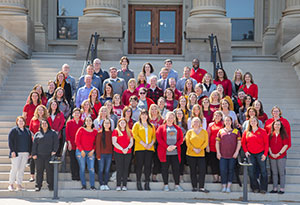
    In 2019, Iowa State University implemented a new financial management and human capital management system. In conjunction with the new system, finance and HR service delivery teams were developed, pulling distributed customer-facing finance and HR roles into two centralized teams. University human resources’ performance through this significant and ongoing organizational change has been positive for the entire campus community. The HR delivery model has led to increased consistency and standardization in delivery of services across the university. It has also created a more well-trained and cohesive team of professionals that work together up and down the chain to find creative solutions to HR challenges and opportunities. HR support for leaders across the institution has significantly improved through better access to accurate data, streamlined processes for workforce and position planning, compensation adjustments, support addressing low-preforming employees and behavioral issues, large-scale employee movement and reorganizations, and professional human capital consulting. The new HR delivery systems have resulted in a much more efficient, collaborative and cohesive HR unit that is better equipped to serve employees and supervisors. At the same time, employees and supervisors have benefitted from HR’s reliability, transparency, accountability and consistency in its efforts to support them.

    Talent and Culture Department, Broward College (Southern Region)

    Recognizing that HR alone cannot create culture but that it plays a critical role in ensuring the infrastructure is in place to support the cultural aspirations of an organization, the talent and culture department at Broward College has worked over the last several years to spearhead significant organizational change. Beginning in 2019, the university launched its three-year culture transformation plan. An integral step in the transformation process was the implementation of information-gathering discussions between the HR leadership team and employee groups comprised of administrators, faculty and professional technical staff, which provided substantive feedback on areas that needed the most attention. This organizational change, led by the talent and culture department, has resulted in more substantive collaboration; stronger relationships among faculty, staff and administrators; and greater trust and communication between employees and their supervisors. It has also served as a catalyst for innovative projects throughout the organization designed to maximize the experience of employees, students and the community. Some major initiative highlights include the creation of talent business partner roles, Leadership 360 Assessments, psychological safety workshops, employee resource groups, employee onboarding, and a leadership development program called BC LEAD that educates and empowers managers at all levels to rise to leadership excellence.
    HR Campus Climate Liaisons, The University of Texas Rio Grande Valley (Western Region)

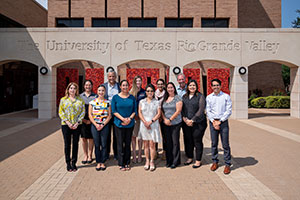
    After implementing a strategic action planning process, led by an internal HR workgroup called Campus Climate Liaisons, The University of Texas Rio Grande Valley saw double-digit improvements in climate survey results within three years, all amid a pandemic. The liaison group consists of individuals from various HR areas, such as talent development, organizational development, employee wellness and employee relations/business partners. The group was trained to provide support to assigned departments with result-sharing, action-planning and ongoing progress-reporting. This method ensured that all departments received the same level of support and helped the HR team better track progress toward climate goals. It also helped empower all department leaders to have conversations about campus climate and department climate. The biggest improvements were seen in areas of faculty, administration and staff relations; senior leadership; and facilities. The campus climate liaison model has been so successful that it will continue to be used for future campus climate initiatives and to provide ongoing support to all departments.

    Higher Ed HR Rock Star Award

    This award recognizes an individual who is serving in the first five years of a higher education HR career who has already made a significant impact.

    Audrey Davis, Assistant Director of Personnel, Texas Tech University (Western Region)

    With her enthusiasm and inspirational demeanor, Audrey Davis has built strong and trusting relationships with each department she works with, not only within university student housing, but within each auxiliary services area at Texas Tech University. Since taking over the personnel team, Audrey has demonstrated continuous innovation and creative thinking, which has completely changed the way the student housing personnel team operates and provides services. After only two years in her role, she has identified and eliminated major gaps in the onboarding/offboarding processes. She has also developed a collaborative hiring system that allows hiring managers to communicate efficiently with the personnel team to discuss new hires, promotions and terminations. Audrey’s initiatives have resulted in university student housing being named a center for excellence for human resourcing by the assistant vice president for auxiliary services. Audrey continues to make a positive impact with her role and demonstrates her passion through advocacy, by fostering a welcoming work environment and by building confidence in her team to serve as a one-stop shop for personnel services.


    Source link

  • Reassessing Your Institution’s EAP: Steps for HR Pros to Increase Awareness and Accessibility – CUPA-HR

    Reassessing Your Institution’s EAP: Steps for HR Pros to Increase Awareness and Accessibility – CUPA-HR

    by Lakyn Whaley | May 2, 2022

    May is Mental Health Month. Throughout the month, be sure to join the Connect discussion in the General Discussion group to discuss challenges and successes, as well as pose questions and offer advice to higher ed HR peers on the topic of mental health. A Zoom discussion will also take place mid-May. Stay tuned for the link to be posted in the Connect discussion. 

    Employee Assistance Programs (EAPs) are nothing new. In fact, 97 percent of large employers offer an EAP as part of their benefits package. Yet, the utilization rate of these programs is abysmally low, clocking in at an average of less than 5 percent even as concerns around mental health continue to grow. EAPs should be a key resource for struggling employees, so why isn’t anybody using them?

    Lack of Awareness

    Lack of awareness, on multiple levels, plays a large role in the underutilization of EAPs. Usually, employees are introduced to their organization’s EAP and other benefits during their onboarding process. However, the deluge of information new employees are exposed to during this time can easily wash out any memory of an EAP mention.

    In addition, there’s a general lack of awareness as to how EAPs function. People may form their own incorrect assumptions, such as thinking that participating in an EAP will incur an immediate cost or that EAP use will be reflected on performance evaluations, which keep them from accessing this benefit.

    Distrust and Stigma

    From grief counseling to connecting employees to legal resources, the situations that EAPs are designed to provide support for can often be deeply personal. Because of this, some employees may be concerned that personal details or other information related to their EAP access will be shared with their employers, since the EAP is an employer-sponsored program. Others may be hesitant to interact with EAPs due to the stigma surrounding mental and behavioral health topics.

    Accessibility

    If employees are aware and comfortable accessing their organization’s EAP, the next challenge they often have to surmount is the myriad steps required to connect with the resources and services they need. Many of the individuals who would benefit from using an EAP are already operating under higher levels of stress and may be more fatigued than their peers. This can mean that these employees are less likely to have the energy needed to engage with extended processes, even when they’re the ones who need it most.

    How Can HR help?

    It might feel like the issues listed above are too big for one department — and in some cases one person — to overcome, but there are steps you can take to help.

    Start by looking at your organization’s EAP from an employee perspective and map out the steps someone needs to take to access services. Ask questions along the way such as: How many steps are there? How do employees learn more about their EAP? What options are there for contacting someone? Might the hours of service be prohibitive to some? Are the services provided meeting a variety of needs? Note too where you notice the potential for confusion or frustration within the process and remember that if something can be simplified, it should be simplified!

    Once you’ve reassessed the EAP process, take some time to examine how your campus is talking about mental health in general. While communication about the EAP is necessary for program awareness, by itself it’s not enough to improve utilization. Double down on efforts to reduce stigma around mental health and mental illness. Creating a culture where employees feel safe to talk about their mental health and welcome to bring their whole selves to the table has myriad benefits — only one of which is improving EAP usage.

    Related resources:

    Mental Health Toolkit (CUPA-HR members-only resource)

    Destigmatizing Mental Health on Campus: What Can HR Do (Higher Ed HR Magazine)

    Right Direction – Free Turnkey Resources for Organizations to Address Mental Health in the Workplace


    Source link

  • 2022 Data: Changes in Higher Ed Pay and Workforce Size – CUPA-HR

    2022 Data: Changes in Higher Ed Pay and Workforce Size – CUPA-HR

    by CUPA-HR | April 27, 2022

    CUPA-HR has released its data on overall higher ed pay increases, as well as changes in workforce size for 2021-22.

    Higher Ed Pay Increases Have Not Kept Pace With Inflation

    The soaring inflation rate has far outpaced pay increases for the higher education workforce. According to findings from CUPA-HR’s annual workforce surveys for 2021-22, overall median salaries for administrators increased by 3.4%. Professionals and non-exempt staff saw increases of 2.9%, and salaries for tenure-track and non-tenure-track faculty increased by 1.6% and 1.5%, respectively. The inflation rate for 2021 was 6.8% and continues to climb.

    This is not the first year that pay increases have not kept up with inflation. Pay increases for administrators, professionals and staff last met or exceeded inflation in 2019-20.  Non-tenure-track faculty salary increases last met or exceeded inflation in 2016-17, and tenure-track faculty salary increases have not kept pace with inflation in any of the past six years.

    Explore pay-increase trends on CUPA-HR’s website.

    Overall Workforce Size Has Declined in the Wake of the Pandemic

    Historically, the overall size of the higher education workforce has increased from year to year. However, colleges and universities are experiencing the same employee recruitment and retention challenges that most U.S. employers have struggled with in the past few years. In both 2020-21 and 2021-22, the size of full-time staff, part-time staff, and tenure-track faculty declined from the prior year.

    Two areas of the workforce that saw growth this year were those of non-tenure-track faculty and adjuncts. Although the number of non-tenure-track faculty and adjuncts declined between 2019-20 and 2020-21, those numbers have rebounded in 2021-22.

    Explore the trends in workforce size changes on CUPA-HR’s website.

    In-Depth Data and Custom Reports

    Higher ed institutions can use CUPA-HR’s DataOnDemand (DOD) subscription service to run comprehensive data tables and analyses.


    Source link

  • DHS Extends I-9 Flexibility Guidance Through October – CUPA-HR

    DHS Extends I-9 Flexibility Guidance Through October – CUPA-HR

    by CUPA-HR | April 25, 2022

    On April 25, the Department of Homeland Security announced another extension of the Form I-9 compliance flexibilities that was initially granted in 2020. The guidance was set to expire on April 30 but has now been extended through October 31, 2022.

    The guidance will continue to allow for remote inspection of Form I-9 documents in situations where employees work exclusively in a remote setting due to COVID-19-related precautions. For employees who physically report to work at a company location on any regular, consistent or predictable basis, employers are required to use standard I-9 procedures.

    Last week, CUPA-HR and the American Council on Education (ACE) sent a letter to United States Citizenship and Immigration Services (USCIS) Director Ur Jaddou asking for this additional extension as colleges and universities continue to rely on such flexibilities during a period where institutions are facing worker shortages and a tight labor market that have caused institutions to turn to out-of-state professionals and faculty to fill open positions. Additionally, the letter noted that DHS is pursuing options to modernize the Form I-9 examination requirements through the formal rulemaking process, which may lead to a permanent option for remote inspection.

    CUPA-HR is once again grateful for DHS’s swift response and extension of the Form I-9 flexibilities. We will keep members apprised of any updates on both this guidance and future Form I-9 regulatory activity.


    Source link

  • Uncovering Workplace Barriers by Auditing the DEI Experience – CUPA-HR

    Uncovering Workplace Barriers by Auditing the DEI Experience – CUPA-HR

    by CUPA-HR | April 20, 2022

    Detecting bias can be a challenge, particularly when it comes to long-standing practices that are firmly rooted in our campus culture and systems. Left unchecked, these routine practices may create unintended barriers to inclusion and belonging.

    In the recent CUPA-HR virtual workshop, “Detecting Systemic Bias in Talent Practices,” Dr. Aarti Shyamsunder, DEI solutions consultant at YSC Consulting, and Pooja Shahani, founder and CEO of Kintsugi Consulting, discussed methods higher ed HR practitioners can use to pinpoint these barriers to inclusion. One method is to audit the DEI experience at your institution by reflecting on the following questions to determine who is present, who is participating and who holds the power.

    • Who runs things? Who are the individuals that make decisions? Who are the leaders? Who sits on the board? Do they all look the same? Is there a pattern in who gets to run things?
    • Who does the office “housework?” Who organizes team outings and takes meeting notes? Are these individuals recognized for their work? Women in the workforce often take on these additional duties.
    • Who gets credit? Are team members receiving praise and recognition for their contributions to a job well done? In academia, this could include whose name gets listed first on research or other academic work.
    • Who knows whom? Is there a pattern of individuals who know each other who receive more information and therefore have more opportunities to progress?
    • Who is speaking? Who gets to take space in a room? Is there an obvious difference in how often men in the room speak versus women?
    • Who gets development opportunities? Who are the individuals who get access to high-visibility roles that end up becoming senior-level positions? Who is being invested in?
    • Whose experience matters? “Covering” is a term that means downplaying our identities. What kind of covering demands (often unspoken) do we make of people so they feel compelled to change themselves in order to belong?
    • Who gets invalidated? Whose presence and voice are missing from meetings?

    Exploring long-standing practices through the lenses of various campus stakeholders is essential to creating a higher ed workplace that is both inclusive and welcoming. Look for ways you and your team can audit employee experiences and uncover barriers at your institution.

    Related resources:

    Diversity, Equity and Inclusion Toolkit (CUPA-HR members-only resource)

    DEI Maturity Index

    Diversity Resources

    Diversity and Inclusion Start With the Hiring Process: Two Institutions Getting It Right (The Higher Ed Workplace Blog)


    Source link

  • HR and the Courts – CUPA-HR

    HR and the Courts – CUPA-HR

    by CUPA-HR | April 13, 2022

    Each month, CUPA-HR General Counsel Ira Shepard provides an overview of several labor and employment law cases and regulatory actions with implications for the higher ed workplace. Here’s the latest from Ira.

    Court of Appeals to Decide Whether a Non-Citizen Applicant for U.S. College Soccer Coaching Position Is Covered Under U.S. Anti-Discrimination Laws 

    The U.S. Court of Appeals for the D.C. Circuit will review a federal trial court decision concluding that a non-citizen soccer coach applicant is not protected or covered by U.S. anti-discrimination statutes.

    The federal trial court dismissed the case against American University on summary judgement concluding that a non-citizen applicant living outside the United States is not protected under Title VII or the Civil Rights Act of 1866. The plaintiff has appealed to the D.C. Circuit claiming that he was discriminated against because of his race, ethnicity and national origin when he did not receive the position he applied for (Nahkid v. American University ( DC Cir. No. 21-cv-7107, 3/11/22)). The plaintiff was a citizen of Trinidad Tobago and was living in Lebanon when he applied for the position. The plaintiff is a graduate of American University and played on the soccer team when he was a student.

    Federal Court Jury Awards Professor $3 Million for Past and Future Emotional Distress, Pain and Suffering Resulting From Her Tenure Denial Based on Her Sex and Pregnancies

    A federal district court jury in west Texas awarded an assistant engineering professor more than $3 million in damages as a result of finding that the University of Texas At Austin denied her tenure because of her sex and pregnancies. The professor was awarded $1 million for past emotional pain and suffering, $2 million for future emotional pain and suffering and $50,000 for lost back pay and benefits (Nikolova v. University of Texas at Austin (W, Dist Tex. No. 1:19-cv-00877, jury verdict 3/14/22)). Motions may be filed to have the court reduce the jury’s damage verdict.

    Court of Appeals Dismisses Student Intern’s Title VII Discrimination Claims Due to No Employee/Employer Relationship

    The U.S. Court of Appeals for the Third circuit (covering Pennsylvania, New Jersey and Delaware) recently affirmed a trial court’s dismissal of a Temple University student intern’s race discrimination lawsuit against an opioid rehab facility, Prevention Point, where he was interning. The plaintiff was a student in Temple’s public health program and obtained the internship as part of the program to complete his degree. In an unpublished decision, the court of appeals concluded that the plaintiff did not have an employee/employer relationship with Prevention Point, so there was no Title VII jurisdiction (Payne v. Prevention Point Philadelphia (2022 BL 86265 Cir. No. 21-02173, unpublished, 3/15/22)).

    The court pointed to evidence that documented that the goals of the internship related to the plaintiff’s course work at Temple and that other documents supported the fact that university staff coordinated with the facility’s staff to manage the internship.

    New York State Court System Terminates 103 Unvaccinated Employees as Appeals Court Reinstates Presidential Vaccine Mandate Among Federal Workers

    New York state court administrators disclosed that they have terminated 103 employees for failure to adhere to the court system’s vaccine mandate. They also reported that another 12 employees have retired or resigned after they failed to comply with the court’s COVID-19 vaccine requirements. All unvaccinated employees were given a warning last month that they faced possible termination for not complying with the vaccine mandate. Forty-one people in that group did comply and were not among those terminated for non-compliance.

    Four judges also face further action for not complying as the court administrators do not have the power to terminate non-compliant judges. It appears that the court administrators will refer non-compliant judges to the judicial ethics independent watchdog for non-compliance and further potential action.

    Union officials representing the terminated employees continue to fight the terminations. Federal courts have ruled against attempts to block enforcement of the court administration’s vaccine mandate.

    Separately, the U.S. Court of Appeals for the Fifth Circuit reversed a Texas federal district court judge’s order, blocking the presidential requirement for federal civilian employees to be vaccinated. The court of appeals threw out the challenge to the presidential order, requiring over two million federal civilian employees to be vaccinated or face termination (Feds for Medical Freedom v. Joseph Biden (5th Cir. No. 22-40043, 4/7/22).

    States Beginning to Ban Employer Non-Disclosure Agreements

    The state of Washington recently became the latest state to restrict an employer’s ability to request or demand a non-disclosure agreement (NDA) as a condition of employment or as part of a settlement agreement in discrimination or other employment-related cases.

    The Washington state law takes effect on June 9, 2022. The law goes on step further than similar laws in California and New York, which ban NDAs. The Washington state law bans confidentiality agreements, in addition to NDAs, as part of workplace settlements related to allegations of illegal conduct.


    Source link

  • Reauthorization of Violence Against Women Act Signed Into Law – CUPA-HR

    Reauthorization of Violence Against Women Act Signed Into Law – CUPA-HR

    by CUPA-HR | April 12, 2022

    On March 15, President Biden signed into law the Violence Against Women Act (VAWA) Reauthorization Act of 2022. The legislation reauthorizes all current VAWA grant programs through 2027 and was included in the omnibus appropriations package, which provided $1.5 trillion to fund the federal government for fiscal year 2022.

    Several of the VAWA Reauthorization Act’s provisions will specifically impact higher education institutions. The bill:

    • requires colleges and universities to conduct campus climate surveys of students to track their experiences of sexual violence on campus;
    • expands and provides additional funding for the Rape Prevention and Education Grant Program and other existing campus grants designed to provide comprehensive prevention education for students;
    • establishes a pilot program that provides funding to colleges and universities (among other entities) to create programs on restorative practices to prevent and address sexual violence;
    • requires the Secretary of Health and Human Services to create a demonstration grant program for colleges and universities to provide comprehensive forensic training to train healthcare providers on forensic assessments and trauma-informed care to survivors of sexual violence; and
    • requires the Government Accountability Office to examine the relationships between victims of sexual violence and their ability to repay their student loans.

    Of particular concern for higher ed institutions is the survey to track student experiences of sexual violence on campus. Conducting the survey could create challenges for the institutions as well as for the Department of Education charged with developing it. Additionally, some institutions are already conducting similar surveys on their campuses, creating a risk of duplicated efforts. This will be a complex undertaking for both the department and higher ed institutions.

    CUPA-HR will update members on any additional information on the implementation of the VAWA Reauthorization Act as it is released.


    Source link