Tag: Cybersecurity

  • Data, privacy, and cybersecurity in schools: A 2025 wake-up call

    Data, privacy, and cybersecurity in schools: A 2025 wake-up call

    Key points:

    In 2025, schools are sitting on more data than ever before. Student records, attendance, health information, behavioral logs, and digital footprints generated by edtech tools have turned K-12 institutions into data-rich environments. As artificial intelligence becomes a central part of the learning experience, these data streams are being processed in increasingly complex ways. But with this complexity comes a critical question: Are schools doing enough to protect that data?

    The answer, in many cases, is no.

    The rise of shadow AI

    According to CoSN’s May 2025 State of EdTech District Leadership report, a significant portion of districts, specifically 43 percent, lack formal policies or guidance for AI use. While 80 percent of districts have generative AI initiatives underway, this policy gap is a major concern. At the same time, Common Sense Media’s Teens, Trust and Technology in the Age of AI highlights that many teens have been misled by fake content and struggle to discern truth from misinformation, underscoring the broad adoption and potential risks of generative AI.

    This lack of visibility and control has led to the rise of what many experts call “shadow AI”: unapproved apps and browser extensions that process student inputs, store them indefinitely, or reuse them to train commercial models. These tools are often free, widely adopted, and nearly invisible to IT teams. Shadow AI expands the district’s digital footprint in ways that often escape policy enforcement, opening the door to data leakage and compliance violations. CoSN’s 2025 report specifically notes that “free tools that are downloaded in an ad hoc manner put district data at risk.”

    Data protection: The first pillar under pressure

    The U.S. Department of Education’s AI Toolkit for Schools urges districts to treat student data with the same care as medical or financial records. However, many AI tools used in classrooms today are not inherently FERPA-compliant and do not always disclose where or how student data is stored. Teachers experimenting with AI-generated lesson plans or feedback may unknowingly input student work into platforms that retain or share that data. In the absence of vendor transparency, there is no way to verify how long data is stored, whether it is shared with third parties, or how it might be reused. FERPA requires that if third-party vendors handle student data on behalf of the institution, they must comply with FERPA. This includes ensuring data is not used for unintended purposes or retained for AI training.

    Some tools, marketed as “free classroom assistants,” require login credentials tied to student emails or learning platforms. This creates additional risks if authentication mechanisms are not protected or monitored. Even widely-used generative tools may include language in their privacy policies allowing them to use uploaded content for system training or performance optimization.


    Data processing and the consent gap

    Generative AI models are trained on large datasets, and many free tools continue learning from user prompts. If a student pastes an essay or a teacher includes student identifiers in a prompt, that information could enter a commercial model’s training loop. This creates a scenario where data is being processed without explicit consent, potentially in violation of COPPA (Children’s Online Privacy Protection Act) and FERPA. While the FTC’s December 2023 update to the COPPA Rule did not codify school consent provisions, existing guidance still allows schools to consent to technology use on behalf of parents in educational contexts. However, the onus remains on schools to understand and manage these consent implications, especially with the rule’s new amendments becoming effective June 21, 2025, which strengthen protections and require separate parental consent for third-party disclosures for targeted advertising.

    Moreover, many educators and students are unaware of what constitutes “personally identifiable information” (PII) in these contexts. A name combined with a school ID number, disability status, or even a writing sample could easily identify a student, especially in small districts. Without proper training, well-intentioned AI use can cross legal lines unknowingly.

    Cybersecurity risks multiply

    AI tools have also increased the attack surface of K-12 networks. According to ThreatDown’s 2024 State of Ransomware in Education report, ransomware attacks on K-12 schools increased by 92 percent between 2022 and 2023, with 98 total attacks in 2023. This trend is projected to continue as cybercriminals use AI to create more targeted phishing campaigns and detect system vulnerabilities faster. AI-assisted attacks can mimic human language and tone, making them harder to detect. Some attackers now use large language models to craft personalized emails that appear to come from school administrators.

    Many schools lack endpoint protection for student devices, and third-party integrations often bypass internal firewalls. Free AI browser extensions may collect keystrokes or enable unauthorized access to browser sessions. The more tools that are introduced without IT oversight, the harder it becomes to isolate and contain incidents when they occur. CoSN’s 2025 report indicates that 60 percent of edtech leaders are “very concerned about AI-enabled cyberattacks,” yet 61 percent still rely on general funds for cybersecurity efforts, not dedicated funding.

    Building a responsible framework

    To mitigate these risks, school leaders need to:

    • Audit tool usage using platforms like Lightspeed Digital Insight to identify AI tools being accessed without approval. Districts should maintain a living inventory of all digital tools. Lightspeed Digital Insight, for example, is vetted by 1EdTech for data privacy.
    • Develop and publish AI use policies that clarify acceptable practices, define data handling expectations, and outline consequences for misuse. Policies should distinguish between tools approved for instructional use and those requiring further evaluation.
    • Train educators and students to understand how AI tools collect and process data, how to interpret AI outputs critically, and how to avoid inputting sensitive information. AI literacy should be embedded in digital citizenship curricula, with resources available from organizations like Common Sense Media and aiEDU.
    • Vet all third-party apps through standards like the 1EdTech TrustEd Apps program. Contracts should specify data deletion timelines and limit secondary data use. The TrustEd Apps program has vetted over 12,000 products, providing a valuable resource for districts.
    • Simulate phishing attacks and test breach response protocols regularly. Cybersecurity training should be required for staff, and recovery plans must be reviewed annually.

    Trust starts with transparency

    In the rush to embrace AI, schools must not lose sight of their responsibility to protect students’ data and privacy. Transparency with parents, clarity for educators, and secure digital infrastructure are not optional. They are the baseline for trust in the age of algorithmic learning.

    AI can support personalized learning, but only if we put safety and privacy first. The time to act is now. Districts that move early to build policies, offer training, and coordinate oversight will be better prepared to lead AI adoption with confidence and care.

    Latest posts by eSchool Media Contributors (see all)

    Source link

  • Vermont’s Dual-Enrollment Cybersecurity Certificate

    Vermont’s Dual-Enrollment Cybersecurity Certificate

    With the cost of a college degree rising, more young people are considering alternative forms of postsecondary education.

    Data from ECMC Group found that fewer high school students today (52 percent) are considering attending a four-year college compared to their peers in 2020 (71 percent), and a number are weighing community college or career and technical education instead (25 percent). Nearly half of respondents to ECMC’s survey said their ideal post–high school education should last three years or fewer.

    A new offering from Champlain College in Vermont allows high school students to earn a certificate in cybersecurity before graduation, providing both career exploration and workforce development. The 12-credit certificate equips students with college-ready skills and a pathway to an evolving career.

    The background: The new program, CyberStart, builds on Champlain’s Virtual Gap Program, launched in summer 2020, which allows traditional-aged college students to complete 15 weeks of classes and an internship course remotely before formally enrolling.

    In Vermont, high school students can participate in two college-level courses at no cost. But statewide trends show the students most likely to engage in dual enrollment live in larger towns, have access to a college campus or are enrolled at a high school with an integrated dual-enrollment program, said Adam Goldstein, program director of CyberStart and academic director of the Leahy Center for Digital Forensics and Cybersecurity at Champlain. Most of the programs available to rural high school students consisted of asynchronous courses.

    “We saw a need for something in the middle, where students had the ability to be remote, but to have that synchronous element where they were meeting with other students and working directly with faculty members,” Goldstein said.

    Survey Says

    A 2023 report from the American Council on Education found that 41 percent of high school seniors said the pandemic changed their thinking on their choice of future career, and one in four students changed their view on what college major to pursue.

    How it works: CyberStart is a partnership between Champlain and cybersecurity group NuHarbor Security, designed to give high school students a peek into that work. Champlain also offers certificates for a working adult population, but CyberStart is modeled a little differently, relying on NuHarbor to identify which skills students need to be successful in an entry-level position.

    All Vermont high school juniors and seniors are eligible to participate if they meet dual-enrollment requirements.

    The program consists of 12 credits over four courses: two introductory courses and two internship experiences. The first internship course is led by Champlain faculty and includes other college students at the Leahy Center. The second is orchestrated by NuHarbor and has students work alongside cyber professionals, finessing their workplace skills.

    Courses take place synchronously with a Champlain instructor and follow a flipped classroom model, requiring students to complete readings or lectures prior to meeting and reserving class time for active learning, activities and collaboration among students. Courses are supported by a current student who serves as a mentor.

    A digital focus: CyberStart’s curriculum is built for someone with no prior experience, making it an accessible pathway for students with an interest in STEM. It also provides introductory college courses for students still exploring their career ambitions.

    “We feel that almost anybody in any discipline they want to go into could benefit from a cybersecurity class,” Goldstein said. “Regardless of where they head into the digital age, having an understanding of cybersecurity is a really, really critical skill set.”

    According to the Boys and Girls Club of America’s fall 2024 Youth Right Now survey, over half of high school students are interested in taking science-related courses after they graduate (57 percent), and 48 percent are interested in a STEM-related job in the future.

    Champlain’s program is intentionally structured as an on-ramp for students who want to launch into a career or postsecondary education, allowing them to build professional skills in an emerging field or kick-start their college education. Students who complete the certificate are also given conditional acceptance to Champlain, and high-performing students may be eligible for scholarships.

    “I think it can open up students’ eyes to the possibilities that maybe they weren’t initially thinking of, whether it is a workforce track and thinking about future training and experience or thinking about college and how that can ultimately have a very valuable return on investment,” Goldstein said.

    The initiative also provides students, particularly those in rural areas, with greater insight into career opportunities available to them in the region or remotely.

    State of play: Since launching the program in 2024, Champlain has established relationships with dozens of teachers and high schools across the state, Goldstein said. CyberStart is also available at Vermont’s centers for technology education.

    Some students in the program’s first cohort have continued into a second year or transitioned into a STEM discipline in higher education after graduating high school; many have chosen to pursue cybersecurity.

    The success of CyberStart may provide a model for similar programs in other fields, Goldstein said, such as computer science and data or digital humanities.

    Get more content like this directly to your inbox. Subscribe here.

    Source link

  • FBI Raids Indiana U Cybersecurity Professor’s Homes

    FBI Raids Indiana U Cybersecurity Professor’s Homes

    Federal investigators spent hours last Friday raiding two homes belonging to a cybersecurity professor at Indiana University at Bloomington, multiple local news outlets reported.

    It’s unclear what investigators were looking for, but Chris Bavender, an FBI spokesperson, confirmed to The Herald-Times that the raid was “court authorized law enforcement activity,” and that the agency had “no further comment.”

    Xiaofeng Wang, a tenured computer science professor and director of IU’s Center for Security and Privacy in Informatics, Computing, and Engineering, has worked at the university for more than 20 years. But after numerous government agents began removing boxes from the Bloomington home Wang shares with his wife, Nianli Ma—who also worked for IU’s library as a systems analyst and programmer—neighbors told The Herald-Times they knew little about the couple, including their names. 

    Law enforcement also arrived Friday morning at a home belonging to the couple in Carmel, about an hour and 15 minutes north of Bloomington. A video taken by a neighbor and published by local NBC affiliate, WTHR, shows FBI agents shouting, “FBI, come out!” through a megaphone pointed toward the residence. 

    An unidentified woman then exits the home holding a phone, which agents confiscated before questioning her and later removing evidence from the home. The woman left the scene and returned hours later with her lawyer, who later told WTHR “they’re not sure yet what the investigation is about.”

    According to The Bloomingtonian, Wang was fired from IU in early March. Both his and Ma’s employee profiles have been scrubbed from the university’s websites.

    Source link

  • Cybersecurity Landscape 2022 [eBook]

    Cybersecurity Landscape 2022 [eBook]

    Cybersecurity Landscape 2022 Ebook

    The number of cyberattacks on educational institutions has grown faster than in any other sector, according to recent research. While all industries face rapidly growing security challenges, higher education is an especially appealing target for cybercriminals. Why is this?

    Download our Higher Ed Cybersecurity Landscape ebook — and check out our updated edition for 2024 — to understand how and why cybercriminals are focused on colleges and universities, as well as actions your institution can take to prevent attacks and safeguard data.

    In this ebook, you’ll learn:

    • Why colleges and universities are targets for hackers
    • Common types of cyberattacks in higher ed
    • The risks and consequences of security breaches
    • Ways to increase your security and prevent attacks

    Don’t let hackers shut your college down. Fill out the form to download our ebook and get tips to keep your school secure in 2022.

    Download Now

    MktoForms2.loadForm(“//087-TII-060.mktoweb.com”, “087-TII-060”, 1379);

    Additional Resources

    The post Cybersecurity Landscape 2022 [eBook] appeared first on Collegis Education.

    Source link

  • Higher Education Cybersecurity Landscape in 2024

    Higher Education Cybersecurity Landscape in 2024

    Facing challenges in enrollment, retention, or tech integration? Seeking growth in new markets? Our strategic insights pave a clear path for overcoming obstacles and driving success in higher education.

    Unlock the transformative potential within your institution – partner with us to turn today’s roadblocks into tomorrow’s achievements. Let’s chat.

    Source link

  • Phone-free multi-factor authentication is key to K12 cybersecurity strategy

    Phone-free multi-factor authentication is key to K12 cybersecurity strategy

    As cyber threats against educational institutions continue to rise, the need to protect sensitive data and maintain secure, accessible learning environments is more crucial than ever. Authentication has always been a cornerstone of cybersecurity, but traditional methods are proving insufficient. For educational institutions facing unique challenges, deviceless authentication (which doesn’t require a cell phone) is emerging as an innovative solution, allowing schools to secure their networks without requiring users to have access to physical devices. Identity Automation’s RapidIdentity platform offers versatile deviceless options, including WebAuthn and Pictograph, which deliver robust, device-free authentication tailored to the needs of schools.

    Why Authentication Matters in Education Today

    With sensitive student data, health records, and other critical information at stake, cybersecurity in schools is a priority. Federal agencies like the Cybersecurity and Infrastructure Security Agency (CISA) and the Department of Education (ED) have increasingly emphasized the need for multi-factor authentication (MFA) as an essential security measure. They urge schools to strengthen their defenses with MFA, advocating for security standards that go beyond passwords. Guidance from federal government’s K-12 Cybersecurity Act and the Department of Education’s resources on protecting student privacy provide best practices guidelines, but implementing MFA in education brings its own challenges.

    Access to physical devices isn’t universal in education, and institutions are increasingly adopting device restrictions. Many students do not own personal devices, while others may be prohibited from using them on campus. Teacher unions often object to districts requiring teachers to use their personal phones for school activities. This is where deviceless authentication becomes critical: it enables every user to securely access school systems without needing an additional device, creating a seamless, secure experience for students and staff alike.

    Trends in Deviceless Authentication

    Across sectors, authentication methods are evolving to increase security while minimizing reliance on devices, passwords, and other traditional methods. Here are a few key trends:

    1. WebAuthn for Passwordless Security: WebAuthn is a leading technology enabling secure, passwordless authentication across platforms. By using biometric sensors or hardware keys, WebAuthn eliminates the need for passwords entirely. For schools, WebAuthn provides a versatile deviceless solution by allowing users to authenticate through built-in or connected hardware options on any device available in the school setting, such as a laptop or desktop computer.
    2. Pictograph Authentication for Visual Simplicity: Pictograph offers a unique, highly accessible way to authenticate by allowing users to choose and memorize a series of images rather than passwords or device-based codes. This method is ideal for students of all ages, as it does not require any device ownership and is easy for younger users to remember. Pictograph aligns well with educational environments, where students can log in quickly without needing a phone or other hardware.
    3. Adaptive and Contextual MFA: Adaptive authentication adjusts security requirements based on factors like user location or behavior, providing extra layers of security without requiring a device. Schools benefit from these dynamic adjustments, allowing students and teachers to access resources with minimal friction while ensuring that the security adapts to higher-risk scenarios.
    4. Zero-Trust Frameworks: Educational institutions increasingly adopt Zero Trust models, which prioritize strict identity verification at every access point. Deviceless options like WebAuthn and Pictograph fit seamlessly into this framework, making it possible for schools to implement Zero-Trust principles even in challenging environments where users may not have access to dedicated devices.

    RapidIdentity’s Deviceless Authentication Solution

    At Identity Automation, we understand the unique security needs in education and the critical importance of balancing secure access with usability. Our RapidIdentity platform is designed to provide flexible, deviceless authentication options, including WebAuthn and Pictograph, that address the specific challenges of school districts.

    • WebAuthn Integration: WebAuthn allows users to authenticate with cryptographic keys generated by their devices, such as biometric sensors or security keys. RapidIdentity’s support for WebAuthn enables schools to offer passwordless, device-independent security that fits naturally within classroom settings. Whether a student is using a computer lab or a shared school device, WebAuthn provides a frictionless and secure way to log in without needing to rely on personal devices.
    • Pictograph for Visual Authentication: Designed with younger students and device-limited environments in mind, RapidIdentity’s Pictograph feature offers a user-friendly alternative to traditional authentication methods. Instead of entering a password or using an SMS code, students can select a personalized sequence of images. This solution is particularly useful for younger students who may struggle with text-based passwords or who lack access to personal devices, providing an easy-to-remember and device-free way to log in securely.
    • Role-Based Access and Adaptability: With thousands of students, teachers, and staff accessing systems daily, RapidIdentity’s platform provides adaptable, role-based access specifically designed for educational institutions. Users are only prompted for higher levels of authentication when necessary, reducing friction while enhancing security. Deviceless options like WebAuthn and Pictograph make this process even smoother by offering flexible solutions that require no additional hardware for authentication.
    • Compliance and Federal Mandates: RapidIdentity’s solutions are built to help schools align with federal guidelines, offering a secure yet flexible way to implement MFA without compromising accessibility. With deviceless options, schools can protect student data and meet cybersecurity mandates without requiring users to carry devices, making compliance achievable for districts of all sizes and means.
    • Scalability and Cost-Effectiveness: Schools can avoid the high costs of purchasing, deploying, and managing hardware tokens or mobile-based authentication solutions by using RapidIdentity’s deviceless authentication. For cash-strapped districts, the ability to secure their environments without extensive device investments is a game-changer, offering schools a highly scalable and economically feasible solution.

    Partnering with Identity Automation for a Safer Future

    In a landscape where cyber threats are increasingly sophisticated, RapidIdentity’s deviceless authentication options, including WebAuthn and Pictograph, stand as versatile and powerful tools in an educational institution’s security arsenal. With Identity Automation, school districts can confidently adopt robust, compliant, and user-friendly authentication solutions designed specifically for the education sector.

    To explore how RapidIdentity can strengthen your school’s cybersecurity posture, reach out to Identity Automation today. Our team is ready to help you navigate these challenges and implement solutions that keep your data secure while making authentication easy for every user. Contact us to learn more about deviceless authentication and other ways RapidIdentity can empower your school with comprehensive, modern security.

    Source link

  • PowerSchool Got Hacked. Now What? – The 74

    PowerSchool Got Hacked. Now What? – The 74


    Get stories like this delivered straight to your inbox. Sign up for The 74 Newsletter

    Were you a current or former student in the last few decades? Or a parent? Or an educator? 

    If so, your sensitive data — like Social Security numbers and medical records — may have fallen into the hands of cybercriminals. Their target was education technology behemoth PowerSchool, which provides a centralized system for reams of student data to damn near every school in America.

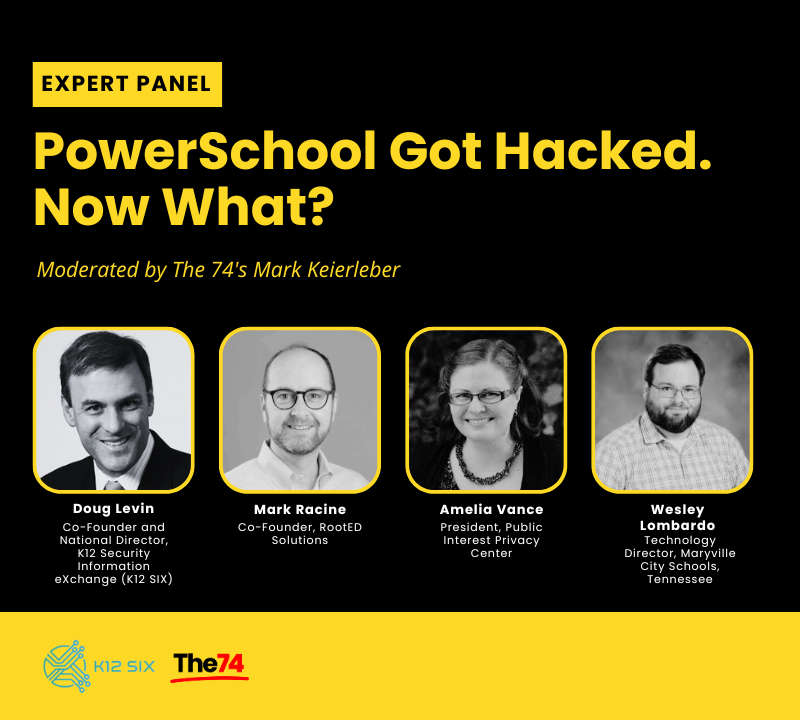
    Given the cyberattack’s high stakes and its potential to harm millions of current and former students, I teamed up Wednesday with Doug Levin of the K12 Security Information eXchange to moderate a timely webinar about what happened, who was affected — and the steps school districts must take to keep their communities safe.

    Sign-up for the School (in)Security newsletter.

    Get the most critical news and information about students’ rights, safety and well-being delivered straight to your inbox.

    Concern about the PowerSchool breach is clearly high: Some 600 people tuned into the live event at one point and pummeled Levin and panelists Wesley Lombardo, technology director at Tennessee’s Maryville City Schools; Mark Racine, co-founder of RootED Solutions; and Amelia Vance, president of the Public Interest Privacy Center, with questions. 

    PowerSchool declined our invitation to participate but sent a statement, saying it is “working to complete our investigation of the incident and [is] coordinating with districts and schools to provide more information and resources (including credit monitoring or identity protection services if applicable) as it becomes available.”

    The individual or group who hacked the ed tech giant has yet to be publicly identified.

    Asked and answered: Why has the company’s security safeguards faced widespread scrutiny? What steps should parents take to keep their kids’ data secure? Will anyone be held accountable?

    Watch the webinar here.


    In the news

    Oklahoma schools Superintendent Ryan Walters, who says undocumented immigrants have placed “severe financial and operational strain” on schools in his state, proposed rules requiring parents to show proof of citizenship or legal immigration status when enrolling their kids — a proposal that not only violates federal law, but is likely to keep some parents from sending their children to school. | The 74

    • Not playing along: Leaders of the state’s two largest school districts — Oklahoma City and Tulsa — rebuked the proposal and said they would not collect students’ immigration information. Educators nationwide fear the incoming Trump administration could carry out arrests on campuses. | Oklahoma Watch
       
    • Walters filed a $474 million federal lawsuit this week alleging immigration enforcement officials mismanaged the U.S.-Mexico border, leading to “skyrocketing costs” for Oklahoma schools required “to accommodate an influx of non-citizen students.” | The Oklahoman
       
    • Timely resource guide: With ramped-up immigration enforcement on the horizon — and with many schools already sharing student information with ICE — here are the steps school administrators must take to comply with longstanding privacy and civil rights laws. | Center for Democracy & Technology

    A federal judge in Kentucky struck down the Biden administration’s Title IX rules that enshrined civil rights protections for LGBTQ+ students in schools, siding with several conservative state attorneys general who argued that harassment of transgender students based on their gender identity doesn’t constitute sex discrimination. Mother Jones

    Fires throw L.A. schools into chaos: As fatal wildfires rage in California, the students and families of America’s second-largest school district have had their lives thrown into disarray. Schools serving thousands of students were badly damaged or destroyed. Many children have lost their homes. Hundreds of kids whose schools burned down returned to makeshift classrooms Wednesday after losing “their whole lifestyle in a matter of hours.” | The Washington Post 

    • At least seven public schools in Los Angeles that were destroyed, damaged or threatened by flames will remain closed, along with campuses in other districts. | The 74

    Has TikTok’s time run out? With a national ban looming for the popular social media app, many teens say they’re ready to move on (and have already flocked to a replacement). | Business Insider

    Instagram and Facebook parent company Meta restricted LGBTQ+-related content from teens’ accounts for months under its so-called sensitive content policy until the effort was exposed by journalist Taylor Lorenz. | Fast Company

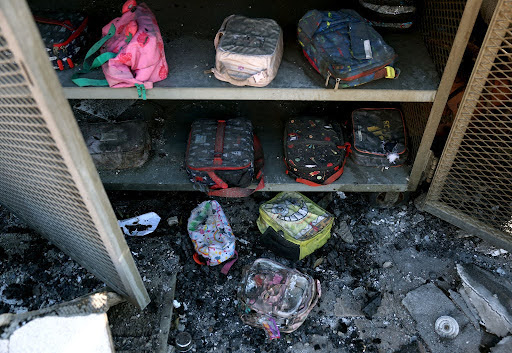
    Students’ lunch boxes sit in a locker at California’s Marquez Charter Elementary School, which was destroyed by the Palisades fire on Jan. 7. (Photo by Justin Sullivan/Getty Images)

    The Federal Communications Commission on Thursday announced the participants in a $200 million pilot program to help schools and libraries bolster their cybersecurity defenses. They include 645 schools and districts and 50 libraries. | FCC

    Scholastic falls to “furry” hackers: The education and publishing giant that brought us Harry Potter has fallen victim to a cyberattacker, who reportedly stole the records of some 8 million people. In an added twist, the culprit gave a shout-out to “the puppygirl hacker polycule,” an apparent reference to a hacker dating group interested in human-like animal characters. | Daily Dot

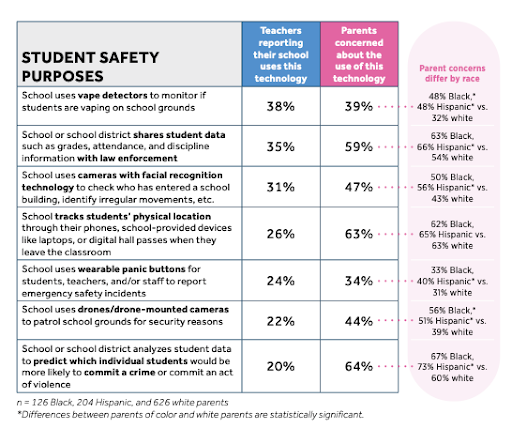
    Not just in New Jersey: In a new survey, nearly a quarter of teachers said their schools are patrolled by drones and a third said their schools have surveillance cameras with facial recognition capabilities. | Center for Democracy & Technology

    The number of teens abstaining from drugs, alcohol and tobacco use has hit record highs, with experts calling the latest data unprecedented and unexpected. | Ars Technica


    ICYMI @The74

    Librarians Gain Protections in Some States as Book Bans Soar

    RFK Jr. Could Pull Many Levers to Hinder Childhood Immunization as HHS Head

    Feds: Philadelphia Schools Failed to Address Antisemitism in School, Online


    Emotional Support

    New pup just dropped.

    Meet Woodford, who, at just 9 weeks, has already aged like a fine bourbon. I’m told that Woody — and the duck, obviously — have come under the good care of 74 reporter Linda Jacobson’s daughter.


    Get stories like these delivered straight to your inbox. Sign up for The 74 Newsletter

    Source link