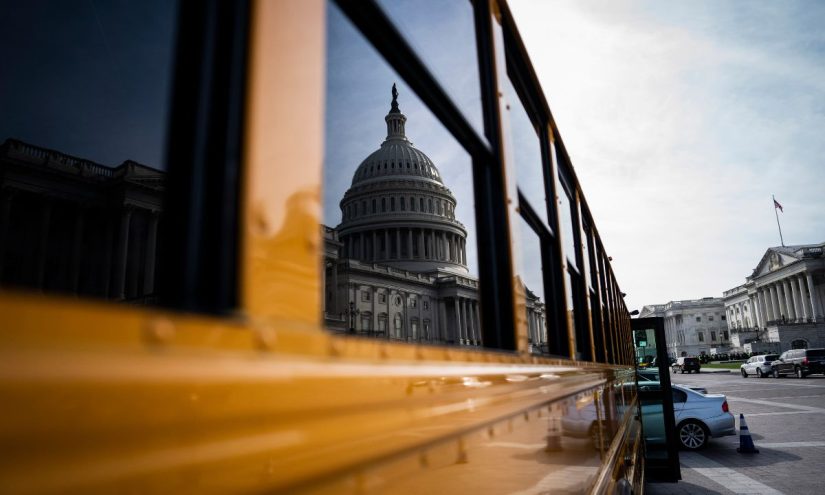
Free speech is more than just a constitutional right — it’s the foundation of democracy and social progress. In today’s divided political climate, defending this right has never been more important. That’s why FIRE’s Free Speech Forum is bringing together passionate young leaders who are ready to become tomorrow’s defenders of free expression.
Not your average summer camp
The Free Speech Forum is an immersive, week-long experience designed for rising 10th through 12th graders who want to strengthen their understanding of free speech and the First Amendment. From June 21–27, 2026, students will gather in Washington, D.C. for an unforgettable program that combines expert-led learning, hands-on skill building, and meaningful peer connections.
This isn’t just about classroom sessions — it’s about becoming part of a movement.
What to expect
Dynamic workshops with leading free speech experts
Advocacy training to sharpen your voice
Field trips to iconic sites like the U.S. Capitol and the Supreme Court
Interactive cohort activities
College prep and career development sessions
Networking with advocates, policymakers, and fellow students who share your passion
From the moment you arrive, you’ll meet your counselor and the students in your cohort where you can start building lasting friendships. Wind-down time is built into each day, so you’ll have the space you need to recharge.
Who should apply?
College-bound students with a passion for free speech and advocacy
Those eager to explore a career in law or First Amendment work
Students enrolled in grades 9–11 at the time of application
Applicants who will be at least 15 years old at the program’s start and no older than 18 when it ends
What does it cost? It’s completely free! FIRE covers registration, housing, and meals. Students are responsible for their own travel arrangements to and from Washington, D.C., but free transportation is provided between Ronald Reagan National Airport or Union Station and the university where the event will be hosted.
Need help with travel expenses? A limited number of need-based scholarships are available. Students accepted into the program will receive details about how to apply.
How do I apply? Applications are now open! The application deadline is March 30, 2026. Due to the competitive nature of the program, we strongly recommend applying early.Important: To submit your application, you’ll need to create a CampInTouch account. When you click the application link on our website, you will be taken to the CampInTouch login page, where you can log in or sign up for a new account before beginning your application.
This is your chance to:
Dive deep into the history and future of the First Amendment
Learn from leaders in advocacy, education, and policy
Build confidence in explaining the importance of free speech to others
Develop the skills to defend free expression in your community, on campus, and beyond
Twenty-one state attorneys general and the AG of Washington, D.C., filed briefs in support of lawsuits challenging the cancellation of TRIO grants for programs such as Upward Bound at Montgomery County Community College.
Linda Johnson/Montgomery County Community College
Democratic attorneys general from 21 states and Washington, D.C., filed briefs this week asking a court to reverse the Trump administration’s rejection of grants supporting TRIO programs, which help disadvantaged students attend and graduate from colleges and universities.
The Council for Opportunity in Education, which advocates for TRIO programs such as Upward Bound, said about 100 grants were rejected or canceled last month after the Education Department delayed funding for thousands of grants that were slated to begin Sept. 1. Another 23 programs lost funding earlier in the year.
Those terminations deprived more than 43,600 students of services such as tutoring and financial aid help. (Trump’s fiscal year 2026 budget request would end TRIO altogether, and all but a handful of staff in the TRIO grants office were fired early in the ongoing government shutdown.)
On Sept. 30, the Council filed two lawsuits against the department and Education Secretary Linda McMahon in the U.S. District Court for D.C., alleging that the department canceled grants for complying with the General Education Provisions Act Equity Directive—a requirement at the time of the applications. One suit argues the department faulted a University of New Hampshire application for allegedly saying its program would be “identifying and recruiting students of color and non-Caucasians.”
The Council is requesting preliminary injunctions vacating the department’s denials and ordering reconsideration of the grants. The attorneys general filed amicus briefs supporting this call.
“TRIO programs serving thousands of high-school and college students have closed, many of which have operated successfully for years with track records of success,” the briefs say. “Students who relied on these programs’ guidance and academic assistance are now being turned away. The result will be fewer students going to college and fewer students graduating college, to the detriment of impacted Amici States, their residents, and their economies.”
The AGs of Nevada and Massachusetts were the briefs’ lead authors; they were joined by their counterparts in Arizona, California, Colorado, Connecticut, Delaware, D.C., Hawai‘i, Illinois, Maine, Maryland, Michigan, Minnesota, New Jersey, New Mexico, New York, Oregon, Rhode Island, Vermont, Washington and Wisconsin.
After decades serving in the Marine Corps and in education, I know firsthand that servant leadership and diplomacy can and should be taught. That’s why I hoped to bring 32 high school seniors from Texas to Washington, D.C., this fall for a week of engagement and learning with top U.S. government and international leaders.
Instead of open doors, we faced a government shutdown and had to cancel our trip.
The shutdown impacts government employees, members of the military and their families who are serving overseas and all Americans who depend on government being open to serve us — in businesses, schools and national parks, and through air travel and the postal service.
Our trip was not going to be a typical rushed tour of monuments, but a highly selective, long-anticipated capstone experience. Our plans included intensive interaction with government leaders at the Naval Academy and the Pentagon, discussions at the State Department and a leadership panel with senators and congressmembers. Our students hoped to explore potential careers and even practice their Spanish and Mandarin skills at the Mexican and Chinese embassies.
The students not only missed out on the opportunity to connect with these leaders and make important connections for college and career, they learned what happens when leadership and diplomacy fail — a harsh reminder that we need to teach these skills, and the principles that support them, in our schools.
Senior members of the military know that the DIME framework — diplomatic, informational, military and economic — should guide and support strategic objectives, particularly on the international stage. My own time in the Corps taught me the essential role of honesty and trust in conversations, negotiations and diplomacy. In civic life, this approach preserves democracy, yet the government shutdown demonstrates what happens when the mission shifts from solving problems to scoring points.
Our elected leaders were tasked with a mission, and the continued shutdown shows a breakdown in key aspects of governance and public service. That’s the real teachable moment of this shutdown. Democracy works when leaders can disagree without disengaging; when they can argue, compromise and keep doors open. If our future leaders can’t practice those skills, shutdowns will become less an exception and more a way of governing.
Students from ILTexas, a charter network serving over 26,000 students across the state, got a lesson in failed diplomacy after the government shutdown forced cancellation of their long-planned trip to the nation’s capital. Credit: Courtesy International Leadership of Texas Charter Schools
With opposing points of view, communication is essential. Bridging language is invaluable. As the adage goes, talk to a man in a language he understands, that goes to his head. Speak in his own language, that goes to his heart. That is why, starting in kindergarten, we teach every student in our charter school network English, Spanish and Mandarin Chinese.
Some of our graduates will become teachers, lawyers, doctors and entrepreneurs. Others will pursue careers in public service or navigate our democracy on the international stage. All will enter a world more fractured than the one I stepped into as a Marine.
While our leaders struggle to find common ground, studies show that nationally, only 22 percent of eighth graders are proficient in civics, and fewer than 20 percent of American students study a foreign language. My students are exceptions, preparing to lead in three languages and through servant leadership, a philosophy that turns a position of power into a daily practice of responsibility and care for others.
While my students represent our ILTexas schools, they also know they are carrying something larger: the hopes of their families, communities and even their teenage peers across the country. Some hope to utilize their multilingual skills, motivated by a desire to help the international community. Others want to be a part of the next generation of diplomats and policy thinkers who are ready to face modern challenges head-on.
To help them, we build good habits into the school day. Silent hallways instill respect for others. Language instruction builds empathy and an international perspective. Community service requirements (60 hours per high school student) and projects, as well as dedicated leadership courses and optional participation in our Marine Corps JROTC program give students regular chances to practice purpose over privilege.
Educators should prepare young people for the challenges they will inherit, whether in Washington, in our communities or on the world stage. But schools can’t carry this responsibility alone. Students are watching all of us. It’s our duty to show them a better way.
We owe our young people more than simply a good education. We owe them a society in which they can see these civic lessons modeled by their elected leaders, and a path to put them into practice.
Eddie Conger is the founder and superintendent of International Leadership of Texas, a public charter school network serving more than 26,000 students across the state, and a retired U.S. Marine Corps major.
The Hechinger Report provides in-depth, fact-based, unbiased reporting on education that is free to all readers. But that doesn’t mean it’s free to produce. Our work keeps educators and the public informed about pressing issues at schools and on campuses throughout the country. We tell the whole story, even when the details are inconvenient. Help us keep doing that.
Every morning in the District of Columbia, nearly 100,000 students step into 251 public schools with hopes and ambitions for their future. After years of pandemic disruption, recent results show clear signs of progress in how students are recovering and advancing.
In our roles as deputy mayor for education and state superintendent, we see something remarkable taking shape — a citywide education system leading the nation in how to reimagine what’s possible for every child.
This year’s statewide assessment results tell a clear story of momentum. On the D.C. Comprehensive Assessment of Progress in Education, students made the largest gains in English Language Arts and math proficiency since the pandemic. Forty percent of schools raised proficiency by at least 5 points in one of these subjects, and more than 60% showed measurable progress in both. Across the city, 137 of 223 tested schools boosted English scores, while 141 schools improved in math.
ELA proficiency has now surpassed pre-COVID levels, increasing from 37.5% in 2019 to 37.6% in 2025. Math proficiency reached a record high since COVID, rising from 19.4% in 2022 to 26.4% this year. This is evidence that students are not only recovering, but moving forward at a faster pace than before the pandemic.
National data confirms this progress. The Harvard Center for Education Policy and Research’s 2024 Education Recovery Scorecard ranked D.C. first in the nation for learning recovery in both math and reading for grades 3 to 8 between 2022 and 2024. In that two-year period, D.C. students gained back the equivalent of half a grade level in math and a quarter of a grade level in reading. Just a few years ago, D.C. ranked 32nd in math recovery since 2019; today, it leads the country.
Federal relief dollars helped make this possible. D.C. received more than $600 million in K-12 pandemic recovery funds, about $6,800 per student — nearly double the national average of $3,700. Research shows that targeting these dollars toward tutoring, summer learning and other evidence-based strategies contributed directly to the rebound.
Together, these results demonstrate what families and educators across the city already feel in classrooms: Students are making meaningful, historic gains in learning.
Several factors are driving this progress. Since 2015, local per-student funding has increased from $16,032 to $28,040 — a 75% rise — with more money provided for serving students with the greatest needs.
D.C.’s early education stands above national enrollment levels, with 95% of 4-year-olds and 82% of 3-year-olds citywide enrolled in pre-K. At the high school level, more students are graduating in four years than in 2010-11, with nearly a 20- point increase since 2010-11, growing from 58.6% to 76.1%. These students now graduate with college credits, industry certifications and real-world experience in high-demand fields through career and technical Education programs, dual enrollment and our growing network of citywide Advanced Technical Centers, preparing them for success in their next chapter.
The Education Through Employment Pathways initiative enables the Office of the Deputy Mayor for Education to connect data from pre-K-12 with postsecondary outcomes to better identify which programs propel students forward in college and careers, helping D.C. make future investments accordingly.
Teachers are a cornerstone of this progress. Thanks to big investments in recent years, D.C. Public School educators now earn an average salary of $109,000, among the highest in the nation, with comparable pay in charter schools. Investments in professional development, coaching, structured literacy training, high-quality instructional materials in literacy and math and high-impact tutoring have also helped to strengthen classroom instruction, so students feel challenged, supported and inspired. At the same time, D.C. is tackling barriers outside the classroom, securing school-based mental health supports, providing safe passage to schools and expanding the District’s Out of School Time programming. As a result, chronic absenteeism overall has declined 18.3% between 2021-22 and 2023-24, while profound chronic absenteeism — a student missing 30% or more of school days — is down 34.2% over the same time period.
The vast majority of families receive one of their top choices of district and charter schools through a universal enrollment lottery, helping drive D.C.’s national leadership in parent satisfaction. This system, combined with investments in quality and variety, has helped drive the city’s sustained enrollment growth since the 2008-09 school year and added more than 5,000 students after COVID. This is at a time when many large districts across the country experienced declines.
D.C.’s education success isn’t just about test scores. It’s about the child who now walks into class with confidence because tutoring makes reading click. It’s about the high schooler graduating with a resume that includes a paid internship and college credits already earned. It’s about showing the nation that D.C. students — no matter their background or income — can succeed at the highest levels.
D.C.’s experience shows how large urban education systems can rebound and thrive when funding is deep and sustained, resources meet student needs, teachers are well supported and compensated, and learning starts early.
While challenges remain, the data show encouraging momentum that is worth studying nationally. D.C.’s educational vision invariably focuses on ensuring every child is prepared for higher education and a family-sustaining career, while making certain that the city continues to be the nation’s talent capital.
D.C.’s public education leaders can keep proving to the nation what happens when a city dreams big for every student, invests strategically and stays the course: Students and schools will surpass expectations.
Paul Kihn is deputy mayor for education in the District of Columbia. Dr. Antoinette Mitchell is state superintendent of education for the District of Columbia.
Join our zero2eight Substack community for more discussion about the latest news in early care and education. Sign up now.
From her home-based day care in Washington, D.C., Alma peers out the door and down the sidewalks. If they’re clear and there are no ICE agents out, she’ll give her coworker a call letting her know it’s safe to head in for work.
They have to be careful with the kids, too. Typically, she took the five children she cares for to the library on Wednesdays and out to parks throughout the week, but Alma — who, like her coworker, does not have permanent legal status — had to stop doing that in August, when President Donald Trump declared a “crime emergency” in the district. Now, two of the kids she cares for are being pulled out of the day care. The parents said it was because they weren’t going outside.
Trump has deployed the National Guard and a wave of U.S. Immigration and Customs Enforcement (ICE) agents into the district. ICE arrests there have increased tenfold. The situation has thrust the Latinas who hold up the nation’s child care sector into a perpetual state of panic. Nationwide, about 1 in 5 child care workers are immigrants, but in D.C. it’s closer to 40 percent; about 7 percent nationally lack permanent legal status. Nearly all are women.
Many are missing work, and others are risking it because they simply can’t afford to lose pay, providers told The 19th. All are afraid they’ll be next.
“What kind of life is this?” said Alma, whose name The 19th has changed to protect her identity. “We are not delinquents, we are not bad people, we are here to work to support our family.”
Alma has been running a home-based day care for the past decade. She’s been in the United States for 22 years, working in child care that entire time. With two kids being pulled, she will have to reduce her staffer’s hours as she tries to find children to fill those spots.
Her four school-age children also depend on her. This month, she had to write out a signed document detailing what should happen to her kids if she were to be detained. Her wish is that they be brought to detention with her.
“I can’t imagine my kids here without me,” she said.
She said she understands the president’s approach of expelling immigrants with criminal convictions from the country, but teachers who are working with kids? Who haven’t committed any crime?
By targeting them, she said, the administration is “destroying entire families.”
The Multicultural Spanish Speaking Providers Association in D.C., which works with Latina child care providers, has seen this panic first hand for the past couple of weeks as more and more Latinas in child care have stopped coming into work. The center also helps workers obtain their associate’s degree in early childhood education, and since the semester started in mid-August, many teachers have asked for classes to be offered virtually so they don’t have to show up to campus at night.
Latinas have flocked to the child care industry for multiple reasons: Families seeking care value access to language education, and Latinas have a lower language barrier to entry, said Blanca Huezo, the program coordinator at the Multicultural Spanish Speaking Providers Association.
“In general, this industry offers them an opportunity for a fresh start professionally in their own language and without leaving behind their culture,” Huezo said.
The changes, coupled with increased enforcement, has fostered fear among Latinx people regardless of immigration status. That fear among workers is deepening a staffing crisis in an industry that already couldn’t afford additional losses, Huezo said.
“There is a shortage — and now even more,” she said. “There are many centers where nearly 99 percent of teachers are of Hispanic origin.”
Washington, D.C., has been a sanctuary city since 2020, where law enforcement cooperation with immigration officials was broadly prohibited. Earlier this year, however, Mayor Muriel Bowser proposed repealing that law and, in mid-August, Washington’s Metropolitan Police Department Police Chief Pamela Smith gave officers leeway to share information with ICE about individuals they arrested or stopped.
“There was some peace that living in D.C. brought more security,” Huezo said. Now, “people don’t feel that freedom to walk through the streets.”
Several child care workers are afraid to go to work in DC, now that President Trump has removed restrictions on ICE conducting enforcement at schools and daycares. (Getty Images)
Child care centers are also no longer off limits for ICE raids. The centers were previously protected under a “sensitive locations” directive that advised ICE to not conduct enforcement in places like schools and day cares. But Trump removed that protection on his first day in office. While reports have not yet surfaced of raids in day cares, ICE presence near child care care centers, including in D.C., has been reported.
A similar story of fear and surveillance has already played out in Los Angeles, where ICE conducted widespread raids earlier in the summer. Huezo said her organization has been in touch with child care providers in L.A. to learn about how they managed those months.
In the meantime, the best the organization can do, she said, is connect workers with as many resources as possible, including legal clinics, but the ones that help immigrants are at their maximum caseload. The group has put child care workers who are not leaving their homes in touch with an organization called Food Justice DMV that is delivering meals to their doorsteps. Prior to last month, people who needed food could fill out a form and get it that same week. Now, the wait time is two to three weeks, Huezo said. For those in Maryland and Virginia, it’s closer to a month.
Thalia, a teacher at a day care, said her coworkers have stopped coming to work. It’s all the staff talks about during their lunchtime conversations. When she rides the Metro into work, she looks over her shoulder for the ICE agents, their faces covered, who are often at the exits.
“They are hunting us,” she said.
Thalia, whose name has been changed because she does not have permanent legal status, has been living in the United States for nine years and working in child care that entire time. Like her, many of the Latina teachers she works with have earned certifications and degrees in early childhood education.
“We are working, we are cooperating, paying taxes,” she said. “We are there all day so other families can benefit from the child care.”
As a single mother, Thalia has also had to consider what would happen to her three children if she was detained. This past month, she retained a lawyer who could help them with their case in case anything were to happen. Her school-age kids know: Call the lawyer if mom is detained and get tickets to Guatemala to meet her there.
This is what she lives with every day now: “The fear of leaving your family and letting them know, ‘If I don’t return, it’s not because I am abandoning you.’ ”
This summer, Washington, D.C., parents were notified that they’d no longer be able to hold their child back from starting kindergarten if the student turned 5 years old before Sept. 30. Previously, the decision on so-called redshirting had been left up to families, with advice from pediatricians and child psychologists.
In New York City, America’s largest school district, the birthday cut-off is even later: Dec. 31. One-third of children are required to begin kindergarten prior to turning 5. This is a cause of concern for many families.
The city Department of Education doesn’t see it as a problem. In an email, a spokesperson told me its official stance is, “We work to provide all families access to a world-class education, and we work closely with families to ensure students’ placements are academically and developmentally appropriate, in alignment with state guidelines. Our policies allow for flexibility, our kindergarten curriculum is responsive to the needs of our younger learners, and our dedicated educators are prepared to support every student.”
Not all are appeased.
“I have a 4-year-old who will start kindergarten this fall but doesn’t turn 5 until after Thanksgiving,” worried mom CK told me. “I think it’s a big disservice to these kids. The amount of sitting isn’t developmentally appropriate, and the lack of free play is concerning.”
Parents are justified in their concerns. As the Child Mind Institute summarized in June:
Several studies have concluded that kids who are youngest in their class are disproportionately diagnosed with ADHD. A Michigan study found that kindergartners who are the youngest in their grade are 60% more likely to be diagnosed with ADHD than the oldest in their grade. And it doesn’t affect just kindergarteners: A North Carolina study found that in fifth and eighth grade, the youngest children were almost twice as likely as the oldest to be prescribed medication for ADHD.
The research didn’t sit well with some teachers. One blasted my social media inquiry seeking views on redshirting by writing, “ADHD is a very serious IEP (Individualized Education Plan) and we don’t hand them out like candy.”
Others, however, agreed.
“My daughter was one of the youngest in her class,” wrote an anonymous mother. “The teacher and school counselor mislabeled her with psychological disorders that both NY special education testing and private neurological tests did not support.”
“More of my students with an IEP have a birthday in the second half of the calendar year,” confirmed Mary C., who has been a special ed teacher for 12 years. “I understand where an incoming K parent would be concerned that their December baby is much younger than a June baby.”
That was the case with Upper West Side parent KE’s son. “He is the youngest and smallest boy in the grade,” she wrote. “He started kindergarten at 4 years old, still sucking his thumb. The physical, emotional, social, psychological and other developmental differences between a 5-year-old born in January and a 4-year-old born in December impacts everything from holding a pencil to kicking a ball, to the length of time one can sit and concentrate. It was too early, too soon and too young, but we literally had no choice in the matter in order to enroll him.”
Pree Kaur lamented that her daughter “is always the younger one and is not as mentally developed as her peers, so she always feels as if something is wrong with her.”
The Riverdale dad of a son born in November wrote, “He had some difficulty following his teacher’s instructions in first grade, and his teacher repeatedly pointed out that he has difficulty sitting still, staying focused, etc. We had him evaluated by a pediatric developmental specialist and he was diagnosed with ADHD. I really struggle with the whole situation, as I believe if we were able to get him to go to school a year later, matters may have been different.”
“My daughter attended a citywide gifted program. She was doing great, but it came with a price,” confessed Annie Tate. “She was high-functioning until high school, where she was overwhelmed and was diagnosed with ADHD, a diagnosis I believe she wouldn’t have received if I didn’t send her to school at 4 years, 8 months. She would have matured emotionally and physically to be a healthier, happier child.”
Pediatric occupational therapist KJL sees this situation frequently: “Children with ADHD have a 30% delay in executive function compared to their peers. Combine that with young ages, and these children are set up to fail.”
When I posed the question of allowing parents to hold back their children on my mailing list, the most frequent response I received was, “SOMEONE has to be the youngest.”
That’s true. But the situation can still be ameliorated.
Grades with multiple classes can be broken up into three- or four-month bands, so students are learning with a narrower-aged peer group.
Repeating a year should be a more acceptable option, unlike the situation faced by mom Heather Hooks: “My son was very behind academically in first grade. The school refused to hold him back and cited studies on ‘retention’ being not good for kids in the long run. I found these didn’t take into consideration that this was not straight retention, but redshirting an ADHD kid. Other studies were significantly different, and suggested these kids have better outcomes and are less likely to be medicated.”
Another mom was told her daughter “wasn’t behind enough,” despite the child’s pleas that “it’s too much for my head.”
Any steps taken to help New York City’s youngest learners would provide the largest experimental sample size in the country, making those results potentially beneficial for students across America.
Based on what happens in NYC, the educational system can stop treating children as developmentally identical and schools as one-size-fits-all, giving families more options.
As Maureen Yusuf-Morales, who has worked at public, charter and independent schools, suggests, “Parents with children born after September should be allowed choice with guidance based on developmental milestones, as opposed to birthdays being the only hard-and-fast rule.”
A federal judge ordered the Trump administration to restore funding to AmeriCorps programs in 24 states and Washington, D.C., following a lawsuit that challenged the April cuts to the program, The Hill reported Thursday.
The judge, Obama appointee Deborah Boardman, ruled that the states were likely to succeed in their argument that the agency’s funding could not legally be cut without a notice-and-comment period. The ruling did not reinstate any of the agency’s staff.
AmeriCorps volunteers and grants support at least 100 college-access organizations across the U.S., many of which had to lay off their AmeriCorps members in the wake of the cuts.
It’s the latest court order blocking the administration’s crusade to reduce the size of the federal government; recently, judges reversed layoffs at the Department of Education and ruled that a lawsuit challenging funding cuts at the National Institutes of Health could move forward.