Research on community colleges has taken a hit amid the Trump administration’s ongoing war against the Ivy League.
The Community College Research Center, an independent organization based at Columbia University’s Teachers College, found out in March that four of its grants totaling at about $12 million were immediately cancelled, despite being multiple years into their grant cycles. The remaining grant money expected from the Institute of Education Sciences amounted to at least $3.5 million. Four half-completed research projects relied on the funding. Now CCRC leaders are scrambling to find ways to continue the work.
The grants were swept up in the Trump administration’s slashing of $400 million in grants to Columbia University to cow the institution into agreeing to a set of demands. Columbia has since reached an agreement with the administration to restore its federal funding, but the deal only restored grants administered by the U.S. Department of Health and Human Services and the National Institutes of Health. Education Department grants, like the CCRC’s, didn’t return.
The center, now almost 30 years old, conducts rigorous research into community college programs and practices, like guided pathways and dual enrollment, to help institutions improve the student experience and student outcomes.
The canceled grants funded two efforts focused on pandemic recovery, including a study into a program at Virginia community colleges to support adults earning short-term credentials in high-demand fields. CCRC researchers were also using IES money to evaluate the Federal Work-Study program and for a fellowship that placed doctoral students in apprenticeships at education agencies and nonprofits. Teachers College has agreed to take over funding for the fellowship program for at least the upcoming academic year.
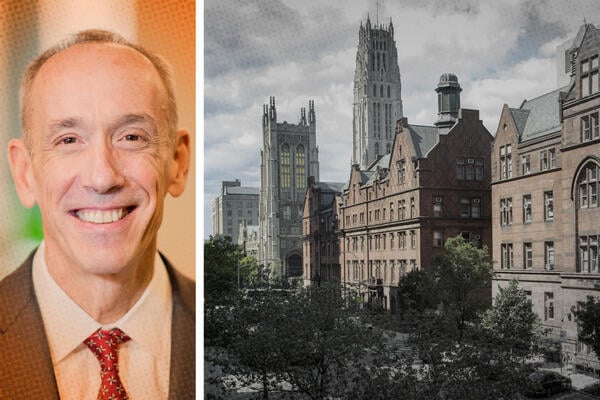
Thomas Brock, CCRC’s director, worries the field of community college research—and its benefits for students—are at risk at a time when federal funding has grown more tenuous. He spoke with Inside Higher Ed about how the center is moving forward in the absence of these funds. The conversation has been edited for length and clarity.
Q: How did you react when you first heard from the Education Department about the nixed IES grants?
A: It got us completely by surprise. We did not see that coming. The notification came on a Friday morning. We had to be finished with our work by the end of the day that Friday—we could have no further charges beyond that point. So, there was just no time to prepare. And all of our communications with IES until that point had been very positive. We were on track to complete the goals of our grants. We had been in frequent conversation with our program officers. So, there was simply no inkling that this would be coming.
Q: What was the extent of the funding loss for you?
A: The overall funding loss amounted to about $3.5 million. Most of the grants that we were working on were pretty far along. The total berth of the grants was well above $3.5 million, but that was about the amount we had remaining. Most of the work that was canceled was in the last year or two. It was all the more disappointing then, because we were so close to having results that we could share with the field. And that is important, of course, not just to CCRC but to the states and colleges that we partner with more broadly to accomplish our mission of informing community colleges, policymakers, practitioners about strategies that work to improve student outcomes.
Q: Going forward, what’s going to happen to projects funded by the canceled grants?
A: So, everything had to be put on hold. I will say we’ve been in discussion with some foundations about what they are calling last-mile funding to complete some of the IES-funded work. We don’t have the grants in hand just yet but invited proposals and ones we think have a good chance of funding.
We should hear news this fall about some of those. With the last-mile funding, we had to narrow the scope. Generally speaking, foundations don’t have the kinds of resources that the federal government does. So, most of these grants are just to really get out the final results and not putting as much emphasis on dissemination as we would have done with the federal funding. But nonetheless, we’re very grateful to have those opportunities.
We were lucky at CCRC. We’ve been around for a while. So, over many years, we’ve built up a reserve fund for rainy days, and we decided if this wasn’t a rainy day, we didn’t know what was. So, we have dipped into those reserves to keep many of our staff fully employed while they work on these proposals and to continue to have the ability to do the work if we get refunded. Those funds won’t last forever. We will have to make some tough decisions later this year about just what size of organization we can continue to support with foundation funds. And, I should note, we have already made a few layoffs and have had a couple of voluntary departures. So we are already smaller than we were, but we hope to maintain a critical core.
Q: Columbia recently reached an agreement with the Trump administration to have some of its research funds restored. Were you hopeful that your funds would be restored as well in that agreement?
A: We were, yes. We were not part of the negotiations. That was handled by Columbia University. And one of the complications here—really, going all the way back to the initial cancellation of our grants—was a misunderstanding, honestly, by the current administration of Teachers College’s relationship to Columbia. We are an affiliated institution, but we are independent—legally, financially, administratively. We have our own president, our own Board of Directors. We are a separate nonprofit organization, a separate 501(c)(3), so the affiliation we have is a loose one. It allows our students to cross-register and take courses at Columbia. But we do not benefit in any way from Columbia’s endowment or its wealth as an institution. Teachers College is a relatively poor stepchild within the Columbia University constellation.
So, when we first lost our grants, we appealed as we were instructed to do if we had an issue with the cancellation. The beginning of our appeal was just that we are a separate institution. Whatever complaints the administration may have about Columbia University and how it handled the student protests last year, that had no bearing on what happened at Teachers College. And indeed, we had no student protests. We had no actions that were of concern to the administration or to anyone. So, we hope, just on that basis, we might win on appeal.
Our appeals were acknowledged, but they have not ever been acted upon as the university went forward with its negotiations. We were hopeful that perhaps [the agreement] would benefit us as well. And when the settlement was reached, I had maybe 24 hours when I was I was really holding my breath. But unfortunately, as we looked at the details of the settlement, it only applied to grants made to the U.S. Department of Health and Human Services and the National Institutes of Health. Department of Education grants were not included.
Q: You touched on this, but what comes next for the CCRC? How are you thinking about moving forward and how you might have to pivot?
A: In the near term, we will have to depend on foundation funding exclusively or primarily. We are fortunate in that we have a long history of foundation funding, so that’s not new, but our model has always involved a blending of federal and foundation resources. And that’s just very important to an organization like ours, because foundations and the federal government have typically funded different kinds of things. They both are really critical to advancing a research agenda.
What is the most important about the federal funding is, No. 1, the strong emphasis on scientific rigor. So, things like the randomized controlled trials that we’re doing on Federal Work-Study, it’s possible you could get a foundation to pick up a project like that, but that is much more in the bailiwick, or at least traditionally has been in the bailiwick of the U.S. Department of Education and its Institute of Education Sciences—not just randomized controlled trials but rigor in all ways, the emphasis on nationally representative samples on longitudinal research. IES funding has been really important for that.
A second way IES has been so critical is this emphasis on dissemination. IES has been criticized, and justifiably so, for the What Works Clearinghouse, for instance, being a bit indecipherable at first and having too much in it that really wasn’t showing effectiveness. But it’s come a long way in improving that resource and also really in encouraging grantees to get their findings out into the field. We depended heavily on federal funding for our website, for our social media efforts, for attending practitioner conferences. It was really vital support for those purposes. So, that is largely what concerns us. Perhaps some new foundation supporters will be interested in that kind of work. [It’s] not likely we will find the level of funding that was available through the federal government, but we hope at least enough to keep our essential communications and outreach efforts intact.
Our agenda will probably have to shift a little bit. This is also what’s disappointing about the Department of Education and IES stepping back—we could count on them to really help set the national agenda and things that were of importance to all 50 states and students in all parts of the country. It’s not to say foundations don’t have that interest, but it is much more typical with foundations to find that they are investing in particular places. There simply are not that many foundations with the resources to kind of take the national view, and that is a concern moving forward. So, it’s something that we’re addressing or trying to think about strategically, but it will be a challenge.
Q: How does the uncertainty with federal funding affect the broader field of community college research?
A: Well, obviously I am biased here. I think research matters, or I would not have entered this profession.
There have been major advances in how community colleges think about developmental education, for example. The models that were in place 20 years ago just turned out to be fundamentally wrong. Most community college students coming in were assessed and placed into developmental education courses that actually did them more harm than good. It was years of careful research that documented that fact and that then supported partnerships with community colleges interested in trying different strategies.
And thanks to all of that work, we now have multiple-measures assessment, where students’ high school grades and other indicators are used. It’s resulting in far fewer students being placed in developmental courses. We also have corequisite remediation, where students are placed in college-level work right away with extra support, as opposed to requiring them to do what was known as prerequisite remediation before starting college-level work. So, those are strategies that we would not have known about, but for this kind of investment, and strategies that have been widely picked up now by the field that are demonstrably leading to improve student outcomes.
So, I guess what I worry about is the cessation, or near cessation, of those kinds of research and development efforts that lead to new insights, that lead to new ways of doing business that really could be transformative for students. And if you think about today’s challenges, they are no different or less concerning.
Artificial intelligence is transforming education. What will it mean for community college students? How could institutions best harness those tools to really ensure students are learning and moving forward? That’s a big, big area that I think cries out for deeper investigation. Another big area of interest is short-term training. Congress is prepared to make Pell Grants available for short-term training. Past evidence has shown not much effectiveness there. But what are the program areas that do lend themselves to short-term training? How might community colleges focus these efforts so that they really do lead to a payoff for students and for taxpayers?
These are big questions that, if we don’t have some of the foundational work in place, we’re not going to have answers five or 10 years from now. And the field as a whole, students specifically, will suffer as a result.