Tag: Dartmouth

  • Dartmouth Joins Growing List of Elite Universities Rejecting White House Academic Compact

    Dartmouth Joins Growing List of Elite Universities Rejecting White House Academic Compact

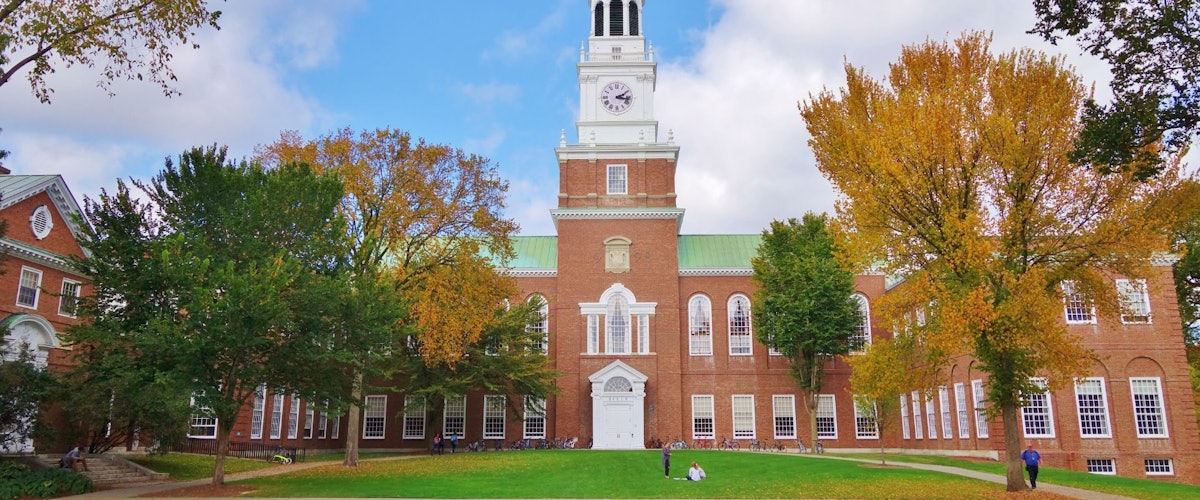
    Dartmouth CollegeFile photoDartmouth College has declined to sign the Trump administration’s “Compact for Academic Excellence in Higher Education,” becoming the latest prestigious institution to prioritize institutional autonomy over preferential federal funding access.

    In a statement released Saturday, Dartmouth President Dr. Sian Beilock firmly articulated the college’s position ahead of Monday’s deadline, emphasizing that governmental oversight—regardless of political affiliation—represents an inappropriate mechanism for directing the mission of America’s top research universities.

    “I do not believe that the involvement of the government through a compact—whether it is a Republican- or Democratic-led White House—is the right way to focus America’s leading colleges and universities on their teaching and research mission,” Beilock stated.

    The compact, extended to nine select institutions, promised enhanced access to federal research dollars in return for compliance with several administration policy mandates. These requirements included adopting the administration’s gender definitions for campus facilities and athletics, eliminating consideration of race, gender and various demographic factors from admissions decisions, and restricting international student enrollment.

    Despite rejecting the compact’s terms, Beilock expressed openness to dialogue, indicating her willingness to explore how to strengthen the traditional federal-university research partnership while maintaining higher education’s focus on academic excellence.

    The decision followed significant campus pressure, with nearly 500 Dartmouth faculty members and graduate students signing a petition advocating for rejection, according to the Valley News.

    In her statement, Beilock emphasized the fundamental principle at stake: “Universities have a responsibility to set our own academic and institutional policies, guided by our mission and values, our commitment to free expression, and our obligations under the law.”

    She framed institutional independence as essential to rebuilding public confidence across political lines and preserving American higher education’s global preeminence.

    Dartmouth’s decision aligns with rejections announced last week by peer institutions including the Massachusetts Institute of Technology, Brown University, the University of Pennsylvania and the University of Southern California, suggesting a coordinated defense of academic autonomy among elite research universities.

    Source link

  • UVA, Dartmouth Reject Trump Compact

    UVA, Dartmouth Reject Trump Compact

    The University of Virginia and Dartmouth College have become the latest higher ed institutions to publicly reject the Trump administration’s “Compact for Academic Excellence in Higher Education.” Now just three of the nine institutions that the federal government originally presented with the document have yet to announce whether they will sign.

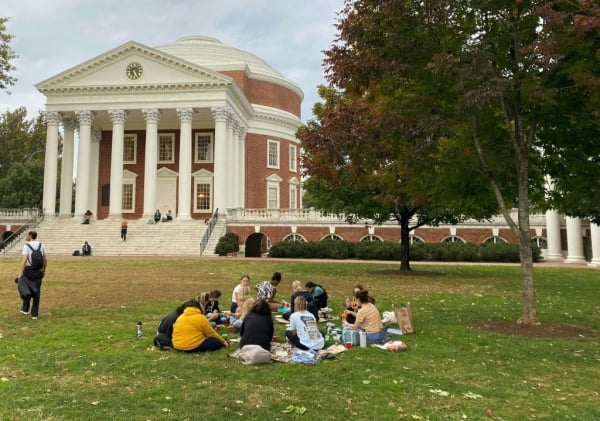
    UVA announced Friday that it opposes the offer of yet-unrevealed special funding benefits in exchange for signing the compact. The statement came the day of an on-campus demonstration urging university leaders not to sign. Dartmouth unveiled its response Saturday morning. Both rejections came despite the universities attending a meeting Friday with White House officials about the deal.

    “As I shared on the call, I do not believe that the involvement of the government through a compact—whether it is a Republican- or Democratic-led White House—is the right way to focus America’s leading colleges and universities on their teaching and research mission,” Dartmouth president Sian Leah Beilock wrote in a message to Education Secretary Linda McMahon, which the president also shared with her community.

    “Our universities have a responsibility to set our own academic and institutional policies, guided by our mission and values, our commitment to free expression, and our obligations under the law,” Beilock wrote. “Staying true to this responsibility is what will help American higher education build bipartisan public trust and continue to uphold its place as the envy of the world.”

    Beilock hasn’t been a publicly outspoken opponent of Trump; at a Heterodox Academy conference in June, she said, “It’s really a problem to say just because the administration, with many things that we all object to, is suggesting something inherently means it’s wrong.” But she also said back then that “we shouldn’t have the government telling us what to do.”

    In a message Friday to McMahon, also shared with the community, UVA interim president Paul Mahoney wrote that “the integrity of science and other academic work requires merit-based assessment of research and scholarship. A contractual arrangement predicating assessment on anything other than merit will undermine the integrity of vital, sometimes lifesaving, research and further erode confidence in American higher education.”

    The compact asks colleges to agree to overhaul or abolish departments “that purposefully punish, belittle, and even spark violence against conservative ideas,” without further defining what those terms mean. It also asks universities, among other things, to commit to not considering transgender women to be women; reject foreign applicants “who demonstrate hostility to the United States, its allies, or its values”; and freeze “effective tuition rates charged to American students for the next five years.”

    In exchange for these agreements, the White House has said signatories would “be given [funding] priority when possible as well as invitations to collaborate with the White House.” But the administration hasn’t revealed how much extra funding universities would be eligible for, and the nine-page compact doesn’t detail the potential benefits. The compact, as well as a Thursday statement from the White House, can also be read as threatening colleges’ current federal funding if they don’t sign.

    Mahoney told McMahon that his university agrees “with many of the principles outlined in the Compact, including a fair and unbiased admissions process, an affordable and academically rigorous education, a thriving marketplace of ideas, institutional neutrality, and equal treatment of students, faculty, and staff in all aspects of university operations.”

    “Indeed,” Mahoney wrote, “the University of Virginia leads in several of these areas and is committed to continuous improvement in all of them. We seek no special treatment in exchange for our pursuit of those foundational goals.”

    The decisions make UVA the fifth and Dartmouth the sixth of the nine initial institutions presented with the deal to publicly turn it down. UVA is also the first public university and first Southern institution to reject it. The Massachusetts Institute of Technology was the first of the nine to turn it down, on Oct. 10, followed by Brown University and the Universities of Pennsylvania and Southern California.

    UVA’s rejection of the compact comes after the Trump administration successfully pressured then–UVA president James Ryan to step down in June. The Justice Department had demanded he step down. The UVA Board of Visitors voted to dissolve the university’s diversity, equity and inclusion office in March, but multiple conservative alumni groups and legal entities complained that Ryan failed to eliminate DEI from all corners of campus.

    A coalition of groups opposed to the compact, including the UVA chapter of the American Association of University Professors, praised the rejection in a Friday news release.

    “Today’s events demonstrate the power of collective organizing and action to defeat tyranny,” the statement said. “We hope that we serve as an example to the other public universities that received the ‘Compact’—the University of Texas, Austin, and the University of Arizona—giving them the courage and clarity not to buckle.”

    UVA faculty groups had overwhelmingly urged university leaders to reject the compact. And hundreds of demonstrators showed up to the anticompact rally Friday on the UVA campus in Charlottesville, Cville Right Now reported.

    Alongside Arizona and UT Austin, Vanderbilt University also hasn’t revealed its decision. But after MIT announced its refusal of the compact, Trump offered it to all U.S. colleges and universities to sign.

    White House officials met Friday with some universities about the proposal. The Wall Street Journal reported that UVA, Dartmouth, Arizona, UT Austin and Vanderbilt were invited, along with universities that weren’t part of the original nine: Arizona State University, the University of Kansas and Washington University in St. Louis.

    White House spokesperson Liz Huston compared the compact in a statement to efforts from former presidents George Washington, Abraham Lincoln, Teddy Roosevelt and John F. Kennedy, who she said “called on our universities to be of greater service to the nation.”

    “President Trump has called on universities to do their part in returning America to its economic and diplomatic successes of the past: a nation of full employment, pioneering innovations that change the world, and committed to merit and hard work as the ingredients to success,” she said, adding the administration hosted “a productive call” with several universities. 

    A White House official said UVA and the other seven invited universities participated in the call.

    “They now have the baton to consider, discuss, and propose meaningful reforms, including their form and implementation, to ensure college campuses serve as laboratories of American greatness,” Huston said. 

    Source link

  • Dartmouth Men’s Basketball Team Drops Union Bid

    Dartmouth Men’s Basketball Team Drops Union Bid

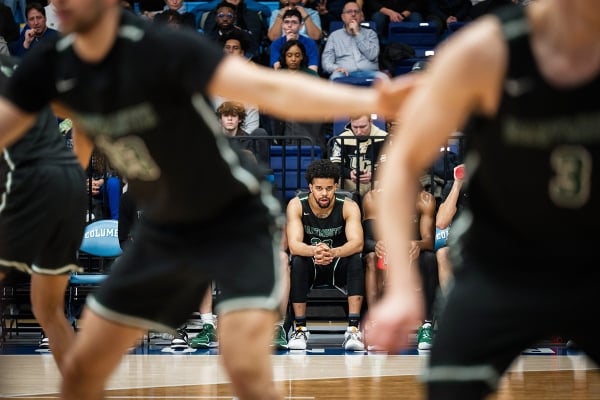
    The Dartmouth College men’s basketball team is dropping its historic bid to form a union, months after voting to do so. 

    The decision, announced Tuesday, comes as Republicans are poised to take control of the National Labor Relations Board, which could affect who is allowed to unionize on college campuses. A regional office of the board cleared the way earlier this year for the players to vote on the petition, ruling that the student-athletes were employees and thus allowed to unionize.

    Dartmouth disagreed with that opinion and refused to bargain with the team until the five-member NLRB ruled on the issue. Currently, the five-member panel has two vacancies, so incoming President Donald Trump could quickly reshape the board. In withdrawing the petition, the Service Employees International Union, Local 560, which represents the players, decided not to gamble with the new board and potentially risk a negative opinion.

    “By filing a request to withdraw our petition today, we seek to preserve the precedent set by this exceptional group of young people on the men’s varsity basketball team,” local president Chris Peck said in a statement to the Associated Press. “They have pushed the conversation on employment and collective bargaining in college sports forward and made history by being classified as employees, winning their union election 13-2, and becoming the first certified bargaining unit of college athletes in the country.”

    The Dartmouth team union threatened to upend college sports and added more urgency to the National Collegiate Athletic Association’s efforts to settle the question of whether student athletes are employees who can collectively bargain. The NCAA has lobbied Congress to pass a law affirming that college athletes aren’t employees. The incoming Congress seems likely to grant that request.

    Source link

  • Dartmouth Men’s Basketball Team Votes to Unionize – CUPA-HR

    Dartmouth Men’s Basketball Team Votes to Unionize – CUPA-HR

    by CUPA-HR | March 6, 2024

    On March 5, 2024, the Dartmouth College men’s basketball team voted 13-2 in favor of joining the Service Employees International Union. The election marks the first time in nearly a decade that student-athletes have been authorized to vote for union representation and may be the first case in which their election results in certified representation.

    Background

    On February 5, the National Labor Relations Board Regional Director Laura Sacks determined that players on the Dartmouth men’s basketball team are employees under the National Labor Relation Act and are thus eligible to unionize. The decision argues that the student-athletes are employees because Dartmouth has the “right to control the work performed by” the players on the team and players receive several benefits, including, but not limited to, lodging, meals, gear and training. Sacks’s decision ordered a secret-ballot election for representation, allowing all 15 players on the roster to determine whether or not to unionize.

    On February 29, Dartmouth filed a request to the NLRB to reconsider the decision made by the regional director and to place a stay on the election or impound the ballots during the reconsideration period. The NLRB rejected these requests to reconsider the decision and stay the election, allowing the election to move forward as scheduled.

    On March 5, before the 13-2 vote, Dartmouth appealed the regional director’s decision to recognize the student-athletes as employees. The appeal asked the NLRB to review and reverse the regional director’s decision and dismiss the petition, making the following arguments in favor of doing so:

    • The NLRB regional director inaccurately defined a student-athlete as an employee.
    • The NLRB regional director contradicted precedent set by a 2015 NLRB decision involving the Northwestern University men’s football team by asserting jurisdiction in this case.*
    • There will be several adverse and unintended consequences for institutions and players if student-athletes are found to be employees, including potential immigration and Title IX issues.

    Looking Ahead

    The SEIU has five days to respond to this appeal, after which the NLRB will consider both motions. The review by the NLRB, along with any further legal challenges that could go all the way to the U.S. Supreme Court, might significantly delay the union’s official recognition and the start of collective bargaining negotiations. These processes could take months or even longer to complete.

    Several lawsuits challenging NCAA policies are also ongoing, and other recent NLRB decisions and complaints further challenge the NCAA’s structure and question the classification of student-athletes as employees. Last month, a district court judge in Tennessee issued a preliminary injunction that bars the NCAA from enforcing its policy prohibiting incoming student-athletes from capitalizing on name, image, and likeness deals prior to enrolling at a college or university. Additionally, the NLRB has also issued a complaint against the University of Southern California, the PAC-12 Conference and the NCAA, alleging the three have misclassified USC’s football and men’s and women’s basketball players as student-athletes rather than employees and that they are joint employers of the athletes. The NLRB complaint is currently being challenged in court.

    The establishment of a student-athlete union is a divergence from the NCAA’s amateurism standards; for example, unionized players gain opportunities to negotiate compensation and working conditions related to practice hours and travel. With unionized players empowered to negotiate, the landscape of collegiate athletics may undergo a significant shift.

    CUPA-HR will keep members apprised of upcoming developments as it relates to this case.


    *In 2015, the NLRB declined to assert jurisdiction in a case involving the Northwestern University men’s football team. Prior to issuing the decision, the men’s football team had voted for representation, but the NLRB ultimately dismissed the petition filed by the union that planned to represent the unit. The NLRB held that, though Northwestern is a private institution, it is a part of the Big Ten Conference, which was comprised of all public schools except for Northwestern at the time.


    Source link