Tag: Data and research

  • How two districts are achieving math recovery

    How two districts are achieving math recovery

    DRESDEN, Tenn. — In early February, seventh grade math teacher Jamie Gallimore tried something new: She watched herself teach class. The idea had come from Ed Baker, district math coach at Tennessee’s Weakley County Schools. Baker set up an iPad on a cabinet in Gallimore’s classroom at Martin Middle School and hit record. 

    Gallimore watched the videos twice, and she and Baker ran through them together. They dissected the questions she asked during the lesson, looked at how much time she took to work through problems and analyzed how she’d moved around the room. As a veteran teacher, she did a lot right — but the meeting with Baker also made her change a few things.

    Instead of throwing out questions to the whole class, now Gallimore more often calls on individuals. When a student answers, she might turn to the other side of the room and ask, “What did they just say?” The tactics, she said, have helped keep her students engaged.

    Coaching is one strategy Weakley administrators and teachers credit with boosting middle school math scores after they crashed during the pandemic. Weakley’s third through eighth graders are more than half a grade ahead of where they were at the same time in 2022 and about a third of a grade ahead of 2019, according to a national study of academic recovery released in February. In three of the district’s four middle schools, the percentage of students meeting grade-level expectations on Tennessee’s standardized math test, including among economically disadvantaged students, rose in 2024 above pre-pandemic levels.

     Teacher Jamie Gallimore uses a few new tactics in her seventh grade math classroom at Martin Middle School after working with district math coach Ed Baker. Credit: Andrea Morales for The Hechinger Report

    Amid a grim landscape nationwide for middle school math, Tennessee fared better than most states. In two districts in the state that bucked the national trend — Weakley and the Putnam County School District — educators point to instructional coaches, a dramatic increase in class time devoted to math and teachers systematically using student performance data to inform their teaching and push students to improve.

    How students do in middle school can predict how they do in life. Higher achievement in eighth grade math is associated with a higher income, more education later and with declines in teen motherhood and incarceration and arrest rates, a 2022 study by Harvard’s Center for Education Policy Research found. In addition, middle school grades and attendance are the best indicators of how a student will do in high school and whether they’re ready for college at the end of high school, a 2014 study found. 

    Related: A lot goes on in classrooms from kindergarten to high school. Keep up with our free weekly newsletter on K-12 education.

    Nationally, the news coming in shows trouble ahead: In January, for example, the National Assessment of Educational Progress, known as the Nation’s Report Card, showed that average eighth grade scores in 2024 were below those of 2019 and didn’t budge from 2022, when scores were the lowest in more than 20 years. Worse, the gaps between high and low achievers widened

    Tennessee, though, was one of five jurisdictions where the percentage of eighth graders scoring proficient in math — meaning they were able to handle challenging tasks like calculating square roots, areas and volumes — increased from 2022 to 2024. That reflects a longer-term trend: Since 2011, Tennessee has climbed from the 45th-ranked state to the 19th for average eighth grade math scores.

    But researchers have struggled to determine which interventions were most effective in helping students recover. A June 2024 study that looked at different strategies came to no conclusion because the strategies weren’t comparable across districts, said Dan Goldhaber of the nonprofit American Institutes for Research. In March, the Trump administration eliminated nearly all staff at the Department of Education unit that runs the Nation’s Report Card, which educators and researchers worry could make it even harder to compare how students in different states and districts perform and draw lessons about what works.

    In the absence of systematic research, attention has turned to states like Tennessee and districts like Weakley and Putnam where kids have climbed out of an academic hole. At Martin Middle School, the percentage of students meeting grade level expectations on the state math exam cratered during the pandemic, falling from 40 percent in 2019 to 24 percent in 2022. But in 2024 that number jumped to 43 percent.

    Related: Data science under fire: What math do high schoolers really need?

    Weakley County sits in the state’s northwest corner, its flat farmland populated with small towns of mostly modest ranch homes. The county is poorer than most in the country, with a median household income under $50,000.

    When the first federal Covid relief money arrived in early 2020, the district had to choose what to prioritize. Weakley focused on hiring staff who could help kids recover lost learning — instructional coaches for each school to focus on teaching strategies, plus subject-area coaches like Baker, whose role the district created in 2021. “Bottom line, we decided people over things,” said school system Director Jeff Cupples.

    Research indicates that coaching can make a big difference in student outcomes. A 2018 study summarizing the results of 60 prior studies found that coaching accelerated student learning by the equivalent of four to six months, according to Brown University associate professor Matthew Kraft, who led the research team. In a survey of Tennessee school districts last year, 80 of 118 that responded said they employ math coaches.

     Two Tennessee school districts credit the systematic use of student achievement data for helping their middle schoolers rebound from the pandemic-era slide in middle-school math scores. Credit: Andrea Morales for The Hechinger Report

    In 2022, Martin Middle made another big change, nearly doubling the time kids spend in math class. In place of a single 50-minute class are two 45-minute periods that the school calls “core” and “encore,” with the encore session meant to solidify what students get in the first.

    On an overcast March day, Becky Mullins, a longtime math and science teacher who’s also assistant principal, helped sixth graders in her encore class calculate area and volume. On a screen at the front of the classroom, she pulled up problems many of them had trouble with in their core class taught by math teacher Drew Love. One asked them to calculate how many cubes of a certain volume would fit inside a larger prism. “What strategy have you learned from Mr. Love on how to solve this problem?” she asked.

    Related: One state tried algebra for all eighth graders. It hasn’t gone well

    When a student in the back named Charlie raised his hand and said he was stuck, Mullins pulled up a chair beside him. They worked through the procedure together, and after a few minutes he solved it. Mullins said helping students individually in class works far better than assigning them homework. “You don’t know what they’re dealing with at home,” she said.

    Martin Middle seventh grader Emma Rhodes, 12, said individual help in her sixth grade encore class last year helped her through fractions. Her encore teacher was “very hands on,” said Rhodes. “It helps me most when teachers are one on one.” 

    Yet studies of double-dose math show mixed results. One in 2013 found a double block of algebra substantially improved the math performance of ninth graders. Another a year later concluded that struggling sixth graders who received a double block of math had higher test scores in the short term but that those gains mostly disappeared when they returned to a single block.

    The share of Martin Middle School students meeting grade level expectations on the state math exam was higher in 2024 than before the pandemic. Credit: Andrea Morales for The Hechinger Report

    Weakley and Putnam County staff also credit the systematic use of student achievement data for helping their middle schoolers rebound. Tennessee was a pioneer in the use of academic data in the early 1990s, devising a system that compiles fine-grained details on individual student achievement and growth based on state test results. Both Weakley and Putnam teachers use that data to pinpoint which skills they need to review with which students and to keep kids motivated.

    Related: Inside the new middle school math crisis

    A four-hour drive east of Weakley in Putnam County on a day in early March, seventh grade math teacher Brooke Nunn was reviewing problems students had struggled with. Taped to the wall of her classroom was a printout of her students’ scores on each section of a recent test in preparation for the Tennessee state exam in April. One portion of that exam requires students to work without calculators. “This non-calculator portion killed them, so they’re doing it again,” Nunn said of the exercises they’re working on — adding and subtracting negatives and positives, decimals and fractions. 

    The data on her wall drove the lesson and the choice of which students to have in the room at Prescott South Middle School, where she teaches. Starting about 10 years ago, the district began requiring 90 minutes of math a day, split into two parts. In the second half, teachers pull out students in groups for instruction on specific skills based on where the data shows they need help.

    Teachers also share this data with students. In a classroom down the hall, after a review lesson, fellow seventh grade math teacher Sierra Smith has students fill out a colorful graphic showing which questions they got and which they missed on their most recent review ahead of the state test. Since Covid, apathy has been a challenge, district math coach Jessica Childers said. But having kids track their own data has helped. “Kids want to perform,” she said, and many thrive on trying to best their past performance.

    The district is laser focused on the state tests. It created Childers’ math coach role in 2019 with district funds and later other instructional coach jobs using federal pandemic relief money. Much of Childers’ job revolves around helping teachers closely align their instruction with the state middle school math standards, she said. “I know that sounds like teaching to the test, but the test tests the standards,” said Childers.

    Something in what the district is doing is working. It’s not well off: The share of its families in poverty is 4 percent higher than the national average. But at all six district middle schools, the percentage of students meeting expectations on the state math exam was higher in 2024 than in 2019, and at all six the percentage was above the state average.

    Goldhaber, the AIR researcher, speculated that the focus on testing might help explain the rebound in Tennessee. “States have very different orientations around standards, accountability and the degree to which we ought to be focused on test scores,” he said. “I do believe test scores matter.”

    The share of Martin Middle School students meeting grade level expectations on the state math exam was higher in 2024 than before the pandemic. Credit: Andrea Morales for The Hechinger Report

    If Trump administration layoffs hamstring the ability to compare performance across states, successful strategies like those in the two districts might not spread. Weakley and Putnam have taken steps to ensure the practices they’ve introduced persist regardless of what happens at the federal level. Most of the federal Covid relief dollars that paid for academic coaches in both districts stopped flowing in January, but both have rolled money for coaches into their budgets. They also say double blocks of math will continue. 

    Cupples, the Weakley superintendent, worries about the effect of any additional federal cuts — without federal funds, the district would lose 90 positions and 10 percent of its budget. It would be “chaos, doom, despair,” he said, laughing. “But one thing I’ve learned about educators — as one myself and working with them — we overcome daily,” he said.

    “It’s just what we do.”

    Contact editor Caroline Preston at 212-870-8965, via Signal at CarolineP.83 or on email at [email protected].

    This story about math recovery was produced by The Hechinger Report, a nonprofit, independent news organization focused on inequality and innovation in education. Sign up for the Hechinger newsletter.

    The Hechinger Report provides in-depth, fact-based, unbiased reporting on education that is free to all readers. But that doesn’t mean it’s free to produce. Our work keeps educators and the public informed about pressing issues at schools and on campuses throughout the country. We tell the whole story, even when the details are inconvenient. Help us keep doing that.

    Join us today.

    Source link

  • A smaller Nation’s Report Card

    A smaller Nation’s Report Card

    As Education Secretary Linda McMahon was busy dismantling her cabinet department, she vowed to preserve one thing: the National Assessment of Educational Progress (NAEP), also known as the Nation’s Report Card. In early April, she told a gathering of ed tech companies and investors that the national exam was “something we absolutely need to keep,” because it’s a “way that we keep everybody honest” about the truth of how much students across the country actually know.  

    That was clearly a promise with an asterisk. 

    Less than two weeks later, on Monday of this week, substantial parts of NAEP came crumbling down when the board that oversees the exam reluctantly voted to kill more than a dozen of the assessments that comprise the Nation’s Report Card over the next seven years. 

    The main reading and math tests, which are required by Congress, were preserved. But to cut costs in an attempt to appease Elon Musk’s Department of Government Efficiency or DOGE, the National Assessment Governing Board (NAGB) scrapped a 2029 administration of the Long-Term Trend NAEP, an exam that has tracked student achievement since the 1970s.* Also cut were fourth grade science in 2028, 12th grade science in 2032 and 12th grade history in 2030. Writing assessments, which had been slated for 2032, were canceled entirely. State and local results were also dropped for an assortment of exams. For example, no state-level results will be reported for 12th grade reading and math in 2028, nor will there be district-level results for eighth grade science that year. 

    Related: Our free weekly newsletter alerts you to what research says about schools and classrooms.

    “These are recommendations that we are making with much pain,” said board chair Beverly Perdue, a former North Carolina governor who was appointed to this leadership role in 2018 during President Donald Trump’s first term. “None of us want to do this.”

    The board didn’t provide an official explanation for its moves. But the vice chair, Martin West, a Harvard professor of education, said in an interview that the cuts were an effort to save the 2026 assessments. “A moment of reckoning came more quickly because of the pressures on the program to reduce expenses in real time,” he said. 

    In other words, the board was effectively cutting off the patient’s appendages to try to save the brain and the heart. Despite the sacrifice, it’s still not clear that the gambit will work.

    Related: Chaos and confusion as the statistics arm of the Education Department is reduced to a skeletal staff of 3

    DOGE has been demanding 50 percent cuts to the $190 million a year testing program. Nearly all the work is handled by outside contractors, such as Westat and ETS, and five-year contracts were awarded at the end of 2024. But instead of paying the vendors annually, DOGE has diced the payments into shorter increments, putting pressure on the contractors to accept sharp cuts, according to several former Education Department employees. At the moment, several of the contracts are scheduled to run out of money in May and June, and DOGE’s approval is needed to restart the flow of money. Indeed, DOGE allowed one NAEP contract to run out of funds entirely on March 31, forcing ETS employees to stop work on writing new questions for future exams. 

    Reading and math tests are scheduled to start being administered in schools in January 2026, and so additional disruptions could derail the main NAEP assessment altogether. NAEP is taken by a sample of 450,000 students who are selected to represent all the fourth and eighth graders in the nation, and each student only takes part of a test. This sampling approach avoids the burden of testing every child in the country, but it requires Education Department contractors to make complicated statistical calculations for the number of test takers and the number of test sections needed to produce valid and reliable results. Contractors must then package the test sections into virtual test booklets for students to take online. The Education Department also must get approval from the federal Office of Management and Budget to begin testing in schools — yet another set of paperwork that is handled by contractors. 

    A DOGE dilemma 

    People familiar with the board’s deliberations were concerned that contractors might be pressured to agree to cuts that could harm the quality and the validity of the exam itself. Significant changes to the exam or its administration could make it impossible to compare student achievement with the 2024 results, potentially undermining the whole purpose of the assessment. 

    Board members were ultimately faced with a dilemma. They could cut corners on the full range of assessments or hope to maintain NAEP’s high quality with a much smaller basket of tests. They chose the latter.

    The cuts were designed to comply with congressional mandates. While the Long-Term Trend assessment is required by Congress, the law does not state how frequently it must be administered, and so the governing board has deferred it until 2033. Many testing experts have questioned whether this exam has become redundant now that the main NAEP has a 35-year history of student performance. The board has discussed scrapping this exam since 2017. “The passage of time raises questions about its continued value,” said West.

    Related: NAEP, the Nation’s Report Card, was supposed to be safe. It’s not

    The writing assessments, originally scheduled for 2032 for grades four, eight and 12, needed an overhaul and that would have been an expensive, difficult process especially with current debates over what it means to teach writing in the age of AI.

    The loss of state- and district-level results for some exams, such as high school reading and math, were some of the more painful cuts. The ability to compare student achievement across state lines has been one of the most valuable aspects of the NAEP tests because the comparison can provide role models for other states and districts. 

    Cost cutting

    “Everyone agrees that NAEP can be more efficient,” said West, who added that the board has been trying to cut costs for many years.  But he said that it is tricky to test changes for future exams without jeopardizing the validity and the quality of the current exam. That dual path can sometimes add costs in the short term. 

    It was unclear how many millions of dollars the governing board saved with its assessment cancellations Monday, but the savings are certainly less than the 50 percent cut that DOGE is demanding. The biggest driver of the costs is the main NAEP test, which is being preserved. The contracts are awarded by task and not by assessment, and so the contractors have to come back with estimates of how much the cancellation of some exams will affect its expenses. For example, now that fourth grade science isn’t being administered in 2028, no questions need to be written for it. But field staff will still need to go to schools that year to administer tests, including reading and math, which haven’t been cut.

    Compare old and new assessment schedules

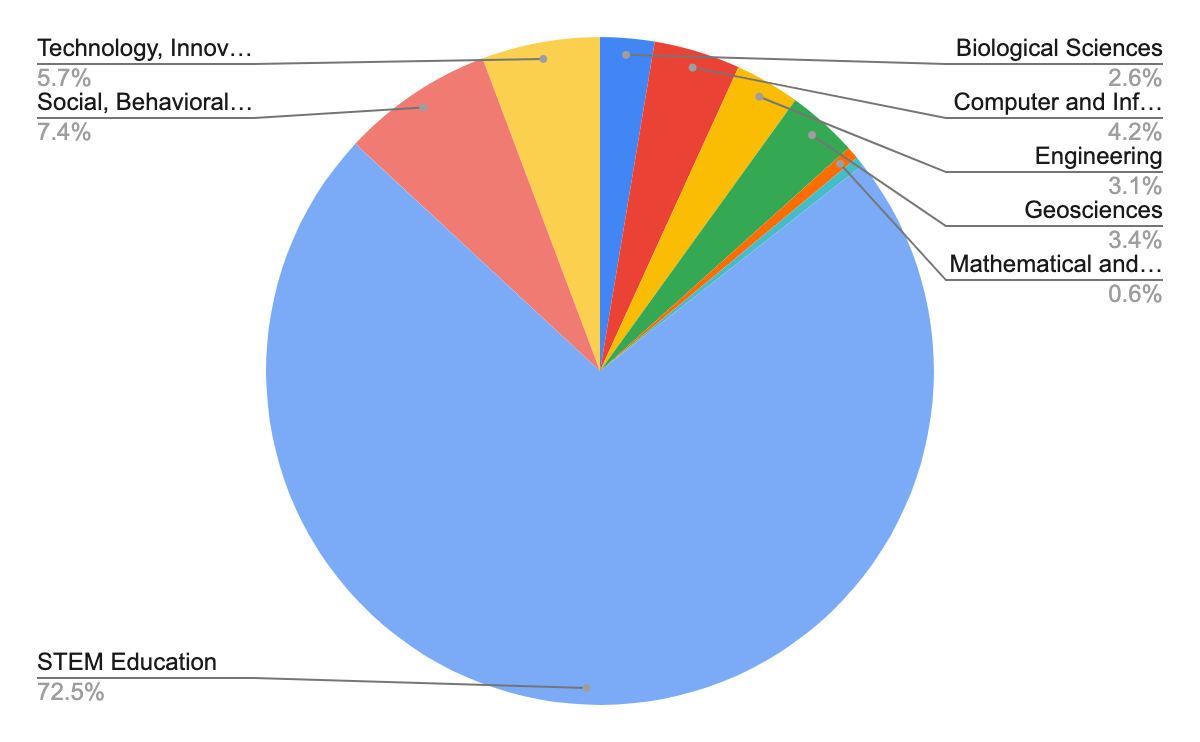
    Outside observers decried the cuts on social media, with one education commentator saying the cancellations were “starting to cut into the muscle.” Science and history, though not mandated by Congress, are important to many. ”We should care about how our schools are teaching students science,” said Allison Socol, who leads preschool to high school policy at EdTrust, a nonprofit that advocates for equity in education. “Any data point you look at shows that future careers will rely heavily on STEM skills.”

    Socol worries that DOGE will not be satisfied with the board’s cuts and demand more. “It’s just so much easier to destroy things than to build them,” she said. “And it’s very easy, once you’ve taken one thing away, to take another one and another one and another one.”

    On April 17, the Education Department announced that the 2026 NAEP would proceed as planned. But after mass layoffs in March, it remained unclear if the department has the capacity to oversee the process, since only two employees with NAEP experience are left out of almost 30 who used to work on the test. McMahon might need to rehire some employees to pull it off, but new hiring would contradict the spirit of Trump’s executive order to close the department.

    Socol fears that the Trump administration doesn’t really want to measure student achievement. “There is a very clear push from the administration, not just in the education sector, to have a lot less information about how our public institutions are serving the people in this country,” Socol said. “It is a lot easier to ignore inequality if you can’t see it, and that is the point.”

    The Education Department did not respond to my questions about their intentions for NAEP. McMahon has been quite forceful in articulating the value of the assessments, but she might not have the final say since DOGE has to approve the NAEP contracts. “What’s very clear is that the office of the secretary does not completely control the DOGE people,” said a person with knowledge of the dynamics inside the Education Department. “McMahon’s views affect DOGE priorities, but McMahon doesn’t have direct control at all.”

    The ball is now in DOGE’s court.  

    Canceled assessments

    • Long-Term Trend (LTT) assessments in math and reading for 9, 13 and 17 year olds in 2029. (The Education Department previously canceled the 2025 LTT for 17 year olds in February 2025.)
    • Science: Fourth-grade in 2028, 12th grade in 2032
    • History: 12th grade in 2030
    • Writing:  Fourth, eighth and 12th grades in 2032
    • State-level results: 12th grade math and reading in 2028 and 2032, eighth grade history in 2030
    • District-level results: Eighth-grade science in 2028 and 2032

    For more details, refer to the new schedule, adopted in April 2025, and compare with the old, now-defunct schedule from 2023. 

    *Correction: An earlier version of this sentence incorrectly said that two administrations of the Long-Term Trend NAEP had been scrapped by the governing board on April 21. Only the 2029 administration was canceled by the board. The 2025 Long-Term Trend NAEP for 17 year olds was canceled by the Education Department in February. Nine- and 13-year-old students had already taken it by April.

    Contact staff writer Jill Barshay at 212-678-3595, jillbarshay.35 on Signal, or [email protected].

    This story about NAEP cuts was written by Jill Barshay and produced by The Hechinger Report, a nonprofit, independent news organization focused on inequality and innovation in education. Sign up for Proof Points and other Hechinger newsletters.
    The Hechinger Report provides in-depth, fact-based, unbiased reporting on education that is free to all readers. But that doesn’t mean it’s free to produce. Our work keeps educators and the public informed about pressing issues at schools and on campuses throughout the country. We tell the whole story, even when the details are inconvenient. Help us keep doing that.

    Join us today.

    Source link

  • Funding for online education library ERIC is slated to end this week

    Funding for online education library ERIC is slated to end this week

    When you’re looking for research on four-day school weeks or how to teach fractions, or trying to locate an historical document, such as the landmark Coleman Report of 1966, you might begin with Google. But the reason that high-quality research results pop up from your Google search is because something called ERIC exists behind the scenes. 

    ERIC stands for Education Resources Information Center and it is a curated online public library of 2.1 million educational documents that is funded and managed by the U.S. Education Department. The collection dates back to the 1960s and used to be circulated to libraries through microfiche. Today it’s an open access website where anyone can search, read online or download material. Neither a library card nor login credentials are needed. It is used by an estimated 14 million people a year. (I am one of them.) If you’re familiar with MedLine or PubMed for health care studies, this is the equivalent for the field of education. 

    This critical online library catalog is supposed to continue operating under a five-year contract that runs through 2028. Initially, ERIC was spared from the department’s mass contract cancellations in February. But according to Erin Pollard Young, the sole Education Department employee who managed ERIC until her job was eliminated in March, the Department of Government Efficiency or DOGE has since refused to approve disbursement of money that has already been authorized by Congress for the upcoming year. 

    Related: Our free weekly newsletter alerts you to what research says about schools and classrooms.

    ERIC is scheduled to run out of money on April 23.  After that date, no new documents can be added.  “The contract, from my understanding, would die,” Pollard Young said in an interview. 

    “After 60 years of gathering hard to find education literature and sharing it broadly, the website could stop being updated,” Pollard Young posted on LinkedIn. “Yes, the data are backed up in so many places, and the website will likely remain up for a while. But without constant curation and updating, so much information will be lost.”

    Parents, teachers, researchers and education policymakers are all affected. “Defunding ERIC would limit public access to critical education research, hindering evidence-based practices and informed policy decisions vital for the advancement of American education,” emailed Gladys Cruz, a superintendent of a school district called Questar III BOCES outside of Albany, New York, and a past president of the AASA, The School Superintendents Association. 

    Proposal to halve the cost

    Pollard Young said that before she left the Education Department, she was frantically working to comply with a DOGE demand to slash ERIC’s annual budget by half, from $5.5 million to $2.25 million. The cuts were painful. She would have to cut 45 percent of the journals added to the database each year. The public help desk would be eliminated. And Pollard Young had agreed to personally take on the extra task of directly communicating with 1,500 publishers, something that had been handled by AEM Education Services, a vendor that collects, analyzes and manages data for the government. 

    These proposed cuts did not satisfy DOGE. Pollard Young said she received an email reply in all caps, “THIS IS NOT APPROVED,” with a request for more information. Pollard Young submitted the additional information but never received a response. She lost access to her work email about a week later on March 11, the day that Pollard Young and more than 1,300 other Education Department employees lost their jobs in a mass firing

    Related: Chaos and confusion as the statistics arm of the Education Department is reduced to a skeletal staff of 3

    Pollard Young was the only Education Department employee who was involved with ERIC on a daily basis. She oversaw a team of 30 contractors at AEM Education Services, which did most of the work. Adding documents to the digital library involves many steps, from determining their importance to cataloging and indexing them. It is the metadata, or descriptive tags, that AEM inserts behind the scenes that allows documents on ERIC to be discoverable and rise to the top on Google searches. But the public can also search directly on the ERIC website. 

    “Fun fact,” Paige Kowalski, executive vice president of the Data Quality Campaign, an organization that advocates for data-driven decision making in schools, posted on LinkedIn. “Over the 20 years that DQC has been around we’ve had some poorly designed websites with atrocious search functions. I often couldn’t find resources I wrote! But could always find them on ERIC. Huge resource.”

    The bulk of the collection consists of academic journal articles. Many are full text PDFs that would otherwise be inaccessible behind paywalls. ERIC also contains books, federal, state and local government reports and doctoral dissertations. 

    Gray literature

    One of its gems is the large amount of “gray literature,” which Pollard Young described as unpublished studies from private research organizations and school district reports that are not cataloged in EBSCO, a private database of academic documents. That’s another reason that Google and AI cannot simply replace this curated ERIC collection. “In education so much research is produced outside of journals,” said Pollard Young. “Big, important RCTs [randomized controlled trials] are in white papers,” or special reports. 

    In response to specific questions about the future of ERIC, the Education Department responded more broadly about the need to restructure the Institute of Education Sciences (IES), where ERIC is managed. “Despite spending hundreds of millions in taxpayer funds annually, IES has failed to effectively fulfill its mandate to identify best practices and new approaches that improve educational outcomes and close achievement gaps for students,” said Madi Biedermann, deputy assistant secretary for communications, in an emailed statement. “The Department is actively evaluating how to restructure IES with input from existing leadership and expert stakeholders so that the Institute provides states with more useful data to improve student outcomes while maintaining rigorous scientific integrity and cost effectiveness.”

    It is still possible that DOGE will approve the reduced budget proposal this week before the money runs out. But there will be no one at the Education Department to oversee it or communicate with publishers. “Best case scenario, ERIC operates at half of its budget,” Pollard Young posted on LinkedIn. 

    Related: DOGE’s death blow to education studies

    Like other Education Department employees who were fired in March, Pollard Young is on administrative leave until June. But she said she is willing to risk potential retaliation from the administration and speak on the record about the threat to ERIC, which she had managed for more than a dozen years.

    “I am aware of what some of the consequences are,” said Pollard Young. “But to me, it is important for the field to know that I am doing everything in my power to save ERIC and also for the country to understand what is happening. As I’m talking to people across the country, it is clear that they don’t fully understand what is happening in D.C. Hopefully we can put some pressure on it so we can keep the funding or bring it back.”

    Contact staff writer Jill Barshay at 212-678-3595, jillbarshay.35 on Signal, or [email protected].

    This story about ERIC was written by Jill Barshay and produced by The Hechinger Report, a nonprofit, independent news organization focused on inequality and innovation in education. Sign up for Proof Points and other Hechinger newsletters.
    The Hechinger Report provides in-depth, fact-based, unbiased reporting on education that is free to all readers. But that doesn’t mean it’s free to produce. Our work keeps educators and the public informed about pressing issues at schools and on campuses throughout the country. We tell the whole story, even when the details are inconvenient. Help us keep doing that.

    Join us today.

    Source link

  • Losing homeschool data Losing homeschool statistics

    Losing homeschool data Losing homeschool statistics

    The Trump administration says one of its primary goals in education is to expand school choice and put power back in the hands of parents. Yet it has killed the main way to track one of the most rapidly growing options — learning at home. 

    The Education Department began counting the number of homeschooled children in 1999, when fewer than 2 percent of students were educated this way. Homeschooling rose by 50 percent in the first decade of the 2000s and then leveled off at around 3 percent

    The most recent survey of families took place in 2023, and it would have been the first indication of the growth of homeschooling since the pandemic. The data collection was nearly finished and ready to be released to the public, but in February, Elon Musk’s Department of Government Efficiency (DOGE) terminated the contract for this data collection, which is part of the National Household Education Survey, along with 88 other education contracts. Then in March, the federal statisticians who oversee the data collection and could review the final figures were fired along with almost everyone else at the National Center for Education Statistics (NCES). As things stand now, this federal homeschool data is unlikely to ever be released. 

    Related: Our free weekly newsletter alerts you to what research says about schools and classrooms.

    “Work on these data files has stopped and there are no current plans for that work to continue,” said a spokesman for the American Institutes for Research, a nonprofit research organization that had held the contract to collect and analyze the data before DOGE canceled it. 

    The loss of this data upset both avid supporters and watchdogs of school choice, particularly now that some states are expanding their Education Savings Account (ESA) programs to transfer public funds directly to families who homeschool their children. Angela Watson, a prominent Johns Hopkins University researcher who runs the Homeschool Research Lab, called it a “massive loss.” Robert Maranto, a professor in the department of education reform at the University of Arkansas, said that in the past, the federal statistics have helped “dispel some of the myths” that homeschooling is “overwhelmingly white,” when, in fact, a more diverse population is learning this way. Maranto also serves as the editor of the Journal of School Choice. The most recent issue was devoted to homeschooling and about half the articles in it cited NCES reports, he said. 

    “There is a certain irony that a pro-school choice administration would cut objective data that might help increase acceptance of homeschooling,” said Maranto. 

    Related: Chaos and confusion as the statistics arm of the Education Department is reduced to a skeletal staff of 3

    It is unclear what will happen to the unreleased 2023 homeschooling data or if the Education Department will ever collect homeschool statistics in the future. 

    In response to questions about the fate of the homeschooling data, Education Department spokeswoman Madison Biedermann said that its research arm, the Institute of Education Sciences, is in possession of the data and that it is “reviewing how all its contractual activities can best be used to meet its statutory obligations.”

    Last September, the Education Department released some preliminary statistics from the 2023 survey. It noted a small increase in traditional homeschooling since 2019 but a large increase in the number of students who were enrolled in an online virtual school and learning from home full time. Together, more than 5 percent of U.S. students were learning at home in one of these two ways. Fewer than 4 percent were learning at home in 2019. 

    Source: National Center for Education Statistics, September 2024 media briefing slide.

    Researchers were keen to dig into the data to understand the different flavors of homeschooling, from online courses to microschools, which are tiny schools that often operate in private homes or places of worship. Researchers also want to understand why more parents are opting for homeschooling and which subjects they are directly teaching their children, all questions that are included in the parent survey conducted by the Education Department. 

    Related: Tracking Trump: His actions on education

    Tracking homeschooling is notoriously difficult. Families who choose this option can be distrustful of government, but this was one of the few surveys that homeschool advocates cited to document the growth in their numbers and they advised the writers of the federal survey on how to phrase questions. 

    Beginning in 2020, the U.S. Census Bureau also began collecting some data on homeschooling, but those statistics cannot be directly compared with the Education Department data and without a historical record, the census data is less useful, researchers said. It is also unclear if this census data will continue. Some states collect data on homeschooling, but researchers said they do it in different ways, making it impossible to compare homeschooling across states.

    Patrick Wolf, a professor of education policy who studies school choice at the University of Arkansas, was also dismayed by the loss of the Education Department’s statistics. 

    “A federal government agency has been collecting national statistics on education since 1867,” he said. “State and local policy makers and practitioners will be severely challenged in doing their work if they don’t have good data from the feds regarding public schooling, private schooling, and homeschooling. Sending education authority to the states only will work well if the federal government continues to collect and publish comprehensive data on schooling. Otherwise, state and local officials are being asked to fly blind.”

    Contact staff writer Jill Barshay at 212-678-3595, jillbarshay.35 on Signal, or [email protected].

    This story about homeschool statistics was written by Jill Barshay and produced by The Hechinger Report, a nonprofit, independent news organization focused on inequality and innovation in education. Sign up for Proof Points and other Hechinger newsletters.

    The Hechinger Report provides in-depth, fact-based, unbiased reporting on education that is free to all readers. But that doesn’t mean it’s free to produce. Our work keeps educators and the public informed about pressing issues at schools and on campuses throughout the country. We tell the whole story, even when the details are inconvenient. Help us keep doing that.

    Join us today.

    Source link

  • OPINION: Here’s why we cannot permit America’s partnership with higher education to weaken or dissolve

    OPINION: Here’s why we cannot permit America’s partnership with higher education to weaken or dissolve

    Abrupt cuts in federal funding for life saving medical research. Confusing and misleading new guidance about campus diversity programs. Cancellation, without due process, of hundreds of millions of dollars in federal grants and contracts held by a major university. Mass layoffs at the Education Department, undermining crucial programs such as federal student aid.

    All of this, and more, in the opening weeks of the second Trump administration.

    The president has made clear that colleges and universities face a moment of unprecedented challenge. The partnership the federal government forged with American higher education long ago, which for generations has paid off spectacularly for our country’s civic health, economic well-being and national security, appears in the eyes of many to be suddenly vulnerable.

    America must not permit this partnership to weaken or dissolve. No nation has ever built up its people by tearing down its schools. Higher education builds America — and together, we will fight to ensure it continues to do so.  

    Related: Tracking Trump: his actions on education    

    Some wonder why more college and university presidents aren’t speaking out. The truth is, many of them fear their institutions could be targeted next.

    They are also juggling immense financial pressures and striving to fulfill commitments to teaching and research.

    But the American Council on Education, which I lead, has always stood up for higher education. We have done it for more than a century, and we are doing it now. We will use every tool possible — including litigation, advocacy and coalition-building — to advance the cause.

    ACE is the major coordinating body for colleges and universities. We represent institutions of all kinds — public and private, large and small, rural and urban — with a mission of helping our members best serve their students and communities.

    Let me be clear: We welcome scrutiny and accountability for the public funds supporting student aid and research. Our institutions are subject to state and federal laws and must not tolerate any form of discrimination, even as they uphold freedom of expression and the right to robust but civil protest. 

    We also know we have much work to do to raise public confidence in higher education and the value of a degree.

    However, we cannot allow unwarranted attacks on higher education to occur without a vigorous and proactive response.

    When the National Institutes of Health announced on Feb. 7 a huge cut in funding that supports medical and health research, ACE joined with the Association of American Universities, the Association of Public and Land-grant Universities and a number of affected universities in a lawsuit to stop this action.

    ACE has almost never been a plaintiff in a lawsuit against the federal government, but the moment demanded it. We are pleased that a federal judge has issued a nationwide preliminary injunction to preserve the NIH funding.

    When the Education Department issued a “Dear Colleague” letter Feb. 14 that raised questions about whether campus programs related to diversity, equity      and inclusion would be permissible under federal law, ACE organized a coalition of more than 70 higher education groups calling for the department to rescind the letter.      

    We raised concerns about the confusion the letter was causing. We pointed out that the majority opinion from Chief Justice John Roberts in the Students for Fair Admissions case acknowledged that diversity-related goals in higher education are “commendable” and “plainly worthy.”    

     We invited the department to engage with the higher education community to promote inclusive and welcoming educational environments for all students, regardless of race or ethnicity or any other factors. We remain eager to work with the department. 

    Related: Fewer scholarships and a new climate of fear follow      the end of affirmative action

    Unfortunately, in recent days the administration has taken further steps we find alarming.

    ACE denounced the arbitrary cancellation of $400 million in federal grants and contracts with Columbia University. Administration officials claimed their action was a response to failures to adequately address antisemitism at Columbia, though it bypassed well-established procedures for investigating such allegations. (The Hechinger Report is an independent unit of Teachers College, Columbia University.)

    Ultimately, this action will eviscerate academic and research activities, to the detriment of students, faculty, medical patients and others.

    Make no mistake: Combating campus antisemitism is a matter of utmost priority for us. Our organization, along with Hillel International and the American Jewish Committee, organized two summits on this topic in 2022 and 2024, fostering important dialogue with dozens of college and university presidents.

    We also are deeply concerned about the letter the Trump administration sent to Columbia late last week that makes certain demands of the university, including a leadership change for one of its academic departments. To my mind, the letter obliterated the boundary between institutional autonomy and federal control. That boundary is essential. Without it, academic freedom is at risk.

    Meanwhile, layoffs and other measures slashing the Education Department’s workforce by as much as half will cause chaos and harm to financial aid and other programs that support millions of students from low- and middle-income families. We strongly urge the administration to change course and Congress to step in if it does not.

    Despite all that has happened in the past several weeks, we want President Trump and his administration to know this: Higher education is here for America, and ready to keep building. Colleges and universities have long worked with the government in countless ways to strengthen our economy, democracy, health and security. We cannot abandon that partnership. We must fortify it. 

    Ted Mitchell is president of the American Council of Education in Washington, D.C.

    Contact the opinion editor at [email protected].

    This story about academic freedom was produced by The Hechinger Report, a nonprofit, independent news organization focused on inequality and innovation in education. Sign up for Hechinger’s weekly newsletter.

    The Hechinger Report provides in-depth, fact-based, unbiased reporting on education that is free to all readers. But that doesn’t mean it’s free to produce. Our work keeps educators and the public informed about pressing issues at schools and on campuses throughout the country. We tell the whole story, even when the details are inconvenient. Help us keep doing that.

    Join us today.

    Source link

  • IES, the Institute of Education Sciences, is in disarray after layoffs

    IES, the Institute of Education Sciences, is in disarray after layoffs

    President Donald Trump promises he’ll make American schools great again. He has fired nearly everyone who might objectively measure whether he succeeds.

    This week’s mass layoffs by his secretary of Education, Linda McMahon, of more than 1,300 Department of Education employees delivered a crippling blow to the agency’s ability to tell the public how schools and federal programs are doing through its statistics and research branch. The Institute of Education Sciences (IES) is now left with fewer than 20 federal employees, down from more than 175 at the start of the second Trump administration, according to my reporting. It’s not clear how the institute can operate or even fulfill its statutory obligations set by Congress. 

    IES is modeled after the National Institutes of Health and was established in 2002 during the administration of former President George W. Bush to fund innovations and identify effective teaching practices. Its largest division is a statistical agency that dates back to 1867 and is called the National Center for Education Statistics (NCES), which collects basic statistics on the number of students and teachers. NCES is perhaps best known for administering the National Assessment of Educational Progress, which tracks student achievement across the country. The layoffs  “demolished” the statistics agency, as one former official characterized it, from roughly 100 employees to a skeletal staff of just three. 

    “The idea of having three individuals manage the work that was done by a hundred federal employees supported by thousands of contractors is ludicrous and not humanly possible,” said Stephen Provasnik, a former deputy commissioner of NCES who retired early in January. “There is no way without a significant staff that NCES could keep up even a fraction of its previous workload.”

    Related: Our free weekly newsletter alerts you to what research says about schools and classrooms.

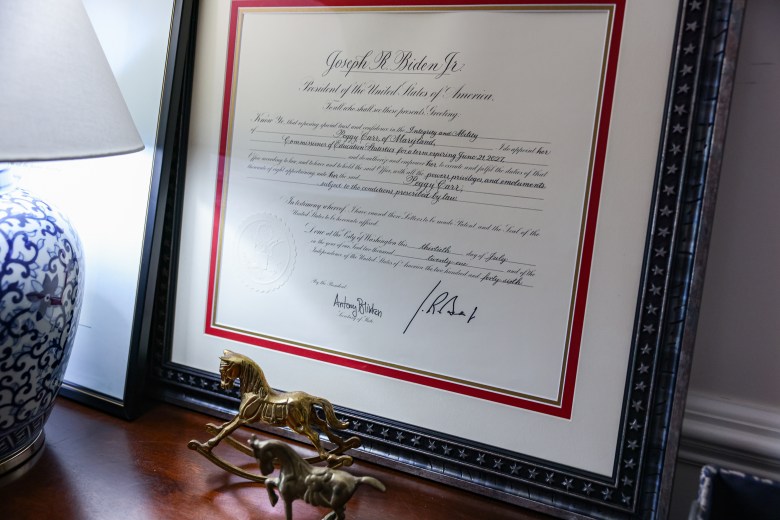
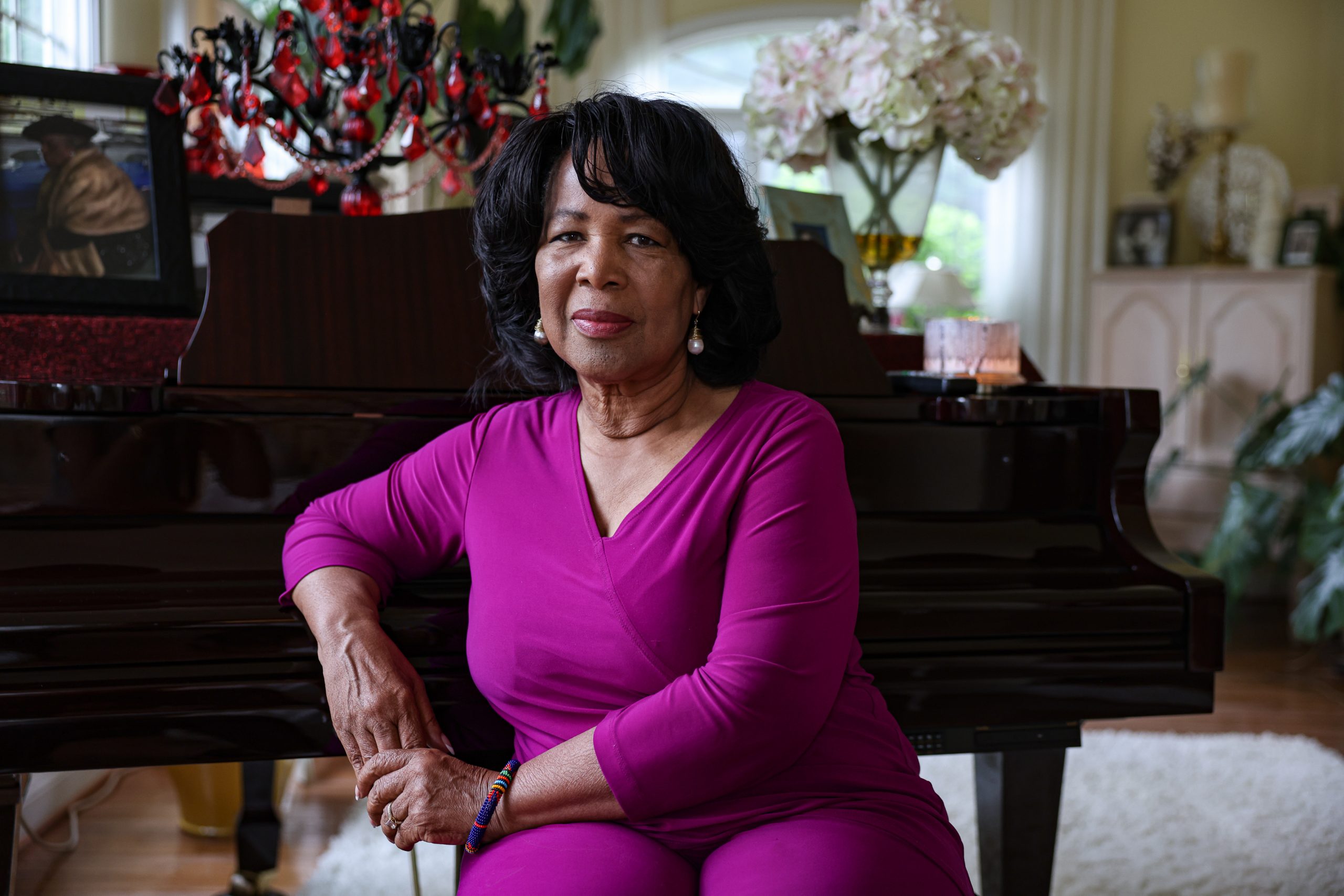
    Even the new acting commissioner of education statistics, a congressionally mandated position, was terminated with everyone else on March 11 after just 15 days on the job, according to five former employees. Chris Chapman replaced Biden-appointee Peggy Carr, who was suddenly removed on Feb. 24 without explanation before her congressionally designated six-year term was to end in 2027. It was unclear who, if anyone, will serve as the commissioner after Chapman’s last day on March 21. (Chapman did not respond to an email for comment.) Meanwhile, the chief statistician, Gail Mulligan, was put on administrative leave until her early retirement on April 1.* There is apparently no replacement to review the accuracy of figures reported to the public.  

    Two offices spared

    Only two IES offices were untouched by this week’s layoffs: the National Center for Special Education Research, an eight-person office that awards grants to study effective ways to teach children with disabilities, and the Office of Science, a six-person office that reviews research for quality, accuracy and validity. It was unclear why they were spared. Other areas of the Education Department that fund and oversee education for children with disabilities also had relatively lighter layoffs.

    A draft of an executive order to eliminate the Education Department was prepared in early March, but Trump hadn’t signed it as of this week. Instead, McMahon said on Fox News that she began firing employees as a “first step” toward that elimination. Former department employees believe that McMahon and her team decided which offices to cut. Weeks before her confirmation, about a half dozen people from McMahon’s former think tank, the right-wing America First Policy Institute, were inside the department and looking at the bureaucracy, according to a former official at the Education Department. The Education Department did not respond to my email queries.

    The mass firings this month were preceded by a Feb. 10 onslaught, when Elon Musk’s Department of Government Efficiency terminated much of the work that is overseen by these education research and statistics units. Most of the department’s research and data collections are carried out by outside contractors, and nearly 90 of these contracts were canceled, including vital data collections on students and teachers. The distribution of roughly $16 billion in federal Title I aid to low-income schools cannot be calculated properly without this data. Now, the statisticians who know how to run the complicated formula are also gone. 

    ‘Five-alarm fire’

    The mass firings and contract cancellations stunned many. “This is a five-alarm fire, burning statistics that we need to understand and improve education,” said Andrew Ho, a psychometrician at Harvard University and president of the National Council on Measurement in Education, on social media.  

    Former NCES Commissioner Jack Buckley, who ran the education statistics unit from 2010 to 2015, described the destruction as “surreal.” “I’m just sad,” said Buckley. “Everyone’s entitled to their own policy ideas, but no one’s entitled to their own facts. You have to share the truth in order to make any kind of improvement, no matter what direction you want to go. It does not feel like that is the world we live in now.”

    The deepest cuts

    While other units inside the Education Department lost more employees in absolute numbers, IES lost the highest percentage of employees — roughly 90 percent of its workforce. Education researchers questioned why the Trump administration targeted research and statistics. “All of this feels like part of an attack on universities and science,” said an education professor at a major research university, who asked not to be identified for fear of retaliation. 

    That fear is well-founded. Earlier this month the Trump administration canceled $400 million in federal contracts and grants with Columbia University, blaming the university’s failure to protect Jewish students from antisemitism during campus protests last year over Israeli attacks on Gaza. Among them were four research grants that had been issued by IES, including an evaluation of the effectiveness of the Federal Work-Study program, which costs the government $1 billion a year. That five-year study was near completion and now the public will not learn the results. (The Hechinger Report is an independent news organization at Teachers College, Columbia University.

    Related: Tracking Trump: His actions on education

    Tom Brock, executive director of the Community College Research Center at Teachers College, Columbia University, said he had been cautiously optimistic that he could successfully appeal the cancellation of his $2.8 million in education research grants. (He planned to argue that Teachers College is a separate entity from the rest of Columbia with its own president and board of trustees and it was not affected by student protests to the same degree.) But now the IES office that issued the grants, the National Center for Education Research, has lost its staff. “I’m very discouraged,” said Brock. “Even if we win on appeal, all the staff have been laid off. Who would reinstate the grant? Who would we report to? Who would monitor it? They have completely eliminated the infrastructure. I could imagine a scenario where we would win on appeal and it can’t be put into effect.”

    Active contracts

    Many contracts with outside organizations for data collection and research grants with university professors remain active. That includes the National Assessment of Educational Progress, which tracks student achievement, and the Integrated Postsecondary Education Data System (IPEDS), which collects data on colleges and universities. But now there are almost no employees left to oversee these efforts, review them for accuracy or sign future contracts for new data collections and studies. 

    “My job was to make sure that the limited public dollars for education research were spent as best as they could be,” said one former education official who issued grants for the development of new innovations. “We make sure there’s no fraud, waste and abuse. Now there’s no watchdog to oversee it.” 

    The former official asked to remain anonymous as did more than a dozen other former employees whom I talked to while reporting this story. Some explained that the conditions of their termination, called a “reduction in force” or “RIF,” could mean losing their severance if they talked to the press. The terminated employees are supposed to work from home until their last day on March 21, and they described having limited access to their work computer systems. That is stymying efforts to wind down their work with their colleagues and outside contractors in an orderly way. One described how she had to take a cellphone picture of her termination notice on her laptop because she could no longer save or send documents on it. 

    Related: DOGE’s death blow to education studies

    So far, there has been no sign of protest among congressional Republicans, even though some of the cuts affect data and research they have mandated. A spokesman for Sen. Bill Cassidy, Republican of Louisiana and chairman of the Senate committee on Health, Education, Labor and Pensions, directed me to Cassidy’s statement on X. “I spoke to @EDSecMcMahon and she made it clear this will not have an impact on @usedgov ability to carry out its statutory obligations. This action is aimed at fulfilling the admin’s goal of addressing redundancy and inefficiency in the federal government.”

    Following the law

    In theory, a skeletal staff might be able to fulfill the law, which is often “ambiguous,” said former NCES commissioner Buckley. For example, the annual report to Congress on the condition of education could be as short as one page. Laws mention several data collections, such as ones on financial aid to college students and on the experiences of teachers, but often don’t specify how often they must be produced. Technically, they could be paused for many years without running afoul of statutes.

    The remaining skeleton crew could award contracts to outside organizations to do all the work and have them “supervise themselves,” said Buckley. “I’m not advocating that oversight be pushed out to contractors, but you could do it in theory. It depends on your tolerance for contracting out work.”

    NAEP anxiety

    Many are anxious about the future of NAEP, also known as the Nation’s Report Card. Even before the firings, William Bennett, Education Secretary under President Ronald Reagan, penned an open letter along with conservative commentator Chester Finn in The 74, urging McMahon to preserve NAEP, calling it “the single most important activity of the department.” 

    Colorado Gov. Jared Polis, a Democrat who chairs the National Governors Association, is especially concerned. In an email, Polis’ spokesman emphasized that Polis believes that “NAEP is critical.” He warned that “undercutting data collection and removing this objective measuring stick that helps states understand and improve performance will only make our efforts more difficult.” 

    Though much of the test development and administration is contracted out to private organizations and firms, it is unclear how these contracts could be signed and overseen by the Education Department with such a diminished staff. Some officials suggested that the National Assessment Governing Board (NAGB), which sets NAEP policy, could take over the test’s administration. But the board’s current staff doesn’t have the testing or psychometrics expertise to do this. 

    Related: Former Trump commissioner blasts DOGE education data cuts

    In response to questions, board members declined to comment on the future of NAEP and whether anyone in the Trump administration had asked them to take it over. One former education official believes there is “apparently some confusion” in the Trump administration about the division of labor between NAGB and NCES and a “misunderstanding of how work gets done in implementing” the assessment.

    Mark Schneider, a former IES director who is now a senior fellow at the American Enterprise Institute, said he hoped that McMahon would rebuild NCES into a modern, more efficient statistical agency that could collect data more cheaply and quickly, and redirect IES’s research division to drive breakthrough innovations like the Defense Department has. But he conceded that McMahon also cut some of the offices that would be needed to modernize the bureaucracy, such as the centralized procurement office. 

    So far, there’s no sign of Trump’s or McMahon’s intent to rebuild. 

    * Clarification: An earlier version of this story said that Mulligan had been terminated, but she revised a social media post about her status after publication of this story to clarify that she was not subject to the “reduction in force” notice. 

    Contact staff writer Jill Barshay at 212-678-3595, jillbarshay.35 on Signal, or [email protected].

    This story about the Institute of Education Sciences was written by Jill Barshay and produced by The Hechinger Report, a nonprofit, independent news organization focused on inequality and innovation in education. Sign up for Proof Points and other Hechinger newsletters.

    The Hechinger Report provides in-depth, fact-based, unbiased reporting on education that is free to all readers. But that doesn’t mean it’s free to produce. Our work keeps educators and the public informed about pressing issues at schools and on campuses throughout the country. We tell the whole story, even when the details are inconvenient. Help us keep doing that.

    Join us today.

    Source link

  • These teens can do incredible math in their heads but fail in a classroom

    These teens can do incredible math in their heads but fail in a classroom

    When I was 12, my family lived adjacent to a small farm. Though I was not old enough to work, the farm’s owner, Mr. Hall, hired me to man his roadside stand on weekends. Mr. Hall had one rule: no calculators. Technology wasn’t his vibe. 

    Math was my strong suit in school, but I struggled to tally the sums in my head. I weighed odd amounts of tomatoes, zucchini and peppers on a scale and frantically scribbled calculations on a notepad. When it got busy, customers lined up waiting for me to multiply and add. I’m sure I mischarged them.

    I was thinking about my old job as I read a quirky math study published this month in the journal Nature. Nobel Prize winning economists Abhijit Banerjee and Esther Duflo, a husband and wife research team at MIT, documented how teenage street sellers who were excellent at mental arithmetic weren’t good at rudimentary classroom math. Meanwhile, strong math students their same age couldn’t calculate nearly as well as impoverished street sellers.

    “When you spend a lot of time in India, what is striking is that these market kids seem to be able to count very well,” said Duflo, whose primary work in India involves alleviating poverty and raising the educational achievement of poor children.  “But they are really not able to go from street math to formal math and vice versa.”

    Related: Our free weekly newsletter alerts you to what research says about schools and classrooms.

    In a series of experiments, Duflo’s field staff in India pretended to be ordinary shoppers and purposely bought unusual quantities of items from more than 1,400 child street sellers in Delhi and Kolkata. A purchase might be 800 grams of potatoes at 20 rupees per kilogram and 1.4 kilograms of onions at 15 rupees per kilogram. Most of the child sellers quoted the correct price of 37 rupees and gave the correct change from a 200 rupee note without using a calculator or pencil and paper. The odd quantities were to make sure the children hadn’t simply memorized the price of common purchases. They were actually making calculations. 

    However, these same children, the majority of whom were 14 or 15 years old, struggled to solve much simpler school math problems, such as basic division. (After making the purchases, the undercover shoppers revealed their identities and asked the sellers to participate in the study and complete a set of abstract math exercises.)

    The market sellers had some formal education. Most were attending school part time, or had previously been in school for years.

    Duflo doesn’t know how the young street sellers learned to calculate so quickly in their heads. That would take a longer anthropological study to observe them over time. But Duflo was able to glean some of their strategies, such as rounding. For example, instead of multiplying 490 by 20, the street sellers might multiply 500 by 20 and then remove 10 of the 20s, or 200. Schoolchildren, by contrast, are prone to making lengthy pencil and paper calculations using an algorithm for multiplication. They often don’t see a more efficient way to solve a problem.

    Lessons from this research on the other side of the world might be relevant here in the United States. Some cognitive psychologists theorize that learning math in a real-world context can help children absorb abstract math and apply it in different situations. However, this Indian study shows that this type of knowledge transfer probably won’t happen automatically or easily for most students. Educators need to figure out how to better leverage the math skills that students already have, Duflo said. Easier said than done, I suspect.  

    Related: Do math drills help children learn?

    Duflo says her study is not an argument for either applied or abstract math.  “It would be a mistake to conclude that we should switch to doing only concrete problems because we also see that kids who are extremely good at concrete problems are unable to solve an abstract problem,” she said. “And in life, at least in school life, you’re going to need both.” Many of the market children ultimately drop out of school altogether.

    Back at my neighborhood farmstand, I remember how I magically got the hang of it and rarely needed pencil and paper after a few months. Sadly, the Hall farm is no longer there for the town’s children to practice mental math. It’s now been replaced by a suburban subdivision of fancy houses. 

    Contact staff writer Jill Barshay at 212-678-3595 or [email protected].

    This story about applied math was written by Jill Barshay and produced by The Hechinger Report, a nonprofit, independent news organization focused on inequality and innovation in education. Sign up for Proof Points and other Hechinger newsletters.

    The Hechinger Report provides in-depth, fact-based, unbiased reporting on education that is free to all readers. But that doesn’t mean it’s free to produce. Our work keeps educators and the public informed about pressing issues at schools and on campuses throughout the country. We tell the whole story, even when the details are inconvenient. Help us keep doing that.

    Join us today.

    Source link

  • America’s kids are still behind in reading and math. These schools are defying the trend

    America’s kids are still behind in reading and math. These schools are defying the trend

    This story was produced by the Associated Press and reprinted with permission.

    Math is the subject sixth grader Harmoni Knight finds hardest, but that’s changing.

    In-class tutors and “data chats” at her middle school in Compton, California, have made a dramatic difference, the 11-year-old said. She proudly pulled up a performance tracker at a tutoring session last week, displaying a column of perfect 100 percent scores on all her weekly quizzes from January.

    Since the pandemic first shuttered American classrooms, schools have poured federal and local relief money into interventions like the ones in Harmoni’s classroom, hoping to help students catch up academically following COVID-19 disruptions.

    But a new analysis of state and national test scores shows the average student remains half a grade level behind pre-pandemic achievement in both reading and math. In reading, especially, students are even further behind than they were in 2022, the analysis shows.

    Compton is an outlier, making some of the biggest two-year gains in both subjects among large districts. And there are other bright spots, along with evidence that interventions like tutoring and summer programs are working.

    Students interact in a fourth grade classroom at William Jefferson Clinton Elementary in Compton, Calif., Thursday, Feb. 6, 2025. Credit: Eric Thayer/Associated Press

    The Education Recovery Scorecard analysis by researchers at Harvard, Stanford and Dartmouth allows year-to-year comparisons across states and districts, providing the most comprehensive picture yet of how American students are performing since COVID-19 first disrupted learning.

    The most recent data is based on tests taken by students in spring 2024. By then, the worst of the pandemic was long past, but schools were dealing still with a mental health crisis and high rates of absenteeism — not to mention students who’d had crucial learning disrupted.  

    “The losses are not just due to what happened during the 2020 to 2021 school year, but the aftershocks that have hit schools in the years since the pandemic,” said Tom Kane, a Harvard economist who worked on the scorecard.

    In some cases, the analysis shows school districts are struggling when their students may have posted decent results on their state tests. That’s because each state adopts its own assessments, and those aren’t comparable to each other. Those differences can make it impossible to tell whether students are performing better because of their progress, or whether those shifts are because the tests themselves are changing, or the state has lowered its standards for proficiency.

    The Scorecard accounts for differing state tests and provides one national standard.

    Higher-income districts have made significantly more progress than lower-income districts, with the top 10 percent of high-income districts four times more likely to have recovered in both math and reading compared with the poorest 10 percent. And recovery within districts remains divided by race and class, especially in math scores. Test score gaps grew by both race and income.

    A student works in a classroom at Benjamin O. Davis Middle School in Compton, Calif., Thursday, Feb. 6, 2025. Credit: Eric Thayer/Associated Press

    “The pandemic has not only driven test scores down, but that decline masks a pernicious inequality that has grown during the pandemic,” said Sean Reardon, a Stanford sociologist who worked on the scorecard. “Not only are districts serving more Black and Hispanic students falling further behind, but even within those districts, Black and Hispanic students are falling further behind their white district mates.”

    Still, many of the districts that outperformed the country serve predominantly low-income students or students of color, and their interventions offer best practices for other districts.

    Related: Become a lifelong learner. Subscribe to our free weekly newsletter featuring the most important stories in education.

    In Compton, the district responded to the pandemic by hiring over 250 tutors that specialize in math, reading and students learning English. Certain classes are staffed with multiple tutors to assist teachers. And schools offer tutoring before, during and after school, plus “Saturday School” and summer programs for the district’s 17,000 students, said Superintendent Darin Brawley.

    To identify younger students needing targeted support, the district now conducts dyslexia screenings in all elementary schools.

    The low-income school district near downtown Los Angeles, with a student body that is 84 percent Latino and 14 percent Black, now has a graduation rate of 93 percent, compared with 58 percent when Brawley took the job in 2012.

    Harmoni, the sixth-grader, said that one-on-one tutoring has helped her grasp concepts and given her more confidence in math. She gets separate “data chats” with her math specialist that are part performance review, part pep talk.

    “Looking at my data, it kind of disappoints me” when the numbers are low, said Harmoni. “But it makes me realize I can do better in the future, and also now.”

    Brawley said he’s proud of the district’s latest test scores, but not content.

    “Truth be told, I wasn’t happy,” he said. “Even though we gained, and we celebrate the gains, at the end of the day we all know that we can do better.”

    A tutor helps students at Benjamin O. Davis Middle School in Compton, Calif., Thursday, Feb. 6, 2025. Credit: Eric Thayer/Associated Press

    As federal pandemic relief money for schools winds down, states and school districts will have limited resources and must prioritize interventions that worked. Districts that spent federal money on increased instructional time, either through tutoring or summer school, saw a return on that investment.

    Reading levels have continued to decline, despite a movement in many states to emphasize phonics and the “science of reading.” So Reardon and Kane called for an evaluation of the mixed results for insights into the best ways to teach kids to read.

    Related: Why are kids struggling in school four years after the pandemic?

    The researchers emphasized the need to extend state and local money to support pandemic recovery programs that showed strong academic results. Schools also must engage parents and tell them when their kids are behind, the researchers said.

    And schools must continue to work with community groups to improve students’ attendance. The scorecard identified a relationship between high absenteeism and learning struggles.

    In the District of Columbia, an intensive tutoring program helped with both academics and attendance, said D.C. Public Schools Chancellor Lewis Ferebee. In the scorecard analysis, the District of Columbia ranked first among states for gains in both math and reading between 2022 and 2024, after its math recovery had fallen toward the bottom of the list.

    Pandemic-relief money funded the tutoring, along with a system of identifying and targeting support at students in greatest need. The district also hired program managers who helped maximize time for tutoring within the school day, Ferebee said.

    Students who received tutoring were more likely to be engaged with school, Ferebee said, both from increased confidence over the subject matter and because they had a relationship with another trusted adult.

    Related: Some of the $190 billion in pandemic money for schools actually paid off

    Students expressed that “I’m more confident in math because I’m being validated by another adult,” Ferebee said. “That validation goes a long way, not only with attendance, but a student feeling like they are ready to learn and are capable, and as a result, they show up differently.”

    Federal pandemic relief money has ended, but Ferebee said many of the investments the district made will have lasting impact, including the money spent on teacher training and curriculum development in literacy.

    Students walk through a hallway at Benjamin O. Davis Middle School in Compton, Calif., Thursday, Feb. 6, 2025. Credit: Eric Thayer/Associated Press

    Christina Grant, who served as the District of Columbia’s state superintendent of education until 2024, said she’s hopeful to see the evidence emerging on what’s made a difference in student achievement.

    “We cannot afford to not have hope. These are our students. They did not cause the pandemic,” Grant said. “The growing concern is ensuring that we can … see ourselves to the other side.”

    The Associated Press’ education coverage receives financial support from multiple private foundations. AP is solely responsible for all content. Find AP’s standards for working with philanthropies, a list of supporters and funded coverage areas at AP.org.

    The Hechinger Report provides in-depth, fact-based, unbiased reporting on education that is free to all readers. But that doesn’t mean it’s free to produce. Our work keeps educators and the public informed about pressing issues at schools and on campuses throughout the country. We tell the whole story, even when the details are inconvenient. Help us keep doing that.

    Join us today.

    Source link

  • The buzz around teaching facts to boost reading is bigger than the evidence for it

    The buzz around teaching facts to boost reading is bigger than the evidence for it

    Over the past decade, a majority of states have passed new “science of reading” laws or implemented policies that emphasize phonics in classrooms. Yet the 2024 results of an important national test, released last month, showed that the reading scores of elementary and middle schoolers continued their long downward slide, hitting new lows.

    The emphasis on phonics in many schools is still relatively new and may need more time to yield results. But a growing chorus of education advocates has been arguing that phonics isn’t enough. They say that being able to decode the letters and read words is critically important, but students also need to make sense of the words. 

    Some educators are calling for schools to adopt a curriculum that emphasizes content along with phonics. More schools around the country, from Baltimore to Michigan to Colorado, are adopting these content-filled lessons to teach geography, astronomy and even art history. The theory, which has been documented in a small number of laboratory experiments, is that the more students already know about a topic, the better they can understand a passage about it. For example, a passage on farming might make more sense if you know something about how plants grow. The brain gets overwhelmed by too many new concepts and unfamiliar words. We’ve all been there. 

    A ‘Knowledge Revival’

    A 2025 book by 10 education researchers in Europe and Australia, “Developing Curriculum for Deep Thinking: The Knowledge Revival,” makes the case that students cannot learn the skills of comprehension and critical thinking unless they know a lot of stuff first. These ideas have revived interest in E.D. Hirsch’s Core Knowledge curriculum, which gained popularity in the late 1980s. Hirsch, a professor emeritus of education and humanities at the University of Virginia, argues that democracy benefits when the citizenry shares a body of knowledge and history, which he calls cultural literacy. Now it’s a cognitive science argument that a core curriculum is also good for our brains and facilitates learning. 

    Related: Our free weekly newsletter alerts you to what research says about schools and classrooms.

    The idea of forcing children to learn a specific set of facts and topics is controversial. It runs counter to newer trends of “culturally relevant pedagogy,” or “culturally responsive teaching,” in which critics contend that students’ identities should be reflected in what they learn. Others say learning facts is unimportant in the age of Google where we can instantly look anything up, and that the focus should be on teaching skills. Content skeptics also point out that there’s never been a study to show that increasing knowledge of the world boosts reading scores.

    It would be nearly impossible for an individual teacher to create the kind of content-packed curriculum that this pro-knowledge branch of education researchers has in mind. Lessons need to be coordinated across grades, from kindergarten onward. It’s not just a random collection of encyclopedia entries or interesting units on, say, Greek myths or the planets in our solar system. The science and social studies topics should be sequenced so that the ideas build upon each other, and paired with vocabulary that will be useful in the future. 

    The big question is whether the theory that more knowledge improves reading comprehension applies to real schools where children are reading below grade level. Does a content-packed curriculum translate into higher reading achievement years later?

    Putting knowledge to the test

    Researchers have been testing content-packed lessons in schools to see how much they boost reading comprehension. A 2023 study of the Core Knowledge curriculum, which was not peer reviewed, received a lot of buzz. The students who attended nine schools that adopted the curriculum were stronger readers. But it was impossible to tell whether the Core Knowledge curriculum itself made the difference or if the boost to reading scores could be attributed to the fact that all nine schools were highly regarded charter schools and were doing something else that made a difference. Perhaps they had hired great teachers and trained them well, for example. Also, the students at these charter schools were largely from middle and upper middle class families. What we really want to know is whether knowledge building at school helps the poorest children, who are less likely to be exposed to the world through travel, live performances, and other experiences that money can buy.

    Another content-heavy curriculum developed by Harvard education professor James Kim produced a modest boost to reading scores in a randomized controlled trial, according to a paper published in 2024. Reading instruction was untouched, but the students received special science and social studies lessons that were intended to boost young children’s knowledge and vocabulary. Unfortunately, the pandemic hit in the middle of the experiment and many of the lessons had to be scrapped. 

    Related: Slightly higher reading scores when students delve into social studies, study finds

    Still, for the 1,000 students who had received some of the special lessons in first and second grades, their reading and math scores on the North Carolina state tests were higher not only in third grade, but also in fourth grade, more than a year after the knowledge-building experiment ended. Most of the students were Black and Hispanic. Forty percent were from poor families.

    The latest study

    The Core Knowledge curriculum was put to the test in another study by a team of eight researchers in two unidentified cities in the mid-Atlantic and the South, where the majority of children were Black and from low income families. More than 20 schools had been randomly assigned to give kindergarteners some lessons from the Core Knowledge curriculum. The schools continued with their usual phonics instruction, but “read aloud” time, when a teacher ordinarily reads a picture book to students, had been replaced with units on plants, farming and Native Americans, for example. More than 500 kindergarteners looked at pictures on a large screen, while a teacher discussed the topics and taught new vocabulary. Additional activities reinforced the lessons. 

    According to a paper published in the February 2025 issue of the Journal of Education Psychology, the 565 children who received the Core Knowledge lessons did better on tests of the topics and words that were taught, compared with 626 children who had learned reading as usual and weren’t exposed to these topics. But they did no better in tests of general language, vocabulary development or listening comprehension. Reading itself was not evaluated. Unfortunately, the pandemic also interfered in the middle of this experiment and cut short the analysis of the students through first and second grades.  

    Related: Inside the latest reading study that’s getting a lot of buzz

    Lead researcher Sonia Cabell, an associate professor at Florida State University, says she is looking at longer term achievement data from these students, who are now in middle school. But she said she isn’t seeing a clear “signal” that the students who had this Core Knowledge instruction for a few months in kindergarten are doing any better. 

    Glimmers of hope

    Cabell did see glimmers of hope. Students in the control group schools, who didn’t receive Core Knowledge instruction, also learned about plants. But the Core Knowledge students had much more to say when researchers asked them the question: “Tell me everything you know about plants.” The results of a test of general science knowledge came just shy of statistical significance, which would have demonstrated that the Core Knowledge students were able to transfer the specific knowledge they had learned in the lessons to a broader understanding of science. 

    “There are pieces of this that are promising and encouraging,” said Cabell, who says that it’s complicated to study the combination of conventional reading instruction, such as phonics and vocabulary, with content knowledge. “We need to better understand what the active ingredient is. Is it the knowledge?” 

    All the latest Core Knowledge study proves is that students are more likely to do well on a test of something they have been taught. Some observers errantly interpreted that as evidence that a knowledge rich curriculum is beneficial

    Related: Learning science might help kids read better

    “If your great new curriculum reads articles about penguins to the kids and your old stupid curriculum reads articles about walruses to them, one of these is going to look more successful when the kids are evaluated with a penguin test,” explained Tim Shanahan, a literacy expert and a professor emeritus at the University of Illinois at Chicago who was not involved in this research.

    Widening achievement gaps

    And distressingly, students who arrived at kindergarten with stronger language skills absorbed a lot more from these content-rich lessons than lower achieving students. Instead of helping low achieving kids catch up, achievement gaps widened.

    People with more knowledge tend to be better readers. That’s not proof that increasing knowledge improves reading. It could be that higher achieving kids like learning about the world and enjoy reading. And if you stuff a child with more knowledge, it’s possible that his reading skills may not improve.

    The long view

    Shanahan speculates that if knowledge building does improve reading comprehension, it would take many, many years for it to manifest. 

    “If these efforts aren’t allowed to elbow sound reading instruction aside, they cannot hurt and, in the long run, they might even help,” he wrote in a 2021 blog post.

    Researchers are still in the early stages of designing and testing the content students need to boost literacy skills. We are all waiting for answers.

    Contact staff writer Jill Barshay at 212-678-3595 or [email protected].

    This story about Core Knowledge was written by Jill Barshay and produced by The Hechinger Report, a nonprofit, independent news organization focused on inequality and innovation in education. Sign up for Proof Points and other Hechinger newsletters.

    The Hechinger Report provides in-depth, fact-based, unbiased reporting on education that is free to all readers. But that doesn’t mean it’s free to produce. Our work keeps educators and the public informed about pressing issues at schools and on campuses throughout the country. We tell the whole story, even when the details are inconvenient. Help us keep doing that.

    Join us today.

    Source link

  • A dismal report card in math and reading

    A dismal report card in math and reading

    The kids are not bouncing back. 

    The results of a major national test released Wednesday showed that in 2024, reading and math skills of fourth and eighth grade students were still significantly below those of students in 2019, the last administration of the test before the pandemic. In reading, students slid below the devastatingly low achievement levels of 2022, which many educators had hoped would be a nadir. 

    The test, the National Assessment of Educational Progress (NAEP), is often called the nation’s report card. Administered by the federal government, it tracks student performance in fourth and eighth grades and serves as a national yardstick of achievement. Scores for the nation’s lowest-performing students were worse in both reading and math than those of students two years ago. The only bright spot was progress by higher-achieving children in math. 

    The NAEP report offers no explanation for why students are faltering, and the results were especially disappointing after the federal government gave schools $190 billion to aid in pandemic recovery. 

    “These 2024 results clearly show that students are not where they need to be or where we want them to be,” said Peggy Carr, the commissioner of the National Center for Education Statistics, in a briefing with journalists. 

    Related: Our free weekly newsletter alerts you to what research says about schools and classrooms.

    More than 450,000 fourth and eighth graders, selected to be representative of the U.S. population, took the biennial reading and math tests between January and March of 2024. 

    Depressed student achievement was pervasive across the country, regardless of state policies or instructional mandates. Student performance in every state remained below what it was in 2019 on at least one of the four reading or math tests. In addition to state and national results, the NAEP report also lists the academic performance for 26 large cities that volunteer for extra testing.

    An ever-widening gap

    The results also highlighted the sharp divergence between higher- and lower- achieving students. The modest progress in fourth grade math was entirely driven by high-achieving students. And the deterioration in both fourth and eighth grade reading was driven by declines among low-achieving students. 

    “Certainly the most striking thing in the results is the increase in inequality,” said Martin West, a professor of education at Harvard University and vice chair of the National Assessment Governing Board, which oversees the NAEP test. “That’s a big deal. It’s something that we hadn’t paid a lot of attention to traditionally.”

    The starkest example of growing inequality is in eighth grade math, where the achievement gap grew to the largest in the history of the test.

    Source: NAEP 2024

    The chart above shows that the math scores of all eighth graders fell between 2019 and 2022. Afterward, high-achieving students in the top 10 percent and 25 percent of the nation (labeled as the 90th and 75th percentiles above) began to improve, recovering about a quarter of the setbacks for high achievers during the pandemic. That’s still far behind high-performing eighth graders in 2019, but at least it’s a positive trend. 

    The more disturbing result is the continuing deterioration of scores by low-performing students in the bottom 10 percent and 25 percent. The huge pandemic learning losses for students in the bottom 10 percent grew 70 percent larger between 2022 and 2024. Learning losses for students in the bottom 25 percent grew 25 percent larger.

    “The rich get richer and the poor are getting shafted,” said Scott Marion, who serves on the NAEP’s governing board and is the executive director of the National Center for the Improvement of Educational Assessment, a nonprofit consultancy. “It’s almost criminal.”

    More than two-thirds of students in the bottom 25 percent are economically disadvantaged. A quarter of these low performers are white and another quarter are Black. More than 40 percent are Hispanic. A third of these students have a disability and a quarter are classified as English learners. 

    By contrast, fewer than a quarter of the students in the top 25 percent are economically disadvantaged. They are disproportionately white (61 percent) and Asian American (14 percent). Only 5 percent are Black and 15 percent are Hispanic. Three percent or fewer of students at the top have a disability or are classified as English learners.  

    Related: Six puzzling questions from the disastrous [2022] NAEP results

    Although average math scores among all eighth grade students were unchanged between 2022 and 2024, that average masks the improvements at the top and the deterioration at the bottom. They offset each other. 

    The NAEP test does not track individual students. The eighth graders who took the exam in 2024 were a different group of students than the eighth graders who took the exam in 2022 and who are now older. Individual students have certainly learned new skills since 2019. When NAEP scores drop, it’s not that students have regressed and cannot do things they used to be able to do. It means that they’re learning less each year. Kids today aren’t able to read or solve math problems as well as kids their same age in the past.

    Students who were in eighth grade in early 2024, when this exam was administered, were in fourth grade when the pandemic first shuttered schools in March 2020. Their fifth grade year, when students should have learned how to add fractions and round decimals, was profoundly disrupted. School days began returning to normal during their sixth and seventh grade years. 

    Harvard’s West explained that it was incorrect to assume that children could bounce back academically. That would require students to learn more in a year than they historically have, even during the best of times.

    “There’s nothing in the science of learning and development that would lead us to expect students to learn at a faster rate after they’ve experienced disruption and setbacks,” West said. “Absent a massive effort society-wide to address the challenge, and I just haven’t seen an effort on the scale that I think would be needed, we shouldn’t expect more positive results.”

    Learning loss is like a retirement savings shortfall

    Learning isn’t like physical exercise, West said. When our conditioning deteriorates after an injury, the first workouts might be a grind but we can get back to our pre-injury fitness level relatively quickly. 

    “The better metaphor is saving for retirement,” said West. “If you miss a deposit into your account because of a short-term emergency, you have to find a way to make up that shortfall, and you have to make it up with interest.”

    What we may be seeing now are the enduring consequences of gaps in basic skills. As the gaps accumulate, it becomes harder and harder for students to keep up with grade-level content. 

    Another factor weighing down student achievement is rampant absenteeism. In survey questions that accompany the test, students reported attending school slightly more often than they had in 2022, but still far below their 2019 attendance rates. Eleven percent of eighth graders said that they had missed five or more school days in the past month, down from 16 percent in 2022, but still far more than the 7 percent of students who missed that much school in 2019. 

    “We also see that lower-performing readers aren’t coming to school,” said NCES Commissioner Carr. “There’s a strong relationship between absenteeism and performance in these data that we’re looking at today.”

    Eighth graders by the number of days they said they were absent from school in the previous month 

    Source: NAEP 2024

    Fourth grade math results were more hopeful. Top-performing children fully recovered back to 2019 achievement levels and can do math about as well as their previous peers. However, lower-performing children in the bottom 10 percent and 25 percent did not rebound at all. Their scores were unchanged between 2022 and 2024. These students were in kindergarten when the pandemic first hit in 2020 and missed basic instruction in counting and arithmetic.

    Reading scores showed a similar divergence between high- and low- achievers.

    Source: NAEP 2024

    This chart above shows that the highest-performing eighth graders failed to catch up to what high-achieving eighth graders used to be able to do on reading comprehension tests. But it’s not a giant difference. What’s startling is the steep decline in reading scores for low-achieving students. The pandemic drops have now doubled in size. Reading comprehension is much, much worse for many middle schoolers. 

    It’s difficult to say how much of this deterioration is pandemic related. Reading comprehension scores for middle schoolers had been declining for a decade since 2013. Separate surveys show that students are reading less for pleasure, and many educators speculate that cellphone use has replaced reading time.

    Related: Why reading comprehension is deteriorating

    The biggest surprise was fourth grade reading. Over the past decade, a majority of states have passed new “science of reading” laws or implemented policies that emphasize phonics in classrooms. There have been reports of improved reading performance in Mississippi, Florida, Tennessee and elsewhere. But scores for most fourth graders, from the highest to the lowest achievers, have deteriorated since 2022. 

    One possibility, said Harvard’s West, is that it’s “premature” to see the benefits of improved instruction, which could take years.  Another possibility, according to assessment expert Marion, is that being able to read words is important, but it’s not enough to do well on the NAEP, which is a test of comprehension. More elementary school students may be better at decoding words, but they have to make sense of those words to do well on the NAEP. 

    Carr cited the example of Louisiana as proof that it is possible to turn things around. The state exceeded its 2019 achievement levels in fourth grade reading. “They did focus heavily on the science of reading but they didn’t start yesterday,” said Carr. “I wouldn’t say that hope is lost.”

    More students fall below the lowest “basic” level 

    The results show that many more children lack even the most basic skills. In math, 24 percent of fourth graders and 39 percent of eighth graders cannot reach the lowest of three achievement levels, called “basic.” (The others are “proficient” and “advanced.”) These are fourth graders who cannot locate whole numbers on a number line or eighth graders who cannot understand scientific notation. 

    The share of students reading below basic was the highest it’s ever been for eighth graders, and the highest in 20 years for fourth graders. Forty percent of fourth graders cannot put events from a story into sequential order, and one third of eighth graders cannot determine the meaning of a word in the context of a reading passage. 

    “To me, this is the most pressing challenge facing American education,” said West.

    Contact staff writer Jill Barshay at 212-678-3595 or [email protected].

    This story about the 2024 NAEP test was written by Jill Barshay and produced by The Hechinger Report, a nonprofit, independent news organization focused on inequality and innovation in education. Sign up for  Hechinger newsletters.

    The Hechinger Report provides in-depth, fact-based, unbiased reporting on education that is free to all readers. But that doesn’t mean it’s free to produce. Our work keeps educators and the public informed about pressing issues at schools and on campuses throughout the country. We tell the whole story, even when the details are inconvenient. Help us keep doing that.

    Join us today.

    Source link