Tag: Date

  • Check Revised Last Date, Eligibility and How to Apply Online at gujcet.gseb.org

    Check Revised Last Date, Eligibility and How to Apply Online at gujcet.gseb.org

    GUJCET 2026 Application Deadline Extended: The Gujarat Secondary and Higher Secondary Education Board (GSEB), Gandhinagar, has extended the application deadline for the Gujarat Common Entrance Test (GUJCET) 2026. According to the official notification, eligible candidates can submit their online applications until January 6, 2026. The application should be filled out on the official websites gseb.org and gujcet.gseb.org.

    The exam is open to students who have either passed or are currently appearing for the HSC examination in the Science stream, including those from Groups A, B, and AB. The GUJCET 2026 exam will be conducted on March 29, 2026, and only those candidates will be considered eligible for the exam whose application form meets the board’s criteria.

    Eligibility

    –Candidates must be citizens of India and have a domicile in Gujarat.

    –Those who wish to take the GUJCET 2026 exam must have passed or be appearing for their class 12 exam or an equivalent qualification.

    –For those applying for Engineering programmes, it is mandatory to have studied Physics, Chemistry, and Mathematics as main subjects.

    –For Pharmacy programmes, candidates must have studied either Physics, Chemistry, and Mathematics or Physics, Chemistry, and Biology as main subjects.

    Passing criteria

    To be eligible, candidates must have achieved a minimum score of 45% in their class 12 exams. Candidates from reserved categories must have scored at least 40% in their class 12 exams.

    Story continues below this ad

    GUJCET Registration 2026: How to apply

    Step 1: Visit the official GSEB website — gujcet.gseb.org.

    Step 2: On the home page click on the ‘Application for GUJCET 2026’’ link and register.

    Step 3: Enter credentials to log in.

    Step 4: Fill in the application form

    Step 5: Upload the required documents

    Step 6: Make the payment for the application form and download the receipt

    Step 7: Submit the application form.

    Step 8: Download the confirmation page and save it for further use.

    Story continues below this ad

    Application Fees

    The application fee is Rs 350, payable online via SBI ePay using credit card, debit card, or net banking. Applicants may also opt for cash payment at designated SBI branches through the “SBI Branch Payment” option.

    GUJCET serves as the gateway for admission to degree engineering and degree/diploma pharmacy programmes across Gujarat. For more updates on GSEB GUJCET notification, application and more, students can check at education.indianexpess.com.


    © IE Online Media Services Pvt Ltd
    Source link

  • Ed Department Announces FAFSA Changes, Oct. 1 Launch Date

    Ed Department Announces FAFSA Changes, Oct. 1 Launch Date

    Richard Stephen/iStock/Getty Images Plus 

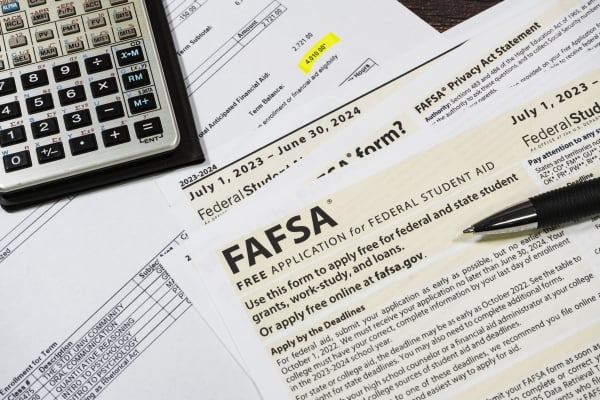
    The Department of Education plans to launch this year’s Free Application for Federal Student Aid on Oct. 1, the agency announced Monday.

    It would be the first time since 2022 that the form is released by the traditional deadline date, after a major overhaul and technical issues pushed back the 2023–24 launch to January and the 2024–25 launch to late November.

    The department will also repeat a new beta-testing period that was piloted last fall. Officials plan to gradually roll out the FAFSA to a limited number of school districts and college-access organizations starting in August and will begin sending test Institutional Student Information Records to colleges at the same time.

    They’re also introducing a simplified process for inviting contributors to the form, a step that frustrated many families over the past two years and stymied completion of the new FAFSA. Instead of requiring a unique Contributor ID code, this year students can invite a parent or guardian to contribute to the form by entering their email, and contributors don’t have to be registered on StudentAid.gov beforehand.

    Source link

  • As Effective Date for Biden FLSA Overtime Rule Nears, Opposition Mounts – CUPA-HR

    As Effective Date for Biden FLSA Overtime Rule Nears, Opposition Mounts – CUPA-HR

    by CUPA-HR | June 18, 2024

    On July 1, the first phase of the U.S. Department of Labor (DOL)’s new overtime rule goes into effect. The initial phase of the rule will require employers to pay most white-collar employees a salary of at least $43,888. If employers fail to do so, those employees will be entitled to overtime pay under federal law. As the rule’s effective date approaches, opposition has mounted, with plaintiffs filing three lawsuits challenging the rule, including one filed by the state of Texas requesting that the court delay the July 1 effective date. Additionally, several Republican members of the U.S. House and Senate have introduced a Congressional Review Act (CRA) resolution aimed at blocking the rule.

    Background

    On April 23, 2024, DOL issued a final rule to amend the Fair Labor Standards Act (FLSA) overtime regulations. The FLSA requires employers to pay employees at least the minimum wage (currently $7.25) for each hour worked and 1.5 times the employee’s regular rate of pay for any hours worked over 40 in one week. However, the FLSA contains various exemptions to these overtime pay requirements, including one for white-collar employees. White-collar employees are considered “exempt” if they satisfy a three-part test: (1) the employee must be paid on a salary basis (that is, paid the same amount each week regardless of hours worked), (2) the employee’s salary must meet a minimum threshold (currently $35,568) established by DOL, and (3) the employee’s primary duties must be consistent with being an executive, administrative or professional employee. The final rule will increase the minimum salary threshold from $35,568 to $43,888 on July 1, 2024, and then to $58,656 on January 1, 2025. Thereafter, the rule requires automatic increases to the threshold every three years based on a set formula.

    Lawsuits

    On May 23, a group of 13 local and national associations and Texas businesses filed the first lawsuit in federal court in Texas challenging DOL’s rule. The suit claims that the salary threshold that goes into effect on January 1, 2025, is so high it will result in more than 4 million individuals being denied exempt status, even though these individuals could be reasonably classified as exempt based on their duties, and in doing so, the rule violates both the statutory language of the FLSA and prior court decisions. The suit also challenges the automatic updates.

    On June 3, two additional lawsuits challenging the overtime final rule were filed by a software company in Texas, as well as the state of Texas itself. In both lawsuits, the plaintiffs make arguments similar to those in the lawsuit filed in May, stating that DOL lacks authority to implement the changes provided in the final rule. The state of Texas also filed a motion for a temporary restraining order (TRO) that seeks to block the final rule from going into effect on July 1.

    While it may take the courts several months to issue decisions on the validity of the rule, the judge could decide whether to grant the state of Texas’s motion for a TRO before the July 1 effective date. The TRO would block the rule from going into effect until the court decides whether or not the rule is valid. More updates will be provided via CUPA-HR Washington Insider Alert emails as decisions are released.

    Congressional Review Act Resolution

    On June 3, Rep. Tim Walberg (R-MI) and Sen. Mike Braun (R-IN) introduced CRA resolutions in the House and Senate to block the overtime final rule from going into effect. Unlike traditional legislation, CRAs require only a simple majority in both chambers to pass (as compared to the usual 60-vote threshold to bypass a filibuster needed in the Senate).

    Though House Republicans have the majority, it is unclear if and when the CRA will be brought to the floor for a vote, given the minimal concern with the July 1 effective date from the business community. In the Democrat-controlled Senate, the path for a floor vote seems even more uncertain as Senate Democrats do not appear to support the efforts to overturn the final rule. As such, it seems unlikely that Congress will pass the CRA to overturn the final rule this session.

    CUPA-HR continues to monitor for and keep members apprised of any major updates relating to the FLSA overtime regulations.


    Source link

  • Keep up to date with all things digital

    Keep up to date with all things digital

    The Digital Learning News is a monthly newsletter from DET Digital Learning Services. Subscribe here to keep up to date with professional learning, software and resources to support you in your classroom.

    You can also find ​teaching ideas, materials and safety for using digital technologies in the classroom at the DET Digital Learning web page.

    Source link