Tag: days

  • He spent 37 days in jail for a Facebook post — now FIRE has his back

    He spent 37 days in jail for a Facebook post — now FIRE has his back

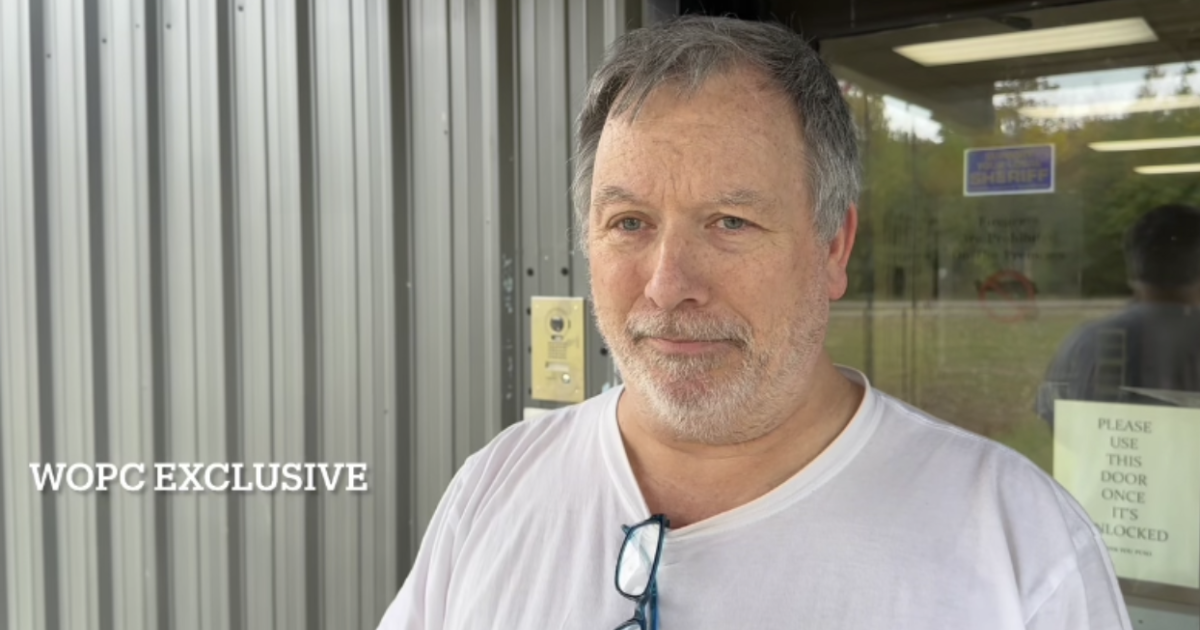
    A 61-year-old Tennessee man is finally free after spending a shocking 37 days in jail — all for posting a meme. 

    Retired police officer Larry Bushart told a local radio station he’s “very happy to be going home” after his nightmarish ordeal. 

    But for Larry and FIRE, the fight isn’t over.

    In September, after Charlie Kirk’s assassination, Larry shared a meme on a Facebook thread about a vigil in Perry County, Tennessee. The meme quoted President Donald Trump saying, “We have to get over it” following a January 2024 school shooting at Perry High School in Iowa. The meme included the commentary, “This seems relevant today …”

    The meme that Larry Bushart shared on Facebook.

    Just after 11 p.m. on Sept. 21, four officers came to Larry’s home, handcuffed him, and took him to jail. He was locked up for “threatening mass violence at a school.” His bond — an astronomical $2 million! 

    Police justified the arrest by saying that people took the meme as a threat to their high school, which has a similar name to the one where the school shooting occurred 20 months earlier. However, police have been unable to produce any evidence that members of the public took the meme as a threat. As The Intercept noted: “There were no public signs of this hysteria. Nor was there much evidence of an investigation—or any efforts to warn county schools.”

    Larry was jailed for more than five weeks. But that wasn’t the only thing he suffered. During that time, he lost his post-retirement job doing medical transportation and missed the birth of his granddaughter.

    Bushart in a police car

    Bushart during his arrest in September, Perry County, Tennessee.

    Prosecutors finally dropped the charges — only after the arrest went viral. Now a newly freed Larry, who spent over three decades with law enforcement and the Tennessee Department of Correction, is preparing to sue.

    “A free country does not dispatch police in the dead of night to pull people from their homes because a sheriff objects to their social media posts,” FIRE’s Adam Steinbaugh told The Washington Post. Now, FIRE is representing Larry to defend his rights — and yours.

    A meme doesn’t become a threat just because a sheriff says it is. In America, there are very few exceptions to the First Amendment, including true threats or incitement of imminent lawless action. 

    Jailing first, justifying later, flips those limits on their head. If officials can arrest you because they dislike your social media posts, then none of us are safe to express ourselves.

    Stay tuned for updates.

    Source link

  • WEEKEND READING: A thousand days of silence: reclaiming education through localisation for Afghan women

    WEEKEND READING: A thousand days of silence: reclaiming education through localisation for Afghan women

    This blog was kindly authored by Naimat Zafary, PhD student at The University of Sussex and a former Afghan Chevening Scholar.

    As I mark my fifth year in UK higher education, a journey that began with a Chevening Scholarship and an MA at the Institute of Development Studies before leading to my PhD in the School of Global Studies at the University of Sussex, a single, recurring image encapsulates a profound contrast.

    From my study window on campus, I watch the vibrant flow of students: a tide of ambition pouring into and out of lecture halls. In a silent, personal ritual, I often count them. Invariably, I find more young women than men, a sight that swells me with pride to be part of an institution that offers equal and abundant opportunities to female students.

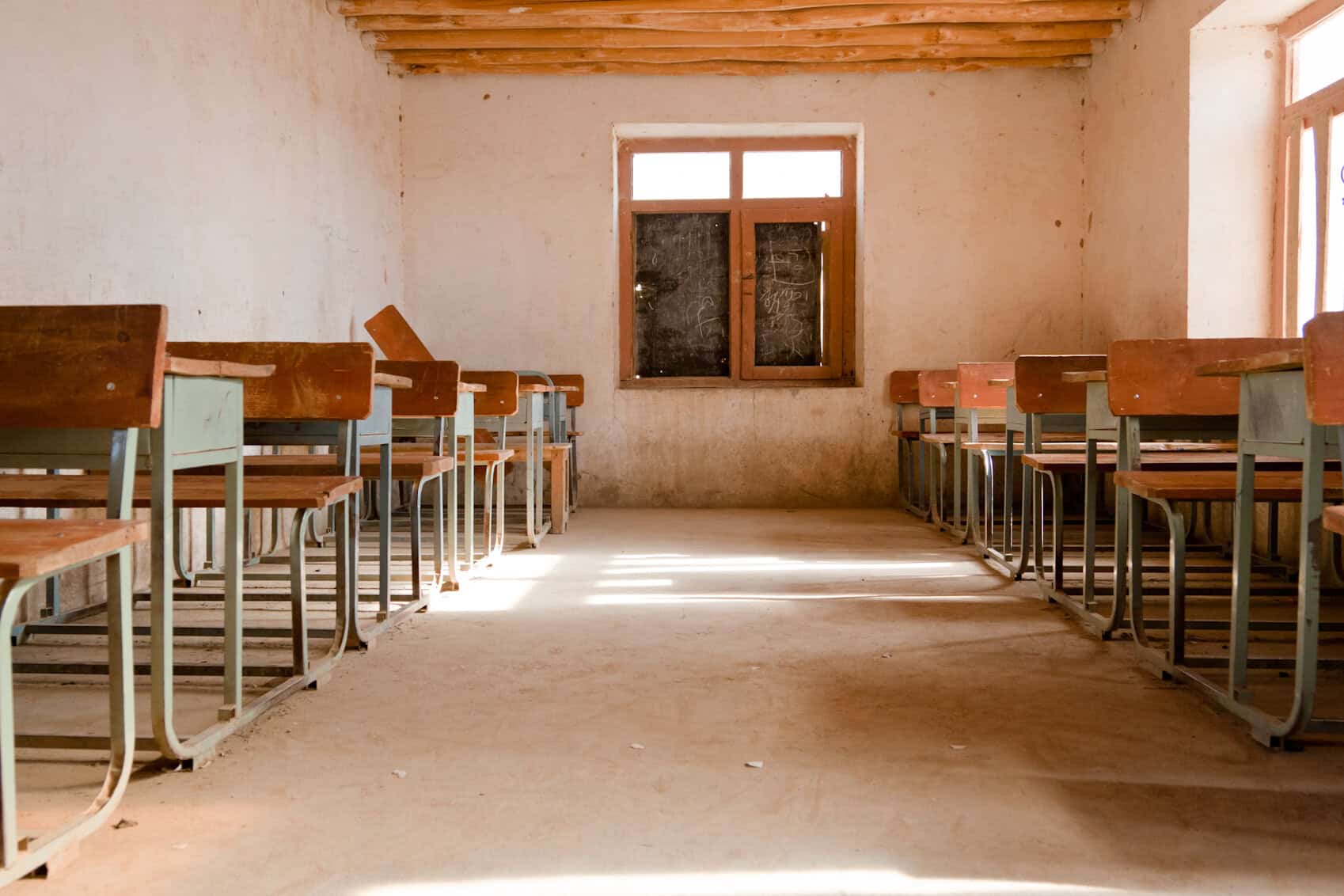
    Yet, this everyday scene instantly transports me to my home of Afghanistan, where this picture is hauntingly absent. For nearly three years – around 1,050 days – the Taliban has barred Afghan girls and women from their fundamental right to higher education. Their university campuses, once symbols of hope, are now forbidden ground.

    Beyond internationalisation

    The start of the academic year is a time of new beginnings for UK universities. There is a mood of anticipation, proudly announcing numbers of new starters and, on my own diverse campus, a commitment to internationalisation. Students arrive from across the world, a myriad of stories behind each of them. For some, a struggle, for others, lifelong dreams of individuals and families.

    If we are lucky, we will share some of these experiences and perspectives with the people around us. We will define our possibilities differently as a result. This focus on global reach is commendable and a deep privilege. We are – we become – international.

    But I ask myself a sharper question too. What of those who do not, cannot travel? How do we consider the community which includes the missing, the trapped?

    So, as I look across campus, I see these faces too. Will institutions that are committed and measured in part in relation to the sustainable development goals –  every one of which is behind – take a step to localise, to go to those who cannot come to them?

    British higher education has a long history of outreach. Many of its now great universities began as an effort to take learning and opportunity to provinces where it was absent, or to include within its potential those who, at one time, were told education was not for them.

    That widening participation agenda is now under strain at home and abroad. If you measure the outcomes only of those blessed with an environment and the support to succeed, you implant a bias away from risk. If you effectively close off the means of access, the hopeful will turn away. Participation can narrow as well as widen. In some cases, participation can stall completely –  those desperate to continue their dreams, whose voices are screaming to be heard, and who are simply waiting for a chance?

    Who will answer the call?

    In the worst of times, those who step forward, demonstrate they care and –  despite their own challenges – stand against this injustice are living the most profound values of education.

    Here again, I look out at my campus at The University of Sussex with pride, and I believe there are lessons for others too.

    It begins with leadership and with kind-hearted teams, but also a desire to turn feeling into action. In this case, despite headwinds of practical barriers, the university has undertaken a pilot and has awarded online distance learning master’s degree scholarships for a small group of talented Afghan women and girls.

    The inspiration for this initiative was born out of a stark contrast. As female Afghan Chevening scholars walked across the Sussex graduation stage with pride, in Afghanistan, not a single woman could enter a university, let alone a graduation ceremony. I longed for those with the potential of taking action to hear the voices of Afghan women and somehow open a door, even for just a few.

    Developing an outreach programme in such a sensitive context isn’t easy. Universities have their own urgent challenges close to home, and the many demands they face don’t pause while they innovate in global education.  But principled leaders took the challenge of the absence of women in higher education a world away to their own core, and recognised that this too was their business. 

    Finding a possible solution took time: more than two years of proposals; assessing the situation; back-and-forth communication; and ensuring we were always working in line with advice on ensuring the safety of participating students. It was modest, but it matters beyond words.

    The logic was beautifully simple and necessary: if Afghan women are banned from stepping into the higher education arena, then higher education must step into their own room. This is a practice the Western world embraced during the pandemic; we simply need to apply it now to find a light in the darkness.

    An undefeated hope

    The proof of this need was instantaneous. In early July 2025, the University of Sussex’s announcement went live. Within the first 48 hours, more than eight hundred women and women sent an inquiry and applied for the scholarships.

    That response sent a clear, undeniable message of a thirst and love for education, of persistent talent, eligibility, and an undefeated hope for the future. And now it begins. The five talented women awarded these scholarships have started on the first of these courses with an unwavering commitment.

    One of the awardees described her gratitude this way:

    As an Afghan woman achieving this milestone under such challenging circumstances has been both difficult and deeply meaningful. I am committed to making the most of this opportunity and to using the knowledge and skills I gain to contribute toward strengthening and supporting our fragile communities.

    These students are proof that Afghan women are not defeated even in this brutal hour. They may have to learn behind legal bars for now, but they believe in a better future, they are determined to serve their community and contribute to wider society — given the chance, they will change their lives and the lives of those around them.

    Deeds not words

    To my colleagues and friends in UK higher education, I humbly say this. Our institutions are built on the foundational motto of “leaving no one behind” – no one, not even the women whose doors are bolted but whose spirits still crave learning.

    I profoundly hope the UKhigher education community will look closely at the successful case of the University of Sussex, draw on the experience of this pilot and follow its lead. One programme could become many. A single voice could become a chorus.

    Afghan girls and women are navigating one of the most catastrophic times in their history. The education of women is core to the UN Sustainable Development Goals for good reason. Those who step up now, who provide a lifeline through education in this moment of darkness, will not only be remembered – they will be helping to shape the very future of Afghanistan. As the suffragists once chanted in this country, this is a time for Deeds Not Words.

    I ask each of you not to write off hope.  A dear friend shared a poem with me, which is much loved across this country. It was written by the great War poet Siegfried Sassoon at a time of despair, but it continues to move people because it defiantly imagines a time of release and redemption.

    Everyone suddenly burst out singing;

    And I was filled with such delight As prisoned birds must find in freedom…

    My heart was shaken with tears; and horror Drifted away … O, but Everyone

    Was a bird; and the song was wordless; the singing will never be done.

    There are times a university keeps hope alive, where a pilot programme is a flame visible across the world. It is the promise of a better future through the empowerment of those who wish desperately to build it.

    A good deed can be multiplied. If Afghan women students cannot come to us, let us join together as a band of scholars and go to them.

    If any university colleagues would be interested in understanding more about the Sussex pilot to offer online postgraduate access to Afghan women, please contact [email protected].

    Source link

  • How can open days help applicants?

    How can open days help applicants?

    Like many Wonkhe readers, I’ve been lucky enough this year to support a young person weighing up their post-18 options.

    If you are the person in someone’s life that “really understands universities” it does often fall to you to sift through the vagaries of our recruitment and application process. Just what are “predicted grades” and why are they different from what someone got in their mocks? Why can you only apply to five courses on UCAS? Why, for that matter, does it cost money to apply via UCAS? Why are league tables so silly? Is there really a “Discover Uni”?

    The new aspect for me this year has been the world of the open day. On a succession of unseasonably rainy weekends I’ve been finding my way around campuses, under strict instructions not to mention who I work for or wear any Wonkhe merch (“so embarrassing!”) and speaking to academics and support staff about undergraduate entry in 2026.

    Performativity

    I’d love to say it has all brought back memories of my own open day adventures many years ago – in all honesty it has not. I never visited the university I ended up studying at prior to securing a place, my memory of the others is more of the cities and towns than the campuses and corridors.

    And that’s kind of the thing. If you are visiting an open day you are asking about third year options and work placements, but the decision that is being made is more along the lines of what it would be like to live and study in a place. The most successful open days I have seen this year have leaned into this – what would a lecture be like? How would you get from where you live to where you study? What else would I be doing outside of my studies? Where might I get a job?

    Academic staff – be they course leaders making a presentation or just generally making themselves available to chat, have often seemed terrified to speak to young applicants and their escorts. I’ve heard an awful lot about course revalidations and QAA Subject Benchmark Statements (yes really!), and while this is clearly great for me I can’t really see anyone else getting much out of it. When you sign up to “the talk” on your subject of choice what I would expect to get is a sense of enthusiasm about the subject and an openness to engage with others who have an interest: we can perhaps assume that anyone who wants to will have read about the course structure on the internet (or even, at one university, in an actual honest-to-god paper prospectus).

    My go-to approach for speaking to shy academics is to ask about their personal research interests – all the best conversations we’ve had have been around the particular interests of my prospective student and those of the academics. I feel like it would be good to work some of this into the more formal aspects of the day.

    The feel

    Applicants and their adults have often asked about practical “feel” based stuff – there’s been a lot of questions raised about assessment strategies and exams versus essays and presentations. The interest in post-degree employment is very real – and there is a trend towards listing industry partners (when done best it has offered tangible examples of how students would experience these partnerships).

    There’s also the inevitable question of entry requirements. Just about everywhere I’ve been has taken pains to reassure that there may be a place even if the grades aren’t quite there next summer – staff at all kinds of providers are actively promoting clearing entry.

    If you are not involving current students in open days you should be (and if you are, be sure to pay them – as you should everyone involved – for what is a very hard day’s work). Speaking to somebody only a few years older than you, who is living the life you are trying on for size, is what really seems to light applicants up. And the more informal the conversation the better it seems – interpolations in course presentations are good, a student-led tour is better, seeing students demonstrate the skills they have learned was excellent, and a sly joke shared in the student accommodation viewing is pretty much the best of all.

    Vibes

    Applicants are very good at picking up the overall mood of the day. If people act like the event has arrived suddenly on campus, and nobody is really clear what is going on, you can pick it up a mile off. And this year keeping the positive mood is not easy if you know the scale and direction of staff and funding cuts coming your way: it is very hard to “sell” an applicant on a course if you know it will have less options and less resources than it did this year.

    Likewise, basic hygiene factors stand out a mile (and I don’t just mean the halls of residence bathrooms…). If we’re sat having a coffee in the SU – something we always tried to do as a way of getting a sense of what campus life is like – it does rather stand out when there was supposed to be food available but it has all gone, or if all the posters seem to be for events that happened in 2023. I mean, posters are infinitely preferable (if the LGBT+Soc ran Chappell Roan bingo for pride day I am one hundred per cent there for it!) to glossy pictures and sidewinders wheeled out for the day, but maybe check if they are recent?

    Likewise, if visitors will be parking on campus some kind of an advanced plan would help – and if you have student services folks sitting at tables make sure there are actual people at the tables to talk to throughout the day.

    It’s the little moments. We were surprised to meet a vice chancellor that was clearly and obviously proud of their university, and who had signed up to do a series of rolling introductory talks. The question I got from next to me (“how often would I meet the vice chancellor as a regular student?”) was interesting – all though frankly I was more exercised about the fact that I’d seen the vice chancellor present a golden slide promoting a “TEF Gold in student experience” with the overall silver noted in tiny writing at the bottom.

    The awards and the league table placings really come across as noise – I didn’t see any applicant looking remotely impressed, although some were interested in graduate destinations and links to employers.

    An open day is an audition. An applicant is trying on the idea of being a student at your university – the best way to respond (and I’ve seen this done really well) is to set out just how great the student experience actually is: the TEF components are perhaps less impressive than what actual students say and the intangible “feel” of the campus. Students spend a lot of time asking “where do I go now?” – applicants have pretty much the same question.

    Source link

  • Academics working 9 hours a day, 365 days a year – Campus Review

    Academics working 9 hours a day, 365 days a year – Campus Review

    Workforce

    Funding challenges, promotion issues and heavy workloads are linked, a separate survey found

    A survey has found academics are working 3,256 hours a year, about double the Australian average, and are suffering worse anxiety and depression as a consequence.

    Please login below to view content or subscribe now.

    Membership Login

    Source link

  • Higher Ed After Trump’s First 100 Days: The Key Podcast

    Higher Ed After Trump’s First 100 Days: The Key Podcast

    Inside Higher Ed journalists analyze the first 100 days of the Trump administration in this week’s episode of The Key, IHE’s news and analysis podcast.  

    Editor in chief Sara Custer, along with news editor Katherine Knott and reporters Johanna Alonso and Liam Knox, discuss the major events of the last three months and the impact they have had on universities and colleges.

    The team summarizes the executive orders that will affect higher education, including one to shutter the Department of Education, another to overhaul accreditation and another to tackle alleged antisemitism. 

    The conversation also explores the new relationship the federal government has established between itself and higher education and how the administration is threatening federal research funding to set ultimatums and progress its agenda, in particular with Columbia and Harvard University.

    The group updates listeners on the latest developments with international students’ Student Exchange and Visitor Information System status reinstatements. Alonso and Knox also talk about what they learned about the administration’s targeting of international students from speaking to students, their advisers and digging through dozens of lawsuits brought against the government. 

    While what comes next is anyone’s guess. The team discusses what they’ll be watching over the next 100 days, including what Congress will be working on, the fallout from the international student crackdown and how summer might shift the vibe on campus. 

    Listen and download the episode here. 

    Source link

  • Trump tackles higher ed during his first 10 days in office

    Trump tackles higher ed during his first 10 days in office

    During his first 10 days in office, President Trump signed a plethora of executive orders to combat so-called woke ideology, reversed a long-standing immigration policy that barred ICE officers from raiding college campuses and sought to freeze federal grants that don’t align with his agenda—a move blocked by a federal court.

    So far, his actions have had few immediate consequences for higher ed, and policy experts say more guidance is necessary to understand their implications. But the president has certainly created chaos and confusion, raising concern among university administrators across the country and inciting pre-emptive responses from some.

    Throughout the past two weeks, higher ed experts have told Inside Higher Ed they are trying to walk the thin line between necessary caution and undue alarm.     

    Many of Trump’s initial actions will take time to enforce and may face intervention from the courts. And while the president has nominated former wrestling mogul Linda McMahon as secretary of education and former University of Florida vice president Penny Schwinn as deputy, neither has a confirmation hearing scheduled. Trump has yet to nominate an under secretary—the highest-ranking official overseeing colleges and universities. So it will likely be at least a few weeks, if not more, until the department reaches full capacity.

    Until then, it will be run by acting secretary Denise Carter, who was already working in the department as head of the Office of Federal Student Aid, and a collection of 10 appointees who do not require confirmation. Of the 10, four have previously worked with the America First Policy Institute, a pro-Trump think tank that McMahon formed in 2021.

    Though the department is not yet fully staffed, the small landing team has leaped into action. In a Jan. 23 new release, department officials said they had removed or archived hundreds of documents, dissolved councils and canceled service contracts that go against the president’s “ongoing commitment to end illegal discrimination and wasteful spending.”

    Executive Orders

    The president signed a record number of executive orders on his first day in office and has added to the tally nearly every day since. But the three that hold the most weight for colleges and universities concern DEI, “gender ideology” and antisemitism. Higher ed, free speech and civil rights advocates predict all three will create a significant chilling effects on campuses.

    “Gender Ideology”

    Signed on Inauguration Day, the first order declares that there are only two sexes, which the White House defines as “male” and “female.” The order also mandates that federal agencies use those definitions when “interpreting or applying statutes, regulations, or guidance and in all other official agency business, documents, and communications” and bans the federal funding of any program that goes against those definitions or defends transgender and nonbinary students.

    Diversity, Equity and Inclusion

    The executive order Trump signed the following day, Jan. 21, tackled all things DEI, though unlike the first order, it never defined the term. Instead, it broadly ordered agencies—including the Education Department—to “enforce our longstanding civil-rights laws and to combat illegal private-sector DEI preferences, mandates, policies, programs, and activities.”

    The document instructs the department to provide guidance for colleges and universities on how to comply with the 2023 Supreme Court ruling against affirmative action. It also designates all institutions that receive federal financial aid as subcontractors and says that as such, they “shall not consider race, color, sex, sexual preference, religion, or national origin” in their programs or hiring decisions. Finally, it commissions the department to conduct an investigation of up to nine colleges with endowments worth more than $1 billion to scrutinize compliance.

    Antisemitism

    The most recent order, signed Wednesday, piggybacks on the tensions over recent campus protests and vows “forceful” measures to combat antisemitism. Its four main components define antisemitism, direct the Office for Civil Rights to reconsider closed investigations on ethnic and religious discrimination, encourage the Department of Justice to take action, and allow immigration officers to deport international student “sympathizers” who support antisemitic groups.

    DEI, LGBTQ+ and pro-Palestinian advocates, along with free speech and academic freedom groups, are pushing back against the order, and some are even encouraging colleges and universities not to comply unless pressured to do so.

    But several colleges have already taken pre-emptive actions in an attempt to avoid financial penalties. For example a conference at Rutgers University about registered apprenticeships and historically Black colleges and universities was canceled last week, and Michigan State University canceled a Lunar New Year event this week. Rutgers officials, however, say calling off the conference wasn’t a university decision. Rather, it was canceled because the organizers, a group outside the university, received a stop work order from the Department of Labor.

    Immigration Actions

    Although less directly targeted at institutions of higher ed, the president has also taken executive actions related to immigration. He attempted (and failed) to strip the children of undocumented immigrants of birthright citizenship; rescinded guidance that prevented immigration arrests at schools, churches and colleges; and signed the Laken Riley Act into law, potentially putting the approval of some U.S. visas into the hands of state attorneys general.

    The first executive action might have impacted some students’ access to in-state tuition or financial aid but would have had no direct implication on the colleges themselves. But the latter two could force university administrators to decide whether they will assist in deportation efforts and may impact the enrollment and hiring of international students and scholars.

    Funding Freeze

    Perhaps the most direct cause of chaos and concern among colleges, however, was the product of an internal Office of Management and Budget memo leaked Monday, which directed all federal agencies to pause thousands of grants and loans in order to conduct a “comprehensive analysis” and ensure they align with the president’s priorities.

    The unprecedented guidance specifically exempted Social Security, Medicare and other programs that provide direct financial assistance to individuals. But initially many institutions feared the mandate would strip students of access to the Pell Grant and federal loans. The White House clarified that was not the case in a press conference and in follow-up memos, but colleges, universities and higher education nonprofit groups were still concerned.

    Policy experts warned that even if temporary, lack of access to grants could impact minority-serving institutions, college preparation programs, childcare for student parents, food banks, student retention and graduation initiatives, campus hospital systems, and more. Multiple legal challenges quickly followed, and on Tuesday afternoon a federal judge in Washington blocked the freeze, just hours before it was scheduled to take effect.

    Since then, the Trump administration has rescinded the original memo, although it has criticized news organizations for saying the freeze was reversed entirely. Instead, officials argued in a news release—titled “Another Day, More Lies”—that the analysis of all programs is ongoing and Trump’s order remains “in full force and effect, and will be rigorously implemented as the administration works to root out waste, fraud, and abuse.”

    Pauses on research grant applications through the National Institutes of Health and the National Science Foundation that started prior to the OMB memo remain in place. The agencies are responsible for billions of dollars in research funding at universities across the country, and faculty members are still largely concerned that the stoppage will interfere with critical STEM research projects, including those that have advanced treatments for common diseases such as cancer and Alzheimer’s.


    Source link