Today’s News Headlines for School Assembly, December 26, 2025: Here are the news headlines for school assembly on December 26. A Maoist leader was killed in Odisha, Delhi’s fog eased, and Kerala introduced photo identity cards. Tarique Rahman returned to Bangladesh, blasts in Nigeria and Gaza. Australia faces England in cricket on Friday, while young Indians shine in chess. India’s GDP data defended, CTET window reopens, AI courses surge in 2025.
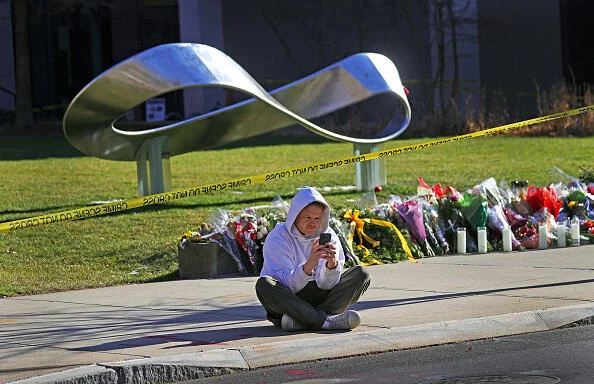
The suspect wanted in connection to a mass shooting at Brown University that killed two students and injured nine was found dead in a storage unit in Salem, N.H., authorities said at a news conference Thursday night.
They identified Claudio Manuel Neves Valente, 48, a former Brown student and Portuguese national, as the man they say barged into an engineering classroom at Brown last Saturday and opened fire on students attending a review session. Valente died from a self-inflicted gunshot wound.
“We are 100 percent confident that this is our target and that this case is closed from a perspective of pursuing people involved,” Rhode Island attorney general Peter Nerhona said.
Officials said they believed Valente was also connected to the murder of MIT nuclear physicist Nuno Loureiro earlier in the week. The same rental car had been spotted near Brown and outside Loureiro’s home, authorities said.
Loureiro was shot at his home Monday night and died at the hospital the next day. His home in Brookline, Mass., is about 50 miles from Brown. Authorities said that in the 1990s, Valente had attended the same university in Lisbon as Loureiro.
Brown President Christina Paxson said at the press conference that Valente had been a student at Brown in the early 2000s but withdrew. She noted that he was a physics student and had likely spent a lot of time in the Barus and Holley science building, where Saturday’s shooting took place.
Paxson wrote in an update Friday that the students injured Saturday were all improving; three had been released from the hospital and six remained in stable condition.
Officials said Valente entered the U.S. in 2000 on a student visa; he became a lawful permanent resident in 2017.
On Friday, the Trump administration announced it was suspending the green card lottery program through which Valente entered the country in 2017. The Diversity Immigrant Visa program, or DV1, allows some 50,000 people a year from low-immigration countries to participate in a random selection process for entry to the U.S.
Valente “entered the United States through the diversity lottery immigrant visa program (DV1) in 2017 and was granted a green card,” Secretary of Homeland Security Kristi Noem wrote on X. “This heinous individual should never have been allowed in our country. … At President Trump’s direction, I am immediately directing [United States Citizenship and Immigration Services] to pause the DV1 program to ensure no more Americans are harmed by this disastrous program.”
This story was updated 12/19 with news about the condition of the injured Brown students and the Trump administration’s pause on a visa lottery program.
Under repeated threats to their funding, higher ed institutions began to rebrand or shut down cultural centers, Black student resource centers and LGBTQ+ and women’s programs. Many campus diversity officers lost their jobs or were shuffled off to other offices, barred from doing much of the work they were hired for. Some institutions scrapped celebrated traditions such as affinity graduations and campus residential communities geared toward students of certain racial or ethnic backgrounds. Some student groups, like Esperanza, lost university funding because of their identity-based missions.
In one recent example, the University of Alabama ended two student publications, one focused on women and the other on Black students, citing federal policy concerns. The University of Tennessee at Chattanooga shuttered its Women’s and Gender Equity Center, an LGBTQ center, its Office of Multicultural Affairs, and the Office of Student & Family Engagement, replacing them with a Center for Student Leadership, Engagement and Community. The changes have affected faculty and staff as well as students; earlier this fall, the University of Illinois System banned consideration of race, sex or country of origin not only in financial aid decisions but in hiring, tenure and promotion as well.
“It’s very sad to see a lot of universities fall to their knees,” Luna said. Higher ed institutions “are supposed to be the places where the exchange of ideas happen, where leaders are developed and where you’re just taught about how the world objectively is … It’s a very dangerous sign for the future.”
A Double Attack
State-level anti-DEI laws have proliferated for several years now, but diversity-related programs and services were dealt a double blow this year when Trump took office.
On Feb. 14, the Education Department’s Office for Civil Rights issued a Dear Colleague letter declaring race-conscious student programming and resources illegal, based on an expansive interpretation of the 2023 U.S. Supreme Court decision against considering race in admissions in Students for Fair Admissions vs. Harvard. It gave colleges and universities 14 days to eliminate such offerings or risk losing their federal funding. A month later, ED launched investigations into 51 colleges for ongoing DEI activity. Federal judges struck down the department’s anti-DEI guidance in April, pausing enforcement, but colleges nonetheless scrambled to review and scrub DEI language from their programs and offices or shutter them altogether.
Over the summer, the Department of Justice came out with a sweeping guidance memo declaring an even wider set of practices off-limits, including those that use “potentially unlawful proxies” for race, such as recruiting students from majority-minority geographic areas. In a series of contentious legal battles, the federal government pressured some universities to agree to settlements that included anti-DEI provisions, including bans on race-conscious programs and transgender athletes. For example, the University of Virginia, which the DOJ targeted for DEI practices, recently agreed to quash all DEI programming to maintain federal funding.
I am a person who still believes, and I will forever believe, that it is important to call it diversity, equity, inclusion, anti-racism.”
Shaun Harper, founder and chief research scientist at USC’s Race and Equity Center
All the while, federal agencies have slashed, frozen and stalled billions of dollars in research grants to universities, often for perceived ties to DEI concepts. More than 120 TRIO programs, which support disadvantaged students, also lost their federal funds over alleged DEI connections. And in September, the Education Department abruptly ended grants for many minority-serving institutions, calling such programs—used to fund supports like extra peer mentoring or streamlined STEM programming at colleges with burgeoning minority student populations—“discriminatory” and “unconstitutional.”
States, meanwhile, enacted an unprecedented number of new laws cracking down on DEI: 14 in 12 states, including Arkansas, Indiana, Iowa, Kentucky, New Hampshire, Mississippi, Ohio, Oklahoma, Tennessee, Texas, West Virginia and Wyoming. That’s double the number of states that passed anti-DEI laws last year.
A higher education consultant and lawyer in the Washington D.C. area, who asked to remain anonymous, said campus leaders are increasingly asking, “How do we keep ourselves off the radar? How do we avoid scrutiny from the federal government?” At the same time, they face “increasingly disgruntled and disappointed communities within who are saying, ‘We thought you cared about this issue’,” the source said. University leaders have come under “very real pressure.”
A ‘Loss of Momentum’
Diversity officers and scholars fear that this year’s seismic policy shifts and campus crackdowns on DEI will have ripple effects across academe and beyond.
Kaleb L. Briscoe, associate professor of educational leadership and policy studies at the University of Oklahoma, is concerned that some institutions have responded to DEI bans by limiting what’s taught in the classroom.
For example, Florida colleges removed hundreds of courses related to race, sex and gender from their general education requirement options. Classes at Texas A&M University that “advocate race or gender ideology, sexual orientation, or gender identity” now require approval from the university president. And other Texas universities have undertaken reviews of course syllabi and curricula for anything that runs afoul of state or federal DEI bans.
Curriculum changes that would normally “take years’ worth of processes” are sometimes happening quickly and without appropriate faculty input, Briscoe said. While proponents of DEI bans often call for viewpoint diversity, “by implementing these bans, you are taking away voices and taking away knowledge … which really counters what they are hoping to do.”
She also fears a “blue, red, purple divide of education,” where students have different levels of access to certain subject areas or perspectives depending on where they go to college.
“We are now going to see different people in different states learning and getting access to different things,” she said. “That is horrible because, knowledge-wise, we should be preparing our students to be productive citizens across difference.”
What we’re doing is reducing opportunities.”
Paulette Granberry Russell, president of the National Association of Diversity Officers in Higher Education
Shaun Harper, founder and chief research scientist at the University of Southern California’s Race and Equity Center, said he’s mourning a “loss of momentum” in improving the experiences and outcomes of underrepresented students, a movement that stretches back to the 1960s.
He recently visited a campus where “the Black cultural center still exists in name, but it has no staff. It has no programming. It’s just an empty room,” he said. Harper, who also serves as USC’s Clifford and Betty Allen Chair in Urban Leadership and Provost Professor of Education, Business and Public Policy, said he found a smattering of students still trying to use the space, sitting in the dark and talking. He remembers when the same center was “a light, bright, vibrant space that was rich with culture that had employees … who helped to make it a home away from home.”
To him, the darkened space was a symbol of what’s been lost.
DEI Professionals Under Fire
Harper said he’s been especially disheartened to see DEI professionals lose their jobs.
Institutions dismissed “good, innocent, hard-working people who were expert at bringing campus communities together across racial, religious, ideological and other important divides,” and who pushed for some widely-cared-about issues like pay equity for women and access for students with disabilities, he said. “The loss of those people has been catastrophic to higher education, to the students that they were serving and to those people’s careers.”
A former diversity professional at a public higher ed institution in the South told Inside Higher Ed that DEI officers were wrestling with the “trauma,” “shame” and “humiliation” of suffering such a forceful, nationwide rejection.
The ex-diversity officer, who asked to remain anonymous for fear of career repercussions, spent years working to make their institution a more welcoming place for students of color—and it worked, they said. Over their tenure, faculty diversity increased and the percentage of underrepresented students in the university’s entering class more than doubled.
But you wouldn’t know it from looking at the institution’s website, the former diversity officer said. It makes no mention of the diversity office, which was dissolved. The university stripped any evidence of its work, including videos of events and educational programs, data reports and online community platforms. Unlike many of their co-workers, the former diversity officer retained an unrelated position at the institution, but their former role feels like a “scarlet letter” on campus and in the job market, they said.
They worry not only for their colleagues but also for students and faculty members left unserved.
“I can tell you that students of color who had community, don’t,” they said. “They’re spitting on Black kids, they’re calling them the N-word, and kids don’t know where to go. They don’t know what office is going to support them.”
The former diversity professional believes DEI is officially “dead,” at least as a label.
But “the underlying work of creating welcoming, diverse, inclusive, supportive cultures on campus and communities is not dead,” they said. The “benefits of diversity, of inclusion, those are still there. It just can’t be called that.”
Students in Ann Arbor protested the University of Michigan’s decision last spring to close its DEI offices, putting up posters criticizing President Donald Trump and former UM President Santa Ono.
Bill Pugliano/Getty Images
DEI’s Murky Future
Harper argued that the work can’t really go on without using the term “DEI.” He believes replacement terms like “culture” and ”community” lack specificity in a way that makes them meaningless.
“It’s giving weak sauce,” he said. “I am a person who still believes, and I will forever believe, that it is important to call it diversity, equity, inclusion, anti-racism.” The same goes for “antisemitism, sexism, homophobia and transphobia. It’s important to call those things by their names.”
Whether DEI will continue in some form is an open question currently under debate by current and former DEI officers and researchers. Some retain their optimism; others argue it’s going to take years, even decades, for campus infrastructure to recover from the full extent of this year’s losses—if a comeback is even possible.
The DEI rollbacks mark a retreat from “60-plus years of effort to broaden access and address inequities,” said Paulette Granberry Russell, who’s stepping down as president of the National Association of Diversity Officers in Higher Education in January after five years at the helm. “So, do I see this work coming back? Bouncing back? No.”
Regardless of who wins the next election, she believes federal funding cuts and stymied DEI-related research will cause long-lasting damage. She’s spoken with scholars studying issues related to race and gender who have been doxed and threatened, and who fear continuing the work they’ve done for years.
“What we’re doing is reducing opportunities,” Granberry Russell said. “You’re not going to make that up in two, three, four years.”
But she’s not without hope. She emphasized that a “systems approach” to improving academic outcomes for students—making such work the entire university’s responsibility—could be the next phase of these efforts as diversity offices fade. Doing so would require leaders to express “their commitment, which at least at this point, requires a certain amount of courage, given the very heavy-handed … taking away of resources to bring colleges and universities into line,” she said.
A chief diversity officer who lost their job in a state with a DEI ban but now works in the same role at an east coast institution, said they’re doing a “post-mortem” on where DEI went wrong. They believe the DEI movement might have tried to accomplish too much too fast, without explaining the research behind the practices developed to boost student outcomes.
Practitioners introduced concepts “really new to people” and sometimes “began to cancel people quickly” who didn’t get it, said the CDO, who asked to remain anonymous. But “you can’t run a marathon with people who are not fit. You have to bring them up to where you want them to be. And that requires teaching. It requires patience.”
They noted that the field of DEI grew rapidly in the aftermath of the Black Lives Matter protests in 2020. Scholarship on improving campus climate flourished, and diversity professionals enjoyed a wide berth to try new strategies to close equity gaps. But it was short-lived. Less than a year into the CDO’s role at their previous institution, the anti-DEI movement gained traction in the state. An anti-DEI law ultimately passed, and the diversity office later closed for good.
“That great rebirth or Renaissance” was “like a star that just had its last final flash of wonder—and then the death began,” they said. “We didn’t know at the time that the star was shining brightly to die.”
They believe DEI could be on the brink of a new era, one that rectifies some of its past mistakes and garners more support. “My fear is that we won’t be given the opportunity to do so,” they said. But they’re confident diversity professionals won’t give up on the programs, practices and strategies they believe students need.
“Fear not. Rest up, my friends,” they said. “We will be back.”
The D.C.-based higher education consultant and lawyer believes DEI isn’t dead; it’s just shifting. Campus DEI work has never been unlawful, they argued, so colleges and universities simply need to emphasize that fact, not scale back their work. They encourage campus leaders to state explicitly that cultural centers and programs are open to all, and to train everyone on campus, including student group leaders, how to frame their programming that way—even though the programs didn’t discriminate in the first place.
“Many times, I’m just trying to remove language that I know is going to draw scrutiny and then trying to offer them a way to continue to live out their values,” they said. “There may be ways to thematically describe the intended purpose of a program without using an identity marker that really just is a lightning rod in this moment.”
They acknowledged that “this transition has been really painful” for all invested in diversity, equity and inclusion work.
“But I think people are resilient,” they said. “They’re evolving, and they’re trying to figure out a pathway to make the work of universal access and opportunity evergreen.”
Lexington, KY (September 3, 2025) — A University of Kentucky student and athlete, 21-year-old Laken Ashlee Snelling—a senior member of the UK STUNT cheer team—has been arrested and charged in connection with the death of her newborn, authorities say.
Allegations and Legal Proceedings
Lexington police were called to a Park Avenue residence on August 27 after they discovered the unresponsive body of an infant hidden in a closet, wrapped in a towel inside a black trash bag. Snelling admitted to giving birth and attempting to conceal both the infant and evidence of the birth, according to arrest documents.
Snelling faces three Class D felony charges:
Each charge carries potential penalties of 1 to 5 years in prison and fines up to $10,000.
At her first court appearance on September 2, Snelling pleaded not guilty and was released on a $100,000 bond, with the court ordering her to live under house arrest at her parents’ home in Tennessee. Her next hearing is scheduled for September 26.
A preliminary autopsy by the Fayette County Coroner’s Office revealed that the infant was a boy, but the cause of death remains inconclusive. Officials confirmed that a thorough death investigation is ongoing.
Context: Kentucky’s Near-Total Abortion Ban
Kentucky currently enforces one of the nation’s most restrictive abortion laws. Since August 1, 2022, the state’s trigger law has rendered abortion completely illegal, except when necessary to prevent the pregnant individual’s death or permanent impairment of a major, life-sustaining bodily function. No exceptions are made for rape, incest, or fetal abnormalities.
Attempts to challenge the ban have largely failed. A 2024 lawsuit disputing the near-total prohibition was voluntarily dismissed earlier this year, and the law remains firmly in place. Additionally, a constitutional amendment that would have explicitly declared that Kentucky’s state constitution does not protect abortion rights was rejected by voters in November 2022.
Public Reaction and Additional Details
Snelling, originally from White Pine, Tennessee, had built a public persona that included cheerleading and pageant appearances. Months earlier, she had posted on TikTok expressing a desire for motherhood—listing “having babies” among her life goals. Viral maternity-style photos—later removed from her social media—have intensified public scrutiny.
A Broader National Context
Snelling’s case arises within a wider national conversation about the legal and societal implications of criminal investigations following pregnancy outcomes. Since the repeal of federal protections for abortion rights, concerns have grown that miscarriages, stillbirths, or even self-managed abortions may now be subject to legal scrutiny—raising fears about reproductive autonomy and medical privacy.
Sources
The Guardian: University of Kentucky athlete charged after dead infant found hidden in closet (Sept. 2, 2025)
People: Univ. of Kentucky STUNT Team Member Arrested After Allegedly Hiding Dead Newborn in Her Closet (Sept. 2, 2025)
TurnTo10: University of Kentucky athlete pleads not guilty to hiding newborn in closet (Sept. 2, 2025)
WWNYTV: College student pleads not guilty after dead infant found in closet (Sept. 3, 2025)
The Sun (UK): Laken Snelling cheerleader baby case (Sept. 2, 2025)
WKYT: Fayette County coroner releases autopsy results after infant found in closet (Sept. 3, 2025)
AP News: Kentucky abortion law lawsuit dismissed (2024)
Wikipedia: Abortion in Kentucky (updated 2025); 2022 Kentucky Amendment 2
New York Post: Kentucky cheerleader who hid newborn had listed “having babies” as life goal (Sept. 2, 2025)
Fox News: Kentucky athlete once posted about wanting babies (Sept. 2, 2025)
India Times: Viral maternity photos of Kentucky student after newborn death case (Sept. 2, 2025)
Vox: How abortion bans create confusion and surveillance risks (2025)
Welcome back to the HEPI blog. Our apologies if you have missed your daily dose of higher education policy debate being delivered to your inbox, but we have been busy working on something new. Following our recent HEPI survey, we were thrilled that in addition to readers using HEPI to stay up to date with the latest in higher education policy, over 70% of our readership use HEPI’s research as an evidence and information base. Many colleagues also draw on this to inform strategic planning, develop good practice, or influence governmental and regulatory policy. As such, we have revamped the HEPI website, making it easier for you to find the trusted, evidence-based research we provide. You can now explore our reports, blogs and events by policy area and use the improved search function to find everything you need. We encourage you to visit the new site, and in the spirit of enthusiastic debate, to let us know what you think.
Today’s blog was authored by Darcie Jones, former Vice President of Education at the University of Plymouth Students’ Union and current HEPI Intern.
We Didn’t Start the Fire by Billy Joel, a karaoke classic. But most importantly a 40-year list of crises and cultural touch points, many of which still present in 2025. The tale of generational fatigue led me to think about the role students play in inheriting challenges they didn’t ignite but are trying to fight. As a sabbatical officer, I often heard ‘our students aren’t activists or political’, suggesting a view of apathy towards student activism. So is student activism dead, or does it need a new lens?
Public perception of student activism often falls within a stereotype: paint throwing, glued to the M5, and generally privileged. In some ways that isn’t false, those activists do exist. Iconic movements such as climate strikes and large-scale encampments often dominate the narrative. It takes activists like these to stand-up, utilise their privilege and be radical to create public discourse. However, such dramatic imagery can cultivate scepticism: are students genuinely passionate or merely troublemakers? Maybe it is possible they can be both.
HEPIs report ‘There was nothing to do but take action’: The encampments protesting for Palestine and the response to them, documented ‘one of the most intensive periods of student protest since the Vietnam War.’ These encampments, born of frustration, helplessness and digital outrage, illustrated a moment when activism was unmistakably alive and visible on campuses. However, what happens to student activism when ‘radical activists’ take a break?
What if student activism isn’t always headline worthy? What if it thrives quietly in the pages of student newspapers, or in the safe spaces built by student communities? Reframing of student activism recognises that while it can be revolutionary, student activism can also be impactful and behind the scenes.
From investigative features on sector issues such as tuition fee hikes, to institutional procedural failures, student journalism shines a light where mainstream media may not. Written by (sometimes faceless) students, hard-hitting features highlight the feelings amongst the student community and utilises media presence to create institutional discourse and influence policy – all without having to leave their bedrooms. The importance of student newspapers in amplifying the voice of students on local or global issues can be seen sector wide, with The Tab, originally established at the University of Cambridge, now spanning across 29 UK universities.
Community-led student spaces are an overlooked driver of cultural change. Student societies and support groups for those from marginalised backgrounds, such as LGBTQ+ societies, offer more than community. They lobby for inclusive institutional policies, host educational events and shape campus cultures from within. These groups offer a safe space for students to form authentic communities without marginalisation, in itself being a form of activism for students from certain cultures. Student groups show that impactful campaigning can be done with accessibility in mind, empowering silenced voices to speak up in ways that suit their needs.
This is just a small example of the methods in which students portray activism within student communities. Overall, arguing that students ‘are not political’ erases all that students do to challenge political climates. Choosing to attend work over lectures, creating a student-led community larder to counteract student poverty, attending a pride parade – these are all political choices. This perspective broadens the activism spectrum: it is not just about visible spectacle – it is about sustained effort, relationship-building, and structural change in all forms.
Moreover, it challenges the notion that activism is solely reactive. Instead, activism can be proactive and constructive, laying the groundwork for safer, more inclusive and better-informed environments.
Therefore, student activism is not dead. It remains alive and evolving. Yes, fiery protests make headlines and are important to enact urgent change. But equally important are the quieter forms of resistance: the written word, shared personal experience, safe and inclusive spaces built one meeting at a time.
Just as the fire ‘was always burning’, student activism continues – whether lighting bonfires or quietly tending embers in the corners of campus. Let’s not dismiss it when it is not loudly visible; instead, let’s recognise and foster it wherever it thrives.
This audio is auto-generated. Please let us know if you have feedback.
Two children — ages 8 and 10 — are dead and 17 other people injured at a Minneapolis Catholic school after an active shooter opened fire Wednesday morning. Fourteen of the 17 injured are children, two of whom are currently in critical condition, according to the Minneapolis Police Department.
The tragedy took place during the first week of classes for Annunciation School, a private pre-K-8 Catholic school with a little over 390 students, according to the National Center for Education Statistics. It occurred while dozens of children were attending religious mass at Annunciation Church, said Minneapolis Police Chief Brian O’Hara during a Wednesday press briefing.
During the event, the shooter barricaded some doors to the church from the outside to keep students from leaving as he shot at children and churchgoers from outside the building, through the windows. O’Hara said a smoke bomb was found at the scene.
That kind of “frontal assault” style attack at a school is “relatively rare” according to David Riedman, a school shooting expert who manages the K-12 School Shooting Database. A similar style of attack was seen at the Virginia Tech shooting in 2007, he said.
“Most school shootings are insider attacks (current students) who commit a surprise attack when they are already inside the building,” said Riedman in a Wednesday analysis sent via email.
It is unknown whether the shooter — who was in his early 20s and appears to have died by suicide during the attack — was a former employee or student of the school, said O’Hara.
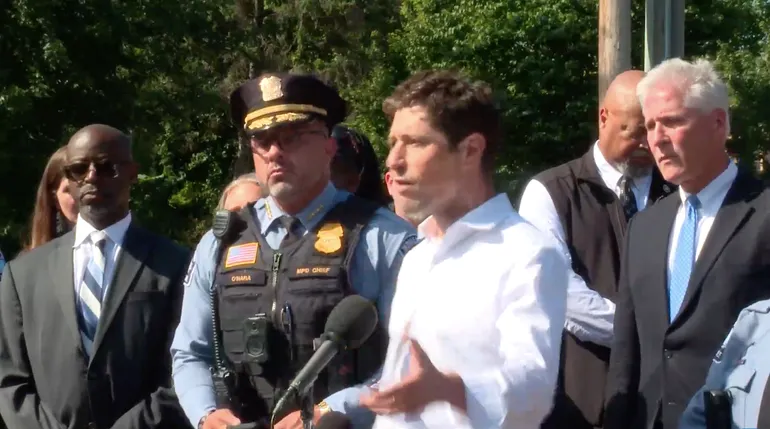
“Don’t just say this is about thoughts and prayers right now. These kids were literally praying.” said Minneapolis Mayor Jacob Frey during the Wednesday press event. “They should be able to go to school or church in peace without the fear or risk of violence, and their parents should have the same kind of assurance.”
The Annunciation Church shooting is the 146th at a K-12 school so far in 2025, according to Riedman’s count.
“These school shootings happen in all sizes of communities and in rural, suburban, and urban areas,” he said.
School shootings reached all-time highs three years in a row between the 2021-22 to 2023-24 school years, according to Riedman’s K-12 School Shooting Database, which tracks anytime a gun is brandished with intent or when a bullet hits school property. The 2024-25 school year then saw a 22.5% decrease in school shootings compared to the prior school year.
There were 254 total school shooting incidents in 2024-25, compared to the nearly 330 school shooting incidents in each of the school years between 2021-22 and 2023-24.
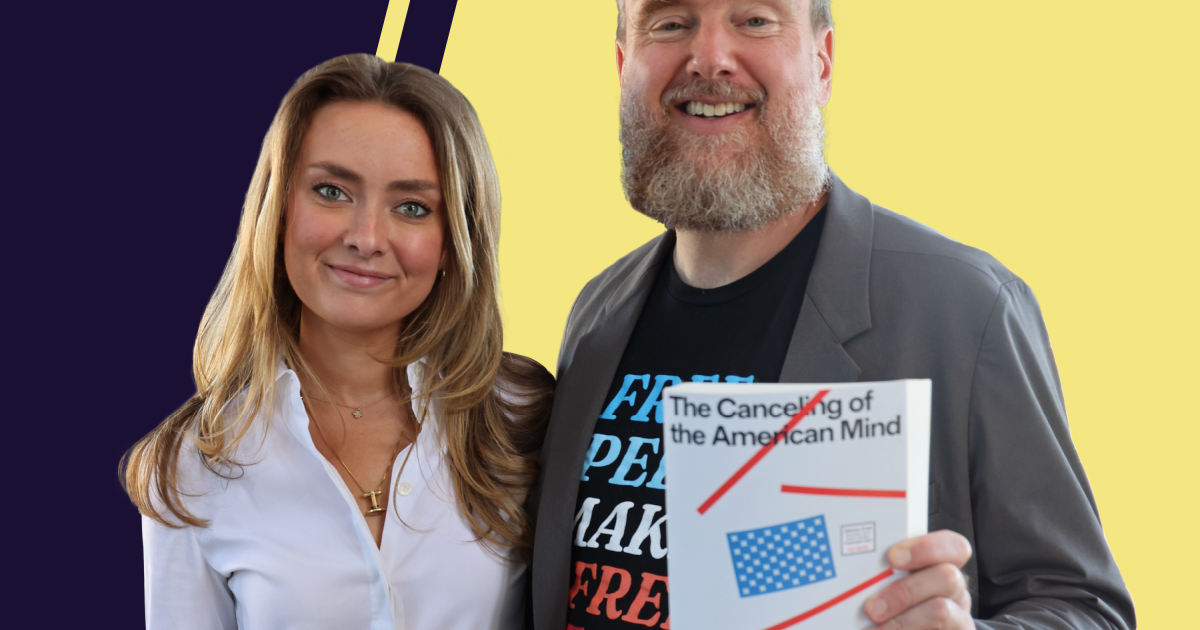
The co-authors of “The Canceling of the American Mind”
discuss its new paperback release and where cancel culture stands a
year and a half after the book’s original publication.
Enjoy listening to the podcast? Donate to FIRE today and
get exclusive content like member webinars, special episodes, and
more. If you became a FIRE Member
through a donation to FIRE at thefire.org and would like access to
Substack’s paid subscriber podcast feed, please email [email protected].
I feel for Nan Zhong, a Chinese American who is suing the University of California because they rejected his son, Stanley, a child prodigy hired by Google at age 18.Emil Guillermo
They think we live in a land of meritocracy where affirmative action is dead. Well, it depends on who’s boss. Zhong has accused the UC system and the U.S. Department of Education of discrimination against Asian American applicants, the third of its kind in recent weeks, according to AsAm News.
Earlier this month, the Students Against Racial Discrimination sued the UC system over its holistic approach to admissions. Another group, The Equal Protection Project sued four Pennsylvania state universities for discrimination against Asians. If you thought the Harvard case which used Asians Americans to end affirmative action last year settled things, you’re wrong.
Some Asian Americans apparently will keep suing until their kid gets in. No lawyer would take Zhong’s case, so he used AI to file his suit. It’s worth it to Zhong to press on because as he puts it, he’s “really p—sed off.”
But Zhong’s anger helps exposed how legal discrimination exists and how it’s allowed to happen. And there’s nothing to do about it. Not when it’s dictated from the top.
TRUMP’S PERSONAL “DEI” LANDSCAPE
For example, I don’t know any Asian Americans or Native Hawaiians cheering Tulsi Gabbard’s rise to Director of National Intelligence. Maybe Kash Patel—the guy who wants to run the FBI. Like Gabbard, Patel and let’s include RFK Jr.—the wormhead, former dope addict, and anti-vax mercenary who has now been confirmed to run the Department of Health and Human Services– are all allied. They are three peas in a pod, three objectively unqualified people, who have risen to the top, not because of merit, but because of allegiance to one man, Donald Trump.
The records of Gabbard, Patel and RFK Jr have all been exposed and are not stellar. Gabbard has never worked for an intelligence agency and is considered by some conservative legislators a dupe for how she has dealt with Russia and Syrian leaders. Would you share secrets with the U.S. with Gabbard at the helm of intelligence?
Patel has ties to key Jan. 6 figures. He’s been an original denier that Trump lost the 2020 election. But if you think those are partisan issues, then what about just the idea of managing an agency like the FBI. He doesn’t have a resume to match any of the previous FBI directors.
And then there’s RFK Jr Let’s just say the worm in his brain qualifies him for a disability, mental and physical. If you put aside the controversial issues like vaccinating his kids, but publicly being anti-vax in situations where people have died, just go with his management experience. Has he ever led anything that qualifies him to run an organization with 13 supporting agencies, 80,000 employees, and a budget around $1.7 trillion in mandatory funding, and $130.7 billion in discretionary funding.
Is he the guy you choose on merit? The answer to RFK Jr is no. As it is for Gabbard and Patel. And the fact is they wouldn’t be hires in a traditional DEI world either, because there are way more qualified people of color to fill the positions. But in this era, they are hires in Trump’s made to order “DEI.” Trump’s pets. They get in when congressional decision makers fold fearing losing their elected positions from candidates funded by the richest man in the world, Elon Musk.
And this is the model of meritocracy at the federal level that trickles down to higher ed and in private practice? It essentially says what the boss wants goes. It’s more than “who you know.” You have to get to the top person’s approval and give them your undivided loyalty. To the man, not the constitution. And then your owned. It’s antithetical to diversity, equity and inclusion, AND merit. It works well for Trump, but nobody else.
Look at Pete Hegseth, the former Fox weekend anchor, now Sec. of Defense, now negotiating away Ukraine’s rights as he seeks Trump-Putin’s vision of an end to war. Trump has a younger more telegenic man standing in for him. And the world is a lot worse off. And that’s where we are in these Trump times. It’s sobering. But so is the fact the Harvard case that went all the way to the Supreme Court really didn’t end disputes in higher ed over who gets into the best schools.
The Asian “winners” weren’t winners after all, in their quest for meritocracy. They were used of course, by the anti-affirmative action folks. Duped. They only want want’s fair. Unfortunately, they were betrayed. I join them in bristling at the headlines about Gabbard and RFK Jr. Meritocracy?
And I wish Zhong good luck with his suit against UC. At least his son, Stanley, without a degree, has that great job with Google.
Emil Guillermo is an award-winning journalist, commentator, and adjunct professor.