Tag: deadly

  • Repression deepens in Hong Kong with Jimmy Lai’s guilty verdict and censorship over deadly Wang Fuk Court fire

    Repression deepens in Hong Kong with Jimmy Lai’s guilty verdict and censorship over deadly Wang Fuk Court fire

    Last year, FIRE launched the Free Speech Dispatch, a regular series covering new and continuing censorship trends and challenges around the world. Our goal is to help readers better understand the global context of free expression. Want to make sure you don’t miss an update? Sign up for our newsletter.

    For challenging the CCP, Jimmy Lai may spend the rest of his life behind bars

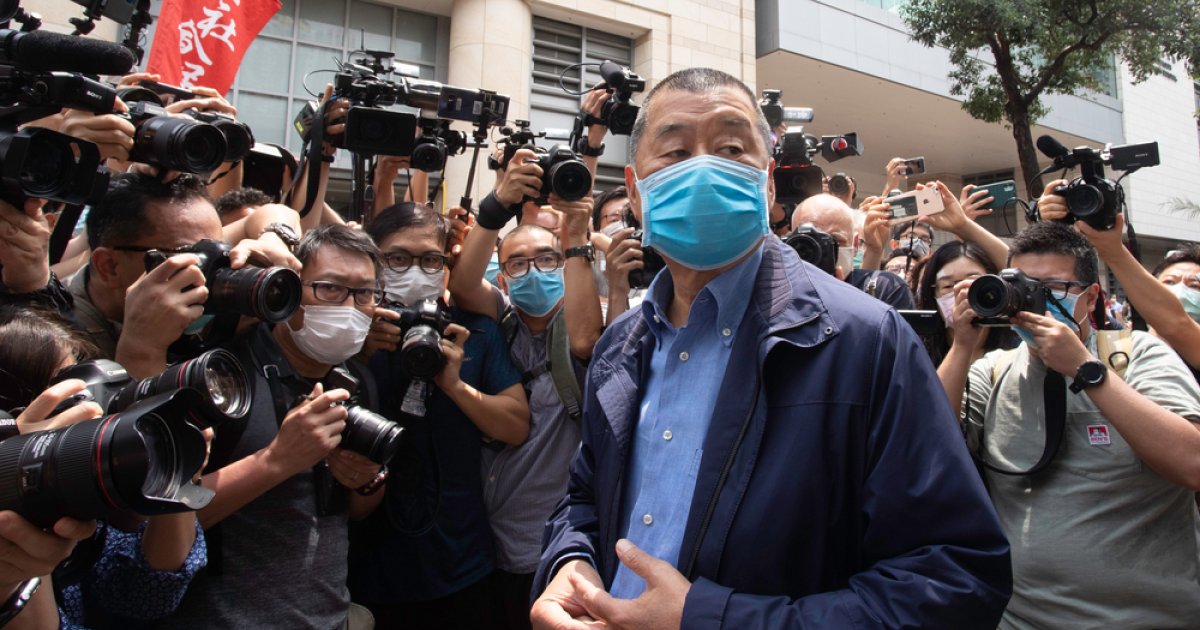
    The result press freedom and human rights advocates feared has arrived: 78-year-old media tycoon, Chinese Communist Party critic, and Apple Daily founder Jimmy Lai was found guilty in Hong Kong this week. After five years in detention, much of it in solitary confinement, a West Kowloon Magistrates’ Court found him guilty of sedition and collusion with foreign forces on Monday morning.

    He will be sentenced at a later date. Lai, who has suffered deteriorating health amidst his detainment, may very well die in prison. 

    Authorities launch censorship campaign after Hong Kong’s tragic Wang Fuk Court fire

    It’s a page straight out of the authoritarian playbook: Censorship after a crisis to protect the interests of the state from the fallout. Unfortunately, authorities in Hong Kong are not straying away from this strategy. In the aftermath of a deadly residential fire that took at least 159 lives, some of those who have spoken out about the tragedy are now themselves at risk. Hong Kong officials warned they would punish those who “exploit” the tragedy and threatened foreign media against “spreading false information, distorting and smearing the government’s disaster relief and aftermath work” or “provoking social division and opposition.”

    Miles Kwan, a university student, started a petition calling for “four big demands” including more regulation, investigation, and assistance to displaced residents after the fire. His position caught the attention of authorities, but not in the way he’d hoped — Kwan was quickly arrested on sedition charges. Other arrests followed, including of a solicitor who intended to speak at a pre-emptively canceled press conference about the fire and a former district councillor. Hong Kong Baptist University suspended the campus student union and “blocked from sight by tall barriers” a union notice board featuring messages about the fire. Separately, authorities also charged a man with sedition for encouraging others on social media not to vote in the latest “patriots only” election. 

    Proposed Trump admin policy could make self-censorship a condition of entry for tourists

    Last week, the U.S. Customs and Border Protection announced its intention to impose a new policy on tourists from dozens of countries that do not require visas for short visits to the country. Under the proposal, tourists will have to provide five years of social media history in their Electronic System for Travel Authorizations applications, just so they can visit Yellowstone or Disney. Tourists will no doubt worry that their travel plans could be disrupted over years-old tweets and social media commentary.

    “Requiring temporary visitors here for a vacation or business to surrender five years of their social media to the U.S. will send the message that the American commitment to free speech is pretense, not practice. This is not the behavior of a country confident in its freedoms,” FIRE warned in response. Keep an eye out for a forthcoming formal comment from FIRE on the matter.

    China’s censorship targets underground pastors — and the global internet

    After dozens of arrests, 18 leaders of the underground Zion Church were charged with “illegally using information networks,” which can result in up to three years in prison. The church is not sanctioned by the government.

    Meanwhile, Chinese tech conglomerate Tencent is reportedly abusing trademark claims to pressure U.S. based cloud hosting service Vultr to halt operations of FreeWeChat, a censorship watchdog tool run by GreatFire.org. FreeWeChat monitors censorship on WeChat, Tencent’s immensely popular social app. After months of back and forth over Tencent’s allegations, Vultr issued “a formal 30-day notification of termination of services.” FreeWeChat has moved to another hosting provider, but expects the new one to face similar threats.

    Prosecutors seek to reverse important UK free speech victory

    In October’s Free Speech Dispatch, I celebrated the overturning of Hamit Coskun’s conviction for burning a Quran outside the Turkish consulate in London. But that victory, a rare one in the UK these days, may be short-lived. 

    Late last month, the Crown Prosecution Service appealed the Southwark Crown Court’s ruling in favor of Coskun, where Justice Joel Nathan Bennathan said that free expression “must include the right to express views that offend, shock or disturb.” The CPS asserts that Quran burning itself is not a criminal act but Coskun “demonstrated hostility towards a religious or racial group, which is a crime.”

    In Quran burning conviction, UK judge uses violence against defendant as evidence of his guilt

    UK judge cites violence against Quran-burning protester as proof of his guilt, Brazil sentences comedian to over eight years for telling jokes, and France targets porn.


    Read More

    “Our case remains that Hamit Coskun’s words, choice of location and burning of the (Quran) amounted to disorderly behaviour,” CPS said in a statement. “We have appealed the decision, and the judge has agreed to state a case for the High Court to consider.” The CPS may be claiming this doesn’t amount to a restriction on blasphemous expression, but the UK’s National Secular Society rightly worries that “CPS seems determined to establish a blasphemy law by the back door.”

    Meanwhile, former Premier League player Joey Barton was found guilty of 6 out of 12 counts of sending grossly offensive electronic communications with intent to cause distress or anxiety, earning a suspended prison sentence over a series of social media posts. In them, Barton attacked commentators Eni Aluko and Lucy Ward, calling them “the Fred and Rose West of football commentary,” a comparison to a notorious serial killer couple, and photoshopped their faces onto the Wests in a photo.. In another post he said Aluko was “only there to tick boxes” and because of DEI and affirmative action. Barton also called another broadcaster a “bike nonce” and implied he had been on Jeffrey Epstein’s island.

    Trump minimizes Jamal Khashoggi murder, transnational prosecutions, and other press freedom news

    • Last month, President Trump welcomed Saudi Crown Prince Mohammed bin Salman to the Oval Office — and berated an ABC journalist in the room who asked about MBS’s role in the gruesome murder of Washington Post columnist Jamal Khashoggi. “You don’t have to embarrass our guest by asking a question like that,” Trump said to the journalist, and called Khashoggi “extremely controversial.” Trump also said of Khashoggi, “Whether you like him or didn’t like him, things happen, but he [gesturing toward Mohammed] knew nothing about it and we can leave it at that.” U.S. intelligence previously confirmed MBS’s involvement in ordering the killing.
    • After Trump’s repeated threats to sue the BBC in U.S. courts for its edits to his Jan. 6, 2021 speech, FCC Chair Brendan Carr announced an investigation targeting the BBC. In a letter to NPR and PBS, which sometimes broadcast BBC material, Carr said he sought “to determine whether any FCC regulations have been implicated by the BBC’s misleading and deceptive conduct.” And this week, Trump did indeed file his suit against the BBC in Florida, seeking $10 billion in damages — yet another frivolous lawsuit filed by the president.

    Carr’s threats to ABC are jawboning any way you slice it

    ABC suspended Jimmy Kimmel hours after FCC Chair Brendan Carr suggested they could face consequences for remarks Kimmel made in the aftermath of Charlie Kirk’s murder.


    Read More

    • Vietnamese police are targeting a journalist over his reporting — and he doesn’t even live in Vietnam. Authorities have issued an order to prosecute and arrest Berlin-based Le Trung Khoa for “making, storing, spreading information, materials, items for the purpose of opposing the state.”
    • Malaysian authorities are also pursuing a transnational prosecution, with the assistance of Thai courts. Australian academic and Thai resident Murray Hunter will go on trial this month in Thailand on criminal defamation charges over Substack posts about Malaysia’s internet regulator. He could face a fine or up to two years imprisonment.
    • American right-wing journalist Andy Ngo is suing the UK’s Guardian News and Media for libel over its description of Ngo as an “‘alt-right’ agitator” in a Mumford and Sons album review.
    • Bianet editor Tuğçe Yılmaz is facing charges of “insulting the Turkish nation, the state of the Republic of Turkey, and its institutions and organs” for her reporting on Armenian youth today and their relationship to the Armenian genocide.
    • Turkish police arrested a man, and the YouTuber who interviewed and broadcast him, over a poem the man read that prosecutors claim insulted President Recep Tayyip Erdoğan and “incit[ed] hatred among the public.”
    • British musical duo Bob Vylan are suing Irish public broadcaster RTÉ for defamation, alleging that RTÉ defamed the duo in a report calling the band’s “death, death to the IDF” chant at this summer’s Glastonbury music festival “anti-Semitic.”

    American writer in Germany receives another visit from police

    Berlin-based American writer CJ Hopkins, whose prosecution FIRE covered last year, is in trouble with authorities again. Hopkins says Berlin police arrived at his home on the morning of Nov. 26 and proceeded to interrogate him and his wife and seize his computer. He is apparently facing new charges over the “publication and distribution” of his book The Rise of the New Normal Reich: Consent Factory Essays, Vol. III (2020-2021). The cover art of the book, which showed a swastika and medical mask, was the root of Hopkins’ previous legal trouble. He had posted the image to social media to compare European COVID policies to Nazism and was charged with “disseminating propaganda.”

    So to Speak Podcast Transcript: CJ Hopkins compared modern Germany to Nazi Germany. Now he’s standing trial.

    J Hopkins is an American playwright, novelist, and political satirist. He moved to Germany in 2004.


    Read More

    Tech censorship news from Australia, India, Russia, and more

    • Reddit is challenging Australia’s age restrictions on social media, citing the country’s free expression protections, and the application of that ban to the message forum. Australia’s government is digging in, though. Health Minister Mark Butler, who promised to “fight this action every step of the way,” said, “It is action we saw time and time again by Big Tobacco against tobacco control and we are seeing it now by some social media or big tech giants.” 
    • The under-16 social media bans are spreading. Following Australia’s lead, the Malaysian government is planning for a system of age verification to limit social media access to people 16 and older. Denmark and Norway are pursuing similar plans. 
    • Due to privacy and security concerns, Apple said it would not comply with an order from the Indian government to require its phones to automatically come with Sanchar Saathi, a cybersecurity app the government says addresses phone theft. The pushback was successful — the government shortly after announced it was rolling back its mandate to phone manufacturers.
    • Claiming to combat “content that can negatively impact the spiritual and moral development of children,” particularly LGBT content, Russian media regulator Roskomnadzor cut off access to the popular online game platform Roblox.
    • Italian YouTube channel Parabellum, which has covered Russia’s invasion of Ukraine, also says it’s received warnings from Roskomnadzor, particularly over its map of operations within Ukraine. Parabellum analyst Mirko Campochiari shared that he received an order from a Russian court to “remove information prohibited in the Russian Federation, to block traffic from Russia to the map, and to notify the Russian authority of the censorship carried out.”

    Award-winning director Jafar Panahi sentenced in absentia

    Iranian director Jafar Panahi was sentenced in absentia to a year in prison by a Tehran court for “propaganda activities against the system.” Panahi is also subject to a two year travel ban. Panahi filmed It Was Just an Accident, which recently received the Palme d’Or at Cannes, “clandestinely in Iran following a seven-month stint in prison.”
    Source link

  • Brown University Reels After Deadly Shooting

    Brown University Reels After Deadly Shooting

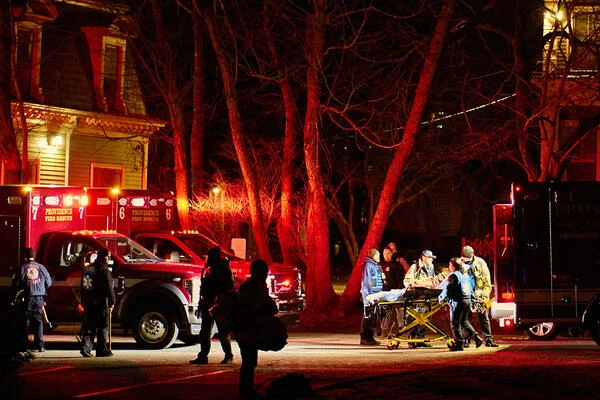
    Two students were killed and nine were injured in a mass shooting at Brown University on Saturday. The university’s president Christina H. Paxson described the incident as “a tragedy that no university community is ever ready for.”

    “The past 24 hours really have been unimaginable,” she said in a letter to the Ivy League university’s greater community Sunday morning, adding that most of the injured students remain hospitalized in stable condition.

    The shooting began just after 4 p.m. at the Barus and Holley engineering and physics building. The Providence, Rhode Island, campus was locked down until Sunday morning when local law enforcement officials ended the order, sharing that they had identified and detained a male in his 20s as a person of interest. That person was later released. State police and agents from the Federal Bureau of Investigation remain on campus.

    Brown University President Christina Paxson leaving a press conference Sunday.

    Jessica Rinaldi/The Boston Globe/Getty Images

    According to The Brown Daily Herald, the student newspaper, many of the students affected were in a review session for a Principles of Economics exam. One freshman, Spencer Yang, told The Herald that he was shot in the leg but others near him were “seriously injured.” He said he tried to help them and keep them conscious.

    “While we always prepare for major crises, we also pray such a day never comes,” Paxson said in her letter. “We know there is a long road ahead as students and families deal with the after effects of the events of the past day and the emergency that is still unfolding.”

    Joseph Oduro, a senior from New Jersey and teaching assistant for the economics class, told The Boston Globe that the review session had just wrapped up when the shooter entered carrying “the longest gun I’ve ever seen in my life.” Oduro crouched behind the podium at the front of the auditorium and huddled with a first-year student who had been shot twice in the leg. He stayed with her until she reached the hospital, The Globe reported.

    Oduro didn’t want to describe what he saw as first responders evacuated the classroom, but said it hurt to see his students “all in a state of panic and desperate pain.”

    University Provost Francis J. Doyle III announced Sunday morning, that “out of profound concern for all students, faculty and staff,” all undergraduate, graduate and medical classes, exams and final projects for the semester would not take place as scheduled. Students are free to leave campus if they are able, but if not, access to on-campus services will remain available, Doyle said. More guidance about the status of unfinished courses will be released in the days ahead, he added.

    Saturday’s events sparked anger and frustration among gun control advocates and affected students as the number of mass school shootings on record continues to climb. One student, Zoe Weissman, a college sophomore, survived the Brown shooting Saturday nearly eight years after she had been affected by a similar event in her hometown—Parkland, Florida.

    Weissman, now 20, was a student at Parkland Middle School when 17 people were killed and 18 injured at the nearby Marjory Stoneman Douglas High School.

    “Mentally, I feel like I’m 12 again. This just feels exactly how I felt in 2018. But honestly, I’m really angry,” Weissman said in an interview with MS NOW, formerly MSNBC. “This isn’t a new phenomenon, and we’re going to get to a point where there’s [more] people like myself who survived two of these.”

    Another Brown student, Mia Tretta, was shot in a 2019 school shooting in Santa Clarita that left two people dead, the New York Times reported.

    “People always think, well, it’ll never be me,” Tretta told the Times. “And until I was shot in my school, I also thought the same thing.”

    President Donald Trump addressed the shooting during a holiday reception at the White House Sunday, but did not speak directly to public concerns about gun control or the number of incidents on college or K-12 campuses.

    “Things can happen,” he said. “So to the nine injured, get well fast and the families of those two who are no longer with us, I pay my deepest regards and respects.”

    The campus shooting also gained attention from fans of the reality TV show Survivor. Season 48 runner-up, Eva Erickson, is a Brown doctoral candidate, and she shared on social media how she had left the engineering building minutes before the shooting began.

    “I am so, so extremely lucky that I was very unproductive at work today,” she said in a video eight hours after the lockdown began. “I was in my office in Barus and Holley in that area until 4 p.m. and I was like, man I’m just not getting nothing done on my code and randomly decided I would go to the gym … I left and about 20 minutes later, we get the warning.”

    Erickson added that while she appreciated all the thoughts and prayers she had received, it wasn’t enough.

    “We need more than thoughts and prayers,” she said. “This is ridiculous that as college students in America we have to worry about someone shooting up our classrooms.”


    Source link

  • Deadly Lincoln University mass shooting: Vigil held on campus; investigation continues (Fox 29 Philadelphia)

    Deadly Lincoln University mass shooting: Vigil held on campus; investigation continues (Fox 29 Philadelphia)


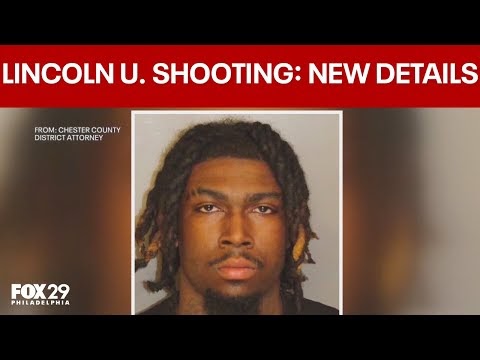
    Detectives believe multiple shooters were involved in a mass shooting that occurred during Lincoln University’s homecoming that left a 20-year-old Wilmington, Delaware man dead and six others injured.

    Source link

  • One Big, Ugly, & Deadly Bill (Reverand William Barber)

    One Big, Ugly, & Deadly Bill (Reverand William Barber)

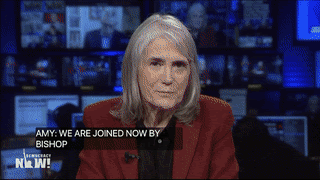
    This morning I joined Amy Goodman on Democracy Now to talk about the bill that House Republican leadership worked through the night to push toward a vote on the floor.

    The more Americans learn about what’s in this bill, the more outrage there will be that House members are willing to vote for cuts that will devastate communities so their billionaire donors can have a massive tax break. (That’s why they’re meeting to talk about the details in the middle of the night.)

    We must sharpen our language to make clear what’s at stake in this one big, ugly, and death-dealing bill.

    And we must prepare ourselves for moral action.

    We are glad to announce that Indivisible, the national organization behind “No Kings Day” on June 14th, has joined our Moral Monday partners to mobilize a mass action on June 2 outside of the US Capitol. We invite you to register here if you can join us for Moral Monday on June 2.

    To learn more, plan to join me and Indivisible co-founder Ezra Levin for a Substack Live on Tuesday, May 27, at 12pm ET.

    I’m also looking forward to a conversation here on Substack next week with Robert Reich. We will be live Wednesday, May 28, at 5:30pm ET/2:30pm PT.

    To join live conversations with us on Our Moral Moment, you just need to download the Substack app, subscribe for free, and turn out notifications. You’ll get a notice on your phone that we are going live.

    Source link

  • Bite of the Big Four: India’s deadly snakebite crisis

    Bite of the Big Four: India’s deadly snakebite crisis

    Every year, an estimated 5.4 million people worldwide are bitten by snakes, resulting in as many as 138,000 deaths and three times as many cases of permanent disability.

    The World Health Organization classified snakebite as a neglected tropical disease in 2017 and set a target to halve related deaths by 2030.

    India, home to over 300 snake species, is at the heart of this global health issue, accounting for half of all snakebite-related deaths.

    While 95% of Indian snakes are non-venomous, it’s “The Big Four” species — the Indian cobra, common krait, Russell’s viper and saw-scaled viper — that cause the most harm said Dr. Sushil John, a public health doctor and amateur herpetologist from Vellore.

    “These snakes cohabit in the same spaces as humans, thriving in India’s agricultural fields, forests and urban outskirts,” said John. “So, they often come into close contact with people and might bite them.”

    A study conducted between 1998 and 2014, called the Million Death Study, found that almost 58,000 people in India died from snakebite each year. Second to India in recorded snakebite deaths is Nigeria, with a reported 1,460 deaths per year. 

    The missing data

    “Though India had a severe snakebite problem, accurate data on snakebite deaths in India was elusive for a long time,” said Dr. Ravikar Ralph, a physician at the Poison Control Centre at CMC Vellore.

    In 2011, the official reported number of snakebite deaths was only 11,000. The deaths reported in the Million Death Study highlighted the severe underreporting of snakebite mortality in the country.

    “This is because most studies available at the time were hospital-based, which led to the gross under-reporting of this issue,” said Ralph. “We knew from grassroots work that most patients were not reaching hospitals on time.”

    “Either people didn’t realize that being bitten by a snake required medical management, or they went to traditional healers, causing fatal delays in hospital-based care,” said Ralph. “The Million Death Study used community-based data collection to circumvent that barrier and document accurate numbers.”

    Harvesting the cure

    Snakebites are unique compared to other health issues. Snake venom, a potent mix of proteins, can destroy tissue, paralyze muscles and impair blood clotting, often leading to severe disability which is most likely loss of limbs which were bitten or death if untreated.

    “Unlike diseases caused by other agents such as viruses or bacteria where one can eliminate the causing agent, a similar approach cannot be taken for snakebites,” Ralph said.

    Antivenom is the only specific treatment that can prevent or reverse many of the effects of snakebite, when given early and in the right dosage.

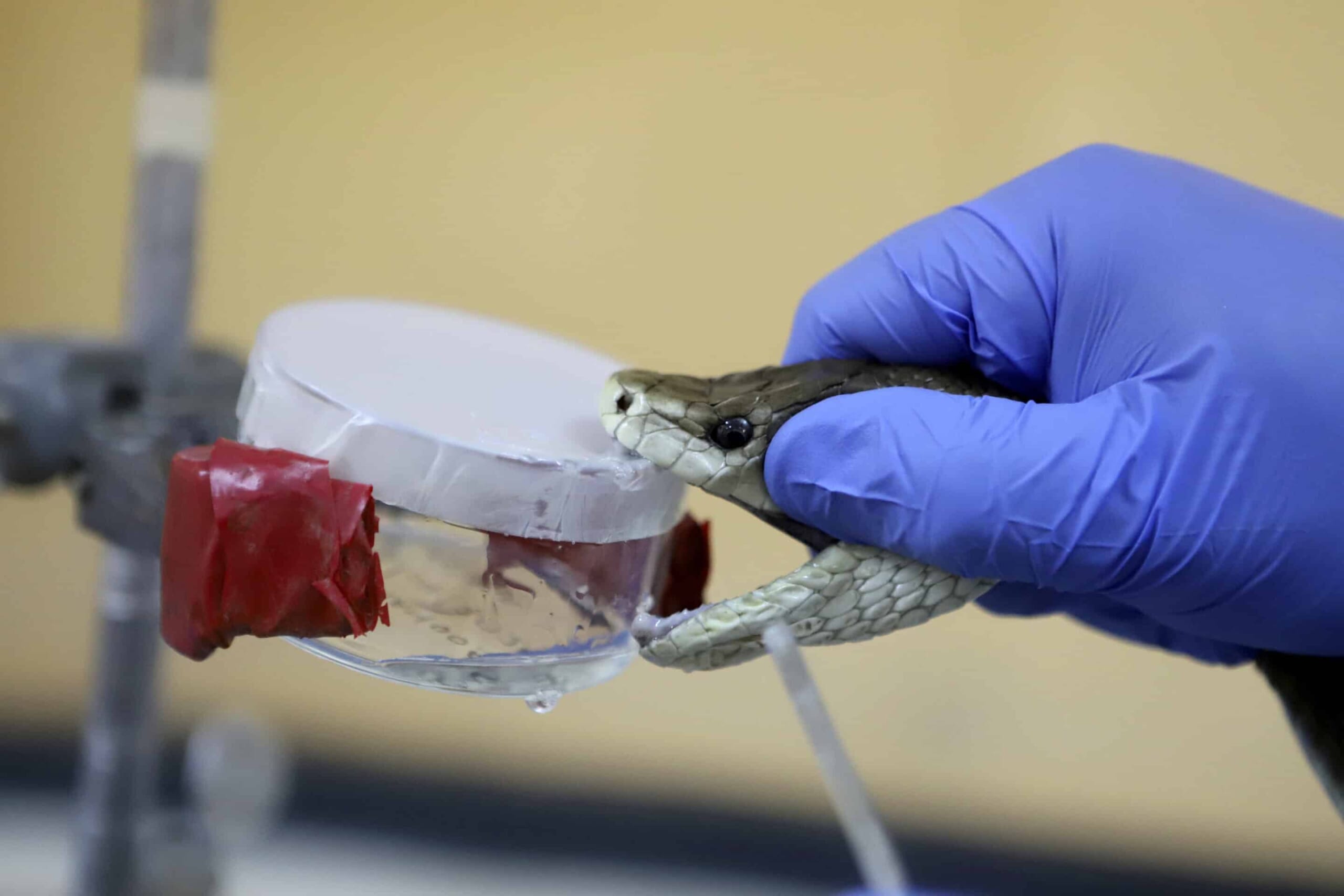
    To produce antivenom, snake venom must be first collected, or “milked,” from live snakes kept in a specialized facility. Only one facility in India, located in Tamilnadu, harvests venom for anti-venom production in India.

    The venom is then diluted and injected in small doses into animals like horses, prompting their immune systems to produce antibodies. These antibodies are then harvested, purified and processed into antivenom.

    But India’s only anti-snake venom treatment targets only The Big Four snakes.

    “There are over 50 venomous snake species in India,” said Gnaneshwar Ch, project lead of the Snake Conservation and Snakebite Mitigation project at the Madras Crocodile Bank Trust.

    “The anti-snake venom’s limited scope means bites from less common species remain inadequately treated,” he said

    Despite its importance, antivenom is also not widely available, and its cost can be prohibitive for many rural families. The gaps in stocking and distribution further worsen the issue.

    While many countries produce antivenom, they tend to cater to the locally available species of snakes making it impractical to import it from other countries to India in order to solve the availability crisis.

    A national action plan

    The WHO has called for concerted global action to reduce deaths and disability in priority nations. In 2019, the WHO launched an international strategy for preventing and controlling snakebite, which was then regionally adapted for Southeast Asia and published in 2022.

    The Indian Union Health Ministry then launched the National Action Plan for the Prevention and Control of Snakebite Envenoming (NAPSE) in March 2024. The NAPSE aligns strategically with the WHO’s global roadmap and its regional adaptation for Southeast Asia.

    Many stakeholders need to join forces in order to balance snakebite mitigation with snake conservation, experts say.

    “Snakes tend to be very important to every ecosystem they are found in,” said Dr. Sushil John. “If snake numbers fall, we would see an increase in rodents which the snakes keep in check by eating. They would then destroy crops and spread diseases to animals and people.”

    While this strategy appears to be heading in the right direction, some experts caution that there might be barriers to implementation.

    “While public hospitals may adopt the reporting system, many Indians seek private health care,” said Professor Sakthivel Vaiyapuri, a venom pharmacologist at the University of Reading in England. “Mechanisms to ensure private hospitals comply with reporting requirements are essential.”

    Vaiyapuri helped work on the National Action Plan. He said health workers who are to report snakebite must understand the significance of their role which will motivate them to record the data accurately. He also said someone must verify the entered data independently to ensure accuracy. He suggests developing a mobile app to streamline data collection.

    While Vaiyapuri worries about the logistics of implementing such a plan for massive surveillance, there are also other worries about unintended consequences for snakebite victims, according to Dr. Anand Zachariah, a toxicologist at CMC Vellore.

    “When India made maternal deaths notifiable, many private clinics in India stopped treating high-risk pregnancies because they worried about the reporting process getting them in trouble if something went south,” said Zachariah. “I fear snakebite becoming a notifiable disease might trigger such defensive practices among physicians.”

    But he admits that at this point, the fear is only theoretical; what will eventually happen remains to be seen.

    “Despite the challenges, I think [the National Action Plan] is a pivotal initiative in tackling snakebite envenomation in India,” Vaiyapuri said.

    “By fostering accurate data collection, promoting intersectoral collaboration and engaging communities, the plan holds significant potential to drive meaningful change — ensuring effective prevention, timely treatment and a significant reduction in snakebite-related deaths and disabilities,” Vaiyapuri said.

    Source link