Tag: deal

  • Secretive Big Ten Deal Riles Trustees

    Secretive Big Ten Deal Riles Trustees

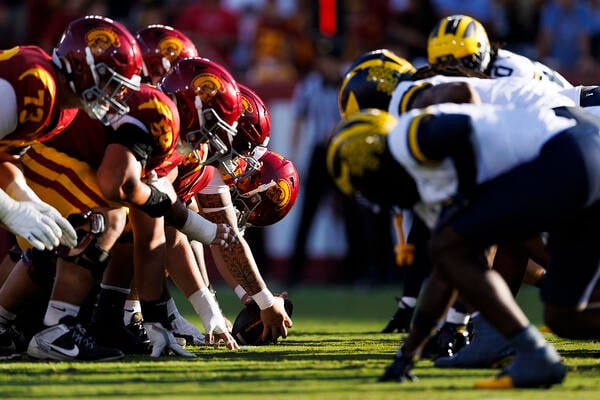
    Trustees at member institutions across the Big Ten are pushing back on a proposed $2.4 billion private equity deal that some argue has been too rushed, lacking transparency and proper vetting.

    Now, with trustee criticism mounting, the conference appears to be prolonging talks amid a push to finalize a plan to establish a for-profit arm of the Big Ten, which would control its media and sponsorship rights and sell a 10 percent stake of that entity to the investor. The deal would give members an immediate cash infusion, with a minimum $100 million disbursement across the league, while more prominent athletic programs would receive an even higher revenue share. That money is needed, even at wealthy institutions, as universities adjust to a changing world of college athletics, which includes direct payments for players that began earlier this year.

    The proposal would also maintain the current 18 universities as Big Ten members through 2046.

    Dissent among the Big Ten ranks seems to have prompted the potential investor—the University of California pension fund, or UC Investments—to slow down the deal.

    While UC Investments indicated in a Monday statement that it “remains very excited” about the offer, officials wrote they will work with members in the “coming months” to solidify the deal. (Prior reports indicated the conference hoped to put the deal to a league vote by mid-November.)

    “As we have continued to evaluate this opportunity over the past five months, we remain convinced that the unity of the 18 Big Ten university members is key to the success of Big Ten Enterprises,” Chief Investment Officer Jagdeep Singh Bachher wrote in the statement. “We also recognize that some member universities need more time to assess the benefits of their participation. UC Investments likewise requires some additional time to complete our due diligence as recent developments unfold and we continue to engage with the conference.”

    The CIO also lauded Big Ten commissioner Tony Petitti and his team.

    “The process they have led has been rigorous, honest and fair—among the best we’ve seen. Recent misinformation has distorted some aspects of its effort,” Bachher wrote in the statement.

    But several trustees at Big Ten member institutions have raised concerns about a lack of transparency into the deal, saying they have received little information about the arrangement and yet been asked to rubber-stamp it on a compressed timeline.

    Trustee Dissent

    UC Investments announced a commitment to a unified process for making a deal just a few days after the American Council of Trustees and Alumni held an online meeting with individual board members representing five Big Ten institutions. The meeting, held Friday, included trustees from the University of Michigan, the University of Minnesota, the University System of Maryland, Pennsylvania State University and the University of Southern California, all of whom had concerns about the deal.

    Tom McMillen, a Maryland regent, said in the recorded meeting that “no trustee has been given a balanced view” of the pros and cons of the proposal, according to his conversations with other governing board members across the conference. He also called for third-party evaluations of the arrangement.

    “It’s shocking to me that a decision of this magnitude, there are no opposing views presented,” McMillen said.

    Michigan regent Sarah Hubbard echoed similar concerns on the ACTA call, arguing that there was a need for more oversight and for trustees to have a formal role in discussing the proposal. She also questioned the need to expedite the process with such limited information available.

    “This lack of transparency and information for the fiduciaries at our universities is unacceptable,” Hubbard said.

    Penn State trustee Jay Paterno questioned the need for secrecy around the potential investment. Given that the Big Ten is about to create “a for-profit company using what are essentially public dollars,” he argued, boards need to know more in order to be able to advise their institutions accordingly. Ultimately, Paterno said, he wanted to see the Big Ten put its cards on the table.

    “If it’s such a great deal, show us the deal and let’s go,” Paterno said.

    Outstanding Concerns

    UC Investments signaled it would work on the deal over the “coming months”—likely signaling a slowdown in the process—but it has offered no information about where things stand.

    A UC Investments spokesperson referred questions about trustee concerns to the Big Ten, which did not respond to a request for comment from Inside Higher Ed.

    But outside analysts echo many of the concerns raised by trustees. Armand Alacbay, chief of staff and senior vice president of strategy at ACTA, said the organization has no position on the proposal itself but got involved because of concerns about trustees being shut out of the deal.

    “Anyone we’ve heard from on this has said it’s not enough time, not enough information, not enough of anything to make this decision. Some have been told that it’s a nonvoting decision for them, that they don’t even have a right to make a decision because it’s the conference,” Alacbay said. “Well, I would say that the intellectual property and media rights of your athletic department are a significantly large asset of the institution and justify a level of board oversight.”

    Karen Weaver, an adjunct assistant professor at the University of Pennsylvania Graduate School of Education, told Inside Higher Ed that while private equity has seeped into numerous areas of college athletics in recent years, the investment in a conference is a new approach. And what happens with the Big Ten will likely set the stage for other conferences.

    She said if the Big Ten can successfully navigate a maze of thorny legal and political concerns, then other athletic conferences will be more likely to follow in their footsteps. “But if they constantly get land mines and roadblocks thrown in the way,” others will be more hesitant, she said.

    Weaver also pointed to concerns lawmakers raised that could upend or complicate the deal.

    Last week U.S. Senator Maria Cantwell, a Washington Democrat, issued warnings about the proposal in a statement and individual letters to both university and conference leadership. She argued that such a deal “may be counter to your university’s academic goals, may require the sale of university assets to a private investor, and may affect the tax-exempt purpose of those assets.”

    Cantwell also emphasized the different priorities of universities and private equity investors.

    “The primary goal of these companies is to make money for the firm, which is unlikely to align with the academic goals of your university or its obligations as a not-for-profit organization,” Cantwell wrote. “These investors will be focused on maximizing their investment, not on preserving and growing athletic and academic opportunities for student athletes.”

    Source link

  • Cornell inks $60M deal with Trump administration to restore funding

    Cornell inks $60M deal with Trump administration to restore funding

    This audio is auto-generated. Please let us know if you have feedback.

    Dive Brief:

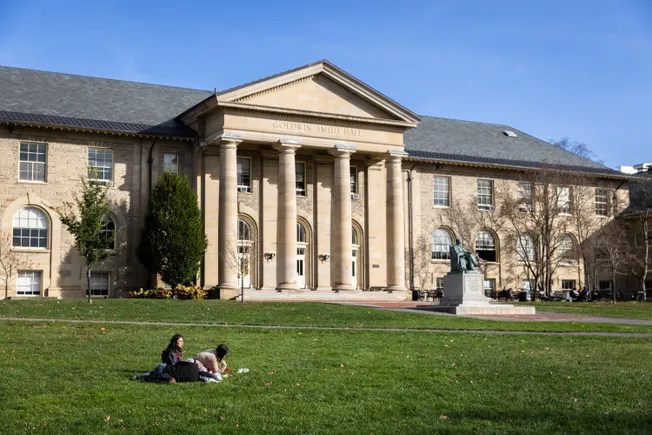
    • Cornell University on Friday struck a deal with the Trump administration, agreeing to pay $60 million and adhere to strict reporting conditions in exchange for having more than $250 million in federal funding reinstated. 
    • In addition to the financial payments, the Ivy League institution will submit expanded undergraduate admissions data to the federal government, and include the U.S. Department of Justice’s July guidance against diversity, equity and inclusion efforts as “a training resource” for employees. Cornell’s president will provide regular compliance reports to the administration.
    • In turn, three federal agencies — the DOJ and U.S. departments of Education and Health and Human Services — agreed to close their civil rights investigations into the New York university. Cornell is the fifth university to publicly strike a deal with the Trump administration to restore federal funding.

    Dive Insight:

    Cornell President Michael Kotlikoff on Friday said the deal reverses costly federal funding cuts that caused significant disruption to the university.

    “The months of stop-work orders, grant terminations, and funding freezes have stalled cutting-edge research, upended lives and careers, and threatened the future of academic programs at Cornell,” he said in a statement. 

    Under the deal, Cornell will pay the federal government $30 million over three years. 

    It will pay an additional $30 million over the same period toward agriculture research programs that “directly benefit U.S. farmers through lower costs of production and enhanced efficiency.” Both the agreement and Kotlikoff’s statement emphasized Cornell’s history as a land-grant university.

    Kotlikoff noted that the bargain does not require Cornell to admit wrongdoing, and he said it does not turn over the university’s academic freedoms to the federal government. 

    As part of the deal, the university will report additional admissions data to the Education Department. Once a quarter through 2028, the university will submit undergraduate admissions disaggregated by students’ race, GPA, performance on standardized tests, and major. Much of the criteria align with a Trump administration proposal to dramatically expand the type of admissions data colleges must report.

    The university will also use the DOJ’s wide-ranging anti-DEI guidance as a training resource for faculty and staff. The document labels race-based scholarships and student resources dedicated to specific racial or ethnic groups as illegal and warns colleges they could lose federal grant funding over such practices.  

    Colleges could similarly lose funding if the DOJ decides they are using “facially neutral” criteria as proxies for federally protected characteristics, such as asking job applicants to demonstrate “cultural competence” as a means of assessing someone’s racial or ethnic background.

    The U.S. Department of Education released a similar document in February threatening federal funding over DEI practices. At the time, Kotlikoff called diversity a driver of Cornell’s excellence. The Education Department’s guidance has since been struck down as unconstitutional in federal court.

    On Friday, Cornell said it will continue to conduct an annual campus climate survey, including on the experience of students with shared Jewish ancestry. Questions will include whether students feel welcome on campus and safe to report antisemitism.

    Kotlikoff agreed to provide the Trump administration with quarterly reports demonstrating Cornell’s compliance.

    Cornell’s agreement shares some elements with that signed by the University of Virginia last month. The public flagship similarly agreed to comply with the DOJ’s anti-DEI guidance and provide quarterly compliance reports to the Trump administration. 

    And like Brown University, Cornell agreed to pay money into a cause seemingly unrelated to the charges the Trump administration levied against it — in Brown’s case, $50 million to workforce development organizations in Rhode Island.

    “Today’s deal is a positive outcome that illustrates the value of universities working with this administration,” Attorney General Pamela Bondi said in a Friday statement.

    U.S. Secretary of Education Linda McMahon said the Cornell deal is an example of the Trump administration forcing colleges to refocus “their attention on merit, rigor, and truth seeking — not ideology.”

    Kotlikoff instead called the deal a reaffirmation of “principles to which we have already independently and publicly committed” and noted that the university already conducts annual campus climate surveys.

    Cornell, he said, “looks forward to resuming the long and fruitful partnership with the federal government.”

    Source link

  • Virginia lawmakers call for audit of UVA’s Justice Department deal

    Virginia lawmakers call for audit of UVA’s Justice Department deal

    This audio is auto-generated. Please let us know if you have feedback.

    Dive Brief:

    • Two Democratic leaders in the Virginia Legislature are questioning the legality of the University of Virginia’s recent deal with the U.S. Department of Justice and calling for an independent review of its constitutionality.
    • In an eight-page letter this week, state Sens. Scott Surovell and L. Louise Lucas said the agreement “directly conflicts with state law, commits the University to eliminate legislatively mandated programs, subjects the University President to personal certification requirements and potentially places UVA in violation of its statutory obligations.”
    • The pair requested UVA Interim President Paul Mahoney and Rachel Sheridan, the head of UVA’s board, to formally respond by Nov. 7. UVA did not immediately respond to questions Thursday.

    Dive Insight:

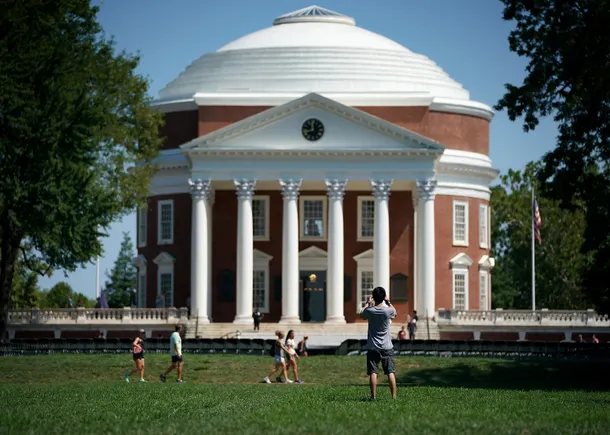
    On Oct. 22, Mahoney signed a four-page agreement with the DOJ to eventually close five investigations into UVA. In exchange, the public university agreed to adhere to the DOJ’s sweeping July guidance against diversity, equity and inclusion efforts and provide the agency with quarterly compliance reports.

    In their letter, Surovell and Lucas lambasted Mahoney and Sheridan for “a fundamental breach of the governance relationship” between the university and the state.

    “This agreement was disturbingly executed with zero consultation with the General Assembly, despite the fact that the General Assembly controls the University and provides the bulk of its government funding,” they said, arguing the lack of legislative involvement could violate state statute.

    When announcing the deal, UVA said Mahoney struck the deal with input from the university’s governing board, whose members were “kept apprised of the negotiations and briefed on the final terms before signature.” Since the agreement doesn’t include a financial penalty, it did not require a formal vote from the board, the university said in an FAQ.

    Along with the board, Mahoney has said he struck the deal with input from the university’s leadership and internal and external legal counsel.

    Surovell and Lucas questioned if Jason Miyares, Virginia’s Republican Attorney General and an ally of President Donald Trump, had counseled the university about the deal. 

    Miyares — who fired UVA’s longtime legal counsel upon taking office in 2022 — is up for reelection in November with Trump’s endorsement, a backing Lucas and Surovell cast as an “inherent conflict of interest.” 

    It is unclear, they said, if Virginia’s top lawyer is “competent and capable of providing truly independent legal advice to Virginia’s public universities in this area of the law.”

    Virginia public colleges “need legal counsel who will zealously defend state sovereignty and institutional autonomy — not counsel whose political fortunes are tied to the very administration applying the pressure,” they said.

    The two lawmakers, along with Democratic state Sen. Mamie Locke, previously threatened UVA’s state funding if the university agreed to the Trump administration’s separate higher education compact, which offered preferential access to grant funding in exchange for unprecedented federal oversight. UVA turned it down five days before announcing its deal with the DOJ.

    Lucas and Surovell aren’t the only Virginia legislators to question the integrity of the UVA-DOJ deal. State Del. Katrina Callsen and Sen. R. Creigh Deeds, Democrats who represent UVA’s district, condemned it as subjecting the university “to unprecedented federal control.”

    In an Oct. 23 letter, the pair told Mahoney and the board that their approval of the agreement calls “into grave question your ability to adequately protect the interests and resources entrusted to you by the Virginia General Assembly.”

    “Your actions fail to leave the University free and unafraid to combat that which is untrue or in error,” they said. “By agreeing to these terms, UVA risks betraying the very principles you espouse in your letter: academic freedom, ideological diversity, and free expression.”

    Callsen and Deeds called on UVA leadership to reverse the deal and “reject further federal interference.”

    When asked on Thursday if Mahoney or the board had responded, Deed’s office referred to a story published by The Cavalier Daily, the university’s independent student newspaper.

    In a letter shared with The Daily, Mahoney and Sheridan said that they “respectfully disagree” with Deeds and Callsen’s assessment, adding that the deal is the “culmination of months of engagement” with the DOJ and other federal agencies over multiple civil rights investigations.

    They also said the institution’s deal with the federal government differs significantly from the “lengthy lists of specific obligations” agreed to by Columbia and Brown universities.

    “Our agreement is different — if the United States believes we are not in compliance, its only remedy is to terminate the agreement,” they said.

    Source link

  • Miami Dade Fights Hearing on Trump Library Land Deal

    Miami Dade Fights Hearing on Trump Library Land Deal

    Ever since Miami Dade College announced last month that it was donating land for the construction of Donald J. Trump’s presidential library, the community college has faced criticism. Now it is fighting in court to prevent a public hearing on the deal, which would resolve a lawsuit brought by a citizen who has argued the move is illegal.

    At a Sept. 23 board meeting, Miami Dade College transferred land to the state of Florida to be used for Trump’s presidential library. Critics alleged that the meeting was rushed, failed to offer adequate public notice on the specifics of the deal and lacked any discussion or debate; a public notice referenced only a “potential real estate transaction” as the reason for the meeting.

    Some estimates have put the value of the 2.6-acre site in downtown Miami at $250 million to $300 million, though others say it is worth $67 million. But regardless of the dollar amount, Miami Dade College is giving the land away for free.

    Marvin Dunn, a local historian, sued to block the transfer, alleging in his lawsuit that the Board of Trustees “unquestionably violated” state anticorruption laws. Dunn argued in a court filing that “depriving the public of reasonable notice of this proposed decision was a plain violation of the Sunshine Act and of the Florida Constitution” and asked for an injunction to block the transfer.

    Judge Mavel Ruiz of Florida’s 11th Judicial Circuit granted Dunn a temporary injunction earlier this month, noting that he is likely to prove his claims about sunshine law violations, but she did not altogether block the land transfer. She also left the door open for the Board of Trustees to redo the deal.

    “It is understood that the board can provide the reasonable disclosure and convey this property as they see fit,” Ruiz said. “That’s why this is not a case, at least for this court, rooted in politics.”

    Jesus Suarez, an attorney for Continental Strategy (founded in 2022 by former Republican lawmaker Richard Corcoran, who was later tapped to lead New College of Florida), which is representing Miami Dade College, has contended that the deal is completely aboveboard.

    “The law doesn’t require that there be any specificity in the notice,” Suarez has argued. College lawyers also said they would appeal the ruling to temporarily block the transfer.

    State officials have bristled at Ruiz’s temporary injunction. Florida attorney general James Uthmeier, who has assigned members of his staff to assist the college in its legal battle, told The Miami Herald the temporary injunction is not technically in place because it was not issued as a written order.

    Dunn, meanwhile, is seeking to expedite legal proceedings, aiming for a trial to begin by January.

    While Ruiz emphasized that the case is not about politics, the MDC board, which is appointed by Republican governor Ron DeSantis, is overwhelmingly comprised of Republican donors. Board chair Michael Bileca and trustee Jose Felix Diaz are also former GOP lawmakers.

    Of the seven trustees, six have donated to Republican candidates and causes. Miami Dade College president Madeline Pumariega, who has defended the way the board handled the transfer, has also donated to GOP candidates, though she has given to Democrats in the past as well. (Most of the presidents at Florida’s 40 public institutions have either Republican ties or past donations.)

    Miami Dade College officials did not respond to a request for comment from Inside Higher Ed.

    Source link

  • ‘A fair deal’ or a ‘surrender’? Stakeholders weigh in on Trump-UVA agreement

    ‘A fair deal’ or a ‘surrender’? Stakeholders weigh in on Trump-UVA agreement

    This audio is auto-generated. Please let us know if you have feedback.

    In the hours and days following the University of Virginia’s deal with the U.S. Department of Justice, the state’s governor cheered the agreement while some faculty and Democratic lawmakers have accused the public flagship of submitting to the Trump administration and enabling it to exert further pressure on other colleges.

    Under the four-page agreement, the DOJ will pause on five investigations in exchange for UVA’s adoption of the agency’s July guidance against diversity, equity and inclusion efforts. The public research institution, which had made DEI work a tentpole of its institutional mission in recent years, will also provide the DOJ with quarterly reports demonstrating its compliance.

    The deal — the first the Trump administration has struck with a public collegecould serve as a template moving forward, as the federal government takes other steps to exert control over the higher education sector.  

    ‘A sad day for UVA’ 

    UVA Interim President Paul Mahoney, who signed the bargain with the Trump administration, said that it came about “after months of discussions with DOJ” and input from the university’s leadership, governing board and internal and external legal counsel.

    The deal, he said in his late Wednesday announcement, is “the best available path forward” for UVA.

    The university will review its practices and policies to make sure they comply with federal law, Mahoney said, adding that “some work remains to be done to satisfy fully the terms of this agreement.”

    “We will also redouble our commitment to the principles of academic freedom, ideological diversity, free expression, and the unyielding pursuit of ‘truth, wherever it may lead,’” he said, quoting UVA founder Thomas Jefferson.

    If UVA “completes its planned reforms prohibiting DEI” through Dec. 31, 2028, the DOJ will formally close its investigations, the agency said in a Wednesday press release.

    Much of Mahoney’s announcement focused on what the deal does not include, noting it doesn’t require the university to pay the federal government or involve external monitoring. The deal also does not require UVA to admit wrongdoing, according to a university FAQ.

    But some faculty quickly voiced concerns.

    Kimberly Acquaviva, a nursing professor at UVA, shamed Mahoney and the university’s governing board “for trading UVA’s independence for federal favor.”

    “It’s a sad day for UVA,” she said on social media.

    Another UVA professor, Walter Heinecke, called the deal “a wolf in sheep’s clothing” that will “increase the likelihood that there’s a climate of fear.”

    It saddles the next president with expectations of monitoring that are highly problematic,” Heinecke told WVIR. “Which will in turn affect the way that faculty, students, staff think about what they can and cannot do.”

    UVA did not respond to questions Friday.

    Lawmakers weigh in

    Reactions from prominent lawmakers in Virginia — a contentious purple state with an election next month that could alter party control — have fallen along party lines.

    Virginia Senate Majority Leader Scott Surovell, a Democrat, called the deal a “surrender” on UVA’s part that has “significant constitutional problems.”

    The agreement “represents a huge expansion of federal power that Republicans have would have never tolerated in the past,” he said Wednesday. “We have the right to run our universities.”

    Republican Gov. Glenn Youngkin — who faces a fight with a Democrat-controlled Senate committee over his picks for UVA’s governing board — praised the agreement as “common sense and a fair deal” and said it embraces academic freedom and protects free speech.

    All UVA must do, he said in a social media post, is “fully comply with federal civil rights law.”

    Under the deal, the university will also operate under the DOJ’s wide-ranging DEI guidance. In addition to condemning race-focused scholarships and resources dedicated to specific racial or ethnic groups, the nine-page document warned colleges against using “facially neutral” criteria the agency deems to be proxies for federally protected characteristics, such as cultural competence. 

    Colleges or other institutions that violate the guidance, DOJ said, could lose federal funding.

    Source link

  • New Jersey City University and Kean University sign official deal to merge

    New Jersey City University and Kean University sign official deal to merge

    Dive Brief:

    • New Jersey City University has signed a definitive agreement to become part of nearby Kean University, the institutions announced in a joint press release Wednesday. 
    • The agreement — approved unanimously by both universities’ governing boards — is subject to accreditor approval by the Middle States Commission on Higher Education as well as by state and federal regulators. Officials expect the merger to be completed by July. 
    • Once complete, NJCU will become “Kean Jersey City.” The two public institutions signed a letter of intent to merge in May after recent years of financial and governance turmoil at NJCU.

    Dive Insight:

    The agreement marks a major milestone for NJCU, which a state-appointed monitor directed to find a financial partner early in 2024. 

    Under the merger terms, Kean will take on NJCU’s assets and liabilities. It will also honor NJCU students’ academic credits, need-based financial aid commitments and merit scholarships if they transition to Kean. Once they do, students will pay Kean’s tuition and fee prices, which amounted to $15,300 for full-time undergraduate students in the 2025-26 academic year.

    A steering committee will oversee the next steps of the merger, including the complicated work of academic and operational integration, as well as navigating regulatory and governmental reviews. 

    As part of the agreement, NJCU students will gain access to Kean’s student services, clubs and organizations after the merger. 

    As for student sports, the agreement establishes a separate advisory committee to look at athletic programming at NJCU post-merger. The university currently competes in more than a dozen NCAA Division III sports, including men’s basketball, women’s softball, and men’s and women’s volleyball and track and field. The committee is expected to make its final report to Kean’s president in December.

    As part of the fiscal 2026 state budget, New Jersey lawmakers lined up $10 million for Kean to help fund its merger with NJCU. The money is to help with feasibility studies, planning and legal work as the two institutions integrate. 

    NJCU’s board voted in March to pursue a merger with Kean. The move came after years of financial distress followed by recovery and turnaround work led by Andrés Acebo, who joined NJCU as interim president in January 2023 before being named permanent president this September. 

    About six months prior to his appointment, NJCU had declared a financial emergency.  Declining enrollment and funding shortfalls led the university to increase scholarships, add academic programs, and spend more on student services and real estate expansions. Those moves failed to turn enrollment around and “instead served to dramatically increase NJCU’s expenses,” New Jersey’s comptroller said in 2023. 

    But by fall 2024, Fitch Ratings lifted the NJCU’s outlook from negative to stable, with analysts citing “significant progress toward achieving fiscal balance despite continued pressure on student enrollment.” The improvements were the product of both state aid and cost cutting at the institution. 

    In fall 2023, NJCU’s student headcount stood at 5,833 students, down 27% from 2018 levels, according to federal data. By fall 2024, the university’s total enrollment fell another 6% year over year, though first-year, full-time students grew by 3% and transfers surged 28%,  NJ.com reported.

    In a statement Wednesday, Acebo said the merger with Kean represents “a significant milestone in a process designed to secure the future of our institution and the communities we have proudly served for nearly a century.”

    Source link

  • Before you click on that incredible deal…

    Before you click on that incredible deal…

    Scammers are everywhere on the internet, masquerading to obtain your personal information. Many social media users or website creators pose as government entities or other authorities to offer you things that seem too good to be true or use scare tactics, like fake warnings about things like late fines or missed court dates, to prompt online users into sharing personal information. 

    In an era of misinformation, how do we know when a website is real? 

    One way is to research a website’s domain. A domain name is the part of a website address preceded by .com, .net or other popular suffixes. It’s essentially just the base website name without the “https://” and “www.”

    “Measuring a website’s credibility might take time,” said Jordan Lyle, a senior reporter for Snopes.com. “Young journalists should know their stuff when it comes to domains and redirects.” 

    Snopes.com is one of the internet’s oldest fact-checking websites. He has more than 25 years of experience in managing websites and knows how to determine whether a site is legit. 

    Investigating internet sites

    Alex Kasprak, a former investigative journalist at Snopes.com, has conducted numerous investigations using information gleaned from Domain Name Server (DNS) registers. DNS registers contain information about a particular website, its URL and IP address — a unique number on every tech device you might use. 

    With the information he found, Kasprak has been able to uncover unreported connections between news websites and their funders and between scammers and their beneficiaries. 

    “DNS tools are a great first step into any investigation that involves the identity of people behind websites or possible undisclosed connections between them,” Kasprak said.

    Taking the expertise from these two investigative reporters, News Decoder has compiled the toolkit below to help perform a credible and comprehensive examination for publishing. 

    Are there red flags?

    Scam websites have certain red flags. They might lack legal documentation, for example, including terms of service and privacy policies. 

    Another sign is sloppiness and mistakes. Try skimming through various pages on the site to look for typos, glaringly incorrect information, vague contact information, skewed formatting and other things that seem unprofessional. 

    Lyle said that a website that promotes a specific giveaway might lack any biographical or contact information about the people promoting the product or offer.

    “Sometimes, scammers will include a mailing address that, upon searching for it, turns out to be a fulfillment center or a business that allows LLCs to anonymously register with that business’ physical office as a virtual address, shielding the scam’s operators from being identified,” Lyle said. 

    Conduct a website domain search.

    Kasprak said that the Internet Corporation for Assigned Names and Numbers (ICANN) operates as a phonebook for the internet.

    “In this analogy, the phone numbers are Internet Protocol (IP) addresses  — a string of numbers formatted like 0.0.0.0 — and the ‘names’ are the actual domain names [e.g. news-decoder.com] to which those IP addresses are associated,” Kasprak said. “Like a human with a phone, domain names can change IP addresses several times.”

    The first step for tracing the origins of a website involves what’s known as a “WHOIS” search — a specific type of domain search listing information about the creation of a domain. 

    WHOIS is a public database that lists several contact numbers, names or organisations associated with a given IP address or domain name. Many people these days use services that allow one to register a website anonymously, making the results have limited value. Older records, or those from some non-Western nations, often include actual names or corporate contacts, explained Kasprak. 

    A WHOIS search, which can be conducted at godaddy.com/whois, queries the public WHOIS database. 

    Lyle said he often looks at the date a person officially purchased and registered a domain name.. “For example, in the case of researching potential scams, if a domain name was recently registered, that’s a red flag indicating the website might be untrustworthy and could confirm the potential scam as legitimate,” he said.

    Look at the site history.

    Another great tool to pair with “WHOIS” searches is the Internet Archive’s Wayback Machine. When performing a “WHOIS” search on godaddy.com/whois, check to see when the domain was created. That year should match the Wayback Machine’s records of creation date, as well as show if the website had other owners with completely different websites. 

    “Also, know that the domain information listed in a WHOIS search might be the most recent data, but not the original data,” Lyle said. “Check the Wayback Machine to see if the website existed long ago in another form.”

    Scammers might also create fake domains to pretend to be a legitimate business, adjusting the URL link slightly to trick users. A fake Home Depot ad on Facebook, for example, didn’t lead to homedepot.com when clicked through, but instead to “h0medepott.com”; an “o” was changed to a zero and a second “t” was added to the end of the URL. 

    “Scammers have created fake domains almost matching the genuine business domain for banks, as well as for USPS, for example,” Lyle said. “Sometimes, scammers won’t even bother to create similar domain names and instead simply rely on people not looking at the URL.” 

    Some scammers go so far as to copy the web design of a company — logo and all — to trick consumers. These types of scam websites often offer giveaways that seem too good to be true, such as free money, super inexpensive offers for goods or services or non-existent programs for student loan forgiveness.

    “Of course, the biggest red flag would be an offer that seems too good to be true,” Lyle said. “If an offer seems too good to be true, it probably is. And I will go a step further: In 2025, if an offer seems too good to be true, it is. Avoid it.”

    For journalists all this should becoming standard practice when using information off the internet in news stories. 

    “Basically, you want to make sure you did everything you could with your research before publishing your article,” Lyle said. “And that you attempted to go above and beyond expectations other publishers might have for their articles’ comprehensive credibility.”


    Questions to consider:

    1. What are some common red flags that a website might be fake or trying to scam you?

    2. What is a DNS register and how is it useful to identify a potential scam?

    3. If a friend sent you an unknown link, what steps would you take before clicking? How would you explain your choice to click or not?



     

    Source link

  • Why Revenue Sharing Is a Bad Deal (opinion)

    Why Revenue Sharing Is a Bad Deal (opinion)

    For many decades, the National Collegiate Athletic Association preserved student athletes’ amateur status by prohibiting their ability to profit off their name, image or likeness (NIL). As a former Division I compliance coordinator, I often felt the NCAA’s amateurism policies went too far—denying student athletes the right to earn money like other college students, such as by running their own sports camps.

    But now the courts have turned the NCAA’s concept of amateurism on its head with the approval in June of a $2.8 billion athlete compensation settlement, which will be shared by student athletes who previously missed out on the opportunity to make money from their NIL. This historic deal between Division I athletes, the NCAA and the Division I Power 5 conferences—the SEC, Big Ten, Big 12, Pac-12 and ACC—has also made revenue sharing with current student athletes a reality.

    Athletes at top football and basketball programs may be celebrating this financial victory, which allows institutions to share up to $20.5 million each year with student athletes—money generated from media, tickets, concessions and donations.

    But many coaches who recruit them—along with professors like me, who teach them—believe that paying college athletes for their athletic ability will hurt college sports. That’s because doing so professionalizes college athletes in a way that hurts other students and sports over all and compromises the institution’s academic mission.

    And while some student athletes stand to benefit from the new system, most won’t. Many universities will use the 75-15-5-5 model, meaning that 75 percent of the revenue would be distributed to football, 15 percent to men’s basketball, 5 percent to women’s basketball and 5 percent to all other sports.

    Paying players will also change the spirit of college sports. Although the concept of amateurism has been a joke in college athletics for a long time—particularly in revenue-generating sports—a pay-for-play system would further move the emphasis away from educational goals and toward commercial ones. As one big-time head football coach described it to me, “As soon as you start paying a player, they become in some ways their [university’s] employees. It’s not amateurism anymore.”

    On many campuses, a separation already exists between student athletes and nonathletes, which some believe is due to student athletes’ perceived privilege. According to one Division I women’s basketball coach I spoke to, implementing revenue sharing will only increase that divide. Student athletes receiving five- or six-figure salaries to play for their institutions will be incentivized to devote more time to their sport, leaving less time to engage in the campus community and further diluting the purpose of college as an incubator for personal and intellectual growth.

    There’s also a possibility, one coach told me, that colleges will shrink staff and “avoid facility upgrades in order to fund revenue share,” putting off improvements to gyms or playing fields, for instance. At some institutions, funding the revenue-sharing plan will undoubtedly lead to cuts in Olympic and nonrevenue sports like swimming and track.

    What’s more, it remains unclear how revenue-sharing plans will impact gender equity, because revenue distribution may not count as financial aid for Title IX purposes. Since 1972, Title IX has ensured equal opportunities for female student athletes that includes proportionate funding for their college athletic programs. If NIL payments from colleges are not subject to Title IX scrutiny, athletic departments will be allowed to direct all revenue generated from media rights, tickets and donations to their football and men’s basketball programs. As one Division I women’s basketball coach put it to me, “We are widening the gap between men and women athletes.”

    To be sure, the college sports system is problematic; as scholars have pointed out, it exploits student athletes for their athletic talent while coaches and athletic leaders reap the benefits. But creating professional athletes within educational institutions is not the answer.

    Instead, I propose that all student athletes participate in collective bargaining before being required to sign employment-type contracts that waive their NIL rights in exchange for a share of the revenue.

    Collective bargaining would ensure that student athletes are guaranteed specific commitments by their institutions to safeguard their academic success, holistic development and well-being. These could include approved time off from their sport to participate in beneficial, high-impact practices like internships and undergraduate research, and academic support to help them excel in a program of their choosing—not one effectively chosen for them to accommodate their athletic schedule.

    The graduation rates of student athletes—particularly Black male football and basketball players at the top Power 5 institutions—are dismal. A 2018 study by Shaun R. Harper found that, across the 65 institutions that then comprised the Power 5 conferences, only 55.2 percent of Black male athletes graduated in six years, a figure that was lower than for all student athletes (69.3 percent), all Black undergraduate men (60.1 percent) and all undergraduates (76.3 percent). Under collective bargaining, student athletes could retain their scholarships, regardless of injury or exhausted eligibility, to help finish their degrees. Such financial support would encourage athletes to stay in college after their athletic careers end.

    They could also negotiate better mental health support consistent with the NCAA’s best practices, including annual mental health screenings and access to culturally inclusive mental health providers trained to work with athletes. Coaches would learn to recognize mental health symptoms, which is crucial; as one former women’s basketball coach told me, she didn’t “have the right language” to help her athletes.

    Presently, the NCAA’s posteligibility injury insurance provides student athletes only two years of health care following injury. Collective bargaining could provide long-term health care and disability insurance for those sustaining injuries during college. This matters because football players risk their lives every day to make money for their institutions—doubling their chances to develop chronic traumatic encephalopathy with each 2.6 years they play and likely significantly increasing their chances of developing Parkinson’s disease relative to other nonfootball athletes.

    As one football coach mentioned to me, it may be too late to put the proverbial genie back in the bottle when it comes to pay for play, but it’s not too late for colleges to prioritize their academic mission in their athletic programs, care for students’ well-being and restore the spirit of college sports.

    Debbie Hogan works and teaches at Boston College. Her research focuses on holistic coaching, student athlete development and sense of belonging of Black student athletes.

    Source link

  • With Grant Cuts, Trump Pressures UCLA to Make Deal

    With Grant Cuts, Trump Pressures UCLA to Make Deal

    The Trump administration announced last week it was freezing federal grants for another prestigious research university. But this time, it wasn’t a private institution.

    It was the University of California, Los Angeles, and if the UC system doesn’t make a deal with the federal government, campuses across one of the nation’s largest public higher education systems might incur the administration’s further punishment. State leaders condemned the funding freeze, and faculty at UCLA are urging university administrators to fight. But the university has said little about how it plans to respond to the administration.

    The Department of Justice has been investigating the University of California system for months—looking into alleged antisemitism, alleged use of race in admissions and “potential race- and sex-based discrimination in university employment practices.” The agency’s investigations into the broader UC system are still ongoing, but last week, the DOJ told system officials it had made a finding regarding one campus and demanded a quick response.

    “The Department has concluded that UCLA’s response to the protest encampment on its campus in the spring of 2024 was deliberately indifferent to a hostile environment for Jewish and Israeli students in violation of the Equal Protection Clause and Title VI,” the letter said. (Title VI of the Civil Rights Act of 1964 prohibits universities that receive federal funding from discriminating based on shared ancestry, including antisemitism.)

    The letter didn’t specifically say what the Trump administration wants UC to do now about its alleged failure to handle a pro-Palestine encampment that ended more than a year ago, and that UCLA itself dismantled a week after its creation. The DOJ didn’t provide Inside Higher Ed further information Monday, but U.S. attorney general Pam Bondi’s news release accompanying the DOJ letter suggests the Trump administration wants significant concessions.

    “Our investigation into the University of California system has found concerning evidence of systemic anti-Semitism at UCLA that demands severe accountability from the institution,” Bondi said. “This disgusting breach of civil rights against students will not stand: DOJ will force UCLA to pay a heavy price for putting Jewish Americans at risk and continue our ongoing investigations into other campuses in the UC system.”

    Just hours before the DOJ’s announcement, UCLA had announced that it was paying $6.45 million to settle a lawsuit from Jewish students over reported antisemitism associated with the encampment. But that wasn’t enough to assuage the federal government.

    The DOJ letter said the department “seeks to enter into a voluntary resolution agreement with the university to ensure that the hostile environment is eliminated and reasonable steps are taken to prevent its recurrence.” It asked the UC officials to contact a special counsel by today if they were “interested in resolving this matter along these lines,” providing an email address and a nonfunctional nine-digit phone number for them to contact. The agency is prepared to sue by Sept. 2 “unless there is reasonable certainty that we can reach an agreement.”

    That July 29 letter wasn’t the end of it. In the week between then and today’s deadline for UC to contact the DOJ, multiple federal agencies said they’re cutting off grants to UCLA. The total amount is unclear—other media have reported numbers exceeding $300 million.

    It’s reminiscent of what happened at Columbia and Harvard Universities. But unlike with those private institutions, the Trump administration hasn’t published an overarching demand letter for how it wants UCLA to change its ways, whether in admissions, student discipline or otherwise.

    A spokesperson for the Department of Health and Human Services, which includes the National Institutes of Health, responded to Inside Higher Ed’s requests for information on how much in NIH grant funding has been canceled and why with a two-line response attributed to an unnamed HHS official: “We will not fund institutions that promote antisemitism. We will use every tool we have to ensure institutions follow the law.”

    A National Science Foundation spokesperson wrote in an email that the NSF “informed the University of California, Los Angeles that the agency is suspending awards to UCLA because they are not in alignment with current NSF priorities and/or programmatic goals.” The spokesperson didn’t specify which priorities or which goals, and his email didn’t mention antisemitism.

    The Department of Energy went beyond allegations of antisemitism in its letter to UCLA, saying that “UCLA engages in racism, in the form of illegal affirmative action” and UCLA “endangers women by allowing men in women’s sports and private women-only spaces.”

    Mia McIver, executive director of the national American Association of University Professors, said what’s happening is the “Trump administration is extending its pattern of attacking higher education faculty, staff and students more broadly outward from the Ivy League universities into the public sector.” McIver, who taught at UCLA for a decade, said the administration intends to “exercise pervasive control over colleges and universities in every region of every different sort of institution.”

    “It is the federal government using levers of power that are completely unrelated to the underlying allegations,” McIver said. “Cutting off research for diabetes, cancer, heart disease will not improve the safety of Jewish faculty and students on campus and will not address antisemitism.”

    ‘Enough Is Enough’

    What does the UC system plan to do? A spokesperson deferred comment to UCLA, which also didn’t provide interviews Monday or answer written questions. The UC system spokesperson did forward a statement Friday from system president James B. Milliken, who started in his new job Aug. 1—just after the grant freezes. 

    Milliken called “the suspension this week of a large number of research grants and contracts” at UCLA “deeply troubling,” though “not unexpected.”

    “The research at UCLA and across UC more broadly saves lives, improves national security, helps feed the world, and drives the innovation economy in California and the nation,” he said. “It is central to who we are as a teaching and learning community. UC and campus leadership have been anticipating and preparing for the kind of federal action we saw this week, and that preparation helps support our decisions now.”

    He didn’t, however, say what the decisions would be.

    Also Friday, California governor Gavin Newsom, a potential 2028 presidential candidate and an ex officio member of the UC Board of Regents, released a statement calling it “a cruel manipulation to use Jewish students’ real concerns about antisemitism on campus as an excuse to cut millions of dollars in grants that were being used to make all Americans safer and healthier.”

    “This is the action of a president who doesn’t care about students, Californians, or Americans who don’t comply with his MAGA ways,” Newsom said.

    UCLA chancellor Julio Frenk said in a video on X Friday that “we share the goal of eradicating antisemitism. It has no place on our campus or in our society.” He said his wife is the daughter of a Holocaust survivor, and his paternal grandparents left Germany in the 1930s after being “driven out of their home by an intolerable climate of antisemitism and hate.”

    “These experiences inform my own commitment to combating bigotry in all its forms, but a sweeping penalty on lifesaving research doesn’t address any alleged discrimination,” Frenk said. He said, “We have contingency plans in place,” though he didn’t elaborate.

    In a petition, the UCLA Faculty Association’s Executive Board criticized UCLA administrators for their past “anticipatory obedience” to the federal government, which it said “has not prevented Trump administration attacks.”

    “UCLA’s anticipatory obedience has put itself in a place of weakness and we must instead choose to stand up,” the association wrote. “We do not have to bend to the Trump administration’s illegitimate and bad-faith demands. UCLA is a state university, with the financial backing and moral support of the fourth-largest economy in the world.”

    The association demanded that UC “demonstrate our strength as the world’s largest university system and reject the malicious demands of the Trump administration,” adding that “each university that falters legitimates the Trump administration’s attacks on all of our institutions.”

    It called for UC to fight the administration in court, to use unrestricted endowment funds to “help keep our university’s mission intact” and to work with Newsom and state lawmakers to get financial support. The petition ended with a call for university administrators to not “sacrifice our strengths and our community, deeply nurtured and protected for over 100 years, to a deeply callous and unfair federal administration that will only ask for more.”

    Meanwhile, Faculty for Justice in Palestine at UCLA said in a statement that “Israel continues to tighten its US-enabled siege of Gaza, where the calculated denial of humanitarian assistance is causing mass starvation amid ongoing aerial bombing. The theatrics of the Trump administration, echoed by UCLA, are part of a larger attempt to cover up this genocidal catastrophe in which all of us, and our university, are complicit.”

    McIver urged the UC system not to cut deals like Columbia and Brown Universities have.

    “There are always alternatives,” she said, “and every deal that is cut makes it harder for those who are downstream of the deal to continue resisting these attacks.”

    “The Trump administration is aiming to control colleges and universities at all levels in all states, and every settlement that is reached basically contributes to that goal,” she said. “And so there has to be a point at which everyone across the country stands up and says, ‘Enough is enough, we’re not going to tolerate this extortion, you can’t hold our campuses hostage and we’re not going to take it anymore.’”

    Source link

  • In Columbia’s Deal, More Gaslighting (opinion)

    In Columbia’s Deal, More Gaslighting (opinion)

    Columbia University president Claire Shipman would have us believe she snatched academic freedom from the flames of Trump’s higher education dumpster fire, but this is more of the same gaslighting we’ve endured for almost two years. Beginning with the first university administrator’s response to the first campus protest against the war in Gaza, university administrations everywhere repeatedly decried antisemitism while rarely naming what the students were actually calling for—namely, for the harm to the Palestinian people to stop, not for harm to come to the Jewish people.

    The words “Palestine” and “Gaza” almost never appeared in university administrators’ statements. That they also don’t appear in Shipman’s announcement of the agreement Columbia reached with the federal government to settle allegations of antisemitism is one tell that protections for academic freedom were not “carefully crafted” over the course of the negotiations but that they were abandoned instead. (For a thorough analysis of the settlement’s many failures that goes beyond the focus of this article, see “An Agreement That Settles Nothing,” by the Columbia chapter of the American Association of University Professors.)

    On CNN, Shipman claimed that the resolution “protects our academic integrity,” calling that a “red line” for Columbia. In her announcement, Shipman offers as evidence of this integrity a sentence in the settlement that reads, “No provision of this agreement, individually or taken together, shall be construed as giving the United States authority to dictate faculty hiring.” She glosses this by adding, “The federal government will not dictate … who teaches.”

    When reading the official document, one is startled, then, to find that faculty hiring is dictated by its terms:

    “13. Columbia shall, consistent with its announcement on March 21, 2025, appoint new faculty members with joint positions in both the Institute for Israel and Jewish Studies and the departments or fields of economics, political science, or SIPA [the School of International and Public Affairs].”

    The government should not be determining which programs Columbia chooses to invest in. I suspect that the slippage in Shipman’s statement from “faculty hiring” (the government cannot dictate faculty hiring) to “who teaches” (the government cannot dictate who teaches) is purposeful. She can always say that no member of the multiagency Task Force to Combat Anti-Semitism that had her by the throat will be personally reviewing candidate files, so Columbia retains control over the who of who teaches. But this is a distinction without substance when the ideological viewpoint of candidates is guaranteed in advance.

    The Institute for Israel and Jewish Studies “is dedicated to the academic study and discussion of Israel and Jewish Studies,” we learn from its webpage. “The Institute for Israel and Jewish Studies supports the State of Israel’s right to exist and to flourish,” its webpage also tells us. Can an academic department be a kind of lobbying organization at the same time? And can an academic department on Israel exclude some of the best thinking on its formation, that of anti-Zionist Jewish scholars? Isn’t this combination of the academic and the ideological a bit like the nonsensical liberal platitude calling Israel a Jewish and democratic state? The conjunction “and” does a heck of a lot of spackling work.

    By sharing the hires in the Institute for Israel and Jewish Studies as joint appointments with other departments, the work performed by phrases like “Israel’s right to exist” is amplified. In this way, the settlement seeks to multiply a particular, pro-Israel point of view in the university, potentially helping to shield Israel from criticism at the very moment it most needs to be criticized. This is not institutional neutrality. This is an intentional tilting of an already painfully tilted playing field.

    If anyone doubts that this tilt is precisely what the settlement seeks to secure, they need only consult No. 12 in the agreement, which stipulates that “the Senior Vice Provost, acting with the authority of the Office of the Provost, will conduct a thorough review of … the Center for Palestine Studies; the Institute for Israel and Jewish Studies; Middle Eastern, South Asian, and African Studies; the Middle East Institute; the Tel Aviv and Amman global hubs; the School of International and Public Affairs Middle East Policy major; and other University programs focused on the Middle East.”

    This person will “make recommendations to the President and Provost, in accordance with academic procedures, about any necessary changes, academic restructuring, or investments.” We already know which program on this list will find its fortunes soon improved. It’s not hard to imagine which ones might find themselves impoverished under the heading “necessary changes” or “academic restructuring.”

    Columbia did negotiate something wise. As Shipman wrote, “We have agreed on a robust dispute resolution process that includes a mutually agreed upon independent monitor and arbitrator as neutral third parties, rather than ceding authority to the government or a court.” Without this provision, Columbia would face a future of potentially endless arbitrary civil rights investigations.

    As more journalists report on the transformation of the federal civil service from a body of mostly nonpartisan experts into one evaluated on loyalty to the president, and as more stories expose the illegitimate tactics and methodologies used to levy accusations of antisemitism, this caveat providing for a third-party arbiter will be one that every institution will want to negotiate before discussing anything else. Columbia’s saga is, after all, only one of the first of many likely to come—last week, Brown University became the second institution to strike a deal with the Trump administration, and Harvard University is reportedly making progress toward one). After the Columbia settlement was announced, Trump posted on Truth Social, “Numerous other Higher Education Institutions that have hurt so many, and been so unfair and unjust, and have wrongly spent federal money, much of it from our government, are upcoming.”

    But this third-party provision holding out the hope that saner heads than those in the federal government will adjudicate going forward—a provision that will have to be negotiated individually by each institution—isn’t good enough, is it? Each institution, in this scenario, stanches its own bleeding, but not one of them directly challenges the federal administration’s use of antisemitism as a weapon of intimidation. It’s a rational calculation for each institution, I suppose, but a disastrous one taken as a whole.

    “For months,” Shipman says, “Columbia’s discussions with the federal government have been set up as a test of principle—a binary fight between courage and capitulation. But like most things in life, the reality is far more complex.” No doubt Shipman has in mind the real tragedies that would have resulted from a show of courage that might have cost Columbia its federal funding—critical research halted, jobs lost, students’ lives derailed, perhaps even the end of Columbia’s continued existence. The stakes were very high for Columbia, as they remain very high for all but the most financially insulated universities and colleges.

    And I suppose the compromises to academic freedom our institutions make, with no end in sight, in order to keep doors open and funds flowing might be forgivable, were it not for the 60,000 people and counting who are now dead—18,500 of them children. Were it not for the “worst-case scenario of famine” now unfolding. Were it not for the “war crimes in plain sight.”

    When the presidents of our universities and colleges compromise our academic freedom, they are doing so by playing along with a narrative of widespread antisemitism that they know is a pretext and a deflection. By going along with this narrative rather than challenging it, they co-create with the federal government a culture of fear that makes us scared to use our voices as professors to name and discuss a genocide. When we hesitate to openly address what is morally undeniable, the world begins to wobble. Yes, the reality is more complex than “a test of principle,” because we do not lose an abstract principle when we lose academic freedom; we slowly but surely lose our ability to tell right from wrong.

    Jennifer Ruth is a professor in the School of Film at Portland State University. She is co-author, with Michael Bérubé, of It’s Not Free Speech: Race, Democracy, and the Future of Academic Freedom (Johns Hopkins Press, 2022); coeditor, with Ellen Schrecker and Valerie Johnson, of The Right to Learn: Resisting the Right-Wing Attack on Academic Freedom (Beacon, 2024); and co-director, with Jan Haaken, of the film The Palestine Exception: What’s at Stake in the Campus Protests?

    Source link