Tag: decade

  • ACUE and ACE Deepen Alliance, Marking Nearly a Decade of Transforming Faculty Development and Advancing Excellence in Higher Education

    ACUE and ACE Deepen Alliance, Marking Nearly a Decade of Transforming Faculty Development and Advancing Excellence in Higher Education

    ACE and the Association of College and University Educators (ACUE) have reaffirmed our long-standing collaboration to continue driving transformative change in faculty development and elevate teaching excellence across higher education. For more information about the updates to this nearly decade-long alliance, click here.

    To learn more and register for an Oct. 29 webinar that will feature ACE President Ted Mitchell and ACUE Chairman and CEO Andrew Hermalyn, click here.


    If you have any questions or comments about this blog post, please contact us.

    Source link

  • A decade of giving teens the last word

    A decade of giving teens the last word

    They are important not only for the students writing these stories but for teens all over the world reading or listening to these stories. They see their own anxieties and concerns reflected.

    As managing director at News Decoder, Maria Krasinski has seen how empowering personal reflection stories are when published. 

    “These stories build students’ self-awareness, confidence and empathy,” Krasinski said. “Seeing their stories published is an empowering act that validates their lived experiences and tells them that their voices are worth being heard.”

    She said that what News Decoder does is ask students to pause, analyze and articulate what they learned from an experience. “That creative process strengthens not only their storytelling skills, but also their ability to make sense of the world and step into public conversation,” she said. 

    A decade of publishing student stories

    News Decoder has been doing this for 10 years. Some of the first stories we published were personal reflections sent in by students.

    Back in May 2016, a high school student studying for a year in France wrote a personal reflection article after having encountered a number of her peers from Turkey at a conference in Luxembourg. During the conference they learned that a suicide bomber had killed three people in Istanbul.

    “I can’t even begin to imagine the heartbreak and panic they felt when they found out,” she wrote. 

    She then explored the concept of senseless violence:

    “I’m afraid that I’m beginning to become desensitized to the tragedies that strike all around the world,” she wrote. “When I got home from the conference and brought up the topic of the Turkish bombings, my host mom asked me how that news was different from any other day’s news, and then asked me to pass the pepper.”

    Students reach profound conclusions.

    In the article, she worked through her complicated thoughts and feelings and came to this conclusion: 

    “If we allow ourselves to be desensitized to all the bad, the good will stop motivating us as well.”

    Back in 2017, News Decoder’s founder Nelson Graves wrote that students make use of the News Decoder platform to make their voices heard. 

    “News-Decoder offers students a chance to put their best foot forward, to push the envelope, to confront different viewpoints and to work with professional correspondents,” he said. 

    For 10 years News Decoder has used storytelling to engage students in the process of learning. Through our educational programs, students are encouraged to ask big questions, identify problems they see around them and talk to people to get their questions answered — classmates, neighbours, family and experts.

    All the while, we ask students to compare their lived experiences and the problems they see around them, with what is happening elsewhere in the world. If they see inequities in their communities, how does that manifest in other countries? In doing this, they find out how connected they are to all the people seeing and experiencing these same problems. 

    Seeing the world through a global lens

    Amina McCauley is program manager for News Decoder’s EYES project — Empowering Youth Through Environmental Storytelling. She said that the global connection is important.

    “I think that young people rarely get the chance to articulate their values in a global context,” McCauley said. “Writing a personal reflection allows them to understand themselves better through this different lens.”

    The empowerment comes when they master the art of communicating what they learn to the wider world. 

    We want News Decoder students, and anyone we work with, to be able to respond when they hear or see something they think is wrong, but to be able to do so not just quickly but thoughtfully. 

    We’d like you to join our network and help us do that. If you are a teacher or school administrator, explore our school programs and consider bringing us into your schools. If you are a journalist consider donating articles and time to engage with students across the world. And if you have the means, consider donating funds to our nonprofit. 

    Why should ignorant people and bullies have the last word? 


    Source link

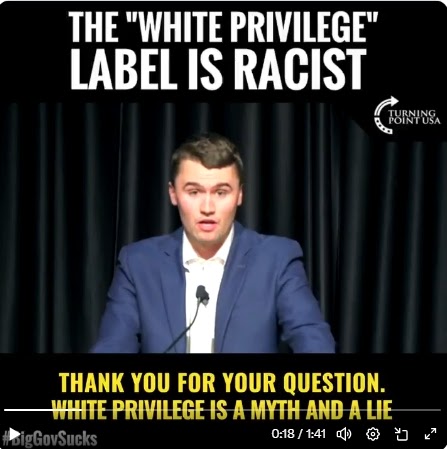
  • Higher Education Inquirer covered Charlie Kirk and Turning Point for nearly a decade

    Higher Education Inquirer covered Charlie Kirk and Turning Point for nearly a decade

    For almost a decade, the Higher Education Inquirer investigated right wing influencer Charlie Kirk and his Turning Point Empire.  Kirk was groomed by Bill Montgomery (a surrogate for Richard Nixon in Florida for Nixon’s Reelection Campaign) and Steve Bannon when Bannon was at Breitbart. Kirk quickly learned the dirty tricks of the Nixon-Reagan era and the dog whistles of white supremacy and misogyny. He also quickly gained funding from right wing billionaire Foster Freiss. 

    In mid-2016, we communicated our concerns with Michael Vasquez at Politico, who later moved on to the Chronicle of Higher Education (CHE).  CHE later reported that Kirk created a plan to win student elections using outside (illegal) money. We also contacted the Southern Poverty Law Center and the Anti-Defamation League who both listed TPUSA as a hate group. 

    For nearly a decade and a half, Kirk and Turning Point USA incited violence on campus and on social media through its playbook of dirty tricks, racist and sexist agitation, and surveillance.  That’s why we warned folks not to engage with TPUSA before this semester started. 

    As we reported in 2018:

    Charlie Kirk, with no evidence whatsoever, alleged that a less qualified woman of color took his slot at West Point.

    Source link

  • A decade getting teens to do something many avoid: Think

    A decade getting teens to do something many avoid: Think

    TikTok reels, attention grabbing headlines and AI that spits out instant answers. The way teens engage with the world today often lacks depth. 

    But at this age, where the teen brain is rapidly developing, deeper thinking — dubbed by psychologists as transcendent thinking — is vital not just for self-reflection and problem solving, but also self-esteem and better relationships in adulthood. 

    Many of us spend a lot of time in what researchers call “surface-level” thinking — reacting to what’s in front of us. Transcendent thinking, though, is when we go beyond concept descriptions, to wrestle with questions like, What does this say about justice? How do systems work? Where do I fit in all this? 

    “Young people get so much information fed to them through social media, influencers and podcasts and AI, and this is such a passive way of learning,” said Marcy Burstiner, News Decoder’s educational news director. “Dangerous, really, if they aren’t critically thinking about the information they are getting.”

    That’s why for 10 years News Decoder has used the lens of journalism to engage students in the process of learning. Through our educational programs, students are encouraged to ask big questions, identify problems they see around them and talk to people to get their questions answered — classmates, neighbours, family and experts. In doing this, they find out information themselves. 

    Spoon-fed learning

    This is more important than ever as the internet transforms from a place where people would lose themselves as they “surfed,” stumbling upon all kinds of new and interesting information along the way, into a place where an AI bot does that for them and spits out summarized results. 

    For 10 years, we’ve been asking teens to find real people to interview, to compare their different perspectives and from that to come up with their own original thoughts about complex topics where there isn’t a clear right and wrong, where there are layers of inequity. 

    Student Jack McConnel at The Tatnall School in the United States did this when he interviewed his state’s congressional representative, Sarah McBride, the nation’s first transgender representative in Congress.

    Through the research he did, and after interviewing McBride, McConnel came to the conclusion that voters in his district didn’t elect her because of gender identity, but because McBride pledged to help solve the more mundane issues they cared most about — protecting consumers from getting scammed, for example, or helping farmers to lower food prices. Gender identity wasn’t their most important concern.

    Students, like McConnel, who work with News Decoder often start with a “pitch” — a proposal for a news story. In the pitch, we have them ask a big question that their story will answer. McConnel’s asked three: “What role does identity play in our elected officials? Has this fixation from both sides made congressional and senatorial positions simply for show? Does it matter more who the person is or what the person does, and have we lost sight of what matters about our politicians?”

    Through his research and his one-to-one interview with McBride, he was able to answer all those questions. 

    Beyond facts

    Hannah Choo is a student at an international school in South Korea, and is working with News Decoder as a summer intern. As part of her work, she creates video content for social media based on articles published on News Decoder.

    Choo has found that through engaging with these stories, she’s forming a deeper connection with the issues the stories explore. She said the challenge is to go beyond merely summarizing the information. The goal is to connect with an audience. 

    “And that puts me in a position where I need to really focus on why this issue matters and why I should care,” Choo said. “And that gives a lot more of a sense of purpose.” 

    Choo remembers talking to a biology graduate student, who told her about apoptosis, a process whereby cells die off — a way our bodies get rid of unneeded cells. Alone, this concept feels meaningless, even dry. 

    But the grad student told Choo that when we’re initially formed in the womb, we have paddle-shaped hands with a webbing of skin connecting the fingers and toes. This webbing disappears as we form, due to this apoptosis. Choo remembers looking at her own hands in fascination.

    “And so later, when I actually got to learn biology and learn about the cell cycle, it was a lot easier for me to engage with the topic,” Choo said. “I wasn’t just studying science but I was studying my own body.” 

    From deep thinking to deeper relationships

    A five-year study, published in 2024 in the journal Scientific Reports, followed 65 teenagers aged 14-18 to see how transcendent thinking shapes their brains, and how this further shapes their lives.  

    The teens were shown emotionally rich mini-documentaries featuring real stories of adolescents around the globe — a method that triggers transcendent thinking. They then talked through what the stories meant: how they felt, why they mattered, and what bigger ideas they raised. 

    They found that teens who engaged in this deeper style of thinking showed stronger connections over time between two key brain networks — those involved in self-reflection and big-picture thought, and focus and problem solving. 

    Crucially, they also found that these teens went on to have a clearer sense of identity in late adolescence, which later linked to greater self-esteem and better relationships in young adulthood.

    One way News Decoder helps young people understand deeper meanings and broader implications is by having them look at societal problems and possible solutions. 

    Searching out solutions

    At News Decoder we ask students to identify a problem in their community and then see if they can find people working to solve that problem. 

    “In the process they see at first that a lot of problems seem to have no solution or the solutions are so far off,” Burstiner said. “But all the complications that prevent solutions are like protective layers around the problem. They are like the levels you need to surmount in a video game.”

    If a teen has the patience and persistence to work through those complications they can not only see the solutions but they can see what is preventing those solutions, Burstiner said. 

    One News Decoder student in India wondered what might happen when climate change causes massive migration. 

    “In exploring the topic she hit on the idea of lost languages — that a language is what often ties a community together and connects generations. But if a community is forced to disperse and the people end up integrating into other lands, the language that connected them could die out,” Burstiner said.

    Connecting dots 

    Another student at The Tatnall School played soccer, and began thinking about how much it cost his family for him to play at a competitive level. “In exploring this he realized how much of competitive sports is elitist and how much more difficult it is for someone to go into professional sports if they are poor,” Burstiner said. 

    When students conduct interviews with people who understand these topics in-depth or who are affected by these issues, they can further connect their sense of self with these stories. 

    Choo, during her internship, pitched a story about cancer, because a close family member was undergoing cancer treatment. She asked this question: “How does climate change affect the quality of healthcare for cancer patients?”  

    In doing the research, uncovering connections and conducting interviews, she connected the often-abstract issue of climate change to her own life. 

    “This was the first time I could really connect climate change to my own life and my own loved ones,” Choo said.

    Source link

  • A decade waking teens up to the world around them.

    A decade waking teens up to the world around them.

    Back in 2019, students at La Jolla Country Day School in California interviewed a citizen of Beirut who had spent years imprisoned in the Guantanamo Bay Detention Center in Cuba, through a live zoom webinar arranged by News Decoder. 

    In 2022, News Decoder brought war correspondent Bernd Debusmann into a classroom, through a live feed to the Tatnall School in the U.S. state of Delaware where students were able to ask him what it was like getting shot in the back while covering Beirut. 

    My memory of high school is the challenge I had keeping my eyes open and my head vertical. I can describe falling in love with a metallic blue Mercedes in the parking lot below the window in my trigonometry class but I can’t tell you what a cotangent is. 

    The students in math and history and language classes today will inherit not just the world we live in but the power to shape it. And the years they spend in school are supposed to prepare them for that awesome responsibility. 

    But can we keep them awake and aware after they’ve stayed up half the night binging Apple TV or playing PUBG, fueled by orange Fanta and Hot Cheetos?

    Feeding curiosity

    It is News Decoder’s deep belief that most students are curious and want to learn but that they need to connect to the material they are supposed to study.

    For 10 years we’ve helped teachers and schools engage teens through experiential learning and by connecting them with people who have been eyewitnesses to world events. At News Decoder, we bring the world into the classroom and take students out into the world around them. 

    We do this through storytelling. We don’t tell them stories, we have them tell stories to us and the world and interview people who have stories to tell. We show them the power of telling other people’s stories through journalism and in the process exploring other people’s perspectives and learning about their experiences. 

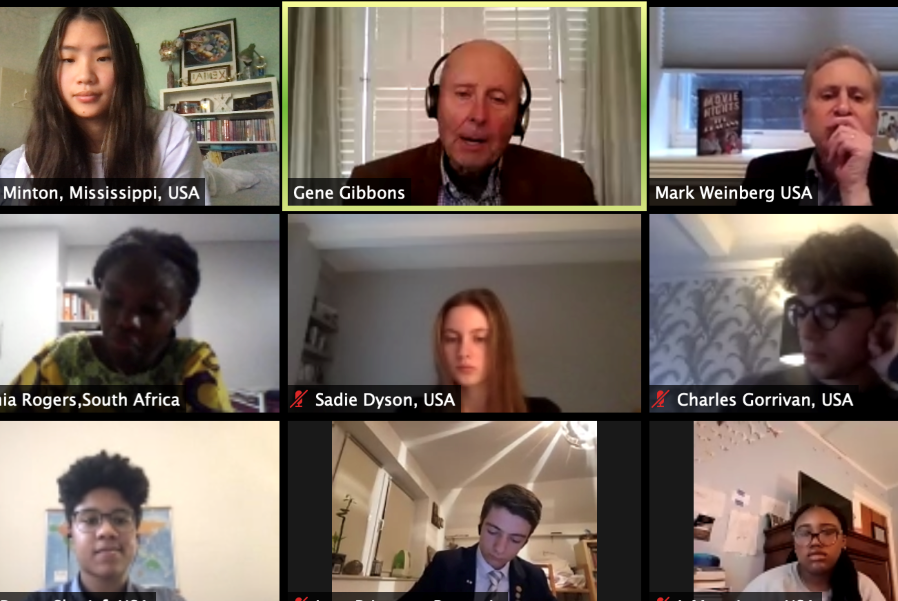
    Two ways we do this is through cross border webinars and through our signature Pitch, Report, Draft and Revise process that we call PRDR. In cross border webinars we put students from different countries and across different time zones together in live video sessions to share problems in their communities and compare the conclusions they reached after researching the same important topic. 

    This past year we did that through our monthly “Decoder Dialogues.” Students from countries including Colombia, India, Belgium, France, Rwanda and the United States shared their research and views about topics as important as the role of the press in journalism, what good and bad leadership looks like, and where responsibility for climate change lies. 

    Through the PRDR process, we encourage students to identify a problem in their community, research it, and find and interview an expert — someone who had directly experienced the problem, or someone working to solve it and then see whether and how that same problem exists in other countries and how people in those countries tackle it. 

    Building human connections across borders

    Ultimately, we guide them through the process of turning their findings into engaging stories — articles or podcasts or videos and publishing those stories to the world. 

    In a world where so many of us spend so much time looking at screens, we want students to realize that knowledge can begin online, but the most powerful information comes from finding and interviewing people who are knowledgeable and that conversation with an interesting person is so much more engaging than words on a screen. 

    Interviews are transformative. In conducting them, students find themselves at the same level as the people they interview no matter how important that person is. An insightful question asked by a 16-year-old to say, famed U.S. constitutional lawyer Floyd Abrahms, which Lucy Jaffee did back in 2020, commands respect.

    “I just loved being able to talk to people and hear their stories,” Jaffee said at the time.

    It is that love for human connection in an increasingly robotic world that News Decoder is committed to fostering. We’ve done it for 10 years and we plan to do it for another decade. 

    Source link

  • Fitch: Private nonprofits see lowest operating margins in a decade

    Fitch: Private nonprofits see lowest operating margins in a decade

    This audio is auto-generated. Please let us know if you have feedback.

    Dive Brief: 

    • Operating margins at private nonprofit colleges have plummeted to their lowest levels in over a decade due to growing financial challenges, especially for tuition-dependent institutions, according to a new Fitch Ratings analysis. 
    • The median adjusted operating margin, which includes endowment funds for operations, fell to -2.0% in fiscal 2024 for the 56 private nonprofit colleges in Fitch’s portfolio. Despite the median margin sitting squarely in negative territory, the highest-rated colleges still enjoyed positive operating margins. 
    • Fitch analysts expect the credit environment for the U.S. higher education sector to deteriorate in 2025 year over year, with federal policy shifts likely to increase pressure on operations and revenue. 

    Dive Insight: 

    The Fitch analysis reflects the challenging financial environment that private nonprofit colleges are navigating. The litany of problems includes continued inflation, threats to federal funding and an expected decline in the number of high school graduates starting next year. 

    Amid these challenges, adjusted operating margins shrank for all types of colleges. 

    That includes the three private nonprofits with AAA ratings from Fitch — the highest one given by the credit rating agency, signaling an institution at very low risk of default. Their median adjusted operating margins declined to 8.4% in fiscal 2024. While “still strong,” that’s down from double-digit highs seen during the coronavirus pandemic, according to Fitch. 

    Colleges with AA ratings showed a median adjusted operating margin of 2.3%, while those with ratings below AA had negative margins, a continuation of a yearslong trend. 

    Lower-rated colleges tend to rely on tuition as their primary revenue source, while higher-rated colleges are more likely to get large contributions from their healthcare operations or investment returns, according to analysts. 

    “This growing credit differentiation within the sector highlights mounting financial challenges for less selective, tuition-dependent institutions,” they wrote. 

    Despite numerous challenges, private nonprofits brought in more tuition and fee revenue in fiscal 2024 than the year before. On average, AA-rated colleges and below saw this revenue stream increase between 1.2 and 3.8%, while institutions with AAA ratings saw a 0.1% decline. 

    However, this year has brought even more financial turbulence. 

    “Operating margins and financial flexibility will remain narrow in 2025, as further increases in tuition, if any, will likely be offset by losses in other revenue streams and are unlikely to be sufficient to preserve margins,” analysts wrote. 

    Financial challenges are not new to much of the higher education sector. But many well-known private research universities are also starting to feel the pressure due to massive drops in federal research funding under the second Trump administration. 

    The National Science Foundation, for instance, approved only $989 million in new grant funding from Jan. 1 through May 21, according to a recent analysis from The New York Times. That’s a massive 51% decline from the 10-year average over the same time period. 

    On top of the slowdown in new grant approvals, NSF has so far terminated some 1,600 active grants, totaling $1.5 billion in research funding. 

    Major research universities across the nation — from the University of Southern California to Brown University, in Rhode Island — have signaled they will have to turn to layoffs to grapple with these declines. 

    Source link

  • Confidence in higher education increases for the first time in a decade

    Confidence in higher education increases for the first time in a decade

    This audio is auto-generated. Please let us know if you have feedback.

    Dive Brief:

    • Americans’ confidence in higher education has increased for the first time in a decade, according to research released Wednesday by Gallup and the Lumina Foundation.
    • Among those surveyed, 42% of adults expressed “a great deal” or “quite a lot” of confidence in the sector, compared with 36% in 2023 and 2024. The percentage of respondents with little to no confidence declined from 32% last year to 23% in 2025.
    • However, the share of adults with high confidence in higher education is still well below 57%, the share who held those views when Gallup first posed the question in 2015.

    Dive Insight:

    Along with breaking a decadelong trend, Wednesday’s findings are noteworthy because they come amid increasing conservative attacks on the sector and continued questioning of the value of college.

    Researchers polled just over 1,400 adults via phone from June 2 to 26.

    When asked to explain their responses, 30% of participants confident in higher education pointed to the value of being educated. And 24% said colleges provide good training, with some respondents citing learning to think for oneself and others citing the ability to appreciate different viewpoints.

    Other reasons were named more frequently than they were in previous years. Last year, 5% of surveyed adults cited the innovations higher education fosters as inspiring confidence. This year, that share jumped to 15%. And 14% said U.S. colleges are some of the best in the world, up from 7% last year.

    In contrast, the share of respondents who pointed to the strength of college instructors and administrators declined from 7% last year to 4% in 2025. And just 1% of adults said college is available to anyone who wants to further their education, down from 2% the previous year.

    More than a third of respondents who said they lacked confidence in higher ed, 38%, cited concerns about political agendas, up from 28% in 2024. Those who had little confidence in the sector also expressed concerns about the cost of college and institutions not focusing on and teaching the “right things,” though mentions of both reasons declined from 2024 to 2025.

    When researchers asked all participants what would increase their confidence in higher education, they said colleges could focus more on practical job skills, lower their costs, and remove politics from the classroom.

    Confidence increased among respondents across the political spectrum, researchers found. But Republicans — who drove much of the decline in confidence in the sector over the past decade — continue to hold more negative views of higher education.

    Among Democrats, 61% expressed confidence in higher ed, up from 56% last year. By comparison, 26% of Republicans said the same, an increase from 20% in 2024. 

    About 2 in 5 respondents who identified as politically independent, 41%, expressed confidence in higher ed. That’s up from 35% last year. 

    Republicans are more likely to express confidence in two-year colleges than four-year colleges, the research found. Almost half of surveyed adults in the party, 48%, expressed confidence in two-year institutions, while just over a quarter, 26%, said the same of four-year colleges.

    A majority of surveyed Democrats had high confidence in both institutional types.

    Source link

  • A decade connecting young people to the world they live in

    A decade connecting young people to the world they live in

    To understand the chaos that is the world today it helps to look back a decade.

    This past year, world representatives met at COP29 to fight climate change in a place led by an authoritarian regime dependent on fossil fuels. The Israeli government under Prime Minister Benjamin Netanyahu has been massacring Palestinians in Gaza. The United States bombed Iran in an attempt to eliminate its nuclear capability. And U.S. President Donald Trump and an increasing number of European leaders have closed their doors to immigrants and refugees.

    In great contrast, when News Decoder launched 10 years ago, 196 nations signed onto the landmark agreement known as the Paris Accords, ushering in the hope that together we could cool down the planet. The administration of then-U.S. President Barack Obama signed a historic agreement with Iran, in which Iran would get rid of 97% of its supply of enriched uranium. A million refugees flooded into Europe from conflicts in Syria and elsewhere.

    In the years in between, the world locked down during the Covid-19 pandemic, Great Britain exited the European Union, the #MeToo movement erupted across the world, nations across the globe began legalizing same sex marriage, Russia invaded Ukraine, Trump got elected, tossed out and re-elected and we began ceding everything to artificial intelligence.

    Can you imagine coming of age in that world?

    Decoding world events

    When Nelson Graves founded News Decoder to help young people “decode” the world through news, it seemed that we lived in an age of optimism. Now young people feel helpless and disconnected. In April 2024, the World Economic Forum reported that young people worldwide are increasingly unhappy and this trend would have real consequences for the future.

    “We live in a world where teenagers grapple with a sense of crisis before adulthood; a time when young people, historically beacons of optimism, report lower happiness than their elders,” the report said.

    But even back in 2015, Nelson knew things would change. He’d spent years as a foreign correspondent covering world events. 

    “Anyone with a sense of history and someone with experience in following current events — especially a foreign correspondent — would have known that the world is most likely to change when you’re least expecting it,” he said. “Nothing is immutable — except the truism that the political pendulum is always swinging.”

    The roots of Brexit, the Make America Great Again movement in the United States and antipathy towards immigrants were already deep in 2015, even if they were largely underground and out of sight, he said. 

    A decade later, News Decoder’s mission of connecting young people to the world around them seems more relevant than ever.

    For 10 years, the high school students News Decoder has worked with have explored — through articles, podcasts, videos and photo essays and in live, cross-border dialogues — how problems in their communities connect to things happening elsewhere in the world. In 2016, for instance, a student studying abroad in China worked with News Decoder to explore how growing consumerism was leading to mountains of trash and created an army of people who mined that trash building up around them.

    That same year in an online roundtable, News Decoder brought together students from the Greens Farms Academy in the United States with students from Kings Academy in Jordan, Aristotle University in Greece and School Year Abroad in France to discuss the ongoing war in Syria and the worldwide crisis of Syrian refugees.

    Kindling curiosity

    One of the Greens Farms Academy students who participated, Samyukt Kumar, further explored the topic in an article News Decoder published that year. Looking back, he now tells, the practical experience it gave him was valuable.

    “Less for the substance but more for the practical experience,” he said. “My views on these topics evolved significantly as I received greater education and real-world exposure. But I still reap the benefits from gaining more confidence in my writing, learning to embrace the editing process and engaging my curiosity about the world.”

    In 2017, a News Decoder student at Haverford College in the United States explored the problem of migrants flooding into her home country of Italy. She came to this conclusion:

    “The roots of the problem lie outside of Italy, which nonetheless bears a heavy burden as the first EU destination for thousands of Africans crossing the Mediterranean,” she wrote. “A solution to the migration crisis depends not only on Italy’s good will — now being stretched to the limits — but also on the willingness of the rest of Europe and the international community to tackle the armed conflicts, poverty and human rights abuses that stir so many Africans to attempt the perilous Mediterranean crossing.”

    Fast forward to 2025. News Decoder worked with high school students in the British Section at the Lycée International Saint-Germain-en-Laye outside of Paris to take what they learned about the United Nations Sustainable Development Goals and find and tell narrative stories through podcasts. They explored such things as the problem of poverty in resource-rich areas of Africa and the connection between actions of multinational corporations and climate change.

    Crossing borders

    In Switzerland, News Decoder worked with students at Realgymnasium Rämibühl Zürich on a series of articles that explored gender inequity in sports, the connection between social media and the decline of democracy, how a local community is affected when it hosts a world conference and the connection between the quality of life in a country and the people’s willingness to pay for that through high prices and high taxes.

    And in monthly “Decoder Dialogues” News Decoder put together students from countries such as the United States, Colombia, France, India, Belgium and Rwanda in online roundtables to discuss such topics as the future of journalism, climate action, censorship, leadership and artificial intelligence.

    Through the exploration of a problem in the world, by seeking out experts who can put it into context and by seeking out different perspectives from other places, students make sense out of chaos. They begin to see that there are people out there thinking about these problems in different ways and seeking solutions to them.

    Ultimately, the message News Decoder wants students to take away is that you don’t need to run from complicated problems. You don’t need to disengage from the news and the events happening around you. By delving more into a topic or issue or controversy, you can begin to understand it and see the path forward.

    At News Decoder, we believe people should be able to listen to each other and exchange viewpoints to work through problems across differences and borders. Back in 2015, Graves posed this challenge: How to tap into the intellectual energy of the generation that will soon assume leadership in business, government, academia and social enterprise? 

    For the past 10 years we have worked to empower young people by giving them the information they need, connecting them to the world around them and providing them a forum for expression. For a decade we have helped them find coherence out of the chaos around them — and we intend to continue doing that for the next 10 years. 

    One thing we know: 10 years from now the world will be a lot different from what it is now. 

    “While no one has a perfect crystal ball, you can be sure that nothing remains unchanged for long,” Graves said. “Yesterday’s mortal enemy can become a fast friend — think of U.S. relations with Vietnam since the 1950s. Lesson: Always expect change, even if you can’t anticipate the precise contours, and don’t project linearly into the future. As ever, keep an open mind and beware confirmation bias.”

    That’s the message News Decoder tries to instill in the young people we work with. After all, a decade from now, they will be the ones making that change happen. 

    Source link

  • TheDream.US Celebrates a Decade of Transforming Immigrant Students’ Lives

    TheDream.US Celebrates a Decade of Transforming Immigrant Students’ Lives

    Gaby PachecoTheDream.US, the nation’s largest college and career success program for undocumented immigrant students, has released its 10-year impact report, highlighting remarkable achievements despite significant challenges faced by Dreamers across the United States.

    Since its founding in 2014, the organization has provided more than 11,000 college scholarships to undocumented students attending nearly 80 partner colleges in 20 states and Washington, D.C. The report, titled “From Dreams to Destinations: A Decade of Immigrant Achievements and the Future Ahead,” details how these students have excelled academically and professionally despite facing substantial barriers.

    “In our wildest dreams, we could not have imagined the outcome,” write co-founders Don Graham, Henry Muñoz, and Carlos Gutierrez in the report. “TheDream.US has enrolled 11,000 students in close to 80 Partner Colleges. 76% of those who chose four-year colleges have graduated.”

    The organization’s scholars have consistently outperformed national averages, with a 92% first-year persistence rate and a 76% graduation rate for National Scholarship recipients, compared to the 88% and 72% national averages, respectively. Even more impressive, Opportunity Scholarship recipients, who must relocate to attend one of five partner colleges in states that offer in-state tuition, achieve an 85% graduation rate.

    Most of TheDream.US scholars arrived in the United States at a very young age – the median age of arrival is just 4 years old. They come from more than 120 countries, with 86% from Latin America, and pursue degrees primarily in high-demand fields: 28% in science, math and technology; 23% in business; 19% in social sciences; and 16% in health and medicine.

    The report highlights a concerning shift in the immigration landscape over the past decade. When TheDream.US launched, most scholarship recipients had protection under the Deferred Action for Childhood Arrivals (DACA) program. Today, 75% of scholars are fully undocumented without work authorization, as court decisions have ended new DACA enrollments.

    Despite these challenges, the organization’s 4,000+ alumni have found ways to thrive. Among those with work authorization, 93% are employed full-time or in graduate school six months after graduation. Many work for major companies including Apple, Microsoft, Bank of America, and JPMorgan Chase, with over half working in business, healthcare, and education.

    Gaby Pacheco, the organization’s President and CEO, embodies the impact of educational opportunity. Once an undocumented student herself who was incorrectly told she couldn’t attend college, Pacheco now leads the organization after a journey that included walking 1,500 miles from Miami to Washington, D.C., spearheading the campaign that paved the way for DACA, and helping pass in-state tuition legislation in Florida.

    “Like the more than 11,000 TheDream.US Scholars we have supported, I grew up in this nation, attended its schools, and received the gift of education thanks to believers in my potential,” Pacheco writes. “Like me, I know our Scholars and our 4,000 Alumni have a lot to offer—if given continued opportunities to help our nation thrive.”

    Looking ahead, TheDream.US plans to continue supporting Dreamers’ access to higher education while also providing immigration and legal resources, preparing scholars for careers as employees or entrepreneurs, and advocating for permanent protections and legal pathways.

    The report concludes with a call for continued support, emphasizing that investment in Dreamers’ education benefits not only the students but also strengthens America’s communities, competitiveness, and economic vitality.

    Source link

  • Legacy admissions tumbled dramatically over past decade

    Legacy admissions tumbled dramatically over past decade

    Dive Brief:

    • The share of four-year colleges that use legacy admissions practices has fallen by roughly half since 2015, from 49% then to 24% by 2025, according to a study from the center-left nonprofit Education Reform Now
    • The group counted 420 institutions that give preferential treatment to applicants related to an alum. Meanwhile, 452 have stopped considering legacy ties since 2015. The number and share of institutions are both at their lowest since collection of the information began. 
    • The recent declines are due in part to revamped diversity commitments following the U.S. Supreme Court’s 2023 ban on race-conscious admissions, as well as a handful of new state laws prohibiting legacy admissions, the group said. 

    Dive Insight:

    The decline in legacy admissions has been swift, the study found. Just between 2022 and 2023, 92 colleges stopped considering legacy status — an 18% decline in one year. And even more have dropped legacy admissions since then. 

    Of the colleges that nixed the practice, 86% did so via voluntary institutional decision, while 14% were complying with legislation, according to the study.

    The report pulled from the Common Data Set and federal data, which began including legacy admissions policies in 2022. Historically, a clear data picture of an institution’s use of legacy status in admissions has been hard to come by. Colleges have at times also made ambiguous or erroneous entries in the Common Data Set. 

    Education Reform Now identified 12 states that have introduced proposals to ban on legacy admissions, and found that most focused on both public and private institutions. 

    Of the dozen states, five have passed bans, all in recent years: California, Colorado, Illinois, Maryland and Virginia. Only Maryland and California addressed private institutions. In several states, bills passed one legislative house but never made it to a vote in both. 

    Legacy admissions policies are concentrated in selective colleges. Among four-year institutions that accepted 25.5% or fewer of their applicants, 56.1% considered legacy status in admissions in the 2023-24 academic year. Nearly a third of colleges with acceptance rates between 25.6% and 50.4% also offered legacy preference, according to the group’s analysis of federal data. 

    Past research has found that legacy status can boost by more than threefold an applicant’s odds of acceptance to highly selective colleges. The practice originated, in part, from an effort in the early 20th century by elite, wealthy universities to keep Jewish applicants out

    One scholar in 2019 described legacy admissions as an “affirmative-action policy for rich white students,” which helps the rich and powerful exploit their position and ensure class domination for the next generation.”

    The practice has come under regulatory scrutiny as well. In 2023, the U.S. Department of Education opened a civil rights investigation into Harvard University’s legacy admissions policy after a group filed a complaint alleging the practice offered de facto preferential treatment to White applicants. 

    Defenders of the practice have pointed to the boost legacy admissions give to fundraising, which in turn can support need-based financial aid that serves to diversify student bodies. 

    Some elite universities, including Yale and Harvard universities, said they were reviewing their legacy policies in the months after the Supreme Court decision. For now, both continue the practice. Some 11% of Yale’s class of 2027 has legacy ties, according to the university’s figures. A survey by The Harvard Crimson found that its share is roughly 32%.

    Source link