Tag: Decades

  • Where are tomorrow’s teachers? Education degrees drop over 2 decades.

    Where are tomorrow’s teachers? Education degrees drop over 2 decades.

    This audio is auto-generated. Please let us know if you have feedback.

    The number of education degrees awarded in the U.S. steadily decreased in the nearly two decades between 2003-04 and 2022-23, according to a new analysis of federal data by the American Association of Colleges for Teacher Education.

    Bachelor’s degrees in education dipped from 109,622 annually to 90,710 while master’s degrees declined from 162,632 to 143,669 in that time span, AACTE said in its report on data from the U.S. Department of Education.

    On Thursday, AACTE released a data dashboard based on these findings as well as two related reports. One covers the degrees and certificates conferred in education and the other highlights teacher preparation program trends.

    As the Trump administration seeks to dismantle the Education Department and limit funding for federal education research, Jacqueline King, a co-author of the reports and an AACTE consultant, called for the agency to continue publishing research on teacher preparation programs. 

    “These reports provide a valuable check-up on the supply of new educators, and it is exciting that this year we can offer readers the opportunity to customize how they view the data through our new data dashboards,” King said in a Thursday statement. “It is essential that the federal government continue to provide the field — and the broader public — with this important information.”

    Here are some standout figures on AACTE’s findings on the state of teacher preparation programs nationwide.

    By the numbers


    -3%

    The one-year decline in bachelor’s degrees awarded in education from 2021-22 to 2022-23, the most recent year with available data.


    -5%

    The one-year decline in master’s degrees awarded in education from 2021-22 to 2022-23.


    407,556.

    The number of students enrolled in a teacher preparation program at a comprehensive higher education institution during the 2022-23 academic year.


    611,296

    The number of students enrolled in a teacher preparation program at a comprehensive higher education institution during the 2012-13 academic year.


    124,428

    The number of students enrolled in a teacher preparation program at an alternative teacher preparation program — ones not based at colleges — during the 2022-23 academic year. In the 2012-13 academic year, that number was just 43,099


    112,913

    The number of students who completed a teacher preparation program at a comprehensive college or university in the 2022-23 academic year. During the 2012-13 academic year, that number stood at 163,851.


    16,899

    The number of students who completed an alternative teacher preparation program not based at a college during the 2022-23 academic year. In 2012-13, that number was 15,550.


    +9%

    The growth in students completing alternative teacher preparation programs not based at higher education institutions between 2012-13 and 2022-23.


    +44%

    The growth in students who completed alternative teacher preparation programs based at colleges between 2012-13 and 2022-23.


    29%

    The share of education bachelor’s degrees awarded to non-White graduates in 2022-23, up from 23% in 2016-17.


    33%

    The percentage of education master’s degrees that went to non-Whites in 2022-23, up from 28% in 2016-17.


    42%

    The portion of education doctoral degrees earned by non-Whites in 2022-23, up from 37% in 2016-17.

    Correction: A previous version of this article stated the wrong number of students enrolled in a teacher preparation program at a comprehensive higher education institution during the 2022-23 academic year. The correct enrollment figure is 407,556 students.


    Source link

  • Small District to Pay $7.5 Million to Settle Lawsuit Over Sexual Abuse Decades Ago – The 74

    Small District to Pay $7.5 Million to Settle Lawsuit Over Sexual Abuse Decades Ago – The 74


    Get stories like this delivered straight to your inbox. Sign up for The 74 Newsletter

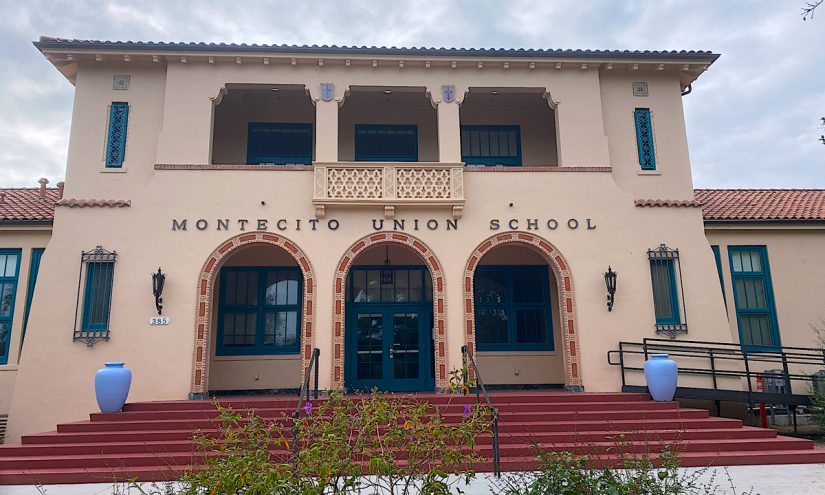
    On the eve of what was expected to be a long and gut-wrenching trial, a small school district in Santa Barbara County has settled a sexual abuse lawsuit for $7.5 million with two brothers, now 65 and 68 years old, who claimed a long-dead principal molested them in the 1970s.  

    The brothers had sought $35 million for the harm they said they suffered, an attorney for the youngest brother said.

    The settlement equals about 40% of the 350-student district’s 2025-26 budget, although the district did not disclose the terms and timetable for the payment. The district’s superintendent acknowledged in a statement that there would be an impact on the budget. 

    Board members of the Montecito Union School District announced the settlement over the weekend. The trial was scheduled to start Monday.

    The case was brought under a 2019 state law, Assembly Bill 218, that removed a statute of limitations for filing claims that employees of public agencies, including school districts and city and county governments, sexually abused children placed in their care.

    Estimates suggest settlements and jury awards could cost California school districts as much as $3 billion by one projection, and possibly a lot more. Los Angeles County alone has agreed to pay $4 billion to settle abuse claims with more pending, mostly involving plaintiffs who were once in foster care.

    With many larger lawsuits with multiple victims yet to be settled or go to trial, the financial impacts are hard to predict. Small districts are worried that multimillion-dollar verdicts could devastate budgets, if not lead to insolvency. Insurance costs, meanwhile, have soared by more than 200% in five years, according to a survey of districts.

    In the Montecito case, the brothers were seeking $35 million in damages combined, John Richards, a lawyer representing one of them, said outside of court Monday.

    Montecito is not alone in facing decades-old accusations. The San Francisco Unified School District is embroiled in an ongoing suit involving a teacher who allegedly molested a student in the mid-1960s, records show.

    School boards association helps with legal fees

    The Montecito case drew the attention of the California School Boards Association, which gave the district a $50,000 grant to help with legal costs, said spokesman Troy Flint.

    Flint said Montecito Union Superintendent Anthony Ranii has “been a staunch advocate for AB 218 reform because he understands how this well-intentioned law carries such significant unintended consequences that compromise the educational experience of current and future students.”

    Montecito Union “is just one example of what potentially awaits school districts and county offices of education statewide,” Flint added.

    The settlement came just weeks after state Assembly members let a measure that would have restored a statute of limitations to such cases, Senate Bill 577, go without a vote in the final days of the legislative session. Its sponsor, Sen. John Laird, D-Santa Cruz, said he would bring it back next year.

    At a brief hearing Monday, Santa Barbara County Superior Court Judge Thomas P. Anderle called the Montecito matter “a case of real consequence.” He had scheduled 17 days for trial, court records show. The district’s lawyers did not attend the hearing.

    The brothers’ lawsuit was filed in 2022 and alleged that Montecito Union’s former superintendent and principal, Stanford Kerr, molested them in the early 1970s, including raping one of them. Kerr died in 2013 at 89. He never faced criminal charges.

    A third plaintiff who also claimed Kerr abused him settled earlier with the district for $1 million. He had described a full range of abuse covering many types of conduct, which included rape, court filings state.

    Just recompense for years of suffering

    The brothers, identified in court documents as John Doe 1 and John Doe 2, pushed forward, Richards said, hoping to be compensated for years of agony. The younger of the two, Richards said, has suffered a lifetime of substance abuse, which is blamed on Kerr’s assaults. 

    “The money is nice,” Richards said, but the younger brother also seeks “social acknowledgment that what happened to (him) was terrible. He has a long way to go,” in recovering.

    The district admitted no liability in making the settlement.

    Montecito Union has no insurance coverage going back to the period the brothers said the abuse occurred — 1972 to 1978, Ranii said in a statement.

    “We were prepared to mount a vigorous defense,” he said. But the possibility of a jury awarding far more than the district could afford pushed the idea of a settlement after years of pretrial maneuvering.

    The superintendent’s statement did not directly address the brothers’ claims. It also did not mention Kerr.

    “We are deeply mindful of the enduring pain caused by sexual abuse and feel for any person who has experienced such abuse,” Ranii said in the statement.

    A large award in the event of a trial would have “diminished our ability to serve students now and well into the future,” Ranii said. “Continued litigation created exceptional financial vulnerability. Settling now allows us to stabilize operations and remain focused on today’s students.”

    Montecito is an unincorporated oceanfront community just south of Santa Barbara in the shadows of the Santa Ynez Mountains. Its residents include Oprah Winfrey and Prince Harry and Meghan Markle. The district is one of the state’s richest, with more than $40,000 per student in funding due to tax receipts from high-value properties. 

    The district will manage the costs through a hiring freeze, staff reductions “when natural attrition occurs,” and redirecting “funds previously designated for capital repair,” Ranii said. The settlement allows the district to avoid layoffs, he said.

    The brothers’ case was built around the testimony they would have given about Kerr’s abuses, Richards said. There was no physical evidence. At one point, a district employee went to the brothers’ home and forced their parents to sign a document requiring them to make sure the boys came right home after school and avoided Kerr, according to court filings.

    Richards said the district did not produce such a document in discovery. It had no records that the boys ever attended the school, he said, although their photos appear in yearbooks. The district also had no records that Kerr ever faced accusations of abuse or sexual misconduct.

    Two school board members from Kerr’s time as superintendent said in depositions taken for the brothers’ suit that they would have taken action had they known he was abusing students, Richards said. But with the case settled, the elderly former members won’t be called to testify.

    All that remains is a final hearing that the judge scheduled for Nov. 19 to make sure the payment has been received “and that the check’s been cashed,” he said.

    Editor-at-Large John Festerwald contributed to this story.

    This story was originally published by EdSource. Sign up for their daily newsletter.


    Get stories like these delivered straight to your inbox. Sign up for The 74 Newsletter

    Source link

  • Former Harvard President Looks Back on Decades of Protests

    Former Harvard President Looks Back on Decades of Protests

    In 1967, in the midst of the Vietnam War, Harvard University English professor Neil Rudenstine intervened in a protest on campus, where a recruiter from Dow Chemical Company, which made napalm, had been surrounded by students upset about U.S. attacks on Vietnamese civilians. He helped defuse the tension by negotiating with students to release the recruiter.

    That foray into conflict resolution prompted an unexpected shift from a budding literary career to academic administration. Rudenstine would then go on to serve as dean of students at Princeton University and in other roles before making his way back to Harvard as president, a job he held from 1991 to 2001.

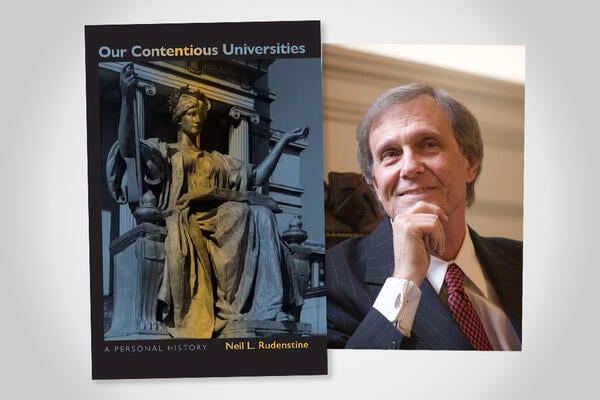
    Now 90, Rudenstine released a book last month titled Our Contentious Universities: A Personal History (The American Philosophical Society Press) that is partly a memoir and partly an exploration of campus protests movements across multiple decades and causes.

    Rudenstine discussed the book with Inside Higher Ed, sharing his personal experiences of protests in years past and his thoughts on the latest wave of pro-Palestinian demonstrations.

    Excerpts of the conversation have been edited for length and clarity.

    Q: What motivated you to write this book?

    A: From my point of view, increasing student protests starting in the ’90s seemed to be different from those of the ’60s, and more complicated to deal with. So I began to try to find out what the differences were and what the results might be of the new movement, so to speak. That got me immersed to look again at the 1960s, and after that, events began to take over.

    Q: What differences do you see in protests of the past versus today?

    A: In the ’60s, student protests were quite violent at times, but they were all mainly concerned with the Vietnam War. Of course, there were other things, like student protests over apartheid in South Africa [in the 1980s]. But the main issue in the 1960s was the war, and students were essentially united in their feelings against the war. There was virtually no sense of students in any way protesting against one another, or student groups disagreeing with other student groups. It was a united feeling.

    It was also a feeling that if the war were to come to an end, the protests would probably also come to an end. In the ’90s and afterward, students were far more diverse. There were more Black students, Jewish students, Asian American students, first-generation students and so on. These groups did not necessarily agree with one another in terms of what was important to protest against, and they sometimes protested against one another. So the situation was very different; there was no single overriding issue like the war.

    Q: Tell me about your own protest experiences, starting when you were a professor at Harvard in 1967 and helped bring an end to a protest organized by Students for a Democratic Society.

    A: I was, at the time, an assistant professor of English literature, and totally absorbed by that job at Harvard. One day I was walking across campus outside of Harvard Yard, and I heard shouting and cheering going on around [Mallinckrodt Laboratory], which was a chemistry building. It turned out that Students for a Democratic Society had organized a protest that imprisoned a recruiter for the Dow Chemical Company who wanted to interview students for jobs. And since Dow was making some products [such as napalm] that were used in the war, the SDS students decided to imprison this recruiter.

    Purely by chance, I stopped by, and I thought it was not proper of the university to imprison a recruiter who’d come to interview students and told the students that by using their megaphone. After several hours of discussion and debate, the students released the recruiter and gave up the protest. I was somehow identified as the person who had helped to bring this about, and that led to me being asked to be dean of students at Princeton University to help with their protest movements. A very considerable accident got in the way of my literary career and deflected me from literature to student protests in a way that I had never imagined. It was purely the result of chance and serendipity.

    Q: Near the end of your career, students staged a sit-in to demand a living wage at Harvard. How were you able to wind that protest down without police intervention?

    A: That was a very complicated situation. Students sat in my office building, Massachusetts Hall, because they wanted to change the way in which many people at the university were reimbursed for their services. The living wage protest was not very rational. If they had wanted a minimum wage change, we might have been able to discuss it, but the method they chose was not rational, and they sat in the building for more than two weeks. So we had a very complicated and delicate situation.

    I decided at the beginning that whatever we would do, we would not call the police, because calling the police in earlier days at Columbia, Harvard, Kent State and other places had led to terrible situations of riots and police beating students. So the question was, how can we not call the police but also bring the situation to a conclusion? It took many, many days of discussion and waiting in order to try to find this conclusion.

    What happened was that the next president [Larry Summers] said, “Why don’t you put together a committee to look into the issue, and that will give the students a way out, and it’ll give you a way out? It’s not likely that this committee will embrace the solution that the students have chosen at all, but it’ll bring an end to the protests.” And that’s what happened. We appointed a committee, the students were able to claim the victory and walk out of the building, and we were able go back into our offices and basically say that we were happy nobody had been hurt, and that we would trust the new committee to make very good recommendations about what should be done in the future.

    Q: You wrote that you were “taken aback” by how quickly presidents brought in police to break up protest encampments last spring. What other tactics do you believe they should have considered first?

    A: Obviously, every situation is different, so there’s no one general thing you can do. But there is a way which you can call for the judiciary to step in. If students are identified as being in the protest, if the [judiciary] tells them to evacuate whatever building they happen to be occupying or whatever they’re doing wrong, they can be held in contempt of court if they don’t obey those admonitions. That’s a very good substitute for bringing in the police; if you’re held in contempt of court, it’s a very serious crime, and very few students want to do that, so they tend to leave right away. We had tried that at Princeton, and that seemed to be a good substitute for actually calling the police, which led, of course, to terrible things at Columbia and elsewhere, when the police tended to just brutalize the students when they were called in.

    Another alternative, of course, is to wait out the students in the hope that sooner or later, their academic needs will force them to go back out and get to their studies. That was a tactic we also used at Princeton.

    Q: What do you think about the institutional neutrality movement?

    A: I’m a little bit skeptical about the conception and certainly the term of neutrality. I understand why people would embrace the idea at the University of Chicago, for example, and other places. I think that’s a very interesting point of view, and I think at times it’s definitely the thing to do. You don’t want to go around commenting all the time on what has happened internationally or nationally. At the same time, it’s a very difficult row to hoe, because there simply are some events that require, if not an actual stance by the university, certainly some kind of an analysis with a possible outcome. I do think that there are times when it’s important for a leader to speak out, and it has to be done very thoughtfully, and one has to choose those moments carefully.

    Q: Any advice for today’s college presidents on how to handle campus protests?

    A: That’s a tough one. I think what they’re doing is about as good as can be done, and that’s clarifying what is legitimate as a protest or what is not legitimate and being willing to discipline students if they really cross the line of what’s permissible in an obstructive way that harms other people’s capacity to do their jobs. I hope the universities are open to discussing in a more collaborative way things that need to be ironed out, other than simply responding with police force. The more they can discuss and analyze and find ways to reason with the students and even some faculty … the more they are able to possibly defuse protest or the threat of protest.

    Source link