Tag: Decline

  • Reclaiming the narrative of educational excellence despite the decline of educational gain

    Reclaiming the narrative of educational excellence despite the decline of educational gain

    There was a time when enhancement was the sector’s watchword.

    Under the Higher Education Funding Council for England (HEFCE), concepts like educational gain captured the idea that universities should focus not only on assuring quality, but on improving it. Teaching enhancement funds, learning and teaching strategies, and collaborative initiatives flourished. Today, that language has all but disappeared. The conversation has shifted from enhancement to assurance, from curiosity to compliance. Educational gain has quietly declined, not as an idea, but as a priority.

    Educational gain was never a perfect concept. Like its cousin learning gain, it struggled to be measured in ways that were meaningful across disciplines, institutions, and student journeys. Yet its value lay less in what it measured than in what it symbolised. It represented a shared belief that higher education is about transformation: the development of knowledge, capability, and identity through the act of learning. It reminded us that the student experience was not reducible to outcomes, but highly personal, developmental, and distinctive.

    Shifting sands

    The shift from HEFCE to the Office for Students (OfS) marked more than a change of regulator; it signalled a change in the state’s philosophy, from partnership to performance management. The emphasis moved from enhancement to accountability. Where HEFCE invested in collaborative improvement, OfS measures and monitors. Where enhancement assumed trust in the professional judgement of universities and their staff, regulation presumes the need for assurance through metrics. This has shaped the sector’s language: risk, compliance, outcomes, baselines – all necessary, perhaps, but narrowing.

    The latest OfS proposals on revising the Teaching Excellence Framework mark a shift in their treatment of “educational gain.” Rather than developing new measures or asking institutions to present their own evidence of gain, OfS now proposes removing this element entirely, on the grounds that it produced inconsistent and non-comparable evidence. This change is significant: it signals a tighter focus on standardised outcomes indicators. Yet by narrowing the frame in this way, we risk losing sight of the broader educational gains that matter most to students, gains that are diverse, contextual, and resistant to capture through a uniform set of metrics. It speaks to a familiar truth: “not everything that counts can be counted, and not everything that can be counted counts”.

    And this narrowing has consequences. When national frameworks reduce quality to a narrow set of indicators, they risk erasing the very distinctiveness that defines higher education. Within a framework of uniform metrics, where does the space remain for difference, for innovation, for the unique forms of learning that make higher education a rich and diverse ecosystem? If we are all accountable to the same measures, it becomes even more important that we define for ourselves what excellence in education looks like, within disciplines, within institutions, and within the communities we serve.

    Engine room

    This is where the idea of enhancement again becomes critical. Enhancement is the engine of educational innovation: it drives new methods, new thinking, and the continuous improvement of the student experience. Without enhancement, innovation risks becoming ornamental: flashes of good practice without sustained institutional learning. The loss of “educational gain” as a guiding idea has coincided with a hollowing out of that enhancement mindset. We have become good at reporting quality, but less confident in building it.

    Reclaiming the narrative of excellence is, therefore, not simply about recognition and reward; it is about re-establishing the connection between excellence and enhancement. Excellence is what we value, enhancement is how we realise it. The Universitas 21 project Redefining Teaching Excellence in Research-Intensive Universities speaks directly to this need. It asks: if we are to value teaching as we do research, how do we define excellence on our own terms? What does excellence look like in an environment where metrics are shared but missions are not?

    For research-intensive universities in particular, this question matters. These institutions are often defined by their research outputs and global rankings, yet they also possess distinctive educational strengths: disciplinary depth, scholarly teaching, and research-informed curricula. Redefining teaching excellence means articulating those strengths clearly, and ensuring they are recognised, rewarded, and shared. It also means returning to the principle of enhancement: a commitment to continual improvement, collegial learning, and innovation grounded in scholarship.

    Compass point

    The challenge, and opportunity, for the sector is to rebuild the infrastructure that once supported enhancement. HEFCE-era initiatives, from the Subject Centres to the Higher Education Academy, created national and disciplinary communities of practice. They gave legitimacy to innovation and space for experimentation. The dismantling of that infrastructure has left many educators working in isolation, without the shared structures that once turned good teaching into collective progress. Reclaiming enhancement will require new forms of collaboration, cross-institutional, international, and interdisciplinary, that enable staff to learn from one another and build capacity for educational change.

    If educational gain as a metric was flawed, educational gain as an ambition is not. It reminds us that the purpose of higher education is not only to produce measurable outcomes but to foster human and intellectual development. It is about what students become, not just what they achieve. As generative AI reshapes how students learn and how knowledge itself is constructed, this broader conception of gain becomes more vital than ever. In this new context, enhancement is about helping students, and staff, to adapt, to grow, and to keep learning.

    So perhaps it is time to bring back “educational gain,” not as a measure, but as a mindset; a reminder that excellence in education cannot be mandated through policy or reduced to data. It must be defined and driven by universities themselves, through thoughtful design, collaborative enhancement, and continual renewal.

    Excellence is the destination, but enhancement is the journey. If we are serious about defining one, we must rediscover the other.

    Source link

  • Disinformation and the decline of democracy

    Disinformation and the decline of democracy

    The unprecedented mob assault on the U.S. Capitol on January 6 represents perhaps the most stunning collision yet between the world of online disinformation and reality.

    The supporters of U.S. President Donald Trump who broke into Congress did so in the belief that the U.S. election was stolen from them after weeks of consuming unproven narratives about “ballot dumps,” manipulated voting machines and Democrat big-city corruption. Some — including the woman who was shot dead — were driven by the discredited QAnon conspiracy theory that represents Democratic Party elites as a pedophile ring and Trump as the savior.

    It’s tempting to hope that disinformation and its corrosive effects on democracy may have reached a high-water mark with the events of January 6 and the end of Trump’s presidency. But trends in technology and society’s increasing separation into social media echo chambers suggest that worse may be to come.

    Imagine for a moment if video of the Capitol riot had been manipulated to replace the faces of Trump supporters with those of known protestors for antifa, a left-wing, anti-fascist and anti-racist political movement. This would have bolstered the unproven story that has emerged about a “false flag” operation. Or imagine if thousands of different stories written by artificial intelligence software and pedaling that version of events had flooded social media and been picked up by news organizations in the hours after the assault.

    That technology not only exists. It’s getting more sophisticated and easier to access by the day.

    Trust in democracy is eroding.

    Deepfake, or synthetic, videos are starting to seep from pornography — where they’ve mostly been concentrated — into the world of politics. A deepfake of former President Barack Obama using an expletive to describe Trump has garnered over eight million views on YouTube since it was released in 2018.

    Most anyone familiar with Obama’s appearance and speaking style can tell there’s something amiss with that video. But two years is an eternity in AI-driven technology and many experts believe it will soon be impossible for the human eye and ear to spot the best deepfakes.

    A deepfake specialist was hailed early last year for using freely available software to “de-age” Robert DeNiro and Joe Pesci in the movie “The Irishman,” producing a result that many critics considered superior to the work of the visual-effects supervisor in the actual film.

    In recent years, the sense of shared, objective reality and trust in institutions have already come under strain as social media bubbles hasten the spread of fake news and conspiracy theories. The worry is that deepfakes and other AI-generated content will supercharge this trend in coming years.

    “This is disastrous to any liberal democratic model because in a world where anything can be faked, everyone becomes a target,” Nina Schick, the author of “Deepfakes — The Coming Infopocalypse,” told U.S. author Sam Harris in a recent podcast.

    “But even more than that, if anything can be faked … everything can also be denied. So the very basis of what is reality starts to become corroded.”

    Governments must do more to combat disinformation.

    Illustrating her point is reaction to Trump’s video statement released a day after the storming of Congress. While some of his followers online saw it as a betrayal, others reassured themselves by saying it was a deepfake.

    On the text side, the advent of GPT-3 — an AI program that can produce articles indistinguishable from those written by humans — has potentially powerful implications for disinformation. Writing bots could be programmed to produce fake articles or spew political and racial hatred at a volume that could overwhelm text based on facts and moderation.

    Society has been grappling with written fake news for years and photographs have long been easily manipulated through software. But convincingly faked videos and AI-generated stories seem to many to represent a deeper, more viral threat to reality-based discourse.

    It’s clear that there’s no silver-bullet solution to the disinformation problem. Social media platforms like Facebook have a major role to play and are developing their own AI technology to better detect fake content. While fakers are likely to keep evolving to stay ahead, stricter policing and quicker action by online platforms can at least limit the impact of false videos and stories.

    Governments are coming under pressure to push Big Tech into taking a harder line against fake news, including through regulation. Authorities can devote more funding to digital media literacy programs in schools and elsewhere to help individuals become more alert and proficient in identifying suspect content.

    When it comes down to it, the real power of fake news hinges on those who believe it and spread it.


    Questions to consider:

    1. How can technology be used to spread fake news?

    2. Why is disinformation potentially harmful to democracy?

    3. How do you think the rise of AI technology will affect the type of information people consume?

    Source link

  • Black, Latino, International Populations Decline at Harvard

    Black, Latino, International Populations Decline at Harvard

    Joseph Prezioso/AFP/Getty Images

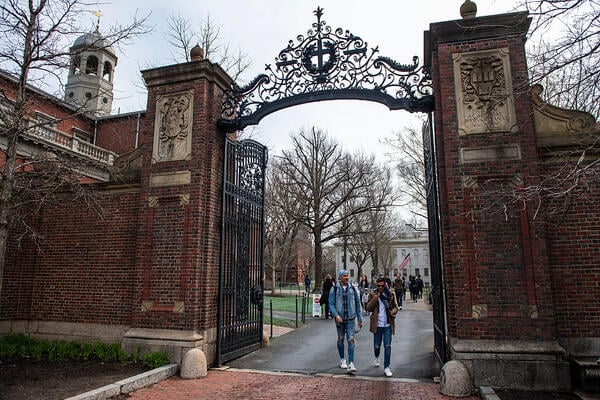
    The share of Black, Latino and international students in this year’s incoming Harvard University class declined from last year’s freshman class, The Washington Post reported.

    Black students made up 12 percent of the Class of 2029, down two percentage points from the previous year; Latino students comprise 11 percent of this year’s incoming class, compared to 16 percent last year. International student enrollment is also down, from 18 percent of last fall’s freshman class to 15 percent this year. Only eight international students deferred their admissions, despite reports that many international students were unable to arrive in the U.S. in time for fall classes due to visa issues.

    Harvard emphasized the incoming class’s geographic diversity, noting that students come from all 50 states and 92 countries. It also said 20 percent of the Class of 2029 are first-generation students.

    The data comes at a time when the Trump administration is attacking colleges for allegedly violating the Supreme Court’s ban on affirmative action by continuing to consider race in admissions—although admissions officials argue this isn’t happening. The administration specifically targeted Harvard earlier this year, ordering the institution to “cease all preferences based on race, color, national origin, or proxies thereof” in favor of “merit-based admissions.”

    Some colleges have stopped publicizing the racial makeup of their incoming classes this year, though it’s unclear if that’s related to the Trump administration’s scrutiny of admissions.

    Source link

  • College Degree Aspirations on the Decline

    College Degree Aspirations on the Decline

    As public skepticism about the value of a college degree persists, the number of students who expect to earn one is also on the decline. 

    Between 2002 and 2022, the percentage of students surveyed who said they expected to earn a bachelor’s degree or higher fell from 72 percent to 44 percent, according to a research brief the Pell Institute for the Study of Opportunity in Education published Tuesday. 

    During the same time frame, the percentage of first-generation students who aspired to earn a degree fell from 60 percent to 33 percent; among students with at least one college-educated parent, degree aspirations dropped from 83 percent to 53 percent. 

    “The decline in college aspirations among first-generation students is deeply concerning,” Kimberly Jones, president of the Council for Opportunity in Education, which oversees the Pell Institute, said in a news release. “These students have long faced systemic barriers to higher education, and this data underscores the urgent need for renewed investment in outreach, support, and affordability—including through programs like TRIO and the Pell Grant.”

    But in his quest to shrink the size of the federal government, President Donald Trump has proposed cutting funding for TRIO—a set of federally funded programs that support low-income, first-generation college students and students with disabilities as they navigate academic life. 

    Major cuts to the federal government also mean it will be harder to produce reports like the one the Pell Institute released this week. That’s because such studies rely on data from now-discontinued longitudinal surveys that were administered by the National Center for Education Statistics; the Trump administration fired all but a handful of NCES employees earlier this year. 

    “Without the continuation of these programs, it will be much harder to track the progress of high school, first-generation, and college students and to learn how to improve education outcomes,” Sean Simone, vice president of research at COE, said in the news release. 

    Source link

  • U.S. Continues Decline in THE World University Rankings

    U.S. Continues Decline in THE World University Rankings

    Photo illustration by Justin Morrison/Inside Higher Ed | bingdian, cbarnesphotography and DNY59/iStock/Getty Images

    Even before U.S. universities lost billions of dollars in federal research funding and international students struggled to obtain visas, America’s dominance in research impact and global reputation was waning. According to the latest rankings from Times Higher Education, the U.S. has continued to cede influence to universities in Asia.

    For several years, the rankings from Inside Higher Ed’s parent company have documented a steady decline in the U.S.’s leadership in global higher education. The 2026 World University Rankings reflect that ongoing trend: Just 102 universities from the United States cracked the top 500—the lowest figure on record, down from a high of 125 in 2018. (The rankings started in 2004.)

    The downward trend is less apparent in the overall top 10, where seven U.S. institutions appear. The Massachusetts Institute of Technology is the highest-ranking American institution, coming in at No. 2, just behind the top-ranked University of Oxford. According to THE, Princeton University recorded an institutional best score to tie for third.

    But institutions farther down the list have slipped. Twenty-five colleges logged their worst-ever scores while 62 dropped in the rankings, which uses 18 measures to judge institutions on five areas including teaching, research quality and international outlook.

    The 2026 rankings of more than 2,100 institutions are based on data collected from 2022 and 2023 and don’t reflect the Trump administration’s push to reshape American higher education. They don’t show what impact cuts to research funding and the crackdown on international students might have on U.S. institutions’ position on the global stage. Those changes could lead to a further decline for U.S. institutions in the rankings, though Ellie Bothwell, THE rankings editor, said what future rankings might show is hard to predict.

    “Any country that cuts research funding, that limits internationalization of higher education, would be in danger of declining in the ranking,” she said. “Those are key things that we measure. Those are important things that universities do. There’s always going to be a risk if you cut those. There’ll be a decline, but it’s all relative, so it does also depend what goes on elsewhere.”

    Looking at the overall 2026 rankings, Bothwell called the decline for the U.S. “striking,” adding that the drop reflects increased global competition. American institutions on average received lower scores on measures related to research, such as citation impact, as well as research strength and reputation.

    Meanwhile, Asian universities continue to climb the rankings. Five universities from China are now in the top 40, and 18 achieved their highest ranks ever, according to THE.

    THE’s chief global affairs officer, Phil Baty, said in a statement that the latest data suggests higher ed is moving toward a new world order with an Eastern center of gravity.

    “This year’s rankings highlight a dramatic and accelerating trend—the shift in the balance of power in research and higher education excellence from the long-established, dominant institutions of the West to rising stars of the East,” Baty said.

    He predicted that U.S. institutions and those in Western Europe would continue to lose ground to their East Asian counterparts in the rankings. “This clear trend is set to persist as research funding and international talent attraction continue to be stymied in the West,” he added.

    Source link

  • Trump Administration’s Higher Education Policies Drive Sharp Decline in College Graduate Support

    Trump Administration’s Higher Education Policies Drive Sharp Decline in College Graduate Support

    The Trump administration’s aggressive stance toward higher education institutions is contributing to a precipitous drop in support among college-educated voters, with new polling data revealing the president’s approval rating among graduates has fallen to historic lows.

    President Donald J. TrumpAccording to Gallup polling, Trump’s approval rating among college graduates plummeted from 34% in June to just 28% by August, with disapproval climbing to 70%. This represents a concerning trend for Republicans as they look toward the 2026 midterm elections, particularly given the growing influence of college-educated voters in key suburban swing districts.

    The administration’s education policies have taken aim at what Trump characterizes as liberal bias and antisemitism on college campuses. Harvard University has faced the most severe federal intervention, with the White House canceling approximately $100 million in federal contracts and freezing $3.2 billion in research funding. The administration has also moved to block international student enrollment and threatened to revoke the institution’s tax-exempt status while demanding sweeping reforms to admissions processes and curricular oversight.

    Similar measures have been enacted against Columbia University, the University of Pennsylvania, and Cornell University over issues ranging from pro-Palestinian campus activism to policies regarding transgender athletes in women’s sports. Harvard officials have characterized these interventions as an unprecedented assault on academic freedom and institutional autonomy.

    The crackdown has generated significant campus unrest and drawn comparisons to Cold War-era loyalty investigations, raising questions about the federal government’s appropriate role in higher education governance.

    The polling data reflects broader dissatisfaction with the administration’s educational approach. Only 26% of college graduates approve of Trump’s handling of education policy, while 71% disapprove. A separate AP-NORC survey from May found that 56% of Americans nationwide disapprove of the president’s higher education agenda.

    However, the policies resonate strongly within Trump’s Republican base, with roughly 80% of Republicans approving his higher education approach—a higher approval rate than his economic policies garner. About 60% of Republicans express significant concern about perceived liberal bias on college campuses, aligning with the administration’s framing of universities as ideologically compromised institutions.

    The Republican coalition shows some internal division on enforcement mechanisms, with approximately half supporting federal funding cuts for non-compliant institutions while a quarter oppose such measures and another quarter remain undecided.

    While political controversies dominate headlines, economic concerns remain the primary driver of public opinion on higher education. Sixty percent of Americans express deep concern about college costs, a bipartisan worry that transcends ideological divisions around campus politics.

    Current data from the College Board and Bankrate show average annual costs of $29,910 for in-state public university students, $49,080 for out-of-state students, and approximately $61,990 for private nonprofit institutions when including room, board, and additional expenses. Financial aid reduces these figures to average net prices of $20,800 at public universities and $36,150 at private colleges.

    These costs reflect decades of sustained increases. EducationData.org reports that public in-state college costs have risen from $2,489 in 1963 to $89,556 in 2022-23 (adjusted for inflation). Over the past decade alone, in-state public tuition has increased by nearly 58%, while out-of-state and private tuition have risen by 30% and 27% respectively.

    The economic pressures extend beyond college costs to post-graduation employment prospects. While overall unemployment among adults with bachelor’s degrees remains low at 2.3%, recent graduates face significant challenges. Bureau of Labor Statistics data shows that only 69.6% of bachelor’s degree recipients aged 20-29 were employed in late 2024, with unemployment among 23-27-year-olds reaching nearly 6%—substantially above the 4.2% national average.

    These employment difficulties contribute to broader economic anxiety, with 39% of college graduates describing national economic conditions as “poor” and 64% reporting job search struggles.

    The confluence of political and economic pressures creates a challenging landscape for Republicans heading into the 2026 midterms. College-educated voters represent a growing and increasingly decisive demographic, particularly in suburban areas that often determine control of swing seats.


    Source link

  • Troubled FAFSA Rollout Linked to Sharp Decline in First-Year College Enrollment

    Troubled FAFSA Rollout Linked to Sharp Decline in First-Year College Enrollment

    Title: Fewer Freshmen Enrolled in College This Year Following Troubling FAFSA Cycle

    Author: Katharine Meyer

    Source: Brookings Institution, National Student Clearinghouse Research Center

    The rollout of the new FAFSA form last year triggered cascading consequences across the higher education community. The launch was delayed, customer calls remained unanswered, and the number of filings decreased by about three percent. As the form’s issues compounded, experts predicted that the fumbled rollout would likely negatively impact the higher education sector across several metrics, particularly new student enrollment.

    The National Student Clearinghouse Research Center collected data at the beginning of the academic year to begin painting the updated enrollment picture and will follow up with final enrollment numbers for the 2024-25 academic year. The Brookings Institution analyzed the preliminary data and observed large declines in FAFSA filings, followed by a decrease in first-year enrollment.

    Across all institutions, first-year enrollment is down 5.8 percent among 18-year-olds and 8.6 percent among 19-20-year-olds. At public four-year institutions, first-year enrollment declined 8.5 percent, and it declined 6.5 percent at private four-year institutions. White freshman enrollment declined the most (11.4 percent), followed by multiracial (6.6 percent) and Black (6.1 percent) first-year student enrollment. Enrollment at HBCUs, however, increased 5.9 percent from last year and has cumulatively increased 12.6 percent since fall 2022.

    First-year enrollment at four-year schools declined across all levels of Pell Grant recipience. Institutions that experienced the largest declines in first-year enrollment, though, were public and private four-year institutions with the highest shares of students receiving Pell Grants (-10.4 and -10.7 percent, respectively). First-year enrollment at four-year colleges is also down across all levels of selectivity, with the largest decline occurring at very competitive public four-year institutions (-10.8 percent), followed by competitive public four-year institutions (-10.3 percent).

    Despite declines in first-year enrollment, total college enrollment increased three percent, due in part to a 4.7 percent increase in community college enrollment. Interestingly, this increase occurred at certain types of two-year institutions but not all of them. At colleges that predominantly award associate degrees and some bachelor’s degrees, freshman enrollment increased 2.2 percent, and at two-year institutions that enroll a higher proportion of low-income students, first-year enrollment increased 1.2 percent. At community colleges only awarding associate degrees, however, enrollment decreased by 1.1 percent.

    The author notes these insights come with caveats; many factors have contributed to enrollment decline over the last decade, notably falling public confidence in higher education and the ever-growing cost of attending college. The sharp decline in first-year enrollment, however, correlates with the troubled FAFSA launch. Continuing to collect data over time will provide more insight into the implications of recent disruptions to enrollment trends, particularly following the COVID-19 pandemic and the FAFSA rollout. The 2025-26 FAFSA form will be available this December, and its functionality will determine the gravity of the past year’s enrollment decline.

    To view the National Student Clearinghouse Research Center data dashboard, click here. To read the Brookings Institution analysis, click here.

    —Erica Swirsky


    If you have any questions or comments about this blog post, please contact us.

    Source link