Tag: Declines

  • As the supply of applicants declines, college admissions gets kinder and gentler

    As the supply of applicants declines, college admissions gets kinder and gentler

    by Jon Marcus, The Hechinger Report
    November 18, 2025

    PLEASANTVILLE, N.Y. — As she approached her senior year in high school, the thought of moving on to college was “scary and intimidating” to Milianys Santiago — especially since she would be the first in her family to earn a degree.

    Once she began working on her applications this fall, however, she was surprised. “It hasn’t been as stressful as I thought it would be,” she said.

    It’s not that Santiago’s anxiety was misplaced: The college admissions process has been so notoriously anxiety inducing that students and their parents plan for it for years and — if social media is any indication — seem to consider an acceptance as among the greatest moments of their lives.

    It’s that getting into college is in fact becoming easier, with admissions offices trying to lure more applicants from a declining pool of 18-year-olds. They’re creating one-click applications, waiving application fees, offering admission to high school seniors who haven’t even applied and recruiting students after the traditional May 1 cutoff.

    The most dramatic change is in the odds of being admitted. Elite universities such as Harvard and CalTech take as few as 1 applicant in 33, but they are the exception. Colleges overall now accept about 6 in 10 students who apply, federal data show. That’s up from about 5 out of 10 a decade ago, the American Enterprise Institute calculates.

    “The reality is, the overwhelming majority of universities are struggling to put butts in seats. And they need to do everything that they can to make it easier for students and their families,” said Kevin Krebs, founder of the college admission consulting firm HelloCollege.

    This has never been as true as now, when the number of high school graduates entering higher education is about to begin a projected 15-year drop, starting with the class now being recruited. That’s on top of a 13 percent decline over the last 15 years.

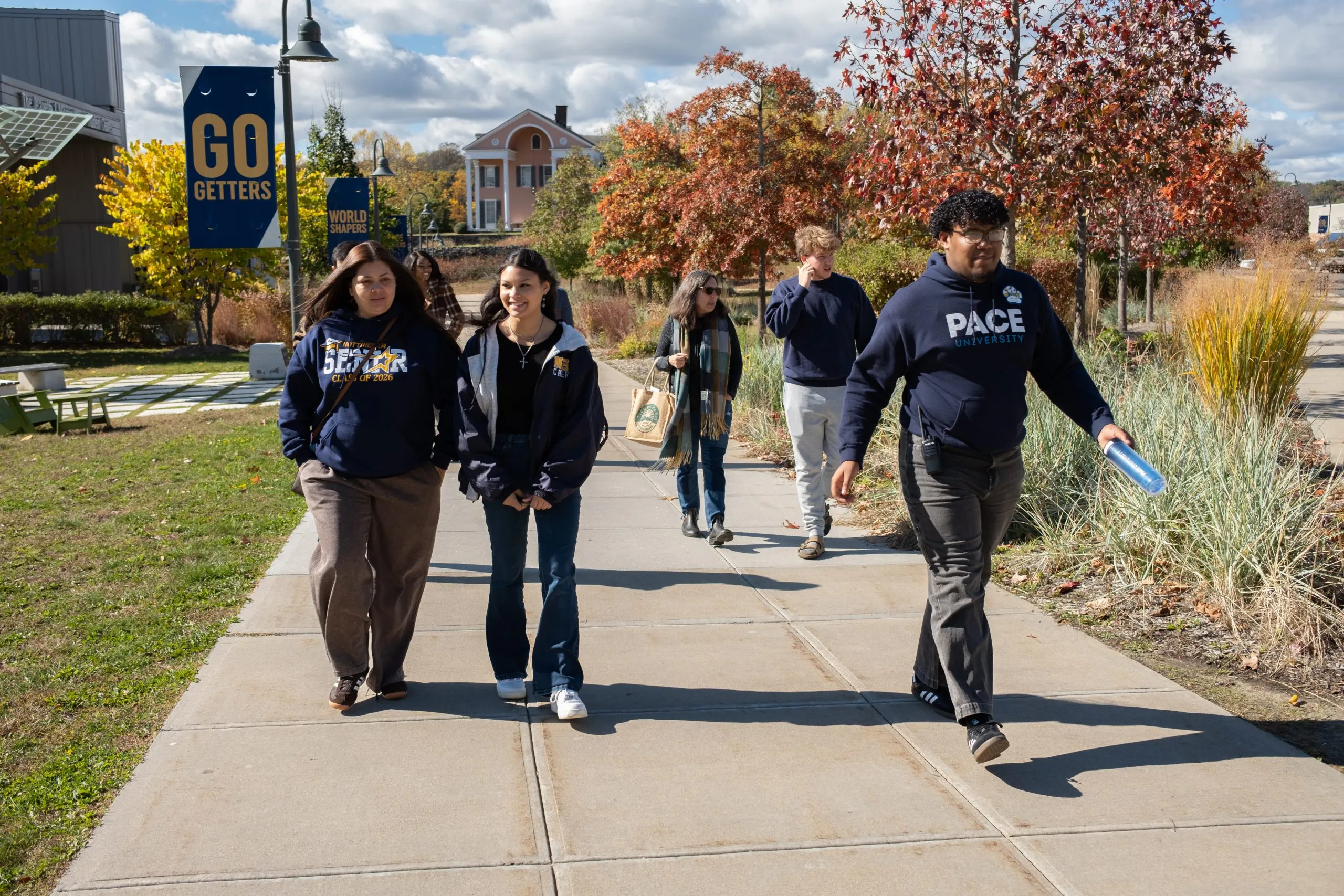
    Santiago, who lives in Hamilton, New Jersey, was waiting for a tour to start at Pace University as a video on repeat showed exuberant students and drone footage of the leafy, 200-acre grounds about 30 miles north of New York City, where the university also has a campus. 

    Related: Interested in more news about colleges and universities? Subscribe to our free biweekly higher education newsletter.

    Pace was one of 130 New York state colleges and universities that during October waived their application fees of from $50 to $90 per student, per school. That’s just one of the ways it’s trying to make admissions easier. 

    “That was a little eye-opening, when we received that letter,” Sueane Goodreau of Ithaca, New York, said about the free application offer as she waited for a tour of Pace’s campus with her high school senior son, Will. Compared to when her older daughter applied to college just three years ago, said Goodreau, “it does feel a little more receptive.”

    There was an even bigger incentive offered by Pace: Prospects such as Santiago and Goodreau who visit are promised an additional $1,000 a year of financial aid if they enroll. Applicants who come to visit a campus are twice as likely to enroll as those who don’t, research has found.

    The students’ names awaited them on a welcome sign at the reception desk in the office where tours depart. “You Belong Here,” pronounced another placard, on an easel in the waiting area. There was a QR code they could scan if they wanted to chat one-on-one with an admissions officer — who, in earlier times at many schools, were often unapproachable.

    “I feel like I’m already a student here,” Santiago quipped.

    The reason the university encourages that feeling? It’s simple, said Andre Cordon, dean of admission, in the distinctive pink Choate House at the center of the campus: “We want more students to apply. We don’t want to put up hurdles.”

    So many hurdles previously stood along the route to college admission, it’s become a part of popular culture. “Everyone thinks we’re sadists — that we like saying no,” noted Tina Fey in her role as a Princeton admissions officer in the 2013 movie “Admission.” 

    Related: The number of 18-year-olds is about to drop sharply, packing a wallop for colleges — and the economy 

    Perceptions such as those are hard to change. Not only do young Americans aged 18 to 29 believe it isn’t any easier to get into college than it was for people in their parents’ generation, 45 percent of them think it’s harder, a Pew Research Center survey found. More than three-quarters say the admissions process is complex, and more than half that it’s more stressful than anything else they’ve done during their time in elementary, middle or high school, according to a separate survey, by the National Association for College Admission Counseling, or NACAC.

    “People have that notion that all campuses are in the same category as MIT, Harvard, Stanford” with their impossibly low acceptance rates, said Cordon. (Pace took 76 percent of its applicants last year, university statistics show.) And “teenagers are still teenagers. There’s anxiety no matter what. They overthink things, and they overthink the admissions process.”

    There’s also still a lot of genuine emotion in the process, he said. For many parents, “It’s a pride thing. It’s a status thing. It’s showing off. Or from the student’s side, it’s, ‘I want to make my parents proud.’ ”

    In the new world of university admissions, however, that no longer necessarily even requires filling out an application.

    “Congratulations! You’ve been admitted,” a new California State University website tells prospective students, before they enter a single piece of information about themselves. 

    Cal State is the latest system to deploy so-called direct admission: They will automatically accept any student who earns at least a C in a list of required high school courses, starting in January for students in some and expanding the following year to every high school in the state.

    Related: To fill seats, more colleges offer credit for life experience

    Public universities or systems in Alabama, Arizona, Connecticut, Georgia, Hawai’i, Idaho, Illinois, Indiana, Minnesota, New York, North Carolina, Tennessee, Texas, Utah, Washington and Wisconsin also now offer various forms of direct admission — some beginning this fall — accepting students automatically if they meet certain high school benchmarks.

    Several systems now allow students to apply to several public universities and colleges with a single application, avoiding the time-consuming process of completing different forms, writing essays, collecting letters of recommendation or paying fees. 

    Through Illinois’s new One Click College Admit, for instance, high school students can have their transcripts provided instantly to 10 of the state’s 12 four-year public universities and all of its community colleges and get back a guaranteed offer of admission to at least one, depending on their grades.

    “Especially first-generation students, they don’t have that knowledge of how to apply to college,” said José Garcia, spokesman for the Illinois Board of Higher Education. “That’s among the people we’re trying to reach — those who might be intimidated by the name of an institution or not feel confident in their academic abilities or their grades.”

    Several of these programs have been advocated for public institutions by governors and legislatures worried about a continued supply of college-educated workers in their states as the proportion of high school graduates going on to get degrees declines.

    “Basically we need to have a bigger pipeline,” said David Troutman, deputy commissioner for academic affairs at the Texas Higher Education Coordinating Board. “We have to do everything we can to open that door to all students, not just a few. So we have to make sure we’re making the process as painless as we can.”

    Now private colleges are jumping aboard the direct-admission bandwagon. More than 210 have arranged through the Common App — an online application used by about 1,100 institutions nationwide — to extend offers of direct admission for the coming academic year to students who filed the Common App but have not applied. That’s almost twice as many as signed on last year, when Common App says 119 institutions in 35 states made more than 733,000 unsolicited offers. 

    It’s still early to definitively know the effect of this on whether students ultimately enroll. In Idaho, which in 2015 became the first state to try direct admission, enrollment of first-time undergraduates at participating public universities rose 11 percent

    Direct admission by itself does not resolve the other reasons students forgo college, however, said James Murphy, director of postsecondary policy at the nonprofit Education Reform Now, which advocates for more access to and diversity in higher education.

    “It’s the furthest thing from a panacea,” Murphy said. “How do we know? Because colleges embraced it so quickly. Any reform taken up so quickly by colleges is likely to have more benefit to colleges than to students.”

    While direct admission might help colleges get closer to enrollment targets, for example, he said, “it works best when it’s paired with financial aid and other resources that actually make it easier” to pay.

    Waiving application fees has driven increases in applications, some research has shown. During the month that fees were waived last fall in New York state, a quarter of a million students applied to the public State University of New York, up 41 percent from the same period the year before, according to the state’s Higher Education Services Corporation, or HESC. 

    Related: After years of quietly falling, college tuition is on the rise again

    While college applications may not seem expensive, at around $50 each, many students “aren’t just paying one application fee. They can be paying multiple fees,” which add up, said Angela Liotta, HESC’s director of communication. 

    Universities and colleges are trying other ways to ease the process. More than 2,000 continue to make submitting the results of SAT and ACT scores optional, for instance, something many started doing during the pandemic. More have extended their deadlines or recruited after the traditional May 1 cutoff, when incoming classes were previously considered locked in. 

    Students are noticing. One way is through the massive amount of marketing materials they’re getting, begging them to apply. The median high school student gets more than 100 letters and emails from colleges and universities each month, a survey by the education technology company CollegeVine found — an old-style approach that CollegeVine found turns out for this generation to be generally ineffective.

    Will Goodreau, who was visiting Pace, for instance, got “so many emails and texts,” he said, laughing. “I must have given somebody my number for something.”

    All of these things appear to be slowly changing students’ perception of admission. In that NACAC survey, fewer of those who had already gone through the process — while they still found it challenging — considered it as challenging as students who hadn’t started yet.

    There could be more changes ahead. A lawsuit was filed in August against 32 colleges and universities that practice so-called early decision, under which students who apply before the usual admission period are more likely to get in, but are obligated to enroll. The practice, which the lawsuit seeks to end, helps colleges fill their classes, but prevents students from shopping around for better offers of financial aid.

    Whatever happens, students and their parents should know that “they’re actually the ones in control of this process,” said Krebs, of HelloCollege. “The reality is that at a lot of schools, if you have the grades, you’re going to get in.”

    Contact writer Jon Marcus at 212-678-7556, [email protected] or jpm.82 on Signal.

    This story about applying to college was produced by The Hechinger Report, a nonprofit, independent news organization focused on inequality and innovation in education. Sign up for our higher education newsletter. Listen to our higher education podcast.

    This <a target=”_blank” href=”https://hechingerreport.org/colleges-ease-the-dreaded-admissions-process-as-the-supply-of-applicants-declines/”>article</a> first appeared on <a target=”_blank” href=”https://hechingerreport.org”>The Hechinger Report</a> and is republished here under a <a target=”_blank” href=”https://creativecommons.org/licenses/by-nc-nd/4.0/”>Creative Commons Attribution-NonCommercial-NoDerivatives 4.0 International License</a>.<img src=”https://i0.wp.com/hechingerreport.org/wp-content/uploads/2018/06/cropped-favicon.jpg?fit=150%2C150&amp;ssl=1″ style=”width:1em;height:1em;margin-left:10px;”>

    <img id=”republication-tracker-tool-source” src=”https://hechingerreport.org/?republication-pixel=true&post=113378&amp;ga4=G-03KPHXDF3H” style=”width:1px;height:1px;”><script> PARSELY = { autotrack: false, onload: function() { PARSELY.beacon.trackPageView({ url: “https://hechingerreport.org/colleges-ease-the-dreaded-admissions-process-as-the-supply-of-applicants-declines/”, urlref: window.location.href }); } } </script> <script id=”parsely-cfg” src=”//cdn.parsely.com/keys/hechingerreport.org/p.js”></script>


    Source link

  • NAEP scores for class of 2024 show major declines, with fewer students college ready

    NAEP scores for class of 2024 show major declines, with fewer students college ready

    This story was originally published by Chalkbeat. Sign up for their newsletters at ckbe.at/newsletters.

    Students from the class of 2024 had historically low scores on a major national test administered just months before they graduated.

    Results from the National Assessment of Educational Progress, or NAEP, released September 9, show scores for 12th graders declined in math and reading for all but the highest performing students, as well as widening gaps between high and low performers in math. More than half of these students reported being accepted into a four-year college, but the test results indicate that many of them are not academically prepared for college, officials said.

    “This means these students are taking their next steps in life with fewer skills and less knowledge in core academics than their predecessors a decade ago, and this is happening at a time when rapid advancements in technology and society demand more of future workers and citizens, not less,” said Lesley Muldoon, executive director of the National Assessment Governing Board. “We have seen progress before on NAEP, including greater percentages of students meeting the NAEP proficient level. We cannot lose sight of what is possible when we use valuable data like NAEP to drive change and improve learning in U.S. schools.”

    These results reflect similar trends seen in fourth and eighth grade NAEP results released in January, as well as eighth grade science results also released Tuesday.

    In a statement, Education Secretary Linda McMahon said the results show that federal involvement has not improved education, and that states should take more control.

    “If America is going to remain globally competitive, students must be able to read proficiently, think critically, and graduate equipped to solve complex problems,” she said. “We owe it to them to do better.”

    The students who took this test were in eighth grade in March of 2020 and experienced a highly disrupted freshman year of high school because of the pandemic. Those who went to college would now be entering their sophomore year.

    Roughly 19,300 students took the math test and 24,300 students took the reading test between January and March of 2024.

    The math test measures students’ knowledge in four areas: number properties and operations; measurement and geometry; data analysis, statistics, and probability; and algebra. The average score was the lowest it has been since 2005, and 45% of students scored below the NAEP Basic level, even as fewer students scored at NAEP Proficient or above.

    NAEP Proficient typically represents a higher bar than grade-level proficiency as measured on state- and district-level standardized tests. A student scoring in the proficient range might be able to pick the correct algebraic formula for a particular scenario or solve a two-dimensional geometric problem. A student scoring at the basic level likely would be able to determine probability from a simple table or find the population of an area when given the population density.

    Only students in the 90th percentile — the highest achieving students — didn’t see a decline, and the gap between high- and low-performing students in math was higher than on all previous assessments.

    This gap between high and low performers appeared before the pandemic, but has widened in most grade levels and subject areas since. The causes are not entirely clear but might reflect changes in how schools approach teaching as well as challenges outside the classroom.

    Testing officials estimate that 33% of students from the class of 2024 were ready for college-level math, down from 37% in 2019, even as more students said they intended to go to college.

    In reading, students similarly posted lower average scores than on any previous assessment, with only the highest performing students not seeing a decline.

    The reading test measures students’ comprehension of both literary and informational texts and requires students to interpret texts and demonstrate critical thinking skills, as well as understand the plain meaning of the words.

    A student scoring at the basic level likely would understand the purpose of a persuasive essay, for example, or the reaction of a potential audience, while a students scoring at the proficient level would be able to describe why the author made certain rhetorical choices.

    Roughly 32% of students scored below NAEP Basic, 12 percentage points higher than students in 1992, while fewer students scored above NAEP Proficient. An estimated 35% of students were ready for college-level work, down from 37% in 2019.

    In a survey attached to the test, students in 2024 were more likely to report having missed three or more days of school in the previous month than their counterparts in 2019. Students who miss more school typically score lower on NAEP and other tests. Higher performing students were more likely to say they missed no days of school in the previous month.

    Students in 2024 were less likely to report taking pre-calculus, though the rates of students taking both calculus and algebra II were similar in 2019 and 2024. Students reported less confidence in their math abilities than their 2019 counterparts, though students in 2024 were actually less likely to say they didn’t enjoy math.

    Students also reported lower confidence in their reading abilities. At the same time, higher percentages of students than in 2024 reported that their teachers asked them to do more sophisticated tasks, such as identifying evidence in a piece of persuasive writing, and fewer students reported a low interest in reading.

    Chalkbeat is a nonprofit news site covering educational change in public schools.

    For more news on national assessments, visit eSN’s Innovative Teaching hub.

    Latest posts by eSchool Media Contributors (see all)

    Source link

  • Federal judge declines to restore $1B in grants cut by NSF

    Federal judge declines to restore $1B in grants cut by NSF

    This audio is auto-generated. Please let us know if you have feedback.

    Dive Brief:

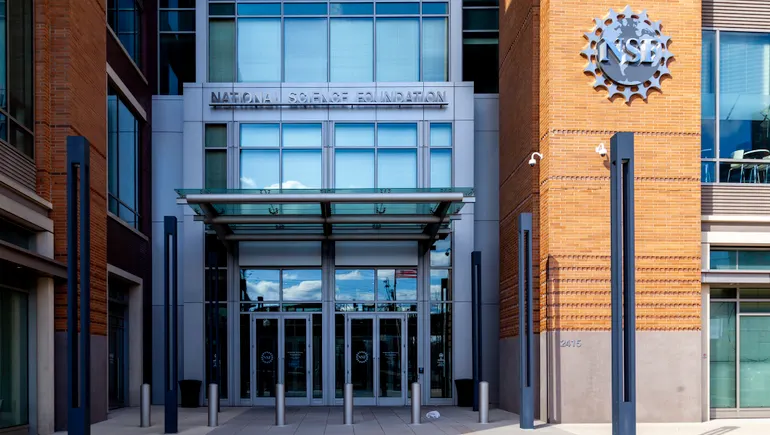
    • A federal judge on Wednesday declined to restore more than $1 billion in research grants cut by the National Science Foundation over research related to diversity, equity and inclusion while a lawsuit against the agency goes forward.
    • In the ruling, U.S. District Judge Jia Cobb concluded that the court didn’t have the jurisdiction to temporarily restore the grants and that plaintiffs failed to show they would experience “irreparable harm” from the agency’s new anti-DEI policies while the case proceeds.
    • Cobb cited in part a recent U.S. Supreme Court ruling that universities and researchers facing mass federal agency cuts must pursue their monetary claims in a separate federal court that handles economic and contractual disputes with the U.S. government.

    Dive Insight:

    In April, NSF issued a new statement of priorities asserting that grant awards “should not preference some groups at the expense of others, or directly/indirectly exclude individuals or groups.”

    “Research projects with more narrow impact limited to subgroups of people based on protected class or characteristics do not effectuate NSF priorities,” the agency added. NSF also noted grants related to environmental justice and the study of disinformation would also fall short of the agency’s objectives under the Trump administration. 

    Mass cancellations of previously awarded grants followed. In June, a group of unions and higher education associations — including the American Association of Colleges and Universities and the American Association of University Professors — sued NSF. 

    They counted 1,600 canceled grants amounting to over $1 billion funding, including many that aimed at broadening participation of women, underrepresented groups and those with disabilities in scientific and technical fields. Commonly appearing typos and boilerplate language in many of the termination notices to researchers showed the mass, automatic nature of the cancellations. 

    NSF afforded recipients of terminated grants no advance notice, and indeed no process whatsoever, before the terminations,” the complaint stated.

    Plaintiffs argued that NSF’s anti-DEI directive and cancellations violated the law as well as the constitutional principles of separation of powers and due process. Among other things, plaintiffs said the grants carried out NSF’s “statutory directive to support an increase in the participation of underrepresented populations in STEM fields, including women, minorities, and people with disabilities.”

    In her ruling Wednesday, Cobb, a Biden appointee, wrote that her court likely had jurisdiction to decide if NSF’s anti-DEI policies could be applied to future grants. But retroactively restoring the grants that had been canceled, as the plaintiffs had requested, would likely need to be handled by the U.S. Court of Federal Claims.

    Among other precedents, she cited last month’s Supreme Court ruling in a case against the National Institutes of Health over similar DEI-related grant cancellations at that agency. While the top court declined to block a district court’s order that struck down the NIH’s anti-DEI guidance, it said the plaintiffs must seek relief for the canceled grants in federal claims court.

    Critics of the decision — including justices in the liberal minority — said that the ruling would add new complications and delays while research projects and laboratories suffer. 

    Cobb further concluded that plaintiffs’ argument that their constitutional rights were violated was unlikely to succeed, finding that their claims were instead statutory in nature. There again Cobb cited a recent case against the Trump administration, this one brought by the Global Health Council over mass cuts at the U.S. Agency for International Development. 

    Democracy Forward, a nonprofit legal organization representing plaintiffs in the lawsuit, called Cobb’s decision not to block NSF’s terminations disappointing and “a loss for American innovation and excellence.”

    This case is not over and we are eager to defend the important role the NSF plays in the daily lives of Americans,” the group said in a statement.

    Source link

  • What do enrollment declines mean for teacher shortages?

    What do enrollment declines mean for teacher shortages?

    Ongoing student enrollment declines and the end of historic federal pandemic aid are causing school leaders to take a hard look at their staffing policies as district budgets tighten. 

    Using pandemic-era Elementary and Secondary School Emergency Relief dollars, schools nationwide hired more teachers despite overall student enrollment dropping, said Marguerite Roza, a research professor and director of Georgetown University’s Edunomics Lab. 

    Now, however, districts are considering more school closures and consolidations as a result of enrollment declines and a surge of school choice options that parents are using to send their kids to private or religious schools. And as the national birthrate drops, these enrollment trends could struggle to rebound. 

    Are teacher shortages in the rearview mirror?

    Because some districts chose to hire despite declining enrollment, they are laying off staff or implementing hiring freezes and leaving open positions, Roza said.

    Consequently, the conditions used to generally describe the teacher shortage have “reversed,” Roza said. “It doesn’t mean that every spot has been filled. It’s still hard to recruit and fill positions in rural districts. High-poverty schools have always had a hard time. Math positions and special ed have always been more scarce.”

    The term “teacher shortage” is often used in a simplistic and rhetorical way that obscures the nuanced staffing challenges districts face, especially for certain STEM subjects and special education, said Thomas Dee, a professor at Stanford University’s Graduate School of Education. 

    In an analysis of student-teacher ratios nationwide between 2010 and 2022, Dee said that 2022 saw the lowest number of students per one teacher. The ratio fell from 16.4 to 15.4 in that 12-year period, he found.

    “There are many more teachers per students than ever before in U.S. history,” Dee said.

    A separate K-12 Dive analysis of student-teacher ratios in November 2024 also showed that 43 out of 50 states and Washington, D.C., had on average fewer students per teacher post-COVID-19 than before the pandemic.

    Navigating staffing amid enrollment challenges

    Arizona’s Deer Valley Unified School District is one district out of many nationwide facing enrollment-related budget hurdles as a result of declining birthrates and growing alternative schooling options for parents, said Curtis Finch, the district’s superintendent. Arizona was the first state to approve a universal school voucher program in 2022.

    Deer Valley USD’s enrollment shrank by 1.5% between the 2021-22 and 2023-24 school years, dropping from 33,303 students to 32,803, according to state data. 

    “We’re at the tip of the educational experiment,” Finch said regarding the impact of Arizona’s school choice policy on public schools. 

    Last school year, Finch said, the district had to cut about 50 positions — most of which weren’t backfilled because of local and state funding budget constraints.

    Still, he said, Deer Valley USD struggles to fill science, math and special education teaching roles. 

    What has helped with staffing issues, however, is the district’s two-year teacher prep program that trains anyone in the community with a bachelor’s degree to become a certified teacher through classes, training and working with a mentor. The grow-your-own program doesn’t require its graduates to teach in the district, but 95% of those who have completed the program do end up teaching at Deer Valley USD, Finch said. 

    About 160 teachers have gone through the program and filled in the district’s instructional gaps within the past three years, Finch said. 

    Other strategies that education finance researchers suggest for districts to consider in their hiring practices amid budget and enrollment challenges include scrutinizing their grow-your-own programs for a good return on investment, paying effective teachers more, firing ineffective uncertified teachers, and streamlining teacher certifications across state lines.

    If there were broad, generic teacher shortages, then the big solution for schools would be to make the profession more attractive to draw in more teachers. “But that’s not the issue,” Dee said.

    “The issue is hard-to-staff schools and hard-to-staff subjects,” which begs the ultimate question for Dee: “What can we do to get more high-quality teachers into the schools serving our most vulnerable students?”

    Source link

  • Cornell University plans to restructure later this year amid federal funding declines

    Cornell University plans to restructure later this year amid federal funding declines

    This audio is auto-generated. Please let us know if you have feedback.

    Dive Brief:

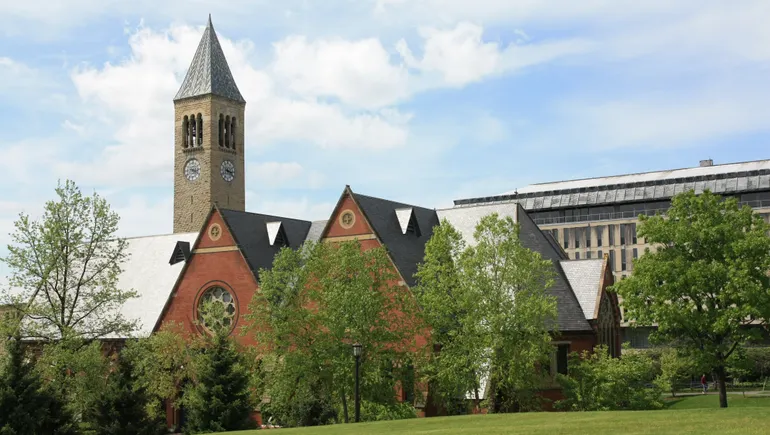
    • Cornell University leaders expect to begin restructuring the institution’s operations and workforce in phases beginning late this year and continuing into 2026.
    • In a community update Friday, senior leaders echoed a June message warning of job cuts. “Reducing costs will mean reconsidering how we handle all of our processes, from procurement to technology, and rethinking, in fundamental ways, how we allocate our resources,” they said Friday. “It will also, inevitably, mean reducing our workforce.”
    • The officials cited inflation, historical staff growth, contractions in federal funding, “significant legal and regulatory expenses,” and “an uncertain and unprecedented federal landscape.”

    Dive Insight:

    In June, the same group of Cornell leaders — President Michael Kotlikoff, Provost Kavita Bala, Chief Financial Officer Chris Cowen and Provost for Medical Affairs Robert Harrington told the university community that disruption in the higher education world would “require financial austerity.”

    “The spring semester was unlike anything ever seen in higher education, with hundreds of millions of dollars in federal research contracts at Cornell terminated or frozen, and serious threats to future research funding, federal financial aid, medical reimbursement, and research cost recovery, along with an anticipated tax on our endowment income, and rapidly escalating legal expenses,” they wrote at the time. 

    The June message also brought news of a hiring freeze. On Friday, the leaders said hiring restrictions would continue “indefinitely” with “rare exceptions” determined by campus committees. 

    Cornell was among the 60 institutions that the Trump administration warned in March could face potential sanctions over allegations related to antisemitism. 

    In April, the administration reportedly froze $1 billion in federal research funding for the university. Administrators said then that they hadn’t received official word from the government about the frozen funds but were hit with dozens of stop-work orders on grant projects. This summer, Bloomberg reported that Cornell was nearing a deal with the Trump administration to restore grant funding that could involve a $100 million payment. 

    Even before the Trump administration’s actions, Cornell faced budget pressure from rising expenses. For fiscal 2024, the Ivy League institution posted a $175.5 million operating deficit, compared to $23 million surplus the year before. 

    Cornell’s senior leaders said that to save costs, the university is looking to consolidate operations where it can, seeking “new efficiencies and reducing duplication of work.” And while part of the university’s tradition, its decentralized structure is also a source of significant administrative inefficiencies, they added.

    “Part of our task is identifying opportunities to scale and regularize our academic support systems across units with unique characteristics and needs without compromising our institutional excellence,” they said. 

    That means centralizing operations that are duplicated across colleges and units, which will ultimately lead to a smaller workforce, leaders said. They didn’t note whether those losses would be primarily through layoffs, buyouts, attrition or other means. 

    Cornell didn’t immediately respond to a request for comment Monday. 

    The leaders said they expect to complete an analysis and planning process around the university’s operations this fall. 

    “These changes will be difficult for our community but are vital for our future,” they added, describing the steps they are taking as “necessary to ensure that Cornell pursues its academic mission sustainably for generations to come.”

    Source link

  • Federal judge declines to block Alabama anti-DEI law

    Federal judge declines to block Alabama anti-DEI law

    This audio is auto-generated. Please let us know if you have feedback.

    Dive Brief: 

    • A federal judge declined to temporarily block the enforcement of a state law that bans public colleges from funding diversity, equity and inclusion programs and from compelling students to affirm certain “divisive concepts.”
    • Earlier this year, a group of students and faculty members sued the state’s governor and the University of Alabama’s trustees over the new law, arguing that it violates their free speech rights by placing viewpoint-based restrictions on what can be taught in the classroom. They also contended that the law undermines due process by being so ambiguous that instructors and students don’t know what is prohibited. 
    • U.S. District Judge R. David Proctor — a George W. Bush appointee — pushed back on those arguments in his 146-page ruling Wednesday. Proctor denied their request for a preliminary injunction, writing that public colleges could reasonably control curricular content and rejecting assertions that the law’s language is impermissibly vague. 

    Dive Insight: 

    Last year, Alabama Gov. Kay Ivey signed a law known as SB 129, which bans public colleges and K-12 schools from having DEI initiatives. It defined those efforts as programs, training or other events where attendance is based on “race, sex, gender identity, ethnicity, national origin, or sexual orientation.” 

    PEN America noted last year that while this language doesn’t outright ban all DEI initiatives, the attendance restrictions could bar public colleges from activities like creating programming specifically for international students or recognizing a Black student union. 

    The law also barred public colleges from requiring students to affirm or adhere to a list of so-called divisive concepts. 

    Under the law, one of the concepts is that individuals “are inherently responsible for actions committed in the past by other members of the same race, color, religion, sex, ethnicity, or national origin.” Another is that people are “inherently racist, sexist, or oppressive, whether consciously or subconsciously” based on their personal characteristics. 

    The law also contains carve-outs. It says that the language does not bar public colleges from teaching or discussing divisive concepts “in an objective manner and without endorsement as part of a larger course of academic instruction.”

    According to court documents, faculty members who sued over the measure said that while they do not require students to affirm or adhere to these concepts, they worry that their instruction on race and gender could be viewed as running afoul of the law — even with the carve-outs for teaching. 

    “I do not know what it means to discuss a divisive concept ‘in an objective manner’ and ‘without endorsement,’ plaintiff Cassandra Simon, a social work professor at University of Alabama, said in court documents. “There is robust empirical evidence of implicit bias, white privilege, and the absence of a colorblind meritocracy. I am unable to determine whether continuing to present these scholarly findings, and assigning readings on these subjects, would violate SB 129.”

    One of Simon’s class assignments — that students select a social issue of their choice and advocate for it — was abruptly canceled due to the law, according to court documents. 

    Her students chose to hold a sit-in to protest SB 129 for their project. The day of the sit-in, however, the social work dean told Simon to cancel the assignment in part over concerns that it would compel students to agree with one of the banned divisive concepts. 

    Another plaintiff raised concerns over teaching about topics such as structural racism, employment discrimination and health disparities by race. And another voiced concerns that the law potentially limits his ability to teach about eugenics. 

    However, Proctor wrote in his ruling that the law doesn’t prohibit the teaching of divisive concepts and pointed to the carve-outs provided. 

    The judge also cited an appeals court case that found a public college could “reasonably control the content of its curriculum, particularly that content imparted during class time.”

    “There is no legal basis for concluding that the First Amendment protects a university professor’s academic freedom in the way the Professors suggest,” Proctor wrote. 

    Referring to the canceled sit-in, Proctor wrote that it was “a reasonable exercise of control over course curriculum to ensure that students would not feel coerced into advocating for a belief with which they disagreed.”

    Proctor also dismissed Ivey as a defendant in the case, ruling that plaintiffs’ alleged injuries aren’t traceable to her. 

    The plaintiffs in the case slammed the decision on Thursday. 

    “SB129 created a culture of fear that has severely hindered the ability of professors to provide comprehensive instruction in our areas of expertise,” Dana Patton, a University of Alabama professor and plaintiff in the case, said in a statement. “The law infringes on our academic freedom and our duty to students to provide a truthful and comprehensive education.”

    Alabama state Sen. Will Barfoot, the sponsor of the legislation, didn’t immediately respond to a request for comment.

    Source link

  • Michigan Governor Declines to Remove Two MSU Trustees

    Michigan Governor Declines to Remove Two MSU Trustees

    After more than a year of uncertainty, Michigan governor Gretchen Whitmer has decided not to remove two Michigan State University trustees as requested by the board, The Lansing State Journal reported.

    Michigan State’s Board of Trustees asked the Democratic governor to remove Rema Vassar and Dennis Denno last year after a university investigation found both trustees violated MSU’s code of conduct. The investigation determined that the pair had “created a fear of retaliation amongst administrators and other MSU personnel,” according to the report, which said they encouraged students to call a frequently critical faculty member a racist. Vassar also accepted gifts from donors, including flights and tickets to athletic events, the report said.

    (Vassar and Denno are currently facing a lawsuit from the professor they allegedly targeted.)

    The report also found the duo intended to “embarrass and terrify” former interim president Teresa Woodruff. The trustees have refuted most allegations and taken issue with the findings.

    Both trustees were stripped of their duties by the board and Vassar stepped down as chair.

    While Whitmer called Vassar and Denno’s actions “shameful,” she decided not to remove her fellow Democrats. (Trustees at Michigan State are elected, unlike at most institutions nationally.)

    “The denial of the request by no means indicates a condoning of the conduct alleged in the referral,” Whitmer’s deputy legal counsel Amy Lishinski wrote in a letter to the MSU board obtained by the newspaper. “Rather, it only means that other considerations related to the Governor’s removal authority weigh against removal under these circumstances at this time.”

    Source link