Tag: declining

  • What America’s Declining Happiness Means — and How Higher Education Fits In

    What America’s Declining Happiness Means — and How Higher Education Fits In

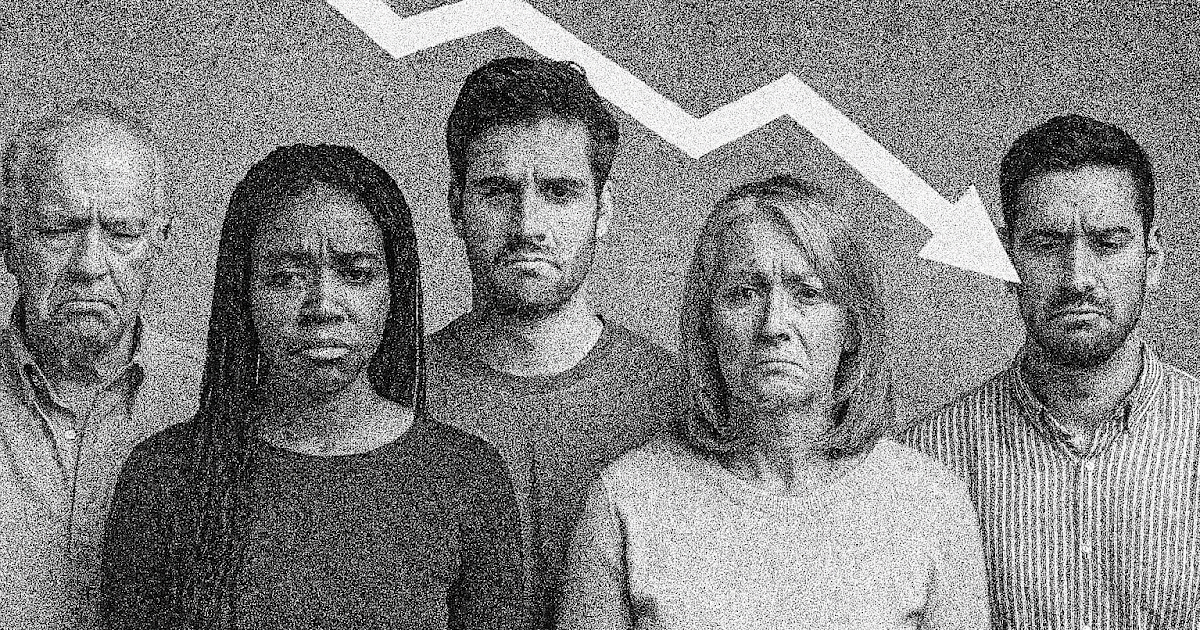
    A recent report has sounded an alarm: happiness in the United States is falling more sharply than in almost every other developed nation. According to coverage by CBS News, Americans increasingly report loneliness, deep political division, and diminished life satisfaction. While this trend is worrying in itself, a closer look shows that it’s not just a problem of individual melancholy — it reflects a broader weakening of social structures, civic trust, and community cohesion. Historically, these phenomena have been central to the nation’s sense of coherence; now, they may be eroding.

    Historical Roots and the Social Capital Framework

    To understand the scale of what’s happening, it helps to go back. Over two decades ago, Robert D. Putnam’s seminal Bowling Alone documented a dramatic decline in American “social capital” — the network of associations, civic participation, and interpersonal trust that undergirds a functioning democracy. Putnam traced declines in everything from civic organizations to informal social gatherings, arguing that this fraying of social infrastructure had profound consequences. 

    Social capital theory provides a useful lens here: trust between citizens, engagement in local institutions, and time spent in shared civic life are not just feel‑good extras, but foundations for collective resilience.

    Later empirical work has revisited these concerns. Weiss, Paxton, Velasco, and Ressler (2018) developed a newer measure of social capital and found evidence that the decline persists. Inequality also appears to play a role: as income gaps widen, interpersonal trust tends to decrease. In research published in Finance & Development, economists found that rising inequality explained a substantial portion of the decline in social trust in the United States.

    More recently, political scientists have documented how perceived political polarization erodes social trust. In a nationally representative panel study, Amber Hye‑Yon Lee showed that when people believe their country is deeply divided, their trust in fellow citizens drops — even beyond partisan loyalties. Pew Research Center data further illustrate this generational shift: younger cohorts, raised in a more polarized and atomized society, report lower social trust than earlier generations. 

    At the same time, the digital revolution hasn’t necessarily filled the gap. Sabatini and Sarracino (2014) found that while people are more active on social media, this does not compensate for lost in-person connection — and may even undermine trust. During the COVID-19 pandemic, researchers observed increased remote communication, but also stronger political echo chambers: in a study of 41,000 Americans’ social networks, political homophily (interacting mostly with those who share one’s partisan identity) increased. 

    Well-Being, Health, and Mortality

    The decline in social trust and cohesion is not just a sociological problem — it is deeply linked to health. A growing body of epidemiological research ties subjective well‑being to longevity and mortality. For instance, a widely cited study by Lawrence, Rogers, and Wadsworth found that lower happiness is associated with higher all‑cause mortality risk in U.S. adults. In another longitudinal study, researchers followed more than 30,000 adults over 14 years and found that individuals with low life satisfaction lived, on average, 8–10 years less than those with high satisfaction — even after controlling for sociodemographic and behavioral variables. 

    These findings suggest that declining happiness is not just a matter of mental distress or cultural malaise — it translates into concrete health inequities and life expectancy gaps.

    Recent Trends and the Global Context

    Over the past decade, the United States has slid in global happiness rankings, according to the World Happiness Report. Some analyses suggest that the U.S. now falls behind peer nations on measures of life evaluation, meaning that Americans are increasingly less satisfied with their lives in a broad, reflective sense. 

    Meanwhile, epidemiological studies of happy life expectancy — the number of years people spend in a state of subjective well‑being — show that although well-being improved from 1970–2000, gains were uneven by race and gender. The recent reversal or stagnation in happiness is thus especially alarming in light of these prior gains.

    The Role of Higher Education: Past, Present, and Potential Futures

    Given this historical and empirical context, higher education institutions have a complex and potentially pivotal role in responding to declining well-being.

    On one hand, universities could help rebuild social capital. Institutions of higher learning have unique capacity to foster cross-partisan civic engagement, to embed community-building in pedagogy, and to support students’ social and emotional development. By investing in mental health infrastructure, peer networks, and service-based learning, colleges could act as local laboratories for restoring trust and social cohesion.

    Higher education also has a research function: universities can produce evidence about what strengthens well-being, what interventions mitigate loneliness or political fragmentation, and how different models of community engagement impact long-term health outcomes. Through partnerships with public policy institutions, universities can help translate these findings into programs that bolster social infrastructure outside campus walls.

    However, higher education also runs risks. If institutions remain fragmented, politically polarized, or focused on prestige rather than public mission, they may contribute to social fragmentation rather than healing it. Elite universities, in particular, may be perceived as disconnected from broader communities, undermining trust rather than reinforcing it. In such a scenario, higher education may reproduce the very inequalities and isolation that are driving declining well‑being.

    Moreover, without deliberate strategies, campus networks may reinforce echo chambers: social connections among students may mirror broader partisan divides, especially in environments where political homogeneity is common.

    Health Equity Implications

    The decline in American happiness intersects directly with issues of health equity. Lower well-being and eroded trust disproportionately affect marginalized communities — those with fewer economic resources, less social support, and weaker civic infrastructure. When universities take an active role in promoting well-being and rebuilding social capital, they not only support individual students but may contribute to reducing structural health disparities.

    Conversely, if higher education plays a passive role, or if access to supportive, socially rich campus environments is limited to privileged groups, the decline in happiness may deepen existing inequities. The gap in life expectancy tied to subjective well-being suggests that we cannot ignore the social determinants of happiness: economic inequality, community fragmentation, political polarization, and institutional trust all matter.

    A Call to Action

    To address this crisis, higher education leaders, policymakers, and public health practitioners should consider the following:

    1. Reinforce community-building: Colleges should invest in programs that promote cross-group interaction, civic participation, and social trust.

    2. Prioritize mental health: Expand counseling, peer support, and proactive well-being initiatives, especially for students who might otherwise fall through the cracks.

    3. Align research with public value: Fund and promote research on social cohesion, well-being interventions, and the relationship between trust and health, and ensure that findings inform public policy.

    4. Foster institutional humility and outreach: Universities should engage with local communities, not as isolated centers of prestige, but as partners in building social infrastructure and resilience.

    5. Measure what matters: Beyond graduation rates and research output, institutions should track well-being metrics — social trust, belonging, mental health — as central indicators of their impact.


    It Doesn’t Have to Be This Bad 

    The decline in happiness across the United States is not a passing phase or a matter of individual pathology. Rather, it reflects deep shifts in social trust, political cohesion, and community infrastructure. Historically, scholars like Putnam sounded the alarm on social capital’s erosion. Today, health researchers warn that falling well‑being shortens lives and exacerbates inequalities.

    Higher education, if reoriented toward building connections, purpose, and trust, could play a vital role in reversing this trajectory. But if universities remain inward-looking or inequality-driven, they risk accelerating the very forces that undermine societal well-being. The stakes are high — not only for individual students, but for the future health and cohesion of the nation.


    Scholarly Sources:

    • Lee, Amber H. Y. “Social Trust in Polarized Times: How Perceptions of Political Polarization Affect Americans’ Trust in Each Other.” Political Behavior, 2022. PMC

    • Weiss, Inbar, Pamela Paxton, Kristopher Velasco, and Robert W. Ressler. “Revisiting Declines in Social Capital: Evidence from a New Measure.” Social Indicators Research, 2018. PMC

    • Lawrence, Elizabeth M., Richard G. Rogers, and Tim Wadsworth. “Happiness and Longevity in the United States.” Social Science & Medicine, 2015. PMC

    • Study on life satisfaction and mortality (14-year follow-up): PMC

    • Research on income inequality and trust: “In Equality, We Trust” (IMF / Finance & Development) IMF

    • Study of happy life expectancy, 1970–2000: PMC

    • Putnam, Robert D. Bowling Alone: The Collapse and Revival of American Community. (on social capital history) Wikipedia+1

    Source link

  • States, districts grapple with declining enrollment

    States, districts grapple with declining enrollment

    This audio is auto-generated. Please let us know if you have feedback.

    Declining student enrollment is plaguing public schools at state and district levels nationwide, with the impact being felt from falling birthrates and expanding school choice programs.

    As preliminary enrollment data for the 2025-26 school year has begun rolling out, school leaders are being forced to plan ahead for some tough decisions over staffing and school consolidations. 

    Significant enrollment declines have been cause for alarm in districts ranging from Texas’ Austin Independent School District and Arizona’s Kyrene School District to Atlanta Public Schools and Florida’s Broward County Public Schools — all of which are considering school closures or consolidations. 

    While K-12 finance researchers have warned of this trend for years, the historic and one-time federal COVID-19 relief funds delayed the inevitable financial challenge for some districts — until now.  

    Here is a look at how the development is affecting selected states and districts.

    Alabama

    Alabama experienced a 0.8% dip in public student enrollment from 720,181 in 2024-25 to 714,358 for the 2025-26 school year, according to data from the Alabama State Department of Education. 

    This marks the state’s steepest enrollment drop in 40 years, Alabama State Superintendent of Education Eric Mackey told an October board meeting. The state’s historic enrollment decline is most likely due to students opting into a new voucher program known as the CHOOSE Act, Mackey said. 

    Another key reason, though, is that some students “just disappeared” and never showed up despite being enrolled in an Alabama public school, he said. Alabama superintendents have told Mackey that it seems a majority of those students who were unaccounted for were Hispanic with unknown immigration statuses, he said.

    Because of the sharp decline in overall student enrollment, Mackey projects that the district will need 500 to 700 fewer teachers by the 2026-27 school year. 

    Over 23,000 students were approved this year to receive an estimated $124 million in education savings accounts through the CHOOSE Act, which allows families to use ESAs to cover private school tuition, fees and other qualified education expenses, according to an Oct. 17 announcement by Alabama Gov. Kay Ivey. 

    West Virginia

    West Virginia’s enrollment has been in steady decline for the last decade. Between 2023 and 2024, the state saw one of the largest public school enrollment drops in the nation, losing 1.7% of its student body, according to a June analysis by the Reason Foundation, a libertarian think tank. 

    Since 2017-18, the state’s public school enrollment has fallen steeply —  from 270,613 students to 241,013 in 2024-25, for a 10.9% decrease, according to the most recently available data from the West Virginia Department of Education

    This decline, along with the expiration of federal COVID-19 aid, an “outdated” state education funding formula and an increasingly popular state school voucher program have contributed to a wave of school closures statewide, according to the West Virginia Center on Budget & Policy. Over 70 West Virginia public schools have closed since 2019, “and more closures are on the way,” the center said. 

    Wisconsin

    In Wisconsin, preliminary unaudited state data reveals that enrollment fell nearly 6%, or by about 46,180 students in September 2025-26 school year compared to the year-over-year counts. After that drop, the state enrolled 759,701 students this school year versus 805,881 in September of 2024-25, according to the Wisconsin Department of Public Instruction.

    One Wisconsin state representative said in September that the number of public school districts in the state — currently at 421 — “is going to have to drop,” The Center Square reported. The legislator, Rep. Amanda Nedweski, added in a press conference that she plans to introduce state legislation by year’s end that would encourage school districts to consolidate as a shrinking population and lower birth rates continue contributing to declining enrollment. 

    Source link

  • Why Founder’s College Is the Answer to Declining College-Going

    Why Founder’s College Is the Answer to Declining College-Going

    In a recent Forbes column, Lumina Foundation president Jamie Merisotis reminded us that degrees must do more than certify coursework—they must create real value for students and employers. In Indiana, where Sagamore Institute’s 2040 workforce economy study and the Indiana Commission for Higher Education warn of falling college-going rates, this challenge is especially urgent.

    That is the backdrop for Butler University’s boldest experiment yet: Founder’s College, launched August 2025.

    Compressing Time, Expanding Values

    The Founder’s College model confronts a growing national conversation: does the U.S. need more pathways beyond the traditional four-year degree? Institutions across the country are piloting three-year bachelor’s options and embedded two-year credentials to align faster, more affordable education with urgent labor market shortages while maximizing current infrastructure to meet needs.

    Butler University has placed itself in this conversation with uncommon clarity. At Founder’s College, students complete a two-year associate degree in six structured semesters, front-loading the critical skills usually acquired in a student’s junior and senior years—career motivation, professional identity and workforce readiness. This compressed pathway is not cut-rate—it is deliberately sequenced with degree programs tied to Classification of Instructional Programs codes and O*NET occupational standards synced to NACE competencies, ensuring that every credential reflects real career demand in Indiana and beyond.

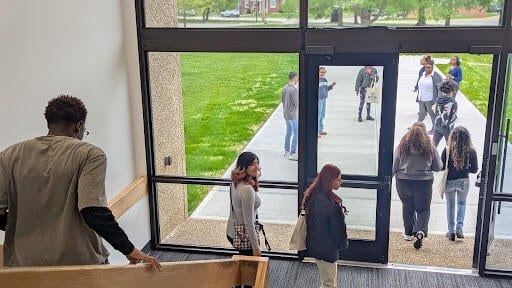
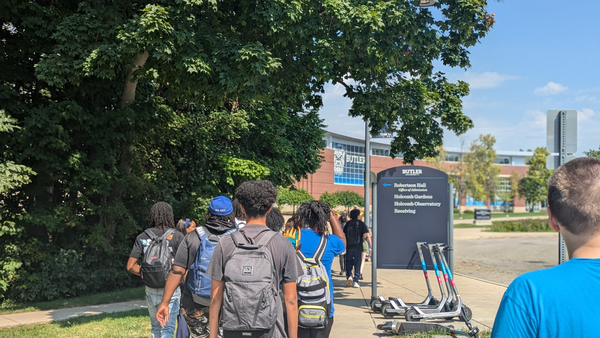
    Founder’s students walking down steps

    A Workforce-Aligned, Equity-Driven Blueprint

    The Indianapolis labor market, seeing a 3.1 percent GDP growth, underscores the need for this approach (Indiana University News, 2004). The monetary value of all that is produced in the state is outpacing state and national averages. At the same time, in-demand industries—especially health care, professional services, technology and advanced manufacturing—are confronting skill mismatches. Employers are offering jobs, yet Indiana’s college-going rate has slipped to historic lows, leaving pipelines partially empty (Indiana Business Research Center, 2024). The Indiana Department of Workforce Development reports wages are rising, up 4.1 percent in the metro area in 2025 according to InContext Indiana.

    Institutions like Butler University are not blind to the demographic challenges either. A declining birth rate, an aging workforce, admissions redesigns and disruptive technologies such as AI intensify the demand for midlevel, adaptable credentials to reskill workers quickly.

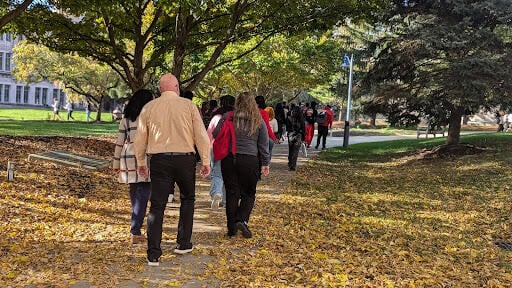
    Founder’s students walking a path on campus

    Here is where Founder’s College shifts the ground. It builds wraparound supports—career coaching, social workers, family inclusion and embedded apprenticeships—into the core of its structure rather than leaving them at the margins. By lowering tuition costs to nearly debt-free levels for students and building in work-integrated experiences, Founder’s College creates a system where opportunity is the design, not the exception.

    Global Research, Local Application

    Butler’s experiment does not arise in a vacuum. It mirrors and operationalizes the findings of major policy reports:

    A 2024 Organisation for Economic Co-operation and Development report recommends expanded investment in skills and high-quality education to combat slowing productivity growth coupled by aging, digitalization and climate changes. It stresses repeatedly that the U.S. is falling behind peer nations in connecting academic programs to workplace readiness, particularly in apprenticeships and microcredentials. The Founder’s College requirement that every student engage in structured, mentored, for-credit work experience directly addresses that gap.

    The America AI Action Plan 2025 highlights the accelerating impact of artificial intelligence on the skills profile of jobs. Handshake reports increase in generative AI usage too. While OECD 2025 reminds us that there is a changing landscape requiring adaptability, complex interdisciplinary problem-solving and liberal arts and professional academic digital fluency are no longer optional. At Founder’s College, technical writing studios, digital credentialing, industry certification and technology integration prepare students to thrive in an AI-mediated workplace.

    FutureEd research from 2023 emphasizes transparency in skills attainment and the use of short-term, stackable credentials as levers of equity. By awarding credentials midjourney and maximizing learning mobility, a call from the LEARN Commission—not just at degree completion—Founder’s College signals value to students, employers and families at every step.

    Taken together, these frameworks make Founder’s College not just a local response to Indiana’s challenges, but a globally informed model tuned to the future of work.

    Founder’s College directly widens the workforce pipeline—by lowering the cost barrier, embedding workforce credentials and signaling to families that college is not just accessible, but immediately useful.

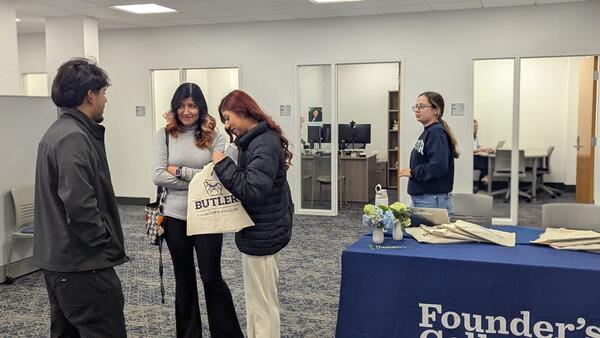
    Founder’s students in student center

    A Case Study and a Challenge

    Across the United States, demographic and migration patterns are reshaping where and how higher education demand will grow. The U.S. South, with its younger, more racially and ethnically diverse populations and steady in-migration, stands poised to lead the nation in enrollment growth through 2035. In contrast, much of the Midwest faces different headwinds: smaller cohorts of college-age students, declining K–12 enrollments and out-migration of young families.

    Rather than a simple story of winners and losers, this shift underscores the divergent opportunities that regions face. In the South, higher education systems will need to expand capacity, affordability and culturally responsive pathways that meet the aspirations of new, more diverse learners. In the Midwest, the challenge is not only to stabilize enrollment but to re-engage adults with some college, no credential and to strengthen the link between education and regional economic renewal.

    Nationally, forecasts for the next decade suggest that the future of higher education will depend on how well institutions adapt to a shrinking pool of traditional-age learners while expanding access for new groups, including working adults and first-generation students. Recruitment, funding models and program design will need to evolve accordingly.

    Using the 2020 U.S. Census as a baseline, when 43 percent of Americans identified as people of color and more than half of minors identified as nonwhite, it’s clear that the next generation of university-bound students will be more multiracial and more globally connected than ever before. Their appetite for education will be shaped by digital fluency, early exposure to STEM and environmental learning, and a social consciousness steeped in sustainability, mental health and civic responsibility.

    For Indiana, where college-going rates are at historic lows, this is more than institutional innovation. Founder’s College is therefore both a case study and a challenge.

    • To other universities: Reimagine the traditional degree in ways that speak to today’s students and employers.
    • To states: Invest in models that don’t just get more students in the door, but get them to good jobs, faster.
    • And to students themselves: Butler is showing you that higher education is within reach, aligned with your life and positions you for thriving success.

    As Merisotis wrote, the future belongs to institutions that make degrees more valuable. Indiana may have just found its vanguard.

    Source link

  • Presidents point to drivers of declining public trust

    Presidents point to drivers of declining public trust

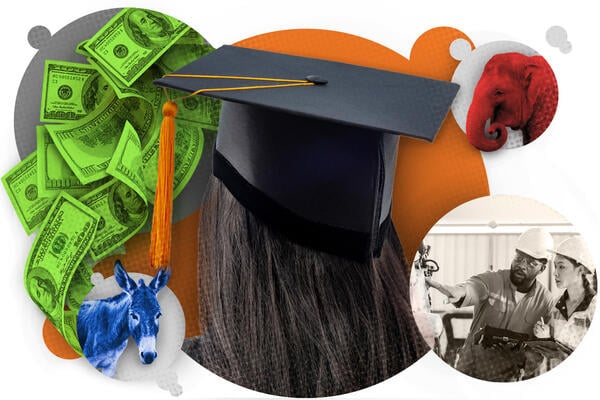
    According to 2024 general election exit polling, 42 percent of voters with college degrees voted for now-President Donald Trump, compared to 56 percent of those without college degrees. Asked how they feel about this growing education gap in the electorate—what researchers call the diploma divide—25 percent of college and university presidents say they’re very or extremely concerned about its implications for their institution.

    More say they’re highly concerned about the growing divide’s impact on higher education in general (58 percent) and on American democracy (64 percent). That’s according to a new analysis of findings from Inside Higher Ed’s 2025 Survey of College and University Presidents, completed with Hanover Research.

    Presidents also offer a scathing review of how higher education has responded to this divide thus far: Just 3 percent think the sector has been very or extremely effective, versus not at all, somewhat or moderately effective. The leaders have a similarly dismal view of how higher education is responding to declining public confidence: A mere 1 percent, rounded up, think it has been highly effective. Much larger shares of presidents think higher education has not been at all effective in responding to the public confidence crisis, with presidents of private nonprofit institutions especially likely to say so, or to the growing education divide in the electorate.

    The Diploma Divide

    Experts say that the diploma divide can’t be decoupled from the public confidence crisis, and that both have implications for the intensifying debate over, and presidential communication about, higher education’s value—especially in this political moment.

    More on the Survey

    Inside Higher Ed’s 2025 Survey of College and University Presidents was conducted with Hanover Research starting in December and running through Jan. 3. The survey included 298 presidents of two- and four-year institutions, public and private, for a margin of error of 5 percent. Download a copy of the free report here, and check out reporting on the survey’s other findings, including what presidents really think about faculty tenure and student mental health, and their expectations for the second Trump administration.

    On Wednesday, March 26, at 2 p.m. Eastern, Inside Higher Ed will present a webcast with campus leaders who will share their takes on the findings. Register for that discussion here.

    “Presidents should be making very clear and very concrete what the practical benefits of their university are, not just for the students that attend that university but for the community, the state at large,” said Joshua Zingher, an associate professor of political science and geography at Old Dominion University who studies elections and political behavior, including the diploma divide. “Thinking about the long-term development of the U.S. as a science power or a technology power is very much a story of the university.” He noted that football games at the University of Iowa, in his home state, pause after the first quarter so that fans can wave to patients in the campus children’s hospital—an example of how society depends on thriving colleges and universities, and how cuts to university research and other funding have ripple effects.

    Matt Grossman, professor of American politics and public policy and director of the Institute for Public Policy and Social Research at Michigan State University, who co-authored the 2024 book Polarized by Degrees: How the Diploma Divide and the Culture War Transformed American Politics, agreed there is reason for presidents to be concerned about the diploma divide, in that the “analogies are not great.” Just think of the politically polarized trust in so-called mainstream media, an institution in which both Democrats and Republicans were once largely confident.

    But whereas Zingher said that presidents might have to “take a position” at some point, even if many loathe being seen as political figures, Grossman pointed to existing public polling linking declining confidence to concerns about ideological bias within institutions, at least among Republicans. So Grossman said he was surprised by how few presidents in IHE’s annual survey most attribute declining trust to concerns about ideological bias (11 percent). About double that share say concerns about ideological bias are very or extremely valid (22 percent).

    Grossman explained that higher education has always been culturally liberal, but as social and cultural issues become more central to how people vote, it’s harder for institutions to “be above the fray.” Indeed, higher education is now a wedge issue. As for how campus leaders should respond to the diploma divide, Grossman said, “The first step would be a realization that they know that they are facing these complaints.”

    Presidents of private nonprofit institutions are somewhat more likely than their public counterparts to express the highest level of concern about the divide’s impact, including on higher education in general. Region also appears to matter, with presidents in the South least likely to worry about the divide. Regarding its impact on American democracy, for example, some 45 percent of presidents in the South are very or extremely worried, versus 62 percent of those in the Midwest, 73 percent of those in the West and 75 percent in the Northeast.

    The widening diploma divide means that voters without a college degree are increasingly likely to vote Republican and those with a degree are increasingly like to vote Democratic. With the Republican Party growing more critical of higher education, this has real consequences for college and university missions and budgets.

    But Keith Curry, president of Compton College and chief executive of the Compton Community College District, emphasized that educating students, including about voting, transcends politics: “It’s important that as leaders we’re bipartisan, and to focus on helping students register to vote and participate in the [democratic] process. They have to understand the issues and how to gather the information. They make their own decisions.”

    For what it’s worth, faculty members in a fall poll by IHE and Hanover overwhelmingly said that they planned to encourage students to vote in the 2024 election. But just 2 percent planned to tell students to vote for a particular candidate or party.

    Jay Akridge, trustee chair in teaching and learning excellence, professor of agricultural economics and former provost at Purdue University, offered a slightly different take. Calling the diploma divide “concerning,” he said it might “make higher ed think more about students with parents who did not go to college and how to better serve this group of first-generation students.”

    The Value Debate

    If not concerns about ideological bias, to what do presidents most attribute declining public confidence in higher education?

    From a list of survey options, the plurality (49 percent) cite concerns about the value of a college education and/or whether college is worth it. A less common choice: concerns about lack of affordability, including high tuition (18 percent). And very few presidents point to concerns about whether colleges are adequately preparing students for the workforce (7 percent).

    Some differences emerge by institution type, with public presidents more likely to cite concerns about whether college is worth it than their private nonprofit peers (54 percent versus 43 percent, respectively). But presidents of private nonprofits are somewhat more likely to blame concerns about affordability (22 percent versus 15 percent of public institution presidents).

    As for whether presidents think that such concerns are actually founded, half say that concerns about affordability are very to extremely valid, with presidents at public institutions (57 percent) significantly more likely to say so than those at private nonprofits (39 percent).

    And while very few presidents over all (1 percent) most attribute declining public confidence in higher education to concerns about equity, including access and outcomes for historically underrepresented groups, a quarter (26 percent) think that such concerns are highly valid. The same goes for higher education being disconnected from society (24 percent say this is highly valid)—something that’s arguably linked to the diploma divide, as well.

    Just 15 percent of presidents say the value question is highly valid. Some 40 percent say it’s not at all valid, while an additional 46 percent rate it as somewhat or moderately valid.

    In IHE’s 2024 Survey of College and University Chief Business Officers with Hanover, 94 percent of CBOs somewhat or strongly agreed that their institution offers good value for what it charges for an undergraduate degree. Just 9 percent of CBOs said their institution charges too much for an undergraduate degree.

    As for the student perspective, in IHE’s 2024 Student Voice survey series, most current two- and four-year students agreed that they’re getting a valuable education. But they were much less likely to agree that their college was affordable.

    Martha Snyder, partner at HCM Strategists, says the education firm’s own U.S. polling and other research has found a general, even bipartisan belief “that education beyond high school in some form or fashion is necessary and important for longer-term economic viability, prosperity and longer-term job security.” But—similar to the Student Voice findings—the “disconnect tends to be in accessibility and affordability.” That is, even as Americans may understand the long-term value of higher education, it is undercut by the immediate challenges of paying for it—especially when weighed against the opportunity cost of not working, or perhaps not working as much, while pursuing a degree.

    Snyder says this also points to a need for institutional transparency on cost of attendance and for better presidential communication as to why higher education works the way it does.

    “Think about the notion of a credit hour, right? The complex way that pricing happens is not easily understood by students and families. And even though net price has fallen, well, what is net pricing?” she said. “So there’s another disconnect in how we are communicating the information we’re providing to individuals about the opportunities, about the pathways and about what the end result is, in terms of career opportunities and career advancement.”

    Akridge, of Purdue, also noted the gap between the relatively large share of presidents who think concerns about the value of a degree are driving declining public confidence and the relatively small share who point to concerns about whether or not colleges are adequately preparing students for the workforce, as these two points are connected. Moreover, he said, there “are plenty of valid questions raised by employers about whether or not college graduates are ready for the work world.”

    In just one example, a recent survey of U.S. employees and human resources leaders by Hult International Business School found that 85 percent of recent graduates wish their college had better prepared them for the workplace, and 75 percent of HR leaders say most college educations aren’t preparing people at all for their jobs. There’s a lot to mine here‚ some of it probably generational (Gen Z employees aren’t necessarily mangers’ favorites, and they have their own expectations about work).

    Employer-led skills training has long been on the decline, as well. In any case, Akridge said that given employer perceptions about lack of preparation, “presidents are missing an opportunity—the so-called skills gap is an issue they can take action to close. And this is an issue where such actions will be well received by the public and will make a great story to tell.”

    Akridge and David Hummels, professor of economics and dean emeritus at Purdue, last fall launched “Finding Equilibrium: Two Economists on Higher Ed’s Future,” a Substack newsletter seeking to inform the value conversation. It has offered a number of ideas for improving the career readiness of college graduates, including elevating teaching and learning as a priority through curricular and co-curricular design, innovation and delivery; rethinking organizational structures and student support with a focus on career readiness; and strengthening connections and feedback loops with employers. Akridge and Hummels have also written about how the economic case for college remains strong and how the price students actually pay to attend college has fallen.

    Hummels told Inside Higher Ed that presidents are especially well positioned to share this kind of information with the public, to address the value debate head-on: “They are not passive actors. They need to get out in their communities and around their states, talking to high schools and chambers of commerce and the like, making the case that college is affordable with grant aid. That the return on college is large and positive when you take challenging courses of study and make the most of co-curricular opportunities.”

    The big asterisk here is that completion rates hover in the mid–60 percent range for four-year institutions. Students pursuing more expensive college options but moving into lower-wage jobs is another problem. So it’s also “clear higher ed does not work for everyone,” Akridge said. “We don’t create value for all students.” And how to get better remains “an essential question.”

    More on Affordability—and the Diploma Divide

    Curry, president of Compton College, said he has no doubts about higher education’s value, but that affordability is a highly valid concern at his institution.

    “We have students who are thinking about, ‘Do I buy a book for math class, or do I get food?’ They have to make some real decisions based off of their current finances about to going to college. It is not just the tuition cost. It is the total cost of education—what does that look like?”

    Similarly, students are weighing the cost of working versus going to college. This means that they have to be able to see higher education’s value in real time, Curry said. One way the college is helping students understand this is with program maps that list careers, salaries and other opportunities connected to various areas of study.

    For Hummels, affordability also points right back to the diploma divide in terms of future funding for higher education. If a majority of voters without a college education vote for one party and express a growing conviction that college is not worth it, he said, “then it becomes easier to cut back on Pell Grants, on subsidized student loans, on state support for universities.”

    The impacts of these cuts would be felt most strongly by lower-income and lower-education households, he continued, and “the lack of support becomes a self-fulfilling prophecy. College will become out of reach for these households.”

    Source link

  • There is declining trust in Australian unis. Federal government policy is a big part of the problem

    There is declining trust in Australian unis. Federal government policy is a big part of the problem


    As we head towards the federal election, both sides of politics are making a point of criticising universities and questioning their role in the community.

    Please login below to view content or subscribe now.

    Membership Login

    Source link