
Tag: deeply

  • ‘Wrong and deeply disappointing’: Supreme Court halts order restoring NIH grants

    ‘Wrong and deeply disappointing’: Supreme Court halts order restoring NIH grants

    This audio is auto-generated. Please let us know if you have feedback.

    Dive Brief:

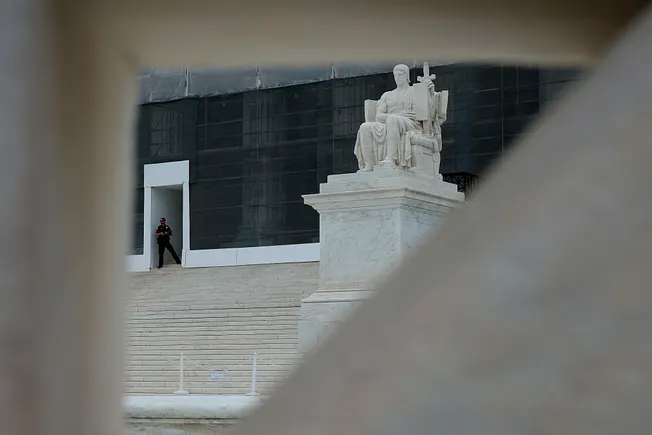
    • The U.S. Supreme Court on Thursday dealt a blow to universities and other research institutions seeking to restore grants cut in mass by the National Institutes of Health.
    • Researchers, unions and associations sued NIH this spring after the agency abruptly terminated millions of dollars in grants for projects that dealt with diversity, equity and inclusion.
    • In a 5-4 decision, conservative justices on the Supreme Court paused a June order that would have restored $783 million in funding, ruling that the district court lacked jurisdiction to handle the grant restoration. However, the court declined to block the lower court’s order that deemed NIH’s guidance that led to the cuts illegal.

    Dive Insight:

    With the Supreme Court decision, those who have seen grant funding cut by NIH could face a longer, more complicated path through another federal court to have their awards restored.

    In their April complaint, plaintiffs accused NIH of “launching a reckless and illegal purge to stamp out NIH-funded research that addresses topics and populations that they disfavor.”

    They tallied 678 terminated projects resulting in $1.3 billion already spent by the government on projects “stopped midstream” being wasted, and another $1.1 billion that had yet to be spent.

    When U.S. District Judge William Young ruled against NIH in June, he blasted the agency for what he saw as discrimination, both racial and against LGBTQ+ communities, in its purge of research funding. 

    “Have we no shame,” said Young, a Reagan appointee, according to a report from The Associated Press

    Earlier this month, the watchdog agency U.S. Government Accountability Office also determined that NIH acted illegally in its DEI cuts. 

    The Supreme Court did not block Young’s ruling that NIH’s guidance that led to the agency cutting DEI research funding was illegal. That ruling is still being litigated in appellate court.

    Instead, the ruling majority determined that the U.S. Court of Federal Claims — which hears monetary claims against the federal government — is the venue for handling terminated grants. 

    Massachusetts Attorney General Andrea Campbell, who has been active in fighting the Trump administration’s various moves to cut federal research funding, blasted the Supreme Court’s ruling on Friday. 

    The Supreme Court’s decision is wrong and deeply disappointing,” Campbell said in a statement. “Even though the Court did not dispute that the Trump Administration’s decision to cut critical medical and public health research is illegal, they ordered the recipients of that fundinghospitals, researchers, and the stateto jump through more hoops to get it back.”

    The Supreme Court’s split decision brought internal dissent as well. In a minority opinion, Chief Justice John Roberts, who joined the court’s liberal justices, wrote that “if the District Court had jurisdiction to vacate the directives, it also had jurisdiction to vacate the ‘Resulting Grant Terminations.’”

    In a separate dissent, Justice Ketanji Brown Jackson rebuked the majority’s opinion. 

    By today’s order, an evenly divided Court neuters judicial review of grant terminations by sending plaintiffs on a likely futile, multivenue quest for complete relief,” she wrote, adding that the court “lobs this grenade” without considering Congress’ intent or the “profound” consequences of the ruling. 

    “Stated simply: With potentially life-saving scientific advancements on the line, the Court turns a nearly century-old statute aimed at remedying unreasoned agency decisionmaking into a gauntlet rather than a refuge,” Jackson said in the dissent.

    Clarification: This article has been updated to clarify the nature of the Supreme Court decision.
     

    Source link

  • ‘Inadequate and deeply troubling’: George Mason AAUP votes no confidence in board

    ‘Inadequate and deeply troubling’: George Mason AAUP votes no confidence in board

    This audio is auto-generated. Please let us know if you have feedback.

    Dive Brief:

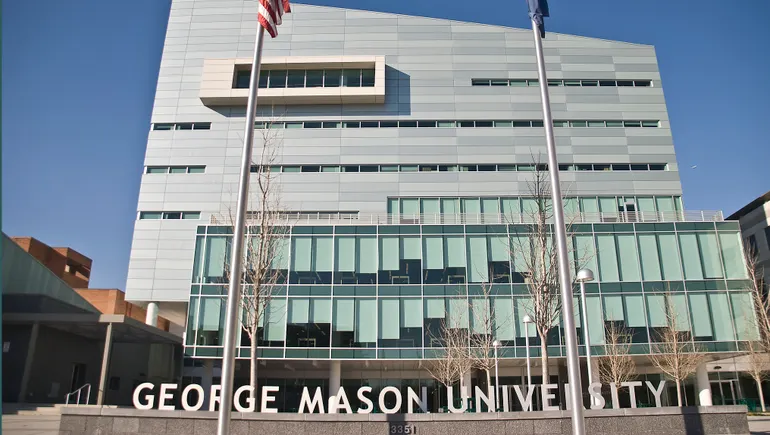
    • A faculty group at Virginia’s George Mason University this week adopted a no-confidence resolution aimed at the institution’s board for its handling of recent attacks on the university by the Trump administration. 
    • George Mason’s chapter of the American Association of University Professors described the board’s response to four government investigations, launched in less than a month, as “inadequate and deeply troubling” in a letter Tuesday to members of George Mason’s board of visitors and state officials. 
    • The group called on the board to publicly defend George Mason President Gregory Washington and to “reaffirm the university’s unwavering commitment to academic freedom, diversity, equity, and inclusive excellence.”

    Dive Insight:

    Over the course of roughly three weeks, the Trump administration has opened multiple civil rights probes into George Mason through the U.S. Department of Education and U.S. Department of Justice. 

    The most recent investigation, launched by the Justice Department’s civil rights unit, is looking at whether George Mason’s admissions and scholarship practices violate Title VI, which forbids discrimination based on race, color or national origin at federally funded institutions. It is also probing the university’s response to antisemitism. 

    A letter this week to the head of George Mason’s board from Harmeet Dhillon, the assistant attorney general for the Justice Department’s civil rights division, didn’t contain any specific allegations against the university, but stated that “a school administration’s deliberate indifference to a racially hostile educational environment is illegal.” 

    It followed the Justice Department’s earlier announcement of a probe into racial discrimination in George Mason’s employment practices. In informing officials of that investigation, Dhillon cited past comments by Washington about George Mason’s efforts to diversify its ranks and support women and faculty members of color.   

    The probes come just weeks after former University of Virginia President Jim Ryan abruptly announced his resignation in June amid pressure from Trump’s Justice Department and a similar investigation into the public institution’s diversity efforts.

    In public statements, George Mason’s board — headed by Charles Stimson, who holds leadership positions at The Heritage Foundation, a conservative think tank — has said little beyond that it will provide government agencies with requested information and comply with law.

    In a statement Tuesday in response to the latest probe, the board said it will “ensure GMU complies with all federal anti-discrimination laws.” In an earlier statement, it said it had a fiduciary obligation to “ensure that the University continues to thrive as the largest public university in Virginia.”

    George Mason’s board did not immediately respond to a request for comment.

    Washington himself has defended the university’s diversity efforts, writing last week, “It is inaccurate to conclude that we created new university policies or procedures that discriminated against or excluded anyone.”

    In the resolution, the George Mason AAUP chapter defended Washington’s record at the university where the board has been publicly silent. 

    “President Washington has demonstrated exceptional leadership by advancing the university’s longstanding commitment to inclusion and diversity, overseeing significant improvements in the university’s national rankings, while still maintaining Mason’s ethos of access and affordability, particularly for first-generation students,” it stated.

    The resolution also blasts the board as having “utterly failed to support President Washington and George Mason University during this period of unprecedented and increasing federal scrutiny and political targeting,” adding that “the silence from the Board has become deafening.”

    The faculty group additionally called out the board’s choice of attorneys to represent it in talks with the Trump administration, noting that the firm Torridon Law was co-founded by former Attorney General Bill Barr, who served under Trump, and has several prominent Republican lawyers on staff. 

    Among them is Mike Fragoso, who is handling communications about the investigations for George Mason and was previously chief counsel to former Senate Republican Leader Mitch McConnell.

    “The hiring of Torridon Law PLLC to defend GMU against the Trump administration’s ideological attacks is like hiring a wolf to protect the sheep,” the faculty group wrote. 

    Torridon’s Fragoso did not immediately respond to a request for comment.

    The George Mason AAUP “overwhelmingly” voted in favor of the no-confidence resolution, according to the letter to the university’s board.

    Source link