Tag: defense

  • Court Temporarily Blocks Ban on Bargaining by Defense Department Teachers Unions – The 74

    Court Temporarily Blocks Ban on Bargaining by Defense Department Teachers Unions – The 74


    Get stories like this delivered straight to your inbox. Sign up for The 74 Newsletter

    A district court judge has temporarily blocked a Trump administration ban on collective bargaining by two teachers unions in Department of Defense schools.

    Judge Paul Friedman issued a preliminary injunction in a lawsuit filed this spring by the Federal Education Association and Antilles Consolidated Education Association, which represent more than 5,500 teachers, librarians and counselors in the 161 schools under the Department of Defense Education Activity. The agency educates 67,000 children on military bases worldwide.

    The union sued the Trump administration over a March executive order that stripped collective bargaining rights from two-thirds of federal service workers. The order impacted the Departments of Justice, Defense, Veteran Affairs, Treasury, and Health and Human Services, as well as the Centers for Disease Control and Prevention and the Environmental Protection Agency.

    The Federal Education Association has been negotiating teachers contracts with the Department of Defense since 1970, while the Antilles Consolidated Education Association has bargained on behalf of Puerto Rico educators since 1976, according to the lawsuit. The current collective bargaining agreements for both unions were approved in 2023 and are set to expire in summer 2028.

    But since the order was issued, the lawsuit says, the Department of Defense Education Activity has discontinued negotiations, stopped participation in grievance proceedings and prohibited union representation during educator disciplinary meetings. Members are also no longer allowed to conduct union work during the school day. Requests from educators to access a union sick leave bank with 13,000 donated hours have also been ignored, according to the suit.

    “These actions, taken together, essentially terminate the respective collective bargaining agreements and thus cause irreparable harm,” Friedman said in his decision.

    A 1978 federal statute allows collective bargaining in the civil service sector. The suit argued that while presidents have the authority to exclude an agency if its primary function involves intelligence, investigation or national security work, “Many, if not most, of the agencies and agency subdivisions swept up in the executive order’s dragnet do little to no national security work, much less do they have a primary function [of] intelligence, counterintelligence, investigative [work].”

    The agency declined to comment on ongoing legal proceedings. In a reply to the unions’ lawsuit, Trump administration attorneys said the executive order was within the law and that reversing it would be costly.

    “Rather than maintaining the status quo, it would force [the Department of Defense] to undo actions it has already taken to implement the executive order, causing significant disruption and resource expenditures,” the lawyers wrote.

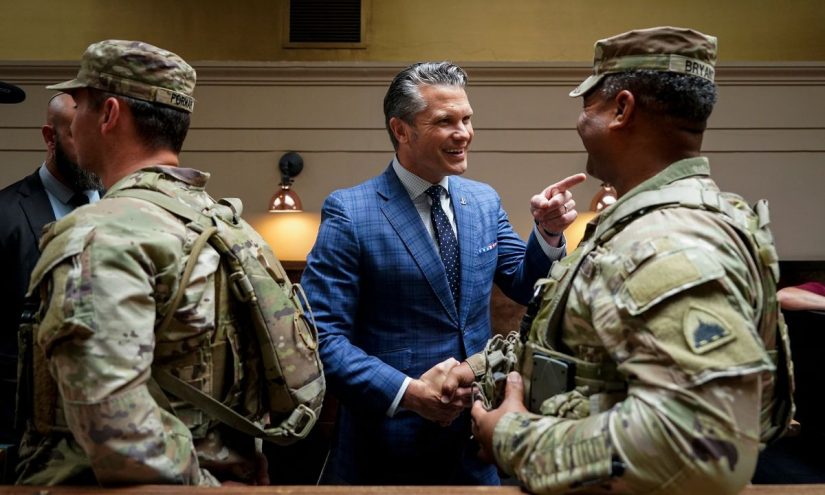
    In April, Defense Secretary Pete Hegseth authorized a few exemptions for agencies related to the Air Force and Army, but not the teachers unions — despite a push from 45 lawmakers to exclude the school system.

    “Ensuring that DoDEA educators and personnel retain collective bargaining protections will ensure that DoDEA can continue to recruit and retain the best staff in support of its mission,” the congressional members wrote in a letter. “Collective bargaining safeguards the public interest, and its history in DoDEA has demonstrated better outcomes for mission readiness, and stronger connections between military-connected families and those who serve them.”

    An appeal from the Trump administration is pending. A similar lawsuit from six unions, including the American Federation of Government Employees, resulted in an injunction, but a federal appeals court reversed it in August.


    Get stories like these delivered straight to your inbox. Sign up for The 74 Newsletter

    Source link

  • American Financial Solutions and Borrower Defense to Repayment

    American Financial Solutions and Borrower Defense to Repayment

    [Editor’s Note: The Higher Education Inquirer has submitted a Freedom of Information Request F-2025-02034 for any Federal Trade Commission consumer complaints against American Financial Solutions. We expect student loan relief scams to grow over the next few years as federal government oversight is reduced.]

    American Financial Solutions (AFS) positions itself in social media as a lifeline for student loan borrowers, offering help with programs like Borrower Defense to Repayment (BDR), PSLF, closed-school discharge, teacher loan forgiveness, and income-driven repayment. They advertise a “95 percent success rate,” more than $25 million in loans discharged, and over 10,000 clients helped. AFS promotes a three-step approach: a free consultation, documentation collection, and federal application submission—with implied guarantees of approval. They even suggest that discharges can occur in as little as 12 to 36 months.

    Behind this polished marketing is a disturbing reality. When contacted directly, AFS quoted a $1,500 fee to file a Borrower Defense claim. The Department of Education provides this service for free, which makes the fee an unnecessary financial burden on people already struggling with debt. Worse still, AFS representatives falsely claimed that approval would be “guaranteed” because the borrower’s school was named in the Sweet v. Cardona settlement. That is not how the Sweet settlement worked, and no private company can guarantee outcomes in federal relief programs.

    AFS also collects a troubling amount of data from borrowers. According to its own disclosures, the company asks for names, contact information, educational histories, student loan details, financial information, and documentation of borrowers’ school experiences. It also stores communications and any additional information provided. Beyond that, the company automatically harvests website usage data, including IP addresses, device and operating system information, pages visited, time spent on the site, referring websites, and even search terms. This means that vulnerable borrowers are not only charged excessive fees but also exposed to unnecessary risks regarding their personal and financial data.

    While AFS presents itself as a nonprofit credit counseling agency with A+ BBB accreditation, consumer complaints suggest a lack of transparency and responsiveness. One unresolved 2024 complaint alleged billing issues, with the consumer insisting they were not liable for a debt and had no contract, while the company failed to respond. Independent review platforms show a mix of praise and criticism, with some clients reporting successful debt management experiences, but others raising questions about hidden costs, communication problems, and misleading claims.

    The bigger problem is that AFS fits a well-documented pattern of predatory practices in the student loan relief industry. Over the past decade, the Federal Trade Commission (FTC) and the Consumer Financial Protection Bureau (CFPB) have repeatedly shut down companies that charged for free government services, misrepresented their powers, and lied about forgiveness guarantees. In one case, the CFPB shut down Student Aid Institute, only to see its operator resurface under a new name and steal more than $240,000 from borrowers. In another, Monster Loans and its associates were sued for defrauding over 23,000 borrowers. The FTC has also acted against multiple operations that bilked millions of dollars from borrowers by pretending to be affiliated with the Department of Education. Even Navient, a major loan servicer, agreed in 2024 to pay $120 million after deceiving borrowers about repayment options.

    The risks to borrowers are increasing as federal oversight weakens. In 2025, reports revealed that the CFPB planned to scale back enforcement of student loan cases, leaving state regulators—who often lack resources—to fill the gap. Critics warned this would create “open season” for scammers. Against that backdrop, companies like AFS are free to charge high fees, collect sensitive data, and make deceptive promises while vulnerable borrowers remain unprotected.

    American Financial Solutions is not a solution. It is part of the problem, a business model that profits by charging people for free services, misrepresenting the law, and exposing them to new risks. Unless stronger oversight and enforcement are restored, borrowers will continue to be victimized first by predatory schools and then by predatory “relief” companies cashing in on their desperation.


    Sources

    American Financial Solutions marketing claims. amerifisolutions.com

    AFS data collection disclosure (website policy provided by user)

    Better Business Bureau profile. bbb.org

    BBB consumer complaint (2024). bbb.org

    Trustpilot reviews. trustpilot.com

    ConsumerAffairs reviews. consumeraffairs.com

    BestCompany review. bestcompany.com

    CuraDebt expert analysis. curadebt.com

    Federal Trade Commission. “American Financial Benefits Center Refunds.” ftc.gov

    Consumer Financial Protection Bureau. “CFPB Seeks Ban Against Operator of Student Loan Debt Relief Scam Reboot.” consumerfinance.gov

    Consumer Financial Protection Bureau. “CFPB Takes Action Against Operators of an Unlawful Student Loan Debt Relief Scheme.” consumerfinance.gov

    Federal Trade Commission. “FTC Acts to Stop Scheme that Bilked Millions out of Student Loan Borrowers.” ftc.gov, December 2024

    Federal Trade Commission. “Student Loan Debt Relief Scam Operators Agree to be Permanently Banned.” ftc.gov, May 2025

    Time Magazine. “Navient Settlement: Student Loan Borrowers to Receive Payments.” time.com, 2024

    The Guardian. “Brad Lander: CFPB Cuts Create Open Season for Fraudsters.” theguardian.com, May 2025

    Source link

  • In Defense of Jonathan Brown

    In Defense of Jonathan Brown

    Jonathan Brown, the Alwaleed bin Talal Chair of Islamic Civilization at Georgetown University, was suspended from his job and is being investigated for posting on X after the US bombing of Iran, “I hope Iran does some symbolic strike on a base, then everyone stops.” Brown’s expressed desire for peace was twisted by conservatives into some kind of anti-American call for violence.

    Rep. Randy Fine, a Florida Republican, noted that the interim president of Georgetown would soon be testifying before Congress and wrote about Brown, “This demon had better be gone by then. We have a Muslim problem in America.” Fine was Gov. Ron DeSantis’s choice to be president of Florida Atlantic University before the board rejected him. But his literal demonization of speech has a powerful impact.

    Georgetown quickly obeyed the commands of anti-Muslim bigots such as Fine. Georgetown interim president Robert M. Groves testified to Congress on July 15, “Within minutes of our learning of that tweet, the dean contacted Professor Brown, the tweet was removed, we issued a statement condemning the tweet, Professor Brown is no longer chair of his department and he’s on leave, and we’re beginning a process of reviewing the case.”

    Groves responded “yes” when asked by Rep. Virginia Foxx, a North Carolina Republican, “You are now investigating and disciplining him?”

    Georgetown’s statement declared, “We are appalled that a faculty member would call for a ‘symbolic strike’ on a military base in a social media post.” But why would this appall anyone? Faculty members routinely support actions that actually kill innocent people—tens of thousands of people, in the case of professors who support Israel’s attack on Gaza, millions of people in the case of professors who supported the fight against the Nazis in World War II. And that’s all perfectly legitimate. So a professor calling for an action against a military target that doesn’t kill anybody should be the most trivial statement in the world.

    There is a good reason why universities shouldn’t take positions on foreign policy—because institutional opinions are often dumb, especially when formulated “within minutes” rather than after serious thought. Georgetown is making the worst kind of violation of institutional neutrality—not merely expressing a dumb opinion, not just denouncing a professor for disagreeing with that dumb opinion, but actually suspending a professor for diverging from Georgetown’s very dumb official opinion on foreign policy.

    Often, defenders of academic freedom have to stand for this principle even when addressing terrible people who say terrible things. But the assault on academic freedom in America has become so awful that even perfectly reasonable comments are now grounds for automatic suspension. Brown’s position on the Iran attacks is very similar to that of Donald Trump, who posted praise for Iran after it did precisely what Brown had urged: “I want to thank Iran for giving us early notice, which made it possible for no lives to be lost, and nobody to be injured.” Unlike Trump, Brown never thanked Iran for attacking a U.S. base. So how could any university even consider punishing a professor for taking a foreign policy stand more moderate than Trump?

    Georgetown’s shocking attacks on academic freedom have garnered little attention or criticism. The Georgetown Hoya reported in a headline, “Groves Appears to Assuage Republicans, Defend Free Speech in Congressional Hearing.”

    The newspaper’s fawning treatment of Groves as a defender of free speech apparently was based on Groves testifying, “We police carefully the behavior of our faculty in the classroom and their research activities,” and adding, “They are free, as all residents of the United States, to have speech in the public domain.” It’s horrifying to have any university president openly confess that they “police carefully” professors’ teaching and research. But for Groves to claim that faculty have free speech “in the public domain” when he proudly suspended Brown for his comments must be some kind of sick joke.

    Another Hoya headline about the controversy declared, “University Review of GU Professor for Controversial Posts Prompts Criticism, Praise.” While the campus Students for Justice in Palestine and the Council on American-Islamic Relations correctly defended Brown, the Anti-Defamation League declared, “We commend Georgetown University for taking swift action following Jonathan Brown’s dangerous remarks about a ‘symbolic strike’ on a U.S. military base.”

    There is nothing “dangerous” about Brown’s remarks calling for an end to war, or any other foreign policy opinions. The only danger here is the threat to academic freedom.

    When Georgetown suspended lecturer Ilya Shapiro in 2022 for his offensive comments on Twitter, I argued that “Shapiro should not be punished before he receives a hearing and fair evaluation” and added, “A suspension, even with pay, is a form of punishment. In fact, it’s a very harsh penalty when most forms of campus misconduct receive a reprimand or a requirement for education or changes in behavior.”

    I called upon all colleges to ban the use of suspensions without due process. Since then, suspensions have become an epidemic of repression on college campuses. An army of advocates once argued in defense of Shapiro’s free speech. Unfortunately, none of Shapiro’s outspoken supporters have spoken out with similar outrage about the even worse treatment of Brown by Georgetown’s censors.

    Georgetown’s administrators must immediately rescind Brown’s ridiculous suspension, restore his position as department chair, end this unjustified investigation of his opinions, apologize for their incompetence at failing to meet their basic responsibilities to protect academic freedom and enact new policies to end the practice of using arbitrary suspensions without due process as a political weapon.

    John K. Wilson was a 2019–20 fellow with the University of California National Center for Free Speech and Civic Engagement and is the author of eight books, including Patriotic Correctness: Academic Freedom and Its Enemies (Routledge, 2008), and his forthcoming book The Attack on Academia. He can be reached at [email protected], or letters to the editor can be sent to [email protected].

    Source link

  • The University of Kentucky suspended a professor for criticizing Israel. Now, FIRE’s Faculty Legal Defense Fund is stepping up to defend him.

    The University of Kentucky suspended a professor for criticizing Israel. Now, FIRE’s Faculty Legal Defense Fund is stepping up to defend him.

    LEXINGTON, K.Y., Aug. 7, 2025 — A University of Kentucky professor suspended for criticizing Israel’s conduct in the Gaza war now has legal representation thanks to the Foundation for Individual Rights and Expression.

    Ramsi Woodcock had established a steady career as a law professor at UK, where he has taught for seven years. He earned tenure in 2022 and was promoted to full professor on July 1.

    Less than two weeks later, the vice provost of the university informed the professor that the university received unspecified complaints about Woodcock’s criticisms of Israel outside the classroom on his personal website and at conferences. 

    The university failed to respond to Woodcock’s requests for copies of the complaints. On July 18, university officials removed Woodcock from teaching and banned him from campus. The university also sent a message to its campus condemning Woodcock’s views as “repugnant” and publicly announcing an investigation. 

    Specifically, the university took issue with a petition Woodcock circulated to other law professors across the country that called for military action against Israel because of its war in Gaza, as well as his arguments that Israel should cease to exist. 

    “This isn’t complicated,” said Graham Piro, FIRE’s Faculty Legal Defense Fund fellow. “Woodcock’s arguments about Israel are clearly protected speech on a matter of public concern, and as a faculty member at a public institution, he has the right to voice his ideas, regardless of whether others find them objectionable. And reprimanding a professor over one set of views opens the door to further restrictions on other opinions down the road.”

    With the help of the FLDF, Woodcock is being represented by Joe F. Childers of Joe F. Childers & Associates. Childers will work to lift Woodcock’s suspension so he can return to teaching in the classroom and continue speaking freely outside of it. 

    “Punishing me for my views on Israel sends a terrifying message to students and colleagues: voice the ‘wrong’ opinion on a sensitive subject and face consequences from the university,” Woodcock said. “It’s not only my career that’s at stake — it’s about whether the University of Kentucky will continue to exist as an institution that encourages and permits free thought and expression.”


    The Foundation for Individual Rights and Expression (FIRE) is a nonpartisan, nonprofit organization dedicated to defending and sustaining the individual rights of all Americans to free speech and free thought—the most essential qualities of liberty. FIRE recognizes that colleges and universities play a vital role in preserving free thought within a free society. To this end, we place a special emphasis on defending the individual rights of students and faculty members on our nation’s campuses, including freedom of speech, freedom of association, due process, legal equality, religious liberty, and sanctity of conscience.

    CONTACT:

    Karl de Vries, Director of Media Relations, FIRE: 215-717-3473; [email protected]

    Source link

  • In Defense of Gladwell and “Revenge of the Tipping Point”

    In Defense of Gladwell and “Revenge of the Tipping Point”

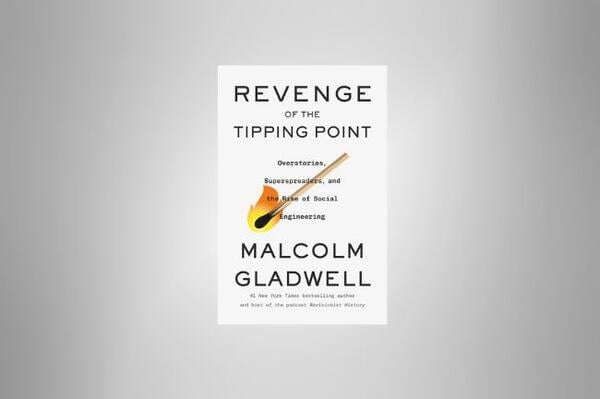
    Revenge of the Tipping Point: Overstories, Superspreaders, and the Rise of Social Engineering by Malcolm Gladwell

    Published in October 2024

    Praising a Malcolm Gladwell book may not be the No. 1 way to seem helplessly uncool with your academic colleagues, but it is close. Share with any random social scientist—my people—that you are reading Gladwell, and you are likely to hear a long lecture detailing the flaws and shortcomings of Gladwell’s writing.

    Ignore the skeptics. Reading a Gladwell book is like listening to a well-crafted song: You can enjoy the experience without agreeing with the lyrics.

    Gladwell’s most recent book is Revenge of the Tipping Point. As with all Gladwell books, the audiobook experience will be your best reading bet. Gladwell is a fantastic writer. His narration style is conversational, intimate and energizing. Revenge of the Tipping Point is an all-new book, taking as its starting place the 2000 Tipping Point publication that launched Gladwell into the nonfiction stratosphere. Like the original, Revenge of the Tipping Point seeks to uncover the hidden forces that drive social trends. The book uses stories and a mix of academic research and data to explain phenomena as diverse as the COVID epidemic, the spread of opiate addiction and the rapid cultural and legal embrace of gay marriage.

    For critics of Gladwell (likely a large proportion of Inside Higher Ed readers), Revenge of the Tipping Point will generate a familiar set of objections. We academics will complain that Gladwell cherry-picks data to support a narrative and fails to include information that may complicate the story. Gladwell’s approach is to structure his stories about social phenomena like a murder mystery, with Gladwell playing the role of Sherlock Holmes. Piecing together the clues, Gladwell reveals the guilty culprit (the policy or cultural phenomenon) responsible for the crime (the trend or social outcome in question). As academics, we know that various variables, forces, structures and random causes drive most social trends. Gladwell’s books are satisfying precisely because he is a master of filtering out complexity. You feel smarter after reading Gladwell, even if you aren’t.

    Knowing all this going into reading Gladwell, including Revenge of the Tipping Point, can help ensure that reading his books is enjoyable and productive. For those of us in higher education, Gladwell has a good deal to say about how universities (well, elite universities) work. I found his explanation as to why highly selective schools field a multitude of sports teams across every conceivable athletic endeavor—from squash to Nordic skiing to equestrian to rugby—reason enough to invest time in Gladwell’s latest book.

    We should not confuse Gladwell’s critiques of elite higher education with the ongoing attacks many universities are navigating from the executive branch. One hopes, however, that Gladwell might be rethinking his history of drawing stark moral absolutes when condemning elite institutions while largely ignoring societal positives and complexity. I suspect that the Ivy League is easier to attack when it is cast as Goliath, as opposed to the defender of academic freedom and bulwark against government overreach that recent events have so clearly revealed our universities to be.

    What are you reading?

    Source link

  • Trump’s Department of Education Continues to Drag Feet on Borrower Defense

    Trump’s Department of Education Continues to Drag Feet on Borrower Defense

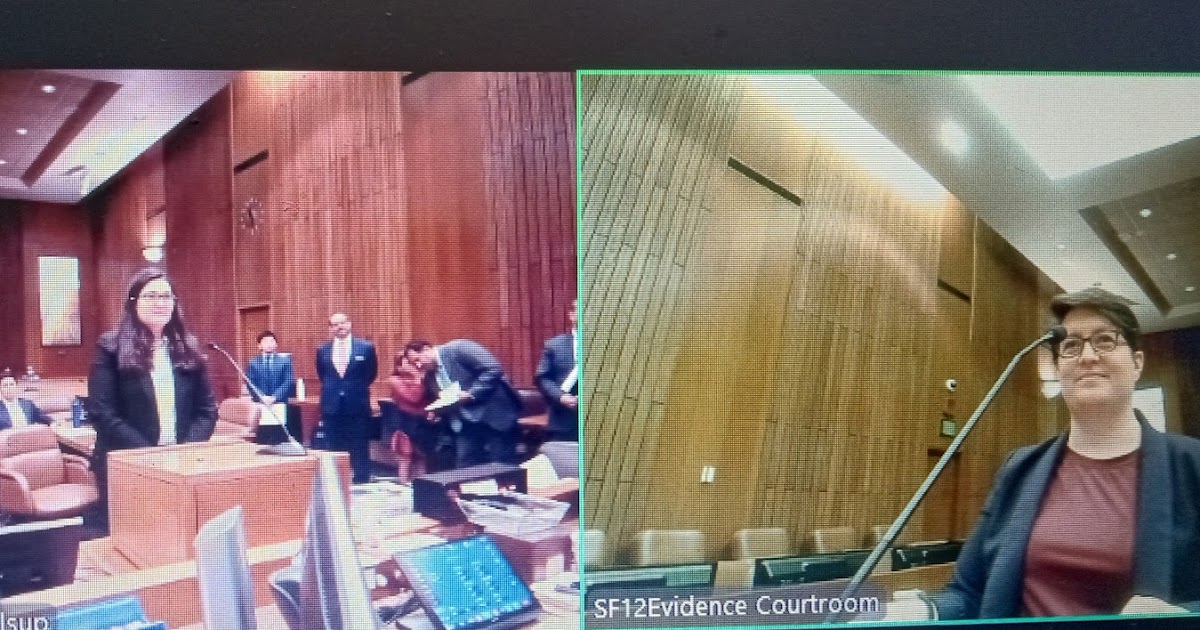
    On June 26th, the US Department of Education was brought to the Ninth District Court (and Judge Alsup) to show how many the Borrower Defense to Repayment cases that have been resolved per court order.  While we wait for a transcript of the latest episode of Sweet v McMahon, what we can tell you is that the Trump government continues to drag its feet in paying back debtors who have been defrauded.  

    Source link

  • Latest Borrower Defense to Repayment Numbers (US Department of Education)

    Latest Borrower Defense to Repayment Numbers (US Department of Education)

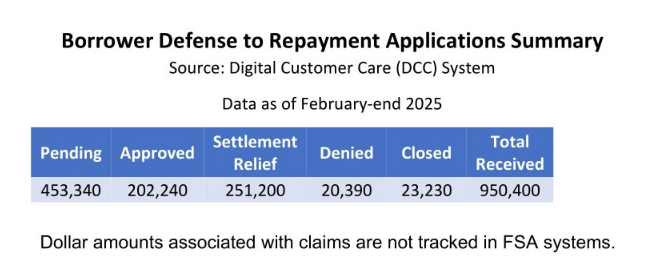
    The Higher Education Inquirer has received information today from the US Department of Education about Borrower Defense to Repayment claims.  Here are the results from ED FOIA 25-02047-F.  


    Source link

  • Legal defense fund will seek to fill gap left by OCR reduction

    Legal defense fund will seek to fill gap left by OCR reduction

    This audio is auto-generated. Please let us know if you have feedback.

    Education attorneys are set to launch a new organization by fall 2025 that would defend students’ civil rights in court and also track and report civil rights data. The effort, according to its founding nonprofit, aims to fill the gap left by the Trump administration’s dismantling of the U.S. Department of Education and its civil rights enforcement arm. 

    The Public Education Defense Fund will be launched by the National Center for Youth Law, which advocates for educational equity among other youth-related issues. It will contract with former Office for Civil Rights attorneys. 

    “At a time when civil rights protections for students are under unprecedented attack, preserving those rights is not negotiable — it’s vital,” said Johnathan Smith, chief of staff and general counsel at NCYL. “We can’t stand by while the federal government abandons its responsibility to uphold the basic rights of children and young people in this country.”

    As part of the administration’s efforts to “end bureaucratic bloat” and send educational control to the states, U.S. Secretary of Education Linda McMahon laid off half of the Education Department’s staff as part of what she called the agency’s “final mission.” The move was followed by an executive order from President Donald Trump calling for the department to be shut down to “the maximum extent appropriate and permitted by law.”

    The Education Department’s Office for Civil Rights took a major blow, with the department shuttering seven of the 12 regional offices that were in charge of more than half of the nation’s open civil rights cases. Over 200 OCR employees were laid off as part of the reduction in force.

    Under the Biden administration, those employees carried a load of more than 40 cases per person. Attorneys fired as part of the reduction in force were in charge of investigating civil rights complaints related to discrimination and harassment in schools, as well as overseeing resolution agreements with school districts. These agreements guide the school systems involved in making policy changes to improve educational access, especially for historically marginalized students.

    Prior to the announcement of the Public Education Defense Fund, NCYL filed a lawsuit against the Education Department in March to challenge the changes at the OCR. The lawsuit said the civil rights enforcement arm “stopped investigating complaints from the public based on race or sex discrimination, it cherry-picked and, on its own initiative, began targeted investigations into purported discrimination against white and cisgender students.”

    Source link

  • Defense Department Caps Universities’ Indirect Cost Rates

    Defense Department Caps Universities’ Indirect Cost Rates

    The Department of Defense is planning to cap indirect cost reimbursement rates for higher education institutions at 15 percent, according to a May 14 memo signed by Secretary of Defense Pete Hegseth. 

    “The Department of Defense (DoD) is the steward of the most critical budget in the Federal Government—the budget that defends our Nation, equips our warfighters, and secures our future. That stewardship demands discipline. It demands accountability. And it demands that we say no to waste,” wrote Hegseth.

    The memo directs the DOD to develop the new policy within 21 days, marking the fourth federal agency—including the National Institutes of Health, the Department of Energy and the National Science Foundation—that has enacted a plan to cap indirect cost rates at 15 percent. For decades, universities have negotiated with the federal government to calculate bespoke indirect cost reimbursement rates to pay for research costs that support multiple grant-funded projects, such as facilities maintenance, specialized equipment and administrative personnel. (The paragraph has been updated.)

    Universities and their trade associations have already sued the NIH, DOE and NSF over these plans, arguing that capping indirect costs would hurt research production and compromise global competitiveness, all while violating multiple aspects of the Administrative Procedure Act, including bypassing congressional authority required to alter indirect cost rates. So far, federal judges have blocked indirect cost caps from taking effect at the NIH and DOE. The NSF agreed to pause the cap until June 13 in order to proceed to summary judgment, which is a way to resolve the case quickly without a full trial.

    Matt Owens, president of COGR, which represents research institutions, condemned the DOD’s newly announced plan. 

    “DOD research performed by universities is a force multiplier and has helped to make the U.S. military the most effective in the world. From GPS, stealth technology, advanced body armor, to precision guided missiles and night vision technology, university-based DOD research makes our military stronger,” Owens said in a statement. “A cut to DOD indirect cost reimbursements is a cut to national security. Less funding for research means less security for our nation.”

    Hegseth’s memo claimed that capping the Defense Department’s indirect cost rate for universities would “save up to $900 [million] per year on a go-forward basis,” while also claiming that the department’s “objective is not only to save money, but to repurpose those funds—toward applied innovation, operational capability, and strategic deterrence.” The NIH has also made similarly incompatible assertions. It touted on social media its indirect rate cap plan’s potential to save taxpayers more than $4 billion, while a lawyer for the NIH told a federal judge that the cut was simply a reallocation of funds. 

    The Defense Department’s plans “will not stop at new grants,” Hegseth wrote, adding that “meaningful savings can also be achieved by revisiting the terms of existing awards to institutions of higher education.” The memo directed the under secretary of defense for research and engineering to do the following within 30 days:

    • Initiate a departmentwide effort to renegotiate indirect cost rates on existing financial assistance awards to institutions of higher education. “Wherever cooperative, bilateral modification is possible, it shall be pursued.”
    • “Where bilateral agreement is not achieved, identify and recommend lawful paths to terminate and reissue the award under revised terms.”
    • “Complete renegotiations or terminations for all contracts by 180 days from the date of this memorandum.”

    Source link

  • Agency Information Collection Activities; Submission to the Office of Management and Budget for Review and Approval; Comment Request; Borrower Defense to Loan Repayment Universal Forms

    Agency Information Collection Activities; Submission to the Office of Management and Budget for Review and Approval; Comment Request; Borrower Defense to Loan Repayment Universal Forms

    A Notice by the Education Department on 05/19/2025

    Department of Education[Docket No.: ED-2025-SCC-0002]

    AGENCY:

    Federal Student Aid (FSA), Department of Education (ED).

    ACTION:

    Notice.

    SUMMARY:

    In accordance with the Paperwork Reduction Act (PRA) of 1995, the Department is proposing a revision of a currently approved information collection request (ICR).

    DATES:

    Interested persons are invited to submit comments on or before June 18, 2025.

    ADDRESSES:

    Written comments and recommendations for proposed information collection requests should be submitted within 30 days of publication of this notice. Click on this link www.reginfo.gov/​public/​do/​PRAMain to access the site. Find this information collection request (ICR) by selecting “Department of Education” under “Currently Under Review,” then check the “Only Show ICR for Public Comment” checkbox. Reginfo.gov provides two links to view documents related to this information collection request. Information collection forms and instructions may be found by clicking on the “View Information Collection (IC) List” link. Supporting statements and other supporting documentation may be found by clicking on the “View Supporting Statement and Other Documents” link.

    FOR FURTHER INFORMATION CONTACT:

    For specific questions related to collection activities, please contact Carolyn Rose, 202-453-5967.

    SUPPLEMENTARY INFORMATION:

    The Department is especially interested in public comment addressing the following issues: (1) is this collection necessary to the proper functions of the Department; (2) will this information be processed and used in a timely manner; (3) is the estimate of burden accurate; (4) how might the Department enhance the quality, utility, and clarity of the information to be collected; and (5) how might the Department minimize the burden of this collection on the respondents, including through the use of information technology. Please note that written comments received in response to this notice will be considered public records.

    Title of Collection: Borrower Defense to Loan Repayment Universal Forms.

    OMB Control Number: 1845-0163.

    Type of Review: A revision of a currently approved ICR.

    Respondents/Affected Public: Individuals and Households.

    Total Estimated Number of Annual Responses: 83,750.

    Total Estimated Number of Annual Burden Hours: 217,750.

    Abstract: On April 4, 2024 the U.S. Court of Appeals of the Fifth Circuit granted a preliminary injunction against 34 CFR 685.400 et seq. (“2023 Regulation”) enjoining the rule and postponing the effective date of the regular pending final judgment in the case. The current Borrower Defense to Repayment application and related Request for Reconsideration are drafted to conform to the enjoined provisions of the 2023 Regulation. This request is to revise the currently approved information collection 1845-0163 to comply with the regulatory requirements of the borrower defense regulations that are still in effect, 34 CFR 685.206(e) (“2020 Regulation”), 34 CFR 685.222 (“2016 Regulation”), and 34 CFR 685.206(c) (“1995 Regulation”) (together, the “current regulations”). These regulatory requirements are distinct from the 2023 Regulation’s provisions. The revision is part of contingency planning in case the 2023 Regulation is permanently struck down. The Department of Education (“the Department”) is attaching an updated Borrower Defense Application and application for Request for Reconsideration. The forms will be available in paper and electronic forms on studentaid.gov and will provide borrowers with an easily accessible and clear method to provide the information necessary for the Department to review and process claim applications. Also, under the current regulations, the Department will no longer require a group application nor group reconsideration application.

    Dated: May 13, 2025.

    Brian Fu,

    Program and Management Analyst, Office of Planning, Evaluation and Policy Development.

    [FR Doc. 2025-08857 Filed 5-16-25; 8:45 am]

    BILLING CODE 4000-01-P
    Published Document: 2025-08857 (90 FR 21296)

    Source link