The value of the grant portfolio at Johns Hopkins University affected by an “unexpected stoppage” of funds from the U.S. Agency for International Development, the institution announced this week. The research university is bracing for cuts amid funding uncertainty caused by the Trump administration.
Tag: DEI
-

Education association sues Trump admin over DEI guidance
Legal challenges to the Education Department’s guidance ordering colleges to rescind all race-based programming are piling up.
A week after the American Federation of Teachers sued the Trump administration over the guidance, the National Education Association and the American Civil Liberties Union filed a lawsuit that seeks to restrain the department from enforcing the Feb. 14 letter.
Similar to the AFT lawsuit, the NEA argues that the letter and its threat to cut federal funding would hamper public schools’ function as “the nation’s ‘nurseries of democracy.’” The NEA lawsuit was filed in the New Hampshire federal district court, while the AFT’s challenge is in Maryland district court.
“The Trump administration is threatening to punish students, parents and educators in public schools for … fostering inclusive classrooms where diversity is valued, history is taught honestly, and every child can grow into their full brilliance,” Becky Pringle, president of the NEA, said in a news release. “We’re urging the court to block the Department of Education from enforcing this harmful and vague directive and protect students from politically motivated attacks that stifle speech and erase critical lessons.”
NEA alleges that the Dear Colleague letter “imposes vague and viewpoint discriminatory prohibitions,” “invites arbitrary and discriminatory enforcement,” and causes “substantial, irreparable harm.”
The NEA wants the court to declare the letter contrary to constitutional rights and place a permanent restraint on the department, preventing it from enforcing the letter’s orders. -
Will Trump’s “anti-wokeism” change DEI in Australian universities?
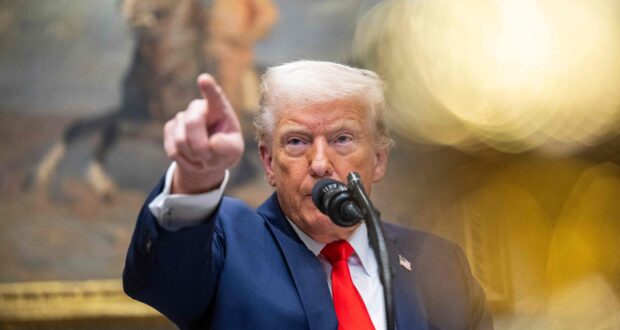
United States President Donald Trump’s first six weeks of his second term has been defined by 76 executive orders, the disestablishment of the national education department and establishment of the Department of Government Efficiency (DOGE).
One of the most controversial executive orders, which is a written directive signed by a president that orders immediate governmental action, was titled “Ending Radical And Wasteful Government DEI Programs And Preferencing,” signed on President Trump’s first day back in office on January 20, 2025.
He directed all federal DEI staff be placed on paid leave and, eventually, laid off. He has also signed another Executive Order, titled “Ending Illegal Discrimination and Restoring Merit-Based Opportunity.”
DEI stands for diversity, equity and inclusion, and refers to programs and committees that help people from underrepresented backgrounds (women, Indigenous, Black, for instance) get into, and stay in, jobs or courses those people wouldn’t traditionally participate in. It is largely similar to the strategy of the Australian Universities Accord.
President Trump has also cut funding to schools and universities that do not cancel DEI programs. He labelled the programs “radical,” “wasteful” and said they demonstrate “immense public waste and shameful discrimination.”
The full effects of these Executive Orders and DEI changes are yet to be seen because decisions regarding DEI will ultimately be made by the court.
However, private companies in the US have walked away from internal DEI programs, including Meta (which has worked closely with Trump as of late), Google (which provides some services to the US government), Pepsi, Disney and multiple prominent banks.
There has been no significant walk away from DEI in Australian private companies, and many universities continue to discuss how to bolster and “future-proof” internal DEI programs.
Australia’s ambassador to the US from 2020 to 2023, Arthur Sinodinos, told the Universities Australia Solutions Summit last week that institutions are best off making decisions “based off their objectives,” but should enact genuine change, not just tick diversity boxes.
Arthur Sinodinos said DEI should be about achieving true diversity rather than ticking boxes. Picture: Sam Ruttyn “My view on DEI is that [universities should] start from a posture that they want to make the best use of all the talent and resources available to them,” he said.
“If you’re also interested in trying to expand the reach of higher education to groups that might otherwise be disadvantaged, you have to find ways to do that, but in a way that also addresses the genuine issue.
“I think access to higher education is still important for a country like Australia, which has to make – given its population – the best use of the resources it’s got.
“The argument that you can just leave it to the market, the meritocracy will still be there [is wrong]. Frankly, in the market, some people start with a head start with with inbuilt advantages.”
President Trump’s former White House chief of staff Mick Mulvaney, who was also on the panel at the UA summit, said he thinks DEI programs in the US have gone “too far to one side.”
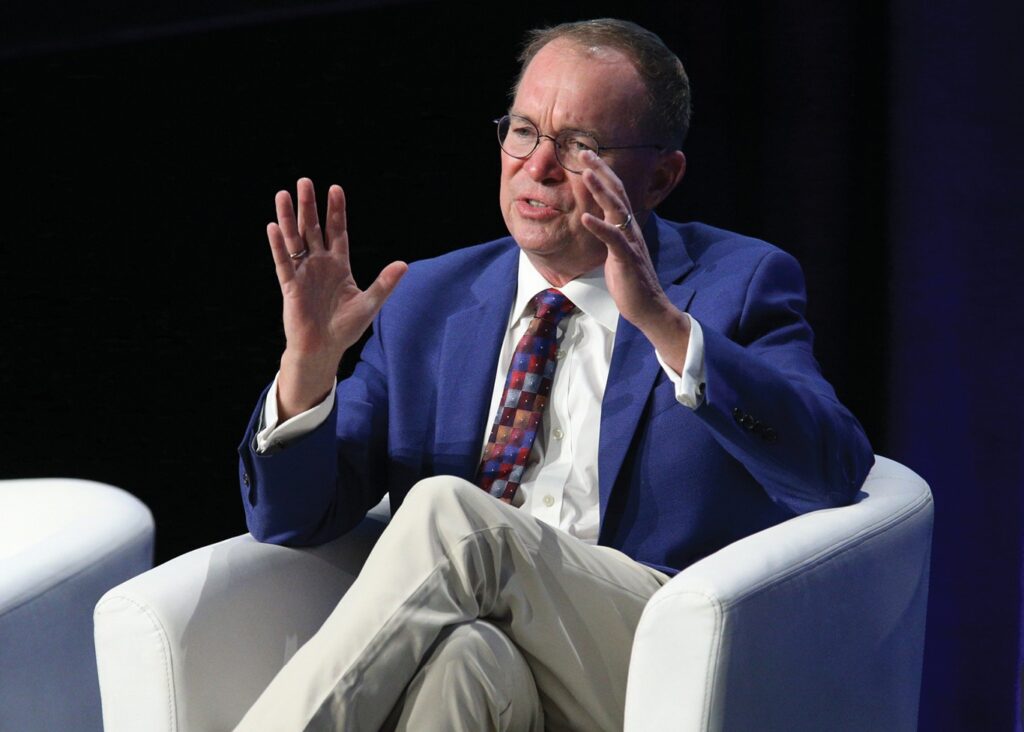
Former Trump White House chief of staff Mick Mulvaney said he thinks DEI has gone “too far” in the US. Picture: UA “One of the reasons you’re seeing the pushback against it in my country is that it went too far to one side. I don’t know where it is in this country, but at some point it may go too far, and the pushback will come.”
He also explained why this Trump term is already more action-packed than his first was at this time: the President expected to win in November, 2024, but not in 2016.
“Not only did [Trump] expect to win, [his team has] been working for four years on what they would do when they won,” he said.
“What are we gonna do the first day? The first week, the first month, the first 100 days? Which is why we’re seeing all these executive orders. It’s actually four years worth of planning coming forward.”
Mr Mulvaney said he thinks DEI could survive if its reasoning for existing is communicated in a tailored way.
He said Trump’s administration is receptive to initiatives that improve efficiency, productivity and merit.
“You could have a program that is good on on the climate, [for example,] but that’s not your selling pitch. That doesn’t register with the person you’re talking to,” he explained.
Related stories: “Unis are not Centrelink offices”: Coalition’s pitch to university leaders | Q&A: Bill Shorten talks VC pay cuts and politics in HE | Report card: Accord recommendations 12 months on
“You have to learn how to speak the language of the person you’re talking to. Don’t change what you’re doing, perhaps just simply change how you explain it.”
UA chief executive Luke Sheehy was asked after his National Press Club address last Wednesday whether he thinks an “anti-woke” sentiment will affect how universities function.
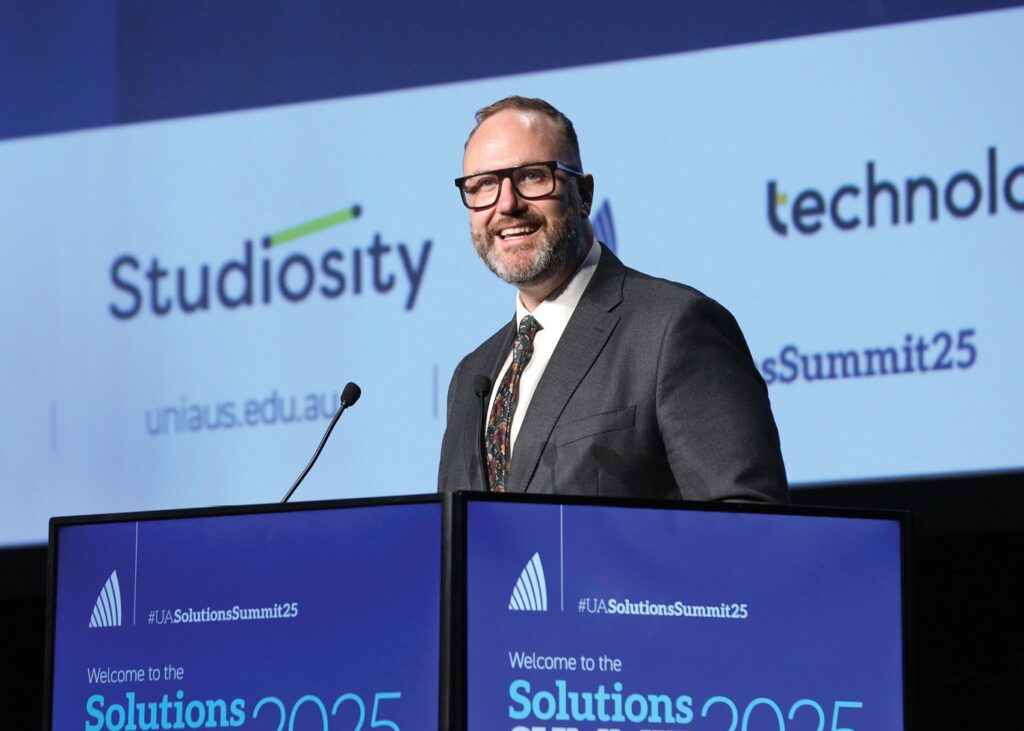
Luke Sheehy’s membership body discussed the impact of “Trump 2.0” at last week’s conference. Picture: UA “Obviously there’s a major disruption that’s happened in America with Trump 2.0 … One of the things we’ve learned is, once articulated in a certain way, positive sentiment skyrockets for universities,” he responded.
“If you offer a simple proposition: we have 4,000 fewer teachers than we need today ,and universities are the only way to get those skilled workers into the workforce to support young people; we need 132,000 more nurses, etc.
“Then remove yourself from what happens on the front pages of newspapers and what occupies political pundits, and think about what the real Australian people need and want from the university sector.
“My hope is that the more we talk about the important role of universities and our core mission in education and research, the more Australians, irrespective of whether or not they went to university or not, they see the value for us as part of our future.”
The university sector’s declining “social license” has been a major topic of discussion of late for university leaders.
There is a growing sentiment that universities, and the knowledge economy, needs to “show” society why they’re worth the funding and enrolments.
“We always have more work to do. In an era where there is declining trust in institutions, I think it’s really important that universities invest in themselves in terms of how they engage with their communities,” Mr Sheehy continued.
-

Arizona bill to cut off state funding over college DEI courses gains traction
This audio is auto-generated. Please let us know if you have feedback.Dive Brief:
- An Arizona bill that would cut all state funding for public colleges offering classroom instruction related to diversity, equity and inclusion cleared a key legislative hurdle Thursday. State Senate lawmakers advanced the bill in a preliminary vote, and a final Senate vote on the measure could come as soon as Monday.
- If enacted, the legislation would prohibit faculty at the state’s public universities and community colleges from relating “contemporary American society” to a wide range of social and economic topics, including whiteness, antiracism, unconscious bias and gender-based equity.
- It would also ban colleges from teaching that racially neutral or color-blind policies or institutions “perpetuate oppression, injustice, race-based privilege, including white supremacy and white privilege, or inequity.”
Dive Insight:
State Sen. David Farnsworth introduced the bill earlier this month, saying in a recent press release that he was motivated to do so after taking a class at a nearby community college.
“The course provided by the local community college represents the very ideology that is dividing America, teaching students to view white American men through a lens of privilege and oppression,” he said.
Farnsworth further described education about gender fluidity as “indoctrination” and said his proposal puts “students’ academic futures over political agendas.”
If the bill is enacted, faculty would not be allowed to “relate contemporary American society to”:
- Critical theory.
- Whiteness.
- Systemic racism.
- Institutional racism.
- Antiracism.
- Microaggressions.
- Systemic bias.
- Implicit bias.
- Unconscious bias.
- Intersectionality.
- Gender identity.
- Social justice.
- Cultural competence.
- Allyship.
- Race-based reparations.
- Race-based privilege.
- Race-based diversity.
- Gender-based diversity.
- Race-based equity.
- Gender-based equity.
- Race-based inclusion.
- Gender-based inclusion.
The bill would allow colleges to teach about subjects related to racial hatred or race-based discrimination, like slavery and Japanese-American internment in World War II — but only if instructors do not include any of the above subjects.
The proposal faces an uncertain fate, as control of Arizona’s executive and legislative branches is split between parties, with a Democratic governor but Republican control of the House and Senate.
Despite growing more conservative through the 2024 election, the Republican party doesn’t have a veto-proof supermajority. And Arizona Gov. Katie Hobbs, who has voiced support for and spearheaded DEI initiatives, is unlikely to sign the bill.
Even so, the bill threatens large pools of funding for Arizona’s higher education institutions, especially its three public universities.
Arizona’s public four-year institutions receive 74% of their funding from state support, according to a 2024 report from the State Higher Education Executive Officers Association.
For example, the University of Arizona’s main campus got almost $303 million in state general funds in fiscal 2024.
Farnsworth’s bill comes as Arizona colleges are already facing two powerful headwinds — a $96.9 million reduction in overall state funding for fiscal year 2025 and a wave of federal DEI restrictions.
Since taking office Jan. 20, President Donald Trump has signed executive orders attempting to eliminate DEI in higher education and elsewhere, though a court order recently blocked major portions of two of those orders. And the U.S. Department of Education recently issued guidance giving colleges until the end of February to cut all DEI or risk losing federal funding.
The University of Arizona recently took down the webpage for its Office of Diversity and Inclusion. The flagship also removed references to “diversity” and “inclusion” from its land acknowledgement — a statement recognizing the Indigenous tribal land the campus sits on — though the original version remains available on at least one department webpage.
Protesters on the University of Arizona’s main campus called on the institution’s leaders Thursday to continue its DEI initiatives.
As of Thursday evening, almost 2,500 University of Arizona students, employees, affiliates and others signed a letter calling for the institution to reverse the changes it made to its web presence.
“We view your actions as preemptive and harmful over-compliance,” the letter reads, referencing the university’s response to the Education Department’s guidance and Trump’s executive orders. “Faculty, staff, and students should not have to fear political retaliation for upholding academic freedom, engaging in free speech, or advocating for their rights.”
-

Accreditors offer flexibility on DEI standards
President Donald Trump’s broadside against diversity, equity and inclusion has left colleges scrambling to determine how to comply—even as they juggle accreditation standards containing elements of DEI.
But even with an executive order from the Trump administration targeting “illegal” DEI programs at colleges blocked by the courts, and a Dear Colleague letter from the Education Department likely unenforceable, accreditors are treading lightly on DEI, allowing colleges leeway on complying to certain standards. If the accreditors didn’t provide such flexibility, colleges would essentially have to decide between complying with the federal government or with their accreditor—a nearly impossible situation for institutions.
Some, like the STEM accreditor ABET, have dropped DEI standards entirely. And the American Bar Association suspended enforcement of its DEI standards through August while it weighs revisions to such requirements.
As colleges feel the squeeze, some of the largest institutional accreditors have decided not to force colleges to choose between them or the Education Department, at least for now, largely telling institutions they will not be adversely affected if they fail to comply with DEI standards due to state or federal laws.
Accreditors Push Back
While accreditors allow colleges to operate with flexibility on DEI standards, some are also pushing back on the Trump administration’s crackdown, particularly the Dear Colleague letter that seeks to expand a Supreme Court opinion in the Students for Fair Admissions case, which shot down affirmative action, to ban race-conscious scholarships, programming and more.
“We would suggest that the [U.S. Department of Education’s] interpretation of SFFA is overly broad and expansive, a concern shared among legal experts,” the Council of Regional Accrediting Commissions wrote in a letter to the Trump administration Monday.
C-RAC officials added that the 14-day deadline for colleges to drop all race-conscious activities is “unreasonable” and that “the expectations for institutional actions or the methods through which institutions are expected to comply with these broad reaching requirements are unclear.”
Numerous accreditors also signed on to a letter to the department from the American Council on Education, which raised similar concerns. That letter also noted that, “however one defines DEI—and DEI is a concept that means different things to different parties—it is worth noting that the range of activities that are commonly associated with DEI are not, in and of themselves, illegal.”
Offering Flexibility
As accreditors press the Department of Education for clarity, they have also provided guidance to colleges, emphasizing that their member institutions must follow state and federal laws.
“What we have said is that they can be assured we would not take any adverse action with regard to any of our standards if the institution is attempting to follow what they believe is a legal requirement,” Larry Schall, president of the New England Commission of Higher Education, told Inside Higher Ed.
Nicole Biever, chief of staff at the Middle States Commission on Higher Education, wrote by email that the organization has notified institutions “that the Commission would never expect any institution to violate the laws or government mandates of the jurisdictions in which they operate.”
She added that MSCHE standards “will in no way inhibit” institutional compliance with the law.
Barbara Gellman-Danley, president of the Higher Learning Commission, emphasized in an email to Inside Higher Ed that institutions must comply with all members of the regulatory triad, comprised of accreditors, state governments and the federal Department of Education. If “HLC’s requirements overlap with requirements from other members of the Triad, we work with the other Triad members to identify these situations and limit the burden on the institution,” she wrote.
“HLC does not prescribe how a member institution meets HLC’s requirements,” she added. “If a requirement of another entity of the Triad may appear to limit an institution’s ability to meet HLC’s requirements in a particular manner, an institution has the flexibility within HLC’s requirements to identify other ways to demonstrate it meets HLC’s requirements.”
In guidance sent to member institutions, Western Association of Schools and Colleges Senior College and University Commission interim president Christopher Oberg noted that the Dear Colleague letter does not have the force of the law and encouraged institutions “to consult their own legal counsel to help navigate the Department’s guidance.” Oberg added that the organization “will continue to provide updates to member institutions as matters are clarified.”
The Accrediting Commission for Community and Junior Colleges has also emphasized flexibility in its guidance to members.
“It is important to note that as a federally recognized institutional accreditor, ACCJC would never require a member institution to violate state or federal laws and regulations or consumer protection clauses. As an agency, we are beholden to the federal government, state governments, and our member institutions, and work collaboratively and flexibly with those oversight partners to meet any and all regulations and communicate requirements to member institutions, as necessary,” AACJC president Mac Powell wrote by email.
What Are the DEI Standards?
Policies on DEI are as varied as the accreditors themselves, with different requirements or none at all.
For instance, NECHE’s accreditation criteria urge member institutions to address their “own goals for the achievement of diversity, equity, and inclusion” across the student body, faculty and staff.
But MSCHE’s accreditation criteria require institutions to “reflect deeply and share results on diversity, equity, and inclusion (DEI) in the context of their mission” across areas such as goals and actions, demographics, policies, processes, assessments, and resource allocation.
“One goal of DEI reflection would be to address disparate impacts on an increasingly diverse student population if discovered,” part of MSCHE’s standards reads. Elsewhere, MSCHE indicates that candidates for accreditation should have “sufficient diversity, independence, and expertise to ensure the integrity of the institution.”
Other accreditors, such as HLC, say that an accredited college should strive “to ensure that the overall composition of its faculty and staff reflects human diversity as appropriate within its mission and for the constituencies it serves.”
Others, such as programmatic accreditors, may have more exacting standards. But some accreditors, like the Southern Association of Colleges and Schools Commission on Colleges, have never included DEI criteria.
Northwest Commission on Colleges and Universities interim president Jeff Fox told Inside Higher Ed by email that it too has never officially had DEI standards as part of its accreditation requirements.
“The NWCCU has no language in the standards pertaining to DEI, and it recognizes institutions are addressing the requirements of various state and federal laws in this arena. The NWCCU supports institutions in their efforts to address the DCL as appropriate for their circumstances,” Fox wrote.
‘Very Little Danger’
Some critics, particularly on the conservative side, take a dim view of accreditors’ DEI standards. Andrew Gillen, a research fellow at the conservative Cato Institute’s Center for Educational Freedom, wrote in a recent paper that “accreditors too often abuse their power as gatekeepers” to federal financial aid, including in areas such as pushing DEI standards.
On paper, such standards look fine, he wrote to Inside Higher Ed by email. But he questions how such standards get enforced, arguing that “the problem is the interpretation of those standards. Accreditors can and do use vague standards to force radical changes on campus.”
Gillen pointed to a past conflict in 2000 when—he argued—the ABA “used innocuous and vague diversity requirements to force George Mason University Law School to discriminate in favor of Black applicants by simply rejecting anything the university did short of discriminating.”
But Gillen believes colleges face little risk if they fail to comply with accreditors’ DEI standards.
“Colleges are in very little danger so long as they follow federal civil rights laws, which have largely reverted to their original intention of promoting colorblindness,” he wrote. “Any state or accreditor that requires violating these laws will find itself in a world of legal trouble. Accreditors that ignore civil rights laws would lose their recognition from the Department of Education, and colleges that followed such requirements would also lose access to federal aid programs.”
Robert Shireman, a senior fellow at the progressive Century Foundation and a member of the National Advisory Committee on Institutional Quality and Integrity, which advises the education secretary on accreditation, downplays the notion that accreditors’ DEI standards are burdensome.
Typically, he told Inside Higher Ed, accreditors’ DEI requirements are minimal. Such standards tend to focus on inclusivity, but he notes that accreditors are “not enforcing any kind of quota.”
At a recent NACIQI meeting, he said when asked about changing DEI standards, accreditors indicated they didn’t plan to do so because “they feel that there’s nothing inappropriate about the approaches that they are taking, and they are holding firm.” He added that accreditors recognize “schools have to comply with laws, whether those laws are federal laws or state laws.”
There’s also an outstanding question on how the Trump administration is defining DEI.
“‘DEI’ has become this undefined term that gets interpreted in certain kinds of ways,” Shireman said. “And most accreditors are quite flexible in their approach to diversity, equity and inclusion.”
In a time of uncertainty, Shireman believes many institutions want to see accreditors hold firm on DEI while they push ED for guidance on terminating race-conscious activities and programming.
Shireman points to “surprise and outrage” over what he calls “an absurd perversion of civil rights laws that is happening in this administration. To read civil rights laws as prohibiting a caring approach to providing opportunity is Orwellian and it’s not appropriate. I don’t think schools support the idea of accreditors caving in to a backwards interpretation of civil rights laws.”
-
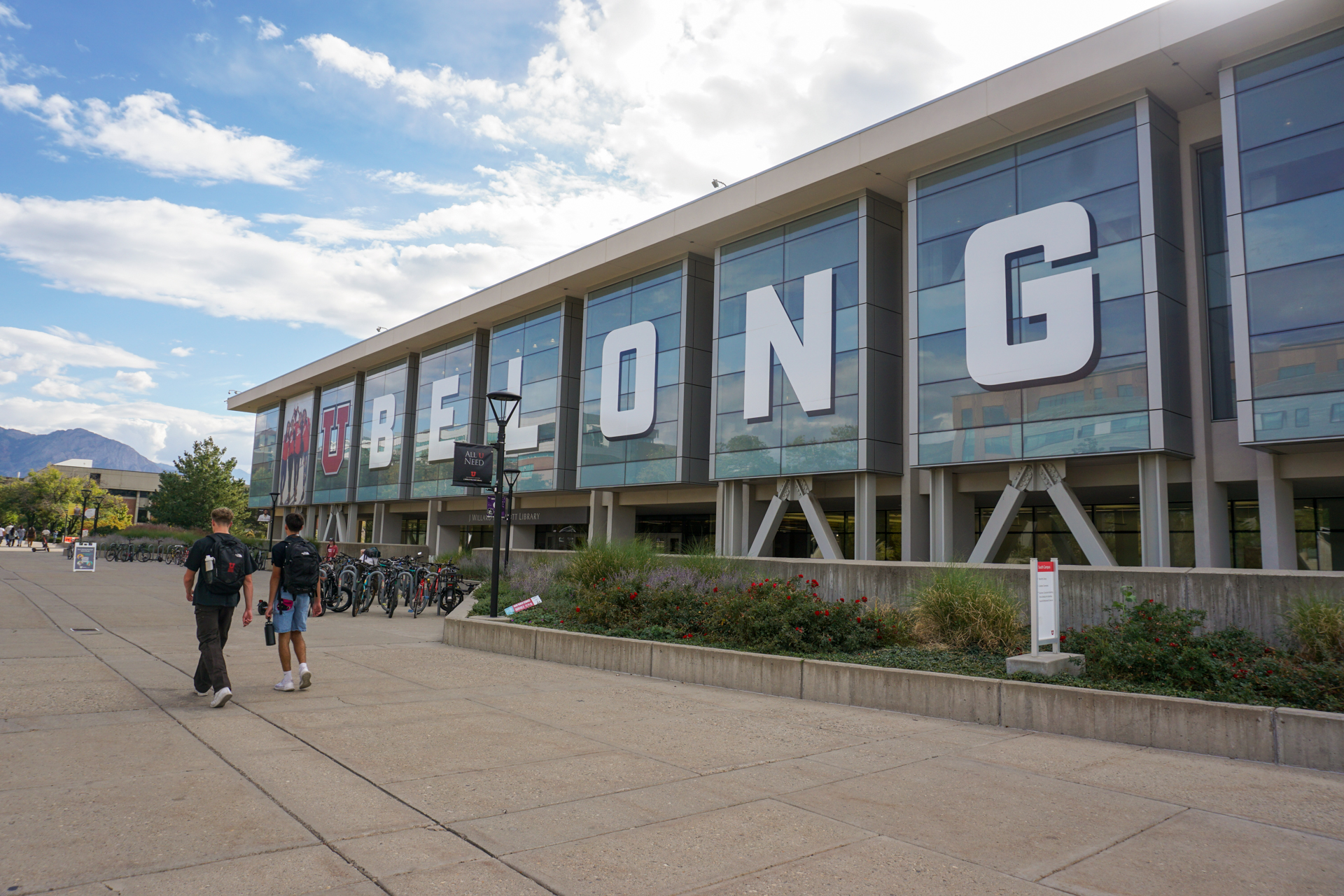
A new Utah law has caused the University of Utah to severely limit DEI initiatives on campus, in a case study of what might happen in other states
SALT LAKE CITY — Nineteen-year-old Nevaeh Parker spent the fall semester at the University of Utah trying to figure out how to lead a student group that had been undercut overnight by matters far beyond student control.
Parker, the president of the Black Student Union, feared that a new Utah law banning diversity, equity and inclusion efforts at public colleges had sent a message to students from historically marginalized groups that they aren’t valued on campus. So this spring, while juggling 18 credit hours, an internship, a role in student government and waiting tables at a local cafe, she is doing everything in her power to change that message.
Because the university cut off support for the BSU — as well as groups for Asian American and for Pacific Islander students — Parker is organizing the BSU’s monthly meetings on a bare-bones budget that comes from student government funding for hundreds of clubs. She often drives to pick up the meeting’s pizza to avoid wasting those precious dollars on delivery fees. And she’s helping organize large community events that can help Black, Asian and Latino students build relationships with each other and connect with people working in Salt Lake City for mentorship and professional networking opportunities.
Nineteen-year-old University of Utah student Nevaeh Parker is working hard to keep the Black Student Union going after the organization lost financial support. Credit: Image provided by Duncan Allen “Sometimes that means I’m sacrificing my grades, my personal time, my family,” Parker, a sophomore, said. “It makes it harder to succeed and achieve the things I want to achieve.”
But she’s dedicated to keeping the BSU going because it means so much to her fellow Black students. She said several of her peers have told her they don’t feel they have a place on campus and are considering transferring or dropping out.
Utah’s law arose from a conservative view that DEI initiatives promote different treatment of students based on race, ethnicity, gender or sexuality. House Bill 261, known as “Equal Opportunity Initiatives,” which took effect last July, broadly banished DEI efforts and prohibited institutions or their representatives speaking about related topics at public colleges and government agencies. Violators risk losing state funding.
Now President Donald Trump has set out to squelch DEI work across the federal government and in schools, colleges and businesses everywhere, through DEI-related executive orders and a recent “Dear Colleague” letter. As more states decide to banish DEI, Utah’s campus may represent what’s to come nationwide.
Related: Interested in more news about colleges and universities? Subscribe to our free biweekly higher education newsletter.
Because of the new state law, the university last year closed the Black Cultural Center, the Center for Equity and Student Belonging, the LGBT Resource Center and the Women’s Resource Center – in addition to making funding cuts to the student affinity groups.
In place of these centers, the university opened a new Center for Community and Cultural Engagement, to offer programming for education, celebration and awareness of different identity and cultural groups, and a new Center for Student Access and Resources, to offer practical support services like counseling to all students, regardless of identity.
For many students, the changes may have gone unnoticed. Utah’s undergraduate population is about 63 percent white. Black students are about 1 percent, Asian students about 8 percent and Hispanic students about 14 percent of the student body. Gender identity and sexuality among students is not tracked.
For others, however, the university’s racial composition makes the support of the centers that were eliminated that much more significant.
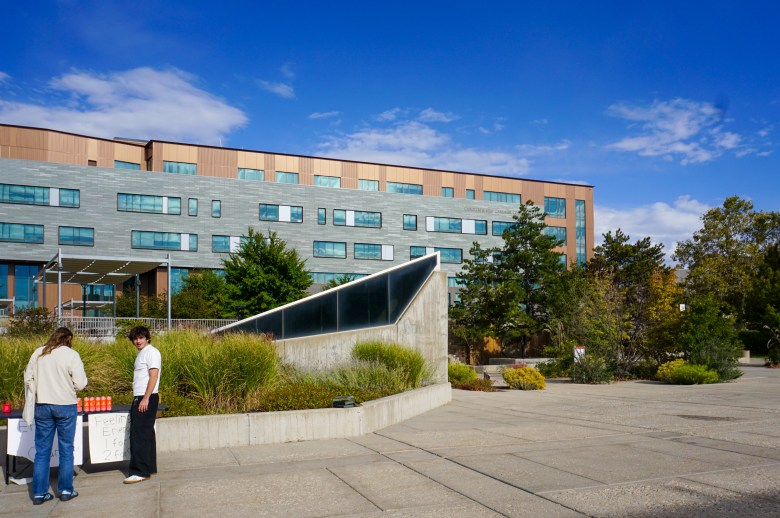
In response to a new state law that broadly banned diversity, equity and inclusion efforts, the University of Utah closed its Center for Equity and Student Belonging, the Black Cultural Center, the Women’s Resource Center and the LGBT Resource Center. Credit: Olivia Sanchez/The Hechinger Report Some — like Parker — have worked to replace what was lost. For example, a group of queer and transgender students formed a student-run Pride Center, with support from the local Utah Pride Center. A few days a week, they set up camp in a study room in the library. They bring in pride flags, informational fliers and rainbow stickers to distribute around the room, and sit at a big table in case other students come looking for a space to study or spend time with friends.
Lori McDonald, the university’s vice president of student affairs, said so far, her staff has not seen as many students spending time in the two new centers as they did when that space was the Women’s Resource Center and the LGBT Resource Center, for example.
“I still hear from students who are grieving the loss of the centers that they felt such ownership of and comfort with,” McDonald said. “I expected that there would still be frustration with the situation, but yet still carrying on and finding new things.”
One of the Utah bill’s co-sponsors was Katy Hall, a Republican state representative. In an email, she said she wanted to ensure that support services were available to all students and that barriers to academic success were removed.
“My aim was to take the politics out of it and move forward with helping students and Utahns to focus on equal treatment under the law for all,” Hall said. “Long term, I hope that students who benefitted from these centers in the past know that the expectation is that they will still be able to receive services and support that they need.”
The law allows Utah colleges to operate cultural centers, so long as they offer only “cultural education, celebration, engagement, and awareness to provide opportunities for all students to learn with and from one another,” according to guidance from the Utah System of Higher Education.
Given the anti-DEI orders coming from the White House and the mandate from the Department of Education earlier this month calling for the elimination of any racial preferences, McDonald said, “This does seem to be a time that higher education will receive more direction on what can and cannot be done.”
But because the University of Utah has already had to make so many changes, she thinks that the university will be able to carry on with the centers and programs it now offers for all students.
Related: Facing legal threats, colleges back off race-based programs
Research has shown that a sense of belonging at college contributes to improved engagement in class and campus activities and to retaining students until they graduate.
“When we take away critical supports that we know have been so instrumental in student engagement and retention, we are not delivering on our promise to ensure student success,” said Royel M. Johnson, director of the national assessment of collegiate campus climates at the University of Southern California Race and Equity Center.
Creating an equitable and inclusive environment requires recognizing that there is no one-size-fits-all approach to supporting students, said Paulette Granberry Russell, president of the National Association of Diversity Officers in Higher Education. A student who grew up poor may not have had the same opportunities in preparing for college as a student from a wealthy or middle-class family. Students from some minority groups or those who are the first in their family to go to college may not understand how to get the support they need.
“This should not be a situation where our students arrive on campus and are expected to sink or swim,” she said.
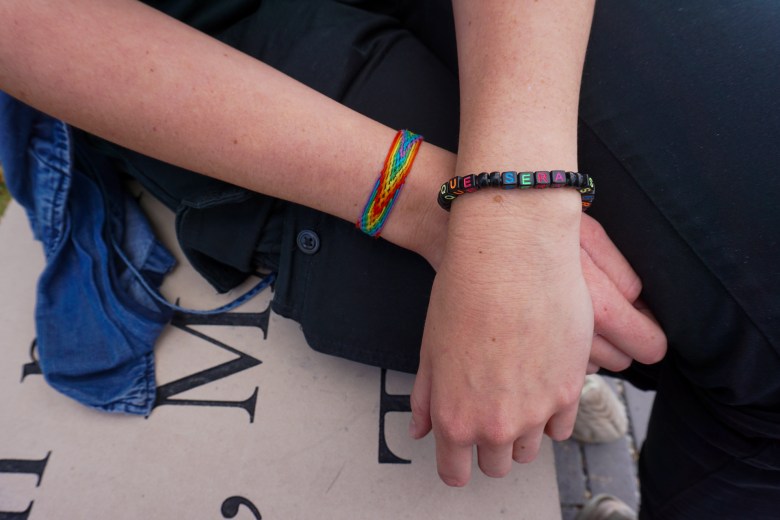
Student Andy Whipple wears a beaded bracelet made at a “Fab Friday” event hosted by the LGBT Resource Center at the University of Utah. The LGBT Resource Center was closed recently to comply with a new state law that limits diversity, equity and inclusion work. Credit: Olivia Sanchez/The Hechinger Report Kirstin Maanum is the director of the new Center for Student Access and Resources; it administers scholarships and guidance previously offered by the now-closed centers. She formerly served as the director of the Women’s Resource Center.
“Students have worked really hard to figure out where their place is and try to get connected,” Maanum said. “It’s on us to be telling students what we offer and even in some cases, what we don’t, and connecting them to places that do offer what they’re looking for.”
That has been difficult, she said, because the changeover happened so quickly, even though some staffers from the closed centers were reassigned to the new centers. (Others were reassigned elsewhere.)
“It was a heavy lift,” Maanum said. “We didn’t really get a chance to pause until this fall. We did a retreat at the end of October and it was the first time I felt like we were able to really reflect on how things were going and essentially do some grief work and team building.”
Before the new state law, the cultural, social and political activities of various student affinity groups used to be financed by the university — up to $11,000 per group per year — but that money was eliminated because it came from the Center for Equity and Student Belonging, which closed. The groups could have retained some financial support from the university if they agreed to avoid speaking about certain topics considered political and to explicitly welcome all students, not just those who shared their race, ethnicity or other personal identity characteristics, according to McDonald. Otherwise, the student groups are left to fundraise and petition the student government for funding alongside hundreds of other clubs.
Related: Tracking Trump — a week-by-week look at his actions on education
Parker said the restrictions on speech felt impossible for the BSU, which often discusses racism and the way bias and discrimination affect students. She said, “Those things are not political, those things are real, and they impact the way students are able to perform on campus.”
She added: “I feel as though me living in this black body automatically makes myself and my existence here political, I feel like it makes my existence here debatable and questioned. I feel like every single day I’m having to prove myself extra.”
In October, she and other leaders of the Black Student Union decided to forgo being sponsored by the university, which had enabled traditional activities such as roller skating nights, a Jollof rice cook-off (which was a chance to engage with different cultures, students said) and speaker forums.
Alex Tokita, a senior who is the president of the Asian American Student Association, said his group did the same. To maintain their relationship with the university by complying with the law, Tokita said, was “bonkers.”
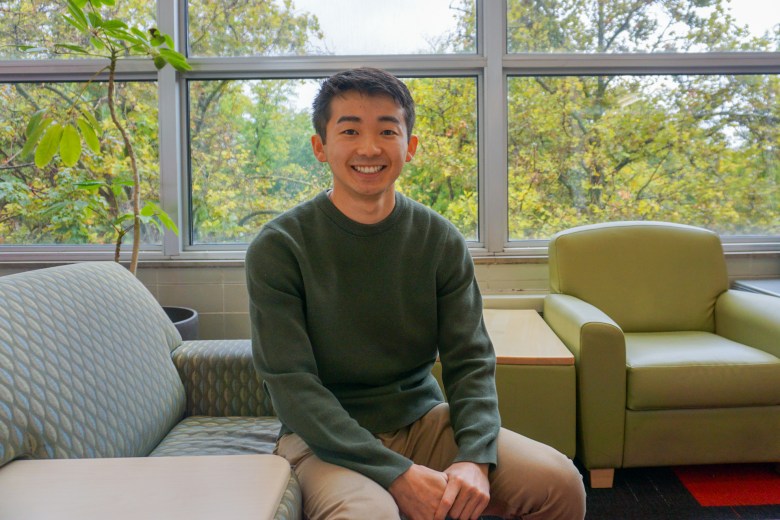
Alex Tokita, a senior at the University of Utah, is the president of the Asian American Student Association. The organization chose to forgo university sponsorship because it did not want to comply with a new state law that restricts speech on certain topics. Credit: Olivia Sanchez/The Hechinger Report Tokita said it doesn’t make sense for the university to host events in observation of historical figures and moments that represent the struggle of marginalized people without being able to discuss things like racial privilege or implicit bias.
“It’s frustrating to me that we can have an MLK Jr. Day, but we can’t talk about implicit bias,” Tokita said. “We can’t talk about critical race theory, bias, implicit bias.”
As a student, Tokita can use these words and discuss these concepts. But he couldn’t if he were speaking on behalf of a university-sponsored organization.
LeiLoni Allan-McLaughlin, of the new Center for Community and Cultural Engagement, said that some students believe they must comply with the law even if they are not representing the university or participating in sponsored groups.
“We’ve been having to continually inform them, ‘Yes, you can use those words. We cannot,’” Allan-McLaughlin said. “That’s been a roadblock for our office and for the students, because these are things that they’re studying so they need to use those words in their research, but also to advocate for each other and themselves.”
Related: Cutting race-based scholarships blocks path to college, students say
Last fall, Allan-McLaughlin’s center hosted an event around the time of National Coming Out Day, in October, with a screening of “Paris Is Burning,” a film about trans women and drag queens in New York City in the 1980s. Afterward, two staff members led a discussion with the students who attended. They prefaced the discussion with a disclaimer, saying that they were not speaking on behalf of the university.
Center staffers also set up an interactive exhibit in honor of National Coming Out Day, where students could write their experiences on colorful notecards and pin them on a bulletin board; created an altar for students to observe Día de los Muertos, in early November, and held an event to celebrate indigenous art. So far this semester, the center has hosted several events in observance of Martin Luther King Jr. Day and Black History Month, including an educational panel, a march and a pop-up library event.
Such events may add value to the campus experience overall, but students from groups that aren’t well represented on campus argue that those events do not make up for the loss of dedicated spaces to spend time with other students of similar backgrounds.
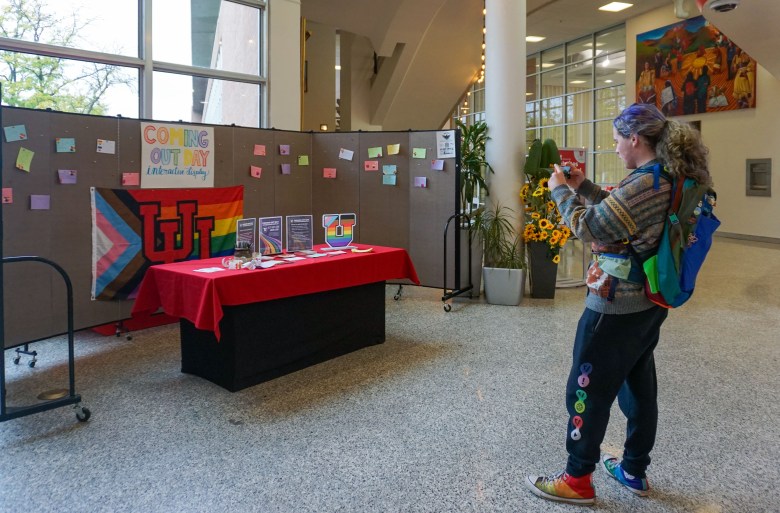
Sophomore Juniper Nilsson looks at a National Coming Out Day exhibit in the student union at the University of Utah. The exhibit was set up by the new Center for Community and Cultural Engagement. Credit: Olivia Sanchez/The Hechinger Report For Taylor White, a recent graduate with a degree in psychology, connecting with fellow Black students through BSU events was, “honestly, the biggest relief of my life.” At the Black Cultural Center, she said, students could talk about what it was like to be the only Black person in their classes or to be Black in other predominantly white spaces. She said without the support of other Black students, she’s not sure she would have been able to finish her degree.
Nnenna Eke-Ukoh, a 2024 graduate who is now pursuing a master’s in higher educational leadership at nearby Weber State University, said it feels like the new Center for Community and Cultural Engagement at her alma mater is “lumping all the people of color together.”
“We’re not all the same,” Eke-Ukoh said, “and we have all different struggles, and so it’s not going to be helpful.”
Contact staff writer Olivia Sanchez at 212-678-8402 or [email protected].
This story about campus DEI initiatives was produced by The Hechinger Report, a nonprofit, independent news organization focused on inequality and innovation in education. Sign up for the Hechinger newsletter.
-
A surge of DEI cuts hits colleges across the US
This audio is auto-generated. Please let us know if you have feedback.Recent attacks on diversity, equity and inclusion have rocked the higher education sector, with the Trump administration ratcheting up the conservative-led fight against those efforts.
President Donald Trump has signed multiple executive orders aimed at eliminating DEI across higher education and other sectors.
More recently, the U.S. Department of Education issued guidance barring colleges from weighing race in any decision-making or promoting diversity efforts. The letter — which used broad language and stirred confusion among colleges — triggered immediate backlash from free speech and faculty groups.
The department gave colleges until Friday to comply or risk losing their federal funding.
Higher education groups have challenged the legality of the directives from both the White House and the Education Department.
A federal judge temporarily blocked major portions of Trump’s anti-DEI executive orders last week. And the American Federation of Teachers, one of the largest unions in the higher education sector, sued the Education Department over its guidance.
But with no clear outcome, the following colleges are stripping down their diversity efforts to avoid endangering their funding.
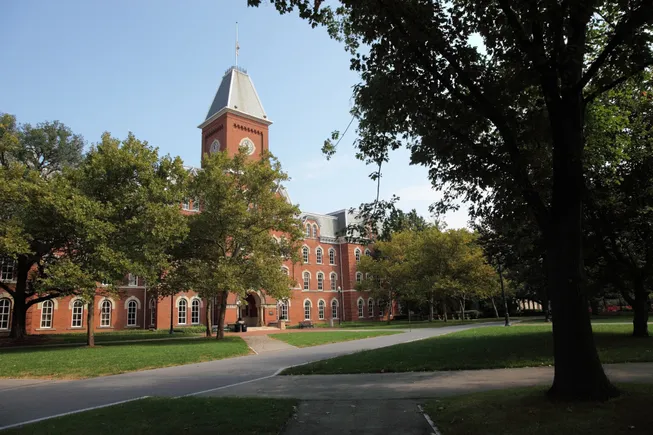
Ohio State University
Ohio State University said Thursday it will eliminate its DEI offices and programming effective Friday. The state flagship plans to close its Office of Diversity and Inclusion and discontinue services at its Center for Belonging and Social Change less than 24 hours after announcing the change.
The move will result in job cuts, though Ohio State did not specify how many.
“The federal government has signaled its intent to enforce guidance invalidating the use of race in a broad range of educational activities, including by withdrawing federal dollars that are so important to our student, academic and operational success,” Ohio State President Ted Carter wrote in a letter to students and employees.
In addition to federal forces, the university faces anti-DEI efforts from the Ohio Legislature. The Republican-controlled body is weighing a massive higher education bill that would, among other things, ban the state’s public colleges from having DEI offices or taking positions on “controversial” topics, such as climate or immigration policies, DEI, or abortion.
“Here in Ohio, a bill barring DEI is also making its way through the legislature, and the Attorney General of Ohio – our statutory counsel – has advised us that his office concurs with the federal government’s position regarding the use of race in educational activities,” Carter said.
The university’s Office of Academic Affairs will continue to offer the Young Scholars Program and the Morrill Scholarship Program with modified eligibility. The former is currently open to low-income, first generation students, while the latter is open to students “actively engaged in diversity-based leadership, service, and social justice activities,” according to their web pages.
The university will also rename its Office of Institutional Equity as the Office of Civil Rights Compliance “to more accurately reflect its work,” according to Carter.
“Our goal is to ensure that Ohio State continues to be a place where all are welcomed and treated with respect, while following the letter and spirit of the laws and regulations that govern us,” he said.
Ohio State leaders announced earlier this month they were evaluating the university’s roles and DEI work so they could “make changes if state or federal law requires it or if we decide a different approach is in the university’s best interests.”
The cuts to DEI will not reduce current student scholarships or financial aid, Carter said Thursday. Ohio State will offer alternative jobs to affected student employees.
The University of Cincinnati
The University of Cincinnati is stuck in limbo — its president announced a complete dissolution of the public institution’s DEI efforts before appearing to walk back the announcement just days later.
On Feb. 21, President Neville Pinto said the university would eliminate all DEI initiatives to comply with one of Trump’s executive orders and the Education Department’s guidance.
“It is untenable to operate as if noncompliance with these directives is an effective option,” Pinto wrote in a community letter. “Given this new landscape, Ohio public and federally supported institutions like ours have little choice but to follow the laws that govern us.”
Pinto said at the time that the University of Cincinnati was reviewing its jobs, programming and projects to eliminate DEI aspects. The institution had also begun removing “references to DEI principles” from its web presence and communications.
“I recognize that these decisions are weighty, and these actions are a departure from decades of established practice within academic communities,” Pinto wrote. “I also continue to ask for your patience and understanding as we do the hard work that will be required to unwind many years of DEI efforts under an extremely compressed timeline.”
The decision sparked multiple days of protests from students, faculty and staff.
According to local news sources, Pinto told protesters at the university’s Feb. 25 board of trustees meeting that all DEI-related programming would continue until final decisions had been made regarding the proposed state legislation and Trump’s executive orders.
The University of Pennsylvania
The University of Pennsylvania has recently scrubbed references to DEI from its offices, websites and policies, as well as the phrase “affirmative action.”
The Ivy League institution renamed its “Equal Opportunity and Affirmative Action Policy” to its “Policy on Equal Opportunity.”
A previous version of the policy said “Diversity is prized at Penn as a central component of its mission and helps create an educational and working environment that best supports the University’s commitment to excellence in teaching, research, and scholarship.”
The current version does not reference diversity, instead saying: “The University of Pennsylvania’s special character is reflected in the wide variety of backgrounds, experiences, and perspectives of the Penn community.”
The university also retitled its main inclusion website as “Belonging at UPenn,” replacing “Diversity and Inclusion.” Beginning Feb. 22, diversity.upenn.edu redirected to belonging.upenn.edu.
One of the university’s student resource centers, previously known as The Office of Affirmative Action and Equal Opportunity Programs, is now called the Office of Equal Opportunity Programs.
Several schools and departments within UPenn — including its schools of medicine, design, communications and law — have also removed or replaced references to DEI from their web presences, according to The Daily Pennsylvanian, the university student-led newspaper.
Philadelphia lawmakers met with university leaders this week but two walked out after they took issue with college officials’ explanations on why UPenn had reversed its stance on DEI, according to WHYY.
Ivy Tech Community College
In Indiana, Ivy Tech Community College announced it will close its DEI programs and offices on March 12, following Trump’s executive orders.”
Ivy Tech President Sue Ellspermann said the college relies largely on state and federal funding, citing pending policies at both levels of government when announcing the forthcoming closures, according to a copy of her letter obtained by WTHI.
“While state laws and federal actions are not yet finalized, the College is acting now to protect our federal and state funding so we can ensure uninterrupted services and provide ample time for adjustment in our operations,” she said.
Affected college employees will receive career support services and will be “encouraged to apply for open positions in the College,” according to Ellspermann.
The soon-to-be closed office promotes “cultural and intellectual diversity” and hosts events for cultural heritage months, including for Women’s History Month, Black History Month, LGBTQ+ History Month and Native American Heritage Month, according to Ivy Tech’s website.
The University of Alaska
Regents for the University of Alaska ordered the system to scrub all references to diversity, equity, inclusion “or other associated terms” from its communications and programs, including websites and job titles. The Feb. 21 directive cited Trump’s executive orders against DEI.
The regent vote was nearly unanimous, with the only dissent coming from the board’s student member, Alaska Public Media reported.
In a recent op-ed in the Anchorage Daily News, the leadership of the University of Alaska Faculty Alliance called the regents’ decision “rash and censorious” and noted that the board’s approved meeting agenda did not give the public notice of the anti-DEI motion.
“This unilateral decision undermines our universities’ respective strategic plans that form the foundation for our accreditations,” the chairs wrote. “A decision without public process belittles the dedication and labor of those who openly collaborated to create these plans.”
The alliance also criticized the ban’s broad language, saying it gave regents free reign to expand the list of prohibited words.
The University of Iowa
Amid federal and state pressures, the University of Iowa has eliminated some of its living learning communities — residential programs allowing on-campus students to live in groups based on identity, degree program or common interest.
The university will not offer living learning communities for Black students, Latinx students and LGBTQ+ students during the 2025-2026 academic year, according to its website. University officials confirmed to The Gazette that it will not offer those three living learning communities going forward but declined to comment further.
In July, a new state law will take effect banning Iowa’s three public universities from funding or maintaining DEI offices. And back in 2023, the Iowa Board of Regents — which oversees the universities — ordered them to cut all DEI efforts not required to comply with the law or accreditation standards.
On Feb. 24, the president of the University of Iowa, Barbara Wilson, told lawmakers that the college has complied with their DEI ban.
“We’ve closed offices, we’ve gotten rid of every DEI committee in every department across every college,” she said, according to The Gazette. “We have retained a central office, but we’ve eliminated about 11 positions in that central office, and it’s focused primarily on civil rights, access and opportunity.”
Wilson also said she couldn’t “imagine getting rid of the word diversity” but would do so if directed to by lawmakers.
Des Moines Area Community College
Des Moines Area Community College in Iowa has paused its DEI efforts, including diversity-focused trainings and task forces, according to the Des Moines Register. It also removed information regarding its diversity commission from its website, as of Jan. 27.
Like the University of Iowa, the public college has faced increasing pressure from conservative state lawmakers to roll back diversity efforts.
On Feb. 26, the Iowa House’s higher education committee advanced a bill that would prohibit community colleges from having DEI offices, like their university counterparts. The committee chair acknowledged the state’s community colleges are already complying with the proposed standard but said lawmakers should codify the rule, according to the Iowa Capital Dispatch.
Grand View University
Grand View University, in Iowa, canceled its plans for International Women’s Day set for March 8 amid changing federal and state anti-diversity policies, according to Axios. A spokesperson for the private college said Grand View wants to ensure its events aren’t exclusionary.
Iowa lawmakers are also taking aim at private colleges’ DEI efforts.
On Feb. 26, the House’s higher education committee advanced a bill that would ban DEI offices at the state’s private colleges, unless required by federal law or accreditation. If the legislation passes, those that don’t comply could lose access to the Iowa Tuition Grant program, which offers scholarships to students enrolled in private colleges in the state.
-
U.S. Department of Education Launches “End DEI” Portal (US Department of Education)
WASHINGTON – Today, the U.S. Department of Education launched EndDEI.Ed.Gov, a public portal for parents, students, teachers, and the broader community to submit reports of discrimination based on race or sex in publicly-funded K-12 schools.
The secure portal allows parents to provide an email address, the name of the student’s school or school district, and details of the concerning practices. The Department of Education will use submissions as a guide to identify potential areas for investigation.
“For years, parents have been begging schools to focus on teaching their kids practical skills like reading, writing, and math, instead of pushing critical theory, rogue sex education and divisive ideologies—but their concerns have been brushed off, mocked, or shut down entirely,” said Tiffany Justice, Co-Founder of Moms for Liberty. “Parents, now is the time that you share the receipts of the betrayal that has happened in our public schools. This webpage demonstrates that President Trump’s Department of Education is putting power back in the hands of parents.”
-

Dismantling DEI Is a Direct Attack on Women in STEM
Science, technology, engineering, and mathematics (STEM) are the center of innovation, fueling advancements that drive economic growth and improve lives. Yet, despite decades of progress, the gender gap in STEM remains a barrier.
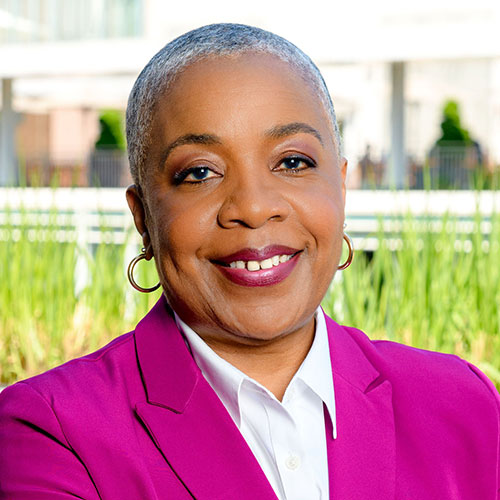
Gloria L. Blackwell
CEO, American Association of University Women (AAUW)
Women, particularly women of color, are still underrepresented in these critical fields, and recent efforts to dismantle diversity, equity, and inclusion (DEI) initiatives in higher education threaten to push us back even further. If we are serious about securing America’s place as a global leader in innovation, we should be doubling down on investing in women — not gutting the very programs that support their success.
The data is clear: Diverse companies are 39% more likely to drive better solutions than those that are not. In fields like artificial intelligence, where racial and gender biases have led to flawed algorithms with real-world consequences, the need for a broad range of perspectives is undeniable. Diverse scientific teams are more likely to challenge assumptions, identify blind spots, and develop creative solutions that benefit everyone. Yet, despite these clear advantages, women continue to face systemic barriers that push them out of STEM careers.
Encouraging our women and girls
According to the National Center for Science and Engineering Statistics (NCSES), women, particularly women of color, leave STEM fields at significantly higher rates than men. In fact, 43% of women leave the STEM workforce after their first child. While the percentage of women in STEM occupations has grown modestly from 15% to 18% over the last decade, men’s participation continues to outpace them. This represents an enormous loss of talent, innovation, and economic opportunity.
The American Association of University Women (AAUW) has been on the front lines of this fight for over a century. Our commitment to supporting women in STEM is deeply rooted in our history, from raising $100,000 to buy a gram of radium for Marie Curie’s groundbreaking research — making her the only woman to win the Nobel Prize twice — to our present-day efforts funding the next generation of women scientists, engineers, and technologists. Through our Community Action Grants, we support organizations like Self-eSTEM, an Oakland-based nonprofit dedicated to empowering Black, Indigenous, and girls of color through hands-on STEM experiences. These programs are not just feel-good initiatives — they are essential pipelines ensuring that the brightest minds, regardless of gender or race, can contribute to the future of science and technology.
But today, our progress is under attack. Across the country, lawmakers are dismantling DEI programs in higher education, rolling back decades of hard-fought progress for women and marginalized communities. These efforts are not just misguided; they directly impact our nation’s ability to compete in a global economy. When we eliminate DEI initiatives, we don’t just shut doors on individual women — we close off entire avenues of discovery, limit our technological advancements, and stifle economic growth.
Doubling down on women in STEM
This is not the time to retreat; it’s time to fight. We should be doubling down on investments in women in STEM, expanding opportunities for historically excluded groups, and ensuring that STEM fields reflect the full diversity of our nation. Our economy, our national security, and our future depend on it.
AAUW will not stand by as decades of progress are dismantled. We will continue to advocate for policies and programs that support women and underrepresented communities in STEM. We call on policymakers, educators, and industry leaders to do the same. The future of American innovation depends on it.
-
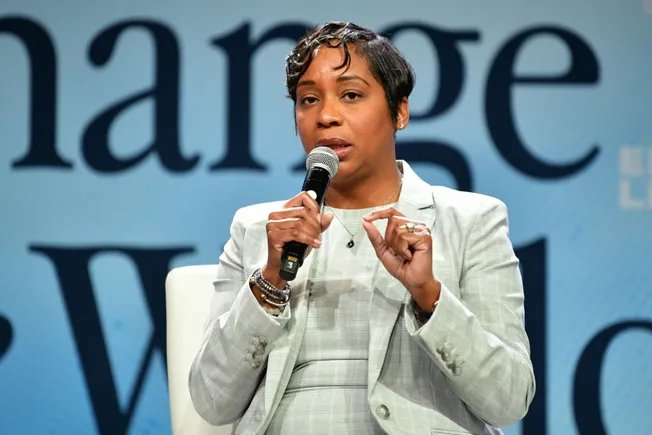
‘Inaccurate and misleading’: Democrat AGs push back against Trump’s DEI executive order
This audio is auto-generated. Please let us know if you have feedback.Dive Brief:
- Diversity, equity, inclusion and accessibility best practices are not illegal, said Massachusetts Attorney General Andrea Joy Campbell and Illinois AG Kwame Raoul, in a multi-state DEIA at work guidance.
- In the Feb. 13 letter, the AGs said the federal government lacks the power to issue executive orders that prohibit “otherwise lawful activities in the private sector or mandates the wholesale removal of these policies and practices within private organizations, including those that receive federal contracts and grants.”
- The AGs of Arizona, California, Connecticut, Delaware, Hawaii, Maine, Maryland, Minnesota, Nevada, New Jersey, New York, Oregon, Rhode Island and Vermont joined in issuing the guidance.
Dive Insight:
The letter came as a response to constituent concerns about the continued viability of DEIA, the AGs said, mainly in light of President Donald Trump’s executive orders.
The primary EO in question, “Ending Illegal Discrimination and Restoring Merit-Based Opportunity,” includes a directive that “order[s] all agencies to enforce our longstanding civil-rights laws and to combat illegal private-sector DEI preferences, mandates, policies, programs, and activities.”
The executive order alleges that colleges, along with other organizations, have “adopted and actively use dangerous, demeaning, and immoral race- and sex-based preferences under the guise of so-called … ‘diversity, equity, inclusion, and accessibility.’”
Campbell and Raoul said the order “conflates unlawful preferences in hiring and promotion with sound and lawful best practices for promoting diversity, equity, inclusion, and accessibility in the workforce.”
It’s “inaccurate and misleading,” they said. On Feb. 21, a federal judge for the U.S. District Court of Maryland issued a preliminary injunction, partially blocking Trump’s executive order targeting the public and private sectors.
While the judge did not prevent the U.S. Department of Justice from proceeding with its investigation of private-sector DEI programs, Judge Adam Abelson held that the plaintiffs would likely succeed with their First and Fifth amendment claims, as well as claims alleging violations of the separation of powers clause.
Prior to the most recent guidance, Democrat attorney generals have made it their priority to speak up about DEI: Last summer, the AGs defended the American Bar Association’s diversity requirements for law schools.
More recently, the Democrat AGs said that the U.S. is “on the brink of dictatorship” due to Trump’s executive orders challenging the scope of the Constitution.
A key takeaway for HR? “Properly developed and implemented initiatives aimed at ensuring that diverse perspectives are included in the workplace help prevent unlawful discrimination,” the AGs said.