Tag: Democratic

  • Why People Under 35 Are Not Afraid of Democratic Socialism

    Why People Under 35 Are Not Afraid of Democratic Socialism

    For Americans under 35, the term “democratic socialism” triggers neither fear nor Cold War reflexes. It represents something far simpler: a demand for a functioning society. Younger generations have grown up in a world where basic pillars of American life—higher education, medicine, economic mobility, and even life expectancy—have deteriorated while inequality has soared. Democratic socialism, in their view, is not a fringe ideology but a practical response to systems that have ceased to serve the common good.

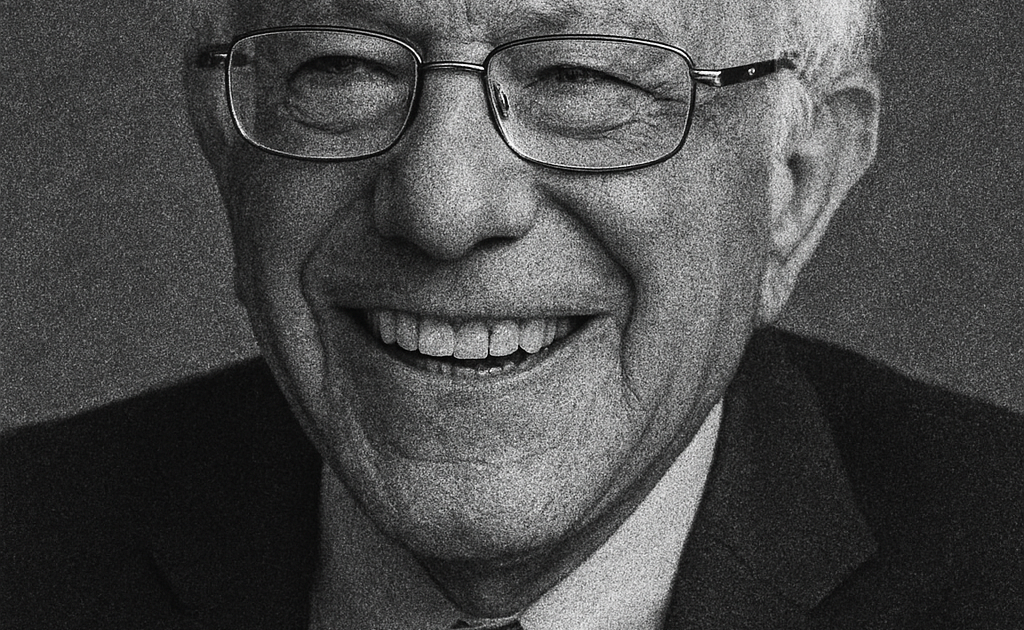
    Nowhere is this clearer than in higher education. Millennials and Gen Z entered adulthood as universities became corporate enterprises, expanding administrative layers, pushing adjunct labor to the brink, and relying on debt-financed tuition increases to keep the machine running. Public investment collapsed, predatory for-profit chains proliferated, and nonprofit universities acted like hedge funds with classrooms attached. Students saw institutions with billion-dollar endowments operate as landlords and asset managers, all while passing costs onto working families. When Bernie Sanders called for tuition-free public college, young people did not hear utopianism—they heard a plan grounded in global reality, a model that exists in Germany, Sweden, Finland, and other social democracies that treat education as a public good rather than a revenue stream.

    Healthcare tells an even harsher story. Americans under 35 watched their parents and grandparents navigate a system more focused on billing codes than care, one where an ambulance ride costs a week’s wages and a bout of illness can mean bankruptcy. They experienced the rise of corporatized university medical centers, private equity–owned emergency rooms, and insurance bureaucracies that ration access more cruelly than any state. They saw life-saving drugs priced like luxury goods and mental health services pushed out of reach. Compare this to nations with universal healthcare: longer life expectancy, lower infant mortality, and far less medical debt. Again, Sanders’ Medicare for All resonated not because of ideology but because young people recognized it as a plausible path toward the kind of humane medical system described by scholars like Harriet Washington, Elisabeth Rosenthal, and Mahmud Mamdani, who all critique the structural violence embedded in systems of unequal care.

    Life expectancy itself has become a generational indictment. For the first time in modern U.S. history, it has fallen, driven by overdose deaths, suicide, preventable illness, and worsening inequities. Younger Americans know that friends and peers have died far earlier than their counterparts abroad. They see that countries with strong public services—childcare, unemployment insurance, housing supports, universal healthcare—live longer, healthier lives. They also see how austerity and privatization have hollowed out public health infrastructure in the United States, leaving communities vulnerable to crises large and small. The message is clear: societies that invest in people live longer; societies that treat health as a commodity do not.

    Quality of Life (QOL) ties all of this together. People under 35 face rent burdens unimaginable to previous generations, debts that prevent them from forming families, stagnant wages, and a labor market defined by precarity. They face the erosion of public space, public transit, libraries, and social supports—what Mamdani would describe as the slow unraveling of the civic realm under neoliberalism. When they look abroad, they see countries with social democratic frameworks offering guaranteed parental leave, subsidized childcare, free or nearly free college, universal healthcare, and robust worker protections. These are not distant fantasies; they are functioning models that produce higher happiness levels, stronger social trust, and more stable democracies.

    Older generations often accuse young people of radicalism, but the reality is the reverse. Millennials and Gen Z are pragmatic. They have lived through the failures of unfettered capitalism: historic inequality, monopolistic industries, soaring costs of living, and a political class unresponsive to their material conditions. They have read Sanders’ critiques of oligarchy and Mamdani’s analyses of state power and structural violence, and they see themselves reflected in those diagnoses. Democratic socialism appeals because it is rooted in material improvements to daily life rather than in abstract political theory. It promises a society where income does not determine survival, where education does not require lifelong debt, where parents can afford to raise children, and where basic health is not a luxury good.

    People under 35 are not afraid of democratic socialism because they have already seen what the absence of a social democratic framework produces. They are not seeking revolution for its own sake. They are seeking a livable future. And increasingly, they view democratic socialism not as a radical break but as the only realistic path toward rebuilding public institutions, revitalizing democracy, and ensuring that future generations inherit a country worth living in.

    Sources

    Sanders, Bernie. Our Revolution: A Future to Believe In.

    Sanders, Bernie. Where We Go from Here: Two Years in the Resistance.

    Mamdani, Mahmood. Define and Rule: Native as Political Identity.

    Mamdani, Mahmood. Neither Settler nor Native: The Making and Unmaking of Permanent Minorities.

    Washington, Harriet. Medical Apartheid.

    Rosenthal, Elisabeth. An American Sickness.

    Skloot, Rebecca. The Immortal Life of Henrietta Lacks.

    Baldwin, Davarian. In the Shadow of the Ivory Tower.

    Bousquet, Marc. How the University Works.

    Source link

  • Democratic Lawmakers Amplify Pressure on UVA

    Democratic Lawmakers Amplify Pressure on UVA

    Months after Jim Ryan stepped down as University of Virginia president, state Sen. Creigh Deeds is still waiting for answers on whether political interference and external pressure played a role.

    Ryan resigned in late June, citing pressure from the federal government amid Department of Justice investigations into diversity, equity and inclusion initiatives at the public university. Although the Board of Visitors voted to shutter its DEI office in March, conservative critics accused UVA of failing to dismantle such efforts. The DOJ subsequently launched seven investigations, two of which have been closed. The status of the other five remains unclear.

    Deeds, a Democrat who represents Charlottesville and the surrounding area, has been seeking answers since Aug. 1 through a series of letters sent to the Board of Visitors and a far-reaching Freedom of Information Act request. But so far, university lawyers have largely refused to answer the state lawmaker’s questions, citing ongoing investigations. Faculty members have also said they can’t get straight answers from the university or face time with the board.

    And complaints over an alleged lack of transparency at UVA are piling up as state lawmakers are applying additional pressure over how the university will respond to an invitation to sign on to the proposed “Compact for Academic Excellence in Higher Education” that the Trump administration sent to UVA and eight other universities last week.

    Trading Letters

    In office since 2001, Deeds has a long relationship with the university. But for the first time in 20-plus years, the senator said, he’s being shut out by a Board of Visitors that refuses to talk to him.

    “We’re just trying to get to the bottom of what role the federal government, the Justice Department, the president’s office, the governor, the [state] attorney general played in the decision that Jim Ryan made to resign,” Deeds told Inside Higher Ed in an interview.

    Deeds has sent several inquiries to UVA since Ryan resigned. The first letter included 46 questions related to Ryan’s resignation, the DOJ investigations and whether the UVA Board of Visitors “operated within the bounds of its legal and ethical responsibilities.”

    But so far, Deeds says, he’s been given “partial answers” and “gobbledygook.”

    In a series of letters to Deeds from two law firms (Debevoise & Plimpton and McGuireWoods), the outside legal counsel offered little insights into Ryan’s resignation, arguing in an Aug. 15 response that UVA is “is currently focused on navigating an unprecedented set of challenges,” which includes the ongoing DOJ investigations.

    Some information included in the responses is already in the public sphere, such as how the board voted to shutter DEI initiatives, and details on the presidential search committee, which Deeds had also asked about. UVA also included letters sent by the DOJ to the university when it closed two investigations; while the DOJ referenced “appropriate remedial action” by the university, it did not offer specifics. But the focus across several letters sent to Deeds by university lawyers was mostly on why UVA can’t respond.

    “Counsel handling the discussions with the Department of Justice has indicated that providing a substantive response to the August 1 letter while negotiations are ongoing would be inconsistent with the need for confidentiality. Counsel has therefore requested that the Board refrain from doing so until a resolution with the Department of Justice is finalized,” wrote David A. O’Neil, an attorney with Debevoise & Plimpton.

    UVA lawyers also repeatedly took issue with Deeds’s characterization of the events surrounding Ryan’s resignation.

    In an Aug. 29 response, O’Neil wrote that the board “would like to correct a number of inaccurate premises and assumptions in your letter” but was “duty-bound to place the University’s interests above all else” and honor its “fiduciary obligation to the University.” However, UVA legal counsel did not specify what, if anything, was inaccurate.

    O’Neil also asked the senator not to “draw conclusions or promote unfounded speculation.”

    Deeds responded in a Sept. 4 letter that he was “surprised and concerned” that the Board of Visitors “felt the need to secure outside counsel to respond to a legislative request.” He added that he was equally troubled by the failure to fully answer any questions.

    Frustrated by UVA’s response, Deeds filed a FOIA request Sept. 18, seeking a trove of documents related to Ryan’s resignation and the DOJ investigations. UVA has not yet fulfilled the FOIA request but did send Deeds a $4,500 bill to process the information, which he plans to pay.

    Deeds then followed up in a Sept. 29 letter, pressing the university on what it agreed to in exchange for the DOJ closing two investigations and for more details on where the other five currently stand.

    To date, Deeds is still seeking answers.

    UVA spokesperson Brian Coy told Inside Higher Ed by email that the university has offered “as much information as possible at the time” in its multiple responses to Deeds. However, he said, the university is constrained by “active discussions with the Department of Justice regarding several investigations, and publicly disclosing information that relates to those investigations could hamper our ability to resolve them in a way that protects the institution from legal or financial harm.” He added that UVA is processing Deeds’s FOIA request in accordance with state law.

    Coy did not address several specific questions sent by Inside Higher Ed asking about potential political interference, remedial action for closed investigations or the status of the active DOJ investigations.

    Mounting Pressure

    Deeds isn’t the only one struggling to get answers from UVA’s Board of Visitors.

    Jeri Seidman, UVA Faculty Senate chair, said the board has declined to answer faculty questions about Ryan’s resignation and DOJ investigations. She added that the board has been less responsive since the Faculty Senate voted no confidence in the Board of Visitors in July.

    “We have not had interactions with the rector or the vice rector since July 11,” Seidman said, adding that the board had declined an invitation to address the Faculty Senate last month.

    Seidman credited UVA interim president Paul Mahoney with being accessible, though, she noted, he and other leaders have also declined to answer faculty questions due to DOJ investigations.

    “We appreciate his willingness to come and answer questions. Those questions are never gentle. But it’s disappointing that the rector has not acknowledged any [faculty] resolutions or requests for information, even if the response were simply to say that now is not the right time,” Seidman said.

    Recent Faculty Senate resolutions include demands for an explanation on Ryan’s resignation, the no-confidence vote and calls for UVA leadership and the board to reject the proposed “Compact for Academic Excellence in Higher Education.” The compact would require changes in admissions and hiring and a commitment to institutional neutrality, while simultaneously suppressing criticism of conservatives, among other demands. In exchange, the administration says signatories would receive preferential treatment from the federal government on research funding, though the document also threatens the institution’s funding if it doesn’t sign or comply.

    Virginia Democrats have also opposed the compact and threatened to restrict funding to the university if it signs on. That threat comes as lawmakers are ratcheting up pressure on UVA and waging a legal battle to block Republican governor Glenn Youngkin’s board appointments.

    The letter, sent Tuesday by Senate majority leader Scott Surovell, expressed “grave concern” over the compact and referenced Ryan’s resignation, which, he wrote, was “forced” by the DOJ via alleged “extortionate tactics—threatening hundreds of millions of dollars in federal funding and the livelihoods of employees, researchers, and students unless he stepped down.”

    Surovell warned that “the General Assembly will not stand by while the University surrenders its independence through this compact” and that there would be “significant consequences in future Virginia budget cycles” for UVA should the Board of Visitors agree to the arrangement.

    Surovell’s warning shot comes amid a broader dispute over who can serve on Virginia boards. While a Senate committee has blocked a recent slate of gubernatorial appointments, including at UVA, Youngkin has insisted that members can still serve until they are rejected by the full Legislature. A related legal case will be heard by the Virginia Supreme Court later this month.

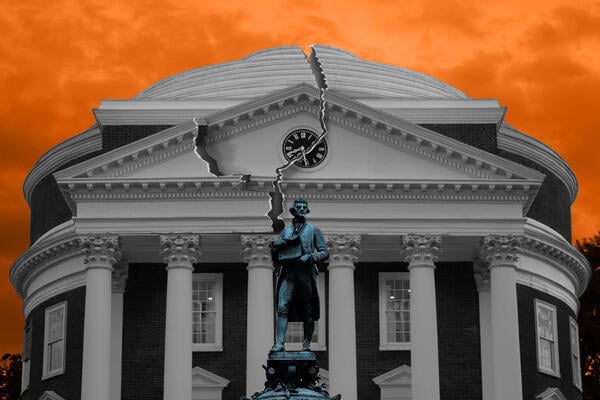
    Board leadership and Mahoney replied to Surovell’s letter Wednesday with a noncommittal reply shared with Inside Higher Ed that did not indicate whether the university intended to sign on to the proposed compact or not. They wrote in part that UVA’s “response will be guided by the same principles of academic freedom and free inquiry that Thomas Jefferson placed at the center of the University’s mission more than 200 years ago, and to which the University has remained faithful ever since.”

    Source link

  • Democratic senators call for probe of Trump Education Department cuts

    Democratic senators call for probe of Trump Education Department cuts

    This audio is auto-generated. Please let us know if you have feedback.

    Democrat efforts to challenge President Donald Trump’s dismantling of the U.S. Department of Education mounted Thursday, as 11 senators asked the agency’s acting inspector general, René Rocque, to investigate the push. 

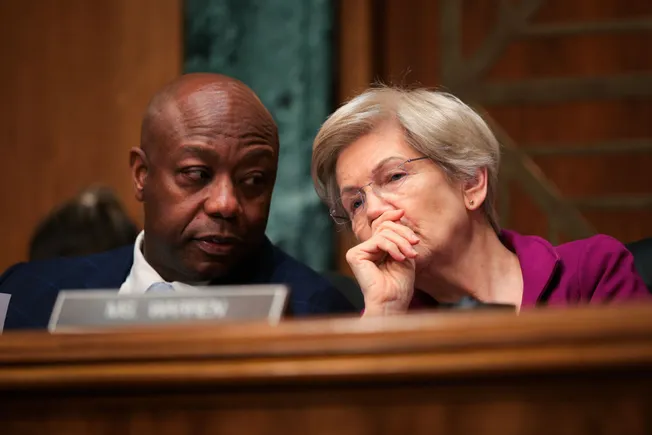
    Sen. Elizabeth Warren and senate Minority Leader Chuck Schumer were among those requesting an evaluation of whether the administration is undermining the Education Department’s ability to provide students with equal access to education and to help state and local governments’ education systems

    “Decimating the Department of Education’s abilities to administer financial aid, investigate civil rights violations, conduct research on educational outcomes, and oversee the use of federal education grants threatens to have disastrous consequences for American students, teachers and families,” they wrote in a March 27 letter to Rocque. 

    “The Trump Administration’s further attempts to close the Department entirely and transfer its responsibilities over to other agencies will likely interrupt and degrade education programs and services, causing additional pain for the 62 million students across the country that the Department serves.” 

    The administration’s gutting of the Education Department not only impacted nearly half of the department’s workforce, but also left civil rights investigation and enforcement offices at half their previous capacity, cut the Federal Student Aid office by over 450 employees, and slashed 90% of the Institute of Education Sciences staff. 

    These decisions would likely impede key functions of the department, including ensuring all students’ civil rights are protected, administering federal loans and overseeing lenders and FAFSA, and tracking students’ educational outcomes and the condition of education in the nation, the Democratic senators told Rocque.

    Rocque, who joined the Education Department’s Office of Inspector General as deputy inspector general in December 2023, became acting director in January.

    As with many other issues dividing lawmakers today, Democrats and Republicans have been starkly divided over the Trump administration’s efforts to eliminate the department altogether. This makes attaining a Senate supermajority of 60 votes — which is required to officially shut the department — unlikely. 

    House Democrats introduced a resolution on March 21 calling for transparency and information from the administration, including unredacted copies of all federal documents referring to the department’s closure and information on workforce reduction decisions.

    About a week after the massive reduction in force on March 11, Democrat lawmakers from both the House and Senate wrote the department demanding information on the layoffs, saying that halving its workforce could impact the agency’s ability to perform vital functions required by law.

    Meanwhile, Republicans in some states have taken the opportunity to ask the administration for more leeway in their education spending. 

    On March 25, for example, Oklahoma State Superintendent Ryan Walters sent a letter to the Education Department requesting a waiver to receive a block grant for all funds allocated to his state under the Every Student Succeeds Act. Such a consolidated block grant would “significantly enhance local flexibility” so “schools will be able to address their unique needs and priorities,” Walters wrote.

    The block grant would be used to “expand educational choices,” including attendance at private schools, and would loosen federal oversight of education spending requirements.

    Source link

  • Democratic AGs sue over cancellation of teacher grants

    Democratic AGs sue over cancellation of teacher grants

    This audio is auto-generated. Please let us know if you have feedback.

    Dive Brief:

    • Democratic attorneys generals in eight states said the U.S. Department of Education “arbitrarily” and “improperly” terminated about $600 million in teacher training grants, according to a lawsuit filed Thursday in U.S. District Court in the District of Massachusetts
    • The complaint said the abrupt cancellation of the grants will “immediately disrupt teacher workforce pipelines, increase reliance on underqualified educators, and destabilize local school systems.” The lawsuit seeks preliminary and permanent injunctions to restore funding and access to these programs.
    • The suit is the second filed against the grants termination — the first one came three days earlier from three teacher preparation groups — and adds to mounting legal pushback to the Trump administration’s efforts to scrub programs associated with diversity, equity and inclusion initiatives.

    Dive Insight:

    The Education Department recently confirmed that the grant programs impacted by the cuts announced last month were for the Teacher Quality Partnership Program and the Supporting Effective Educator Development Grant. The agency said the cuts were made because the programs trained teachers on “divisive ideologies.”

    Examples the agency provided in its Feb. 17 announcement included professional development workshops on dismantling racial bias and activities that required educators to take personal and institutional responsibility for systemic inequities.

    Supporters of DEI rollbacks in education view the activities as illegal discrimination and wasteful spending of federal funds.

    But those opposing the grant eliminations say the programs help address a severe lack of teachers and support students in underserved areas.

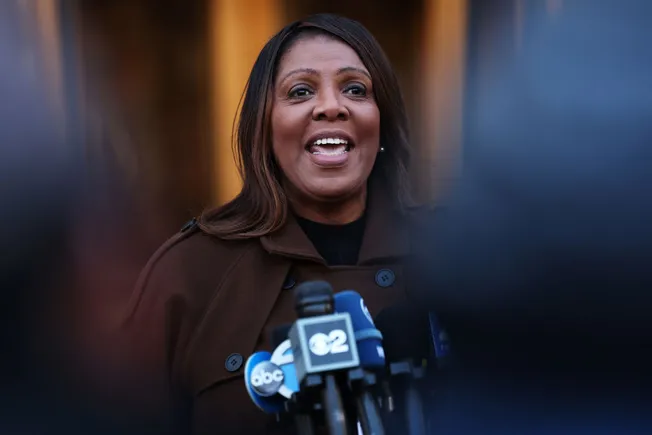
    Kids in rural and underserved communities deserve access to a quality education, and programs like SEED and TQP help bring qualified teachers to classrooms that desperately need it,” said New York Attorney General Letitia James, in a March 6 statement. “Slashing funding for these critical programs robs students of the opportunity to succeed and thrive.”

    In New York, James said the cancellation of TQP programs at SUNY Buffalo, Buffalo Public Schools, Buffalo Academy of Science Charter, and REACH Academy Charter School alone would impact more than 120 teachers and about 13,000 students. Also affected by the elimination of SEED programs are 100 teachers and some 6,000 pre-K-12 students at SUNY Buffalo, Buffalo Public Schools, Amherst Central School District, and Kenmore Tonawanda Union-Free School District. 

    Joining James in the lawsuit were attorneys general from seven other states: California, Massachusetts, New Jersey, Colorado, Illinois, Maryland and Wisconsin.

    Just days earlier, on March 3, the American Association of Colleges for Teacher Education, National Center for Teacher Residencies and Maryland Association of Colleges for Teacher Education also sued to overturn the program cuts. That challenge, filed in U.S. District Court for the District of Maryland, said the Education Department “failed to follow statute and Federal regulations in terminating the grants.” 

    Additionally, more than 100 national and state education organizations sent a letter to congressional leaders last week urging them to reverse the cancellations of SEED, TQP and the Teacher and School Leader Incentive Program grants.

    Source link