Tag: Department of Education

  • Hawaiian Language Schools Grow As DOE Shrinks. There’s One Big Problem – The 74

    Hawaiian Language Schools Grow As DOE Shrinks. There’s One Big Problem – The 74


    Get stories like this delivered straight to your inbox. Sign up for The 74 Newsletter

    At a time when local schools are facing shrinking enrollment and talks of closure, Hawaiian immersion programs are bucking the trend. 

    Enrollment in schools that teach primarily in ʻōlelo Hawaiʻi — collectively known as Kaiapuni schools — has increased by 68% over the past decade, with the number of campuses run by the state education department growing from 14 to 26. But students tend to have fewer immersion options in middle and high school, and the pool of qualified teachers isn’t keeping up with families’ growing demand.

    Recruiting qualified teachers is one of the largest barriers to expanding Kaiapuni programs, Office of Hawaiian Education Director Kau‘i Sang said in a recent education board meeting. The Department of Education needs to find a balance between adding more classrooms to meet families’ needs and hiring enough teachers to support existing Kaiapuni schools, she said. 

    DOE plans on opening two new Kaiapuni programs at Haleʻiwa Elementary on Oʻahu and Kalanianaʻole Elementary on the Big Island.

    “We cannot open classrooms unless we have qualified staff,” Sang said. 

    Currently, DOE has three unfilled Kaiapuni teacher positions, Communications Director Nanea Ching said in an emailed statement. The department also employs 25 unlicensed Kaiapuni educators who still need to fulfill their teacher training requirements, she said. 

    But the number of additional teachers needed to fully staff Kaiapuni schools could be closer to 100, said Kananinohea Mākaʻimoku, an associate professor at the University of Hawaiʻi Hilo’s College of Hawaiian Language. Some Kaiapuni teachers are taking on larger-than-average class sizes because of staffing shortages, she said, meaning the annual vacancy rates underestimate the number of educators schools need. 

    DOE will need 165 more Kaiapuni teachers in the next decade to fully staff its classrooms and meet families’ growing demand, according to ʻAha Kauleo, an advisory group of Hawaiian language schools and organizations. The projection doesn’t account for a large group of teachers who are expected to retire in the coming years, Mākaʻimoku said.

    Last year, UH Mānoa and Hilo produced a total of 12 licensed Kaiapuni teachers.

    It’s difficult to find candidates who are both fluent in Hawaiian and interested in teaching, Mākaʻimoku said, especially because Hawaiian language speakers are in high demand in many careers. But a lack of teachers doesn’t mean schools should stop expanding Kaiapuni programs, she said, especially when the movement has so much family support and momentum. 

    ‘No Option But To Leave Their Home District’

    The Hawaiʻi Supreme Court has previously ruled that the education department has a constitutional duty to provide families with access to Hawaiian immersion education. Two lawsuits filed in August argued that DOE has fallen short of this responsibility by creating unique barriers for immersion families, such as waitlists for enrollment and limited immersion programs in some school districts.

    One of the lawsuits was dropped over the summer, but the second remains active. 

    Currently, families are pushing for more immersion options in Pearl City, which has no middle or high school for Kaiapuni students. Children can attend the Kaiapuni program at Waiau Elementary until the sixth grade but then need to transfer to immersion programs in Kapolei or Honolulu for middle school or switch to an English-language program.

    A petition to add Kaiapuni programs at Highlands Intermediate and Pearl City High School received more than 100 signatures over the past three weeks. 

    “Our keiki start their educational journey in Hawaiian immersion programs, but upon reaching intermediate and high school levels, they find themselves with no option but to leave their home district,” parent Chloe Puaʻena Vierra-Villanueva said in written testimony to the Board of Education.

    The department is planning to add more grade levels to existing Kaiapuni schools next year and provide families with more information on how to enroll in immersion programs, Sang said. Her office also plans on tracking the number of open seats and waitlists across the state to determine which communities have the greatest demand for Kaiapuni classrooms. 

    Since 2020, the state has also offered a $8,000 salary bonus to Kaiapuni teachers to attract more people to classroom positions. 

    Kahea Faria, an assistant specialist at UH Mānoa’s College of Education and a Kaiapuni parent, said she would like to see more DOE campuses solely dedicated to serving immersion students across all grade levels. Creating environments where Hawaiian is the only spoken language is critical to students’ development, she said, and could possibly encourage more kids to pursue teaching careers in Kaiapuni schools. 

    “Right now, with a growing number of students, they have very limited opportunities to grow their language abilities,” Faria said. 

    The state also needs to look beyond Kaiapuni graduates to expand the potential pool of immersion teachers, Mākaʻimoku said. For example, she said, offering more Hawaiian language classes to families and community members could encourage more people to earn their Kaiapuni teaching credentials. 

    “That’s definitely a conversation that all communities in Hawaiʻi should have,” she said. 

    This story was originally published on Honolulu Civil Beat.


    Did you use this article in your work?

    We’d love to hear how The 74’s reporting is helping educators, researchers, and policymakers. Tell us how

    Source link

  • What happens after the U.S. Department of Education is dissolved?

    What happens after the U.S. Department of Education is dissolved?

    eSchool News is counting down the 10 most-read stories of 2025. Story #1 focuses on the Trump Administration’s goal of dismantling the U.S. Department of Education.

    Key points:

    In light of Donald Trump assuming a second presidential term in 2025, conversations concerning dismantling the United States Department of Education have resurfaced. Supporters argue that federal involvement in education undermines state authority, while critics fear that removing the federal role could exacerbate inequities and hinder national progress. To evaluate the proposal, it is crucial to examine the federal and state roles in education, the historical and constitutional context, and the potential benefits and challenges of such a shift.

    The federal role in education

    The United States Constitution does not explicitly grant the federal government authority over education. As Lunenberg et al. (2012) noted, “Education is not a function specifically delegated to the federal government” (p. 327). Instead, under the Tenth Amendment, powers not delegated to the federal government are reserved for the states (McCarthy et al., 2019). This leaves education primarily under state jurisdiction, with federal involvement historically limited to indirect support rather than direct control.

    The United States Department of Education was established in 1979. It is responsible for overseeing federal funding for schools, enforcing federal laws in education, and ensuring equal access for students across the country.  Furthermore, it has played a significant role through legislation such as the Elementary and Secondary Education Act (ESEA) and its successors: NCLB (No Child Left Behind) and ESSA (the Every Student Succeeds Act). These laws link federal funding to specific requirements, which aim to address inequities in education. Currently, federal contributions account for approximately 8 percent of funding for elementary and secondary education, with the remaining 92 percent coming from state and local sources (“The Federal Role,” 2017).

    The role of state and local control in education

    Education policy and administration have traditionally been state functions. States determine funding formulas, establish teacher certification requirements, and oversee curricula through their departments and boards of education (Lynch, 2016). Governors and state legislatures allocate funds, which are often distributed to schools based on enrollment, need, or specific programs (Lunenberg et al., 2012).

    Local school boards also play a critical role, managing day-to-day operations and responding to community needs. This decentralized structure reflects a longstanding belief that local authorities are better positioned to address the diverse needs of their communities. However, it has also led to significant disparities between states and districts in terms of funding, resources, and student outcomes.

    Dismantling the United States Department of Education 

    One of the most compelling arguments for dismantling the United States Department of Education lies in the principle of localized control. Critics argue that education is best managed by state and local governments because they are closer to the specific needs of their communities. Localized governance could allow schools to tailor their policies, curriculum, and resource allocation in ways that best fit the unique demographics of their regions. For example, schools in rural areas may have vastly different needs than those in urban centers, which is why local authorities are likely better equipped to address these disparities without the interference of federal oversight.

    The concern extends beyond general education. The Individuals with Disabilities Education Act (IDEA), which is enforced by the United States Department of Education, mandates that students with disabilities receive free and appropriate public education (FAPE) along with necessary services and accommodations. Similarly, the department oversees federal programs that support English Language Learner (ELL) students by helping schools provide tailored instruction and resources to students who are not native English speakers. Without federal oversight, it is possible that these programs could lose funding or be inconsistently applied across states, causing vulnerable populations to be without critical support.

    Advocates of dismantling the United States Department of Education also point to the financial burden of maintaining a federal agency. They argue that billions of dollars allocated to the department could be redirected to state education budgets, thereby allowing for more impactful initiatives at the forefront. By eliminating bureaucratic layers, states could potentially deliver education funding more efficiently, thereby focusing resources directly on teachers, classrooms, and students.

    Another critical function of the United States Department of Education is establishing and enforcing national education standards. Programs such as NCLB and ESSA aim to hold schools accountable for student performance and ensure consistency across states (albeit, there are arguments those programs have led to a culture of “teaching to the test” and have stifled creativity in the classroom), but allowing states and local districts to have greater freedom to design their own standards and assessments may fostering innovation while also leading to the quality of education varying dramatically from state to state and can cause challenges for students in transient populations due to a lack of cohesion disrupting their education and limiting their opportunities.

    Keeping the United States Department of Education 

    Dismantling the United States Department of Education raises significant concerns about equity. The department plays a crucial role in addressing disparities in funding education, as well as in funding access. Federal programs (i.e., Title I, free meals, counseling, after-school programs, etc.) provide additional resources to schools serving high numbers of low-income students, many of which are located in inner-city areas. Without the United States Department of Education, these programs might be eliminated or left to the discretion of states that have historically struggled to prioritize funding for underserved communities.

    Inner-city urban schools often face unique challenges (i.e., overcrowding, insufficient funding, higher rates of poverty among students, etc.). Many of these schools also serve disproportionately high numbers of students with disabilities and ELL students, thereby making federal support even more vital. The United States Department of Education enforces civil rights protections that ensures that all students (including vulnerable subgroups) receive equitable treatment. Dismantling the department could weaken these safeguards, thereby leaving marginalized communities more vulnerable to neglect. Therefore, the loss of federal oversight is a serious concern for public education. Historically, states have not always allocated resources equitably, and urban school districts have often been underfunded compared to their suburban counterparts. Federal intervention has been essential in addressing these disparities. Without it, inner-city schools may struggle to maintain even basic standards of education, thereby exacerbating poverty and inequality.

    All schools (not just inner-city schools) will be adversely impacted by dismantling the United States Department of Education. Federal funding supports Advanced Placement (AP) courses, STEM initiatives, and dual-enrollment opportunities. Dismantling the United States Department of Education could lead to inconsistencies in college admissions processes because states might adopt different graduation requirements and assessments. This lack of standardization could complicate admissions for students applying to out-of-state or prestigious universities. Furthermore, the United States Department of Education funds research initiatives that lead to the development of new teaching methods, technologies, and curricula. These innovations often benefit all schools, but without federal support, such research might stagnate leaving schools without access to cutting-edge educational resources.

    Conclusion

    In conclusion, the debate pertaining to dismantling the United States Department of Education has taken on new urgency under the Trump administration in 2025. While advocates of dismantling the department argue for greater local control and efficiency, the critics highlight the potential risks to equity and access.  As the nation grapples with this issue, it is essential to prioritize the needs of students (and communities). The ultimate goal must be to create a more equitable and effective education system that serves all students regardless of their background or zip code.

    Latest posts by eSchool Media Contributors (see all)

    Source link

  • 25 of Our Top Stories About Schools, Students and Learning – The 74

    25 of Our Top Stories About Schools, Students and Learning – The 74

    Republish This Article

    We want our stories to be shared as widely as possible — for free.

    Please view The 74’s republishing terms.


    Source link

  • KU researchers publish guidelines to help responsibly implement AI in education

    KU researchers publish guidelines to help responsibly implement AI in education

    This story originally appeared on KU News and is republished with permission.

    Key points:

    Researchers at the University of Kansas have produced a set of guidelines to help educators from preschool through higher education responsibly implement artificial intelligence in a way that empowers teachers, parents, students and communities alike.

    The Center for Innovation, Design & Digital Learning at KU has published “Framework for Responsible AI Integration in PreK-20 Education: Empowering All Learners and Educators with AI-Ready Solutions.” The document, developed under a cooperative agreement with the U.S. Department of Education, is intended to provide guidance on how schools can incorporate AI into its daily operations and curriculum.

    Earlier this year, President Donald Trump issued an executive order instructing schools to incorporate AI into their operations. The framework is intended to help all schools and educational facilities do so in a manner that fits their unique communities and missions.

    “We see this framework as a foundation,” said James Basham, director of CIDDL and professor of special education at KU. “As schools consider forming an AI task force, for example, they’ll likely have questions on how to do that, or how to conduct an audit and risk analysis. The framework can help guide them through that, and we’ll continue to build on this.”

    The framework features four primary recommendations.

    • Establish a stable, human-centered foundation.
    • Implement future-focused strategic planning for AI integration.
    • Ensure AI educational opportunities for every student.
    • Conduct ongoing evaluation, professional learning and community development.

    First, the framework urges schools to keep humans at the forefront of AI plans, prioritizing educator judgment, student relationships and family input on AI-enabled processes and not relying on automation for decisions that affect people. Transparency is also key, and schools should communicate how AI tools work, how decisions are made and ensure compliance with student protection laws such as the Individuals with Disabilities Education Act and Family Education Rights and Privacy Act, the report authors write.

    The document also outlines recommendations for how educational facilities can implement the technology. Establishing an AI integration task force including educators, administrators, families, legal advisers and specialists in instructional technology and special education is key among the recommendations. The document also shares tips on how to conduct an audit and risk analysis before adoption and consider how tools can affect student placement and identification and consider possible algorithmic error patterns. As the technologies are trained on human data, they run the risk of making the same mistakes and repeating biases humans have made, Basham said.

    That idea is also reflected in the framework’s third recommendation. The document encourages educators to commit to learner-centered AI implementation that considers all students, from those in gifted programs to students with cognitive disabilities. AI tools should be prohibited from making final decisions on IEP eligibility, disciplinary actions and student progress decisions, and mechanisms should be installed that allow for feedback on students, teachers and parents’ AI educational experiences, the authors wrote.

    Finally, the framework urges ongoing evaluation, professional learning and community development. As the technology evolves, schools should regularly re-evaluate it for unintended consequences and feedback from those who use it. Training both at implementation and in ongoing installments will be necessary to address overuse or misuse and clarify who is responsible for monitoring AI use and to ensure both the school and community are informed on the technology.

    The framework was written by Basham; Trey Vasquez, co-principal investigator at CIDDL, operating officer at KU’s Achievement & Assessment Institute and professor of special education at KU; and Angelica Fulchini Scruggs, research associate and operations director for CIDDL.

    Educators interested in learning more about the framework or use of AI in education are invited to connect with CIDDL. The center’s site includes data on emergent themes in AI guidance at the state level and information on how it supports educational technology in K-12 and higher education. As artificial intelligence finds new uses and educators are expected to implement the technology in schools, the center’s researchers said they plan to continue helping educators implement it in ways that benefit schools, students of all abilities and communities.

    “The priority at CIDDL is to share transparent resources for educators on topics that are trending and in a way that is easy to digest,” Fulchini Scruggs said. “We want people to join the community and help them know where to start. We also know this will evolve and change, and we want to help educators stay up to date with those changes to use AI responsibly in their schools.”

    Latest posts by eSchool Media Contributors (see all)

    Source link

  • ‘Make Sure They Speak English’ is Fed’s Only Responsibility to U.S. Kids – The 74

    ‘Make Sure They Speak English’ is Fed’s Only Responsibility to U.S. Kids – The 74


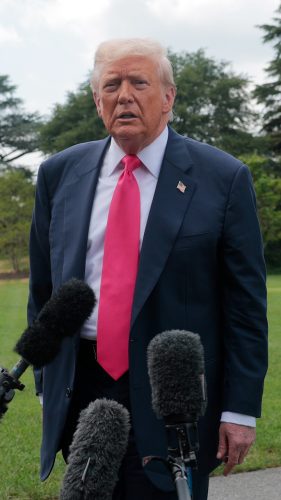
    Speaking to reporters on Tuesday, President Donald Trump said ‘little tiny bit of supervision’ is all that’s needed for education.


    Source link

  • Trump Education Department Delays Return of Laid-Off Workers Over Logistics – The 74

    Trump Education Department Delays Return of Laid-Off Workers Over Logistics – The 74


    Get stories like this delivered straight to your inbox. Sign up for The 74 Newsletter

    Parking permits. Desk space. Access cards.

    Ordered to bring back roughly 1,300 laid-off workers, the U.S. Department of Education instead has spent weeks ostensibly working on the logistics. Meanwhile, the Trump administration wants the U.S. Supreme Court to decide they don’t have to restore those jobs after all.

    The legal argument over the job status of Education Department workers is testing the extent to which President Donald Trump and Education Secretary Linda McMahon can reshape the federal bureaucracy without congressional approval.

    The employees, meanwhile, remain in limbo, getting paid for jobs they aren’t allowed to perform.

    An analysis done by the union representing Education Department employees estimates the government is spending about $7 million a month for workers not to work. That figure does not include supervisors who are not part of the American Federation of Government Employee Local 252.

    “It is terribly inefficient,” said Brittany Coleman, chief steward for AFGE Local 252 and an attorney in the Office for Civil Rights. “The American people are not getting what they need because we can’t do our jobs.”

    McMahon announced the layoffs in March, a week after she was confirmed by the Senate, and described them as a first step toward dismantling the Education Department. A few days later, Trump signed an executive order directing McMahon to do everything in her legal authority to shut down the department.

    The Somerville and Easthampton school districts in Massachusetts, along with the American Federation of Teachers, other education groups, and 21 Democratic attorneys general sued McMahon over the cuts. They argued the layoffs were so extensive that the Education Department would not be able to perform its duties under the law.

    The layoffs hit the Office for Civil Rights, Federal Student Aid, and the Institute of Education Sciences particularly hard. These agencies are responsible for federally mandated work within the Education Department. By law, only Congress can get rid of the Education Department.

    U.S. District Court Judge Myong Joun agreed, issuing a sweeping preliminary injunction in May that ordered the Education Department to bring laid off employees back to work and blocked any further effort to dismantle or substantively restructure the department.

    The Trump administration sought a stay of that order, and the case is on the emergency docket of the Supreme Court, where a decision could come any day.

    In the administration’s request to the Supreme Court, Solicitor General John Sauer argued that the harms the various plaintiffs had described were largely hypothetical, that they had not shown the department wasn’t fulfilling its duties, and that they didn’t have standing to sue because layoffs primarily affect department employees, not states, school districts, and education organizations.

    Sauer further argued that the injunction violates the separation of powers, putting the judicial branch in charge of employment decisions that are the purview of the executive branch.

    “The injunction rests on the untenable assumption that every terminated employee is necessary to perform the Department of Education’s statutory functions,” Sauer wrote in a court filing. “That injunction effectively appoints the district court to a Cabinet role and bars the Executive Branch from terminating anyone.”

    The Supreme Court, with a conservative 6-3 majority, has been friendlier to the administration’s arguments than lower court judges. Already the court has allowed cuts to teacher training grants to go through while a lawsuit works its way through the courts. And it has halted the reinstatement of fired probationary workers.

    The Education Department did not immediately respond to a request for comment.

    Last week, Joun issued a separate order telling the Education Department that it must reinstate employees in the Office for Civil Rights. The Victims Rights Law Center and other groups had described thousands of cases left in limbo, with children suffering severe bullying or unable to safely return to school.

    Meanwhile, the Education Department continues to file weekly updates with Joun about the complexities of reinstating the laid-off employees. In these court filings, Chief of Staff Rachel Oglesby said an “ad hoc committee of senior leadership” is meeting weekly to figure out where employees might park and where they should report to work.

    Since the layoffs, the department has closed regional offices, consolidated offices in three Washington, D.C. buildings into one, reduced its contracts for parking space, and discontinued an interoffice shuttle.

    In the most recent filing, Oglesby said the department is working on a “reintegration plan.”

    Coleman said she finds these updates “laughable.”

    “If you are really willing to do what the court is telling you to do, then your working group would have figured out a way to get us our laptops,” she said.

    This story was originally published by Chalkbeat. Chalkbeat is a nonprofit news site covering educational change in public schools. Sign up for their newsletters at ckbe.at/newsletters.


    Get stories like these delivered straight to your inbox. Sign up for The 74 Newsletter

    Source link

  • Federal judge blocks Trump’s Education Dept. shutdown, orders reinstatement of laid off staff

    Federal judge blocks Trump’s Education Dept. shutdown, orders reinstatement of laid off staff

    This story was originally published by Chalkbeat. Sign up for their newsletters at ckbe.at/newsletters.

    A federal judge on May 22 issued a preliminary injunction blocking President Donald Trump’s executive order to shut down the U.S. Department of Education and said the agency must reinstate the employees who were fired as part of mass layoffs.

    After U.S. Education Secretary Linda McMahon announced the agency’s plans in March to slash its workforce by roughly half, she called it a first step in getting rid of the agency. Trump followed days later with his executive order aiming to eliminate the department, a move he has long wanted.

    But only Congress can actually eliminate the department, and the administration’s attempt at getting around that influenced U.S. District Judge Myong Joun’s Thursday ruling.

    The Trump administration argued that they implemented agency layoffs to improve “efficiency” and “accountability,” the Massachusetts judge wrote, but then said: “The record abundantly reveals that [the administration’s] true intention is to effectively dismantle the Department without an authorizing statute.”

    Joun added: “A department without enough employees to perform statutorily mandated functions is not a department at all. This court cannot be asked to cover its eyes while the Department’s employees are continuously fired and units are transferred out until the Department becomes a shell of itself.”

    Within hours of the Joun’s ruling, the Trump administration filed an appeal.

    “This ruling is not in the best interest of American students or families,” Madi Biedermann, Deputy Assistant Secretary for Communications, wrote in a statement.

    Calls for the injunction came from lawsuits filed by the Somerville and Easthampton schools districts in Massachusetts along with the American Federation of Teachers, other education groups, and 21 Democratic attorneys general.

    They argued that the gutting of the department rendered the agency incapable of performing many of its core functions required by Congress.

    For example, all of the attorneys from the agency’s general counsel office who handle grants for K-12 schools and grants under the Individuals with Disabilities Education Act, or IDEA, had been fired. The dismantling of the Office for Civil Rights made it difficult to enforce civil rights protections. The department’s Financial Student Aid programs, which provide financial assistance to almost 12.9 million students across approximately 6,100 postsecondary educational institutions, were also hampered.

    Trump’s executive order instructed McMahon to “take all necessary steps to facilitate the closure of the Department of Education and return authority over education to the States and local communities” to the “maximum extent appropriate and permitted by law.”

    At the same time, the order said McMahon should ensure “the effective and uninterrupted delivery of services, programs, and benefits on which Americans rely.”

    Trump said he would move the agency’s student loan portfolio to the Small Business Administration, and the Department of Health and Human Services would replace the Education Department’s role in “handling special needs.”

    Before the layoffs, the Education Department was the smallest of the 15 cabinet-level departments in terms of staffing, according to the judge, with around 4,100 employees. And the plaintiffs said the agency was strained meeting its obligations even then.

    The ruling was not based on the employees’ job rights, but rather how the agency was able to fulfill its obligations.

    “It’s not about whether employees have a right to a job,” said Derek Black, a University of South Carolina law professor. “It’s about whether the department can fulfill its statutory obligations to the states and to students.”

    The case made by former department employees, educational institutions, unions, and educators, Joun wrote, paints “stark picture of the irreparable harm that will result from financial uncertainty and delay, impeded access to vital knowledge on which students and educators rely, and loss of essential services for America’s most vulnerable student populations.”

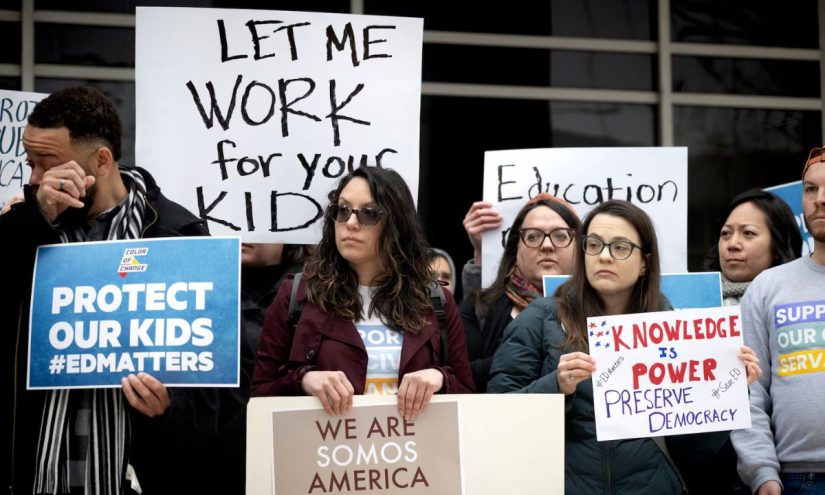
    American Federation of Teachers President Randi Weingarten heralded the judge’s ruling, calling it “a first step to reverse this war on knowledge and the undermining of broad-based opportunity.”

    But Biedermann, from the Education Department, said the ruling was unfair to the Trump administration.

    “Once again, a far-left Judge has dramatically overstepped his authority, based on a complaint from biased plaintiffs, and issued an injunction against the obviously lawful efforts to make the Department of Education more efficient and functional for the American people,” she said in a statement.

    Chalkbeat national editor Erica Meltzer contributed reporting.

    Chalkbeat is a nonprofit news site covering educational change in public schools.

    For more news on federal policy, visit eSN’s Educational Leadership hub.

    Latest posts by eSchool Media Contributors (see all)

    Source link

  • Arizona Autism Charter School Founder Tapped as DOE Special Education Chief – The 74

    Arizona Autism Charter School Founder Tapped as DOE Special Education Chief – The 74

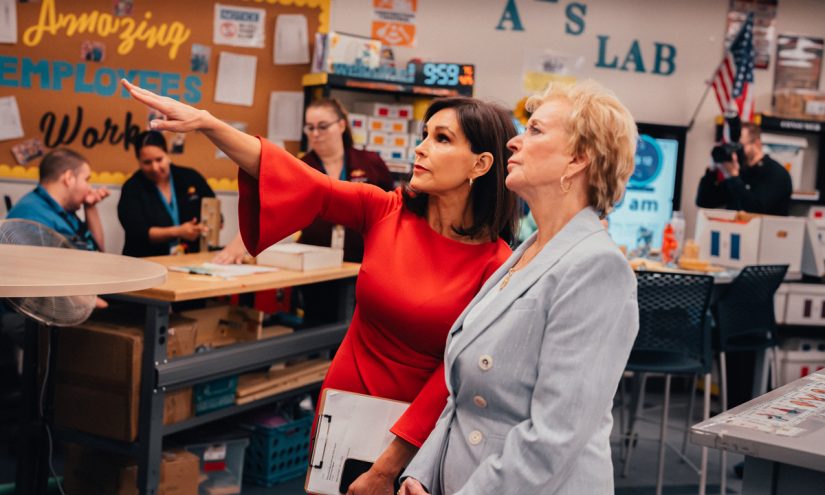
    The founder and executive director of a network of Arizona charter schools serving autistic children has been named the U.S. Education Department’s deputy assistant secretary for special education and rehabilitative services. Education Secretary Linda McMahon made the announcement while touring the Arizona Autism Charter Schools’ Phoenix location.

    Diana Diaz-Harrison, whose son is autistic, said that in her new job she hopes to continue her efforts to help others launch autism charter schools throughout the country. Her schools, she said in remarks captured on video by AZ Central, are a testament to what happens “when parents like me are empowered to create solutions.”

    “My vision is to expand school choice for special needs families — whether through charter schools, private options, voucher programs, or other parent-empowered models,” she said in a statement to The 74. .

    The five-school network uses a controversial intervention that attempts to train children to appear and behave like their neurotypical peers. Created by the researcher behind LGBTQ conversion therapy, applied behavior analysis, or ABA, is widely depicted as the gold standard despite scant independent evidence of its effectiveness and mounting research documenting its harms. 

    Diaz-Harrison opened the network’s first school in 2014 as a free, public alternative to private schools for autistic children, which are popular in Arizona but typically charge tens of thousands of dollars a year in tuition. Her Arizona charter schools are a 501(c)3 nonprofit financed by state and federal per-pupil funds. ABA is specifically endorsed by Arizona education officials as a strategy to use with autistic students.

    In the time since those charters opened, ABA has grown to be a national, multi-billion-dollar industry, with for-profit companies tapping public and private insurance to pay for as much as 40 hours a week of one-on-one therapy. The intervention uses repeated, rapid-fire commands that bring rewards and punishments to change a child’s behavior and communication style.

    A 74 investigation last year showed that most data supporting ABA’s effectiveness is drawn from research conducted by industry practitioners. Independent analyses, including a years-long U.S. Department of Defense review, found little evidence the intervention works. Former patients who underwent the therapy as children reported severe, lasting mental health effects, including PTSD.

    Diaz-Harrison told The 74 the therapy is both valuable and sought-after. “For the autism community, specifically, many families seek schools that integrate positive behavioral strategies,” she says. “The evidence supporting behavioral therapy is extensive and well-established. It has been endorsed by the U.S. surgeon general and the American Academy of Pediatrics as an effective, research-backed approach for individuals with autism.”

    During her visit, McMahon told students and staff she was eager to tell President Donald Trump about the schools. “He doesn’t believe any child, whether they have neuro-difficulties or any other problems, should be trapped in a school and not have the facilities that they need,” she said. 

    Since Trump’s second inauguration, he has issued numerous orders that have alarmed disability advocates and the autistic community. Though both edicts contradict longstanding federal laws, in March he ordered the closure of the Education Department and said responsibility for special education will be transferred to the U.S. Department of Health and Human Services.

    About half of the Education Department’s staff has been fired, including most of the people responsible for investigating what had been a backlog of some 6,000 disability discrimination complaints. Though it’s unclear whether Trump and McMahon may legally disregard special education funding laws and allow states to spend federal dollars as they see fit, both have said they favor giving local officials as much decision-making power as possible.

    Meanwhile, HHS Secretary Robert F. Kennedy Jr. has stoked fear in the autistic community by announcing a new effort to tie autism to vaccines or other “environmental toxins” — a hypothesis discredited by dozens of studies. The man he appointed to head the study has been cited for practicing medicine without a license and prescribing dangerous drugs to autistic children. 

    Last week, the new head of the National Institutes of Health announced that an unprecedented compilation of medical, pharmaceutical and insurance records would be used to create an autism “disease registry” — a kind of list historically used to sterilize, institutionalize and even “euthanize” autistic people. HHS later walked back the statement, saying the database under construction would have privacy guardrails.

    Among other responsibilities, the offices Diaz-Harrison will head identify strategies for improving instruction for children with disabilities and ensure that as they grow up, they are able to be as independent as possible. The disability community has raised concerns that the administration is retreating from these goals.   

    Advocates have said they fear the changes pave the way for a return to the practice of separating students with disabilities in dedicated special ed classrooms rather than having them attend class with typically developing peers. The Individuals with Disabilities in Education Act guarantees special education students the right to instruction in the “least restrictive environment” possible.          

    Families’ preferences vary widely, with some parents of autistic children refusing any form of behavior therapy, while others want their kids in settings with children who share their needs. Many insist on grade-level instruction in general education classrooms 

    Diaz-Harrison has a master’s degree in education and worked as a bilingual teacher in California early in her career. From the late 1990s until she began supporting her son full time, she worked as a public relations strategist and a reporter and anchor for the Spanish-language broadcast network Univision. 

    In 2014, frustrated with her son’s school options, she organized a group of parents and ABA providers who applied for permission to open what was then a single K-5 school serving 90 children. The network now has about 1,000 students in all grades and features an online program. 

    At the end of the 2023-24 academic year, 9% of the network’s students scored proficient or highly proficient on Arizona’s annual reading exam, while 4% passed the math assessments.      

    In December 2022, the network won a $1 million Yass Prize, an award created by Jeff and Janine Yass. The billionaire investors have a long track record of donating to Republican political candidates and organizations that support school choice. 

    One of the award’s creators, Jeanne Allen, is CEO of the Center for Education Reform. The center nominated Diaz-Harrison for the federal role. 

    Yass award winners were featured at the 2023 meeting of the American Legislative Exchange Council, or ALEC, a conservative forum where state lawmakers are given model bills on education and other policies to introduce in their respective statehouses. 

    Diaz-Harrison has partnered with a Florida autism school to create a national charter school accelerator program to help people start schools like hers throughout the country. She told The 74 the effort has so far supported teams of hopeful school founders from Louisiana, Texas, Florida, Alabama and Nevada. 

    Parents of young autistic children and autistic adults often disagree about ABA. Told by their pediatrician or the person who diagnosed their child as autistic that they have a narrow window in which to intervene, families fight to get the therapy. Adults who have experienced it, however, report lasting trauma and have lobbied for research — much of it now at risk of being defunded by Kennedy — into more effective and humane alternatives.


    Get stories like these delivered straight to your inbox. Sign up for The 74 Newsletter

    Source link

  • Lawyers in New Jersey School Segregation Case Want Appellate Court to Weigh in – The 74

    Lawyers in New Jersey School Segregation Case Want Appellate Court to Weigh in – The 74


    Get stories like this delivered straight to your inbox. Sign up for The 74 Newsletter

    Attorneys representing a group of New Jersey parents and activist groups are asking a state appellate court to weigh in on a case that could reshape the state’s public education system.

    At the center of the fight is whether New Jersey schools are unconstitutionally segregated by race and socioeconomic status. A lower court judge in October 2023 acknowledged the state’s public schools are segregated by race and that the state must act, but also found that the plaintiffs had failed to prove the entire system is segregated across all its districts.

    The parents’ attorneys filed a motion last week with the state’s appellate division asking it to hear the case.

    “It is imperative that no more students be deprived of these rights by the trial court’s avoidance of the straightforward conclusion compelled by the facts and the law in this case — that the state defendants, who are legally obligated to take action to desegregate public schools regardless of the reasons for that segregation, have acted unconstitutionally by failing to do so,” the attorneys wrote in the filing.

    Gov. Phil Murphy and the state Department of Education have until April 28 to respond to the plaintiffs’ new filing. A spokesman for the Murphy administration declined to comment.

    News of the new filing was first reported by Chalkbeat Newark.

    The case dates to 2018, when the Latino Action Network, the NAACP New Jersey State Conference, and several other families and groups sued the state alleging New Jersey failed to address de facto segregation in public schools. The plaintiffs cited data showing that nearly half of all Black and Latino students in New Jersey attend schools that are more than 90% non-white, in districts that are often just blocks from predominantly white districts.

    In New Jersey, students typically attend schools in the municipality where they live. Plaintiffs argued that long-standing housing policies that led to segregated residential neighborhoods led to segregated schools also. New Jersey is the seventh-most segregated state for Black and Latino students, the plaintiffs say.

    In October 2023, after Superior Court Judge Robert Lougy issued his ruling that acknowledged racial segregation in New Jersey schools but said it was not widespread, both sides entered mediation talks in hopes it would resolve more quickly than continued litigation.

    Attorneys for the parties said in February that it’s unlikely continuing the talks would “be constructive.”

    The plaintiffs’ attorneys say the lower court’s October ruling should be reversed. They want a judge to review what they say are six errors in the 2023 order, like the fact that Lougy did not identify a disputed fact.

    “Rather than reach the only logical conclusion that followed — that the state defendants violated plaintiffs’ constitutional rights — the trial court left the question of liability for another day,” the filing reads.

    If the appellate court denies the motion, the case would return to the trial court, or could be appealed to the state Supreme Court.

    New Jersey Monitor is part of States Newsroom, a nonprofit news network supported by grants and a coalition of donors as a 501c(3) public charity. New Jersey Monitor maintains editorial independence. Contact Editor Terrence T. McDonald for questions: [email protected].


    Get stories like these delivered straight to your inbox. Sign up for The 74 Newsletter

    Source link

  • Federal Education Cuts and Trump DEI Demands Leave States, Teachers in Limbo – The 74

    Federal Education Cuts and Trump DEI Demands Leave States, Teachers in Limbo – The 74


    Get stories like this delivered straight to your inbox. Sign up for The 74 Newsletter

    Early this month, the U.S. Department of Education issued an ultimatum to K-12 public schools and state education agencies: Certify that you are not engaging in discrimination under the banner of diversity, equity and inclusion, or risk losing federal funding — including billions in support for low-income students.

    The backlash was immediate. Some states with Democratic governors refused to comply, arguing that the directive lacks legal basis, fails to clearly define what constitutes “illegal DEI practices,” and threatens vital equity-based initiatives in their schools.

    After lawsuits from the National Education Association teachers union and the American Civil Liberties Union, the Department of Education agreed to delay enforcement until after April 24.

    But states across the country, both liberal- and conservative-led, are worried about losing other aid: the pandemic-era money that in some cases they’ve already spent or committed to spending.

    The Department of Education has long played a critical role in distributing federal funds to states for K-12 education, including Title I grants to boost staffing in schools with high percentages of low-income students, and emergency relief like that provided during the COVID-19 pandemic.

    Conservative-led states — particularly Mississippi, South Dakota and Arkansas — rely the most heavily on these funds to sustain services in high-need districts.

    The 15 states with the highest percentage of their K-12 budget coming from federal funding in fiscal year 2022 — the latest year with data available from the National Center for Education Statistics — voted for Trump in the 2024 presidential election. Similarly, 10 of the 15 states receiving the highest amounts of Title I funding in fiscal year 2024 also voted for Trump.

    Mississippi and Kentucky have sent letters to the Department of Education expressing concern over halted pandemic aid.

    The clash over federal funding comes even as the future of the Department of Education is murky, given President Donald Trump’s pledge to dismantle the department.

    DEI-related cuts

    In letters to the Department of Education, state officials and superintendents in Illinois, New York and Wisconsin pushed back against the DEI directive.

    New York officials said they would not provide additional certification beyond what the state already has done, asserting that there “are no federal or State laws prohibiting the principles of DEI.” Illinois Superintendent Tony Sanders wrote that he was concerned that the Department of Education was changing the conditions of federal funding without a formal administrative process. Wisconsin Superintendent Jill Underly questioned the legality of the order.

    New York State Department of Education Counsel and Deputy Commissioner Daniel Morton-Bentley noted that the federal department’s current stance on DEI starkly contrasts with its position during Trump’s first term, when then-Education Secretary Betsy DeVos supported such efforts.

    Colorado and California also confirmed they would not comply with the Department of Education’s order.

    While some states with liberal leaders are gearing up for legal battles and possible revocation of funding, conservative-led states such as Florida have embraced the federal directive as part of a broader push to reshape public education.

    In Florida, anti-DEI laws have been in place dating back to 2023. In fact, many school districts and the state education department say they plan to follow the federal department’s directives, noting the similar state laws.

    Pandemic aid cancellations

    In March, the Department of Education abruptly rescinded previously approved extensions of pandemic-era aid, ending access to funds months ahead of the original March 2026 deadline.

    When the Massachusetts governor’s office voiced concern over that decision, the federal department’s reply on social media was blunt: “COVID is over.

    Sixteen mostly Democratic-led states and the District of Columbia filed a federal lawsuit against the Department of Education and Secretary Linda McMahon, challenging the abrupt rescission of previously approved extensions for spending COVID-19 education relief funds.

    But backlash against abrupt federal cuts to education has not been limited to blue states.

    Mississippi’s Department of Education warned the cuts would jeopardize more than $137 million in already obligated funds, slated for literacy initiatives, mental health services and infrastructure repairs. “The impact of this sudden reversal is detrimental to Mississippi students,” state Superintendent Lance Evans wrote in a letter to McMahon.

    The letter also outlines the state’s repeated — but unsuccessful — efforts to draw down millions in approved funds since February.

    Shanderia Minor, a spokesperson for the Mississippi education department, told Stateline the agency is awaiting next steps and direction about the funds and federal directives.

    In Kentucky, state Education Commissioner Robbie Fletcher told districts — which stand to lose tens of millions in pandemic aid — that abrupt federal changes leave them “in a difficult position,” with schools already having committed funds to teacher training and facility upgrades.

    According to Kentucky Department of Education spokesperson Jennifer Ginn, the state has about $18 million in unspent pandemic aid funds left to distribute to districts. And districts have about $38 million in unspent funds, for a total $56 million that could be lost.

    Lauren Farrow, a former Florida public school teacher, told Stateline that schools that receive Title I money are already underfunded — and the federal threat only widens the gap.

    “Florida is pouring billions into education — but where is it going? Because we’re not seeing it in schools, especially not in Title I schools,” said Farrow. “I taught five minutes away from a wealthier school, and we didn’t even have pencils. Teachers were buying shoes for students. Why is that still happening?”

    Effects in the classroom

    Tafshier Cosby, senior director of the Center for Organizing and Partnerships at the National Parents Union, a parents advocacy group, told Stateline that while most families don’t fully understand the various school funding systems, they feel the impact of cuts in the classroom.

    Cosby said parents are worried about the loss of support services for students with disabilities, Title I impacts, and how debates about DEI may deflect from more urgent needs like literacy and teacher support.

    “We’ve been clear: DEI isn’t the federal government’s role — it’s up to states,” she said. “But the confusion is real. And the impact could be devastating.”

    Today, as a consultant working with teachers across Florida’s Orange County Public Schools — one of the largest districts in the country — Farrow says many educators are fearful and confused about how to support their students under changing DEI laws.

    “Teachers are asking, ‘Does this mean I can’t seat a student with glasses at the front of the room anymore?’ There’s so much fear around what we’re allowed to do now.”

    “There’s no one giving teachers guidance or even basic acknowledgment. We’re just left wondering what we’re allowed to say or do — and that’s dangerous.”

    Amanda Hernández contributed to this report. Stateline reporter Robbie Sequeira can be reached at [email protected].

    Stateline is part of States Newsroom, a nonprofit news network supported by grants and a coalition of donors as a 501c(3) public charity. Stateline maintains editorial independence. Contact Editor Scott S. Greenberger for questions: [email protected].


    Get stories like these delivered straight to your inbox. Sign up for The 74 Newsletter

    Source link