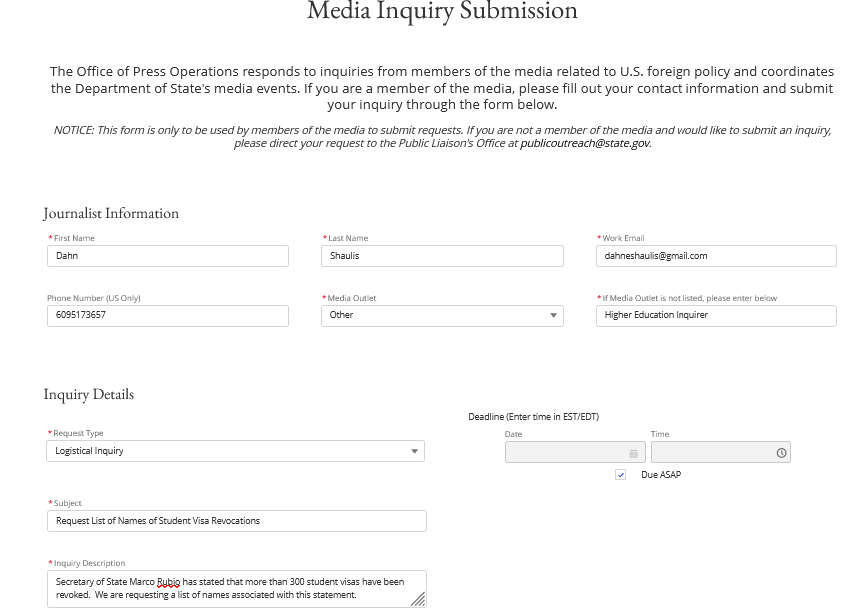
The Higher Education Inquirer (HEI) has requested a list of more than 300 students who have had their visas revoked. The State Department has acknowledged receipt. We hope other media outlets will follow suit. At this point, we only know of a handful of these cases. We will keep the public informed as this story develops.
This audio is auto-generated. Please let us know if you have feedback.
Democrat efforts to challenge President Donald Trump’s dismantling of the U.S. Department of Education mounted Thursday, as 11 senators asked the agency’s acting inspector general, René Rocque, to investigate the push.
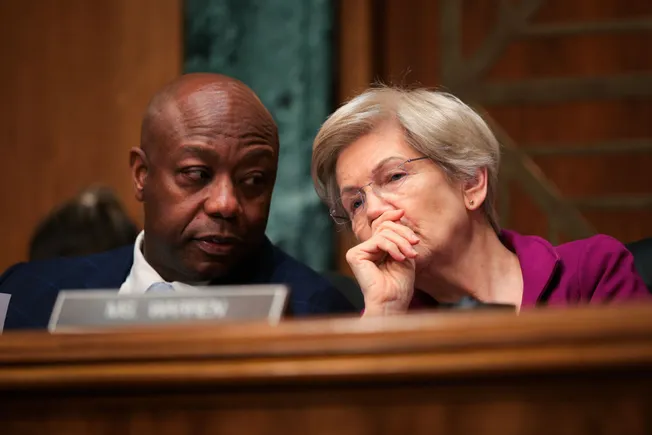
Sen. Elizabeth Warren and senate Minority Leader Chuck Schumer were among those requesting an evaluation of whether the administration is undermining the Education Department’s ability to provide students with equal access to education and to help state and local governments’ education systems
“Decimating the Department of Education’s abilities to administer financial aid, investigate civil rights violations, conduct research on educational outcomes, and oversee the use of federal education grants threatens to have disastrous consequences for American students, teachers and families,” they wrote in a March 27 letter to Rocque.
“The Trump Administration’s further attempts to close the Department entirely and transfer its responsibilities over to other agencies will likely interrupt and degrade education programs and services, causing additional pain for the 62 million students across the country that the Department serves.”
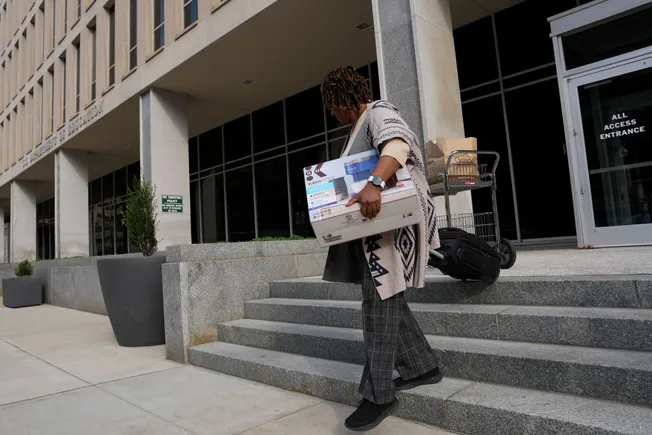
The administration’s gutting of the Education Department not only impacted nearly half of the department’s workforce, but also left civil rights investigation and enforcement offices at half their previous capacity, cut the Federal Student Aid office by over 450 employees, and slashed 90% of the Institute of Education Sciences staff.
These decisions would likely impede key functions of the department, including ensuring all students’ civil rights are protected, administering federal loans and overseeing lenders and FAFSA, and tracking students’ educational outcomes and the condition of education in the nation, the Democratic senators told Rocque.
Rocque, who joined the Education Department’s Office of Inspector General as deputy inspector general in December 2023, became acting director in January.
As with many other issues dividing lawmakers today, Democrats and Republicans have been starkly divided over the Trump administration’s efforts to eliminate the department altogether. This makes attaining a Senate supermajority of 60 votes— which is required to officially shut the department — unlikely.
House Democrats introduced a resolution on March 21 calling for transparency and information from the administration, including unredacted copies of all federal documents referring to the department’s closure and information on workforce reduction decisions.
About a week after the massive reduction in force on March 11, Democrat lawmakers from both the House and Senate wrote the department demanding information on the layoffs, saying that halving its workforce could impact the agency’s ability to perform vital functions required by law.
Meanwhile, Republicans in some states have taken the opportunity to ask the administration for more leeway in their education spending.
On March 25, for example, Oklahoma State Superintendent Ryan Walters sent a letter to the Education Department requesting a waiver to receive a block grant for all funds allocated to his state under the Every Student Succeeds Act. Such a consolidated block grant would “significantly enhance local flexibility” so “schools will be able to address their unique needs and priorities,” Walters wrote.
The block grant would be used to “expand educational choices,” including attendance at private schools, and would loosen federal oversight of education spending requirements.
The third month of the second Trump administration is coming to a close, and the White House has shown no signs of slowing down on the number of actions it’s taking that directly impact the higher education sector.
In the latest episode of The Key, Inside Higher Ed’s news and analysis podcast, Editor in Chief Sara Custer checks in on the latest developments with news editor Katherine Knott and federal policy reporter Jessica Blake.
They discuss the huge staff cuts at the Department of Education, an executive order to shutter the agency, arrests and intimidation of international students and scholars, and a $400 million ultimatum to Columbia University. They share what IHE has learned from the people at the center of these stories.
They also consider what legal and policy experts have said about the potential for these actions to be challenged in courts or through Congress.
Listen to the latest episode here and find more episodes of The Key here.
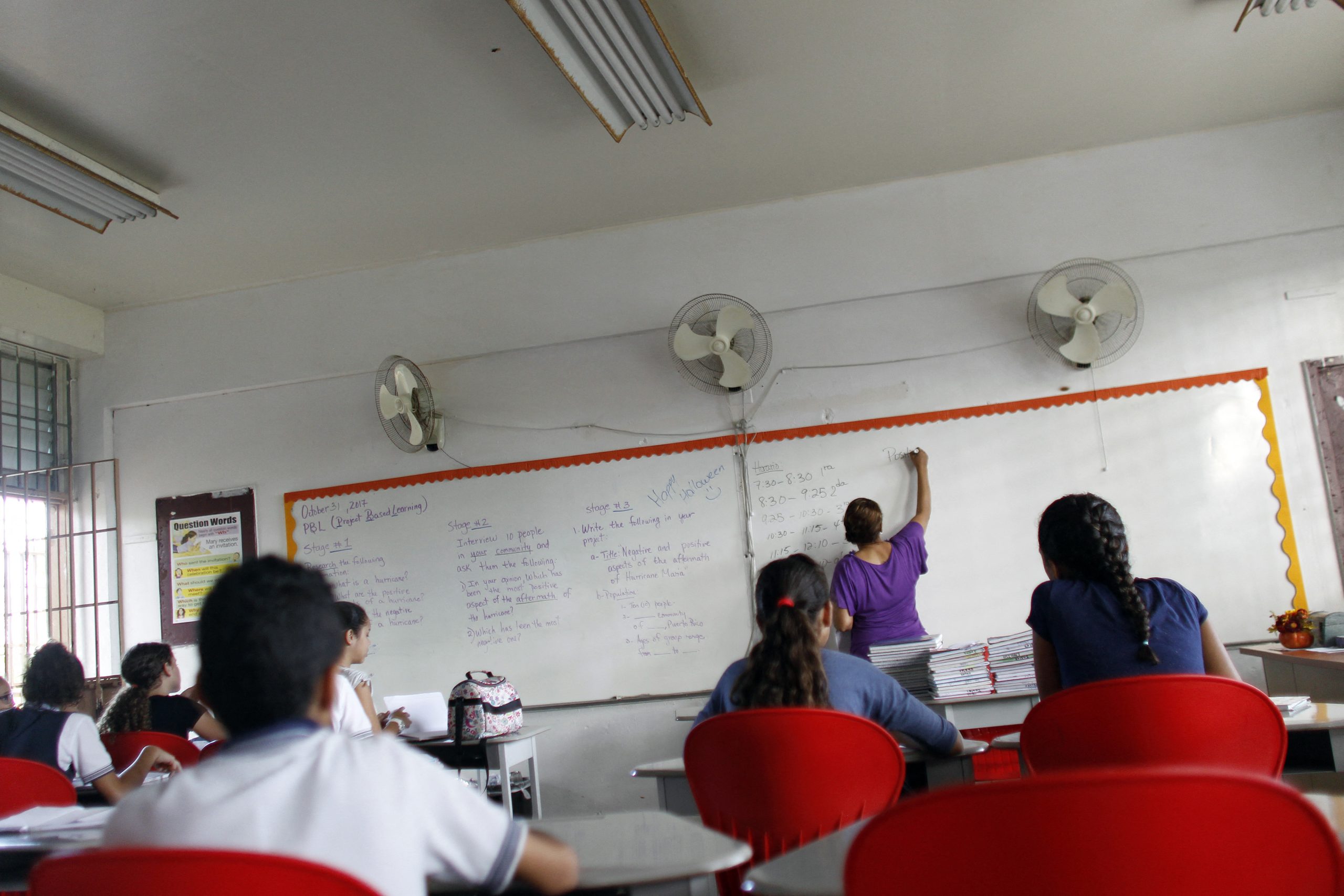
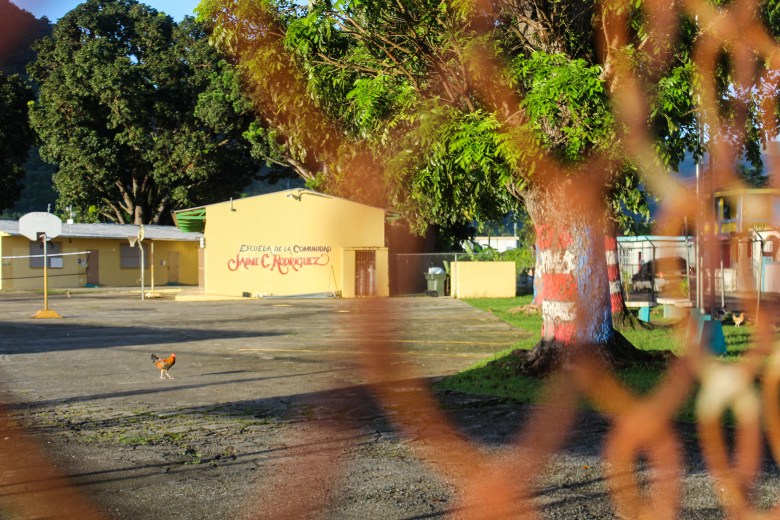
Maraida Caraballo Martinez has been an educator in Puerto Rico for 28 years and the principal of the elementary school Escuela de la Communidad Jaime C. Rodriguez for the past seven. She never knows how much money her school in Yabucoa will receive from the government each year because it isn’t based on the number of children enrolled. One year she got $36,000; another year, it was $12,000.
But for the first time as an educator, Caraballo noticed a big difference during the Biden administration. Because of an infusion of federal dollars into the island’s education system, Caraballo received a $250,000 grant, an unprecedented amount of money. She used it to buy books and computers for the library, white boards and printers for classrooms, to beef up a robotics program and build a multipurpose sports court for her students. “It meant a huge difference for the school,” Caraballo said.
Yabucoa, a small town in southeast Puerto Rico, was one of the regions hardest hit by Hurricane Maria in 2017. And this school community, like hundreds of others in Puerto Rico, has experienced near constant disruption since then. A series of natural disasters, including hurricanes, earthquakes, floods and landslides, followed by the coronavirus pandemic in 2020, has pounded the island and interrupted learning. There has also been constant churn of local education secretaries — seven in the past eight years. The Puerto Rican education system — the seventh-largest school district in the United States — has been made more vulnerable by the island’s overwhelming debt, mass emigration and a crippled power grid.
Maraida Caraballo Martinez has been an educator in Puerto Rico for 28 years and is now the principal of an elementary school. Her school has been slated for closure three times because of mass emigration from the island. Credit: Kavitha Cardoza for The Hechinger Report
Under President Joe Biden, there were tentative gains, buttressed by billions of dollars and sustained personal attention from top federal education officials, many experts and educators on the island said. Now they worry that it will all be dismantled with the change in the White House. President Donald Trump has made no secret of his disdain for the U.S. territory, having reportedly said that it was “dirty and the people were poor.” During his first term, he withheld billions of dollars in federal aid after Hurricane Maria and has suggested selling the island or swapping it for Greenland.
A recent executive order to make English the official language has worried people on the island, where only 1 in 5 people speak fluent English, and Spanish is the medium of instruction in schools. Trump is seeking to eliminate the U.S. Department of Education and has already madesweeping cuts to the agency, which will have widespread implications across the island. Even if federal funds — which last year made up more than two thirds of funding for the Puerto Rican Department of Education, or PRDE — were transferred directly to the local government, it would likely lead to worse outcomes for the most vulnerable children, say educators and policymakers. The PRDE has historically been plagued by political interference, widespread bureaucracy and a lack of transparency.
And the local education department is not as technologically advanced as other state education departments, nor as able to disseminate best practices. For example, Puerto Rico does not have a “per pupil formula,” a calculation commonly used on the mainland to determine the amount of money each student receives for their education. Robert Mujica is the executive director of the Puerto Rico Financial Oversight and Management Board, first convened under President Barack Obama in 2016 to deal with the island’s financial morass. Mujica said Puerto Rico’s current allocation of education funds is opaque. “How the funds are distributed is perceived as a political process,” he said. “There’s no transparency and there’s no clarity.”
Related: Become a lifelong learner. Subscribe to our free weekly newsletter featuring the most important stories in education.
In 2021, Miguel Cardona, Biden’s secretary of education, promised “a new day” for Puerto Rico. “For too long, Puerto Rico’s students and educators were abandoned,” he said. During his tenure, Cardona signed off on almost $6 billion in federal dollars for the island’s educational system, leading to a historic pay increase for teachers, funding for after-school tutoring programs, hiring of hundreds of school mental health professionals and the creation of a pilot program to decentralize the PRDE.
Cardona designated a senior adviser, Chris Soto, to be his point person for the island’s education system to underscore the federal commitment. During nearly four years in office, he made more than 50 trips to the island. Carlos Rodriguez Silvestre, the executive director of the Flamboyan Foundation, a nonprofit in Puerto Rico that has led children’s literacy efforts on the island, said the level of respect and sustained interest felt like a partnership, not a top-down mandate. “I’ve never seen that kind of attention to education in Puerto Rico,” he said. “Soto practically lived on the island.”
Soto also worked closely with Victor Manuel Bonilla Sánchez, the president of the teachers union, Asociación de Maestros de Puerto Rico, or AMPR, which resulted in a deal in which educators received $1,000 more a month to their base salary, a nearly 30 percent increase for the average teacher.“It was the largest salary increase in the history of teachers in Puerto Rico,” Bonilla said, though even with the increase, teachers here still make far less money than teachers on the mainland.
One of the biggest complaints Soto said he heard was how rigid and bureaucratic the Puerto Rico Department of Education was, despite a 2018 education reform law that allows for more local control. The education agency — the largest unit of government on the island, with the most employees and the biggest budget — was set up so that the central office had to sign off on everything. So Soto created and oversaw a pilot program in Ponce, a region on the island’s southern coast, focusing on decentralization.
For the first time, the local community elected an advisory board of education, and superintendent candidates had to apply rather than be appointed, Soto said. The superintendent was given the authority to sign off on budget requests directly rather than sending them through officials in San Juan, as well as the flexibility to spend money in his region based on individual schools’ needs.
In the past, that wasn’t a consideration: For example, Yadira Sanchez, a psychologist who has worked in Puerto Rican education for more than 20 years, remembers when a school got dozens of new air conditioners even though it didn’t need it. “They already had functioning air conditioners,” she said, “so that money was lost.”
The pilot project also focused on increasing efficiency. For example, children with disabilities are now evaluated at their schools rather than having to visit a special center. And Soto says he tried to remove politics and increase transparency around spending in the PRDE as well. “You can improve invoices, but if your political friends are getting the work, then you don’t have a good school system,” he said.
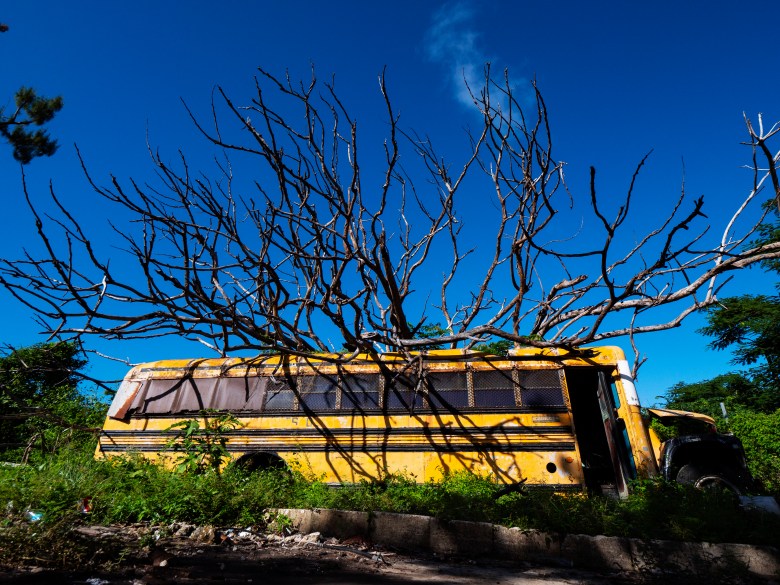
A school bus under a tree that fell during Hurricane Maria, which hit the island of Puerto Rico in September 2017. More than a year later, it had not been removed. Credit: Al Bello/Getty Images for Lumix
Under Biden, Puerto Rico also received a competitive U.S. Department of Education grant for $10.5 million for community schools, another milestone. And the federal department started including data on the territory in some education statistics collected. “Puerto Rico wasn’t even on these trackers, so we started to dig into how do we improve the data systems? Unraveling the data issue meant that Puerto Rico can properly get recognized,” Soto said.
But already there are plans to undo Cardona’s signature effort in Ponce. The island’s newly elected governor, Jenniffer González Colón, is a Republican and a Trump supporter. The popular secretary of education, Eliezer Ramos Parés, returned earlier this year to head the department after leading it from April 2021 to July 2023 when the governor unexpectedly asked him to resign — not an unusual occurrence within the island’s government, where political appointments can end suddenly and with little public debate. He told The Hechinger Report that the program won’t continue in its current form, calling it “inefficient.”
“The pilot isn’t really effective,” he said, noting that politics can influence spending decisions not only at the central level but at the regional level as well. “We want to have some controls.” He also said expanding the effort across the island would cost tens of millions of dollars. Instead, Ramos said he was looking at more limited approaches to decentralization, around some human resource and procurement functions. He said he was also exploring a per pupil funding formula for Puerto Rico and looking at lessons from other large school districts such as New York City and Hawaii.
While education has been the largest budget item on the island for years, it’s still far less than any of the 50 states spend on each student. Puerto Rico spends $9,500 per student, compared with an average of $18,600 in the states.
The U.S. Department of Education, which supplements local and state funding for students in poverty and with disabilities, has an outsized role in Puerto Rico schools. On the island, 55 percent of children live below the poverty line, compared with 17 percent in the 50 states; for students in special education, the figures are 35 percent and 15 percent, respectively. In total, during fiscal year 2024, more than 68 percent of the education budget on the island comes from federal funding, compared to 11 percent in U.S. states. The department also administers Pell Grants for low-income students — some 72 percent of Puerto Rican students apply — and supports professional development efforts and initiatives for Puerto Rican children who move back and forth between the mainland and territory.
Linda McMahon, Trump’s new education secretary, has reportedly said that the government will continue to meet its “statutory obligations” to students even as the department shuts down or transfers some operations and lays off staff. The U.S. Department of Education did not respond to requests for comment.
Some say the Biden administration’s pouring billions of dollars into a troubled education system with little accountability has created unrealistic expectations and there’s no plan for what happens after money is spent. Mujica, the executive director of the oversight board, said the infusion of funds postponed tough decisions by the Puerto Rican government. “When you have so much money, it papers over a lot of problems. You didn’t have to deal with some of the challenges that are fundamental to the system.” And he said there is little discussion of what happens when that money runs out. “How are you going to bridge that gap? Either those programs go away or we’re going to have to find the funding for them,” Mujica said.
He said efforts like the one in Ponce to bring decision making closer to where the students’ needs are is “vitally important.” Still, he said he’s not sure the money improved student outcomes. “This was a huge opportunity to make fundamental changes and investments that will yield long-term results. I’m not sure that we’ve seen the metrics to support that.”
Puerto Rico is one of the most educationally impoverished regions, with academic outcomes well below the mainland. On the math portion of the National Assessment of Educational Progress, or NAEP, a test that students across the U.S. take, just 2 percent of fourth graders in Puerto Rico were proficient, the highest score ever recorded for the island, and zero percent of eighth graders were. Puerto Rican students don’t take the NAEP for reading because they learn in Spanish, not English, though results shared by Ramos at a press conference in 2022 showed only 1 percent of third graders were reading at grade level.
There are some encouraging efforts. Flamboyan Foundation, the nonprofit in Puerto Rico, has been leading an island-wide coalition of 70 partners to improve K-3 literacy, including through professional development. Teacher training through the territory’s education department has often been spotty or optional.
The organization now works closely with the University of Puerto Rico and, as part of that effort, oversees spending of $3 million in literacy training. Approximately 1,500 or a third of Puerto Rico’s K-5 teachers have undergone the rigorous training. Educators were given $500 as an incentive for participating, along with books for their classrooms and three credit hours in continuing education. “It was a lot of quality hours. This was not the ‘spray and pray’ approach,” said Silvestre. That effort will continue, according to Ramos, who called it “very effective.”
A new reading test for first through third graders the nonprofit helped design showed that between the 2023 and 2024 school years, most children were below grade level but made growth in every grade. “But we still have a long way to go so that this data can get to teachers in a timely manner and in a way that they can actually act on it,” Silvestre said.
Kristin Ehrgood, Flamboyan Foundation’s CEO, said it’s too soon to see dramatic gains. “It’s really hard to see a ton of positive outcomes in such a short period of time with significant distrust that has been built over years,” she said. She said they weren’t sure how the Trump administration may work with or fund Puerto Rico’s education system but that the Biden administration had built a lot of goodwill. “There is a lot of opportunity that could be built on, if a new administration chooses to do that.”
Another hopeful sign is that the oversight board, which was widely protested when it was formed, has cut the island’s debt from $73 billion to $31 billion. And last year board members increased education spending by 3 percent. Mujica said the board is focused on making sure that any investment translates into improved outcomes for students: “Our view is resources have to go into the classroom.”
Betty A. Rosa, education commissioner and president of the University of the State of New York and a member of the oversight board, said leadership churn in Puerto Rico drives its educational instability. Every new leader is invested in “rebuilding, restructuring, reimagining, pick your word,” she said. “There is no consistency.” Unlike her New York state position, the Puerto Rican education secretary and other positions are political appointments. “If you have permanent governance, then even when the leadership changes, the work continues.”
Ramos, who experienced this instability when the previous governor unexpectedly asked to resign in 2023, said he met McMahon, the new U.S. secretary of education, in Washington, D.C., and that they had a “pleasant conversation.” “She knows about Puerto Rico, she’s concerned about Puerto Rico, and she demonstrated full support in the Puerto Rico mission,” he said. He said McMahon wanted PRDE to offer more bilingual classes, to expose more students to English. Whether there will be changes in funding or anything else remains to be seen. “We have to look at what happens in the next few weeks and months and how that vision and policy could affect Puerto Rico,” Ramos said.
Ramos was well-liked by educators during his first stint as education secretary. He will also have a lot of decisions to make, including whether to expand public charter schools and close down traditional public schools as the island’s public school enrollment continues to decline precipitously. In the past, both those issues led to fierce and widespread protests.
Soto says he’s realistic about the incoming administration having “different views, both ideologically and policywise,” but he’s hopeful the people of Puerto Rico won’t want to go back to the old way of doing things. “Somebody said, ‘You guys took the genie out of the bottle and it’s going to be hard to put that back’ as it relates to a student-centered school system,” Soto said.
Cardona, whose grandparents are from the island, said Puerto Rico had seen “academic flatlining” for years. “We cannot accept that the students are performing less than we know they are capable of,” he told The Hechinger Report, just before he signed off as the nation’s top education official. “We started change; it needs to continue.”
Principal Carabello’s small school of 150 students and 14 teachers has been slated for closure three times already, though each time it has been spared in part because of community support. She’s hopeful that Ramos, with whom she’s worked previously, will turn things around. “He knows the education system,” she said. “He’s a brilliant person, open to listen.”
Escuela de la Communidad Jaime C. Rodriguez is a Montessori school in Yabucoa, Puerto Rico, that did not have any sports facilities for its students. It recently began work on a multipurpose sports center, made possible by federal funds under former President Joe Biden. Credit: Kavitha Cardoza for The Hechinger Report
But the long hours of the past several years have taken a toll on her. She is routinely in school from 6:30 a.m. to 6:30 p.m. “You come in when it’s dark and you leave when it’s dark,” she said. There have been many new platforms to learn and new projects to implement. She wants to retire but can’t afford to. After decades of the local government underfunding the pension system, allowances that offset the high price of goods and services on the island were cut and pension plans were frozen.
Now instead of retiring with 75 percent of her salary, Carabello will receive only 50 percent, $2,195 a month. She is entitled to Social Security benefits, but it isn’t enough to make up for the lost pension. “Who can live with $2,000 in one month? Nobody. It’s too hard. And my house still needs 12 years more to pay.”
Carabello, who is always so strong and so optimistic around her students, teared up. But it’s rare that she allows herself time to think about herself. “I have a great community. I have great teachers and I feel happy with what I do,” she said.
The Hechinger Report provides in-depth, fact-based, unbiased reporting on education that is free to all readers. But that doesn’t mean it’s free to produce. Our work keeps educators and the public informed about pressing issues at schools and on campuses throughout the country. We tell the whole story, even when the details are inconvenient. Help us keep doing that.
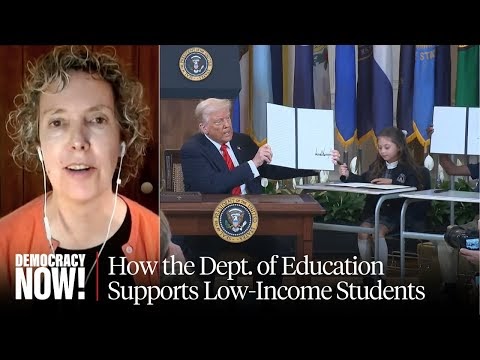
President
Donald Trump signed an executive order Thursday instructing Secretary
of Education Linda McMahon to start dismantling her agency, although it
cannot be formally shut down without congressional approval. Since
returning to office in January, Trump has already slashed the Education
Department’s workforce in half and cut $600 million in grants. Education
journalist Jennifer Berkshire says despite Trump’s claims that he is
merely returning power and resources to the states, his moves were
previewed in Project 2025. “The goal is not to continue to spend the
same amount of money but just in a different way; it’s ultimately to
phase out spending … and make it more difficult and more expensive for
kids to go to college,” Berkshire says. She is co-author of the book The
Education Wars: A Citizen’s Guide and Defense Manual and host of the
education podcast Have You Heard.
President Donald Trump said Friday that the U.S. Small Business Administration would handle the student loan portfolio for the slated-for-elimination Education Department, and that the Department of Health and Human Services would handle special education services and nutrition programs.
The announcement — which raises myriad questions over the logistics to carry out these transfers of authority — came a day after Trump signed a sweeping executive order that directs Education Secretary Linda McMahon to “take all necessary steps to facilitate the closure” of the department to the extent she is permitted to by law.
“I do want to say that I’ve decided that the SBA, the Small Business Administration, headed by Kelly Loeffler — terrific person — will handle all of the student loan portfolio,” Trump said Friday morning.
The White House did not provide advance notice of the announcement, which Trump made at the opening of an Oval Office appearance with Defense Secretary Pete Hegseth.
The Education Department manages student loans for millions of Americans, with a portfolio of more than $1.6 trillion, according to the White House.
In his executive order, Trump said the federal student aid program is “roughly the size of one of the Nation’s largest banks, Wells Fargo,” adding that “although Wells Fargo has more than 200,000 employees, the Department of Education has fewer than 1,500 in its Office of Federal Student Aid.”
‘Everything else’ to HHS
Meanwhile, Trump also said that the Department of Health and Human Services “will be handling special needs and all of the nutrition programs and everything else.”
It is unclear what nutrition programs Trump was referencing, as the U.S. Department of Agriculture manages school meal and other major nutrition programs.
One of the Education Department’s core functions includes supporting students with special needs. The department is also tasked with carrying out the federal guarantee of a free public education for children with disabilities Congress approved in the Individuals with Disabilities Education Act, or IDEA.
Trump added that the transfers will “work out very well.”
“Those two elements will be taken out of the Department of Education,” he said Friday. “And then all we have to do is get the students to get guidance from the people that love them and cherish them, including their parents, by the way, who will be totally involved in their education, along with the boards and the governors and the states.”
Trump’s Thursday order also directs McMahon to “return authority over education to the States and local communities while ensuring the effective and uninterrupted delivery of services, programs, and benefits on which Americans rely.”
SBA, HHS heads welcome extra programs
Asked for clarification on the announcement, a White House spokesperson on Friday referred States Newsroom to comments from White House press secretary Karoline Leavitt and heads of the Small Business Administration and Health and Human Services Department.
Leavitt noted the move was consistent with Trump’s promise to return education policy decisions to states.
“President Trump is doing everything within his executive authority to dismantle the Department of Education and return education back to the states while safeguarding critical functions for students and families such as student loans, special needs programs, and nutrition programs,” Leavitt said. “The President has always said Congress has a role to play in this effort, and we expect them to help the President deliver.”
Loeffler and HHS Secretary Robert F. Kennedy Jr. said their agencies were prepared to take on the Education Department programs.
“As the government’s largest guarantor of business loans, the SBA stands ready to deploy its resources and expertise on behalf of America’s taxpayers and students,” Loeffler said.
Kennedy, on the social media platform X, said his department was “fully prepared to take on the responsibility of supporting individuals with special needs and overseeing nutrition programs that were run by @usedgov.”
The Education Department directed States Newsroom to McMahon’s remarks on Fox News on Friday, where she said the department was discussing with other federal agencies where its programs may end up, noting she had a “good conversation” with Loeffler and that the two are “going to work on the strategic plan together.”
Maine Morning Star is part of States Newsroom, a nonprofit news network supported by grants and a coalition of donors as a 501c(3) public charity. Maine Morning Star maintains editorial independence. Contact Editor Lauren McCauley for questions: [email protected].
This audio is auto-generated. Please let us know if you have feedback.
President Donald Trump and Republicans promised to shutter the U.S. Department of Education on the 2024 campaign trail, a goal of many conservatives going back decades.
The department — created by statute in 1979 — legally cannot be eliminated without congressional approval and a president’s signature. Such a move would have to pass the 60-vote threshold for overcoming a filibuster in the Senate, which could partly explain why past efforts to nix the department have not gotten far.
But on Thursday, Trump threw the department’s fate into deep uncertainty after he signed an executive order directing U.S. Secretary of Education Linda McMahon “to the maximum extent appropriate and permitted by law, take all necessary steps to facilitate the closure of the Department of Education“and turn its authority over to states.
The order came just over a week after the department announced massive layoffs that cut its workforce in half.
Thursday’s order provided for the “effective and uninterrupted delivery of [Education Department] services, programs, and benefits on which Americans rely,”but it offered few details on how the Trump administration plans to restructure or distribute the agency’s functions.
Those include managing and distributing billions in Pell Grants and student loans every year, as well as enforcing civil rights laws related to education on college campuses, among other functions.
A statement from McMahon similarly offered scant details on what the shuttering would mean in practical terms.
“We’re going to follow the law and eliminate the bureaucracy responsibly by working through Congress to ensure a lawful and orderly transition,” McMahon said.
On Friday, Trump told media that the Education Department’s management of student loans would be moved to the Small Business Administration. “That’s coming out of the Department of Education immediately,” he said. The announcement came as the SBA said it will cut 43% of its staff.
While much remains uncertain about the ultimate effects of Trump’s order, higher education groups panned the order and raised alarms over what Trump’s unilateral attempt to shutter the agency will mean for students and institutions.
“This is political theater, not serious public policy,” American Council on Education President Ted Mitchell said in a statement Thursday. “To dismantle any cabinet-level federal agency requires congressional approval, and we urge lawmakers to reject misleading rhetoric in favor of what is in the best interests of students and their families.”
Kara Freeman, president and CEO of the National Association of College and University Business Officers, said that Trump’s order “adds to the turbulence colleges and universities are experiencing and the uncertainty students and families are facing at this critical time in the academic year.”
Freeman voiced concerns around key functions of the department, including federal student aid processing, aid to institutions and data tracking “that is so important to institutional decision-making.”
“Most troubling is that these collective actions involving the department could cause enough confusion to discourage students and families from considering a path to college,” Freeman said.
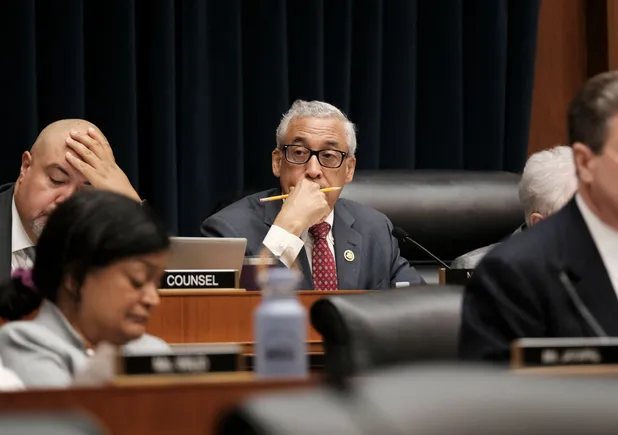
Congressional Democrats were sharper in their criticism. In a letter to McMahon, Rep. Bobby Scott, ranking member of the House Committee on Education and Workforce, and Rep. Gerald Connolly, ranking member of the Committee on Oversight and Government Reform, described both the Thursday order and the Department’s mass layoffs as illegal moves to “usurp Congress’s authority.”
Scott is leading an effort within the House to open an inquiry into the effort to dismantle the department.
He and Connolly also noted in their letter that the Trump administration’s efforts to shutter the agency run “counter to the will of the American people, the majority of whom oppose efforts to close the Department.”
To their point, recent nationally representative surveys have found fairly wide support for the department. A March poll from Quinnipiac University found 60% of those surveyed opposed Trump’s plan to close the Education Department, while only 33% supported it.
A poll from the center-left New America similarly found low levels of support for eliminating the agency. (Kevin Carey, the think tank’s vice president of education, called Trump’s order “short, weak, and substance-free.”)
Morning Consult, meanwhile, recently found a majority of voters favored preserving or expanding funding to the Education Department.
Some conservatives also raised issues with the push to kill the department — at least in the manner Trump has gone about it.
“There are good reasons to streamline operations at the Department and even to shut it down entirely. But efforts to date have been too hasty,” Beth Akers, senior fellow with right-wing American Enterprise Institute, said in a statement. “The cuts we’ve already seen will likely be disruptive in ways that weren’t expected.”
Akers added that department officials should proceed cautiously and ensure “programs mandated by legislation are transferred to other agencies before the staffing reduction makes them impossible to administer effectively.”
This audio is auto-generated. Please let us know if you have feedback.
Dive Brief:
Democrats on the House Education and Workforce Committee introduced a resolution on Friday calling for transparency and information from the Trump administration and U.S. Secretary of Education Linda McMahon on their efforts to shutter the U.S. Department of Education.
Specifically, the resolution requests unredacted copies of all documents from the administration that refer to the Education Department’s closure, including decisions around workforce reductions and those that could affect the agency’s ability to carry out education laws like the Individuals with Disabilities Education Act and the Elementary and Secondary Education Act.
The resolution will be taken to the House floor for a vote if the Education and Workforce Committee, led by Chair Tim Walberg, R-Mich., does not adopt it within 14 legislative days.
Dive Insight:
The resolution’s introduction comes one day after President Donald Trump signed an executive order directing McMahon to close the Education Department to the “maximum extent appropriate and permitted by law.”
“Abolishing a federal agency requires an Act of Congress,” said Rep. Bobby Scott, D-Va., ranking member of the House Education and Workforce Committee, in a Friday statement. “President Trump’s executive order has little regard for the irreparable harm it will cause to students, educators, our future workforce, and parents, who are already struggling.”
After the Trump administration announced massive layoffs that cut the Education Department’s workforce in half earlier this month, the agency has denied that its key functions would be impacted.
“Closing the Department does not mean cutting off funds from those who depend on them — we will continue to support K-12 students, students with special needs, college student borrowers, and others who rely on essential programs,” said McMahon in a Thursday statement praising the executive order.
Additionally, Trump said before signing Thursday’s executive order that he plans to redistribute the department’s primary responsibilities to other parts of the government. That includes Pell Grants, Title I funding and resources for students with disabilities, he said.
The resolution introduced Friday appears to be part of a broader effort by Democrats in the House and Senate to challenge and seek more information over the slew of changes being made to the Education Department.
On March 17, leading Democrats on the congressional appropriations committees demanded details on the Education Department’s mass layoffs in a letter to the agency. The requested information included details on the number of staff terminated in each office and the expected savings from the staffing cuts.
President Donald Trump has signed a much anticipated executive order that he said is designed to close the U.S. Department of Education.
The order Trump signed Thursday tells Education Secretary Linda McMahon to “take all necessary steps to facilitate the closure of the Department of Education and return authority over education to the States and local communities” to the “maximum extent appropriate and permitted by law.” At the same time, the order says McMahon should ensure “the effective and uninterrupted delivery of services, programs, and benefits on which Americans rely.”
Despite polling to the contrary, Trump said in his speech Thursday that closing the department is a popular idea that would save money and help American students catch up to other countries. He also said his order would ensure that other federal agencies take over major programs now housed at the Education Department, like those for students from low-income backgrounds and students with disabilities.
“Beyond these core necessities, my administration will take all lawful steps to shut down the department,” Trump said. “We’re going to shut it down, and shut it down as quickly as possible. It’s doing us no good. We want to return our students to the states.”
The executive order represents a symbolic achievement for Trump, who for years has expressed a desire to close the department. Yet the president has already radically transformed the department without relying on such an order. McMahon announced massive layoffs and buyouts earlier this month that cut the department’s staff nearly in half.
Beyond the rhetoric, it’s unclear how exactly the order will impact the department’s work or existence.
The order does not directly change the department’s annual budget from Congress. And federal law dictates many of the Education Department’s main functions–changing those would require congressional approval that could be very hard to secure.
Still, Trump’s move to dramatically slash the department’s staff could impact its capacity and productivity, even if officially its functions remain in place.
At her confirmation hearing, McMahon promised to work with Congress on a reorganization plan. Project 2025, a prominent blueprint for conservative governance from the Heritage Foundation released before Trump’s second term, says that along with closing the Education Department, the federal government should move the department’s education civil rights enforcement to the Department of Justice, while the collection of education data should move to the U.S. Census Bureau.
In a statement on Thursday, McMahon said closing the Education Department does not mean cutting off funds from those who depend on them.
“We will continue to support K-12 students, students with special needs, college student borrowers, and others who rely on essential programs,” she wrote. “We’re going to follow the law and eliminate the bureaucracy responsibly by working with Congress and state leaders to ensure a lawful and orderly transition.”
The executive order notes that the Education Department does not educate any students, and points to low test scores on an important national assessment as evidence that federal spending is not helping students.
“Closing the Department of Education would provide children and their families the opportunity to escape a system that is failing them,” the order says.
Trump order is triumph for department’s foes
The Republican governors of Florida, Texas, Iowa, Indiana, Ohio, Louisiana, Tennessee, Idaho, and Nebraska were present during the signing ceremony. Trump said they “badly” wanted the federal government to give their states more control over education.
The Education Department administers billions of dollars in federal assistance through programs such as Title I, which benefits high-poverty schools, and the Individuals with Disabilities Education Act, or IDEA, which offsets the cost of special education services.
The department also administers financial aid for college students, shares information about best practices with states and school districts, and enforces civil rights laws. And it oversees the school accountability system, which identifies persistently low-performing schools to extra support.
States and school districts already make most education decisions, from teacher pay to curriculum choices.
Conservatives have wanted to get rid of the U.S. Department of Education since it was created by President Jimmy Carter and Congress in 1979, and Trump talked about doing so in his first administration. But those efforts never gained traction.
Conservatives say that for decades the department has failed to adequately address low academic performance. They also see the department as generally hostile to their political and ideological perspectives.
The executive order says that McMahon must ensure that “any program or activity receiving Federal assistance terminate illegal discrimination obscured under the label ‘diversity, equity, and inclusion’ or similar terms and programs promoting gender ideology,” a reference to policies intended to make schools more welcoming for students of color and LGBTQ students.
They say they’re already seeing impacts from layoffs, which hit the Office for Civil Rights, Federal Student Aid, and the Institute of Education Sciences particularly hard.
The Education Department already was one of the smallest cabinet-level departments, with around 4,100 employees, before the layoffs. With buyouts and layoffs, the department now employs just under 2,200 people.
Chalkbeat is a nonprofit news site covering educational change in public schools.
The number of colleges being investigated by the Education Department’s Office for Civil Rights over allegations their programs and scholarships have race-based restrictions. The agency opened the probes after issuing guidance last month that said colleges are barred from considering race in any of their policies.