Tag: Dept

  • Education Dept. Prepares for “Big, Beautiful Bill” Changes

    Education Dept. Prepares for “Big, Beautiful Bill” Changes

    The Education Department is moving quickly to carry out the higher ed changes in the recently passed One Big Beautiful Bill Act.

    The agency announced Thursday that it will convene two advisory committees to weigh in on changes to the rules and regulations for the federal student loan program, institutional and programmatic accountability, and the Pell Grant program. Officials wrote in the announcement that this round of rule-making was necessary to implement the changes in the One Big Beautiful Bill as well as “other administration priorities.”

    Many of the higher ed provisions in the legislation take effect July 1, 2026, and several experts have raised concerns about whether that’s enough time for the department to put in place the necessary regulations and guidance. Among other changes, the law ends the Graduate PLUS loan program, caps loans for graduate and professional students, and expands the Pell Grant to workforce training programs that run between eight and 15 weeks.

    To revise the regulations, the department is following its lengthy and complicated process known as negotiated rule making, which involves bringing together stakeholders to review proposed changes and then listening to public comment on the plan.

    One group, which the department is calling the Reimagining and Improving Student Education (RISE) Committee, will focus on the student loan regulations, including creating new repayment plans and giving colleges the ability to limit how much students can borrow. The RISE Committee will meet twice in September and November for week-long sessions to negotiate policy revisions. If the committee doesn’t reach a consensus, the department is free to move forward with its own proposal, which would still be subject to public comment.

    The other policy changes in the law will fall to the other panel, known as the Accountability in Higher Education and Access through Demand-driven Workforce Pell (AHEAD) Committee. That includes implementing the new earnings test, which requires programs to prove their graduates earn more than an adult with a high school diploma or risk losing their access to student loans, as well as revising the eligibility criteria for Pell grants to exclude students who get a full ride. The AHEAD committee will meet in December and January for week-long sessions.

    Both committees will include student borrowers, legal assistance organizations and representatives from various types of institutions, among other stakeholder groups. None specifically include the financial aid administrations who will play a key role in rolling out these changes on college campuses.

    To kick off the rule-making process, the department will hold a virtual public hearing from 9 a.m. to 4 p.m. Aug. 7. More information is available on the department’s website.

    Source link

  • How Mass Layoffs at the Education Dept. Affect Colleges

    How Mass Layoffs at the Education Dept. Affect Colleges

    Before the Department of Education laid off half its staff in March, college financial aid officers on the west coast could typically help a student track down their missing login information for the federal aid application in a matter of minutes.

    But now, due to limited hours of agency operation, tracking down a student’s Federal Student Aid ID can take days or even weeks; an east coast-based help line, which used to be open until 8 p.m. now closes at 3 p.m.—or noon Pacific time, according to Diane Cooper, the senior financial aid officer at Northwest Career College in Las Vegas.

    For Cooper, the reduction in force has upended countless advising sessions and made it difficult to enroll working adult learners with tight schedules.

    “When I have a student who’s driven 30 minutes to get here and then we have this issue, I can’t do anything,” Cooper said. “When they did this reduction, I don’t think they thought about colleges on the west coast.”

    Over the past three months, the financial aid office at Northwest has tried to be proactive and warn students about retrieving their username and password in advance, but not everyone gets the message in time.

    “When [prospective students] face a roadblock, it’s very frustrating,” Cooper said. “I’ve even had some people say, ‘Well, college just must not be meant for me.’”

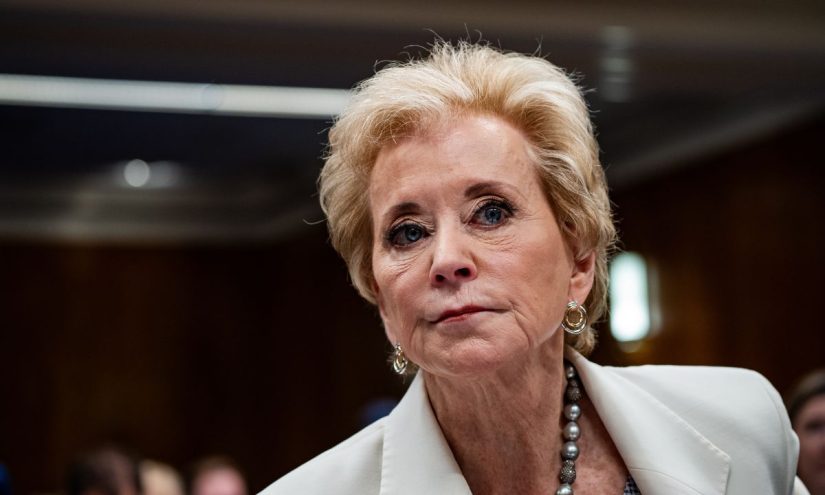
    Difficulties applying for financial aid are just one of the many road bumps students and university staff across the country have faced since Education Secretary Linda McMahon and the Department of Government Efficiency cut the department down to just over 2,000 employees—about half of what it was during the Biden administration.

    The Department of Education told Inside Higher Ed that all three of its help lines, the Federal Student Aid Information Center, FSA Partner School Relations and the FPS Helpdesk were open well past noon Pacific time.

    “Just within President Trump’s first six months, the Department has responsibly managed and streamlined key federal student aid features, including fixing identity verification and simplifying parent invitations, while ensuring the 2026–27 FAFSA form is on track,” said deputy press secretary Ellen Keast.

    But Cooper said ever since the reduction in force if she calls FPS in the afternoon they are closed.

    Since March, colleges, advocates and others have noticed lags in communication about financial aid. Between March 11 and June 27, the department also dismissed more than 3,400 civil rights complaints—an unprecedented number, according to one former official. Additionally, the department ended an IPEDS training contract, among other changes at the Institute for Education Sciences, sparking concerns about the future of data collection at the agency.

    Some college administrators expressed optimism that the staff shortage would be temporary after a district court blocked the layoffs in May. But the Supreme Court extinguished that hope last week when it overturned the ruling, giving McMahon the go-ahead to proceed with the pink slips and other efforts to dismantle her agency.

    Now, higher education experts are adjusting to the reality of a smaller department for potentially years to come.

    “It’s a whole lot easier to break things than it is to put them back together again,” said Ted Mitchell, president of the American Council on Education (ACE).

    He and others worry that the department’s deficiencies will only get worse as staffers rush to overhaul the federal student loan system and implement other policies in the Big Beautiful Bill over the course of the next year. Add to that President Trump’s plan to dismantle the department by transferring certain programs to other agencies and what you have, Mitchell said, is “a mess.”

    “I suppose we all need to adopt a ‘time will tell’ philosophy about this,” he said. “But I for one am not optimistic.”

    Keast, on the other hand, said the department is complying with court orders and fulfilling its statutory duties.

    “We will continue to deliver meaningful and on time results while implementing the President’s [One Big Beautiful Bill] to better serve students, families, and administrators,” she said.

    Behind the Scenes ‘Breakdown’

    Cooper and Northwest Career College are not alone in struggling to get help from the Federal Student Aid Office. Nearly 60 percent of colleges and universities experienced noticeable changes in agency responsiveness or processing delays, according to a survey conducted by the National Association of Student Financial Aid Administrators in May.

    While 48 percent of respondents ranked front-facing glitches that directly affect students as their top concern, Melanie Storey, NASFAA’s president and CEO, noted that the Free Application for Federal Student Aid and aid distribution have been operating relatively smoothly. Many of the challenges created by the reduction in force, she said, are actually taking place behind the scenes.

    Nearly half of the institutions surveyed said that the FSA regional office they reported to had closed, and about a third said they were experiencing gaps in support as a result. Applying for the financial aid eligibility of a new program or addressing compliance concerns was already difficult before the regional offices closed, said Storey, who worked at FSA during the Biden administration. Now it will be even more arduous.

    “Our communities are just not getting answers to questions that they have,” she explained. “But if we see a breakdown in that work, we will see a breakdown in the delivery of aid.”

    Paula Carpenter, the director of financial aid at Jefferson College, a community college in eastern Missouri, said the biggest unknown is whether she will be able to complete the college’s recertification before the September 30 deadline and maintain its eligibility for federal aid.

    In the past, when it was time to begin the recertification process, Carpenter received an email from staff at the FSA Kansas City office, which was one of eight that closed in March.

    Now, “I’m uncertain on when I should submit the application, how long it’s going to take, and the impact it will have on other changes along the way,” she said. “The loss of those working relationships we had with the Kansas City participation team is definitely creating a lot of uncertainty.”

    Although critics have accused DOGE of operating in a rash and haphazard manner, one senior FSA official told Inside Higher Ed that the decision to cut staff at the regional offices that handled eligibility and compliance was likely deliberate.

    “The easiest place to cut is in functions that the broader public doesn’t see, even if they may be impactful,” said the official, who requested anonymity to speak freely. “You can’t cut the FAFSA … and you can’t cut the teams that support the actual technology for dispersing aid and handling repayment, because then borrowers start calling the press and calling Congress,” they added. “But if it just takes longer for schools to go through the process, get questions answered and get support then there’s not a discrete pain.”

    But just because the pain may not be publicly distinct, that doesn’t mean colleges aren’t feeling it.

    “There’s never been a worse time to be starting or renewing a Title IV program, and there’s never been a better time to be not following Title IV regulations,” the staffer said.

    Future of ‘Flying Blind’

    Other concerns raised by higher education advocates are more focused on the future.

    The sweeping Big, Beautiful Bill, signed into law July 4, includes a swath of higher education policy changes, ranging from revamping student loan repayment plans to introducing a novel accountability metric for colleges. Getting those changes implemented by July 1, 2026 with fewer employees is a tall order for the department, and many higher education advocates worry that the agency will struggle to pull it off.

    Mitchell from ACE fears that a general lack of data will hamper efforts to implement the new policies. The Institute for Education Sciences, an agency focused on collecting and analyzing education data to inform policy, was almost entirely gutted by the layoffs. Fewer than 20 employees remain, down from more than 175 at the start of the year, according to the Hechinger Report. The National Center for Education Statistics, one of the most crucial arms of IES, is down to just three staff members.

    Without IES fully staffed, Mitchell worries colleges and universities will be held to new student outcome standards based on inaccurate data.

    “Who will be on the other side receiving information about program level earnings? We don’t know,” he said, referring to the new post-graduation income test that colleges will have to pass. “If the cuts go through the way they are planned, higher education will largely be flying blind. We won’t know what programs and interventions will work to improve student success at the very moment when higher ed is facing a crisis of confidence about whether it is doing the right thing for students.”

    Without the department, colleges will have to increase their own technical capacities, he added, and that comes at a cost.

    The department acknowledged that the bill includes major changes to the federal student aid system and the development of a new accountability program but said that, with billions of dollars in federal funding, the Office of Federal Student Aid will be able to complete both projects.

    More disruptions are expected at the department in months to come as the Trump administration aims to shift certain responsibilities and programs to other agencies. Last week, shortly after the Supreme Court ruling, McMahon formally announced a plan to move career, technical (CTE) and adult education programs to the Labor Department. Trump and other officials have also talked about moving the federal student loan program to either the Small Business Administration or the Treasury Department.

    But the FSA official said the department is using the transfer of smaller CTE programs as a test run first and will take its time to move the federal aid system—if it does at all. The official is also confident the department will be able to put the new policies and programs in motion, but only if Congress extends the deadlines.

    “I think there’s a wide recognition, including on the Hill, that the timelines in the bill aren’t realistic,” the official said. “I feel good about being able to get [it] done … [But] if the question is, can we hit all the details and all the timelines? I think that’s impossible.”

    Both the department staffer and Storey from NASFAA said that if lawmakers and White House staff are smart, they will apply the lessons learned from the last time FSA overhauled student aid programs. For the Biden administration, pressure to finish a big project in a short amount of time, combined with a lack of feedback from college leaders, led to a botched rollout of the new financial aid application, they said. Hopefully, this time things will be different.

    “If we learned anything from the FAFSA debacle, it was that while the department was struggling to get their implementation in order, they neglected institutions and vendors who are incredibly important partners in that ecosystem of delivering aid,” Storey said. “Let us not make that mistake again. Ignore the role of institutions, at your peril. They are the front lines.”

    Source link

  • Education Dept. Agrees to Send Career Ed Programs to Labor

    Education Dept. Agrees to Send Career Ed Programs to Labor

    Before a federal judge blocked its plans, the Education Department reached a deal with the Department of Labor to hand over some of its career, technical and adult education grants, according to court records.

    Under the agreement, reached May 21, the Labor Department would administer about $2.7 billion in grants, including the Perkins Grant program, which funds career and technical education at K–12 schools and community colleges, Politico first reported. But that plan is now on hold, as is an agreement with the Treasury Department regarding student loan collections, according to a status update in New York’s lawsuit challenging mass layoffs at the agency and President Donald Trump’s executive order to dismantle the department.

    The Trump administration has asked the Supreme Court to overturn the lower court’s injunction so officials can proceed with the layoffs and other plans. 

    The department didn’t publicly announce the handover, which appears to be a first step toward Trump’s endgame of shutting down the agency. Education Secretary Linda McMahon has acknowledged repeatedly that only Congress can legally shutter the department, but she’s also made clear that she can transfer some responsibilities to other agencies. In addition to administering the funds, Labor officials agreed to oversee the implementation of career education programs and to monitor grant recipients for compliance. 

    Advance CTE and the Association for Career and Technical Education criticized the plan, saying the agreement “directly circumvents existing statutory requirements” related to the Perkins program and would cause confusion.

    “We strongly oppose any efforts to move CTE administration away from the U.S. Department of Education given the disruption this would cause to the legislation’s implementation and services to students in schools across the country,” they said in a statement released Wednesday evening.

    Source link

  • State Dept. to Expand Social Media Screening for Intl. Students

    State Dept. to Expand Social Media Screening for Intl. Students

    John McDonnell/Getty Images

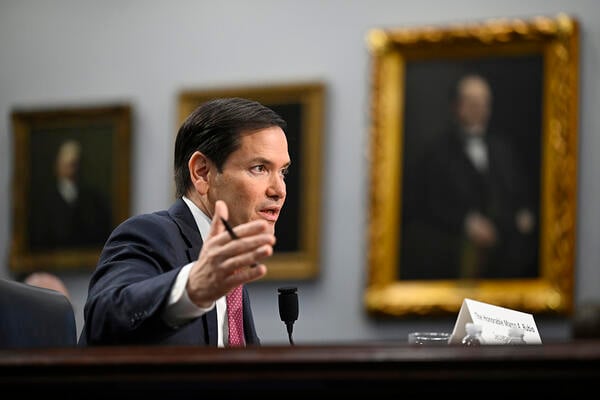
    The Trump administration is planning to implement a policy that would require all student visa applicants to undergo social media vetting, according to a cable sent by Secretary of State Marco Rubio, Politico reported Tuesday. All new student visa interviews have been paused in preparation for the new policy.

    “The Department is conducting a review of existing operations and process for screening and vetting of student and exchange visitor (F, M, J) visa applicants, and based on that review, plans to issue guidance on expanded social media vetting for all such applicants,” the memo reads, according to a copy published in full on social media by independent journalist Marisa Kabas.

    The planned changes come amid the federal government’s ongoing attacks on student visa holders, which began in March with the detention of multiple students and recent graduates who had been involved in pro-Palestinian protests on their campuses. Shortly after, the administration terminated thousands of student visa holders’ records in the Student Exchange and Visitor Information System, the database the houses international students’ records, leading to a slew of legal actions from students who feared they wouldn’t be able to continue studying in the U.S.

    Most recently, the Trump administration announced last week that it would prohibit Harvard University from enrolling international students as punishment for allegedly failing to prevent antisemitism and harassment on campus during last year’s pro-Palestinian encampments. Though that action was quickly blocked by a judge, the move could be devastating for the Ivy League institution, where international students make up more than a quarter of the student body.

    The proposed policy would increase the amount of time, manpower and resources required to process visa applications, according to experts.

    Faye Kolly, an immigration attorney based in Texas, noted that it’s not unusual for immigration officials to review visa applicants’ social media profiles, which they are required to list on certain immigration forms. But the administration has begun specifically screening the social media accounts of some returning students with visas who had participated in pro-Palestinian campus protests, though Politico reported that State Department officials had found the guidance on how to complete those screenings vague.

    It is not clear how this expanded vetting process will unfold; Rubio included no details in the memo, which said further guidance would be disseminated in the coming days. Though the memo didn’t say as much, Kolly predicted that the extra screening will involve looking “at [applicants’] social media handles more closely for what I’m assuming is going to be speech that could be considered either anti-Israel or pro-Gaza.”

    International education advocates have sounded the alarm on the proposed policy, arguing that it limits prospective students’ right to free expression and illustrates the Trump administration’s devaluation and distrust of international students.

    Fanta Aw, the CEO of NAFSA, an association for international educators, told Politico, “The idea that the embassies have the time, the capacity and taxpayer dollars are being spent this way is very problematic. International students are not a threat to this country. If anything, they’re an incredible asset to this country.”

    Kolly told Inside Higher Ed that the move harks back to the SEVIS terminations in March and April. Both actions, she said, indicate the administration’s lack “of nuance … regarding international students. It’s [taking] a simplistic approach to a very complex issue. When you target international students en masse, it’s irresponsible.”

    Daryl Bish, the president of EnglishUSA, which represents all English language programs in the country, said the change will reverse recent progress on the visa approval process and have an “immediate impact” on enrollment in English language programs.

    “The extraordinary decision to pause visa interviews, under the guise of security and enhanced vetting, is a dangerous precedent that will have immediate short-term consequences,” Bish said. “Visa appointment wait times have, generally, improved since the pandemic. This means that many students apply for the visa close to their program start date. The pause in interviews, if protracted, will force these students to change their plans.”

    Elora Mukherjee, a law professor at Columbia University and the director of the law school’s Immigrants’ Rights Clinic, also criticized the government for pausing new student visa interviews in the interim—especially as the memo gave no indication of how long the pause might last.

    “The pause is destructive to our national interests and America’s reputation in the world, and its effects may be felt for years. It has thrown the lives of tens of thousands of prospective international students into turmoil and will cause chaos and disruption at colleges and universities across the country. International students have been preparing for months to join U.S. colleges and universities in the fall, and schools have been preparing to welcome them,” she wrote in an email to Inside Higher Ed.

    “It is unclear how long the ‘pause’ will be in place, what heightened scrutiny visa applicants will face once the pause is lifted, and the extent to which decisions about granting visas may be tainted by prejudices based on race, religion, and national origin.”

    Source link

  • Federal judge blocks Trump’s Education Dept. shutdown, orders reinstatement of laid off staff

    Federal judge blocks Trump’s Education Dept. shutdown, orders reinstatement of laid off staff

    This story was originally published by Chalkbeat. Sign up for their newsletters at ckbe.at/newsletters.

    A federal judge on May 22 issued a preliminary injunction blocking President Donald Trump’s executive order to shut down the U.S. Department of Education and said the agency must reinstate the employees who were fired as part of mass layoffs.

    After U.S. Education Secretary Linda McMahon announced the agency’s plans in March to slash its workforce by roughly half, she called it a first step in getting rid of the agency. Trump followed days later with his executive order aiming to eliminate the department, a move he has long wanted.

    But only Congress can actually eliminate the department, and the administration’s attempt at getting around that influenced U.S. District Judge Myong Joun’s Thursday ruling.

    The Trump administration argued that they implemented agency layoffs to improve “efficiency” and “accountability,” the Massachusetts judge wrote, but then said: “The record abundantly reveals that [the administration’s] true intention is to effectively dismantle the Department without an authorizing statute.”

    Joun added: “A department without enough employees to perform statutorily mandated functions is not a department at all. This court cannot be asked to cover its eyes while the Department’s employees are continuously fired and units are transferred out until the Department becomes a shell of itself.”

    Within hours of the Joun’s ruling, the Trump administration filed an appeal.

    “This ruling is not in the best interest of American students or families,” Madi Biedermann, Deputy Assistant Secretary for Communications, wrote in a statement.

    Calls for the injunction came from lawsuits filed by the Somerville and Easthampton schools districts in Massachusetts along with the American Federation of Teachers, other education groups, and 21 Democratic attorneys general.

    They argued that the gutting of the department rendered the agency incapable of performing many of its core functions required by Congress.

    For example, all of the attorneys from the agency’s general counsel office who handle grants for K-12 schools and grants under the Individuals with Disabilities Education Act, or IDEA, had been fired. The dismantling of the Office for Civil Rights made it difficult to enforce civil rights protections. The department’s Financial Student Aid programs, which provide financial assistance to almost 12.9 million students across approximately 6,100 postsecondary educational institutions, were also hampered.

    Trump’s executive order instructed McMahon to “take all necessary steps to facilitate the closure of the Department of Education and return authority over education to the States and local communities” to the “maximum extent appropriate and permitted by law.”

    At the same time, the order said McMahon should ensure “the effective and uninterrupted delivery of services, programs, and benefits on which Americans rely.”

    Trump said he would move the agency’s student loan portfolio to the Small Business Administration, and the Department of Health and Human Services would replace the Education Department’s role in “handling special needs.”

    Before the layoffs, the Education Department was the smallest of the 15 cabinet-level departments in terms of staffing, according to the judge, with around 4,100 employees. And the plaintiffs said the agency was strained meeting its obligations even then.

    The ruling was not based on the employees’ job rights, but rather how the agency was able to fulfill its obligations.

    “It’s not about whether employees have a right to a job,” said Derek Black, a University of South Carolina law professor. “It’s about whether the department can fulfill its statutory obligations to the states and to students.”

    The case made by former department employees, educational institutions, unions, and educators, Joun wrote, paints “stark picture of the irreparable harm that will result from financial uncertainty and delay, impeded access to vital knowledge on which students and educators rely, and loss of essential services for America’s most vulnerable student populations.”

    American Federation of Teachers President Randi Weingarten heralded the judge’s ruling, calling it “a first step to reverse this war on knowledge and the undermining of broad-based opportunity.”

    But Biedermann, from the Education Department, said the ruling was unfair to the Trump administration.

    “Once again, a far-left Judge has dramatically overstepped his authority, based on a complaint from biased plaintiffs, and issued an injunction against the obviously lawful efforts to make the Department of Education more efficient and functional for the American people,” she said in a statement.

    Chalkbeat national editor Erica Meltzer contributed reporting.

    Chalkbeat is a nonprofit news site covering educational change in public schools.

    For more news on federal policy, visit eSN’s Educational Leadership hub.

    Latest posts by eSchool Media Contributors (see all)

    Source link

  • Judge Blocks Energy Dept. Plan to Cap Indirect Cost Rates

    Judge Blocks Energy Dept. Plan to Cap Indirect Cost Rates

    A federal judge temporarily blocked the U.S. Department of Energy’s plan to cap universities’ indirect research cost reimbursement rates, pending a hearing in the ongoing lawsuit filed by several higher education associations and universities.

    Judge Allison D. Burroughs of the U.S. District Court for Massachusetts wrote in the brief Wednesday order that the plaintiffs had shown that, without a temporary restraining order, “they will sustain immediate and irreparable injury before there is an opportunity to hear from all parties.”

    Plaintiffs include the Association of American Universities, the American Council on Education, the Association of Public and Land-grant Universities and nine individual universities, including Brown, Cornell and Princeton Universities and the Universities of Michigan, Illinois and Rochester. They sued the DOE and department secretary Chris Wright on Monday, three days after the DOE announced its plan.

    Department spokespeople didn’t return Inside Higher Ed’s requests for comment Thursday afternoon.

    DOE’s plan is to cap the reimbursement rates at 15 percent. Energy grant recipients at colleges and universities currently have an average 30 percent indirect cost rate. The Trump administration has alleged that indirect costs are wasteful spending, although they are extensively audited.

    The DOE sends more than $2.5 billion a year to over 300 colleges and universities. Part of that money covers costs indirectly related to research that may support multiple grant-funded projects, including specialized nuclear-rated facilities, computer systems and administrative support costs.

    The department’s plan is nearly identical to a plan the National Institutes of Health announced in February, which a judge also blocked.

    Source link

  • Education Dept. Agrees to Push DEI Compliance Deadline

    Education Dept. Agrees to Push DEI Compliance Deadline

    State education agencies are no longer bound to certify their compliance with President Donald Trump’s executive orders and guidance memos banning diversity, equity and inclusion programs in order to continue receiving federal funds—at least for now.

    K-12 school districts were originally required to prove they had met the president’s standard by April 14. But now, as the result of an agreement reached Thursday in a lawsuit, the Department of Education cannot enforce that requirement or enact any penalties until April 24. The move to require school systems to certify their compliance was one of the department’s first actions since releasing the Feb. 14 Dear Colleague letter that declared all race-conscious student programming, resources and financial aid illegal.

    The National Education Association challenged that letter in a lawsuit and then moved for a temporary restraining order to block the certification requirement. (The department notified state educational agencies of the deadline April 3.)

    In addition to not enforcing the certification requirement, the Education Department also agreed not to take any enforcement action related to the Feb. 14 guidance until April 24, though that doesn’t cover any other investigations based on race discrimination.

    The plaintiffs, represented by the American Civil Liberties Union, still want to block the Dear Colleague letter entirely. But they see the agreement as a positive step.

    “This pause in enforcement provides immediate relief to schools across the country while the broader legal challenge continues,” the plaintiffs said in a news release.

    A judge will hold a hearing April 17 to consider the NEA’s motion for a preliminary injunction, which could block the guidance entirely.

    For more information on this case and others, check out Inside Higher Ed’s lawsuit tracker here.

    Source link

  • AFT sues Dept. of Education for denying borrowers’ rights (Student Borrower Protection Center)

    AFT sues Dept. of Education for denying borrowers’ rights (Student Borrower Protection Center)

    Yesterday, President Trump signed an executive order ordering the shutdown of the U.S. Department of Education (ED). The order claims to ensure the “uninterrupted delivery of services, programs, and benefits on which Americans rely,” yet Trump and Secretary Linda McMahon have gutted the arms of ED that make those functions possible. Read our statement on yesterday’s executive order here. Last week, Trump announced a 50 percent reduction in the workforce at the Department. Now he plans to move student loans to the Small Business Administration?!?!

    The Trump Administration is intentionally breaking the student loan system and attacking borrowers and working families with student debt. But we’ve been fighting back.

    On Tuesday night, the 1.8 million-member AFT sued ED for denying borrowers’ access to affordable loan payments and blocking progress towards Public Service Loan Forgiveness (PSLF)—in violation of federal law.

    Three weeks ago, federal education officials eliminated access to Income-Driven Repayment (IDR) plans by removing the application from ED’s website and secretly ordering student loan servicers to halt processing all applications. These IDR plans provide millions of borrowers the right to tie their monthly payment to their income and family size, giving them the option to make loan payments they can afford.

    IDR plans are also the only way for public service workers to benefit from PSLF—a critical lifeline for teachers, nurses, first responders, and millions of other public service workers across the country.

    SBPC Executive Director Mike Pierce’s statement:

    Source link

  • Judge Orders Education Dept. to Restore Teacher Prep Grants

    Judge Orders Education Dept. to Restore Teacher Prep Grants

    A federal judge in Maryland this week ordered the U.S. Department of Education to reinstate numerous grants that support teacher-preparation programs.

    The department canceled the $600 million in grants last month as part of a wider effort to slash federal funding and eliminate programs that promote diversity, equity and inclusion. In response, the American Association of Colleges for Teacher Education, the National Center for Teacher Residencies and the Maryland Association of Colleges for Teacher Education challenged the cuts, arguing in a lawsuit that the grant terminations were illegal.

    On Monday, U.S District Judge Julie Rubin ordered the department to restore funding for the Supporting Effective Educator Development program, the Teacher Quality Partnership program and the Teacher and School Leader incentive program within five business days. That order comes after a federal judge last week directed the department to reinstate canceled grants in eight states.

    “We are thrilled that the court has ruled in favor of preserving funding for TQP, SEED, and TSL grants, which have a transformative impact on our nation’s education system,” AACTE president and CEO Cheryl Holcomb-McCoy said in a news release.

    The order also blocks the department from terminating any other TQP, SEED or TSL grant awards “in a manner this court has determined is likely unlawful as violative of the Administrative Procedure Act,” which instructs courts to “hold unlawful and set aside final agency actions” deemed “arbitrary, capricious, an abuse of discretion, or otherwise not in accordance with law.”

    The judge asked both the department and the plaintiffs to file a status report within seven business days showing compliance with the order.

    Source link

  • Dismantling Ed Dept. Will Harm More Than 26 Million Kids — and America’s Future – The 74

    Dismantling Ed Dept. Will Harm More Than 26 Million Kids — and America’s Future – The 74


    Get stories like this delivered straight to your inbox. Sign up for The 74 Newsletter

    The layoffs of half of the employees of the U.S. Department of Education clearly demonstrate the Trump administration’s follow-through on one of Project 2025’s mandates, which intends to eliminate the resources, protections and opportunities that millions of children and families across this nation rely on.

    It is evident that the White House will not stop until it wipes out the most basic protections and supports for the American people, including the youngest children. The first step was the attempt to defund Head Start and Early Head Start, impacting 800,000 young children across the nation. This order was halted by a federal judge in Washington, thanks to the lawsuits filed by Democracy Forward and attorneys general from 23 states. 

    The mass layoffs will severely hamper the department’s ability to execute on its core responsibilities. This move is a direct assault on millions of students, teachers and families. It is clearly a precursor to dismantling the department without congressional consent, which would have an even more devastating impact. The department serves and protects the most vulnerable children and young adults, ensuring that they have equal access to education. This includes:

    • 26 million students from low-income backgrounds — more than half of all K-12 students — who rely on the department for reasonable class sizes; school meals; tutoring; afterschool and summer programs; school supplies such as laptops and books; parent engagement programs; and, in some cases, transportation
    • 9.8 million students enrolled in rural schools
    • 7.4. million students with disabilities
    • 5 million English learners
    • 1.1 million students experiencing homelessness
    • 87 million college students who receive Pell Grants and student loans 

    The department was created in 1980 with a single, crucial purpose: to ensure equal access to education and to promote educational excellence throughout the nation. Its creation followed decades of systemic inequities that left children in disadvantaged communities without the same learning opportunities as their more privileged peers. The department’s work has been a critical safeguard against discrimination in schools, whether on the basis of race, disability, gender or income. 

    Without the federal government’s intervention and oversight, the more than 13 million children who live in poverty would be even more vulnerable to systemic inequities. The department ensures that federal dollars are distributed to those students most in need, ensuring that underserved children have the same opportunities for success as their wealthier peers. Without the federal oversight and the department’s support, these students will fall even further behind, and the national achievement gap will grow wider.

    The federal government is the only entity that can ensure a baseline level of educational equity across the entire nation. The department holds states accountable for ensuring that all children, regardless of where they live or what their socioeconomic status may be, receive a quality education. If this accountability is removed, the children most at risk — those in underfunded schools, children of color, children with disabilities, English learners and those experiencing homelessness — will be the first to suffer. These children would be denied the critical services and protections they need to succeed in school and in life.

    Moreover, the president’s plan to turn education policy over to the states would completely dismantle the federal safety net that ensures that the most vulnerable children are not left behind. Each of the 50 states has different priorities, resources and political climates. While some might be able to provide excellent educational opportunities, others will leave children behind, particularly in rural or economically disadvantaged areas. Inequities between states could widen to an intolerable degree, and the resulting lack of uniform educational standards would only further disadvantage the children who need the most help.

    To be clear, the department cannot be dissolved at the whim of a sitting president. Under the Constitution, only an act of Congress can create or dismantle a federal agency. The president does not have the unilateral power to eliminate an entire federal institution that serves the educational needs of millions of children across this country. Attempting to do so would not only undermine the law, but also inflict tremendous harm to the very foundation of America’s educational system.

    The idea that dismantling the department could somehow improve that system is not only misguided, but dangerously naïve.

    It’s vital that we, as a nation, recognize the long-term damage this action would cause. The attempt to dismantle the Department of Education is not just an attack on a government agency — it is an attack on the future of America’s children.

    To parents across the country: This policy is not only unconstitutional — it is a grave threat to your children’s future. Whether your child is in a classroom in New York, Los Angeles or a small town in the Midwest, the U.S. Department of Education has worked to ensure that their educational opportunities are protected, funded and regulated. A president who seeks to eliminate this essential agency is jeopardizing the future of every single student in America.

    This is why we must all rise up and make our voices heard. We must demand that our leaders stop this dangerous plan in its tracks, that they fix what isn’t working and that they use this opportunity to reimagine public education and invest in a more effective, equitable system that gives all children the opportunity to succeed.


    Get stories like these delivered straight to your inbox. Sign up for The 74 Newsletter

    Source link