Tag: Derail

  • College president fears that federal education cuts will derail the promise of student parents, student military veterans and first-gen students

    College president fears that federal education cuts will derail the promise of student parents, student military veterans and first-gen students

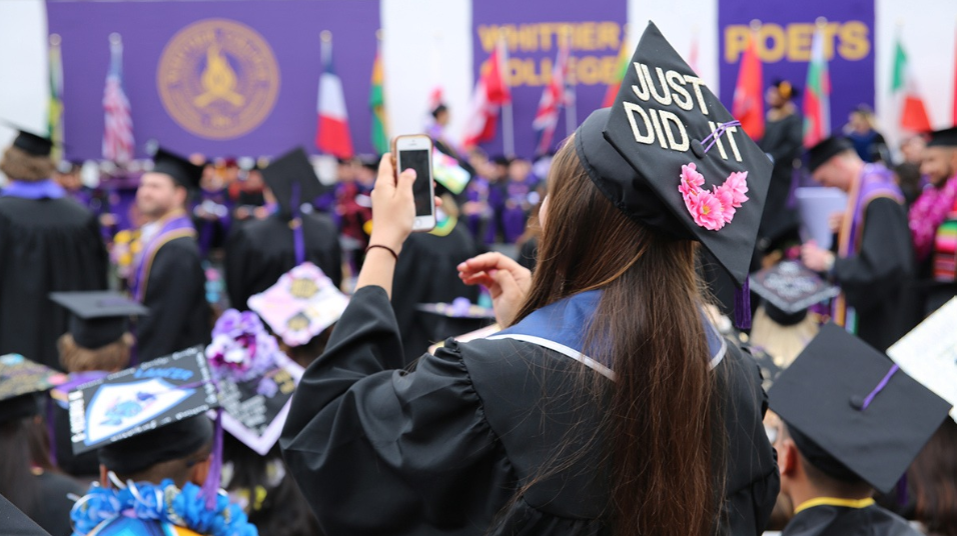
    As a college president, I see the promise of higher education fulfilled every day. Many students at my institution, Whittier College, are the first in their families to attend a university. Some are parents or military veterans who have already served in the workforce and are returning to school to gain new skills, widen their perspectives and improve their job prospects.  

    These students are the future of our communities. We will rely on them to fill critical roles in health care, education, science, entrepreneurship and public service. They are also the students who stand to lose the most under the proposed fiscal year 2026 federal budget, and those who were already bracing for impact from the “One Big Beautiful Bill” cuts, including to the health care coverage many of them count on. 

    The drive with which these extraordinary students — both traditionally college-aged and older — pursue their degrees, often while juggling caregiving commitments or other responsibilities, never fails to inspire me.  

    Related: Interested in innovations in higher education? Subscribe to our free biweekly higher education newsletter. 

    We do not yet know the precise contours of the spending provisions Congress will consider once funding from a continuing resolution expires at the end of September. Yet we expect they will take their cues from the president’s proposed budget, which slashes support for students and parents and especially hammers those already struggling to improve their lives by earning a college degree, with cuts to education, health and housing that could take effect as early as October 1.  

    That budget would mean lowering the maximum Pell Grant award from $7,395 to $5,710, reversing a decade of progress. For the nearly half of Whittier students who received Pell Grants last year, this rollback would profoundly jeopardize their chances of finishing school. 

    So would the proposal to severely restrict Federal Work-Study, which supports a third of Whittier students according to our most recent internal analysis, and to eliminate the Supplemental Educational Opportunity Grant, which more than 16 percent of our student body relies upon. In addition, this budget would impose a cap on Direct PLUS Loans for Parents, which would impact roughly 60 percent of our parent borrowers. It would also do away with the Direct PLUS Loans for Graduates program.  

    These programs are lifelines, not just for our students but for students all across the country. They fuel social mobility and prosperity by making education a force for advancement through personal work ethic rather than a way to rack up debt. 

    If enacted, these proposed cuts would gut the support system that has enabled millions of low-income students to earn a college degree.  

    Higher education is a bridge. To cross it and achieve their full potential, students from all walks of life must have access to the support and resources colleges provide, whether through partnerships with local high schools or with professional gateway programs in engineering, accounting, business, nursing, physical therapy and more. Yet, to access these invaluable programs, they must be enrolled. How will they reach such heights if they suddenly can’t afford to advance their studies? 

    The harm I’ve described doesn’t stop with cuts to financial aid, loans and services. Proposed reductions also target research funding for NASA, NIH and the National Science Foundation. One frozen NASA grant has already led to the loss of paid student research fellowships at Whittier, a setback not just in dollars but in momentum for students building real-world skills, networks and résumés.  

    These research opportunities often enable talented first-generation students to connect their classroom learning to career pathways, opening the door to graduate school, lab technician roles and futures in STEM fields. We’ve seen how federal funding has supported student projects in everything from climate data analysis to environmental health.  

    Stripping away support for hands-on research undermines the federal government’s own calls for colleges like ours to better prepare students for the workforce by dismantling the very mechanisms that make such preparation possible. 

    Related: These federal programs help low-income students get to and through college. Trump wants to pull the funding 

    It’s particularly disheartening that these changes will disproportionately hurt those students who are working the hardest to achieve their objectives, who have done everything right and have the most to lose from this lack of investment in the future.  

    The preservation and strengthening of Pell, Work-Study, Supplemental Educational Opportunity grants and federal loan programs is not a partisan issue. It is a moral and economic imperative for a nation that has long been proud to be a land of opportunity.  

    Let’s build a system for strivers that opens doors instead of slamming them shut.  

    Let’s recommit to higher education as a public good. Today’s students are willing to work hard to deserve our continuing belief in them.  

    Kristine E. Dillon is the president of Whittier College in California. 

    Contact the opinion editor at [email protected]. 

    This story about education cuts was produced by The Hechinger Report, a nonprofit, independent news organization focused on inequality and innovation in education. Sign up for Hechinger’s weekly newsletter. 

    The Hechinger Report provides in-depth, fact-based, unbiased reporting on education that is free to all readers. But that doesn’t mean it’s free to produce. Our work keeps educators and the public informed about pressing issues at schools and on campuses throughout the country. We tell the whole story, even when the details are inconvenient. Help us keep doing that.

    Join us today.

    Source link

  • DEI Skepticism Threatens to Derail Japan’s Gender Equity Push

    DEI Skepticism Threatens to Derail Japan’s Gender Equity Push

    Japan needs to admit that long-running efforts to address gender inequality in higher education aren’t working, experts say, with antidiversity sentiment spreading from the U.S. and threatening to gain traction.

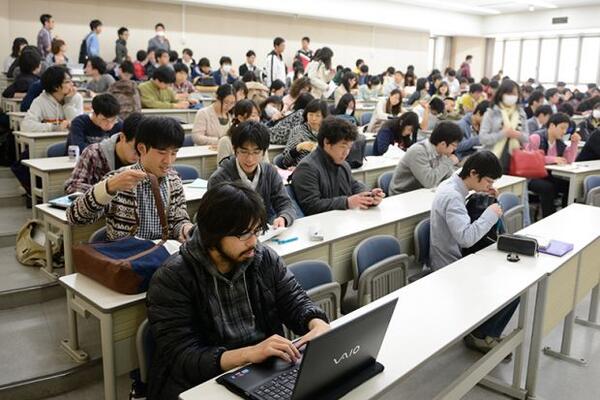
    Despite government policies spanning nearly two decades, women remain severely underrepresented across Japanese universities, particularly in science, technology, engineering and mathematics fields.

    As of 2022, women made up just 26.7 percent of faculty nationwide and fewer than half of all students, with even starker disparities in senior academic roles and male-dominated disciplines.

    Sayaka Oki, a professor at the University of Tokyo, described the situation as “terrible.”

    “Gender equality doesn’t really exist here,” she added.

    As of 2022, only 11 percent of professors at Oki’s university were female, with particularly low representation in engineering. In undergraduate programs in physics and engineering, women typically make up only about 15 percent of the student population.

    “The gender imbalance starts at the student level and gets worse in higher positions,” she said. The university has launched repeated initiatives that have attempted to address the problem and has reported that it has “steadily increased the number of women in faculty positions.”

    Since 2006, Japan’s government has implemented a “goal and timetable” policy aimed at increasing women researchers in natural sciences, setting numerical hiring targets every five years.

    However, these targets have remained largely unchanged because the proportion of women earning doctoral degrees—the main feeder for research roles—has not significantly increased.

    Ginko Kawano, professor of gender equality at Kyushu University, said that, “after nearly two decades, the policy has not produced significant results, and it appears we are now at a turning point in terms of policy design.”

    Kawano noted recent government encouragement for universities to adopt admission quotas for women in STEM to improve applicant numbers.

    Yet “while this sends a positive message that women are welcome in these disciplines, it is unlikely to serve as a fundamental solution to the underlying issues,” she said.

    She also acknowledged strong opposition from students and faculty: “Institutions that choose to introduce this system should clearly explain the reasoning behind it.

    “At the same time, it is crucial for university faculty to have access to the information and knowledge necessary to evaluate the merits and drawbacks of such quotas.

    “For example, they should be aware of the historical exclusion of women from science, and recognize the persistent bias that suggest[s] women are not suited for STEM fields—biases that continue to shape the choices women feel able to make,” Kawano said.

    Adding to the complexity is a political environment increasingly wary of diversity initiatives.

    Kawano warned that antidiversity sentiment similar to that in the U.S. could gain traction in Japan, although opposition to gender equality policies has existed independently for years.

    Akiyoshi Yonezawa, professor of higher education in the Global Strategy Office at Tohoku University, highlighted demographic pressures pushing universities toward diversity.

    “Since around 1990, the number of 18-year-olds has continuously declined and is expected to continue until at least 2040,” he said.

    In response, women and international students have been framed as essential for sustaining Japan’s knowledge economy.

    Yonezawa criticized how diversity initiatives in Japan are often framed: “DEI initiatives in Japanese universities and society tend to be promoted as a ‘catch-up’ Western mindset rather than intrinsic value formation through daily experience. This makes DEI activities in Japan’s higher education fragile in the long term when faced with controversy.”

    Institutional barriers also persist. Oki described how her university’s collegial governance system complicates efforts to implement top-down diversity policies and secure funding, which often comes with centralized control conditions.

    “To access the fund, we’re required to adopt a more top-down management style,” she said. “That’s difficult because our university traditionally follows a collegial governance model.”

    Oki agreed that there was a risk that international developments had made the situation potentially more difficult—particularly in the U.S., where things like the ban on affirmative action had made colleagues “more cautious about what might happen here.”

    Source link