Get stories like this delivered straight to your inbox. Sign up for The 74 Newsletter
Despite the summer heat, Toyia Diab came out to the Summer on the Block at Pulaski Elementary-Middle School to learn what it had to offer the four grandchildren she had in tow.
The family made their way to about a dozen tables snaking around the lawn on the side of the school. Diab listened to staff from the Detroit school district detail all of its resources over the pulsing base of loud music.
Diab’s family was one of many the Detroit Public Schools Community District courted this summer as part of its efforts to retain families and boost enrollment. With the loss of more than 92,000 students in the last 20 years, district officials devote some of the summer break each year to getting word out about what the city’s schools have to offer.
This year, the district ramped up efforts. It sent 40 people to canvas communities and held 19 events to create excitement about the start of school — nearly double that of previous years. It also started new initiatives, such as putting up billboards around the city. In all, the school system budgeted around $3.5 million for marketing this year. School starts Aug. 25.
Though the district has “done a fairly good job” of recruiting new students in previous years, Superintendent Nikolai Vitti told school board members at a meeting earlier this month that the main challenge is keeping them.
As a result, this year the school system also has focused on reenrollment rates. Those numbers have become a metric the district uses to “hold schools accountable,” Vitti said, though he didn’t share how many students the district typically loses during the school year.
“We have emphasized … the need to improve customer service and parent engagement, so that parents feel more welcome,” he said. “And we fight harder to keep students at the schools that they’re at, rather than having more of an attitude of, ‘Well, if you don’t like it here, then you can find another school.’”
Sharlonda Buckman, assistant superintendent of family and community engagement, told Chalkbeat the district has seen a lot of “good signs” for this school year because of the number of people her office reached in the summer.
“It’s noticeable for me, and I’ve been at this for a long time,” she said. “We’ll see what that boils down to, in terms of enrollment.”
This year, Buckman said nearly 5,000 people went to the Summer on the Block events, parties held at schools that both serve as a vehicle to sell families on sending their kids to the district and connect them with free resources.
“As a parent, you have to bring your kids to school every day in order to get the education that they need,” Diab said at the Pulaski back-to-school event. “But then you’ll find some schools, they just don’t have enough resources to keep them interested to come to school, to stay in school.”
All of the district’s summer efforts produced 532 leads on parents interested in enrolling their kids by mid-August. Around 80 of those students completed enrollment, according to the district.
Though initial enrollment numbers are up, officials say, the full impact of the district’s efforts won’t be known until the end of the 2025-26 school year.
Myriad factors have affected enrollment in DPSCD
Boosting student numbers has been among the district’s top priorities for years.
The numbers of students attending schools are crucial for districts in Michigan, where school funding is tied to enrollment.
Now that COVID relief dollars are gone and the federal government has signaled it will not renew various other funding sources, districts are bracing to rely more on local money.
A number of factors affected the district’s enrollment over the years, including population declines in the city, lower birthrates, the state’s emergency management of the district, and the pandemic. The district also faces competition from Detroit charter schools, where around half of kids in the city go to school.
High student mobility rates, or the rate at which kids move to different homes, contribute to the district’s difficulty in keeping children enrolled. Chronic absenteeism rates also have a direct impact on enrollment.
Enrollment in the district was more than 156,000 in the 2002-03 school year. Last year, it was 49,000.
When DPSCD was created and the school system began being phased out of emergency management in the 2017-18 school year, enrollment shot up to more than 50,800 from 45,700 during the 2016-17 school year.
The district has struggled to move the needle much since, especially after drops during pandemic-era school closures and the years that followed.
At the beginning of this month, there were 50,890 students enrolled in the district, Vitti said at the board meeting.
“We have about 1,400 more students than we did at the end of the year enrolled in DPSCD as of today, and about 500 more as compared to the first day of school,” he said, adding that “ “enrollment is trending in a positive direction.”
Early enrollment numbers for the district are usually higher than official headcounts made in October. The number of students recorded on “Count Day” is used by the state to calculate funding for districts.
Making the case for DPSCD face-to-face
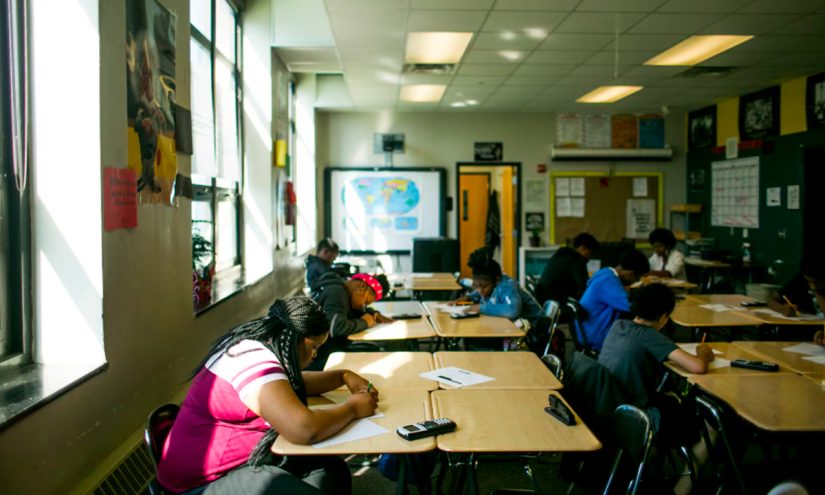
Three days before the Summer on the Block at Pulaski, more than 20 people squeezed into a sun-filled classroom at the Detroit School of Arts.
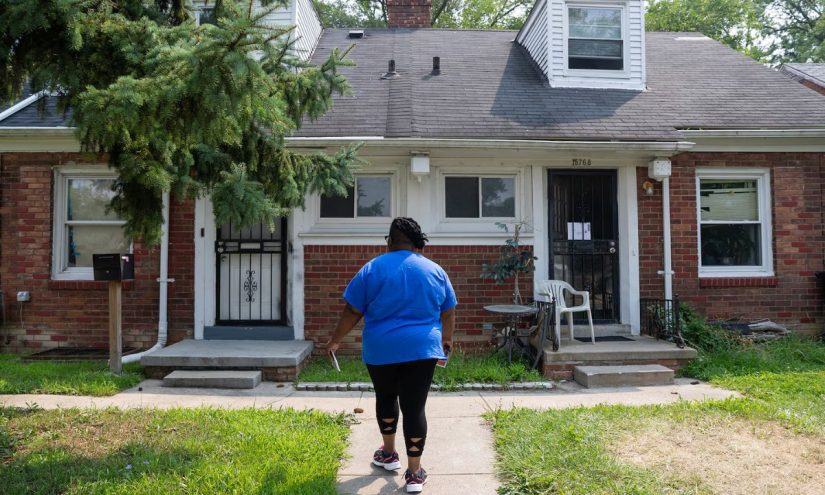
The group was contracted by the district to canvas homes in areas where attendance is low compared to the number of school-aged children living there.
This summer, the district sent canvassers to more than 78,000 homes to inform families about its schools and programs.
The group at the School of Arts was gathered to get their assignments for the day. They waited to pick up hand-out materials, including fliers listing Summer on the Block dates and pamphlets highlighting programs at application schools.
To get the energy up in the classroom before they headed out, the canvassers stood up to form a circle. Buckman, the assistant superintendent, asked them to share what they heard door-knocking.
“We’re getting a good response in terms of some of those students coming back to the district,” said one woman.
Others expressed residents’ hesitations to open their doors or to give their contact information for the district to follow up with them.
Laura Gomez, who has been canvassing for three years, said through a translator that this summer has been different in southwest Detroit, which is home to many immigrant and newcomer families.
People in the neighborhood say they have seen more community members detained and deported in recent months, including a student at Western International High School.
“There are some people that are really happy we’re going out to the houses because that way they don’t have to leave their home because they don’t feel safe,” she said.
After the canvassers broke out into teams, they drove to the areas they were assigned to for the day.
Tanya Shelton and her son, David, arrived in the Crary St. Mary’s neighborhood in the northwest corner of the city.
“We’ll ask them what school district are they in, and if they are interested in DPSCD, we give some information on it,” she said as she made her way down a long block adjacent to the Southfield Freeway.
In her conversations with families, Shelton said the district’s free school lunches piqued their interest. Other canvassers said parents were interested in learning more about the academic interventionists available to students.
Most of the doors Shelton knocked on that day, though, went unanswered. She left the district’s literature at dozens of houses.
Families weigh programming, academics, and transportation in selecting schools
At Pulaski’s Summer on the Block Alexa Franco-Garcia saw more students signing up to attend the school than she has in past years.
“Right now, I have three enrollment packets in my hand, so that means they’ve completed enrollment,” she said during a break from talking with families.
Another three parents left their contact information and said they would return the paperwork the next day.
Considering it was about 30 minutes into the event, that was a strong number, said Franco-Garcia, who works in the Office of Family and Community Engagement.
In her time working in the district, Franco-Garcia has learned what kinds of questions families ask: They want to know about the curriculum, extracurricular activities, and class sizes. They wonder whether their children will be supported in special education and if they will get a bus ride to school.
Most of the sign-ups at the Pulaski event were for kindergartners who were new to the district, Franco-Garcia said.
Enrolling early learners is one of the districts’ top growth strategies.
There were 457 students enrolled in prekindergarten by the beginning of August, according to the district, up about 10 compared to the same time last year.
Diab, the grandmother, brought four kids ages 5 to 12 out to learn more about the school. They heard about the district’s community health hubs, parent academy, and mental health resources.
Teachers from the school gathered around a welcome table ready to answer questions as Principal Tyra R. Smith-Bell floated around talking with parents.
The fresh produce boxes, ice cream truck, free books, and kids’ activities also enticed more than 350 people to come – many more than in previous years, Buckman said.
Linn Flake was the first second-grader of the day to enroll at Pulaski, said Franco-Garcia. It would be his first experience at a neighborhood school, she added.
His mom, Roxanne Flake, chose DPSCD over the charter school Linn went to last year.
“I just wanted a different start,” she said.
The charter school didn’t provide transportation, said Flake, which was an inconvenience because she doesn’t currently have a car. But the Detroit school district offered bus service for Linn to Pulaski, the mother said.
Diab said she had more research to do before her family committed to Pulaski.
“We’re gonna come here and we’re gonna figure everything out – ask questions, all of that stuff, and then if it’s the right fit for them, then we’re gonna put them in,” she said.
Chalkbeat is a nonprofit news site covering educational change in public schools. This story was originally published by Chalkbeat. Sign up for their newsletters at ckbe.at/newsletters.
Get stories like these delivered straight to your inbox. Sign up for The 74 Newsletter