This HEPI blog was authored by Isabelle Bristow, Managing Director UK and Europe at Studiosity, a HEPI Partner.
The Universities UK Annual Conference always serves as a vital barometer for the higher education sector, and this year, few topics were as prominent as the role of Generative Artificial Intelligence (GenAI). A packed session, Ethical AI in Higher Education for improving learning outcomes: A policy and leadership discussion, provided a refreshing and pragmatic perspective, moving the conversation beyond academic integrity fears and towards genuine educational innovation.
Based on early findings from new independent research commissioned by Studiosity, the session’s panellists offered crucial insights and a clear path forward.
A new focus: from policing to pedagogy
For months, the discussion around Gen-AI has been dominated by concerns over academic misconduct and the development of detection tools. However, as HEPI Director Nick Hillman OBE highlighted, this new report takes a different tack. Its unique focus is on how AI can support active learning, rather than just how students are using it.
The findings, presented by independent researcher Rebecca Mace, show a direct correlation between the ethical use of AI for learning and improved student attainment and retention. Crucially, these positive effects were particularly noticeable among students often described as ‘non-traditional’. This reframes the conversation, positioning AI not as a threat to learning but as a powerful tool to enhance it, especially for those who need it most.
The analogy that works
The ferocious pace of AI’s introduction to the sector has undoubtedly caught many off guard. Professor Marc Griffiths, Pro-Vice Chancellor for Regional Partnerships, Engagement & Innovation at UWE Bristol, acknowledged this head-on, advocating for a dual approach of governance and ‘sand-boxing’ (the security practice of isolating and testing to make sure an application, system or platform is safe) of new technologies. Instead of simply denying access, he argued, we must test new tools and develop clear guardrails for their use.
In a welcome departure from the widely used but ultimately flawed calculator analogy (read more here Generative AI is not a ‘calculator for words’. 5 reasons why this idea is misleading), Professor Griffiths offered a more fitting one: the overhead projector. Like PowerPoint today, the projector was a new technology that was a conduit for content, but it never replaced the core act of teaching and learning itself. AI, he posited, is simply another conduit. It is what we put into it, and what we get out of it, that matters.
Evidenced insights and reframing the conversation
The panel also grappled with the core questions leaders must ask themselves. Stephanie Harris, Director of Policy at Universities UK posed two fundamental challenges:
How can I safeguard my key product that I am offering to students?
How can I prepare my students for the workforce if I don’t yet know how AI will be used in the future?
She stressed the importance of protecting the integrity of the educational experience to prevent an ‘erosion of trust’ between students and institutions. In response to the second question, both Steph and Marc emphasised the answer lies not in specific tech skills, but in timeless critical thinking skills that will prepare students not just for the next three years, but for the next 15. The conversation also touched upon the need for universities to consider students under 16 as the future pipeline, ensuring our policies and frameworks are future-proof. Steph mentioned further prompts for leaders to think about as listed in a UUK-authored, OfS blog Embracing innovation in high education: our approach to artificial intelligence– which was given a commonsense shorthand by Steph as ‘have fun, don’t be stupid!’.
The session drove home the importance of evidence-based insights. Dr David Pike, Head of Digital Learning at the University of Bedfordshire, shared key findings from his own research comparing student outcomes for Studiosity users versus those of non-Studiosity users, stating that the results were ‘very clear’ that students did improve at scale. He provided powerful data showing significant measurable academic progress, along with a large positive correlational impact on retention and progression. Dr. Pike concluded that, given this demonstrated positive impact, we should be calling the technology ‘Assisted Intelligence,’ because when used correctly, that is exactly what it is.
A guiding framework of values
To navigate this new landscape, Professor Griffiths laid out seven core values that must underpin institutional policy on AI:
Academic integrity: Supporting learning, not replacing it.
Equity of access: Addressing the real challenge of paywalls.
Transparency: Clearly communicating how students will be supported.
Ethical Responsibility
Empowerment and Capability Building
Resilience
Adaptability
These values offer a robust framework for leaders looking to create policies that are both consistent and fair, ensuring that AI use aligns with a university’s mission.
The policy challenge of digital inequality
The issue of equity of access was explored in greater detail by Nick Hillman, who connected the digital divide to the broader student funding landscape. He pointed out that no government had commissioned a proper review on the actual cost of being a student since 1958. With modern student life costing upwards of £20,000 annually if a student wants to involve themselves fully in student life. He made a powerful case for increased maintenance support to match an increased tuition fee, which would also help prevent further disparity between those who can afford premium tech tools and those who cannot. This highlights that addressing digital inequality is not just a technical challenge; it is a fundamental policy one too.
In closing
The session’s core message was clear: while the rise of AI has been rapid, the sector’s response does not have to be only reactive. By embracing a proactive, values-led approach that prioritises ethical development, equity and human-centric learning, universities can turn what was once seen as a threat into a powerful catalyst for positive change.
Studiosity is AI-for-Learning, not corrections – to scale student success, empower educators, and improve retention with a proven , while ensuring integrity and reducing institutional risk.
On Sept. 10, a public lecture at Utah Valley University became the site of a nightmare when the political commentator Charlie Kirk was killed before thousands of students. Whatever one thinks of Kirk’s politics, the trauma endured by those young witnesses will last far longer than the news cycle. For adolescents, such moments do not fade when the cameras leave. They etch themselves into the brain—literally. Witnessing violence, even indirectly, negatively impacts brain development.
At the University of Southern California’s Center for Affective Neuroscience, Development, Learning and Education (CANDLE), our colleagues recently studied how violence exposure shapes young people. Again and again, the evidence is stark: When adolescents witness or hear about violence in their communities, their developing brains bear the burden. The anterior cingulate cortex—a region critical for processing stress and pain, emotional regulation, motivation, learning, and social connection—has a greater decrease in gray-matter volume in adolescents exposed to more community violence. This pattern of gray-matter volume decrease has been seen in ground troops deployed to war and in people affected by post-traumatic stress disorder. It has been linked to anxiety, depression and difficulty sustaining attention.
Yet neuroscience also points to a path forward. Our newest research, published this year in the Journal of Research on Adolescence, offers a striking counterpoint: Adolescents are not passive victims of their environments. They have within them the capacity to buffer these harms, within themselves and within society. That capacity is what we call transcendent thinking.
Transcendent thinking is the ability to move beyond the immediate details of an event and consider the complexities that characterize a diverse society, to explore perspectives that differ or conflict with one’s own and to contemplate the bigger picture: What does this mean for me, for my community, for justice and fairness? When teenagers reflect in these ways, they are not escaping reality but engaging it more deeply. They are searching for meaning, considering multiple perspectives and placing their experience in a larger human story. This, in turn, helps them imagine how things might be different, and how they might contribute to the change.
In our study of 55 urban adolescents, those who more frequently engaged in transcendent reflection about social issues showed a greater increase in gray-matter volume in the anterior cingulate cortex two years later—the very brain region seen to be most vulnerable to violence exposure. In other words, transcendent thinking didn’t erase the negative effects, but it appeared to give young people’s brains some scaffolding to adapt and heal.
This has profound implications for how we respond to political and community violence. The instinct, understandably, is to shield young people from harsh realities. But shielding won’t work. Adolescents are already encountering violence—whether on the street, online or in lecture halls. What they need are the tools to make sense of it, to weave their experiences into narratives of purpose and agency rather than despair. And for this, they need curiosity about the experiences of others and safe opportunities to think across difference.
Fortunately, transcendent thinking is not rarefied or inaccessible. It is something every young person can do and likely already does spontaneously. The challenge is to nurture it deliberately and thoughtfully. Schools and colleges can make space for students to grapple with complex social issues and to connect classroom learning with ethical and civic questions. Families and communities can invite adolescents into intergenerational storytelling, where young people see how others have wrestled with hardship and injustice. Education that emphasizes civic reasoning and dialogue can strengthen not only academic outcomes but also neurological resilience and long-term well-being.
This is both a scientific and a civic imperative. Neuroscience is showing us that meaning making changes the brain. We need support for educators to find ways to translate that science into daily practices that help young people transform tragedy into purpose. Our vision is to illuminate the capacities that empower adolescents to question their and others’ beliefs, to engage across difference, to imagine futures and work to create the world they want to live in.
The tragedy at Utah Valley University underscores how high the stakes have become. America’s young people are coming of age amid rising polarization and public acts of violence. We cannot protect them or shield them from it, but we can equip them to counter its developmental impacts.
Transcendent thinking is not a cure-all. But it is a proven developmental asset that can buffer the effects of witnessing community violence on the brain. It is also a civic skill we urgently need: the ability to see beyond the present conflicts and tragedies to the larger questions of justice, community and meaning.
If we want to safeguard both adolescent development and democratic life, we must equip schools, colleges, families and communities with the tools to cultivate transcendent thinking.
Mary Helen Immordino-Yang is the Fahmy and Donna Attallah Professor of Humanistic Psychology and a professor of education, psychology and neuroscience at the University of Southern California and founding director of the USC Center for Affective Neuroscience, Development, Learning and Education.
If you have the opportunity to apply for a job at the University of Michigan’s Center for Academic Innovation, do so. If they offer you the gig, accept.
The two roles that CAI is recruiting for that I want to highlight are:
I asked Suzanne Dove, CAI’s chief education solutions officer, to answer four questions about the roles.
Q: What is the university’s mandate behind these roles? How do they help align with and advance the university’s strategic priorities?
A: Education Solutions is a new team within the University of Michigan’s Center for Academic Innovation, charged with bringing strategic focus and forward momentum to our partnerships with external organizations, both private and public, seeking an innovative educational provider for workforce development.
A growing and robust set of high-value strategic partnerships is an essential component of CAI’s growth strategy in the decade ahead. We are responsible for engaging prospective partners, identifying opportunities and crafting relevant educational solutions in collaboration with other CAI teams and U-M faculty and ensuring a high-quality partner experience. We also provide thought leadership around the shifting workforce-development landscape.
Q: Where do the roles sit within the university structure? How will the hires in these roles engage with other units and leaders across campus?
A: The Center for Academic Innovation is a strategically focused central campus unit at the University of Michigan. We aim to shape the future of learning by unlocking new opportunities for the University of Michigan community and learners, as well as organizations around the world. Our vision is a future in which education connects and empowers learners everywhere to reach their full potential throughout their lives.
The people who join our team in these two new business development roles will play a vital role in connecting CAI to organizations outside the university, understanding and supporting solutions that fulfill these organizations’ evolving workforce and talent development needs, and helping us scale these partnerships in alignment with CAI’s mission. Successful candidates will bring expertise in developing and nurturing strong partnerships with external organizations at regional, national and international levels, as well as the ability to adopt an industry perspective.
Q: What would success look like in one year? Three years? Beyond?
A: Year one is about building the foundations for successful partnerships, both by experimenting with different ways we can serve organizational partners and by taking a systematic approach to deliver, evaluate and learn as we go. We will work together to establish a robust and vibrant pipeline of strategic partner organizations, evaluate their organizational learning needs and determine ways in which our current and future catalog of offerings can serve those needs.
At three years, I expect we will be engaging with a set of strategic external partnerships and have built our understanding of the educational solutions that we’re best positioned to provide. Beyond that, we want to scale these solutions to match the vast needs of workforce trends and transitions around the world.
Q: What kinds of future roles would someone who took either of these positions be prepared for?
A: I am excited for the people we hire as business development specialists because their work will position them at the intersection of building relationships, understanding the dynamic world of workforce learning and building internal processes to allow effective delivery of educational solutions for organizations. The result will be a tangible impact not only on people’s lives but also on the organization’s performance.
I can envision plenty of doors that would open as a result of success in one of these positions, depending on the individual’s interests: HR or talent development leadership; a workforce or economic development agency at the local, state, federal or even global level; or a larger or more complex business development portfolio.
One thing I have noticed about CAI since I joined a few months ago is that there are plenty of opportunities for team members to grow and stretch. If you are an intellectually curious, creative problem solver who leads by listening and collaborating, if you love to take an initial concept and help a team and organization bring it to life, I hope you’ll apply!
Please get in touch if you are conducting a job search at the intersection of learning, technology and organizational change. If your gig is a good fit, featuring your gig on Featured Gigs is free.
As a higher education professional with a background in writing and rhetoric, I frame my work in career and professional development in terms of communication, such as helping trainees translate their skills to the language of employers, convey complex research to audiences beyond their fields and forge professional selves through the written and digital texts they produce. By training, I often think about how texts produce effects on readers and the design choices writers make to engage those audiences.
At a time when higher education faces great adversity, I find myself reflecting on the value of writing about career and professional development work in a venue such as “Carpe Careers”: Why write about graduate and postdoc career and professional development? How does this writing translate the impact of our work to different audiences? In this piece, I outline what we do when we write about graduate and postdoc career and professional development and why we should keep writing about this work.
Writing to Empower Graduate and Postdoctoral Scholars
As career and professional development leaders, we sometimes feel frustrated that the impact of our work seems limited to one institution or program. For example, we might be the office of one at our institution and concerned about the scalability of advising appointments or low attendance at workshops. Writing about best practices for career and professional development can expand the reach of our advice to online audiences worldwide.
These essential topics continue to be necessary and relevant to new generations of graduate and postdoctoral readers because they make visible the hidden curriculum of academia and the world of work. Our work gives learners the tools to navigate these spaces with confidence, supplementing the efforts of mentors, coaches and instructional workshops. Likewise, when we write about professional development, we attend to the holistic flourishing of graduate and postdoctoral scholars by centering topics such as mental well-being on the job search, coping with the culture shock of career transitions or the power of rest. We not only give learners practical advice for the next steps in their careers but also cultivate virtual community and belonging for graduate and postdoctoral trainees facing common challenges and pursuing similar goals.
Writing to Support Fellow Practitioners
When we write about career and professional development, we put our own spin on old chestnut topics by drawing on our backgrounds, identities and experiences. For example, this recent piece reframes professional networking as a form of evidence-gathering and scientific research, leveraging the authors’ training in science. Putting our own spins on standard topics of career transitions and exploration can help us create a distinct personal professional brand as practitioners: How have we synthesized our own stories and the wisdom of others to support current graduate and postdoc trainees? What do we want to be known for as graduate and postdoc career development leaders?
Beyond enriching individual professional identities, when we write about graduate and postdoc career and professional development, we also reflect on how our work with graduate and postdoctoral trainees is changing and identify opportunities for innovation, from the pros and cons of using generative AI tools for career-related activities to advice for supporting international job seekers. We likewise showcase innovative approaches to implementing career and professional development for graduate and postdoctoral learners, such as how to tailor experiential learning, alumni mentoring and badging programs to these populations.
By reflecting on our practice and how we have adapted to challenges, this writing becomes a form of professional development for us, as it enriches the dynamic fields of graduate and postdoc career and professional development and extends our conversations from professional organizations and conferences to wider, virtual communities of practitioners. For instance, recent “Carpe Careers” pieces have highlighted administrative postdoc and “meta” postdoc roles as entry points to career development and related academic administrative work, defining new positions through the perspectives of those who hold these inaugural roles and shaping the futures of work in our fields. When we address practitioners as an audience, writing about career and professional development creates a virtual community of practice where we highlight emerging trends and offer support for one another’s professional growth.
Writing to Engage Stakeholders
Writing for fellow graduate and postdoc career practitioners elevates our work and sets the stage to convey its value to stakeholders, such as faculty and senior administrators whose support is crucial for campus career and professional development initiatives. The external recognition from a piece in a venue such as “Carpe Careers” can lead to greater internal recognition for our programs and offices. For example, when I wrote a “Carpe Careers” post on professional thank-you notes for Thanksgiving week 2024, a University of Pittsburgh newswire service highlighted it in a newsletter, and a vice provost invited me to present on writing thank-yous at a faculty retreat.
Beyond our campuses, when we write about graduate and postdoctoral career development, we communicate the value of our efforts to stakeholders outside higher education, such as employers, policymakers and the public. As Celia Whitchurch observed, graduate and postdoc career and professional development work occupies a third space in higher education amid academic, student affairs and administrative functions, so it is often overlooked and less understood than more conventional academic or student life initiatives.
Writing about our work situates it—and by extension the experiences of graduate and postdoctoral scholars—in the wider ecosystems of higher education and the workforce. This writing can educate stakeholders who are less familiar with the work of career and professional development, highlighting our contributions to graduate and postdoctoral learners’ success, and thereby helping us advocate for greater visibility and resources. When we write about graduate and postdoc career and professional development, we underscore the value of our work and its impacts on trainees, higher education and the wider society.
Writing for and as Change
Writing about graduate and postdoc career and professional development positions us as change agents, championing trainees’ holistic success and envisioning what our field could be. In this writing, we hold space for courageous conversations in difficult times, such as supporting learners through recent disruptions, reflecting on activism as a form of professional development and highlighting the entrepreneurial potential of our trainees amid economic uncertainty. Whether we address learners, fellow practitioners or broader stakeholders, when we write about career and professional development, we let ourselves dream about our careers and those of trainees, not only advocating for change but also modeling what change looks like through our advice, our programmatic innovations and our support for the broader enterprise of higher education.
In short, writing about graduate and postdoc career and professional development is an affirmation of advanced degrees, higher education and the work of practitioners who support these learners’ long-term professional flourishing. This writing can be rewarding, as it scales up the impact of our advice, enriches professional communities and elevates the profile of career and professional development work. It can be bold, as it envisions and embodies positive change in our areas of practice. For “Carpe Careers” readers who are writers, why do you write about graduate and postdoc career and professional development? For “Carpe” readers who are considering writing about their work, when will you start?
Katie Homar is the assistant director of the Office of Academic Career Development, Health Sciences, at the University of Pittsburgh. She is a member of the Graduate Career Consortium—an organization providing an international voice for graduate-level career and professional development leaders.
Last August, Republican Rep. Gino Bulso looked out at a room filled with dozens of fellow state lawmakers as he touted new legislation he had just helped become a reality in Tennessee. Under the law, a fetal ultrasound or a video of a computer-animated fetus developing in the womb had become mandatory viewing for students in the state’s sex education classes.
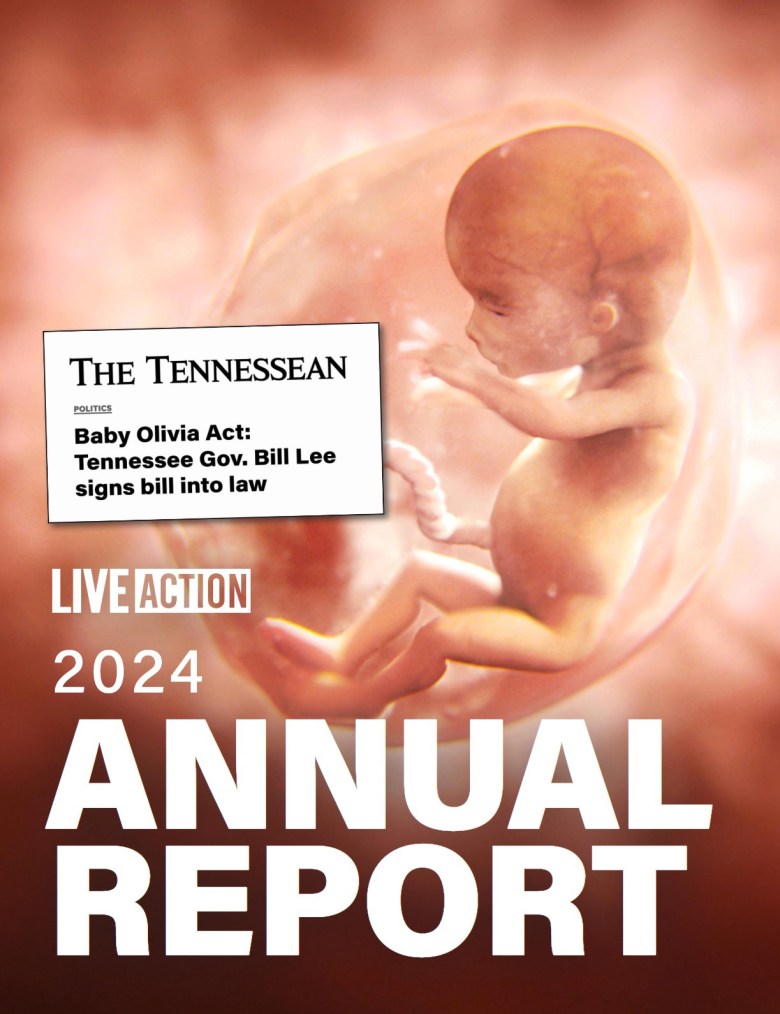
Bulso was there at the request of the event’s host, anti-abortion advocacy nonprofit Live Action. The group had gathered legislators from across the country to provide them “with the policy information and persuasion strategies they need to end abortion,” according to its annual report.
Bulso’s panel, “The Agenda for Life in Schools and Beyond,” focused on how he had successfully shepherded his bill into becoming the second so-called fetal development education law in the country.
When lawmakers returned to their home states after the Live Action event, The Hechinger Report found, at least 10 of them sponsored bills similar to Bulso’s, in some cases proposing that students as young as third grade watch fetal development videos. Another legislator who introduced such a bill had sent his chief of staff and wife to the event. And the volume of legislation stemming from the gathering may be higher: Live Action keeps its list of attendees private, though many lawmakers posted about the event on social media or were featured in Live Action’s promotional materials.
Since 2023, when North Dakota became the first state to pass fetal development education legislation, anti-abortion lawmakers in more than 20 additional states have proposed such bills; 6 of those states, including Bulso’s, have passed them. As a result, this fall, nearly 4 million children will attend school in a state that requires them to watch a video or ultrasound of a fetus in the womb during sex education classes. And this year, legislators in four states tried to go even further: Their proposals would have required students to view depictions of abortions, including computer-animated videos.
After the fall of Roe v. Wade in 2022, public schools have become an increasingly important battleground in the fight over abortion rights. Even though 12 states now ban abortion in all circumstances, the number of procedures has increased nationwide since the Supreme Court’s decision to overturn Roe.Public support for abortion rights has also risen. Many anti-abortion advocates hope that getting their message in front of students can help them win the hearts and minds of young people and change these trends in the long run.
While critics, including medical professionals and some parents, say that the fetal development education materials being introduced to schools are manipulative and little more than propaganda, Live Action and other groups that produce them maintain they are medically accurate and unbiased. Experts in sex education and abortion policy say a related problem is the dearth of sex education in schools — students, on average, receive only about six hours during their high school years — that creates a vacuum for anti-abortion groups to move into.
“They’re attempting to reach children at an age where I would assume most haven’t been exposed to issues of an abortion,” says Alisa Von Hagel, a political science professor at University of Wisconsin-Superior who has studied the strategies of the anti-abortion movement. “They’re attempting to be the first to imprint this quote, unquote ‘knowledge’ or opinion about these issues.”
During a debate earlier this year in the Arkansas Senate, Republican Sen. Alan Clark referred to his state’s proposal as “one of the most important pro-life bills that’s ever come before us.” He also said, “It will shape the minds of kids from now on.”
The proposal would have required showing a video created by Live Action to students starting in sixth grade. In the video, titled “Meet Baby Olivia,” a narrator tells the viewer that life begins at conception and says the fetus, named Baby Olivia, begins playing and exploring as early as 11 weeks.
In an annual report, Live Action noted that its “Meet Baby Olivia” video caused a “37-point shift towards the pro-life perspective among viewers.” The organization also highlighted the impact its materials can have on kids, in particular, to help “instill a reverence for life as children at impressionable ages develop their world view.”
Tennessee state Rep. Gino Bulso sponsored the nation’s second fetal development education law. He credits the anti-abortion group Live Action with helping him get it passed. Credit: George Walker IV/AP Images
Both Bulso and Noah Brandt, Live Action’s vice president of communications, have said the only goals of Baby Olivia and fetal development education are to teach and inform students — but they also expected it to leave an impression. “It is intuitive that, after watching that, people would be less likely to support abortion on demand,” Brandt said.
Live Action’s work to connect with students is also part of playbooks for other anti-abortion organizations. Take Heartbeat International, for example, a group that supports clinics known as “crisis pregnancy centers,” which provide limited medical care and encourage people not to have abortions. Heartbeat also offers in-person and online training, including one program on how to “Change the Nation with Pro-life Education,” featuring specific tactics for working with public schools. One speaker at Heartbeat’s 2023 national conference described performing an ultrasound on a pregnant woman in front of public school students to “plant a seed of life.”
Before creating “Meet Baby Olivia,” Live Action was best known for anti-abortion campaigns and undercover stings against Planned Parenthood, and largely worked outside of policymaking. But as the organization has grown in recent years, it has begun to coordinate directly with legislators.
Live Action held its inaugural lawmaker summit in 2022, two months after Roe was overturned. The following spring, North Dakota passed a fetal development education law, the nation’s first.
Many proposed fetal development education bills mention the video “Meet Baby Olivia” by name. Critics say that the video is designed to manipulate the viewer’s emotions, while its creator, Live Action, says it is accurate. Credit: Live Action
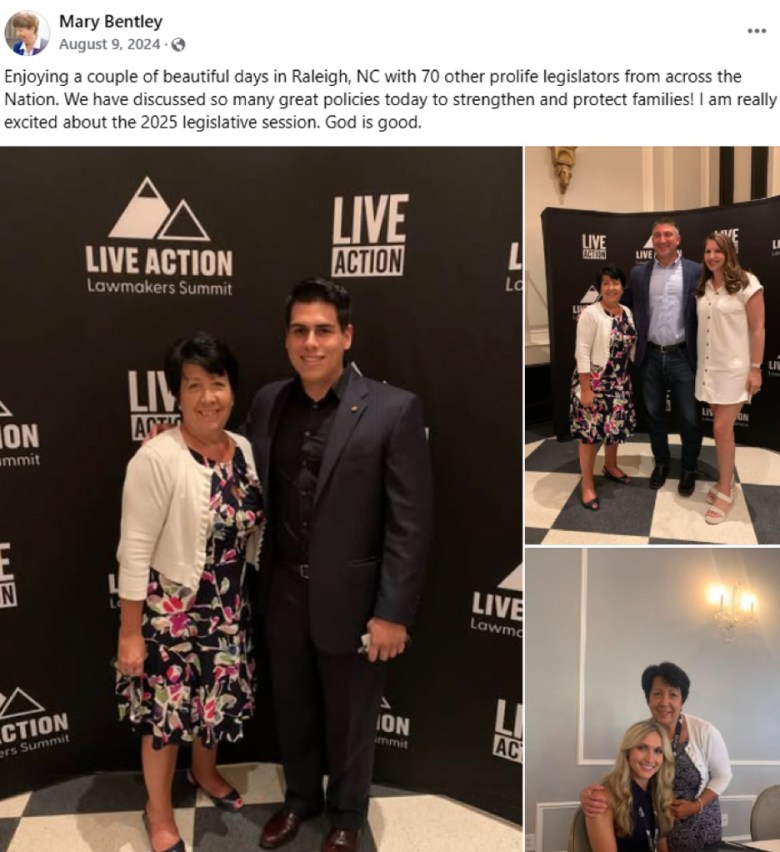
By 2024, the summit had doubled in size to host 70 lawmakers at a four-star hotel in Chapel Hill, North Carolina. Lawmakers attended panel discussions titled “Saving Our Children and Helping Their Mothers” and “Communications and Persuasion: Winning the Messaging War.” Live Action also screened its abortion videos, including “Meet Baby Olivia.”
On his panel, Bulso walked through every step of creating Tennessee’s law, from filing the bill to committee deliberations to its eventual passage. He gave Live Action credit for providing him with resources to help make the case that “Meet Baby Olivia” was scientifically accurate.
Most of the proposed fetal development education bills don’t prescribe a specific video, but many suggest the Baby Olivia video. Two bills in Texas do mention alternatives: A 1983 film by PBS’s NOVA called “The Miracle of Life” and a video produced by the St. John Paul II Life Center, a crisis pregnancy center.
Said Brandt, it’s up to “lawmakers, school board members, teachers, that kind of thing, to try to make prudential judgments about, ‘Is the actual resource I’m using a good resource to accomplish the goal that I’ve been tasked to accomplish?’”
“Meet Baby Olivia” in particular, has been sharply criticized by medical experts since Live Action released the video in 2021. Many doctors have raised concerns about its language and portrayal of the timeline of fetal development. Parents and students in Fargo, North Dakota, used arguments such as these to convince the school district to use a different video to meet the state law.
“The Baby Olivia video is designed to manipulate students’ emotions rather than to share objective facts about embryonic and fetal development,” Nisha Verma, senior advisor of reproductive health policy and advocacy for the American College of Obstetricians and Gynecologists, said in a statement. “The video attempts to advance anti-abortion policies such as fetal personhood and uses non-scientific language about conception, pregnancy, embryos, and fetuses to evoke an emotional response.”
Live Action maintains the video is medically accurate — and has its own roster of anti-abortion doctors who endorse it, including a handful who collaborated with the organization on the video’s creation.
The approval of some medical professionals was part of the appeal of “Meet Baby Olivia” and another Live Action video series called “What Is Abortion?” for New Hampshire Rep. John Sellers, another Republican who attended the group’s lawmaker summit. The series shows a computer rendering of three different points in the pregnancy process.
Since 2023, getting fetal development education into public schools has been a priority for the anti-abortion group, Live Action. Credit: Live Action
In January, Sellers filed two bills to make Live Action’s videos required viewing for New Hampshire students — including college students in the case of “Meet Baby Olivia.” Both bills, however, faced opposition: Nearly 700 residents officially recorded their objection with the state or submitted testimony opposing the fetal development bill, and 1,080 registered their opposition to the abortion video legislation. By comparison, the number of residents who registered in favor was 23 and 30, respectively.
Many of those who submitted written testimony called the bill an attempt to indoctrinate students; Sellers maintained the legislation was nonpolitical. “We’re just trying to get the information out to the kids so they’re educated,” he said in an interview. “I don’t know how you indoctrinate somebody with the truth of the development of life … or the truth that these are the types of procedures of abortions. I can’t see that being indoctrination.”
Sellers said further that he hoped education could help people “make a better decision of, ‘Should I get an abortion or not?’”
Several people who opposed Sellers’ bills agreed that the videos contained some factual information and that topics such as fetal development and abortion could be useful to learn about in schools, but it was the presentation of the information — and that it came from an anti-abortion group — that worried them, they explained.
“My biggest concern is that it’s set up to come from a moralistic and fear-based place as opposed to a medical or wellness model,” said Stephanie Vazzano, a therapist who lives in New Hampshire who submitted written testimony opposing the abortion video bill. “They do have some facts. When you watch them you can be really seduced by those facts … but then these other things get slipped in.”
During the hearing for his bills, Sellers repeatedly said he was open to other abortion videos being shown but didn’t know of any. This lack of alternativeshas allowed Live Action to succeed in getting into schools so far, said Mary Ziegler, a law professor at University of California-Davis and author of several books on the history of abortion debates. “Part of what they’ve exposed is that there are gaps in the way we’ve done sex education,” she points out. “There’s truth in the sense that sex education programs across the board, including those favored by progressives, don’t have enough information about pregnancy, childbirth, abortion or fetal development.”
In many ways, Live Action’s efforts — as well as those of Heartbeat International and other organizations working to reach K-12 students — are a response to groups that run comprehensive sex education programs. Five states require comprehensive sex education, and individual districts in other states also provide it. These programs typically cover an array of topics including contraception, gender identity, consent, and options if one becomes pregnant. Planned Parenthood offers such a program to schools and has become the single-largest provider of sex ed nationwide.
“I’m sympathetic if someone says we wouldn’t want any organization that has any point of view creating any materials for our public school system,” Brandt of Live Action said. “But I would just say that’s not the reality that’s happening across the country. It’s tough to find curriculum that is from a group that no one would oppose.”
Even some anti-abortion Republicans have drawn a line at directly promoting the use of Live Action materials in public schools. Among them is Arkansas Sen. Breanne Davis, who led the opposition to a bill that specifically called for “Meet Baby Olivia” to be shown in schools. She raised concerns about requiring content from “a political advocacy group.” Davis said in an interview, “That’s just out of bounds for what we should be putting into law.”
At least 11 state legislators who attended Live Action’s Lawmaker Summit, including Arkansas Rep. Mary Bentley, introduced fetal development legislation during the 2025 legislative session. Credit: Facebook
In hearings, Arkansas representative and bill sponsor Mary Bentley argued it would be easier and better for school districts to be told which video to use rather than have to make that determination themselves. She remains staunchly in support of the Baby Olivia video: “I think it’s so good to help kids understand the process of fetal development,” she said. “I just assumed that it would get the support that we needed in the most pro-life state in the nation.”
Davis proposed a competing bill, one that would require the Arkansas department of education to adopt standards for age-appropriate fetal development education, including showing an ultrasound, in the future. No video would be required, but districts could still show one, such as “Meet Baby Olivia,” if they chose to.
In the end, Bentley’s bill died and Davis’s legislation was signed into law in April.
For Brandt, of Live Action, the law falls short of what he considers the “gold standard” of fetal development education, but “We’re happy that they passed some version of it,” he said. “That is definitely better than nothing, and maybe can even be improved upon in the future.”
Contact investigations editor Sarah Butrymowicz at [email protected] or on Signal: @sbutry.04.
The Hechinger Report provides in-depth, fact-based, unbiased reporting on education that is free to all readers. But that doesn’t mean it’s free to produce. Our work keeps educators and the public informed about pressing issues at schools and on campuses throughout the country. We tell the whole story, even when the details are inconvenient. Help us keep doing that.
The Trump administration’s financial and political attacks on higher education, as well as more pressing problems across the sector, mean it’s unlikely U.S. colleges will prioritize sustainability work in the near future.
While seven Canadian universities—including Queen’s University, McMaster University and the University of Alberta—ranked in the global top 50, Arizona State University, ranked joint sixth, is the only U.S.-based institution to crack the top 50. Three highly ranked U.S. colleges fell out of the global top 50 this year: Michigan State University is now at joint 61st, Penn State at joint 64th and Florida International University at joint 71st.
Western Sydney University in Australia topped the global ranking for the fourth year in a row.
THE—Inside Higher Ed’s parent company—ranked the sustainability efforts of 2,526 universities from 130 countries; 52 institutions from across the U.S. participated in the 2025 ranking, down from 58 in 2024.
Since 2019, THE has evaluated the performance of thousands of higher education institutions across the globe on the U.N.’s 17 Sustainable Development Goals. Universities that want to participate in the rankings are required to submit information for SDG 17, Partnerships and Goals, and at least three other SDGs. How well an institution meets those goals is then evaluated across four broad categories: research, stewardship, outreach and teaching.
Phil Baty, chief global affairs officer for THE, described American universities’ “general lack of direct engagement with the SDGs” as “disappointing,” especially because the U.S. has some of the world’s strongest research universities. “I’d hope they can turn their greatest minds more overtly towards tackling the world’s most pressing and urgent challenges.”
Under Trump, SDGs May Be ‘More Risky’
Although the nation’s lackluster showing in the 2025 Impact Rankings is based on university data that predates the start of President Donald Trump’s second term, the administration’s attacks on the sector and political stances suggest the country’s higher education institutions may only face more barriers to becoming global sustainability leaders.
In March, the Trump administration denounced the SDGs, which the U.N. created in 2015 during President Barack Obama’s administration with the aim of reaching them by 2030. The second Trump administration has also pulled out of other international sustainability initiatives, including the Paris Agreement on climate change, and moved to cut billions in funding for scientific research and social programs—including many focused on reducing social inequities, addressing climate change and advancing diversity, equity and inclusion efforts.
Bryan Alexander, a scholar who studies the future of higher education and author of 2023’s Universities on Fire: Higher Education in the Age of Climate Crisis, wrote in an email to Inside Higher Ed that even before the Trump administration’s denouncement of the SDGs, they’d failed to gain much traction among U.S. universities.
“When I mention SDGs in academic settings, I usually see blank faces and have to explain what they are,” he wrote, attributing the indifference to a stronger focus on other, seemingly more pressing matters plaguing higher education, such as financial instability. “That sense of institutional urgency, heightened by a steady stream of campuses closing, merging, or cutting programs and staff, looms large. In that context, the SDG goals look like noble but not essential, nice-to-haves rather than imperatives.”
According to Alexander, other deterrents to the sector launching a widespread commitment to sustainable development include faculty burnout, scarce resources, anti-expert animus, doubts from faculty and administrators that their efforts will make a difference, and anxiety about associated political risks.
And he expects all those problems to persist, if not worsen, in the coming years as Trump continues his assault on universities and pro-sustainability initiatives. “The anti-DEI campaign strikes directly at several SDGs,” Alexander wrote. “It will be harder for academics to win external support for any such work, from doing research to offering new academic programs, overhauling a campus power system to replacing vehicles with electric vehicles. It will appear to be politically even more risky.”
However, he said there are some less risky actions U.S. institutions can take to be more sustainable.
“First, renewable energy, especially solar, is simply cheaper than fossil fuels. Switching a campus’ power supply just makes financial sense,” he said. “Second, traditional-age undergraduates are much more interested in climate change and sustainable development than their elders, which means they will tend to be eager to take classes and study in programs along those lines.”
Walking a Fine Line
ASU also tops the global ranking for SDG 14: Life Below Water, which means it’s at the forefront of developing strategies that support the health and sustainability of aquatic ecosystems.
It launched one of the nation’s first schools of sustainability nearly 20 years ago, and although its main campus is located in the Arizona desert, ASU launched the School of Ocean Futures in 2024. The school connects research and teaching facilities in the Pacific and Atlantic Oceans with research happening on its main campus in Tempe.
The school is one example of how universities can help to “restore balance within the global environment,” said Marc Campbell, ASU’s assistant vice president of sustainability and deputy chief sustainability officer.
“Fundamentally, the work of sustainability is about trying to be more efficient in the use of our resources and trying to protect what’s out there,” Campbell said. “A lot of people can support the foundational work of sustainability, but we need to unload some of the baggage that’s associated with the word and the discipline.”
Doing that, he said, will come from making a case for the economic and social value of investing in sustainable development initiatives.
“In any organization there are supporters and detractors. You have to figure out how to walk that fine line to get people supporting the greater good and recognizing what that is,” Campbell said.
“When we can do that more effectively across the board and build broader collaborative partnerships with other organizations that are focused on the same goals, then I think we can get past some of the [political] baggage.”
Nick Hillman, HEPI’s Director, tries to make sense of the Government’s new plans on R&D spending up to 2029/30.
Perhaps the Speaker of the House of Commons will be unhappy the Government have pre-briefed the media on what this week’s Spending Review will mean for research spending. But what should the higher education and wider research community make of it?
As the BBC story on the £86 billion reminds us, ‘Earlier this week, Reeves admitted that not every government department would “get everything they want” in Wednesday’s review’. We are meant to think the £86 billion is one of the rare exceptions, a surfeit of generosity (albeit with taxpayers’ money) – that is why it is being pre-briefed as a good news story a few days before the Spending Review itself. Ministers have even managed to squeeze positive endorsements from those tipped off in advance, such as the Russell Group. But let’s be honest, the Department for Science, Innovation and Technology (DSIT), which will oversee this £86 billion, is not getting what it wants. The £86 billion is thought to be a real-terms freeze; it is implausible to think DSIT Ministers have been lobbying the Treasury to stand still. If they had been, they would not have been doing their jobs. Some will wonder whether this explains why friends of the Secretary of State for Science, Innovation and Technology have been speaking up his chances of being moved to a bigger spending Department in due course.
We have been here before. The proudest boast in the Government’s news release, apart from the total multi-year settlement of £86 billion, is of ‘a bumper funding package worth more than £22.5 billion a year in 2029/2030’. But hang on a moment; if Whitehall had more institutional memory, they might have worded this differently because it is five years since the Treasury, under a previous administration and despite being in the midst of COVID, boasted there would be public spending of £22 billion on R&D by 2024/25, just £500 million a year less and five years earlier than the new number for 2029/30. While the modesty of the new announcement might be partly excused by the sluggish economic growth seen since, it may also explain why the announcement seems not to have had the pickup in the Sunday newspapers that the Government would have been hoping for.
A real-terms freeze is a cut in terms of the percentage of GDP spent on R&D, which is the usual way R&D spending is measured in the UK and internationally. In the past, policymakers have obsessed over whether the UK can reach 2.4% or even 3% of GDP on (public and private) R&D spending, putting such targets in many election manifestos. But by a stroke of the pen three years ago, the Office for National Statistics suggested the UK spends much more than we thought on R&D, meaning we had already hit the 2.4% target, overtaken the OECD average and even got close to the 3.0% ambition. So policymakers could claim they had already hit a target that had looked extremely stretching and shift their attention elsewhere. (The ONS’s change put red faces on those who had been lobbying for such targets, however: if the target you have been lobbying for has already been hit [even if it does not feel like it on the ground], what should your next move be? This is something no one quite seems to have worked out.) The new announcement is problematic in GDP terms because, if you assume any economic growth at all, then a real-terms freeze in research spending means a reduction in R&D spending as a proportion of GDP. The latest international data suggest the UK’s gross R&D spending has been just above the OECD average (2.8% of GDP versus 2.7%). If the OECD average remains the same or (as has been happening) goes up somewhat, today’s announcement means the UK is likely to spend less on R&D as a proportion of GDP and once more fall behind our main competitors. (This is not absolutely guaranteed because today’s announcement is on public spending and most R&D spending is private spending. However, public spending on R&D is generally [though not universally] thought to ‘crowd in’ rather than ‘crowd out’ public funding.)
It is easy for me to be a little cynical about all this because I was there when the same conversations happened between the Business, Innovation and Skills Department and the Treasury at the time of the 2010 Spending Review, which had a similar importance to this week’s forthcoming Spending Review. However, that experience also taught me that a flat settlement in a constrained environment can indeed be a win. The settlement in 2010 was flat-cash not flat real – in other words, it ignored future inflation, so was less generous even than the one being announced today. At one point during the 2010 negotiations, however, it had looked as if there would be actual cuts to the cash spent on research and development each year; expectations in the research community were running so low that, when flat cash was instead announced, it led to my boss, the Minister for Universities, being presented with a bouquet of white roses by the founder of Research Fortnight.
Today’s announcement is about the money but the Government’s spin doctors have also tried to focus on the uses to which the money is put. Voters are likely to find it hard to imagine what £86 billion spread over a number of years means in practice. However, as the Mirror reports, it could mean ‘In Liverpool, which has a long history in biotech, funding will be used to speed up drug discovery and in South Wales, which has Britain’s largest semiconductor cluster, on designing the microchips used to power mobile phones and electric cars.’ Those feels like things everyone can get behind, even if the focus on local spending may or may not mean a weakening of excellence as the key criterion on which to distribute research funding from central government. This focus on projects should also serve as a reminder to the research community that, whatever Ministers say now, there is likely to be more money available if they lobby smart in the months to come. After what was perceived as a good settlement for science in 2010, we still managed to secure additional funding at pretty much every subsequent spending review. There were lots of reasons for this to do with how effectively the Department lobbied (it helped having both a Lib Dem and a Tory Minister from the Department sit around the Cabinet table), George Osborne’s predilection for science (albeit generally for big new projects rather fully funding existing ones) and politicians’ ceaseless desire to have an exciting new building or two to don a hard hat for. Perhaps most importantly, the research community were ready with ideas of what additional projects should be funded whenever we went to them with the question; if we give policymakers the tools to lobby the Treasury in the years ahead, researchers could get more.
Finally, I am left wondering what this five-year settlement means for the commitment in Labour’s 2024 election manifesto to ‘scrap short funding cycles for key R&D institutions in favour of ten-year budgets that allow meaningful partnerships with industry to keep the UK at the forefront of global innovation.’ It was always likely that this wording was a political trick to put the focus on the length of time rather than the quantum of money. But Spending Reviews are always about money and always have a fixed shorter timetable, so how this week’s announcement chimes with longer-term planning is an issue that won’t go away even if it primarily is for another week.
Networking events with alumni give students the chance to learn more about life after graduation and build career skills.
A May 2024 Student Voice survey by Inside Higher Ed and Generation Lab found that 29 percent of respondents believe their college or university should prioritize connecting students to alumni or other potential mentors. However, not every student has this opportunity before graduating; only one-third of graduates said their institution helped them to network with alumni while they were students, according to a 2024 National Alumni Career Mobility survey.
Administrators don’t always recognize this disconnect between current and former students; a 2024 survey of student success leaders found that 56 percent believe their career center effectively connects students with the institution’s alumni network.
Inside Higher Ed compiled six ways colleges and universities can invite alumni to partner with them to enhance students’ career development.
Mentorship Programming
Pairing students with graduates, particularly those in the same discipline or with similar career goals, is a common way to foster feelings of belonging among classes and with the institution.
Survey Says
A 2025 survey from Gravyty found that 80 percent of alumni engagement teams invite alumni to participate in community or networking events, but just over one-quarter ask alumni to become active volunteers. A survey of alumni also by Gravyty found that alumni who have served as mentors say they are 200 percent more likely to donate in the future.
The University of Massachusetts Dartmouth hosts a Meet and Mentor mixer to introduce current and past students, building organic relationships in an informal setting. Syracuse University extends mentorship opportunities for alumni far from campus through virtual mentorship meetings. The university has coordinated over 1,000 meetings between students and alumni mentors over the past five years.
In some cases, alumni can provide insights into evolving industries in ways that career services pros may be less equipped to.
Worcester Polytechnic Institute created a mentorship program for students interested in green or sustainable jobs and industries, in part to help them keep up with the rapid changes in the field. The program has found more mentors than mentees so far, including alumni from a variety of industries such as architecture and design, waste reduction, consulting, and energy.
Office Hours Programs
Establishing an informal space for students to meet with alumni allows them to create connections and helps students build confidence for venturing into more professional networking spaces. Clemson University’s business school invites alumni to participate in drop-in office hours to review résumés, provide career advice or engage in a casual conversation with students.
Some colleges and universities designate alumni in residence who provide one-on-one guidance, give presentations, engage in networking receptions and more, as needed. The University of Connecticut’s career center asks alumni in residence to devote at least four hours per month for virtual office hours and to participate in several career events and programs.
Job Shadows
While many students may know what field they’re interested in working in, understanding the day-to-day responsibilities of an industry professional can feel out of reach. Alumni connections can address the transition to work and help students establish work-life balance. Kalamazoo College connects students with local alumni for a short-term job shadow during spring break, showcasing local businesses and industries that hire graduates.
Grinnell College also taps alumni around the globe each spring to provide job shadows and homestays, giving soon-to-be graduates a deeper look at what their future may be after college. The visits, which can last from a day to a week, connect students to new cities, professional networks and careers.
Microinternships
Microinternships have grown as a way to engage students in project-based experiential learning connected to a potential employer. At Goucher College, microinternships also introduce students to alumni who share their career interests. The six-week virtual experiences take place across the winter break and January term, and students are paid a stipend by the university, reducing barriers for participation.
Projects vary depending on the needs of alumni, and in the past students have edited books, organized data, created presentations or conducted market research. The goal is to enable the student to walk away with a portfolio piece they can talk about in future interviews.
Early Alumni Engagement
Colleges can also help graduating students make the transition to being engaged alumni by establishing programs for recent graduates.
Boise State University created BOLD, short for Broncos of the Last Decade, an alumni group specifically for students who graduated in the past 10 years, which holds tailgate events and a champagne reception for new grads during commencement weekend. BOLD also offers discounts on football and basketball season tickets, helping alumni maintain connections to the institution even after graduation.
West Virginia University and Marshall University partnered to create a talent-development pipeline, called First Ascent, for recent graduates to reduce brain drain in the state and connect recent alumni to peers and mentors.
Financial Support
Alumni can also build institutional capacity and help sustain programs for current students through financial gifts and endowed resources. Supported through alumni donations, Brandeis University’s World of Work fellowship program provides stipends of up to $6,000 for students to participate in unpaid or underpaid experiential learning opportunities, helping build their career skills.
Many career centers are also endowed by alumni, including the University of Central Florida’s Kenneth G. Dixon Career Development Center, named for the 1975 alumnus who donated $5 million in 2024.
Do you have a career-focused intervention that might help others promote student success? Tell us about it.
Title: First-generation College Students’ Career Entry: College Perspectives
Authors: Melinda Mechur Karp, Suzanne Lyons, Nancy Stalowski, and Mary Fugate
Source: FirstGen Forward and Phase Two Advisory
First-generation college students experience the transition from high school to college and enrollment in higher education in a unique way. While there is significant research on first-generation students’ postsecondary pursuits and how they cross the boundary from the K-12 system into colleges and universities, less attention has been dedicated to exploring first-generation students’ career development and movement into the workplace.
A new brief by FirstGen Forward helps to close this knowledge gap, drawing on a national survey from 411 colleges and universities across 47 states and Washington, DC, and six focus groups with higher education professionals. Eighty-nine percent of those interviewed work directly with first-generation initiatives and programs, and 72 percent of respondents identify as first-generation graduates themselves.
Additional highlights and insights include:
First-generation college student career development is highly unique. First-generation students rely heavily on institutional resources and mentors to help them progress through unfamiliar environments, which include institutions. Focus group participants indicated that students often need additional mentorship and support in understanding how their experiences as first-generation students can be career assets and how they can be reframed in job applications.
First-generation respondents frequently indicated they need exposure to individuals who share their identities who can help them explore their future career pathways. When asked what students need for future career support, 20 percent of survey respondents said opportunities to build social capital, including networking, mentoring, and internship opportunities.
Institutional approaches to promoting first-generation career development differ. First-generation students indicated they rely on both general university career services and programs tailored to them. Thirty-six percent of respondents reported their postsecondary institution offers career services tailored to first-generation students, 43 percent stated their institution does not, and the rest were unsure. Of 201 written survey responses about specific knowledge first-generation students need, the most commonly mentioned skill was interview preparation. However, the survey responses indicate that only 66 percent of respondents’ institutions offer this.
First-generation College Students’ Career Entry: College Perspectives is the first of six research and policy briefs that will make up a national landscape analysis. Additional briefs will be released over the coming months.
To read the full report from FirstGen Forward, click here.
—Austin Freeman
If you have any questions or comments about this blog post, please contact us.
The Concordat to Support the Career Development of Researchers was designed to drive culture change, not compliance. However, many institutional action plans suggest institutions are meeting the letter rather than the spirit of its commitments.
Financial constraints and the evolving REF 2029 people, culture and environment (PCE) guidance are shaping how institutions support research staff, and universities face a choice: stick with the easy, surface-level interventions that look good on paper, or commit to the tougher, long-term changes that could truly improve research careers.
The latter is difficult, resource-intensive, and politically fraught – but it is the only route to a research culture that is genuinely sustainable.
Progress and pressures
There has been real progress in embedding researcher development in UK higher education. The 2019 review of the concordat highlighted expanded training opportunities, strengthened mentoring schemes, and, crucially, the integration of researcher development into institutional strategies and governance. Many institutions have since used its principles to shape research culture action plans and strategies.
This progress has been uneven, however. Access to high-quality training and development opportunities varies across the sector, particularly for researchers in smaller, less well-resourced institutions. In addition, new initiatives frequently lack long-term sustainability beyond initial funding.
Institutional action plans tend to emphasise soft politics – awards, charters and resource hubs – which, while useful, may function as reputational signals more than mechanisms for change. Meanwhile, the concordat’s more challenging commitments, like improving job security, workload management, and the visibility of career pathways across sectors, receive less attention.
Financial constraints and shifting priorities
Universities are operating in an era of financial constraint forcing difficult decisions about what can be sustained and what must be scaled back. These financial pressures are already reshaping researcher development and career pathways, with potentially lasting consequences:
Shift toward low-cost interventions: Institutions may prioritise training, mentoring, and “off the shelf” development workshops as the most financially viable options, while more complex reforms – such as improving career pathways, addressing workload pressures, and ensuring meaningful career learning – are pushed aside.
Growing precarity and inequity in research careers: With the risk of non-renewal of fixed-term contracts and rising redundancies, instability may increase. The effects will likely be unequal – early-career researchers, those with caring responsibilities, and underrepresented groups are usually most affected in such situations, with workload pressures further widening existing inequities in career progression and retention.
Shifts in career trajectories: Financial pressures will push more researchers to seek opportunities beyond academia, not always by choice but due to diminishing prospects within universities. This is not in itself a bad thing, but the absence of robust career tracking data, limited engagement with non-academic sectors, and a lack of structured support for diverse pathways mean that institutions risk making decisions in a vacuum.
Without a clear understanding of where researchers go and what they need to thrive, researcher development may become misaligned with market realities – undermining both retention and outcomes. Initiatives like CRAC-Vitae’s new UK research career tracking initiative aim to close this critical evidence gap.
What makes researcher development sustainable?
What will actually make researcher development sustainable? The answer isn’t simply more initiatives, or cheaper ones – it’s about embedding development in institutional culture and building on evidence of what works. That means making time for development activities, creating space for strategic reflection, and encouraging researchers to learn from one another – not just offering mentoring or reciprocal schemes in isolation. Vitae’s refreshed Researcher Development Framework sets out the full breadth of what this encompasses.
Researcher development doesn’t necessarily require large budgets. Much of it comes down to embedding development in the culture: time to pursue meaningful opportunities, support from line managers and supervisors to do so, and the ability to learn in community with others. Yet in times of crisis, workloads tend to rise – and it’s often this development time that’s seen as non-essential and cut. Around half of research staff do not have time to invest in professional development – demonstrating just how limited that space already is.
These overlapping pressures are pushing institutions to make trade-offs – but it’s clear that the most effective and sustainable approaches to researcher development will depend not just on resource levels, but on institutional priorities and strategic leadership.
Unmet expectations
At the same time, the ongoing review of sector-wide concordats and agreements, meant to clarify priorities and improve alignment, seems to have stalled – raising concerns about whether it will lead to meaningful action. The Researcher Development Concordat Strategy Group, tasked with overseeing implementation and strategic coordination, has also been quiet over the last year, though the new chair has recently signalled renewed commitment to its activities.
This stagnation raises questions about the long-term value of the concordat, particularly in a landscape where institutions are grappling with resource constraints. Without strong leadership and coordinated sector-wide action, there is a real risk that institutions will continue to take a fragmented, compliance-driven approach rather than pursuing deeper reform.
If the concordat is to remain relevant, it must address the structural issues it currently skirts around – particularly those related to researcher employment conditions, workload sustainability, and career progression. Without this, it risks becoming another well-intentioned initiative that falls short of delivering real sector-wide change.
PCE and the concordat
The introduction of people, culture and environment (PCE) in REF 2029 was intended to shift the sector’s focus from research outputs to the broader conditions that enable research excellence. However, the way institutions interpret these requirements is critical.
REF PCE has the potential to drive meaningful change – but only if institutions use it as a platform for genuine reflection rather than a showcase of best practices.
PCE and the concordat share several ambitions: both emphasise inclusive research environments, professional development, and supporting leadership at all career stages. The concordat’s focus on employment conditions, researcher voice, and long-term career development also aligns with PCE’s emphasis on institutional responsibility for research culture.
This coherence is no accident – PCE was co-developed with the sector, and the concordats and agreements review recognised the overlaps between existing frameworks.
If institutions take a strategic, integrated approach, REF PCE could reinforce and enhance existing concordat commitments rather than becoming another compliance exercise. However, this requires institutions to go beyond superficial reporting and demonstrate tangible improvements in the working conditions and career pathways of researchers.
A call to action
If institutions want to move beyond just ticking boxes, they need to take bold, practical steps.
Job security must be redefined in the current climate. Researcher development should not just focus on career skills and knowledge but on career sustainability, accountability, and agility. While reducing reliance on fixed-term contracts remains a long-term goal, immediate priorities must also include clearer career progression routes (within and beyond higher education), cross-sector mobility, and support for career transitions.
Workload and pay transparency need urgent attention. As researchers face increasing uncertainty about their career trajectories, solutions must go beyond surface-level fixes. This requires coordinated policy reform at both institutional and sector levels, including meaningful workload management strategies, transparent pay equity audits, and governance processes that embed researcher voices. While wellbeing initiatives have value, they are not a substitute for structural reform.
Finally, the role of the concordat strategy group must evolve in response to the current climate. With institutions facing severe financial constraints and a shrinking research workforce, the group must take a more proactive role in advocating for sustainable researcher careers. This includes setting clearer expectations for institutions, addressing gaps in employment stability, and ensuring that commitments to researcher development are not lost amid cost-cutting measures. Without stronger leadership at the sector level, there is a risk that the concordat will become little more than a bureaucratic exercise, rather than a meaningful driver of change.