
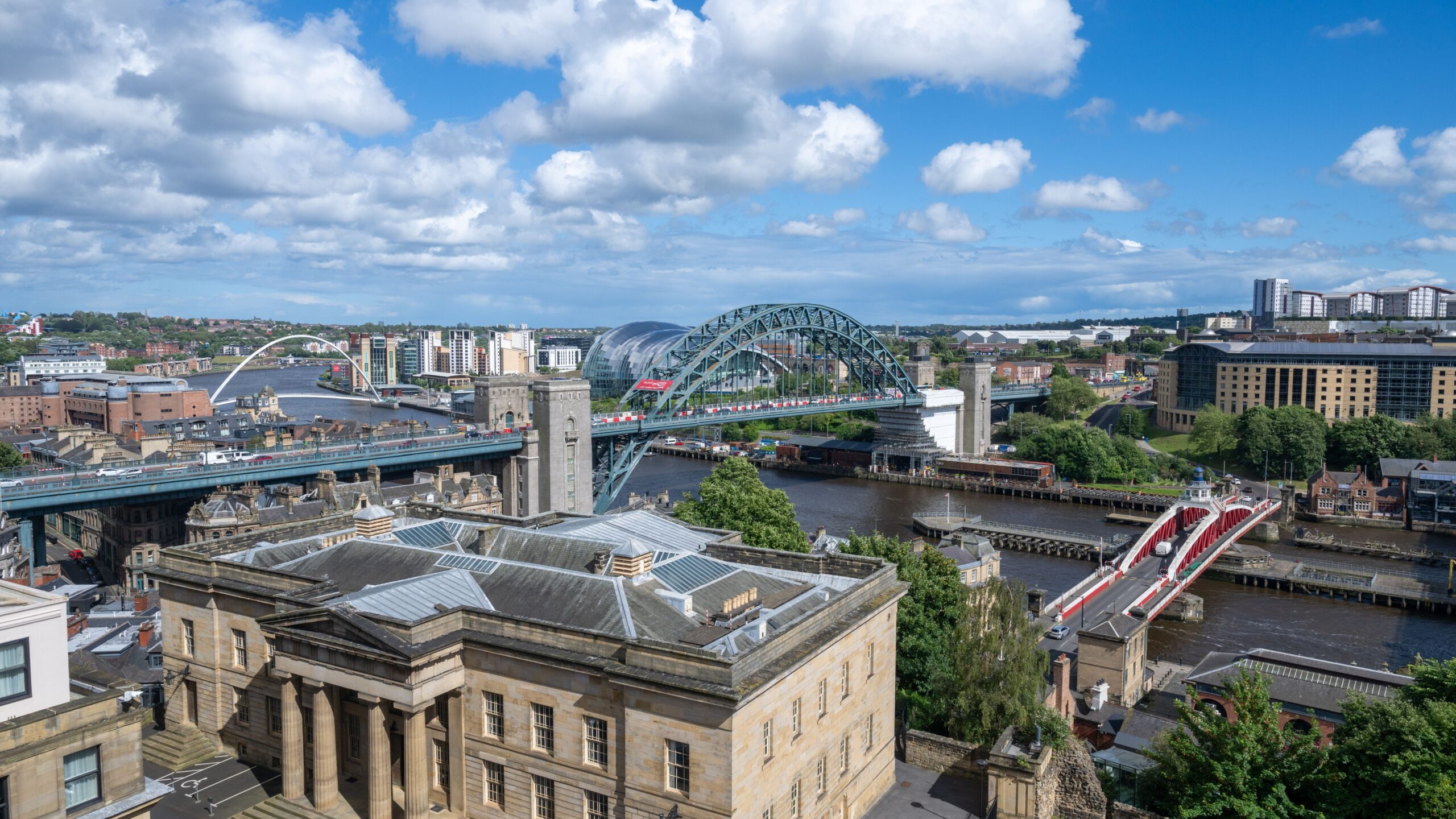
Of all the things I am proud of in my life I am the most proud of being Northern.
You have not felt love until you have seen the sun rise over the Tyne Bridge. Life is rendered that bit more vibrant by a visit to Middlesbrough Institute of Modern Art. The North is the place where kindness is a professional sport. To be Northern is to be part of a collective, part of a cultural and economic history that spans from the Darlington and Stockton Railway to the Mercury Prize.
To be Northern is to have won the lottery of life but it is to have not even been in the draw when it comes to infrastructure investment.
Dark satanic mills
The UK is stuck in a deep economic malaise. Productivity is low which means economic output and living standards are also flat-lining. This phenomena is even worse in the North where a vicious cycle of poor investment in innovation assets and infrastructure weakens the case for further investment in innovation assets and infrastructure which in turn further depresses productivity, growth and living standards.
The regional imbalance in infrastructure investment is not inevitable nor as prominent a feature of many comparable economies. It is a series of deliberate policy decisions that are both structural in the hyper-centralisation of the state which allocates and reallocates its resources to London and the South East, and economically reinforcing through investment in clusters of leading assets. The results of which see UKRI invest 72 per cent more per person in the Greater South East than outside the Greater South East.
This arrangement is also not a good deal for London. The weak economy across the rest of the country reduces the amount of cash available to invest in London’s leading research assets which in turn depresses growth in the capital, and because of the size of London’s economy, the whole of the economy. Despite the concentration of state spending Londoners also generate far more in tax receipts than London receives in state expenditure.
The economy cannot grow without improving productivity, productivity will not grow without improving Northern economies, and Northern economies will not improve under the current approach to state spending. A problem at last recognised by the government in the launch of its Northern Growth Strategy.
We do thing differently here
There are three planks to the strategy. Investment in transport, business support, and a devolution agenda that combines investment in innovation assets with promises of further devolution.
There are further plans to come but the agenda, while light, sets out some of the big opportunities that would be genuinely transformative to the North. The first is to improve the educational opportunities for the people in the North and increase the number of graduates that stay there. Unless there are going to be caps for students in the South East (unlikely) this would inevitably mean more not fewer university students. The hope is that retaining graduates, and therefore intellectual capital, would provide an economic boost. This reads more as a wish than a plan. The government has not explained how they will rebalance the economy by moving graduates without any incentives, fewer jobs in the North, and bad infrastructure.
The wider economic plan relies on realising the benefits of key research assets aligned to the industrial strategy in things like manufacturing, digital, and clean energy. The promise is that there will be national investment in these assets, coupled with improved transport to improve the economic performance of radial cities, allied to wider transport infrastructure to improve connection between Northern cities. The plan is to use government investment to improve economic performance both with and across cities.
Darlington and Stockton rail
The transport announcements have captured the headlines. There is evidence in other contexts that good transport links allied to research assets induce spillover benefits The plan, finally backed by Labour’s perennial leadership candidate Andy Burnham, will see investment between Sheffield, Leeds, York, and Bradford followed by a new route between Liverpool and Manchester, and complete with new connections in the Pennines connecting the rest of the North via Darlington. Part of the case for transport investment is that improving connectivity between leading knowledge assets will support economic growth.
Ultimately, this plan recognises two crucial points about the UK’s economy. The first is that the success of the UK’s knowledge assets is the success of the wider economy. That success is predicated on a better distribution of cash and opportunity. The second is that the North’s potential has been stymied by poor infrastructure. In addressing both the government not only confirms its ambitions for the North but further cements innovation at the heart of its economic plan.