As artificial intelligence (AI) becomes an integral part of modern education, instructional coaches play a pivotal role in guiding teachers on its implementation, bridging the gap between emerging educational technologies and effective classroom practices.
As trusted mentors and professional development leaders, they guide teachers in implementing AI tools thoughtfully, ensuring that technology enhances student learning while aligning with pedagogical best practices. This article briefly synthesizes responses from instructional coaches regarding their experiences, challenges, and recommendations for integrating AI into K-12 education.
Ten instructional coaches, all with advanced degrees, had the following insights into the instructional use of AI in K12 education. They all have more than 10 years of experience in education and work across all three types of school environments: urban, suburban, and rural.
The coaches reported that AI is used for various instructional purposes. The most-cited applications included providing feedback on student work, creating professional development materials, supporting writing and content generation, creating course content, and enhancing accessibility for students with special needs. Many coaches note that AI tools assisted in grading assignments, offering real-time feedback, and supporting differentiated instruction. AI-powered feedback helps teachers provide more personalized responses without increasing their workload. Regarding professional development, AI is being used to generate training content for teachers, ensuring they stay updated on educational trends. Coaches are leveraging AI to curate research, synthesize best practices, and develop instructional strategies tailored to their schools. They encourage teachers and students to utilize AI for brainstorming, outlining essays, and improving writing mechanics.
Perceived impact of AI on instruction
The vast majority of instructional coaches expressed positive expectations regarding AI’s potential to reduce educator workload, create personalized learning experiences, and improve access for students with disabilities. However, perspectives on AI’s overall impact on education varied. While most believe AI has positively influenced instruction, a few remain cautious about its potential risks. One coach suggested that allowing students to utilize the tools in a structured setting and teaching them to use AI as a tool is one of the biggest potentials for generative AI in education. About three-fourths of coaches feel that AI will reduce teacher workload by automating repetitive tasks such as grading and data analysis.
Concerns about AI in education
While AI presents numerous benefits, instructional coaches also raised concerns about its potential drawbacks, including ethical dilemmas, student engagement challenges, and equity issues. Despite its advantages, instructional coaches identified several challenges and ethical concerns. They worry some students will use AI tools without critically engaging with the material, leading to passive learning and an overreliance on generative tools. Some had concerns that AI-generated content could reduce the need for creativity and independent thought. Coaches worry that AI makes it easier for students to plagiarize or rely on generated answers without truly understanding concepts which can negatively impact academic integrity. Coaches cite technical challenges as well. Educators face issues with AI tool reliability, compatibility with existing learning management systems (LMS), and steep learning curves. The coaches mentioned that some schools lack the infrastructure to support meaningful widespread AI integration.
Several ethical and privacy concerns were mentioned. AI tools collect and store student data, raising concerns about data privacy and security–particularly with younger students who may be less aware or concerned about revealing personally identifiable information (PII). They mention the need for clear guidelines on responsible AI use to prevent bias and misinformation.
Coaches emphasize the importance of verifying AI-generated materials for accuracy. They suggest teachers be encouraged to cross-check AI-produced responses before using them in instruction. They recommend robust integrating discussions on digital literacy, AI biases, and the ethical implications of generative AI into classroom conversations. Schools need to train educators and students on responsible AI usage. Some schools restrict AI for creative writing, critical thinking exercises, and certain assessments to ensure students develop their own ideas–an idea that coaches recommend. Coaches suggest embedding AI literacy into existing courses, ensuring students understand how AI works, its limitations, and its ethical implications.
Equity concerns are a serious issue for instructional coaches. Schools should ensure all students have equal access to AI tools. AI should be leveraged to bridge learning gaps, not widen them. Making sure all students have access to the same suite of tools is essential to create a level playing field for all learners. Instructional coaches generally agree that AI is not just a passing trend, but an integral part of the future of education. There is a concern that generative AI tools will reduce the human interaction of the teaching and learning process. For instance, interpersonal relationships are not developed with AI-based tutoring systems in the same way they can be developed and encouraged with traditional tutoring processes.
The integration of AI in K-12 education presents both opportunities and challenges. Instructional coaches largely recognize AI’s potential to enhance learning, improve efficiency, academic integrity, and maintain human-centered learning experiences. As AI continues to evolve, educators must be proactive in shaping how it is used, ensuring it serves as a tool for empowerment rather than dependency. Future efforts should focus on professional development for educators, AI literacy training for students, and policies ensuring equitable AI access across diverse school settings.
Dr. Steve Baule, Dillon Martinez, Dr. Shauna Mayer, & Dr. Ray Martinez
Dr. Steve Baule is a faculty member at Winona State University (WSU), where he teaches in the Leadership Education Department. Prior to joining WSU, Baule spent 28 years in K-12 school systems in Illinois, Indiana, and Iowa, and two years teaching in the University of Wisconsin System. For the 13 years prior to moving to the university level, Baule served as a public -school superintendent. He holds a doctorate in instructional technology from Northern Illinois University and a doctorate in educational leadership and policy studies from Loyola University Chicago.
Dr. Shauna Mayer is an assistant professor in Education Studies at Winona State University. She is a graduate of Winona State University’s Doctorate of Education program and has previous K12 classroom experience.
Dillon Martinez is a faculty member in Physical Education and Sports Science at Winona State University, where he serves as Director of the Developmentally Adapted Physical Education (DAPE) teacher preparation program. He is currently pursuing his Doctor of Education at Winona State as well.
Dr. Ray Martinez is a professor and chair professor and chair of the Department of Physical Education & Sport Science at Winona State University.
Latest posts by eSchool Media Contributors (see all)
MINNEAPOLIS, MINNESOTA – Carousel Digital Signage announces a new technology partnership with CrisisGo that enables K-12 schools and businesses to deliver emergency alerts and other safety messages to digital displays with immediacy. The integration is enabled through an open API that triggers visual alerts, interactive maps and more to Carousel Cloud digital signage networks via the Common Alerting Protocol (CAP), a global standard that supports the digital exchange of emergency alerts and public warnings over multiple networks.
CrisisGo’s Safety iResponse platform offers a comprehensive suite of advanced alerting software and tools that empower school districts to create safer and more secure learning environments. Its features include real-time alerting, incident management and parent notification, all of which combine to help schools respond to emergencies in an efficient and effective manner. The platform also immediately shares emergency alerts with local law enforcement when police assistance is needed.
Direct integration of the two software platforms on a common IT network ensures consistent monitoring of incoming triggers from Safety iResponse to Carousel Cloud. Upon recognizing an incoming alert, Carousel Cloud disseminates the active alert as a priority for instant takeover of all targeted screens. Upon resolution, Carousel Cloud immediately removes the alert and resumes normal operations, eliminating the need to schedule expiration times or manually clear the system. That accelerates the important process of reunification to ensure all students, teachers and other staff members are accounted for and safe.
“Carousel Cloud’s ability to recognize an all-clear message is a differentiator from other digital signage solutions that we have evaluated,” said Jacob Lewis, Chief Security Officer, CrisisGo. “Carousel Cloud will also recognize the type of event our system is addressing and exactly where the alerts need to go, which could be select screens, schoolwide, or across an entire multi-campus network. This seamless interoperability represents an important step in our multimodal strategy for mass notification, which also includes delivery to all computers and mobile devices that are connected to our software.”
The CrisisGo partnership represents the latest technology integration between Carousel Digital Signage and emergency alerting platforms aimed at strengthening school safety in K-12 environments. Lewis says that while K-12 remains the top priority for CrisisGo’s integrated solution with Carousel, he anticipates potential expansion into other verticals including corporate enterprise and manufacturing.
“Our collaboration with CrisisGo represents the next step in our efforts to keep students and faculty informed, safe and resilient across all grade levels,” said Eric Henry, SVP of Business Architecture, Carousel Digital Signage. “Carousel Cloud’s open platform enables clean and reliable interoperability with CrisisGo, and our common integration with the CAP protocol ensures immediate dissemination of important visual alerts that will help school districts keep all campuses safe and secure.”
About Carousel Digital Signage
Carousel is Digital Signage Content Management Software that is easy to use, scalable, and reliable. With a deep feature set and strong technology partnerships Carousel gives you the most value in digital signage. Carousel Digital Signage is a division of Tightrope Media Systems. You can reach the Carousel team at (866) 866-4118, or visit www.carouselsignage.com.
About CrisisGo
CrisisGo has been leading the K-12 industry since 2013, setting the standard for school safety. Our comprehensive emergency and safety management platform empowers schools with real-time alerting, incident management, visitor management, threat and behavioral intervention features, and reunification solutions. CrisisGo also offers comprehensive training to equip staff and teachers with handling emergencies. CrisisGo consistently innovates to enhance K-12 security, partnering with educators and administrators to create safe and nurturing learning environments and redefining school safety for a brighter future in education.
eSchool Media staff cover education technology in all its aspects–from legislation and litigation, to best practices, to lessons learned and new products. First published in March of 1998 as a monthly print and digital newspaper, eSchool Media provides the news and information necessary to help K-20 decision-makers successfully use technology and innovation to transform schools and colleges and achieve their educational goals.
As we welcome a new year, educators and industry leaders are excited to discover the biggest education trends for 2025. The past few years have been characterized by fresh and innovative solutions for learning, as well as transformative, technology-forward approaches to education.
Each year, we like to look ahead and anticipate the biggest upcoming education trends. There are many topics education professionals can expect to be at the center of the conversation in 2025–from new perspectives on artificial intelligence for education to the emergence of nontraditional school models amid an increasingly competitive enrollment environment.
For 2025, schools and districts are focused on making learning more engaging for students, creating a more positive environment for educators, and transforming school culture to meet the diverse needs of the school community. As schools work to accomplish these goals, we expect to see an expansion of AI and other emerging technologies in the classroom, enhanced professional development and support for teachers, and more individualized learning opportunities for students.
Here are five of the biggest education trends for 2025:
1. Nontraditional school models
Everything from career opportunities, technology, and the world around us has changed significantly over the past decade, yet the traditional model of public schools in the U.S. has remained largely unchanged for generations. As this industrial-age school model persists, many students feel bored and disengaged with their learning.
When the COVID-19 pandemic caused school interruptions in 2020, many families decided it was time to pivot to new and nontraditional learning opportunities for their children. Since 2019, over 1 million students–the equivalent of one student from every class in the country–have left the conventional classroom to seek out different educational approaches and more innovative learning environments. The National Center for Education Statistics projects that public schools, including public charter schools, will lose an additional 2.4 million students by 2031.
Today’s students desire more individualized learning approaches, which empower them to use their creativity, explore their passions, and engage with their peers in more collaborative ways. In 2025, we will see a greater emergence of nontraditional school models that center student engagement, collaboration, and creativity, and prepare learners to graduate into a continually-evolving workforce.
Some of these emerging nontraditional education models include microschools, online and hybrid learning programs, and project-based or student-led schools, as well as long-established nontraditional school programs such as homeschooling, Montessori, and career and technical education schools. In 2025, we also anticipate that public schools will step up to meet the diverse needs of students through innovative approaches, mirroring some of the elements of these nontraditional school models in order to maintain enrollment, enhance engagement, and equip students with applicable career-ready skills.
2. Expanded use of AI in education
As we predicted last year, artificial intelligence (AI) has become prevalent in the educational space, and this emerging technology shows no sign of stopping its rapid growth as we make our way into 2025. This year, we expect the conversation around AI to shift, reflecting a more widespread acceptance of the technology as a beneficial tool to enhance education and productivity.
In 2025, schools will continue to integrate more AI into the curriculum, guiding students to use it appropriately to enhance their learning. Many schools and districts have already developed formal AI school policies and modified student codes of conduct to ensure safe, effective, and ethical use of AI tools in the classroom.
Furthermore, many educators are now taking the initiative to incorporate AI tools into their lesson plans to help students build familiarity with the technology. Introducing students to AI in a safe and controlled environment enables them to learn how to use it effectively and ethically. Equipping students with foundational skills in AI is already regarded as an essential skill set for college and many careers.
Because AI is a fairly new technology for everyone, including educators, we anticipate that more schools will implement AI professional development opportunities this year, enabling teachers to deliver more effective AI instruction. Some schools are also beginning to employ AI tools for administrative productivity, which will require training and guidance to ensure educators and staff can successfully integrate these tools into their work.
3. Targeted support for educators
Over the past five years, many districts have been focused on allocating Elementary and Secondary School Emergency Relief (ESSER) funding to implement new educational programs and tools, support student wellbeing, and overcome learning loss. Now that the final ESSER deadline has passed, 2025 will see schools and districts shift their attention to providing targeted support directly to educators.
With all of the new technology, refreshed learning spaces, and updated curriculum districts have recently introduced, professional development is essential to ensure effective implementation of these enhancements. In 2025, schools will incorporate new professional development programs that empower educators to foster engaged learners. By providing the tools and resources teachers need to be successful, schools can help educators improve their productivity and attain professional goals, while still keeping teacher wellbeing as a top priority.
Teachers are the primary influencers of the K-12 educational experience, so supporting educators is a holistic approach that benefits the entire school community. To address rising workloads, schools will implement new tools and strategies to support teacher efficacy and wellbeing. Some schools are even piloting automated and AI-powered technologies to take repetitive and administrative tasks off teachers’ plates, freeing up invaluable time for them to connect with students and focus on teaching.
Additionally, districts have begun to recognize the importance of a healthy work-life balance, as many teachers have left the profession over the past several years. In 2025, districts will continue to explore ways to cultivate a more positive job experience for teachers. Teachers want solutions for student behavioral issues, more attentive leadership teams, and more manageable workloads. Schools will work to improve these matters, while maintaining aspects of the job teachers value most, including school culture, opportunities for professional learning and certifications, and STEM and arts programs.
4.A focus on school and district culture
With a growing list of education options, students and their families are seeking out learning environments that not only provide high-quality curriculum and resources, but also align with their values and prioritize school-home communication. In this increasingly competitive enrollment environment, cultivating a positive culture and connected school community are the qualities that make schools stand out.
Funding and resources are directly related to the number of students at each school, so cultivating an inviting school culture is key. In 2025, schools and districts will take time to refine their school brand in order to attract and maintain students. School leaders will focus on creating more opportunities to engage with students and families, implementing new communications tools, initiatives, and events that bring the school community together.
In the past few years, some K-12 administrators have piloted mobile teaching stations to increase their visibility and daily impact throughout their school. We anticipate more school leaders will embrace this approach in 2025, enabling them to build stronger relationships with students and teachers. By working from mobile workstations, administrators can directly engage with students and staff, making face-to-face connections on a daily basis. Frequent positive interactions with school leadership help students, teachers, and families stay engaged with the school community, promoting a culture of connection and support.
5. Universal design for learning
Today’s students are making more choices about how and where they want to learn than ever before. Universal design for learning (UDL) promotes achievement among diverse student bodies by giving each student access to resources and environments that help them learn. Accessibility goes far beyond ADA compliance, and schools are recognizing this through the application of UDL across the learning experience. Understanding the diverse needs of students is crucial for creating learning experiences that are inclusive and supportive.
In 2025, UDL will be at the center of creating comfortable and engaging learning environments that accommodate all students’ needs. For instance, more schools are implementing sensory spaces, ensuring neurodiverse learners have a safe and comfortable space to self-regulate throughout the school day. These spaces don’t just serve neurodivergent students–all students benefit from having areas at school that are dedicated to supporting wellbeing.
As in previous years, accessibility and equity will continue to be prominent topics in 2025, but the conversation will pivot to focus on ways UDL can positively impact curriculum. UDL emphasizes providing students with multiple, flexible types of engagement, different ways of presenting information, and multiple ways to demonstrate their understanding in the classroom. This practice supports students who are neurodivergent and/or experience learning challenges, but also improves the learning experience for neurotypical students.
Dr. Christina Counts, MiEN Environments
Dr. Christina Counts, VP of Education at MiEN Environments, is a proven leader with over 17 years of experience transforming learning spaces. Her background includes roles as a teacher, district leader, school administrator, and innovative learning designer. She currently leads a team supporting schools transitioning to flexible, collaborative, student-centered environments. Dr. Counts holds a doctorate in K-12 Educational Leadership, is National Board certified, and an Accredited Learning Environment Planner (ALEP).
Latest posts by eSchool Media Contributors (see all)
Burnsville, MN – January 16, 2025 – Mackin, a leader in providing print and digital educational resources for PK-12, is proud to announce that its free digital content management platform, MackinVIA, has earned the Platinum Award in LibraryWorks’ 10th annual Modern Library Awards (MLAs). This prestigious accolade marks MackinVIA’s 10th consecutive win, solidifying its position as a top choice for digital content management in schools worldwide.
The MLAs, which celebrate the best products and services in the library industry, are awarded based on an unbiased voting process involving over 80,000 librarians from public, K-12, academic, and special libraries. Judges evaluated submissions on a range of criteria, including functionality, value, and customer service. MackinVIA received an outstanding score of 9.25, a testament to its continued excellence and innovation.
“We’re honored to receive the Platinum Award for the 10th year in a row,” said Troy Mikell, Director of Marketing and Communications at Mackin. “Since launching MackinVIA over a decade ago, we’ve continually focused on creating a powerful, user-friendly platform for educators and students. Our relentless drive for improvement and exceptional customer service has fueled MackinVIA’s success, and it’s thrilling to see that effort recognized once again.”
MackinVIA is accessible by more than 9 million students worldwide, providing access to over 4 million eBooks, audiobooks, read-alongs, databases, and video resources. Its digital platform offers a dynamic and comprehensive solution for PK-12 schools looking to streamline content management and improve student engagement.
Jenny Newman, Publisher and MLA Program Manager, noted, “MackinVIA’s consistent excellence in functionality and service is what has kept them at the forefront of the industry for over 40 years. Their innovative approach continues to break barriers and set new standards.”
About Mackin For over 40 years, Mackin has provided PK-12 grade libraries and classrooms with access to nearly 4 million printed and digital titles. The 24-time, multi-award-winning, digital content management system, MackinVIA, along with divisions Mackin Classroom, MackinMaker, Mackin Learning, and the brand-new, whole school resource management system, MackinVision, help to create a truly unique and robust educational resource company that schools and educators have relied on, year after year. For more information, visit www.mackin.com or call 800-245-9540.
About LibraryWorks LibraryWorks helps library administrators make informed decisions regarding technology, automation, collection management, staffing, and other key areas that support efficient library operations. Their resources empower libraries to implement best practices, monitor trends, evaluate products and services, and more.
About the Modern Library Awards (MLAs) The MLAs recognize outstanding products and services that enhance library operations and improve the user experience. Entries are judged by library professionals based on their relevance, functionality, and impact on the library sector.
eSchool Media staff cover education technology in all its aspects–from legislation and litigation, to best practices, to lessons learned and new products. First published in March of 1998 as a monthly print and digital newspaper, eSchool Media provides the news and information necessary to help K-20 decision-makers successfully use technology and innovation to transform schools and colleges and achieve their educational goals.
As Chief Information Officer, PJ Hemmaway is driving innovation at Manchester to future-proof the university and deliver the best possible day-to-day experience. In this recent interview with Melissa Bowden, Content Writer at Kortext, he shared insights on creating a sector-leading learning environment where everyone can thrive. PJ Hemmaway will be speaking at Kortext LIVE in Manchester on 6 February 2025: you can register here.
Building resilient and flexible systems
The University of Manchester has a bold ambition: to ‘be recognised globally as Europe’s most innovative university’. Since 2022, Hemmaway has been tasked with realising this vision, leading the institution’s digital transformation as Chief Information Officer.
‘As CIO, I have two core aims,’ he says. The first is ‘keeping the operational lights on’ so the university functions effectively now. The second is ensuring ‘we’re future ready – not just for one, three or five years, but for the next fifteen to twenty years’. For Hemmaway, this means making decisions that deliver long-term value, not just quick wins, and taking calculated risks.
Over the last two years, Hemmaway has been implementing several high-level technology strategies, all of which are underpinned by a focus on resilience and flexibility. One project has enhanced digital capabilities by laying ‘foundational building blocks’, such as a new enterprise service management system and a new integration platform, that ‘allow us to streamline workflows and improve access to services that align to our one university theme,’ he says.
Hemmaway’s philosophy of ‘buy, don’t build’ is central to achieving his aims. ‘In the university sector, we’ve got very intelligent people who love to build things,’ he says, ‘but that creates technical debt, skills debt and data debt.’ Instead, he prefers a modular, scalable approach. ‘One of the reasons Manchester’s technology transformation has been so successful is that we’ve been modular and had small pilots – we’ve built on those and we’ve delivered’.
Enhancing institutional intelligence
The next stage of Hemmaway’s digital transformation strategy involves modernising Manchester’s existing data infrastructure. This means replacing older systems, which he prefers to describe as ‘heritage’ rather than ‘legacy’ technology. ‘I’ve got a lot of colleagues who implemented this technology,’ he explains, ‘and it’s part of our heritage as an institution’.
Data is ubiquitous in higher education, yet many universities are still not leveraging it effectively. ‘As a sector, we’re not capitalising on the data we’ve got,’ says Hemmaway, ‘whether it’s research outputs or data from teaching, learning, and professional services ecosystems’.
In response, Hemmaway is keen to foster a culture of data sharing. ‘Gone are the days where we want people to be holding their silos of data,’ says Hemmaway. Instead, by integrating data from multiple sources across the institution and then leveraging analytics tools, the university can benefit from powerful insights into areas like student retention, outcomes and wellbeing.
Bridging the digital divide
People are ‘at the heart’ of Manchester’s strategic plan, with its vision of students and colleagues working together ‘as one connected community’. For Hemmaway, a personal focus on equity and inclusion informs his stewardship of the university’s digital transformation too.
He shares, ‘I come from a humble background but, thanks to my dad, I was very fortunate to have a computer in the late 80s’. When Hemmaway started his career in a bank, this early access gave him an advantage over colleagues who were still unfamiliar with the Internet.
‘It created an imbalance in terms of those that ‘could’ – a digital divide,’ he says. A similar gap is emerging now, with the rapid proliferation of generative AI tools. ‘It is critical to provide equitable access,’ Hemmaway states, ‘otherwise we’re going to see that digital divide again’. But access alone is not sufficient; institutions must help users develop digital confidence too.
As part of this, Hemmaway encourages a risk-based culture of experimentation. ‘Most organisations are risk averse and they lose opportunities,’ he says. Instead, he has been selecting new products – including AI tools – and inviting colleagues to try them out in a trusted and supported environment. Feedback from these trials informs further product development.
Successfully implementing new technology
When asked for advice on technology adoption, Hemmaway emphasises collaboration. ‘My biggest piece of advice is to work with partners’, he says. For him, that means having a network of go-to peers and finding trusted vendors who understand the higher education sector.
Hemmaway is now keen to explore partnering with Kortext, after seeing a demonstration of Kortext fusion – a unified strategic platform developed in collaboration with Microsoft. Following a conference, he was motivated to find a solution built on Microsoft Fabric and ‘I nearly broke my number one principle,’ he jokes. ‘I thought we were going to have to build it, not buy it’.
However, the introduction to Kortext fusion was ‘serendipity’. Going forward, Hemmaway will be working closely with Kortext and Microsoft to explore how the platform can help Manchester to enhance data-driven decision-making and enhance the student experience. He adds, ‘this technology could also help me accelerate my digital-first strategy’, seeing it as a foundation to support flexible and inclusive education with equitable access for all.
The benefits of a unified platform align with Hemmaway’s final thoughts. ‘The world is a complex place,’ he says, ‘and we need to simplify it’. For him, ‘simplification is a number one priority’ for successful digital transformation. Without this, he says, ‘we won’t be efficient, we won’t be flexible, and we won’t have inclusive education in a digital-first environment’.
Join PJ, HEPI Director Nick Hillman and other education and technology expert speakers at a series of three events for HE leaders hosted at Microsoft’s offices in London, Edinburgh and Manchester during late January and early February. Find out more and register your free place here.
In today’s digital-first world, higher education institutions are increasingly turning to digital marketing to educate, engage, enroll, and retain students. However, one of the key challenges that the campus decision-makers face is understanding the potential costs associated with digital marketing and how to effectively budget for growth.
As someone deeply immersed in the world of digital strategy, I often find myself having the same conversation with campus leaders: how do we set realistic expectations about what it really costs to do effective digital marketing? And more importantly, how do we directly link those costs with your institution’s growth objectives? In this blog, I will highlight the key data-driven strategies for assessing ROI and how these strategies inform a strategic budget plan that strengthens your institution’s overall portfolio and drives sustainable growth.
The importance of setting realistic expectations
Success in higher education landscape, particularly when managing a large portfolio, is driven by a disciplined, metrics-oriented approach. From my experience, the institutions that excel are those that rely on crisp numbers, rigorously evaluate their plans ahead of time, and understand the value of projections and estimations. By leveraging detailed forecasts and aligning resources accordingly, we can navigate the complexities of enrollment growth with precision and confidence, always mindful that incremental progress, evaluated at every stage, is key to achieving long-term goals.
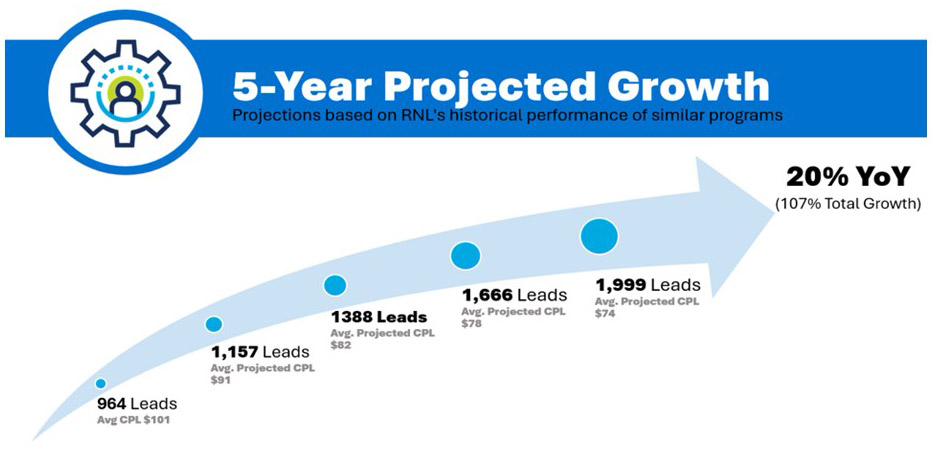
Setting expectations means recognizing that significant results take time and careful planning. This translates to setting realistic growth expectations based on an understanding that reaching your enrollment goals will take multiple academic terms. When I am collaborating with our partners, we adopt a structured five year growth trajectory where Year 1 serves as the “foundational” phase, establishing the core infrastructure and strategic alignment. Year 2 is focused on “scaling,” optimizing initial investments to drive measurable growth. Years 3 and beyond are dedicated to “sustained value creation,” with a continuous focus on refining processes and maximizing returns through ongoing optimization and strategic enhancements. This phased approach allows for calculated risk-taking and ensures a clear path to long-term, scalable success.
Once we’ve set realistic expectations for our digital strategy, it’s crucial to ensure that every tactic -whether paid digital marketing, SEO, or creative content, all work together seamlessly to achieve your goals. These elements don’t function in isolation; rather, they complement each other to drive greater visibility, engagement, and, ultimately, enrollments. A well-rounded strategy that integrates SEO to boost discoverability, paid digital marketing for targeted reach, and compelling content to engage prospective students will create a strong foundation for success. By understanding how these components interrelate, you’ll be better equipped to assess their effectiveness and make data-driven adjustments as needed.
From here, let’s dive into how digital strategy translates into budget planning and ROI. Understanding the interconnectedness of these key elements will help you allocate resources more efficiently and set a clear path for measuring the success of your investments.
Connecting strategy to ROI and crafting a strategic budget plan for growth
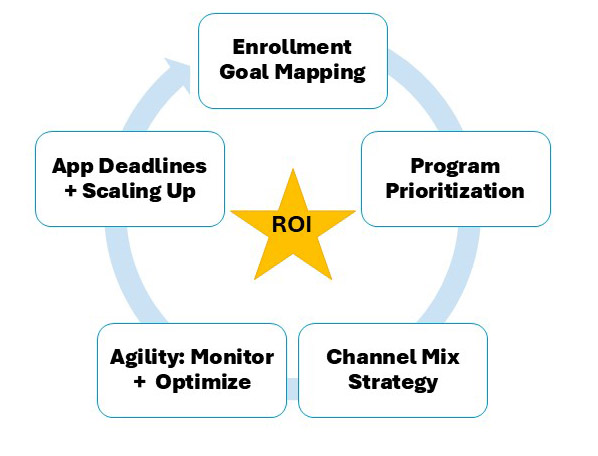
The connection between strategy and ROI is grounded in the ability to align your digital marketing efforts with measurable outcomes, and it all starts with the establishment of clear and precise enrollment goals. Prioritizing top programs ensures that marketing resources are directed toward the areas with the highest demand or growth potential, improving overall program performance. The right channel mix is crucial to reaching the right audience, maximizing visibility, and efficiently converting interest into applications. Monitoring data and optimizing it in real-time ensures that marketing efforts are continuously adjusted for maximum effectiveness, enhancing the likelihood of meeting targets and improving ROI. Finally, effective allocation based on application timing, seasonality projections, and market revisions allows for strategic adjustments in campaigns to account for fluctuating demands, ensuring marketing spend is optimized throughout the enrollment cycle. Collectively, these elements create a robust framework for maximizing ROI, ensuring that marketing investments lead to increased applications, conversions, and, ultimately, student enrollment.
How do you craft a budget that supports your growth goals? Whether you are the decision-making authority or a decision influencer, here are the essential steps to craft a budget plan that aligns with your institution’s growth objectives and maximizes your enrollments:
1. Define your enrollment goals in detail
When you think of marketing costs, what comes to mind first? How much will it cost to meet your enrollment goals, right? So, your first step in planning a budget is to have your overall Enrollment goal (and, for graduate or online programs, a goal for every program) in front of you. With the goal (or program-level goals) in hand, determine what that means in terms of percentage growth from the current state. You may also have subsidiary goals like enhancing brand awareness, building more brand equity, or engaging alumni. If these are going to be part of your plan, they should also have tangible goals for what you are trying to do. Defining your enrollment goals helps you allocate your budget accordingly and measure ROI effectively.
STRATEGY TIP
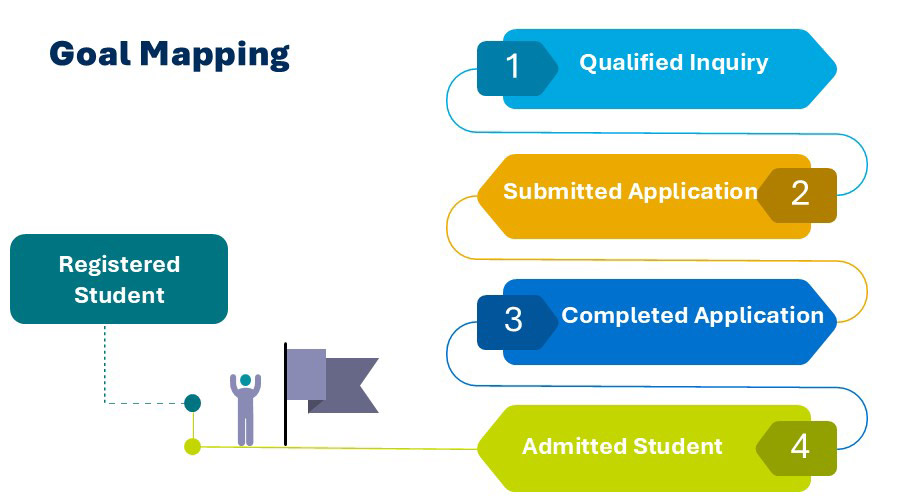
Develop a “Goal Mapping” Scenario or you can say a Reverse Funnel (for each program). After you set enrollment goals (for the year or the term) you then need to understand the lead to enroll ratio. This will help you work backwards to determine how many accepted apps/admits will be needed, how many completed apps, how many submitted apps, and finally how many qualified leads will be needed. Based on the program category, dig deeper into what the Cost per Leads (CPL’s) are, based on industry benchmarks. That will help you calculate the estimated ad spend needed to generate those qualified leads.
A note on program-level goals: If you don’t have program-level enrollment goals for your online and graduate programs, finalize those as soon as possible. Until then, focus marketing on building brand awareness. It is likely that people in your own backyard could be less familiar with your program than you may think they are. Brand advertising will ensure that awareness rises so that when you have your program goals, you can build your campaigns on a higher level of familiarity with your institution. However, given that Google reports that 75 percent of graduate and online program searches don’t include an institution name, remember that branding alone will not be enough to fill your classes.
Institutional example: When we began work with one of our partners nearly two years ago, they had not established program-level goals. So, in year one, we focused the largest portion of the budget on institutional awareness, with mini-campaigns focused on specific programs of importance to the institution. By the beginning of the second year, the institution had set program-level goals based on a greater understanding of market conditions. At that point, we began transitioning our campaigns to focus (ultimately 80 percent of the budget) on the programs with the “mini campaign” focused on continuing the brand equity efforts.
2. Prioritize your programs
It is highly unlikely that most institutions can spend marketing dollars on every program they offer. This means that in order to maximize the ROI of your marketing budget, you must prioritize your programs. But how? Take a data-driven approach, prioritizing programs for which you a) know there is market demand both among students and employers, and b) understand the competitor environment. These are the “cash cows” that will demonstrate the best ROI on your marketing spend and support the programs that, while not demonstrating significant market demand, are critical to the institutional mission.
STRATEGY TIP
Spreading a $100K marketing budget across 15 -20 programs will only dilute the ad spend, by spreading it too thin. Instead, identify the top 5-7 programs that have the greatest market demand and focus on them. Note that sometimes, the programs that seem most in need of a “marketing boost”, really aren’t. They are struggling because their market demand situation is not what it once was.
Institutional example: A partner institution recently commissioned RNL to conduct a Program Prioritization and Positioning study focused on their current program mix. The goal was to take a data-driven deep dive into 12 programs vying for marketing dollars, with a focus on understanding student demand and employer needs in the region. The results indicated that while one of the programs they had planned to prioritize came out on top, two others that they hadn’t been planning to focus on also demonstrated strong demand, and one of the programs that they had questioned was confirmed as having weak local market demand.
3. Determine your channel strategy
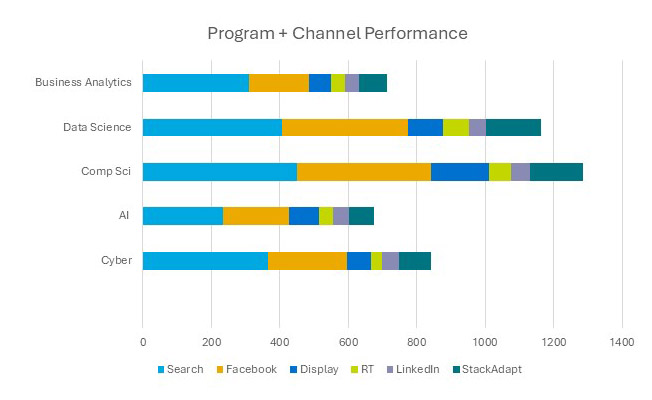
Once you have prioritized your programs for marketing ROI, setting your channel strategy is pivotal. Personas (at the graduate and online levels developed for each program) dictate the channels on which you should focus. You don’t want (or need) to be present on every single channel just for the sake of “eyeballs.” Be mindful of the budget and how best to use it in order to maximize return, which can only be accomplished if you apply the personas that will inform you where your target student spend their “digital time.” So, for example, not every program may benefit from marketing on LinkedIn. Since it is expensive with a $10 minimum ad spend, a persona-based approach may indicate that other platforms are a much better match. But you can only do this if you know the characteristics of your audience, and that comes from the program personas.
STRATEGY TIP
The critical element in increasing marketing ROI is to engage the right students at the right time on the right channel, without spreading your budget too thin. In contrast, being too invested in any single channel exclusively or too long is also almost always the wrong strategy. There is always a point of diminishing returns as students cycle to different platforms, and you want to be sure to know where to go next before you approach that point by being able to tap into the next new thing.
Institutional example: One of our prestigious campus partners was struggling with recent market shifts that resulted in an overall decline in applications. We dug into market and performance data to help them prioritize programs that had the highest lead-to-enroll ratios, lowest cost per acquisition, and good search volume with an eye to increasing marketing ROI and overall success. This approach not only helped regain their momentum at the top of the funnel but also generated strong conversion volume that exceeded goals and sustainably reduced cost per conversion. These changes benefited not only the marketing operation but were also felt by the call center, and further down the funnel where we saw an increase in applications.
Talk with our digital and enrollment experts
We’re to help you find the right digital marketing and recruitment strategies. Let’s set up a time to talk.
4. Analyze data regularly and optimize with agility
If (quality) content is king, data is queen! Sustained growth can only occur when data and insights are continuously incorporated into strategy. Analyzing performance data is crucial to understanding which programs and channels are yielding the largest numbers of applications and enrollments and, hence, generating the best return on ad spend (ROAS). This type of analysis allows for a data-driven approach to strategic pivots on how the marketing budget is allocated to ensure the highest ROI (or ROAS) across channels and the program portfolio. As the cost of marketing has risen, so has the need for marketers to make an effective case to senior leadership for additional marketing dollars. You can only do this if you can demonstrate that you are the best possible stewards of current resources.
STRATEGY TIP
As you continue to increase your campaign efficiency and success with the focus on ROI, your cost per lead will gradually start to go down – on average by 5 – 10 percent in year 2 and beyond. So, campaigns can generate more qualified leads efficiently over the years (for the same cost), thereby maximizing the return on your ad spend (ROAS). This helps you not just grow but also helps in building forecasts and projections for growth compounded over several years – and it also provides a strong ROI-driven basis for any requests you may need to make for additional funds elsewhere.
A note on analytics platforms: The fact that resources have become increasingly scarce at the same time as marketing costs have skyrocketed has resulted, out of necessity, in more sophisticated tracking of ROI. If your internal systems are set up in the correct manner (or if you are working with a strategic partner like RNL) every lead can be tracked to its source, thereby allowing for the assessment of just how effectively each marketing dollar has been used.
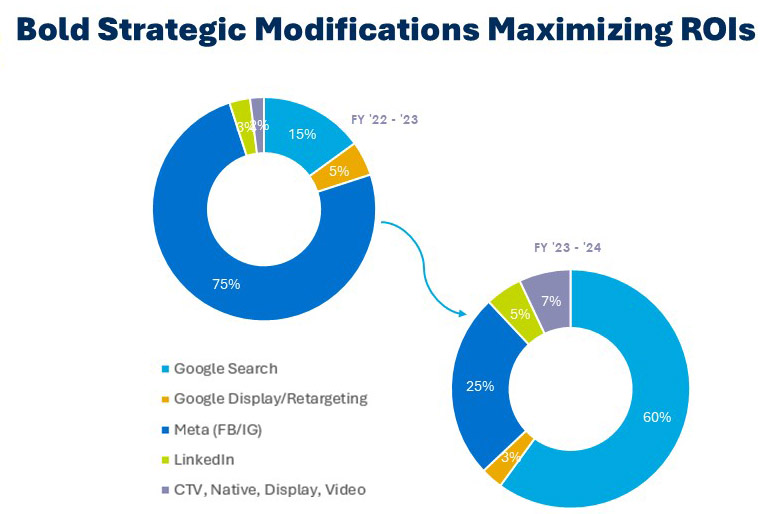
Institutional example: A prestigious campus partner was having challenges with converting leads to applications and enrollments. We reviewed their full-funnel data (compete with attribution percentages) and realized something wasn’t working. The top of the funnel was healthy, with good lead volume. However, down the funnel we saw that a disproportionate number of leads were not converting to apps and enrollments. As a result of the review and data analysis, we made a bold strategic pivot to shift significant budget allocations to the channel (Google search) that we could see was producing the greatest numbers of applications and enrollments. Without the data, solving the challenge would have been impossible. With the data, it was easy. Since we made this change, applications, and enrollments have consistently increased each academic period.
Making sure that the top of the funnel strategy is guided by down funnel numbers is the KEY! Effective strategy must evolve through ongoing optimizations with thoughtful placements across diverse media platforms that are informed by performance data. Remember that the path to enrollment is rarely linear and an integrated media strategy allows you to provide a personalized message in the right place at the right time.
5. Understand and account for seasonality/application timings/expansion
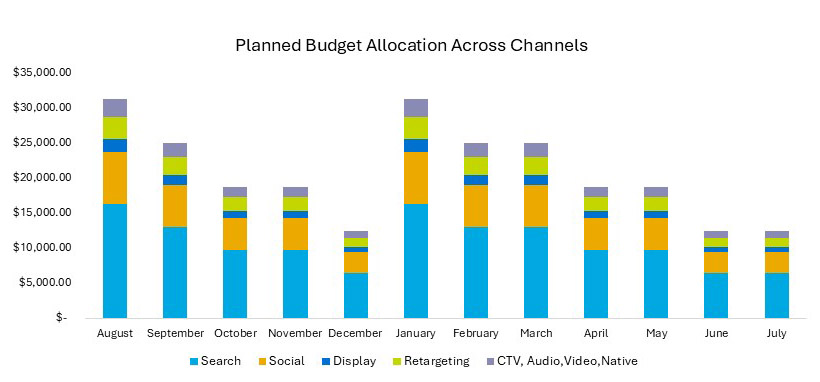
Another aspect of the dynamic nature of the marketing process relates to the seasonality of lead flow – and subsequent enrollment. This requires flexibility to adjust your strategies based on real-time performance data collected throughout the year. For any program or institution, there are times of the year during which more or fewer leads are generated. Fully understanding these trends takes time; you can make preliminary judgments on when the lead volume is highest and lowest within one year, but multiple years will allow for greater certainty. As you build your capacity to track lead generation – and conversion throughout the funnel – by program and source – you can create visualizations that map these factors by month. They can be used to build monthly budget allocations like those presented below.
Institutional example: For one campus partner we used the annual performance data in an innovative way. Our data insights indicated that there was more market share to capture, by having the program leverage low cost per conversion at the top of the funnel at certain points in the year, and low cost per acquisition at the bottom at other points of the year. There was time to scale up both applications and enrollments. We developed a forecast plan to address the potential areas of opportunity, calculated the cost, and pitched it to the partner. Once approved, we moved with agility, and implemented additional ad spend on the top champion programs and frontloaded the budgets for the academic periods yielding the highest number of applicants and enrollments. With this, we were not only able to meet the qualified lead goal but also exceeded the enrollments by 19% for the following academic period.
The lifetime value of the student
As you budget for growth, it’s crucial to consider the lifetime value (LTV) of a student. LTV refers to the total revenue a student generates throughout their academic journey and beyond. This value encompasses tuition fees, ancillary revenues (like housing and meal plans), alumni donations, and increasingly in our era lifelong learning opportunities.
Talk with our digital and enrollment experts
We’re to help you find the right digital marketing and recruitment strategies. Let’s set up a time to talk.
By Matteo Quacquarelli, Vice President of Strategy and Analytics at QS Quacquarelli Symonds.
Across the globe, economies are grappling with skills and talent challenges. From talent saturation to workforce reskilling, each country is facing its own unique issues as it prepares for the evolution of the digital age.
The QS World Future Skills Index, just launched, offers a detailed breakdown of the globe’s higher education systems, their links with industries and how countries are preparing for the next industrial evolution. Using exclusive QS data, it identifies where economies and countries need to align their higher education outcomes with the needs of industry in three key areas – green, AI and digital.
The analysis delves into 81 economies and finds that UK higher education is currently one of the world’s best for cultivating students with the future skills business and industry are calling out for.
It measures four indicators linked to skills like AI proficiency, digital literacy and environmental sustainability that will form the bedrock of the industries of tomorrow.
Skills Fit measures how well countries are equipping graduates with the skills employers desire. In this, no country is currently better than the UK. Using data from both our own largest-of-its-kind QS Global Employer Survey and the World Bank Group, we identified that UK employers have the highest satisfaction rates with the skills graduates bring with them, anywhere in the world – but perhaps only for the time being.
Additionally, the UK received top marks in the Academic Readiness dimension, measuring the preparedness of a country in regard to the future of work. The UK’s success in the QS World University Rankings by Subject allowed it to flourish here.
However, the UK must not rest on its laurels. Higher education in other markets globally is innovating at a far more rapid rate than in the UK. The reputational strength of the UK – built on its history and tradition of delivering excellent teaching and learning – is unlikely to be the key driver of satisfaction going forward.
The UK was slightly less successful than its closest rivals in the areas of Future of Work and Economic Transformation.
Future of Work measures how well the job market is prepared to meet the growing demand for digital, AI and green skills, using 1Mentor data of over 280m job postings worldwide.
Economic Transformation analyzes whether a country has the infrastructure, investment power, and talent available to transition to industries driven by AI, digital transformation, green technologies and high-skilled work. This indicator used data from the World Bank Group, UNESCO Institute for Statistics and the Education Policy Institute.
This lower score is reflective of the slow-to-no economic growth seen in the UK over the past decade and the tightening of the public purse strings strangling investment in R&D and new business innovation (evidenced by decline not only in public but also private sector funding in the UK).
The latest economic forecasts signal a further period of stagnation for the UK economy might be on the horizon.
Just as the importance of investment in future skills cannot be understated, nor can the importance of higher education in AI breakthroughs and innovation.
Funnelling research innovation down the value chain into industry has been the bedrock of economic innovation worldwide. Without Stanford University, there would be no Silicon Valley. In Germany, the universities of Stuttgart and Tübingen are key in the country’s Cyber Valley initiative. If Melbourne didn’t have its outstanding higher education institutions, the city would not hold the crown of tech capital of Australia.
The QS Future World Skills Index highlights the example of South Korea, where there is a correlation between increasing numbers of young adults attaining tertiary education and GDP growth.
The UK government’s new AI Opportunities Action Plan, announced earlier this week sets out a clear ambition strategy to maintain Britain’s position as one of the world’s AI superpowers and has been widely welcomed by industry.
The prime minister says his government will make it easier for experts to come to the UK via its talent visas and for future leaders to learn here. Tens of thousands of additional AI professionals will be needed by 2030, he has said.
The Government also wants to ‘increase its share of the world’s top 1,000 AI researchers’ and will launch an AI scholarship scheme to support 100 students to study in the UK.
While the UK was also top in Europe for talent creation, with 46,000 students graduating from an AI-relevant higher education program ahead of Germany in terms of absolute numbers with 32,000, the UK is still behind Finland on a per capita basis. Without specific policy and commitment, the UK risks losing its leading position.
The UK is missing ‘frontier conceptual, cutting-edge companies‘. DeepMind, the AI research laboratory, was one such company that was founded in the UK before being acquired by Google in 2014. But where was it established? The three co-founders meet while studying at University College London.
The new AI Growth Zones the government has announced, with the first starting in Culham, will need to engage universities up and down the country. Higher education must also be closely involved in the Digital and Technology Sector Plan, which is set to be published in the coming months.
The government has also previously pledged to become a green energy superpower. The QS Future World Skills Index suggests that both the UK’s job market and its higher education system is well set up to capitalise on that opportunity.
To succeed, government policy, the needs of industry and higher education curricula must all align to create an environment where the country can succeed and be future-ready.
Economies and higher education systems that invest in high-quality academic programmes in AI, digital and sustainability are setting themselves up for long-term success.
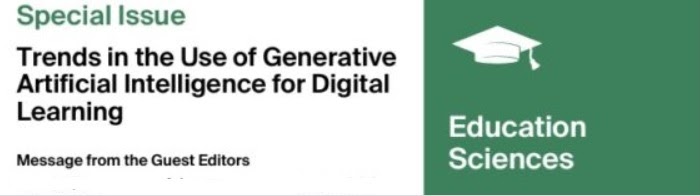
Patsy Moskal and I have decided to be guest editors for Education Sciences for a special edition entitled,
“Trends in the Use of Generative Artificial Intelligence for Digital Learning.” (See below for a longer description.)
It is a most timely topic of deep interest to many in the academy. We would love to have you contribute an article for it. Your submission can be research, practitioner, or thought-based. It also does not have to be a long article (4,000-word minimum). Final articles will be due no later than July 1, 2025.
Nick Gilbert, Chief Information Officer of the London School of Economics and Political Science, shares perspectives on how institutional leaders can work together to deliver strategic change in challenging times.
We in universities face well-reported challenges that have brought long-standing strategic imperatives into sharper focus. While the sector has always needed to evolve and transform, today’s operational and financial pressures have added fresh urgency.
For many, this creates a perceived choice between investing in long-term change and delivering immediate improvements. However, this isn’t an either/or proposition. The priority has to be on today and tomorrow. We cannot afford to focus exclusively on building solutions that will only deliver results in five or fifteen years. Planning for both requires careful navigation from institutional leadership, with the entire leadership team aligned on where we’re going and how we’ll get there.
Leading strategic change together
At the heart of these considerations lies the fundamental purpose of universities: the advancement of knowledge and its dissemination. We must constantly evolve to remain institutions of quality, delivering value to students, fostering impactful research, and building capabilities for the future. This multifaceted purpose shapes how leadership teams approach transformation.
We can no longer afford to simply implement new systems or processes. If our investments aren’t vital to the changes that our organisations need to make to survive and thrive now, we really must be questioning why we’re doing them. These aren’t just operational decisions – they’re strategic choices that require alignment across the leadership team.
Consider student retention, where challenge and opportunity intersect. We need both immediate interventions and long-term solutions. Many of the 6.4% of students who withdrew last year had not changed their goals. But, rather, they were struggling with a particular issue at a particular time. Identifying these crucial moments in a consistent and systematic manner requires sophisticated infrastructure and processes that many institutions are still considering how to build. Supporting our students with the maturity and capability they deserve demands that our academic and professional services leaders work in concert – and shows up in the right conversation at the right time with the right person.
Data as a foundation for change
Data is the cornerstone of the modern university. The development of institutional data capabilities illustrates how organisations can balance immediate value with longer-term transformation. Most universities recognise that they need sophisticated ways to understand and act upon their data – from student engagement patterns to research impact measures. However, achieving this requires careful consideration.
Building comprehensive data capabilities is an undertaking that every institution needs to consider, and the challenge lies in structuring this work to deliver tangible benefits throughout the journey. Success requires the entire leadership team to understand that while the full vision may take years to realise, we can and must deliver meaningful improvements at regular intervals.
“Planning digital transformation is like planning a long car journey. You need to know your destination but also need to plan your stops carefully.”
This approach reflects proven change management principles: begin with well-defined challenges, demonstrate value quickly, and build incrementally with clear institutional support. The institutions making real progress in this space share a common approach. They identify specific challenges – perhaps understanding patterns in student engagement or tracking research collaboration opportunities – and address these systematically. Each solution helps their communities immediately while contributing to more comprehensive capabilities.
At LSE, I work with colleagues across the institution to ensure this balanced approach delivers results. Like many institutions, we’re exploring how emerging capabilities around data and analytics will reshape research and education. The key is ensuring these forward-looking initiatives also address current needs. When we improve our understanding of student engagement patterns, for instance, we’re simultaneously helping today’s students while building the foundation for more sophisticated support in the future.
Strategic choices in resource-conscious times
Institutions have always faced decisions about what capabilities to develop internally versus where to collaborate or buy solutions. One question I see leadership teams grappling with every day is what makes us distinct, and therefore where we should focus our innovation efforts. While these considerations aren’t new, they take on added significance when resources require careful stewardship.
This calibration extends to decisions about technology investment and development. Whether considering research management systems, student engagement platforms, or data analytics capabilities, institutions must weigh up where to invest in distinctive capabilities versus where to adopt sector-standard approaches. Making the wrong choice doesn’t just affect current operations – it can impact an institution’s transformation journey for years and affect trust between different parts of the organisation. Success requires clear strategic alignment on where distinctive capability matters most.
Aligning the journey with the destination
We need to identify our goals, our destination, but that is not enough. I like to think of planning digital transformation like planning a long car journey. You need to know your destination but also need to plan your stops carefully. Each stop should serve multiple purposes – refuelling, rest, perhaps some strategic sightseeing. What you want to avoid is driving for eight hours straight only to realise you’re headed in the wrong direction. And we certainly don’t want to have to keep everyone in the car interested and excited in the journey for eight full hours without seeing any progress. We must start from where we are, end at our final destination, and, crucially, lay out our way markers.
This means being intentional about both immediate improvements and long-term transformation. As universities, we have a responsibility to push boundaries while ensuring we deliver value to our students and society today. This balance between innovation and operational excellence is something every institution must navigate. Going on that journey as connected leadership teams and being collectively clear where we will see value along the way is vital if we are to be successful.
While the current environment may add complexity to this task, the fundamental approach remains sound: start from where you are, deliver value as you go, and keep your destination clearly in sight. What matters most is taking that first step together, with a shared understanding of both immediate priorities and long-term ambitions.
Nick Gilbert will be speaking at Kortext LIVE in London on 29January 2025. Join Nick and other education and technology expert speakers at a series of three events for HE leaders hosted at Microsoft’s offices in London, Edinburgh and Manchester during late January and early February. Find out more and register your free place here.
Feelings of belonging have a significant positive impact on academic success and progression, but we know that creating belonging isn’t as simple as putting up a welcome sign.
Belonging is not something that can be automatically created by an institution, regardless of its commitment to access and inclusion. To make students feel they belong in a higher education environment, having the power to shape and co-create the environments in which they participate is essential.
For students in higher education, liminal digital spaces (those informal areas of interaction that sit between formal academic environments and students’ broader social contexts) offer unique opportunities for students to lead, collaborate, learn and foster a sense of belonging, and the freedom to shape their learning environment and exercise agency in ways that may not be available within more formal institutional frameworks. They also offer opportunities for institutions to create places that nurture academic success without assuming responsibility for the development and delivery of all support.
But squaring the ownership, credibility and safeguarding triangle is complex, so how can universities do this while also embracing digital tools?
Taking ownership for learning
Focusing on digital spaces allows institutions to expand the space their students feel comfortable inhabiting and learning in, without limiting engagement from those who may not be free to meet at a specific time or be able to meet in person.
Digital learning resources can help students connect to their peers, further strengthening their sense of place within the institution. These spaces could act as connectors between university resource and student-driven exploration and learning in a way that more formal mechanisms sometimes fail to. At Manchester, resources such as My Learning Essentials (a blended skills support programme) can be used by the students within the spaces (via online resources) and signposted and recommended by peers (for scheduled support sessions).
Although this model exists elsewhere, at Manchester it is enhanced by the CATE-awarded Library Student Team, a group of current students who appreciate and often inhabit these spaces themselves. The combination of always available online, expert-led sessions and peer-led support means there is a multiplicity of avenues in the support. This allows the University to partner with, for example, its Students’ Union, and work alongside students and the wider institution by hosting these digital spaces, acting as mediators or facilitators, and ensuring the right balance of autonomy and support.
Keeping learning credible
Wider institutional support like My Learning Essentials already takes advantage of digital spaces by delivering both asynchronous online support and scheduled online sessions, and it can be easily integrated, signposted and shaped by the students using it.
These spaces need to be connected to the institution in such a way as to feel relevant and powerful. “Leaving” students to lead in spaces, giving them leadership responsibility without institutional support or backing, sets both them and these spaces up for failure.
Universities can work alongside students to help them define collective community values and principles, much like the community guidelines found in spaces like MYFest, a community-focused annual development event. Doing so ensures these liminal spaces are inclusive and responsive to the needs of all participants. Such spaces can also help students transition ‘out’ of the university environment and support others to build skills that they have already developed, such as by mentoring a student in a year below.
Safeguarding in a digital world
Universities should also allow students to follow the beat of their own drum and embrace digital outside of university spaces to further their learning.
Kai Prince, a PhD candidate in Maths at The University of Manchester, who runs a popular Discord server for fellow students, notes:
If the servers are led by a diverse group of students, I find that they’re also perfect for building a sense of belonging as students feel more comfortable in sharing their difficulties pseudo-anonymously and receiving peer-support, either by being informed on solutions or having their experiences, such as impostor syndrome, acknowledged.
Spaces like Discord allow students to engage in peer-led learning, but universities can enhance the quality of that learning by making available and investing in (as is done with My Learning Essentials) high-quality online materials, clear paths to wider support services and formal connections with societies or other academic groups. These mechanisms also help to keep the space within a student’s university experience, with all the expectations for behaviour and collegiality that entails.
The higher education sector is a complex and diverse space, welcoming new members to its communities each year. But it is often mired in a struggle to effectively engage and include each individual as a true part of the whole.
Work to address this needs to incorporate the students in spaces where the balance of power is tilted, by design, in their favour. Recognising the potential for digital spaces, for accessibility, support and familiarity for students as they enter higher education means that universities can put their efforts towards connecting, but not dictating, the direction of students and helping them forge their own learning journeys as part of the wider university community.