Tag: disconnect

  • Data Shows AI “Disconnect” in Higher Ed Workforce

    Data Shows AI “Disconnect” in Higher Ed Workforce

    Photo illustration by Justin Morrison/Inside Higher Ed | hoozone and PhonlamaiPhoto/iStock/Getty Images | skynesher/E+/Getty Images

    New data shows that while 94 percent of higher education workers use AI tools, only 54 percent are aware of their institution’s AI use policies and guidelines. And even when colleges and universities have transparent policies in place, only about half of employees feel confident about using AI tools for work.

    “[That disconnect] could have implications for things like data privacy and security and other data governance issues that protect the institution and [its] data users,” Jenay Robert, senior researcher at Educause and author of “The Impact of AI on Work in Higher Education,” said on a recorded video message about the report. Educause published the findings Monday in partnership with the National Association of College and University Business Officers, the College and University Professional Association for Human Resources and the Association for Institutional Research.

    In the fall, roughly three years after generative artificial intelligence tools went mainstream and some higher education institutions began partnering with tech companies, researchers surveyed 1,960 staff, administrators and faculty across more than 1,800 public and private institutions about AI’s relationship to their work. Ninety-two percent of respondents said their institution has a work-related AI strategy—which includes piloting AI tools, evaluating both opportunities and risks and encouraging use of AI tools. And while the vast majority of respondents (89 percent) said they aren’t required to use AI tools for work, 86 percent said they want to or will continue to use AI tools in the future.

    But the report also reveals concerns about AI’s integration into the campus workplace, and shows that not every worker is on the same page regarding which tools to implement and how.

    For example, 56 percent of respondents reported using AI tools that are not provided by their institutions for work-related tasks. Additionally, 38 percent of executive leaders, 43 percent of managers and directors, 35 percent of technology professionals and 30 percent of cybersecurity and privacy professionals reported that they are not aware of policies designed to guide their work-related use of AI tools.

    “Given that institutional leaders and IT professionals are the two groups of stakeholders most likely to have decision-making authority for work-related AI policies/guidelines, the data suggest that many institutions may simply lack formal policies/guidelines, rather than indicating insufficient communication about policies,” Robert wrote in an email to Inside Higher Ed.

    And even if they are aware of AI use policies, most workers still don’t know whether to fear or embrace AI.

    The majority of respondents (81 percent) expressed at least some enthusiasm about AI, with 33 percent reporting that they were “very enthusiastic/enthusiastic” and 48 percent reporting a mix of “caution and enthusiasm.” Meanwhile, 17 percent said they were “very cautious/cautious” about it.

    The survey yielded a similar breakdown of responses to questions about impressions of institutional leaders’ attitudes toward AI: 38 percent said they thought their leaders were “very enthusiastic/enthusiastic”; 15 percent said they were “very cautious/cautious” about it, and 36 percent said their leaders express a mix of “caution and enthusiasm.”

    But Kevin McClure, chair of the department of educational leadership at the University of North Carolina at Wilmington, told Inside Higher Ed that embrace of AI may be skewed. That’s because only 12 percent of the survey’s respondents were faculty, whereas the rest held staff, management or executive roles.

    “This survey was also sent to institutional researchers and people affiliated with human resources,” he said. “Those people are working in the realm of technology, processing forms, paperwork data analysis and filing reports.”

    And the framing of the report’s questions about workers’ levels of caution and enthusiasm may have contributed to the elevated excitement about AI captured in the report, McClure added.

    So many people said they share a mix of caution and enthusiasm “because that was one of the choices,” he said. “To me, it reads like people are feeling it out—they can see the use cases for AI but also have concerns. That gets washed out by combining it with enthusiasm.”

    Risks and Rewards

    Nonetheless, that mix of caution and enthusiasm stems from the risks and benefits higher education workers associate with AI.

    Sixty-seven percent of respondents identified six or more “urgent” AI-related risks, including an increase in misinformation, the use of data without consent, loss of fundamental skills requiring independent thought, student AI use outpacing faculty and staff AI skills, and job loss. Some of those concerns align with the findings of Inside Higher Ed’s own surveys of provosts and chief technology officers, which found that the majority of both groups believe AI is a moderate or serious risk to academic integrity.

    “Almost more important than the specific risks that people are pointing out is the number of risks that people are pointing out,” Robert, the report’s author, said. “This really validates the feeling that we’re all having about AI when it comes to this feeling of overwhelm that there really are a lot of things to pay attention to.”

    At the same time, 67 percent of respondents to the Educause survey identified five or more AI-related opportunities as “most promising,” including automating repetitive processes, offloading administrative burdens and mundane tasks, and analyzing large datasets.

    “A lot of people want tools that will simplify the [administrative burden] of higher ed. Not a lot of that is going to save a ton of time or money. It’s just going to be less of an annoyance for the average worker,” McClure said. “That suggests that people aren’t looking for something that’s going to transform the workplace; they just want some assistance with the more annoying tasks.”

    And according to the report, most colleges don’t know how efficient those tools are: Just 13 percent of respondents said their institution is measuring the return on investment (ROI) for work-related AI tools.

    “Measuring the ROI of specific technologies is challenging, and this is likely one of the biggest reasons we see this gap between adoption and measurement,” Robert said. “As higher education technology leaders consider longer term investments, ROI is becoming a more pressing issue.”


    Source link

  • The Retention Disconnect: What Adult Learners Need — and What Institutions Miss

    The Retention Disconnect: What Adult Learners Need — and What Institutions Miss

    New research from UPCEA and Collegis Education reveals a growing misalignment between how institutions approach retention and what adult learners actually need to succeed. While many institutions are investing in retention, strategies still over-rely on structured oversight and under-deliver on the flexibility, visibility, and autonomy adult online learners say they need most.

    The Retention Disconnect: What Adult Learners Need and What Institutions Miss
    Wednesday, February 11
    1:00 pm ET / 12:00 pm CT 

    Join Dr. Tracy Chapman, Chief Academic Officer at Collegis Education, and Emily West, Senior Market Research Analyst at UPCEA, as they break down key findings from the national survey and explore how institutions can realign support strategies to improve outcomes, protect revenue, and meet adult learners where they are.

    Expert Speakers

    Dr. Tracy Chapman

    Chief Academic Officer

    Collegis Education

    Emily West Headshot

    Emily West

    Senior Market Research Analyst

    UPCEA

    What you’ll learn: 

    • Why nearly half of institutional leaders can’t report their online retention rate — and why that matters
    • The disconnect between staff-led interventions and student-preferred tools like dashboards and self-service
    • How to shift from compliance-based models to empowerment-driven support
    • The importance of segmentation based on life stage, not just demographics
    • Three strategic shifts institutions can act on now

    Who should attend:

    This session is ideal for higher ed leaders focused on student success, enrollment, and retention strategy, including:

    • Academic leadership (CAOs, provosts)
    • Enrollment and student affairs leaders
    • Online and adult learner program managers
    • Institutional researchers and data strategists
    • IT decision-makers
    • Presidents, CFOs, and strategic planning teams

    If you’re working to improve outcomes for adult online learners or reduce attrition, this webinar is for you.

    Complete the form on the top right to reserve your spot. We look forward to seeing you on Wednesday, February 11. 

    Source link

  • FCC proposal would disconnect school bus Wi-Fi, hotspots from E-rate coverage

    FCC proposal would disconnect school bus Wi-Fi, hotspots from E-rate coverage

    This audio is auto-generated. Please let us know if you have feedback.

    Dive Brief:

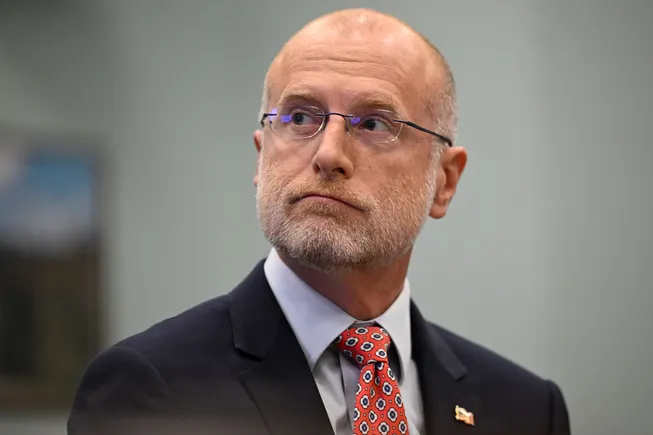
    • An E-rate expansion that allowed schools to use the program’s funds for school bus Wi-Fi and hotspots for students could soon be reversed, pending a vote called for by Federal Communications Commission Chairman Brendan Carr on Wednesday.
    • The vote on the proposal to reverse the Biden-era expansions is currently “on circulation” as of Friday, according to an FCC spokesperson. That means commissioners can vote on the matter outside of their open monthly meetings at their discretion. 
    • With a Republican majority among the three commissioners, it’s possible the E-rate expansion could be reversed.  

    Dive Insight:

    Carr’s proposal comes at a time of high demand among school districts to expand students’ internet access through school bus Wi-Fi and hotspots.

    Schools and districts have requested a total of $15.3 million in E-rate funds to pay for school bus Wi-Fi and $50.2 million for hotspots so far in fiscal year 2025, according to federal data. 

    E-rate, also known as the schools and libraries universal service support program, helps connect schools to affordable broadband. The federal program is administered by the nonprofit private corporation Universal Service Administrative Co., or USAC, under the FCC’s authority.

    If Carr’s proposal is approved, the FCC will direct USAC to deny the pending FY 25 requests to use E-rate funds for hotspots and school bus Wi-Fi services. 

    Millions of students and older adults rely on the expanded E-rate services for homework and telehealth services, said FCC Commissioner Anna Gomez, a Democrat, in a Wednesday statement. 

    “Now the FCC is moving to strip that connectivity away while doing nothing to make broadband more affordable,” Gomez said. “Their latest proposals will only widen the gap between those with access to modern-day tools and those left behind.”

    The commission approved the school bus Wi-Fi addition in 2023 and then voted to include hotspots the following year. Carr, a commissioner at the time, voted against both E-rate expansion measures.

    School bus Wi-Fi access is especially beneficial for students in rural areas with long commutes to school, said Andrew Jay Schwartzman, senior counselor at the Benton Institute for Broadband & Society, in a Wednesday statement. Carr’s push to reverse the use of E-rate funds for those services will “lock rural kids into dead zones,” he added.

    “Chairman Carr’s moves today are very unfortunate, as they further signal that the Commission is no longer prioritizing closing the digital divide,” Schwartzman said. 

    The Consortium for School Networking also released a statement Friday denouncing Carr’s plan. The expansion of the E-rate program has been “critical to closing the digital divide and ensuring every student can learn, both in school and where they live and learn.”

    In his announcement, Carr said the FCC violated Congress’ authority when it decided to broaden E-rate under the Biden administration. 

    “During COVID-19, Congress passed a law that expressly authorized the FCC to fund Wi-Fi hotpots for use outside of schools and libraries. When that program ended, so did the FCC’s authority to fund those initiatives,” Carr said. “Nonetheless, the Biden-era FCC chose to expand its E-Rate program to fund those initiatives long after the COVID-19 emergency ended.”

    Carr also praised Sen. Ted Cruz, R-Texas, for leading a Senate vote in May approving a repeal of the FCC’s decision to cover hotspots under E-rate. The bill is still awaiting action from the House.

    Source link

  • Class of 2025 grads are experiencing disconnect between job expectations and reality, study finds

    Class of 2025 grads are experiencing disconnect between job expectations and reality, study finds

    This audio is auto-generated. Please let us know if you have feedback.

    Class of 2025 graduates’ expectations seem to be clashing with reality during their job search, especially when it comes to pay, job preferences and beliefs about the job market, according to an April report from ZipRecruiter. 

    For instance, some graduates have found that the job search is taking longer than they expected. About 82% of those about to graduate expect to start work within three months of graduation, but only 77% of recent graduates accomplished that, and 5% said they’re still searching for a job.

    “Navigating the transition from campus to career can be a challenge for new grads, especially given the unpredictable market this class is stepping into,” Ian Siegel, co-founder and CEO of ZipRecruiter, said in a statement.

    In a survey, additional disconnects surfaced. About 42% of recent graduates reported they didn’t secure the pay they wanted. Although soon-to-be graduates said they expected to make six figures — $101,500 on average — the average starting salary for recent graduates was $68,400.

    Those about to graduate also said they want flexibility, but recent graduates said that’s harder to achieve than they hoped. About 90% of recent graduates said schedule flexibility is important to them, yet only 29% said they had flexible jobs.

    Amid shifting job market conditions, college graduates feel both confident yet cautious about their job prospects and the economy, according to a Monster report. Employers that offer flexibility, purpose and growth opportunities will attract and retain the next generation of top talent, a CareerBuilder + Monster executive said.

    Compensation conversations could remain a challenge in 2025, especially as pay transparency feels contentious, according to a report from Payscale. To combat this, employers can listen to employees and lead with fairness through pay transparency, a Payscale executive said. 

    Despite the challenges, job seekers entered 2025 with optimism, according to an Indeed report. Job seekers’ interest will likely remain steady but face more competition since job availability has remained stagnant in recent months, an Indeed economist said.

    Source link

  • ‘It’s different when they’re in their office’: the disconnect in student perceptions of academic meetings

    ‘It’s different when they’re in their office’: the disconnect in student perceptions of academic meetings

    by Stacey Mottershaw and Anna Viragos

    As we approach the five-year anniversary of the closure of UK university campuses for the Covid-19 pandemic, we thought it might be interesting and timely to reflect on the way that the sector adapted to educational delivery, and which innovations remain as part of our new normal.

    One key aspect of educational delivery which has remained to varying extents across the sector is the move to online student meetings. This includes meetings for academic personal tutorials, dissertation supervisions and other one-to-one meetings between students and staff. The Covid-19 lockdowns necessitated the use of online meetings as the only available option during this time. However, even post-lockdown, students and staff have continued to request online meetings, for reasons such as flexibility, privacy and sustainability.

    To explore this further, we conducted a small mixed-methods study with students from Leeds University Business School to consider their preferences for online or in-person meetings, utilising a faculty-wide survey for breadth and short semi-structured interviews for depth.

    We designed a questionnaire including questions on demographic (eg gender, home/international, whether they have caring responsibilities) and situational questions regarding their preference for face-to-face only, hybrid, or online meetings. We also included some questions around the ‘Big Five’ personality traits, to better understand factors that influence preferences.  We then distributed this online questionnaire, using the Qualtrics questionnaire software.

    Based on our findings, 15% of respondents preferred face-to-face only, 31% online only, with the remaining 54% preferring to have the option of either face-to-face or online.

    We also found that international students had a stronger preference for online meetings compared to non-international students. Whilst we had a relatively small sample of students on the Plus Programme (our institutional programme targeted to under-represented students); they had a stronger preference for in-person meetings. In terms of the Big Five traits, this student sample was highest on agreeableness and conscientiousness, and lowest on extroversion.

    In addition to the questionnaire, we ran seven one-to-one interviews with students from a mix of second year, the year in industry and final year, who had all experienced a mix of both online and face-to-face meetings throughout their studies.

    In reviewing the data, we identified five core themes of student preferences around meeting modes:

    • Connection and communication: Participants felt that the type of meeting affected connection and communication, with in-person meetings feeling more authentic.
    • Privacy/space: Participants felt that the type of meeting was influenced by factors including their access to private space, either at home or on campus.
    • Confidence: Some participants felt that the type of meeting could affect how confident they would feel in interactions with staff, with online meetings in their own environment feeling more comfortable than in spaces on campus.
    • Time: Participants discussed the amount of time that they had for each type of meeting, with online meetings deemed to be more efficient, due to the absence of travel time.
    • Flexibility: Participants demonstrated a strong preference for flexibility, in that they value having a choice over how to meet, rather than a meeting mode being imposed upon them.

    Through cross-examination of the core themes, we also identified something akin to a meta-theme, that is a ‘theme which acquire[s] meaning through the systematic co-occurrence of two or more other themes’ (Armborst, 2017 p1). We termed this meta-theme ‘The Disconnect’, as across each of the core themes there seemed to be a disconnect between student expectations of APT and what is typically provided, which ties in with existing literature (Calabrese et al, 2022).

    For example, one participant suggested that:

    It’s different when they’re in their office like popping there and asking a question for the lecture or even like the tutorials rather than having to e-mail or like go on a call [which] feels more formal.

    Whilst this comment seems to lean more towards other types of academic teaching (eg module leadership, lecture delivery or seminar facilitation), it can also translate to availability of staff more broadly. The comment suggests that students might expect staff to be available to them, on site, as and when they are needed. Yet in reality, it is unlikely that outside of set office hours academic staff will be available to answer ad hoc questions given their other commitments and particularly given the increased proportion of staff regularly working from home since the pandemic. This perspective also seems to contradict the perception that staff are much more available now than ever before, due to the prevalence of communications administered via email and online chat and meeting tools such as MS Teams. Staff may feel that they are more available as online communication methods increase in availability and use, but if students do not want ‘formal’ online options or prefer ad hoc on-site provision, then there may be a disconnect between student expectations and delivery, with all stakeholders feeling short-changed by the reality.

    Another disconnect between expectations and reality became apparent when another participant commented:

    […] online it was more rushed because you have the 30 minutes and you see the time going down and in the Zoom you will see like you have 4 minutes left to talk and then you’re rushing it over to finish it.

    Whilst this clearly relates to the core theme of time, it also seemed to be correlated with participant understanding of staff roles. It is difficult to understand how the time limitation for online and in-person meetings is different when the meetings are of the same duration, except that in the case of in-person meetings the student may be less aware of timings, due to not having the time physically visible on the screen in front of them. This might be reflected in the student-staff dynamic, where managing online meetings might be seen to be a joint and equal endeavour, with the responsibility for managing in-person meetings being skewed towards the staff member. Whilst it can be argued that staff should take responsibility for managing the meeting, in a time of increased narratives around student-led tutoring, it may be worth exploring the possible knock-on effects of students passively allowing the meeting to happen, rather than actively owning the meeting.

    Final thoughts

    A limitation of this study was the low response rate. At the point of dissemination, there were approximately 2,000 students in our faculty. However, we received just 198 survey responses (9.9%), and only seven people took part in the interviews, despite repeated calls for participants and generous incentives. Although this was a smaller sample than we had hoped for, we are confident that our study makes a timely and relevant contribution to discussions around delivery of APT, both within our faculty and beyond.

    As a starting point, future research could seek to generate responses from a broader pool of participants, through both a quantitative survey and qualitative methods. Based on our findings, there may also be scope for further research exploring student expectations of staff roles, and how these match to institutional offerings across the sector. Ultimately, universities need to do more to investigate and understand student preferences for educational delivery, balancing this alongside pedagogical justifications and staff circumstances.

    Stacey Mottershaw is an Associate Professor (Teaching and Scholarship) at Leeds University Business School and an EdD candidate at the University of Sheffield. Her research predominantly seeks to understand the needs of marginalised groups in higher education, with a particular focus on equitable and socially just career development. 

    Dr Anna Viragos is an Associate Professor in Organizational Psychology at Leeds University Business School, and a Chartered Psychologist of the BPS. Her research focuses on a variety of topics such as stress and wellbeing, creativity, and job design.

    Author: SRHE News Blog

    An international learned society, concerned with supporting research and researchers into Higher Education

    Source link