

Tag: discounts

  • Tuition Discounts Fuel Higher Ed Skepticism

    Tuition Discounts Fuel Higher Ed Skepticism

    Tuition discounting is a tactic private colleges have long used to control a primary revenue stream. But over the past decade, an increasingly precarious financial picture—driven in part by stagnating state funding and tuition caps—has pushed public institutions to adopt tuition-discounting policies, too.

    According to an issue brief from the Strada Education Foundation, the share of first-time, full-time undergraduates receiving institutional grant aid at public four-year institutions increased from 49 percent to 62 percent between 2014–15 and 2021–22. The average discount rates increased from 24 percent to 31 percent over the same period.

    Strada argued in the brief that tuition discounting sows confusion about the real cost of college among students and their parents. The practice also fuels increased public skepticism about the value of a college degree. It warned that growing financial uncertainty for public higher education could make the problem worse.

    “State postsecondary budgets soon may face new strains stemming from federal actions, demographic shifts, and broader fiscal pressures,” the brief said. “Without intentional alignment between states and institutions, this environment could drive even more aggressive tuition discounting in the years ahead—further complicating cost transparency for students, public missions, and the perceived value of education.”

    Tuition discounts allow institutions to maintain financial stability and recruit academically strong or underrepresented students who may be enticed by a big discount presented as a scholarship. However, increases in merit-based aid can “favor wealthier or out-of-state students at the expense of low-income, in-state residents,” according to Strada’s brief.

    “These practices also leave students, families, and citizens confused and without a transparent understanding of the cost of higher education,” the report said, noting that low-income and first-generation college students are especially vulnerable to uncertainty around tuition prices. “As the debate over the value of postsecondary education continues, exaggerated prices and confusion over actual costs weigh heavily on public trust and whether ‘college is worth it.’” 

    The report recommends a set of guiding principles to address tuition discounts:

    • Transparency and clarity for families;
    • Alignment between state and institutional aid;
    • Regular assessment of aid strategies;
    • Ensuring discounting supports public mission and access goals, not just revenue; and
    • Avoiding blunt, one-size-fits-all approaches.
    Source link

  • SCOTUS decision safeguards schools’ E-rate discounts

    SCOTUS decision safeguards schools’ E-rate discounts

    This audio is auto-generated. Please let us know if you have feedback.

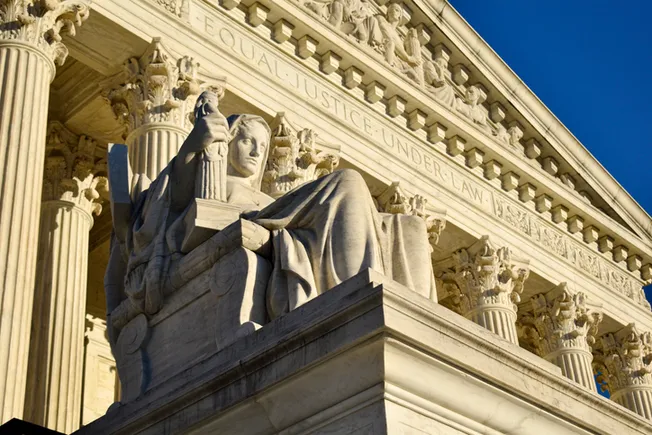
    The U.S. Supreme Court on Friday unanimously ruled that reimbursement requests filed with the federal E-rate program, which subsidizes internet access for schools and libraries, qualify as claims under the False Claims Act, allowing a whistleblower suit to proceed against a telecommunications company.

    Whistleblower Todd Heath alleged in 2008 that telecommunications provider Wisconsin Bell overcharged schools and libraries by not offering them discounted rates required under the E-rate program and submitting reimbursement requests for higher amounts than E-rate should have paid. The False Claims Act allows civilians to bring lawsuits against companies on behalf of the government when federal money is at stake.

    E-rate is administered by the Universal Service Administrative Co. under the direction of the Federal Communications Commission. Wisconsin Bell argued that because the Universal Service Administrative Co. is a private, nonprofit corporation and program money comes from fees collected by service providers, its reimbursement requests didn’t qualify as claims under the False Claims Act.

    Under that law, a request for money qualifies as a claim if the government “provides or has provided any portion of the money or property requested or demanded.” Justice Elena Kagan, writing for the court, rejected Wisconsin Bell’s arguments because the government provided part of the funds that schools and libraries applied for.

    “In the years in which those requests were made, the Government transferred more than $100 million from the Treasury into the pool of funds used to pay E-Rate subsidies,” Kagan wrote. “That is enough to create a ‘claim’ under the Act, and to allow a suit alleging fraud to go forward.”

    Wisconsin Bell’s argument that the $100 million was entirely from fees collected by carriers also overlooked the government’s role in delivering that money to the program, Kagan wrote, stating that the government was not a “passive throughway” for those funds.

    The Supreme Court sent Wisconsin Bell, Inc. v. United States, ex rel. Todd Heath back to the 7th U.S. Circuit Court of Appeals for its whistleblower claims to proceed.

    The Schools, Health and Libraries Broadband Coalition hailed the ruling as helping to strengthen enforcement measures and safeguard broadband funding.

    “This decision is a win for schools and libraries who rely on the E-rate program for essential broadband services,” said John Windhausen, the coalition’s executive director, in a statement. “By clarifying the applicability of the False Claims Act to E-rate reimbursements, the Court helps ensure that schools and libraries are able to obtain prices that are no higher than the rates charged to similarly situated customers. This ruling helps improve the efficiency of the Universal Service Fund and the E-Rate program.”

    Attorney Allyson Ho, who represented Wisconsin Bell in the case, did not immediately respond to a request for comment.

    The narrow scope of the ruling, however, makes it difficult to forecast how the justices might rule on another pending E-rate matter this term. In a case consolidated from two pre-existing ones FCC v. Consumers’ Research and Schools, Health and Libraries Broadband Coalition v. Consumers’ Research — the program’s future could be decided as the court determines the constitutionality of the funding mechanism for the FCC’s Universal Service Fund, which is overseen by USAC.

    “The court was very clear in its emphasis that it has no opinion on issues regarding the constitutionality of the universal fund and of USAC’s role that it will decide in that upcoming Consumers case,” said Noelle Ellerson Ng, associate executive director of advocacy and governance for AASA, The School Superintendents Association. 

    Source link