Tag: Diversity

  • Breaking barriers: advancing ethnic diversity in higher education professional services

    Breaking barriers: advancing ethnic diversity in higher education professional services

    This blog was kindly authored by Dr Louise Oldridge, Senior Lecturer at Nottingham Trent University (with research team Dr Maranda Ridgway, Dr David Dahill, Dr Ricky Gee, Dr Stefanos Nachmias, Dr Loyin Olotu-Umoren, Dr Jessie Pswarayi, Dr Sarah Smith, Natalie Selby-Shaw and Dr Rhianna Garrett).

    Despite decades of progress in widening participation and diversifying student bodies, UK higher education still faces a stark reality: senior professional services roles remain overwhelmingly white.

    Indeed, when the professional body for senior professional services staff (Association of Heads of University Administration – AHUA) embarked on work to ‘shift the dial’ on race, membership had less than 5% global majority colleagues.

    While universities champion equality, diversity, and inclusion (EDI), and the sector has developed levers such as the Race Equality Charter (REC), the lived experiences of ethnically minoritised staff highlight systemic barriers that hinder career progression and perpetuate inequality.

    A recent research project funded by AHUA and conducted by the Centre for People, Work & Organizational Practice at Nottingham Business School explored these challenges. Drawing on interviews, focus groups, and institutional data, the project studied the career barriers and enablers for ethnically minoritised professionals in senior roles.

    The diversity gap in professional services leadership

    University leadership teams have diversified in some areas, for instance among governors, students, and even vice-chancellors, but senior professional services remain largely homogenous.

    Recruitment practices, opaque progression pathways, and institutional norms continue to privilege whiteness and middle-class values, leaving talented individuals from minoritised backgrounds sidelined.

    With limited institutional data available for the study, it revealed that while representation among lower-grade professional services roles has improved, senior positions tell a different story.

    Unlike academic colleagues, there is a stark shift in career management for professional services staff, with our research finding that many institutions are unequipped to track the career trajectories of professional service staff.

    Lived experiences: authenticity, masking, and emotional labour

    The qualitative insights from interviews and focus groups paint a vivid picture of what it means to navigate professional services as a person of colour. Participants spoke candidly about the emotional labour involved in “code-switching” (altering language, appearance, or behaviour to fit dominant norms) and “masking” aspects of identity to avoid judgment or exclusion.

    One participant reflected: “I felt I had to disappear… to succeed, I needed to be someone else.” Others described being labelled as “diversity hires” or facing regular microaggressions that impacted confidence and wellbeing.

    Intersectionality compounds these challenges. Participant responses indicated that race intersected with gender, class, disability, and caring responsibilities, creating layered barriers that are often invisible to policy-makers. Women of colour, for instance, reported being undermined due to both race and gender, while those with disabilities faced inflexibility and a lack of empathy.

    Performative EDI and the need for structural change

    In a blog on the REC for Advance HE, Patrick Johnson calls for institutions to make an authentic commitment to dismantling racial barriers for staff. Institutions can use data to expose disparities and perceptions of the operating culture and environment.

    As Patrick notes, it is important that challenges are acknowledged openly and specific actions put in place in response.

    That said, participants in this research questioned the depth of their organisation’s commitments. EDI initiatives were described as performative and focused on optics rather than outcomes. As one interviewee put it:

    We talk about EDI when we’re going for awards, but it’s not part of our everyday practice.

    This disconnect between rhetoric and reality highlights a critical gap: policies alone cannot dismantle systemic inequities.

    Ultimately, what is needed is leadership from those in roles which can challenge the structural issue, redefine what it means to be ‘professional’, develop clear career pathways, transparent promotion processes, and accountability mechanisms that move beyond tick-box exercises. REC is a starting point for supporting this process, but cannot be seen either as a panacea or an end in itself.

    Five pathways to change

    The report offers a roadmap for transformation, organised into five thematic areas:

    1. Structural reform and policy change
      Clarify career pathways for professional services staff, audit recruitment practices, embed accountability into EDI policies and ensure progression routes are transparent – such as providing an understanding of ‘typical’ career histories for leadership roles.
    2. Representation and inclusion
      Increase diversity at senior levels through targeted development and sponsorship. Avoid tokenism by ensuring ethnically minoritised staff have meaningful influence, not just visibility. This could include clearer succession planning.
    3. Development, support, and research
      Invest in mentoring, coaching, and executive development programmes tailored to professional services. This reflects both formal support staff networks and more informal collectives, alongside committing to longitudinal research to track progress. For example, creating an informal network of colleagues across the sector.
    4. Cultural change and co-creation
      Move beyond compliance-driven EDI to authentic engagement. Challenge assumptions about professionalism and leadership, and co-create inclusive cultures with staff. This could mean redefining what institutions view as ‘professional(ism)’.
    5. Sector-level collaboration and accountability
      Coordinate efforts across professional bodies, share best practice, and ensure transparent reporting. Diversity must be a collective responsibility, and could include sector-wide knowledge exchange, clear metrics and outcomes.

    From awareness to action

    The report calls for dismantling what research team member Rhianna Garrett describes as ‘the architecture of whiteness’, which underpins institutional norms. This means rethinking recruitment, valuing professional services as integral to university success, and creating spaces where ethnically minoritised staff can thrive without compromising their identity.

    As one focus group participant put it:

    We recognise there is an issue, but I don’t think we really understand what to do about it – and a big part of that is because things are so white.

    For AHUA, and other sector professional service organisations, this report is a call for the sector to deliver systemic, sustained change. The question is not whether higher education can afford to prioritise diversity in professional services leadership; it is whether it can afford not to. It informs our next steps in a Theory of Change workshop to identify meaningful actions moving forward.

    As Dr Andrew Young, Chief Operating Office, The London School of Economics and Political Science, and AHUA project sponsor states:

    The evidence in this report should make all of us in higher education uncomfortable.  Change will only happen when we stop celebrating statements of intent and start measuring outcomes.

    Source link

  • The Growing Diversity of Community College Trustees

    The Growing Diversity of Community College Trustees

    Maricopa County Community College District

    New data shows that community college trustees have become more reflective of the diverse student bodies they serve over the past three decades.

    That’s one of the big takeaways from a report the Association of Community College Trustees published last week in partnership with the Center for the Study of Community Colleges, which shows that the proportion of women serving on community college boards is on the rise. Between 1997 and 2025, female representation on the boards grew from 33 percent to 47 percent, with the biggest increases coming in the past seven years. During the same time frame, the proportion of nonwhite trustees grew from roughly 12 percent to 27 percent.

    Association of Community College Trustees/Center for the Study of Community Colleges

    While disparities remain, that breakdown is now closer to mirroring the diversity of community college students. In 2025, 57 percent of students were women and 58 percent identified as people of color, according to data from the American Association of Community Colleges.

    The report, “Community College Trusteeship in 2025: A Commitment to Serve,” draws on surveys of more than 2,000 community college trustees and 40 qualitative interviews with trustees, building on similar reports from 1997 and 2018. The study demonstrates that trustees “have a pulse on their communities’ needs, a deep commitment to the community college mission of open access to high-quality higher education for all people, and the kind of visionary thinking needed to keep their institutions thriving,” ACCT president and CEO Jee Hang Lee said in a news release.

    That’s in part because community college governing boards are also more likely now to have members who attended a community college.

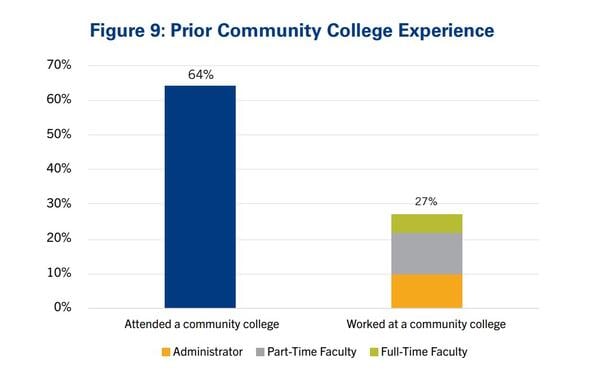
    In 2025, 64 percent of trustees attended a community college and 27 percent previously worked at one, according to the report. In 1997, only 51 percent of trustees had been community college students and 22 percent had been employees. Today’s trustees also are also showcasing the earning potential of community college graduates: 71 percent of trustees who attended a two-year college made at least $100,000 a year in 2025, while 31 percent made close to $200,000, according to the report.

    community college trustee experience

    Association of Community College Trustees/Center for the Study of Community Colleges

    In an interview, one such trustee said that attending a community college first allowed them to continue on to a university “to get my education at a reasonable cost and also to improve my life and my business.”

    For many trustees, those firsthand experiences with the community college system have also translated into enthusiasm for higher education governance work. “I was a nontraditional college student,” one said in an interview for the report. “I went back to school with three kids in tow and got my bachelor’s and my master’s, and it’s just something that I believe in.”

    That’s a common trajectory for community college trustees.

    Among trustees who were once community college students, 83 percent have a bachelor’s or higher degree, and 54 percent have a graduate or professional degree. And over all, trustees have become even more educated over the past 28 years. Although the vast majority of trustees have long held a college degree, the proportion with a bachelor’s degree rose from 84 percent to 86 percent between 1997 and 2025; the proportion with a graduate or professional degree rose from 50 percent to 59 percent.

    But other aspects of community college governance haven’t changed as much since the 1990s, the report shows.

    In 2025, trustees spent an average of five hours a week on board duties—hardly any change from 1997. Similarly, trustees identified funding, access and affordability as top challenges in 1997, 2018 and in 2025. This year, however, 63 percent of trustees also cited enrollment as a top issue, “likely stemming from the fact that most states have begun to experience the anticipated enrollment cliff,” the report noted.

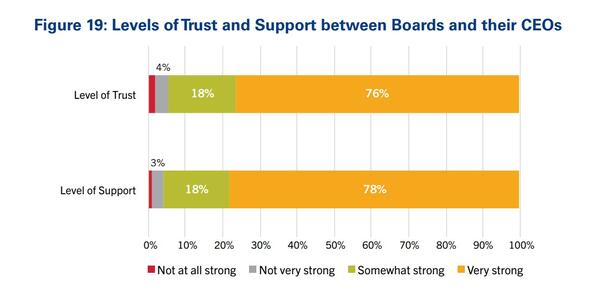
    Community college trustees have also maintained high levels of trust in and support for their college leaders. In 2025, 94 percent of respondents indicated a “somewhat or very strong level of trust” between boards and presidents, while 96 reported somewhat or very strong levels of support—numbers that have hardly changed since 1997.

    community college trustee trust and support

    Association of Community College Trustees/Center for the Study of Community Colleges

    And that’s an essential aspect of effective governance, one trustee said in an interview.

    “The demands [on] a college president are huge, and [it’s a] difficult job, which is one reason [that] when you get somebody, you’ve got to support them,” they said. “You hire somebody and then you get out of their way and let them do what you hired them to do. That is so important.”

    Source link

  • Some Colleges Cut Diversity Essays, But They Remain Popular

    Some Colleges Cut Diversity Essays, But They Remain Popular

    Two years after the Supreme Court banned the use of race in college admissions decisions and in the wake of the Trump administration’s attacks on diversity, equity and inclusion, colleges’ use of diversity- and identity-related supplemental essay prompts is patchy.

    After a boom in prompts about applicant’s identities, several universities have scrapped the essays entirely for the 2025–2026 admission cycle. Still others, especially selective universities, have kept the prompts, saying they are the best way to get to know their applicants.

    Kelsea Conlin, who oversees the college essay counseling team for College Transitions, an admissions consulting firm, identified 19 colleges with optional or required diversity essays last admission cycle that either had dropped or reworded those prompts this year.

    “I’ve seen very few colleges that still require students to write about diversity; the prompt may still be on their application and students have the opportunity to write about it, but it’s an optional essay,” she said.

    Diversity-related essays often ask students to describe how they’ve been shaped by their community, culture or background, sometimes prompting them to describe how those identities will bring something new to a campus. Others ask students to discuss or reflect on issues like diversity, social justice or antiracism more broadly.

    In the majority opinion in Students for Fair Admissions v. Harvard, Chief Justice John Roberts said it was acceptable for students to continue discussing race in their essays: “Nothing in this opinion should be construed as prohibiting universities from considering an applicant’s discussion of how race affected his or her life, be it through discrimination, inspiration, or otherwise.”

    The following application cycle, several colleges introduced diversity-related essay prompts to their applications, according to research by Sonja Starr, a law professor at the University of Chicago; Conlin also said she observed a surge in these essays in the 2023–2024 application cycle.

    But this year, the Department of Justice issued guidance warning institutions against using “proxies” for race in admissions and hiring, and described requirements for applicants to “describe ‘obstacles they have overcome’ or submit a ‘diversity statement’ in a manner that advantages those who discuss experiences intrinsically tied to protected characteristics” as examples.

    “The administration basically says, … ‘if you are letting the desire for a diverse campus influence your policies in any way, that is just as unconstitutional as taking the individual applicant’s race into account,’” Starr said. “I think that’s a wrong reading of the law.”

    Still, she said she’s not surprised institutions may be wary of maintaining essay questions overtly related to identity, considering the harsh actions the administration has taken against colleges it disagrees with.

    “There’s all kinds of ways the federal government can really make it difficult for universities,” she said, pointing out the slew of funding the administration has cut or frozen over the past ten months. “[Some institutions], I think, are just trying to at least stay out of the administration’s way.”

    Simplifying the Process

    Several institutions told Inside Higher Ed that they cycle out their essay prompts regularly, so the change from last year’s diversity question was par for the course. Others said they eliminated their supplemental essay requirements altogether, in an effort to make the application process less strenuous.

    The University of Washington, which removed a supplemental essay asking prospective students to describe how their background and the communities they are involved in would contribute to the campus’s diversity, told Inside Higher Ed in an email that they hope the removal of the essay will make the admissions process less strenuous for applicants.

    “During the annual review of our application process, we determined that an additional essay did not provide sufficient value when reviewing students for admission. We discovered that some applicants, like those interested in our honors program, were previously seeing up to four essay prompts. This change simplifies the process for all our applicants,” wrote David Rey, associate director of strategic communications.

    A University of Virginia spokesperson gave a similar statement to the campus student newspaper, The Cavalier Daily, about its decision to remove a diversity essay prompt introduced in the 2025–2026 application cycle, saying that its removal aimed to “lighten the load and reduce stress and anxiety around the college application process.” UVA did not respond to Inside Higher Ed‘s request for comment.

    Does that mean supplemental essays are falling out of vogue? Not necessarily, Conlin said; a significant number of selective universities still require them, and the students she works with are generally writing just as many supplemental essays as they have in previous years.

    Despite some institutions opting to change or remove their diversity prompts, though, Ethan Sawyer, the founder of the admissions consulting firm College Essay Guy, said that a review of 300 institutions’ prompts for the 2025–2026 admission season showed that questions about what a student’s identity will bring to the institution are the most popular for the second year in a row.

    He said in an email to Inside Higher Ed that these prompts have proven to be particularly effective at providing colleges with the key information they’re looking for out of an admissions essay. The identity prompt acts as the new “Why Us” essay, but avoids the pitfall of students focusing exclusively on the college’s attributes rather than their own.

    “It lets colleges learn what they’ve always wanted to know—how will this student engage with our community? What qualities will they bring?—but through a framing that encourages students to reflect on who they are (as opposed to how awesome the college is). In other words, colleges are still trying to understand fit; they’re just using a lens that better centers the student,” he said.

    Students Still Write About Race

    While some colleges may be scrapping diversity prompts, many students want to write about their identities, Conlin and Sawyer said.

    “They don’t see themselves through just one lens. No student wants to be reduced to a single label or experience. They understand they’re complex people shaped by many different identities, roles, and life moments,” Sawyer wrote. “Part of our job as counselors is to help them express that complexity—to choose which pieces of their story to spotlight in each essay, and to show how those pieces translate into contributions they’ll make on a college campus.”

    Many of the new or reworded essay prompts that have replaced diversity-related questions are broad enough that students can still talk about their identities and experience if they choose to, Conlin noted. In her experience, students are often interested in discussing their race or first-generation student status in essays. But students are more reluctant to write about being LGBTQ+ or having mental health struggles.

    Diversity essays aside, Conlin also noted two burgeoning categories of essay topics this year: prompts asking students to talk about how they handle conflict and prompts offering students the chance to explain their relationship with AI.

    Source link

  • Indiana’s Attack on Intellectual Diversity

    Indiana’s Attack on Intellectual Diversity

    Indiana’s new Act 202, which advocates of free inquiry have feared would suppress academic freedom despite its claims to promote intellectual diversity, now has been implemented in real life: Citing Act 202, Indiana University (IU) officials suspended Social Work professor Jessica Adams from teaching a class called “Diversity, Human Rights and Social Justice” because U.S. Senator Jim Banks complained that she showed a chart in class that included “Make America Great Again” as a slogan that can be used as covert white supremacy.

    Senator Banks declared, “At least one student in the classroom was uncomfortable, and I’m sure there are more. This type of hateful rhetoric has no place in the classroom.” He is wrong. Hateful rhetoric has every place in the classroom, and bans on all ideas deemed “hateful” by someone would require massive repression. The goal of a challenging university must be to make students uncomfortable at times.

    Although Act 202 is a terrible law, it’s important to point out that this law does not allow Adams to be suspended. Act 202 only allows colleges to do two things in response to complaints: Provide the information to the trustees, and “refer” them “for consideration in employee reviews and other tenure and promotion decisions.”

    It does not authorize censoring classes or removing teachers on the grounds of intellectual diversity. In fact, Act 202 specifically prohibits this action because it says that institutions cannot “Limit or restrict the academic freedom of faculty members or prevent faculty members from teaching, researching, or writing publications about diversity, equity, and inclusion or other topics.”

    Obviously, banning a professor from teaching because they used a chart about white supremacy is a direct violation of this provision of Act 202. By suspending a professor from a class and invoking this law, the Indiana University administration is going far beyond the requirements and the authority of the law, and Indiana officials are violating the Bill of Rights, Act 202 and their own policies.

    The unjustifiable, illegal suspension of Adams without due process is yet another act of repression by Indiana University officials.

    But the attack from Act 202 in the name of intellectual diversity has a long history. The right has taken the language of the left, mockingly imitating the words and then turning them into tools of repression.

    In 2003, David Horowitz urged conservatives to “use the language that the left has deployed” and declare that there is “a lack of ‘intellectual diversity’ on college faculties.” Horowitz tried to invoke “academic freedom” to justify suppressing it, creating the Academic Bill of Rights and his “Students for Academic Freedom,” claiming that protecting the rights of students meant banning professors from expressing political views.

    Horowitz’s terrible idea is implemented in Act 202, where one fireable offense is the crime of being deemed by trustees “likely” while teaching “to subject students to political or ideological views and opinions that are unrelated to the faculty member’s academic discipline or assigned course of instruction.” One problem is that no evidence of any misconduct is needed, simply a feeling that a professor might be “likely” to say something forbidden. But the deeper flaw is the belief that professors should not be allowed to say anything unrelated to their classes.

    The AAUP’s standard is for “teachers to avoid persistently intruding material which has no relation to their subject.” It’s not the presence of any ideas unrelated to a class that violates academic norms, but only persistently intruding material. And this rule must be applied in a viewpoint neutral manner. Colleges cannot punish unrelated speech about politics more than they punish unrelated speech about football or the weather or any other topic. By targeting political viewpoints alone for penalties, SB 202 clearly violates the First Amendment.

    Heterodox Academy, an organization that advocates for viewpoint diversity, spoke out strongly against these repressive aspects of Act 202. Joe Cohn warned: “The trustees’ guess that the faculty member is likely to ever express a political or ideological view that isn’t germane to the class is sufficient to justify the denial of promotion or tenure.”

    These kinds of massive, totalistic bans on speech have an enormous chilling effect in practice, since no one knows what ideas could be deemed “unrelated” to a professor’s field by a trustee who knows nothing about that field.

    Indiana has legislated Horowitz’s old dream of banning politics from the classroom, which in practice is meant to be a targeted attack on the expression of left-wing viewpoints.

    When we resist bad laws like Act 202 by attacking intellectual diversity, we end up undermining the values we’re trying to protect and undercutting public support. Instead of denouncing the concept of intellectual diversity, we ought to say instead that we are defending intellectual diversity against those who cynically or misguidedly invoke it in order to destroy it.

    In the past century, no concept has done more to protect intellectual diversity than tenure. Act 202, by creating a post-tenure review by trustees with no competence to judge academic work, undermines tenure and endangers intellectual diversity rather than defending it.

    The Indiana law, by weakening tenure protections, is one of the greatest threats to intellectual diversity in the state. We need to attack the “intellectual diversity” law not because we oppose intellectual diversity, but because we support it. We want professors to be judged by their academic work, not by their political views, and we want academic work to be judged by academic experts rather than unqualified political appointees, because intellectual diversity is endangered when academic freedom and shared governance are attacked.

    This week, I spoke about Indiana’s intellectual diversity law as part of a panel on academic freedom at Purdue University Northwest (an event funded by the University of Chicago’s Forum for Free Inquiry and Expression as part of its Academic Freedom Institute). And while attacks on academic freedom can inspire some people to mobilize against the threat, the far more common response is fear and silence.

    In an atmosphere of budget cuts, no one is safe. We’re all contingent now, even the diminishingly few faculty with tenure in places where tenure still means something, because entire departments can be whacked to pieces as easily as a controversial adjunct professor is not rehired.

    Indiana’s Act 202 attacks intellectual diversity. And when administrators violate the law to suspend faculty for presenting controversial views, academic freedom is under even greater threat.

    Source link

  • Uni boosts gender diversity by 30% in maths – Campus Review

    Uni boosts gender diversity by 30% in maths – Campus Review

    As the artificial intelligence (AI) and quantum computing industries explode, trained STEM professionals are in high demand. Mathematics is foundational to these fields.

    Please login below to view content or subscribe now.

    Membership Login

    Source link

  • The Push for Viewpoint Diversity Misses the Point (opinion)

    The Push for Viewpoint Diversity Misses the Point (opinion)

    Much of the controversy around the Trump administration’s “Compact for Academic Excellence in Higher Education” has focused on its push for viewpoint diversity and the claim that open inquiry does not exist in our classrooms. That push builds on a long-standing conservative critique that today makes hay out of the fact that the vast majority of faculty in U.S. colleges and universities lean left.

    Recent data supports that claim. In elite institutions, like Duke and Harvard Universities, surveys suggest the number of faculty identifying as liberal exceeds 60 percent. The percentages differ not only by type of institution but by discipline, with the humanities and social sciences leaning more liberal than STEM. Some even claim that political bias corrupts academic disciplines.

    Liberal faculty and commentators on higher education sometimes take the bait and respond defensively to what often is a politically motivated attack. In an op-ed in The Guardian, Lauren Lassabe Shepherd argued that the purpose of the conservative critique has been “to delegitimize the academy … [and] return colleges to a carefully constructed environment not to educate all, but to reproduce hierarchy.”

    Whether or not she is right, you don’t have to look hard to see that institutions of higher education are feeling growing pressure to right their ships—to create campuses and classrooms where open inquiry flourishes, where students feel free to say what they think and to challenge ideas they disagree with. Colleges have responded by scrambling to incorporate more ideological diversity into their course offerings, to implement new programming and to recruit guest speakers who challenge progressive thinking.

    All this misses the point and distracts us from the work that needs to be done to further improve the quality of the education students receive in American colleges and universities. Put simply, instead of fixating on who is in the classroom and whether they are liberal or conservative, we should be focused on how we are in the room.

    Higher education’s greatest challenge to achieving open inquiry is not one of ideology or viewpoint diversity, but of disposition. Harvard University’s 2024 report from a working group on open inquiry gestured in this direction but did not flesh it out.

    If we are to truly commit to open inquiry, we need to step back, pause and reflect not just on what we think, but on how we acquire knowledge, how we think, whether we are interested in learning more or if we are content with what we already know.

    You can decorate campuses with all the colors of the political rainbow but not make them better places to learn.

    The issue is how we show up with others. Data suggests that students in our classrooms don’t feel comfortable pushing back on each other or on their professors when they disagree. They engage in what psychologists Forest Romm and Kevin Waldman call “performative virtue-signaling.”

    In conversations with students at Amherst College, we have heard that they are not just constraining their expression in academic settings but in social settings, too. It seems we are afraid of each other.

    It is no wonder. The academic and public squares have not proven themselves to be especially kind or generous as of late. We need look no further than the vitriolic reactions to Charlie Kirk’s murder, and the as-vitriolic reactions to the reactions to his murder. When we do, we can see that the rush to righteousness operates across the ideological spectrum.

    The work of college education is to dislodge the instinct to judge and replace it with a commitment to rigorous listening. The work of college teachers is to model an approach to the world that puts empathy before criticism.

    What if instead of just talking about the right to speech, we emphasized the right to listen? But we don’t just mean any kind of listening; we mean listening in a certain way. Deep listening. The kind of listening that takes in ideas in slow, big gulps and lets them settle deeply, and sometimes uncomfortably.

    It is listening that seeks to catch ideas in flight and carry them further. This is a disciplined kind of listening that resists defensiveness and instead burrows into curiosity.

    To foster it, we have to cultivate in ourselves and in our students a disposition to wonder. Why does someone think that way? What experiences, places, relationships, institutions and social forces have shaped their thinking? How did they get to that argument? How did they get to that feeling? How is it that they could arrive at a different perspective than I did?

    This is the heart of open inquiry, and it is much harder to achieve than it is to bring more conservatives to campus. Without the disposition to wonder, doing so will produce enclaves, not engagement, on even the most ideologically diverse campus.

    This kind of open inquiry would demand that we remove the stance of moral certainty and righteousness from our ways and practices of thinking. That is the real work that needs to animate our colleges and universities.

    It is hard, slow work. There is no magic bullet. Teachers and their students, liberals and conservatives, have to commit to it.

    While open inquiry is a social disposition, it is also about how we orient our thinking when we are alone. We need to challenge our students to wonder not just about others but about themselves.

    What would happen if we all got into the habit of asking ourselves: When was the last time we changed our mind about something? When was the last time we left a conversation or finished a text and actually grappled with our orientation to a subject?

    We yearn for our students to practice open inquiry not just when they are in our classrooms, but when they are in the library or in their dorm room with a book to read, an equation to solve, a painting to finish.

    The promise of this type of inquiry is exhilarating, freeing. And it opens up great possibilities of seeing the world differently or in more complicated ways.

    At the end of the day, the literary scholar Peter Brooks gets it right when he says, “To honor, even only nominally, the call for ‘viewpoint diversity’ is to succumb to a logic that is at its heart hostile to the academic enterprise.” At the heart of that enterprise is a belief that viewpoint diversity is not the same thing as open inquiry. That belief requires changing the culture of learning on our campuses.

    Maybe the shift does not seem responsive to the political clamor of the moment. Maybe it sounds like it demands too much and will be hard to assess.

    But whatever the case, it feels revolutionary to us.

    Austin Sarat is the William Nelson Cromwell Professor of Jurisprudence and Political Science at Amherst College.

    Leah Schmalzbauer is the Clarence Francis 1910 Professor in the Social Sciences and associate provost and associate dean of the faculty at Amherst College.

    Source link

  • A Tumultuous Tenure Leading the Nation’s Diversity Officers

    A Tumultuous Tenure Leading the Nation’s Diversity Officers

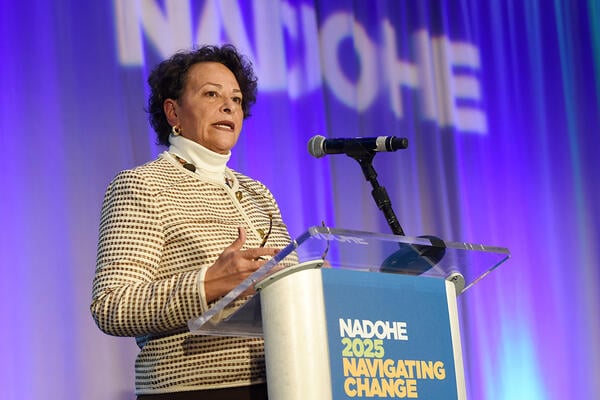
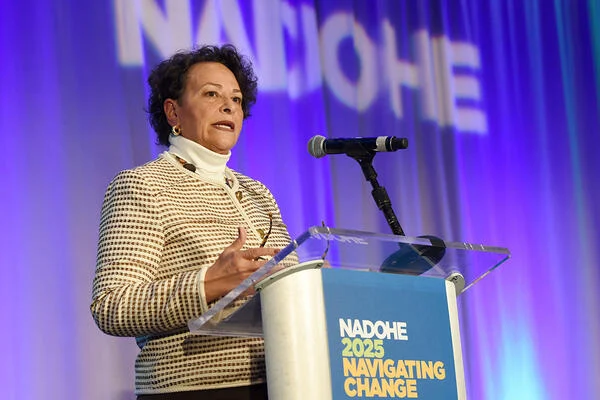
    Paulette Granberry Russell is stepping down as president of the National Association of Diversity Officers in Higher Education after a dramatic and unpredictable five years at the helm.

    She represented campus diversity professionals amid the national racial reckoning that accompanied the Black Lives Matter movement, and then through the dizzying years that followed as anti-DEI laws swept the country. She also spent 22 years as a diversity professional at Michigan State University.

    Granberry Russell told Inside Higher Ed she never planned to stay at NADOHE longer than five years, so she’s ready to move on and facilitate a “smooth transition and handoff.”

    But what a tenure it’s been.

    She spoke with Inside Higher Ed about how she navigated the headwinds facing diversity professionals and the future of diversity, equity and inclusion work on campuses. The conversation has been edited for length and clarity.

    Q: Over the course of your term, from 2020 to 2025, the landscape for diversity professionals in higher education radically shifted. What has it been like for you to represent DEI professionals then and now?

    A: When I came into the role, my goals were to do a few things, which, not only were intended to build on our past successes, but also [to] develop new initiatives that would enhance a few areas, [including] increasing our membership but also providing our support for them. It included, for example, enhancing our industry influence but also sustainability of the organization.

    I came into the role in March of 2020, and what happened in March of 2020? The pandemic, which altered much of what was going on in higher education and how we were doing our work, whether that was remotely, but also with threats in terms of both student experiences but also student support. And then in May of 2020, the murder of George Floyd, and all of the ways in which our institutions were reacting and responding and certain commitments were made to enhance antiracism efforts on our campuses.

    When I think about my first few months, it was something very different than what I anticipated. And I’m certain that’s true for higher education as well. I lived in this state of shifting priorities, having to think about ways to best support members who were having to adjust to significant shifts on their campuses. We were also dealing with significant challenges around freedom of speech and disruption on our campuses prior to these more recent experiences.

    And the politics are very different. When you shift from an environment of enhanced commitment built on an understanding that our campuses had to deal with issues around race and expanding opportunities more broadly across identity to now pushback—it was causing quite a shift in equilibrium. And that’s true for our members as well as the organization. And because of the evolution of diversity, equity and inclusion in higher education historically, as painful as a lot of this was, I believe we were better prepared than we understood ourselves to be.

    Q: You touched on how you started at NADOHE in this moment in 2020, when campuses made commitments and investments in thinking about race and racial inequities, and now campuses are rolling back so much of those efforts in response to anti-DEI legislation. How did these policy shifts change NADOHE’s work and change your work as its leader? How did you have to pivot?

    A: Our successes, I think, resulted in some of the pushback. The pushback was evolving. Expanding on opportunities [created by diversity initiatives] beyond race, so that people understood that diversity was more inclusive than they initially understood it to be—we did not do as good a job as we could have and should have.

    But [we] are beginning to do [it] now, in broadening people’s understanding that diversity is and should be interpreted very broadly. I think that the narrative was hijacked, meaning it was easy to unfortunately define diversity narrowly on the basis of race, gender and sexuality. And others used that narrative to create fear and apprehension that somehow others were being advantaged, versus understanding that we all have benefited from the ways in which we were adjusting our efforts on campus to broaden access, to broaden opportunities, to increase equitable outcomes, understanding that [it’s] not one-size-fits-all, and we had to tailor and adjust our efforts to accommodate the broad range of interests and identities that presented on our campuses and have always presented on our campuses. What we failed to do well was messaging both the communities impacted by our work and the work that was being done to expand opportunities as well.

    Q: How did the backlash shift your priorities, if at all?

    A: When we think about the early challenges, some [opponents] would point to critical race theory. I don’t know that they necessarily understood it very well, and [they] were having a difficult time messaging it. But it was easier to talk about diversity, because for many people, that conjures up issues around race, it harkens back to earlier views of affirmative action and I think it became an easier message to divide higher ed both internally as well as externally.

    It was important for NADOHE to emphasize—whether it was around academic freedom, First Amendment rights and freedom of speech and freedom of expression—that diversity, equity and inclusion are embedded in those. Freedom of expression cannot be sanitized. Our research, for example, or our curriculum is going to touch on issues that may impact communities broadly—and diverse, marginalized, underserved communities. And the work that we do in higher education as diversity leaders requires evidence-based research that informs our work. In the absence of that, you’re guessing at strategies and interventions that will support all students.

    This work is not going to go away. We’re not going to go back to a time when opportunities were constrained, when fairness did not extend to certain communities. That’s unacceptable.”

    —Paulette Granberry Russell

    And so, I don’t know that it was as much a shift in our priorities as much as it was helping higher ed internally, as well as audiences outside of higher ed, to understand that access and opportunity are not limited to any one demographic or a few demographics. If there was a shift in priorities, it was hopefully helping broader audiences understand that there’s nothing to fear, especially in the ways that diversity, equity, inclusion was being demonized. This work is not intended to grant preferential treatment to some and deny others opportunities.

    Q: So, you found yourself having to do a lot of explaining about what’s actually meant when people say “DEI” in a higher ed context.

    A: That’s right. And it’s also saying to folks, don’t use the acronym. Because the acronym, unfortunately, supported a very narrow way of defining efforts.

    Diversity is not defined narrowly. Equity is intended to reduce barriers that may result in differential impact, and those differential impacts are not limited to any one category. Inclusion doesn’t happen just naturally. We know individuals feeling included allows them to be themselves but also allows them to be more successful. If I don’t feel like I belong, what do I do? I tend to retreat, or I don’t access the resources that are there, resources that may benefit me, resources that are accessible to all, with an understanding that, again, we’re not monolithic. It is helping people differently understand, and hopefully better understand, that there are no threats here. Diversity on our campuses is a reality, period. And it’s not going to change, certainly not as long as organizations like NADOHE are here to defend access and opportunities.

    Changes in nomenclature happen. How we define our work, how we label our work, how we tag our work has always changed. If we think historically, going back 20, 30 years, we talked about affirmative action. We talked about multiculturalism. We talked about diversity. We talked about equal opportunity. We talk about fairness. We talk about equity. We talk about belonging. We talk about inclusion. Terminology evolves over time, given how the work itself evolves.

    Q: As campuses close centers associated with DEI and get rid of diversity roles, what do you see as the next phase of the work? How do campus diversity professionals move forward from here? And what does the DEI movement look like now and into the future?

    A: At least for this moment in time, we need to more closely scrutinize the systems that have been designed that have resulted in barriers to success. And how do we redesign, or how do we begin to design systems that differently support our campuses?

    There’s no single office or individual that can do this work alone. Certainly, in my own career at an institution that was a large public land-grant with over 40,000 students at that time and 14,000 faculty and staff, there was no way that a person with two staff was going to be able to dramatically impact change. [Change comes from] working with others and understanding that it’s going to take what I would call a whole institution approach, which means that our leadership, our policies, budget, people, culture have to be aligned. That also means that we have to take a look at the policies, practices, procedures that we have in place that may be having differential impacts, and how do we make adjustments in those? Not to grant preferential treatment, not to discriminate, but to say, can we design systems that work better?

    We’re talking about a systems approach for structural change. When I say a systems approach, this is going to be far more extensive than I think many of us are prepared to do, but I think that it’s the future. [In the past], unfortunately, we didn’t [always] look at connections between the needs of our students, the capacity of faculty to meet those needs, the capacity of staff to meet those needs and connecting our students to potential employers. Things were very siloed. Things are still very siloed. We have to think about the life cycle of a student. And we do that, but it’s not that we are always very deliberate in how we do it.

    When I grew up as a child, the expectation was that I would go to college, but my family by all definitions was very low income. [When] I got to my undergraduate experience, there were no tools in the way that there are now. There were no interventions. There were no programs that I could access that connected me to all of the resources that would allow me to be successful. I was a low-income Black female who arrived on a campus with no prior experience, not knowing how to navigate the space, not knowing where the resources were, not knowing how to fund my education. I was a person with a dream and a family that really wanted me to be successful, but they didn’t have the tools to provide that. It’s a very different world we live in today.

    [The goal is] helping that student understand where the resources are, and then helping faculty understand the differences of those students that come into your classroom, ways that you as faculty can support them, connecting those faculty with the advisory services that those students might need. We have to design [systems] in ways that reduce barriers, that acknowledge the differences that exist and with the goal of those individuals being successful [and] reducing the barriers for faculty to be successful.

    Q: After leaving NADOHE, what’s next for you?

    A: My entire trajectory, my entire life, I have always been this person who believed in fairness. I always believed in opportunities. I’m always that person who fought for not only myself, but for others to be treated fairly, because I grew up in a family where my history included ancestors who were formerly enslaved.

    At 16 years old, I decided I wanted to increase participation in voting. In 12th grade, I remember I had a speech class, and I was that person giving speeches on the slaughtering of baby seals. I was the person who was giving speeches on sexuality and treating people differently based on how they identified. I was that person who gave speeches on the Black Power movement, civil rights, Martin Luther King. And as I reflect now, as I transition, I’m not going to be any different than what I have always been. I will find new ways to [apply] my experiences and my advocacy. Because I have no choice. I realized that about myself.

    My time with NADOHE has been to build on the successes of my predecessors. I believe that I have done that. I achieved the goals that I set out to achieve, both for myself and for the organization, whether that is increasing our membership, our influence within higher ed [and] beyond higher ed. We’ve done that.

    This work is not going to go away. We’re not going to go back to a time when opportunities were constrained, when fairness did not extend to certain communities. We’re not going back to a time when discrimination on the basis of identity was lawful, certainly in the context of race, gender, sexuality, sexual orientation. That’s unacceptable. We’re not going back.

    My next move is, I’m going to breathe. I’m going to take a little bit of time for myself. But I know I will always find my way back to what I have always been committed to, that I want people to be treated fairly. I want people to have opportunities.

    Q: Whoever takes over your position is going to face significant headwinds. What would be your advice to them?

    A: Bring your passion. Bring your commitment. Coming into this role, it’s going to be exhausting, but you have to decide that there’s no other way forward. Too many lives depend on it. This country, our democracy, depends on it.


    Source link

  • Colleges Must Pursue All Legal Paths for Diversity (opinion)

    Colleges Must Pursue All Legal Paths for Diversity (opinion)

    Two years ago, the Supreme Court dealt a devastating blow to opportunity in America when it gutted access to higher education for underrepresented groups. That decision was not only legally misguided but also turned a blind eye to the deep inequities that have long shaped our education system. Our colleges and universities scrambled to find lawful tools to ensure that their student bodies still reflected the breadth of talent and promise in this country.

    One of those tools was Landscape, a program recently canceled by the College Board that gave admissions officers data about a student’s high school and neighborhood while explicitly excluding race or ethnicity.

    Standardized test scores and GPAs never tell the whole story. Median family income, access to Advanced Placement courses, local crime rates and other key indicators help admissions officers see the full picture and provide crucial context to help identify high-achieving students from disadvantaged communities. These are students whom universities might otherwise overlook. Tools that give context level the playing field—not by lowering standards, but by lifting students up according to their merit and the obstacles they have overcome.

    The Supreme Court, even in striking down diversity initiatives, still made clear that universities could explore race-neutral alternatives to achieve equity. The use of socioeconomic and geographic factors is exactly such an alternative. Despite U.S. Attorney General Pamela Bondi’s recent nonbinding guidance warning against the use of geographic indicators as “proxies” for race, make no mistake: Abandoning consideration of these elements of an applicant’s background is not a legal requirement but a political choice, reflecting fear rather than courage.

    Without tools that account for the barriers students face, colleges will fall back on practices that overwhelmingly favor the privileged, shutting out low-income and first-generation students who have already beaten the odds. This spoils opportunity for millions, and our campuses and our nation will suffer for it. Diversity is not a box to check; it is a vital engine of education and democracy. Classrooms that bring together students from different walks of life prepare all graduates to lead a diverse society, foster innovation and strengthen our communities.

    We cannot allow the Supreme Court’s decision—and the chilling effect in its wake—to undo decades of progress. And we cannot allow educational institutions to abdicate their responsibility in this moment of crisis. The data that provides broader context for applicants remains available, but without the will to use it, too many doors will remain closed for the students who need them most.

    America has always promised to reward hard work and perseverance, no matter where you come from. That promise rings hollow if we allow the wealthy and well connected to monopolize educational opportunity. Colleges and universities must honor that promise by continuing to seek out and support students who have succeeded against the odds. Fairness demands it, equal opportunity requires it and the future of our country depends on it.

    The authors all serve as state attorneys general: New York Attorney General Letitia James, Connecticut Attorney General William Tong, Delaware Attorney General Kathy Jennings, Illinois Attorney General Kwame Raoul, Minnesota Attorney General Keith Ellison, New Jersey Attorney General Matthew Platkin, Vermont Attorney General Charity Clark and Washington Attorney General Nick Brown.

    Source link

  • Green skills, graduate competencies, and championing subject diversity – it’s time to join up some agendas 

    Green skills, graduate competencies, and championing subject diversity – it’s time to join up some agendas 

    Author:
    Rebecca Collins and Santiago Poeira Ribeiro

    Published:

    This HEPI blog was kindly authored by Rebecca Collins, Director, Sustainability and Environment Research and Knowledge Exchange Institute, University of Chester and Santiago Poeira Ribeiro, student in Natural Sciences (Physics), University of Chester. 

    UK universities are currently grappling with a perfect storm of disruptors: financial challenges, ambivalence from national policymakers, and, increasingly, from prospective students as they question what a university education really offers them. At the same time, the employment landscape is weathering its own storms, including those driven by accelerating technological change (particularly AI), concerns about skills deficits, geopolitical turbulence, and equivocation about whether or not this net zero business is here to stay.  UK Government response to these challenges has most recently taken the form of Skills England’s analysis of the skills requirement across ten priority sectors and the promise of a new industrial strategy from 2026-27 that connects these requirements to reforms of the higher education system.  

    It is in this context that a strangely paradoxical scenario is playing out.  On the one hand are claims that the UK does not have the necessary skills for a ‘green transition’ to net zero – what are increasingly being described as ‘green skills’.  (Notwithstanding the current national political ambivalence about net zero, most sectors of the UK economy have long since recognised the necessary direction of travel and know they need an appropriately knowledgeable and skilled workforce to accelerate action.) On the other is a higher education sector beset by the contraction or closure of subject areas perceived by some political and industrial leaders as insufficiently relevant to our collective economic future, ‘green’ or otherwise. However, for many years now, UK higher education has cultivated students’ green skills through its commitment to education for sustainable development (EfSD), widely recognised as essential knowledge for graduates entering the workforce. Indeed, climate literacy training is now often embedded in university curricula, as well as becoming increasingly normalised as a core, if not mandatory, training requirement across a range of industry sectors. Whilst what EfSD looks like at different universities varies, the majority of institutions demonstrate some degree of engagement with this agenda across all subject areas, with some making it a flagship institutional policy.   

    UK higher education thus seems to be quite good already at cultivating green skills for graduates, and across a wide range of subject areas. How, then, does this map onto the very varied definitions of green skills that have emerged from different sectors? The proliferation of reports concerned with this topic has not (yet) resulted in a clear, unified definition. Rather, this tends to be determined by who is doing the defining. Considering the different definitions and concepts prioritised by different institutions, we propose that these intersecting concerns can ultimately be distilled into three main types of green skill: 

    1. Technical skills: particularly those needed to accelerate decarbonisation; concentration of this need in industries such as manufacturing, transportation, utilities and infrastructure.  
    1. Green-enabling skills: otherwise known as soft or transferable skills, including systems thinking, communication, collaboration, critical thinking, adaptability. 
    1. Values-based skills: such as environmental awareness, climate justice, democratic engagement, cultural sensitivity. 

    Whilst definition 1 skews towards STEM subjects (as well as forms of technical expertise developed through other forms of learning, such as apprenticeships or vocational training), definitions 2 and 3 are within the purview of many other subjects commonly studied at undergraduate level, particularly within the arts, humanities and social sciences.   

    It is a timely moment to be reflecting on the relationship between how skills deficit narratives are framed by some corners of industry and government, and how universities position their offer in response. It feels like every academic in UK higher education has a story about recent, current or imminent institution-wide curriculum transformation. Whilst the rationales presented for these varies, one of the stronger narratives concerns ensuring students develop competencies that are fit for the future, respond directly to regional, national or global skills needs, and give students the vocabulary to articulate how the former meets the latter. As such, curriculum transformation presents an opportunity to think about how universities frame their offer, not just to prospective students but equally to the sectors those students might move into as skilled graduates.   

    Further, whilst driven by a range of factors, curriculum transformation presents the opportunity to articulate the role of all subjects studied in higher education, and all types of higher education providers, to contribute to the skills needed for an economy resilient to the socio-political shocks that will inevitably be invoked by environmental crises. There is a role for university leaders to be much bolder in articulating the value of all subjects – STEM and the arts, humanities, social sciences, and everything in between – and the green skills they cultivate. Now is the moment to consider how the promise of higher education might speak to or work with other agendas concerned with ensuring environmentally and socially sustainable and inclusive economies, regionally, nationally and globally. University leaders have a central role to play in advocating for a national higher education system where diversity – of student, skill and subject area – is not just celebrated as a buzzword but is demonstrated to be an essential part of a thriving, resilient and sustainable society.  

    Source link

  • Eliminating Testing Requirements Can Boost Student Diversity

    Eliminating Testing Requirements Can Boost Student Diversity

    The percentage of underrepresented minority students increased in some cases after universities stopped requiring applicants to submit standardized test scores, according to a study published Monday in the American Sociological Review

    The findings come in the aftermath of the COVID-19 pandemic, which prompted many colleges and universities to rethink their testing policies; some went test-optional or test-blind while others doubled down. But starting long before the pandemic, critics have argued that consideration of standardized test scores often advantages white and wealthier applicants. 

    The study examined admissions patterns at 1,528 colleges between 2003 and 2019. During the 16-year time frame, 217 of those colleges (14.2 percent) eliminated standardized testing requirements. But researchers found that simply eliminating testing requirements didn’t guarantee a more diverse student body.  

    The institutions that eliminated the requirements but still gave significant weight to test scores during the application process didn’t increase their enrollment of underrepresented students in the three years after the change. However, colleges that reduced the weight of test scores showed a 2 percent increase in underrepresented student enrollment. 

    Additionally, researchers found that increases in minority student representation were less likely at test-optional colleges that were also dealing with financial or enrollment-related pressures. 

    Greta Hsu, co-author of the paper and a professor at the University of California, Davis, Graduate School of Management, said in a news release that “although test-optional admissions policies are often adopted with the assumption that they will broaden access to underrepresented minority groups,” their effectiveness depends “on existing admissions values and institutional priorities at the university.”

    Source link