Tag: Diversity

  • Exploring the diversity of people the world over

    Exploring the diversity of people the world over

    At the age of 9, Hannah Choo found herself shuttled across the Pacific Ocean from California to Seongnam, South Korea. She found herself living in a city, about an hour from Seoul, where everything from language to climate was different.

    She’d grown up in sunny, suburban, slow-paced Pasadena in Southern California and wasn’t happy at first about the move.

    “When I first arrived, the honking of cars at night was so loud that I couldn’t fall asleep,” Choo said. 

    But now, seven years later, she realizes that the experience of living in two starkly different cities has given her a better understanding of people. And this is important because Choo wants to be a journalist. 

    She has joined News Decoder as a summer intern, bringing with her an interest in communities and how they collectivize and support themselves. 

    “Korea has made me look deeper into how people differ experientially, not just in terms of surface factors like race or ethnicity or where they’re from,” she said. “I think there’s a lot of diversity in Korea with what people go through in their lives.”

    Appreciating cultural differences

    The homogenous culture of South Korea gives Choo a strong sense of community and has helped her realise that people’s differences are not defined by where they come from.

    For News Decoder, Choo brings the perspective of a young person, which is valuable to an organization devoted to helping youth process global events and the confusing digital world that consumes them.

    Consider her work with Amina McCauley, who leads News Decoder’s EYES program — Empowering Youth Through Environmental Storytelling —  a two-year project to create a climate change curriculum that can be implemented in schools across the globe. 

    “Hannah has been helping me critique News Decoder’s climate journalism educational materials,” McCauley said. “As the EYES project enters its phase of dissemination, Hannah’s curiosity and understanding of depth is helping the curriculum to become stronger and more relevant for the young people of today.”

    McCauley said that Choo is thoughtful and critical, but that it is her way of interacting with others that is her best asset.

    “She brings me trust in future generations,” McCauley said. 

    Working with News Decoder

    Choo said she wanted to work with News Decoder because of the way it spotlights the human side of news, and how lives are impacted by everyday events. 

    “I feel like News Decoder aims to really empower students to not just write a story in general, but also how to incorporate their own voice into that while sticking with the rules of journalism,” Choo said.

    Choo will also help News Decoder bolster its social media. In the coming weeks, she will be working with News Decoder’s Program and Communication Manager Cathal O’Luanaigh on her own series of posts on News Decoder’s social media pages and working with its Educational News Director Marcy Burstiner on articles related to climate change, people and culture.

    Burstiner said that when Choo first came to News Decoder it was as if she knew exactly what was wanted of her. “She has a great instinct for news, for seeing the story that hasn’t been told and that needs to be told,” Burstiner said. “For News Decoder, South Korea is a country that has been underreported. I’m really looking forward to her stories.”

    Ultimately, Choo hopes to tell stories about people in many different places. 

    “I see myself travelling the world and visiting different communities and really hearing their stories, and being able to present it in a way that’s authentic to them,” she said. “And showing that to the rest of the world and allowing other people to also see all of these unique parts of a global culture that you never really get a spotlight on.” 

    Telling global stories

    What she has learned so far in her travels from California to South Korea is that there is great satisfaction in adapting to a new culture. 

    While there was no language barrier for Choo when she moved to Seongnam, having spoken Korean with her parents since she was a child, the noise and way of living there needed some getting used to. But what she at first found so different, she now finds comfort in. 

    Everything she needs outside of her apartment complex, which is wrapped by four different roads, is just a short subway, drive or walk away. And with community comes safety. 

    “I always tell people that you could leave your laptop on top of a coffee shop table and expect to find it there again an hour later,” Choo said. 

    There are still challenges. 

    Korean schools are hyper competitive and getting into a prestigious university is important. This means that in high school, students are so focused on getting good grades that their mental health often suffers.

    Young people prioritise studying for tests over sleep and a social life. They compare themselves to each other and base their self worth on academic performance. 

    “That creates pretty toxic dynamics between people,” she said. “Beating out the competition, I think, is a huge narrative here.”

    This also means that school and learning is centred on grades, so that critical thinking and interest is of much lower importance.

    “Studying in any school in Korea, even if international, means you’re still affected by the culture,” Choo said.

    Source link

  • New Congressional Bill Targets College Sports Funding, Could Impact Campus Diversity Programs

    New Congressional Bill Targets College Sports Funding, Could Impact Campus Diversity Programs

    A bipartisan House bill introduced last Thursday aims to reshape college athletics by limiting how universities can fund sports programs while offering the NCAA limited antitrust protections—changes that could significantly affect institutional priorities and student access.

    The SCORE Act, backed by seven Republicans and two Democrats, faces uncertain prospects despite bipartisan support. While the House appears receptive, the bill would require at least seven Democratic votes in the Senate, where passage remains unlikely.

    The legislation addresses three key NCAA priorities: antitrust protections, federal preemption of state name-image-likeness (NIL) laws, and provisions preventing student-athletes from becoming university employees. These changes come as colleges navigate the fallout from a $2.78 billion settlement requiring institutions to compensate athletes directly.

    The bill’s prohibition on using student fees to support athletics could force difficult budget decisions at universities nationwide. This restriction strikes at proposed funding mechanisms as schools scramble to find up to $20.5 million annually for athlete compensation.

    Several institutions have already announced fee increases that would be affected. Clemson University implemented a $150 per-semester “athletic fee” this fall, while Fresno State approved $495 in additional yearly fees, with half designated for athletics. Such fees disproportionately impact students from lower-income backgrounds who already face rising educational costs.

    The financial pressures extend beyond student fees. Tennessee has introduced “talent fees” for season-ticket holders, Arkansas has raised concession prices, and numerous schools are seeking increased booster contributions—all reflecting the growing financial demands of competitive athletics.

    The legislation includes provisions aimed at protecting Olympic sports programs, which some fear could be eliminated as resources shift toward revenue-generating football and basketball. Schools with coaches earning over $250,000 would be required to offer at least 16 sports programs, mirroring existing NCAA Division I FBS requirements.

    This mandate could help preserve opportunities for student-athletes in traditionally underrepresented sports, many of which provide crucial scholarship pathways for diverse student populations. However, critics question whether this protection is sufficient given the magnitude of financial pressures facing athletic departments.

    The bill’s broader implications for Title IX compliance and gender equity in athletics remain unclear, as institutions balance new athlete compensation requirements with existing obligations to provide equal opportunities for male and female student-athletes.


    Source link

  • REF panels must reflect the diversity of the UK higher education sector

    REF panels must reflect the diversity of the UK higher education sector

    As the sector begins to prepare for REF 2029, with a greater emphasis on people, culture and environment and the breadth of forms of research and inclusive production, one critical issue demands renewed attention: the composition of the REF panels themselves. While much of the focus rightly centres on shaping fairer metrics and redefining engagement and impact, we should not overlook who is sitting at the table making the judgments.

    If the Research Excellence Framework is to command the trust of the full spectrum of UK higher education institutions, then its panels must reflect the diversity of that spectrum. That means ensuring meaningful representation from a wide range of universities, including Russell Group institutions, pre- and post-92s, specialist colleges, teaching-led universities, and those with strong regional or civic missions.

    Without diverse panel representation, there is a real risk that excellence will be defined too narrowly, inadvertently privileging certain types of research and institutional profiles over others.

    Broadening the lens

    Research excellence looks different in different contexts. A university with a strong regional engagement strategy might produce research that is deeply embedded in local communities, with impacts that are tangible but not easily measured by traditional academic metrics, but with clear international excellence. A specialist arts institution may demonstrate world-leading innovation through creative practice that doesn’t align neatly with standard research output categories.

    The RAND report looking at the impact of research through the lens of the REF 2021 impact cases rightly recognised the importance of “hyperlocality” – and we need to ensure that research and impact is equally recognised in the forthcoming REF exercise.

    UK higher education institutions are incredibly diverse, with different institutions having distinct missions, research priorities, and challenges. REF panels that lack representation from the full spectrum of institutions risks bias toward certain types of research outputs or methodologies, particularly those dominant in elite institutions.

    Dominance of one type of institution on the panels could lead to an underappreciation of applied, practice-based, or interdisciplinary research, which is often produced by newer or specialist institutions.

    Fairness, credibility, and innovation

    Fair assessment depends not only on the criteria applied but also on the perspectives and experiences of those applying them. Including assessors from a wide range of institutional backgrounds helps surface blind spots and reduce unconscious bias. It also allows the panels to better understand and account for contextual factors, such as variations in institutional resources, missions, and community roles, when evaluating submissions.

    Diverse panels also enhance the credibility of the process. The REF is not just a technical exercise; it shapes funding, reputations, and careers. A panel that visibly includes internationally recognised experts from across the breadth of the sector helps ensure that all institutions – and their staff – feel seen, heard, and fairly treated, and that a rigorous assessment of UK’s research prowess is made across the diversity of research outputs whatever their form.

    Academic prestige and structural advantages (such as funding, legacy reputations, or networks) can skew assessment outcomes if not checked. Diversity helps counter bias that may favour research norms associated with more research established institutions. Panel diversity encourages broader thinking about what constitutes excellence, helping to recognize high-quality work regardless of institutional setting.

    Plus there is the question of innovation. Fresh thinking often comes from the edges. A wider variety of voices on REF panels can challenge groupthink and encourage more inclusive and creative understandings of impact, quality, and engagement.

    A test of the sector’s commitment

    This isn’t about ticking boxes. True diversity means valuing the insights and expertise of panel members from all corners of the sector and ensuring they have the opportunity to shape outcomes, not just observe them. It also means recognising that institutional diversity intersects with other forms of diversity, including protected characteristics, professions and career stage, which must also be addressed.

    The REF is one of the most powerful instruments shaping UK research culture. Who gets to define excellence in the international context has a profound impact on what research is done, how it is valued, and who is supported to succeed. REF panels should reflect the diversity of UK HEIs to ensure fairness, credibility, and a comprehensive understanding of research excellence across all contexts.

    If REF 2029 is to live up to the sector’s ambitions for equity, inclusion, and innovation, then we must start with its panels. Without diverse panels, the REF risks perpetuating inequality and undervaluing the full range of scholarly contributions made across the sector, even as it evaluates universities on their own people, culture, and environment. The composition of those panels will be a litmus test for how seriously we take those commitments.

    Source link

  • “It stays with us”: Leading change in diversity and inclusion for professional services staff

    “It stays with us”: Leading change in diversity and inclusion for professional services staff

    • Nearly five years after the 2020 Universities UK report on racial harassment, the experiences of careers services staff, who shoulder the heavy lifting of employability and inclusion from Graduate Outcomes to Access and Participation and other core metrics, remain unaddressed. Leena Dattani-Demirci, Head of Student Success & Professional Development at De Montfort University, and Claire Toogood, Research and Strategic Projects Manager at AGCAS, share reflections on recent and ongoing research and resources that can help to inform change, leading to action and impact.

    It is clear that existing inequity can inhibit engagement with higher education careers support, creating a vicious cycle where the students with the greatest need for these services may not take up  valuable opportunities. Given the wider lack of diversity in professional services leadership and staffing, there is also a risk that higher education policy and practice will continue failing to incorporate the lived experience and diverse voices that can help to drive change.

    Leena Dattani-Demirci’s current doctoral studies explore the experiences of ethnically minoritised staff within university career services, an area comparatively underexplored despite extensive research on inequalities experienced by academic staff. Her research aims to address that gap, giving voice to the lived realities of those working to support students’ career aspirations. Claire is the author of What Happens Next?, the latest report in a long-running series from AGCAS that identifies and explores disabled graduates’ employment outcomes.

    Barriers and burnout

    Early findings from Leena’s research highlight persistent challenges faced by ethnically minoritised staff.  Drawing on 37 hours of interviews over eight months, this study explored the experiences of 21 ethnically minoritised career professionals in UK higher education. Participants worked in a wide variety of institutions, and most came from working-class backgrounds, with diverse ethnicities, faiths, and, in some cases, experiences of disability. These research participants reported exhaustion, career bottlenecks, and felt forced to leave their institutions to progress. The emotional labour of supporting minoritised students disproportionately fell on minoritised staff. Many staff felt immense pressure, particularly where the diversity of careers teams did not reflect the diversity of the student body. Career professionals described feelings of guilt for not being able to meet the demand for support from minoritised students.

    Microaggressions remain commonplace: Participants described mocking of accents dismissed as “jokes” and being labelled “too sensitive” when raising concerns. “People say things and don’t think about the impact on those of us from BAME families; it stays with us,” one participant noted. Others described ill-equipped managers, promoted through time served, resulting in poor trust and under-reporting of inappropriate comments.

    Performative inclusion is common: initial support for Black Lives Matter faded, and universities responded swiftly to Ukraine but remained silent on Gaza, revealing that, for many, inclusion feels conditional. One research participant highlighted how inclusion and diversity are part of the conversation around students, but not staff, “We’ve had team days where diversity and recruitment have come up for students, but if the topic moves onto our teams, it’s always shut down. People get defensive.”

    Signs of hope and the need for structural change

    Yet compassionate leaders and allies do exist. “When my manager asked me ‘Are you okay?’ during the summer riots, it meant the world to me,” shared one participant in Leena’s research. There is also excellent work happening across higher education, such as staff/student partnerships at the Open University that integrate the lived experiences of marginalised groups in curriculum design, and collaboration to ensure inclusive language across graduate attributes at Bath Spa University. However, default systems and cultures continue to shape staff progression and team structures. As one of Leena’s research participants explained, ‘I felt excluded because a lot of the candidates who did get the roles fit the mould of what managers had in their heads. I’ll never be that”.

    Addressing oversights and inequity within careers services requires accurate data on staff demographics. Gathering the data on who works inside HE careers services is a crucial first step towards meaningful change. AGCAS recently came together with other higher education sector membership bodies to highlight why professional services staff should be included in the HESA staff record; this would support better understanding at a sector level, and lead the way for institutions.

    Intersectional identity

    The AGCAS “What Happens Next?” report underscores the complexity of student identities and outcomes, revealing how intersectional disadvantage can further compound employment challenges for many individuals. This year, the report included outcome evaluations incorporating ethnic background and gender alongside disability status and type. The report showed that while disabled graduates have lower rates of full-time employment than graduates with no known disability across all ethnic backgrounds, White disabled graduates are more likely to be in full-time employment than disabled graduates from any other ethnic background.

    The need for joined-up approaches to careers and employability delivered by a diverse staff team is clear. We need to recognise that each individual’s identity is complex and multi-faceted, and to model equity and inclusion for students.

    Looking forward

    AGCAS has been working with careers professionals in their Equality, Diversity and Inclusion Working Party, Disability Task Group, and Social Mobility, Widening Participation and Regional Inequality Working Party to develop provision that supports genuine sector-wide action in this space. A recent positive action toolkit for members offers clear insights into relevant legislation across the UK and Ireland, including practical examples of how universities and careers services can apply positive action principles. Upcoming drop-in networking sessions support AGCAS members who identify as having Black, Asian and Ethnic heritage to build contacts and develop their network. AGCAS are keen to encourage members and wider higher education stakeholders to be part of our work towards much-needed change, whilst also championing and supporting individual projects like Leena’s that move the conversation forward.

    Source link

  • The future for teacher diversity in a world of DEI scrutiny

    The future for teacher diversity in a world of DEI scrutiny

    This audio is auto-generated. Please let us know if you have feedback.

    With diversity, equity and inclusion efforts facing scrutiny under the Trump administration, school districts and states looking to diversify their teacher workforces are in a precarious situation. 

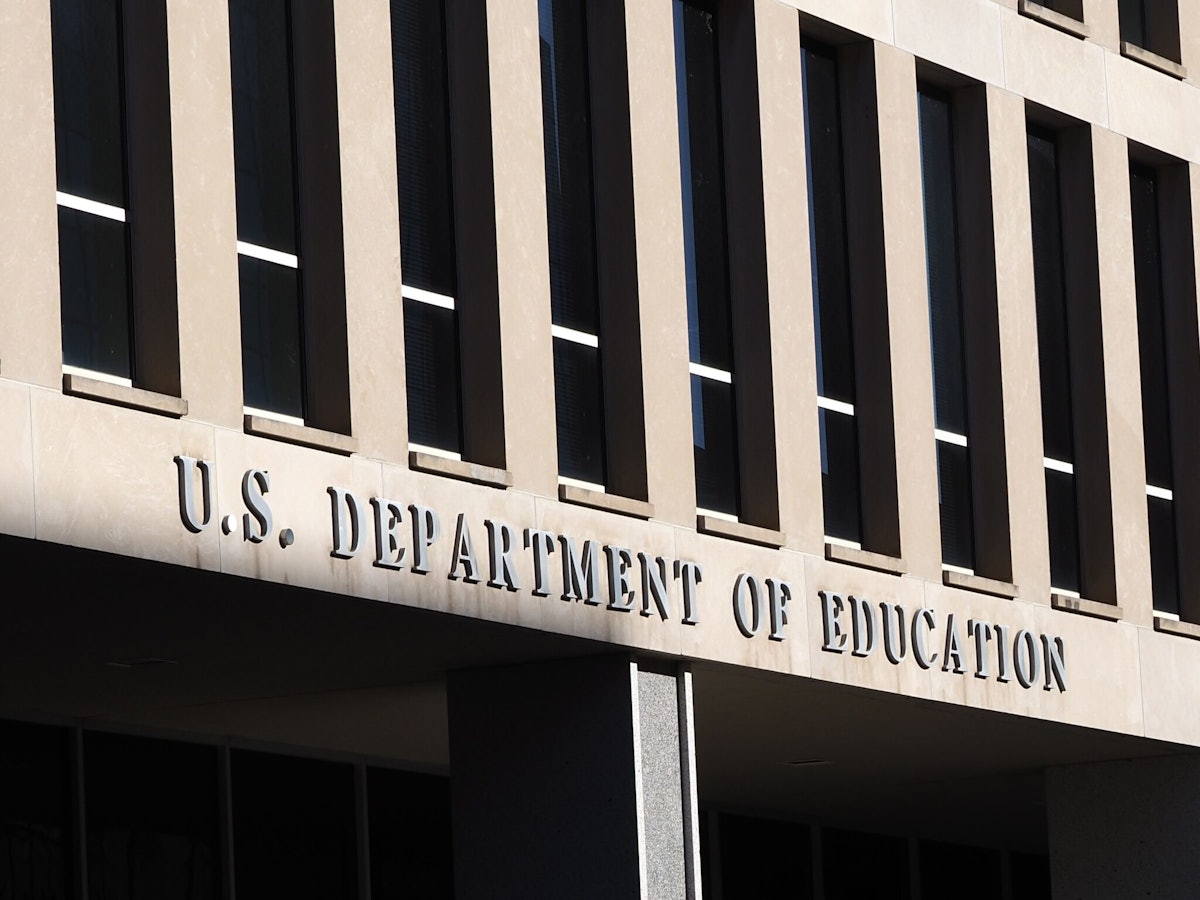
    Nearly a month into President Donald Trump’s second term, for instance, the U.S. Department of Education slashed $600 million in “divisive” teacher training grants — specifically through the Teacher Quality Partnership Program and the Supporting Effective Educator Development Grant Program. The department said in February that those cuts were made to grants that “included teacher and staff recruiting strategies implicitly and explicitly based on race.” Advocates for the federal grants said the decision particularly impacted funding for programs aiming to improve teacher diversity in classrooms. 

    For years, there’s been a push for more policies to support the recruitment and retention of teachers of color as the nation’s K-12 public school student population grows more racially diverse and as teacher shortages persist. Advocates often point to research that shows when schools hire teachers who look like their students — particularly students of color — student achievement improves and disciplinary rates go down.

    While research from the National Council on Teacher Quality found that teacher diversity slowly grew between 2014 and 2022, those findings also suggested that teachers of color are opting out of careers in education as teacher diversity lags behind the rate of the broader workforce.  

    But with the U.S. Supreme Court’s 2023 ruling that repealed race-conscious admissions in higher education and the Trump administration’s ongoing push against DEI, some experts advise districts and states to be cautious when approaching teacher diversity efforts moving forward. On the flip side, advocates say the need for these initiatives remain. 

    A ‘scary’ time for teacher diversity initiatives

    Before Modesto City Schools began its teacher workforce diversity partnership with California State University, Stanislaus, there was a “mismatch” in representation between students of color and teachers of color in its elementary schools, said Shannon Panfilio-Padden, an associate professor at the university’s college of education. 

    During the 2021-22 school year, elementary enrollment for students of color in Modesto City Schools could range from 60% in some buildings to as much as 98% in others. That’s compared to the range of 13% to 66% among elementary teachers of color in the district, said Panfilio-Padden, who helped oversee the partnership between the district and university. “What Modesto had been working on for years was diversifying their teacher workforce, but no matter what they tried, it wasn’t working.”

    By improving collaboration and identifying workforce barriers with Modesto City Schools, CalState Stanislaus — which has a majority Hispanic student population — was able to double the number of candidates who are teachers of color, from 6 to 16, who entered the district’s classrooms between the 2021-22 and 2023-24 school years, said Panfilio-Padden. 

    The partnership was spurred through CalState’s Center for Transformational Educator Preparation Programs, which aims to boost recruitment and retention of teachers of color to serve California’s diverse student population. 

    At a time when such initiatives are being targeted at the federal level, Panfilio-Padden said “it can be scary.” But, she said, she’s dedicated to supporting her students, who are aspiring teachers from diverse backgrounds. 

    “We need teachers so desperately in California, and we need highly qualified teachers,” she said. Panfilio-Padden said the university can’t predict the amount of federal aid or state grant money that will be available to aspiring teachers, but “at the same time, when they continue to come to us with an enthusiasm to teach elementary kids, it just puts everything into perspective.” 

    Meanwhile, on the other side of the country, Massachusetts enacted the Educator Diversity Act in November 2024 as part of the state’s economic development package. The legislation looks to address barriers to recruiting and retaining educators of color by allowing multiple pathways for teacher certification, creating a statewide dashboard for tracking educator workforce diversity at the district level, and increasing uniformity in hiring practices to support candidates from underrepresented backgrounds. 

    Source link

  • Federal Court Blocks Education Department’s Diversity Directive, Marking Victory for Academic Freedom Advocates

    Federal Court Blocks Education Department’s Diversity Directive, Marking Victory for Academic Freedom Advocates


    A federal judge in New Hampshire delivered a significant legal victory Thursday for proponents of diversity, equity, and inclusion (DEI) programs in education by granting a preliminary injunction against the U.S. Department of Education’s controversial February “Dear Colleague” letter that critics had denounced as an unprecedented attempt to restrict DEI initiatives nationwide.

    The ruling temporarily blocks the Education Department from enforcing its February 14, 2025, directive against the plaintiffs, their members, and affiliated organizations while litigation continues. The court determined the directive potentially contradicts established legal protections for academic freedom and may violate constitutional rights by imposing vague restrictions on curriculum and programming.

    The February directive had sent shockwaves through higher education institutions across the country, with many administrators and faculty expressing concern that their diversity programs could trigger federal funding cutoffs. According to court documents, some educators reported feeling targeted by what they characterized as a “witch hunt” that put their jobs and teaching credentials at risk.

    “Today’s ruling allows educators and schools to continue to be guided by what’s best for students, not by the threat of illegal restrictions and punishment,” said National Education Association President Becky Pringle in a statement following the decision. She further criticized the directive as part of broader “politically motivated attacks” designed to “stifle speech and erase critical lessons” in public education.

    The coalition of plaintiffs who filed the lawsuit on March 5 includes the National Education Association (NEA), NEA-New Hampshire, the American Civil Liberties Union (ACLU), ACLU of New Hampshire, ACLU of Massachusetts, and the Center for Black Educator Development.

    Sharif El-Mekki, CEO and founder of the Center for Black Educator Development, emphasized the significance of the ruling beyond its immediate legal implications. “While this interim agreement does not confirm the Department’s motives, we believe it should mark the beginning of a permanent withdrawal from the assault on teaching and learning,” he said. “The Department’s attempt to punish schools for acknowledging diversity, equity and inclusion is not only unconstitutional, but it’s also extremely dangerous — and functions as a direct misalignment with what we know to be just and future forward.”

    Education legal experts note that the case represents a critical battleground in the ongoing national debate about how issues of race, identity, and structural inequality should be addressed in educational settings. The preliminary injunction suggests the court found merit in the plaintiffs’ arguments that the Education Department overstepped its authority and potentially violated First Amendment protections.

    Sarah Hinger, deputy director of the ACLU Racial Justice Program, called the ruling “a victory for students, educators, and the fundamental principles of academic freedom,” adding that “every student deserves an education that reflects the full diversity of our society, free from political interference.”

    The lawsuit challenges the directive on multiple legal grounds, including violations of due process and First Amendment rights, limitations on academic freedom, and exceeding the department’s legal mandate by dictating curriculum content. The plaintiffs argue that the directive created a chilling effect on legitimate educational activities while imposing vague standards that left educators uncertain about compliance requirements.

    Gilles Bissonnette, legal director of the ACLU of New Hampshire, emphasized the importance of the ruling for educational inclusivity. “The court’s ruling today is a victory for academic freedom, the free speech rights of educators, and for New Hampshire students who have a right to an inclusive education free from censorship,” he said. “Every student, both in the Granite State and across the country, deserves to feel seen, heard, and connected in school – and that can’t happen when classroom censorship laws and policies are allowed to stand.”

    The injunction comes at a time when many colleges and universities have been reassessing their diversity initiatives amid increased public scrutiny and policy debates. Higher education institutions have expressed particular concern about maintaining both compliance with federal regulations and their commitments to creating inclusive learning environments.

    The Department of Education has not issued a public response to the court’s decision. The case will now proceed to further litigation as the court considers whether to permanently block the directive.

    Source link

  • Embracing Workforce Diversity in Higher Education for a Sustainable Future

    Embracing Workforce Diversity in Higher Education for a Sustainable Future

    • Professor Antony C. Moss is Pro Vice Chancellor Education and Student Experience at London South Bank University.

    The recent announcement from Universities UK that it will be setting up a taskforce to look at efficiency and transformation across the higher education sector is very welcome, if not long overdue. As our sector faces existential challenges regarding financial sustainability, it is absolutely right that we look more critically at the way we organise ourselves and run our institutions. This means more than looking at shared professional service models, moving IT systems into the cloud, or diversifying income streams. The argument I want to develop here is that we desperately need a more diverse workforce to support a higher education sector which serves a far broader purpose for society than it did when our current workforce model was first established.

    The Uneven Growth of the Higher Education Sector

    It is a fascinating exercise to visualise the growth of the UK higher education sector over time. Robbins reported the total number of full-time UK students in 1960 was just short of 200,000. Fast forward to the latest data available via the Higher Education Statistics Agency, and in 2022/23, that number has grown to almost three million. While that 1960 figure does not include student numbers enrolled in the polytechnics of the day (which of course mostly became universities in 1992, stimulating a sudden burst of growth in student numbers), this remains an extraordinary expansion by any standard.

    As a sector, we have weathered much criticism in recent years regarding the extent to which we are recruiting too many students. While this might be a tempting conclusion given the figures cited above, it is worth keeping in mind that the needs of our labour market have also changed dramatically since 1960. For example, in 2021/22, over 160,000 of the 2.25 million students in higher education that year were studying towards a nursing qualification. In other words, the nursing student population of 21/22 equates to more than three-quarters of the entire full-time UK university student population in 1960. We all benefit from advancements in modern medicine, but this requires us to invest in a workforce with an ever-increasing level of technical knowledge and skill. This same argument could be made for the workforce in many other sectors of our economy, and so we should continue to expect expansion and diversification of our education sector to support the types of jobs and skillsets required for the future.

    While we might debate and reflect on the number of students entering higher education, it is less common to hear debates and discussions on the size of the workforce who are the backbone of our own sector. While I have been unable to locate accurate workforce data as far back as 1960, the Higher Education Statistics Agency have published data from 2005/6. At that time, UK higher education providers employed a total of 355,410 staff, of which 164,875 were in academic roles. Moving ahead to 2022/23, we now employ 480,845 staff, of whom 240,420 are in academic roles. In itself, this is a significant workforce expansion – a total increase in staffing of over a third, and a 50% increase in academic staff numbers over a 17-year period. Or in more human terms, that is a net increase of 75,545 full-time equivalent academic staff.

    What is perhaps most remarkable is that this expansion of our workforce has been, at a national level, an organic process. We have no whole-sector workforce plan and no sector-wide discussion around the shape and size of the workforce we need in 5, 10, or 25 years’ time. In their 2021 review of HE sector workforce changes, Alison Wolf and Andrew Jenkins illustrated both the expansion and changing shape of the sector workforce but also demonstrated that this has been largely reactive and not driven by a clear set of principles or plans.

    The reason this all matters in the context of discussions about financial sustainability is that the expansion of the higher education sector has been uneven in terms of the growth of our different areas of activity. As illustrated in Figure 1, over the past ten years, the overwhelming majority of our income growth has been linked to teaching.

    Figure 1: Income of UK Higher Education Providers by income type and academic year (£ millions)

    From a workforce perspective, with teaching income rising sharply against relatively stable income for research, it would be reasonable to assume that the additional 75,454 academic staff noted above would be almost entirely focused on teaching. However, the best available data we have on the proportion of time spent by academics on different activities – the Transparent Approach to Costing (TRAC) returns published by the Office for Students – shows that there has been almost no change in the proportion of academic staff time spent on research activity. For years where there are comparable TRAC data, we can see that in 18/19, research activity accounted for 35.3% of academic activity, while in 22/23 that figure was 34.1% (and from Figure 1, we can see that teaching-related income grew over this period by over £7bn, while research income only grew by £821m). If research income to the sector had been growing at the same rate as teaching income, these figures would not be a concern – but that is very clearly not the case.

    One interpretation of these figures could simply be that this is how higher education has always operated. Tuition fees are, in part, spent on recruiting academic staff, and academics are typically recruited on contracts which include an expectation of them engaging in research and scholarly activities. Moreover, the argument goes, this is fundamental to the mission of universities, which is not solely to teach degree courses but also to generate new knowledge.

    This argument is flawed, however, due to a decade of tuition fee freezes set alongside the massive growth in student numbers, which far outstrips growth in research-related income. Our workforce model cannot simply continue growing in a linear fashion while the demands and expectations placed on the workforce are changing as significantly as they have. To provide an analogy, if the government were to announce a massive boost in research funding for universities, and the sector were to respond to this by indicating that around a third of this money would actually be spent on teaching, I would expect eyebrows to be raised across the board. But this is precisely what we have been doing, over a long period of time, in relation to teaching-related income.

    Developing a Workforce Model for the Future

    As noted above, our sector does not have a workforce plan; we have essentially grown our workforce using traditional contract types and workload models. On the other hand, the NHS Long Term Workforce Plan is an example of taking a whole-sector approach to reflect on workforce needs for a large and complex sector. Importantly, the plan proposes a significant expansion of its workforce, which will depend heavily on the capacity and ability of our further and higher education sectors to deliver. This does not simply entail the expansion of current training routes for existing professions, but the diversification of the types of qualification we offer, and continued development of curricula to ensure the skills being taught reflect long-term workforce needs.

    There are many examples of other sectors and, indeed, government departments developing workforce plans and strategies which similarly rely upon the capacity and expertise of further and higher education institutions to fulfil education and training needs. What is invariably missing from such plans is any meaningful reflection on the assumptions made about the capacity and structure of our tertiary education sector. Shortages in teachers can be addressed by funding more training, but are we confident that we have a large enough workforce of teacher-educators to meet this demand? Similarly for nurses, doctors and allied healthcare professionals and, indeed, for any other sector who may be assuming that the tertiary sector is ready and waiting to absorb a continued expansion of students to meet their own future workforce needs.

    Moving beyond subject expertise and whether we can simply recruit a large enough workforce to teach, the higher education sector has also changed beyond recognition in terms of the range of qualifications we offer. The three-year undergraduate degree remains the most common study route, but higher education providers now also offer degree apprenticeships, higher technical qualifications, and a growing number of professional and technical qualifications which are quite different to traditional university study. These differences arise due to the type of students they attract, the content of the qualifications themselves, and also the very different regulatory frameworks which underpin their delivery and monitoring.

    These changes place a very different set of needs and expectations on our workforce – both academic and professional services colleagues. Degree apprenticeship programmes require a different pedagogic approach to a traditional undergraduate degree, and come with a significant set of additional regulatory expectations. Very few academics will have ever encountered the Education and Skills Funding Agency prior to the growth of apprenticeships standards, and Ofsted was the regulator of everyone except us (outside of university education departments). These changes are not trivial, but they have happened rapidly, and without overt consideration of the way we need to support, develop and expand our own workforce.

    While 1960s higher education was, in relative terms, a fairly monolithic sector, today’s higher education sector is extraordinarily diverse and delivers massive economic and societal benefits, which are incomparable to the past. Our sector has changed, and I would strongly argue it has changed for the better. However, in the current climate of deep financial challenge, we must also reflect critically on the way we develop and diversify our own workforce. This, in my view, means stepping outside the well-trodden path of introducing so-called ‘teaching only contracts’ for academics – essentially, academic contracts where the focus is on professional practice and pedagogic leadership, which still retain a career pathway through to the highest academic ranks. Rather, we need to invest in developing a new segment of our workforce, of expert educators who are specialised in areas such as skills development and technical education. If done well, this has the potential to deliver a range of benefits:

    1. Stabilising the financial precarity of our sector. When teaching income is rising faster than research income, we need to ensure we are not disproportionately growing the cross-subsidy of research from teaching income (while recognising that some degree of cross-subsidy is part of the higher education funding model).
    2. Improving the quality of education. By developing more specialised roles within the sector, we can deliver better experiences and outcomes for students, and ensure that they are better able to succeed beyond their time in higher education.
    3. Improving working conditions for all staff. Through the creation of more specialised roles and career pathways which are better aligned to the needs of the sector as a whole.
    4. Supporting our national ambitions for Growth and Skills. As Skills England looks at our future workforce needs, it is critical that we have a stable and high-performing education sector to educate and train the workforce. We cannot continue to take for granted that our education sector can organically bend itself to meet changing industrial and economic needs, without a strategy to support the reforms which will be required.

    Universities UK and its taskforce on efficiency and transformation should, I suggest, prioritise a review of our underpinning workforce model to ensure that we are collectively fit for the future. But this work cannot happen in isolation. Our sector will be able to respond more effectively to changing demands if we work together with Skills England and the Department for Education to better understand the role that higher education can play in delivering on national ambitions for growth and skills development.

    Source link

  • UC System Freezes Hiring, Bans Diversity Statement Mandates

    UC System Freezes Hiring, Bans Diversity Statement Mandates

    The University of California System’s president announced a systemwide hiring freeze and other “cost-saving measures, such as delaying maintenance and reducing business travel where possible.”

    “Because every UC location is different, these plans will vary,” president Michael V. Drake said in a Wednesday letter to the campuses of one of the country’s largest higher education systems. He said “every action that impacts our University and our workforce will only be taken after serious and deliberative consideration.”

    Drake pointed to a “substantial cut” to the system in the California state budget atop the Trump administration’s disruptive national reduction in support for postsecondary education. He said the administration’s executive orders and proposed policies “threaten funding for lifesaving research, patient care and education support.”

    “The Chancellors and I are preparing for significant financial challenges ahead,” Drake wrote.

    Whenever hiring does resume, UC universities and their components will no longer be able to require that applicants submit diversity statements. Janet Reilly, chair of the UC Board of Regents, said in a separate statement Wednesday that the board directed the system to eliminate such mandates.

    “While the University has no systemwide policies requiring the submission of diversity statements as part of employment applications, some programs and departments have used this practice,” Reilly said.

    Paulette Granberry Russell, president and chief executive officer of the National Association of Diversity Officers in Higher Education, told Inside Higher Ed that, “while I think diversity statements added value on the front end of a search,” it’s far more important to have a structured approach to faculty hiring. She said this approach should eliminate biases and consideration of “non–job-related criteria,” such as accents or lack of eye contact, from the process.

    Diversity statements, she said, are “not the defining factor in whether or not somebody’s going to be successful” if they earn the position.

    Source link

  • University of Hawai‘i dean sues law professor who criticized diversity event

    University of Hawai‘i dean sues law professor who criticized diversity event

    When the University of Hawai‘i at Manoa planned a Black History Month event in February 2023 that lacked any black facilitators, law professor Kenneth Lawson publicly challenged a dean about it at a faculty meeting. Nearly two years later, and shortly after clashing with administrators over their decision to doctor one of his class presentations,  Lawson suddenly must defend himself against a defamation lawsuit over his remarks — one filed by that same dean. 

    On Feb. 20, Lawson’s legal team filed an anti-SLAPP motion to dismiss the dean’s lawsuit, in which she alleged that Lawson’s heated arguments with her concerning the Black History Month event, as well as Lawson’s call to boycott the event, were defamatory. Lawson’s legal team argues that the defamation suit is “an attempt to chill and silence Professor Lawson’s constitutionally protected speech.” And the fact that it came fast on the heels of a curriculum dispute raises further questions of retaliation.

    2023: Lawson files First Amendment lawsuit against university following imbroglio over Black History Month event 

    The threats to Lawson’s expressive freedoms date to a faculty meeting back in February 2023, where he voiced vehement objections to a scheduled Black History Month event that was to feature a panel with no black facilitators. (Lawson is black.) 

    At the meeting, UH Dean Camille Nelson clashed with Lawson over the issue. Lawson claimed Nelson (who is also black) didn’t have sufficient experience in or understanding of the Civil Rights Movement. Nelson retorted that her experience as a black woman gave her perspective to understand racism, but that she did not want to litigate that issue during the meeting. In a follow-up email, Lawson accused Nelson of being “highly dismissive” of his objections, and a few days later, he called for a boycott of the panel via a university listserv. 

    Law professor challenges university after campus ‘shooting’ hypothetical changed in lesson plan

    News

    The University of Hawai’i violated academic freedom and set a dangerous precedent with unilateral revisions to a law professor’s presentation on a legal concept.


    Read More

    UH banned Lawson from campus and launched an investigation to determine whether he had created a “hostile work environment” for his colleagues. The university also issued no-contact orders barring Lawson from contacting certain administrators and restricting his use of university listservs. 

    Lawson, in turn, sued UH for violating his First Amendment rights to speak on a matter of public concern: racism and inclusion at the university. 

    The university eventually sanctioned Lawson for the February 2023 incident, requiring him to complete mandatory training and serve a one-month suspension without pay. Lawson returned to teaching in August of 2024, after completing the university’s sanctions under protest as his legal case proceeded.

    2025: Lawson becomes locked in conflict over academic freedom violations

    Last month, we told readers about Lawson’s clash with the university over an in-class PowerPoint presentation. Last September, Lawson used a hypothetical involving himself and two deans — one of whom shoots at the other, misses, and hits Lawson accidentally — to teach his law students the legal concept of transferred intent. The accompanying slide included website portraits of himself and the two deans to illustrate the example. 

    When an anonymous student filed a complaint about the example, the university’s response to the complaint presented a master class in how to violate academic freedom. The university ordered Lawson to change the hypothetical because it could be “disturbing and harmful,” despite the fact that he had not violated any policy. When Lawson rightfully demurred, the university unilaterally changed Lawson’s slides, removing images of the two deans—but leaving Lawson as the victim of the shooting. (Why students would be less disturbed by a hypothetical that still depicted their professor as a shooting victim was not explained.)

    Slide with an image of law professor Ken Lawson alongside generic man/woman icons

    FIRE sent two letters to the university urging it to restore the hypothetical to its original state. We argued that unilaterally changing a faculty member’s teaching materials raised serious concerns about the university’s fealty to the basic tenets of academic freedom. Those tenets protect the right of faculty members to determine how best to teach their subjects. This freedom is even more important when those topics are complicated, difficult, or potentially upsetting to students. Going over Lawson’s head to change the hypothetical without his consent also raises serious concerns for future academic freedom issues. Would UH consistently bypass faculty rights to change instruction until the teaching satisfied administrators?

    UH dean files defamation lawsuit

    Shortly after Lawson filed his censorship grievance, and nearly two years after the case’s original filing, Nelson hit Lawson with a lawsuit of her own: She alleged that Lawson’s behavior at the meeting nearly two years earlier, and his subsequent email to the university listserv, had defamed her. 

    She suffered significant emotional distress and reputational harm, she says, because of Lawson’s alleged accusations of her of being a silent “Intellectual Negro.” 

    Yet defamation claims require proof that the targeted person made false statements of fact, not just heated statements of opinion. There is no way to read Lawson’s remarks as anything but opinion. Furthermore, the First Amendment offers a “wide latitude” for faculty members to express themselves “on political issues in vigorous, argumentative, unmeasured, and even distinctly unpleasant terms.” 

    Baseless SLAPP suits threaten the speech rights of all Americans

    News

    FIRE President Greg Lukianoff explains why we are defending Iowa pollster J. Ann Selzer against Donald Trump.


    Read More

    SLAPP lawsuits — strategic lawsuits against public participation — are often used to silence expression by bringing legal claims about others’ speech. Lawson’s legal team filed his anti-SLAPP motion seeking the dean’s suit’s dismissal on Feb. 20. 

    We hope this motion will give UH the sharp reminder it needs that faculty members have a right to speak on matters of public concern. Faculty members also have the right to determine how to approach their courses. And faculty members shouldn’t have to fear retaliation — in the university setting or in the court of law — for exercising their First Amendment rights.

    We’ll continue to keep readers apprised of Lawson’s battle against his university.

    Source link

  • Humane societies are thoughtful about how to promote equality, diversity and inclusion

    Humane societies are thoughtful about how to promote equality, diversity and inclusion

    We all knew that the Trump administration’s attacks on diversity, equality and inclusion would have ramifications in the UK, but we probably didn’t expect it to show up quite so quickly.

    This Saturday’s lead in The Times warned that – in tacit contrast to President Trump’s apparent intention that all federal funding should cease to organisations or projects that champion inclusion – UK universities could now lose public money if they do not.

    This refers, of course, to the ongoing consultation on the people, culture and environment measure in the 2029 Research Excellence Framework. Back in 2023, our tongues firmly in our cheeks, we held a panel session at our Festival of HE titled “Has REF gone woke?” That joke no longer looks so funny.

    DK has explained elsewhere on the site exactly what’s wrong with the claims about the REF in The Times, should you need ammunition to fire over the dinner party table. We should hardly be surprised by now to see half truths and scare tactics mobilised in this particular culture war. Its proponents are not in the main motivated by a concern for evidence as by animus against a particular set of values which it suits them to project as being in opposition to [delete as appropriate] common sense/free market economics/honest working people/standards in public services/The Meritocracy.

    While the spectacle in the US of wealthy white men openly deploying their enormous power against those who are minoritised and disenfranchised is truly horrifying, FT science columnist Anjana Ahuja last week pointed to a larger concern: that scientists, funders and research organisations would quietly divest from equality, diversity and inclusion initiatives, or deprioritise vital research into differential experiences of or outcomes from public health, provision of public services, justice, or education, consciously or unconsciously orienting the scientific endeavour towards the locus of power rather than towards truth or justice. Any such reorientation would have a serious impact, both through loss of talent in research, and loss of knowledge that could improve, and save, many lives.

    The politics in the UK

    You might feel that despite the tendency of part of the UK media to promulgate the culture wars, UK research is unlikely to experience anything like as serious as the US. And that is probably correct in the short term, given the current flavour of the Westminster and devolved governments. The temptation when there is a lot of noise but without much real likelihood of action, is to stay quiet, and wait for the noise to pass. That would be a mistake.

    Despite the size of the Labour government’s majority, the current political battle – including the Labour Party – is on the populist right. The Conservatives under opposition leader Kemi Badenoch are locked in a struggle with Reform, which is currently not only beating the Tories in the polls, but is also neck and neck with Labour as a chunk of (socially, if not necessarily economically) conservative voters become impatient with Labour but are not ready to turn back to the big-C Conservatives.

    None of this should be an immediate cause for concern – the next election is a long way off, and Farage remains a good distance from No 10. But it does appear to mean, unfortunately, that political discourse tends to gravitate to the populist right, as it is these potential Reform voters both parties hope to woo back. Badenoch – whose anti-woke credentials formed part of her appeal to Tory members – has called diversity and inclusion work “woke indoctrination.” Labour has been adamant on the need to cut net migration, a perennial Reform issue, despite the likely impact on its stated priority of economic growth. The next Westminster election may yet be fought on an “anti-woke” platform. And Labour may be a one-term government, as Biden was in the US.

    What could the response be?

    An instance last week in which Secretary of State for Health Wes Streeting was asked about diversity, equality and inclusion activity in the NHS gives a sense of the issues higher education institutions will be working through in this space. Streeting’s measured answer acknowledged the cost of such activity in a time of economic constraint but robustly defended the importance of, for example, anti-racist bullying and harassment work in the NHS. He added that on occasion some “daft things” have been done in the name of equality, diversity and inclusion – the part of his answer which inevitably formed the bulk of media headlines.

    On equality, diversity and inclusion there is a principle at stake and a “political fight” to be had, in Streeting’s words, in which organisations that operate in the public interest must continue to stand up for the idea that any just and humane society makes a meaningful effort to address systemic and structural inequality no matter the economic environment or the political backlash.

    But nor should external pressures dissuade the academic and scientific community, higher education institutions or students’ unions, from examining the evidence, and keeping the public conversation open about how such efforts are best accomplished in practice.

    The culture wars thrive on category slippage between principle and practice – when one or two examples of specific initiatives are held to stand for all forms of equality and inclusion work. Anyone may have doubts about the merits of any given approach, and the best way to engage with those doubts is through evidence and good-faith discussion. Higher education has a responsibility not simply to protect and defend its own practice but to subject equality, diversity and inclusion practice to thoughtful scrutiny in the interests of promoting that principle – to contribute to making the public conversation as informed as possible.

    Research England, in its extended consultation and discussion of its people, culture and environment measure, and its mobilisation of evidence, is therefore a shining exemplar of good practice. Inevitably some will feel that the resultant system puts too much weight on equality, while others will wish that the funding mechanisms would lean in harder.

    What is not really arguable is that our collective approach to the management of research and education – what is prioritised, who is supported – has real-world consequences that shape the future of our society. To suggest that it’s wrong for evidenced consideration of how equality, diversity, and inclusion manifests in the funding mechanisms that drive those decisions is simply absurd.

    Source link