Tag: DOJ

  • Austin Community College Joins Fight Against DOJ and Texas

    Austin Community College Joins Fight Against DOJ and Texas

    Civil rights groups have been piling on to intervene in the recent Texas court case that ended in-state tuition for noncitizens living in the state. Now Austin Community College and a Texas undocumented student are joining the effort to defend the now-defunct law.

    College officials worry they’ll lose students and revenue if undocumented students’ tuition prices suddenly skyrocket. Austin Community College is the first Texas college to try to join the lawsuit.

    The Texas Dream Act, which allowed noncitizens who grew up in the state to benefit from in-state tuition, was overturned last month after the Department of Justice sued Texas over the law. The state didn’t fight back and instead sided with the DOJ mere hours after the legal challenge. A week later, the Mexican American Legal Defense and Educational Fund, a Latino civil rights organization, filed a motion on behalf of a group of Texas undocumented students to intervene in the lawsuit. The group argued the swift resolution of the DOJ’s legal challenge denied those affected any chance to weigh in, so the students should become intervenors, or a party to the case, and have their day in court.

    Other groups quickly followed MALDEF’s lead. Since last week, the American Civil Liberties Union of Texas, the Texas Civil Rights Project, Democracy Forward and the National Immigration Law Center have joined the fight, representing the activist group La Unión del Pueblo Entero, the Austin Community College District’s Board of Trustees and Oscar Silva, a student at University of North Texas. The groups filed emergency motions on their behalf to intervene in the lawsuit and get relief from the judgment that killed the law. If these legal efforts are successful, a case so quickly open and shut by Texas and the DOJ could be reopened.

    Austin Community College board chair Sean Hassan said in a news release from the Texas ACLU chapter that college officials deserved to have their say on the policy shift.

    “Employers and taxpayers are looking to community colleges to produce a sufficient number of highly skilled graduates to meet workforce needs,” Hassan said. “If legislation or court decisions will impact our ability to meet these expectations, we should have a seat at the table to help shape responsible solutions. The action by our board asks the court to ensure our voice is heard.”

    Calculating the Costs

    In court filings, Austin Community College leaders argue that the institution will lose revenue because of the abrupt end of the Texas Dream Act. They estimated that about 440 students will see their tuition rates quadruple, and as a result, hundreds of students will stop out and prospective students will avoid enrolling in the first place. College leaders also argued in the motion to intervene that the need for scholarships will rise, putting extra financial pressure on the community college.

    They cited other potential costs as well, including setting up new processes to identify and notify noncitizen students of tuition rate changes and ramping up public relations efforts so the college can continue to “market itself as an accessible, inclusive, and affordable institution for all Texas high school graduates,” despite the policy change.

    “The loss of these students will have a cascading effect on campus life, academic programs, and student support services,” Austin Community College chancellor Russell Lowery-Hart said, according to court filings.

    The motion also detailed how Silva, the student, would likely have to withdraw from his joint bachelor’s and master’s program at the University of North Texas if he lost his in-state tuition benefits. He was expected to graduate next spring. Silva has lived in Texas since the age of 1 and attended Texas K–12 schools.

    “The Texas Dream Act means everything to me,” Silva said in the ACLU of Texas news release. “This law has made my education possible. Without it, college would’ve been out of reach for me as a first-generation college student.”

    The motion comes after Wynn Rosser, commissioner of higher education for the Texas Higher Education Coordinating Board, sent out a June 18 memo directing colleges and universities to determine which of their students are undocumented and need to be charged higher tuition starting this fall.

    Trouble Over Timelines

    Texas, the DOJ and civil rights groups have since been haggling over how fast the U.S. District Court should move in response to the new motions.

    The civil rights groups want a decision soon. But, in a joint submission to the court on June 30, the Trump administration and Texas argued emergency motions were uncalled-for and the legal proceedings shouldn’t be expedited, though they acknowledged the intervenors raised issues “which merit response.”

    “Expediting responses to intervenors’ motions would only serve [to] put the United States and Texas at a disadvantage, having to brief and respond to intervenors’ myriad of arguments in a drastically shorter timeframe than would otherwise be necessary, and would do nothing to help intervenors expedite any potential relief,” the response read.

    But the civil rights groups representing Austin Community College and other intervenors weren’t having it. On July 1, they asked that the court deny the request.

    The attorneys argued that the state and the federal government moved quickly to resolve the DOJ’s lawsuit and end the Texas Dream Act, but “when asked to respond on an expedited basis to the consequences of their actions and the imminent harm raised” by the motions, “the parties balk, insisting that the court should postpone its consideration of these motions until well past the point when the looming harms become irreversible.”

    That same day, Judge Reed O’Connor gave the Trump administration and Texas until July 14 to respond to the motion to intervene, which aligns with their requested timeline. He also delayed briefings on the motions to stay the judgement and for relief until he rules on the motion to intervene.

    As this fight plays out in Texas, the DOJ is targeting other states that offer in-state tuition benefits to undocumented students. Last month the Trump administration filed similar lawsuits in Kentucky and Minnesota, which have yet to be resolved.

    Source link

  • DOJ Sues Minnesota Over In-State Tuition for Noncitizens

    DOJ Sues Minnesota Over In-State Tuition for Noncitizens

    The U.S. Department of Justice sued Minnesota lawmakers Wednesday over the state’s policy allowing in-state tuition benefits for undocumented students.

    The lawsuit names Gov. Tim Walz, Attorney General Keith Ellison and the state’s Office of Higher Education as defendants. It claims Minnesota is violating federal law and discriminating against U.S. citizens by permitting noncitizens who grew up in the state to pay in-state tuition rates. Under the Minnesota Dream Act, signed into law in 2013, undocumented students have to meet various criteria to qualify, including spending three years at and graduating from a Minnesota high school.

    The suit also takes issue with the state’s North Star Promise Program, a free college program launched last year for Minnesotans who meet certain requirements, including undocumented students who live in the state.

    The lawsuit comes after the Justice Department successfully sued Texas over the same issue earlier in June. Texas swiftly sided with the federal government, and within hours, its two-decade-old law allowing in-state tuition for undocumented students became moot. The DOJ also sued Kentucky politicians over its in-state tuition policy last week. The lawsuits cite President Donald Trump’s May executive order that called for a crackdown on cities and states with laws that benefit undocumented immigrants, including those that offer in-state tuition benefits.

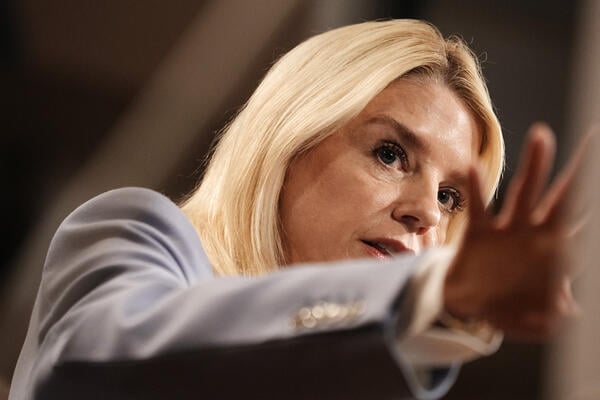
    “No state can be allowed to treat Americans like second-class citizens in their own country by offering financial benefits to illegal aliens,” Attorney General Pamela Bondi said in a news release. “The Department of Justice just won on this exact issue in Texas, and we look forward to taking this fight to Minnesota in order to protect the rights of American citizens first.”

    Source link

  • After Texas, DOJ Targets Kentucky’s In-State Tuition Policy

    After Texas, DOJ Targets Kentucky’s In-State Tuition Policy

    Undocumented students and immigrant advocacy organizations are still reeling after Texas, earlier this month, swiftly sided with a U.S. Department of Justice lawsuit against its policy of permitting in-state tuition for undocumented students. The two-decade-old law, which Republican state lawmakers had recently tried and failed to quash, was dismantled within a matter of hours in a move some critics called collusive.

    Now the DOJ is employing the same strategy all over again—this time in Kentucky. The department filed a complaint in U.S. District Court for the Eastern District of Kentucky on Tuesday challenging the in-state tuition policy for undocumented students. The lawsuit, which names Democratic governor Andy Beshear, Commissioner of Education Robbie Fletcher and the Kentucky Council on Postsecondary Education, takes issue with a policy that allows graduates of Kentucky high schools who live in the state, regardless of citizenship, to access in-state tuition benefits.

    “No state can be allowed to treat Americans like second-class citizens in their own country by offering financial benefits to illegal aliens,” U.S. attorney general Pamela Bondi said in a statement. “The Department of Justice just won on this exact issue in Texas, and we look forward to fighting in Kentucky to protect the rights of American citizens.”

    Beshear is trying to distance himself from the legal battle. Crystal Staley, communications director for the governor’s office, said in a statement that the office hasn’t been served with a lawsuit, nor did it receive advance notice or hold prior conversations with the department about the regulation. She emphasized that the in-state tuition policy was established by the Kentucky Council on Postsecondary Education more than a decade ago.

    “Under Kentucky law, CPE is independent, has sole authority to determine student residency requirements for the purposes of in-state tuition, and controls its own regulations,” Staley wrote. “The Governor has no authority to alter CPE’s regulations and should not be a party to the lawsuit.”

    The Kentucky Council on Postsecondary Education also only became aware of the lawsuit Wednesday morning and reported that afternoon that it had not yet been served legal documents.

    “Our staff General Counsel is reviewing pertinent federal laws and state regulations at this time to determine next steps,” Melissa Young, the council’s communications senior fellow, wrote in an email to Inside Higher Ed.

    As of Wednesday evening, no new developments in the case had taken place, but Kentucky attorney general Russell Coleman, a Republican, indicated in a statement to Inside Higher Ed that his office planned to support the lawsuit.

    “Preserving in-state tuition for our citizens at the commonwealth’s premier public universities is important to fostering Kentuckians’ potential and encouraging a vibrant state economy,” Coleman said in the statement. “Our Office will support the Trump Administration’s efforts to uphold federal law in Kentucky.”

    As in Texas, a group of Republican lawmakers proposed legislation earlier this year to prevent noncitizens in Kentucky from qualifying as residents and accessing in-state tuition benefits. But the bill didn’t proceed further.

    The new lawsuit heightens fears among undocumented students’ advocates that the Trump administration could target in-state tuition policies across the country, which help undocumented students in 23 states and D.C. pay for college when they can’t access federal financial aid. Advocates also worry the Trump administration could continue to sue red states to secure policy wins desired by both Republican state lawmakers and the federal government. (In Kentucky, Republicans control the attorney general’s office and the State Legislature.)

    Monica Andrade, director of state policy and legal strategy at the Presidents’ Alliance on Higher Education, predicted after the Texas lawsuit, “This might only be the beginning, and there might be future actions that extend beyond Texas.”

    Now she worries she’s been proven right.

    Pushback in Texas

    The move in Kentucky comes as undocumented students and civil rights organizations are fighting back in Texas.

    The Mexican American Legal Defense and Educational Fund, a Latino civil rights organization, filed a motion on behalf of undocumented students in Texas to intervene in the DOJ lawsuit. The motion argues that the speed at which Texas and the DOJ came to an agreement and the judge closed the case provided no opportunity for a hearing or for the public to weigh in.

    “Our federal courts are public agencies,” said Thomas A. Saenz, president and general counsel at MALDEF. “They’re supposed to undertake their work in the public eye. The two parties and the court did all of this behind closed doors in one afternoon, without setting a public hearing … That is a complete abuse of the judicial system.”

    “To come up with a consent judgment like that, they had to have been planning this for weeks,” he said. “Every Texan should be offended if something their legislators passed and then never repealed was so easily killed by the attorney general acting in collusion with the Department of Justice.”

    MALDEF is representing unnamed affected students, including three DACA recipients: a third-year biomedical science student at the University of Texas Rio Grande Valley who is planning to pursue medical school, a student earning a master’s in higher education at University of Houston who was planning to apply to Ph.D. programs and a master’s student in clinical mental health counseling at the University of North Texas.

    “She cannot afford to pay out-of-state tuition and will likely be forced to drop out of her program,” the motion says of one student.

    The goal is for the student group to become a party in the lawsuit so that it can appeal the decision. Texas and the federal government have until early July to oppose MALDEF’s motion to intervene, but if the judge denies an intervention, MALDEF could appeal that decision as well.

    Andrade said that what MALDEF is doing could possibly be replicated in other states if the DOJ challenges more in-state tuition laws, though some states might face different challenges that require different approaches. For example, Republican lawmakers in Arizona included a provision in their House budget, approved June 12 by the House Appropriations Committee, that colleges can’t use public money to reduce tuition for noncitizens, The Arizona Capitol Times reported. Some cited the Texas lawsuit.

    The Presidents’ Alliance is in “close coordination with legal, with advocacy and institutional partners to explore—whether it’s immediate or longer-term—actions that we can take” to prepare for different kinds of attacks, Andrade said. “Folks in the states where we’re having conversations, their laws comport with federal law. But given everything that’s been going on, that doesn’t mean that folks should not be preparing for any type of challenge.”

    The organization is also trying to advise Texas undocumented students who are “scrambling,” in the absence of any state guidance to higher ed institutions as to when the tuition rate change goes into effect and to whom the shift applies. It’s unclear, for example, whether students with DACA or Temporary Protected Status are included.

    “We’re telling students to continue to take their classes and do not make any drastic changes based on this,” Andrade said.

    TheDream.US, a scholarship provider for undocumented students, is also gearing up to help Texas students find more affordable programs if they can’t pay their colleges’ out-of-state tuition prices. MALDEF predicted some students’ costs would increase up to 800 percent—in some cases, from $50 to $450 per credit hour.

    Gaby Pacheco, president and CEO of TheDream.US, said the organization is prioritizing helping students connect with online programs, because many live in Texas border towns, where commuting to a more distant college could require having to cross immigration control checkpoints.

    In the meantime, Texas institutions and students are embroiled in “confusion and uncertainty and chaos” as they await more information, she said.

    Daniel I. Morales, an associate professor of law and Dwight Olds Chair at University of Houston Law Center, said what happened in Texas is the latest example of a national trend: the “absolute erasure” of state and local issues in favor of the administration’s priorities.

    Morales said two decades ago, Texas’s in-state tuition policy was born out of Republican governor Rick Perry’s recognition of “the reality locally in Texas, that we have an enormous undocumented population that is enormously productive if given the opportunity to go to college,” which benefits the state economy. But now, state lawmakers fear risking their career trajectories if they don’t prioritize partisan national interests, he said.

    He doesn’t know what’s going to happen in Kentucky. But if it goes the way of Texas and the attorney general files a joint motion with the DOJ, civil rights organizations such as MALDEF would have to be the ones to fight it, with students as the plaintiffs, he said.

    “Students, if they don’t have the resources to pay out-of-state tuition, they don’t have the resources to litigate, either,” at least not on their own, he said. “There’s very little recourse.”

    Source link

  • ‘New sheriff in town’: DOJ to enforce anti-trans Trump orders

    ‘New sheriff in town’: DOJ to enforce anti-trans Trump orders

    This audio is auto-generated. Please let us know if you have feedback.

    The Trump administration on Friday announced a major change in Title IX enforcement at schools and colleges, tapping the U.S. Department of Justice to help investigate and ultimately enforce the separation of transgender students from girls’ and women’s athletics teams and spaces in schools and colleges. 

    The Title IX Special Investigations Team shifts some civil rights investigations and enforcement from the U.S. Department of Education to the Department of Justice — both of which are a part of the newly minted unit.

    The move is part of a Trump administration effort to push through a backlog of complaints at the Education Department’s Office for Civil Rights. These investigations usually take months — sometimes years — to complete. The process typically includes interviews and other tools and ultimately ends in resolution agreements to bring schools into compliance.  

    Instead, the department will rely on a rapid resolution process to address sex discrimination complaints, framing the move as a way to protect cisgender girls and women, according to a Friday announcement. Rapid resolution is “an expedited case processing approach,” according to the Trump administration’s case processing manual, which was updated in January. 

    There are certain requirements before rapid resolution is an option, including having the complainant initiate the expedited process and having schools on board with that plan of action to resolve a complaint. The tool can be tapped when schools have already taken action to resolve the complaint on their own accord. It was used under the previous administration as well to address the increasing volume of complaints.

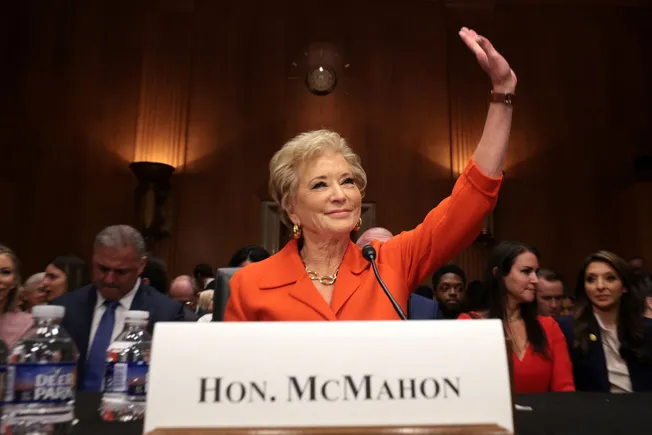
    OCR under this Administration has moved faster than it ever has, and the Title IX SIT will ensure even more rapid and consistent investigations,” U.S. Secretary of Education Linda McMahon said in Friday’s announcement. “To all the entities that continue to allow men to compete in women’s sports and use women’s intimate facilities: there’s a new sheriff in town. We will not allow you to get away with denying women’s civil rights any longer.”

    Attorney General Pamela Bondi said in an accompanying statement that “protecting women and women’s sports is a key priority” for the Department of Justice. The agency will “ take comprehensive action when women’s sports or spaces are threatened,” she continued. The administration has often used that language to separate transgender students from programs spaces aligning with their gender identities with blanket bans. 

    The department’s formal announcement that it is handing off Title IX enforcement to the Justice Department and joining forces on investigations comes after weeks of collaboration between the two agencies, confirming suspicions from education civil rights attorneys that DOJ involvement will be the new normal.

    It was also expected, considering that Education Department layoffs gutted half of OCR enforcement offices nationwide, and the department was already relying on the DOJ in the layoffs’ wake. 

    The Education Department already tapped the Justice Department in an investigation the Trump administration launched into the Maine Department of Education over the state’s transgender athlete policy.

    “Why would they continue to administratively enforce when they’re trying to put themselves out of jobs?” Kayleigh Baker, a Title IX attorney for TNG Consulting, an education civil rights consultant group, surmised late last month in wake of the Maine case. “And so I think leaning on DOJ makes sense.” 

    Prior to this administration, the DOJ was rarely called off the bench to enforce civil rights protections in schools, and its involvement was usually only reserved for complex and high-profile cases.

    Source link

  • ‘New sheriff in town’: DOJ to enforce anti-trans Trump orders

    ‘New sheriff in town’: DOJ to enforce anti-trans Trump orders

    This audio is auto-generated. Please let us know if you have feedback.

    The Trump administration on Friday announced a major change in Title IX enforcement at schools and colleges, tapping the U.S. Department of Justice to help investigate and ultimately enforce the separation of transgender students from girls’ and women’s athletics teams and spaces in schools and colleges. 

    The Title IX Special Investigations Team shifts some civil rights investigations and enforcement from the U.S. Department of Education to the Department of Justice — both of which are a part of the newly minted unit.

    The move is part of a Trump administration effort to push through a backlog of complaints at the Education Department’s Office for Civil Rights. These investigations usually take months — sometimes years — to complete. The process typically includes interviews and other tools and ultimately ends in resolution agreements to bring schools into compliance.  

    Instead, the department will rely on a rapid resolution process to address sex discrimination complaints, framing the move as a way to protect cisgender girls and women, according to a Friday announcement. Rapid resolution is “an expedited case processing approach,” according to the Trump administration’s case processing manual, which was updated in January. 

    There are certain requirements before rapid resolution is an option, including having the complainant initiate the expedited process and having schools on board with that plan of action to resolve a complaint. The tool can be tapped when schools have already taken action to resolve the complaint on their own accord. It was used under the previous administration as well to address the increasing volume of complaints.

    OCR under this Administration has moved faster than it ever has, and the Title IX SIT will ensure even more rapid and consistent investigations,” U.S. Secretary of Education Linda McMahon said in Friday’s announcement. “To all the entities that continue to allow men to compete in women’s sports and use women’s intimate facilities: there’s a new sheriff in town. We will not allow you to get away with denying women’s civil rights any longer.”

    Attorney General Pamela Bondi said in an accompanying statement that “protecting women and women’s sports is a key priority” for the Department of Justice. The agency will “ take comprehensive action when women’s sports or spaces are threatened,” she continued. The administration has often used that language to separate transgender students from programs spaces aligning with their gender identities with blanket bans. 

    The department’s formal announcement that it is handing off Title IX enforcement to the Justice Department and joining forces on investigations comes after weeks of collaboration between the two agencies, confirming suspicions from education civil rights attorneys that DOJ involvement will be the new normal.

    It was also expected, considering that Education Department layoffs gutted half of OCR enforcement offices nationwide, and the department was already relying on the DOJ in the layoffs’ wake. 

    The Education Department already tapped the Justice Department in an investigation the Trump administration launched into the Maine Department of Education over the state’s transgender athlete policy.

    “Why would they continue to administratively enforce when they’re trying to put themselves out of jobs?” Kayleigh Baker, a Title IX attorney for TNG Consulting, an education civil rights consultant group, surmised late last month in wake of the Maine case. “And so I think leaning on DOJ makes sense.” 

    Prior to this administration, the DOJ was rarely called off the bench to enforce civil rights protections in schools, and its involvement was usually only reserved for complex and high-profile cases.

    Source link

  • EEOC and DOJ Issue Technical Assistance Documents on Unlawful DEI-Related Discrimination

    EEOC and DOJ Issue Technical Assistance Documents on Unlawful DEI-Related Discrimination

    by CUPA-HR | March 20, 2025

    On March 19, the Equal Employment Opportunity Commission (EEOC) and Department of Justice (DOJ) released two technical assistance documents intended to educate “the public about unlawful discrimination related to ‘diversity, equity, and inclusion’ (DEI) in the workplace.” The two documents aim to inform the public about how civil rights rules and laws like Title VII of the Civil Rights Act of 1964 apply to employment policies, programs and practices, including those labeled or framed as “DEI.”

    Title VII prohibits employment discrimination based on protected characteristics, including race, color, religion, sex or national origin. As the agencies note in both documents, DEI is a broad term that is not defined under statute. The technical assistance explains that DEI practices may be unlawful if they involve an employer or other covered entity taking an employment action motivated in whole or in part by an employee’s race, sex, or other protected characteristic. The agencies emphasize that Title VII’s protections apply equally to all racial, ethnic, and national origin groups, as well as both sexes, and that unlawful discrimination may exist no matter which employees are harmed.

    Technical Assistance Document #1: The EEOC describes what DEI-related discrimination looks like.

    The first document, “What To Do If You Experience Discrimination Related to DEI at Work,” explains how DEI-related practices may manifest as discrimination under Title VII.

    • Title VII bars disparate treatment: Any employment action motivated in whole or in part by race, sex, or another protected characteristic that is taken in the context of the terms, conditions, or privileges of employment may be unlawful.*
    • Title VII prohibits limiting, segregating, and classifying: Any action taken that limits, segregates, or classifies employees based on race, sex, or other protected characteristics in a manner affecting their status or depriving them of employment opportunities may be unlawful. Examples of these practices include the establishment of workplace groups (employee resource groups or employee affinity groups) that limit membership to a protected group or groups, as well as the separation of employees into groups based on a protected characteristic when administering trainings or other privileges of employment. The document makes clear that the latter may still violate Title VII even if the separate groups receive the same training or programming content.
    • Title VII prohibits workplace harassment: Workplace harassment is illegal when it results in an adverse change to a term, condition, or privilege of employment, or it is so frequent or severe to reasonably be considered intimidating, hostile, or abusive. The document explains that DEI training may give rise to a hostile work environment claim and that harassment may occur when an employee is subject to unwelcome remarks or conduct based on protected characteristics.
    • Title VII prohibits employer retaliation: The agencies explain that reasonable opposition to a DEI training may constitute protected activity if the employee provides a fact-specific basis for their belief that the training violated Title VII, and that an employer may not retaliate if an employee participates in an EEOC investigation or files an EEOC charge.

    The document reaffirms that Title VII protects employees, potential and actual applicants, interns, and training program participants. It directs individuals who suspect to have experienced DEI-related discrimination to contact the EEOC “promptly” as claimants have 180 to 300 days to file a claim depending on whether a state or local agency enforces a law that prohibits employment discrimination on the same basis.

    Technical Assistance Document #2: The EEOC answers additional questions about DEI-related discrimination in the workplace.

    The second technical assistance document, titled “What You Should Know About DEI-Related Discrimination At Work,” expands upon the information provided in the technical assistance document discussed above and answers a number of additional questions on how Title VII intersects with DEI-related practices in the workplace.

    Notably, the document addresses questions surrounding employers’ DEI-related considerations of race, sex, and other protected characteristics when the protected characteristic wasn’t the “sole or deciding factor” for the employers’ action. The document states that “race or sex (or any other protected characteristic under Title VII) does not have to be the exclusive (sole) reason for an employment action or the ‘but-for’ (deciding) factor for the action” for there to be unlawful discrimination. Additionally, the agencies explain that workers only need to show “some injury” or “some harm” affecting their terms, conditions or privileges of employment to allege a colorable claim of discrimination under Title VII.

    The document also makes clear that an employer may not justify an employment action simply on the basis that they have a business necessity or interest in “diversity” as Title VII prohibits employers from using business necessity as a defense against intentional discrimination claims. Likewise, the agencies explain that “client or customer preference is not a defense to race or color discrimination” and that “basing employment decisions on the racial preferences of clients, customers, or coworkers constitutes intentional race discrimination.”

    CUPA-HR will continue to monitor for updates related to Title VII enforcement from the EEOC.


    *The terms and conditions of employment include: hiring; firing; promotion; demotion; compensation; fringe benefits; exclusion from training; exclusion from mentoring or sponsorship programs; exclusion from fellowships; selection for interviews (including placement on candidate slates).


    Source link