An impressively brilliant African American 14-year-old sent a thoughtful response to the column I published yesterday on the policing of Black men in America. He began by characterizing what I had written as “fascinating,” which could have meant a multitude of things coming from a teenager. He then explained that his eighth-grade English class included recent discussions about immigrant pursuits of the American dream. Accordingly, one major takeaway from those conversations with his teacher and peers was that many people come to the U.S. because it is perceived as a land of opportunity. My article complicated this presumption for him.
In addition to the racial profiling, harassment, abuse and police killings of unarmed Black Americans that I wrote about yesterday, this middle schooler’s perspective has me wondering how other youth his age, as well as collegians in the U.S. and abroad are thinking about the possibility of the American dream at this time for themselves and others. I am especially interested in knowing how attainable it feels among Asian, Black, Latino and Indigenous youth here and elsewhere across the globe. Juxtapositions of their perspectives with those of their white counterparts also fascinate me.
The Trump administration includes few people of color in leadership roles—certainly much, much fewer than in the Obama and Biden administrations. Programs and policies that were designed to ensure equitable opportunities for citizens who make our nation diverse have been ravaged (in some instances outlawed) during Donald Trump’s second presidential term.
Black, Latino and international student enrollments at Harvard University and other elite institutions have declined since the U.S. Supreme Court ruled race-conscious admissions practices unconstitutional. Immigrants are being threatened, terrorized and deported. It is possible that these challenges and realities have done little to erode immigrants’ and prospective international students’ faith in U.S. structures and systems. This is a researchable topic.
It would also be good for social scientists and education researchers to study how students in K–12 schools and on college campuses across the U.S. are appraising the equitable availability of the American dream to all citizens. Results collected via surveys and other research methods should be disaggregated by race, socioeconomic status, gender and gender identity, citizenship and documentation status, sexual orientation, religion, state and geographic region, political party, and other demographic variables. Those findings should be compared within and across groups. Furthermore, sophisticated analyses should be done at the intersection of identities (for example, perceptions of Asian American transgender immigrant youth).
In another column published earlier this week, I wrote about what I teach students in my classrooms. One statement therein seems worthy of amplification here: “To be absolutely sure, I have never instructed [students] to hate or in any way despise America.” I do, however, teach them truths about our nation’s racial past and present. Those lessons are not based on my opinions or so-called divisive ideologies, but instead rigorous statistics and other forms of high-quality, trustworthy data substantiate my teachings. As a responsible educator and citizen, I understand that the problem of inequitable access to the American dream requires a lot, including but not limited to consciousness raising, truth telling, reparations and restorative justice, and the implementation of equity-minded public policies, to name a few.
I want youth of color to love our country. I want immigrants who believe in the availability of the American dream to come here. But I also want access to the American dream to be fair and equitable. I want our nation to disable and permanently destroy structures and systems that cyclically reproduce disparate outcomes that disadvantage people who make our country beautifully diverse. I got a very real sense that the Black teenage boy who thoughtfully responded to what I wrote yesterday wants the same thing, too. Again, I think it would be “fascinating” to know how other adolescents and young adults, including those who are white, are thinking about who has full access to the American dream at this time.
Shaun Harper is University Professor and Provost Professor of Education, Business and Public Policy at the University of Southern California, where he holds the Clifford and Betty Allen Chair in Urban Leadership. His most recent book is titled Let’s Talk About DEI: Productive Disagreements About America’s Most Polarizing Topics.
Junior Eurovision has given me and my ten year-old an excuse to visit Tbilisi in Georgia this year – and he’s been thrilled to learn that it just so happens to have been a dramatic week in higher education policy news.
If you click around on the ruling party’s Facebook page, you’ll find the face of Bidzina Ivanishvili, the party’s billionaire founder and honorary chairman, proudly proclaiming one of the headlines from his party’s reforms:
Georgian Dream – the first government in Georgia’s history to make higher education free!
There’s a lot more to it than that. The government has pushed through sweeping reforms to the Law on Higher Education that include an outright ban on state universities recruiting international students – all with what critics argue has been extraordinary speed and minimal consultation.
Free education
The current system, which has operated since the mid-2000s, allows students to take state grants based on their national exam performance to any accredited university – public or private.
In 2025, 7,320 students received grants totalling 11 million lari (about £3m), with 66 per cent going to public universities and 34 per cent to private institutions, like the University of Buckingham accredited “British University Georgia”.
Under the new model, the entire grant architecture will be abolished. State universities will instead receive direct government funding to provide “free” education to all admitted students at both bachelor’s and master’s levels, whilst private universities will lose all access to state support.
The government presents it all as democratising access, but critics note that with strict quotas, “free” education may actually mean fewer available places overall. That’s a story that sounds familiar.
The reforms go far beyond funding though. A “one city, one faculty” model means that within any given city, only one state university will be allowed to offer each academic discipline. In Tbilisi, for instance, where law faculties currently exist at Tbilisi State University, Ilia State University, and Georgian Technical University, these would be consolidated into a single faculty at one institution.
The government will determine which programs each university will be allowed to offer, and set strict enrollment quotas based on labour market research conducted with the Ministry of Economy and Sustainable Development. That’s another story that sounds familiar, albeit ministers and regulators in England have been more prone to nudges and kite-flying than pulling levers.
The academic structure itself is being compressed from the current 4+2 model (four-year bachelor’s, two-year master’s) to a 3+1+1 system, with three years for bachelor’s degrees in non-regulated professions, followed by one year for a master’s degree, with an optional additional year for those planning to pursue doctoral studies.
While authorities claim this aligns Georgia with the Bologna Process – the European higher education standardisation framework – critics argue the opposite, fearing these changes will make Georgian qualifications less compatible with international systems and compromise students’ ability to pursue studies abroad. The UK seems to get away with it – and it’s part of a broader trend across Europe for governments aiming to speed up students’ entry to the Labour market.
Serve our citizens first
The ban on international students at state universities has generated particular confusion and concern among academic observers. Under the new legislative package, Georgia’s 19 state universities will be barred from admitting international students from next academic year, with only minimal exceptions.
That’s an extraordinary reversal for institutions that have spent years building international partnerships, recruiting foreign students as both a source of revenue and academic diversity, and positioning themselves as regional education hubs. Tbilisi State University alone hosts hundreds of international students, particularly in English-language medical programmes that have attracted students from India, Nigeria, and the Middle East.
Deputy Minister Zviad Gabisonia has defended the measure as a way to ensure state universities focus their resources on Georgian students, with the government arguing that making education “completely free” for domestic students requires concentrating limited state resources.
From Georgian Dream’s perspective, the 19 state universities should serve Georgian citizens first, whilst private institutions remain free to recruit internationally. The government also says that it’s part of their labour market-focused approach – training Georgian students for Georgia’s economy rather than providing education for students who may leave after graduation.
They’ve positioned it all alongside the broader promise of free education as evidence of prioritising ordinary Georgians over international interests – a message that resonates with some domestic audiences who’ve seen international students, particularly in medical programmes, as taking places from local applicants.
Critics argue the international student ban exposes fundamental contradictions in the government’s rhetoric about “quality improvement” and alignment with European standards, and will create a two-tier system – isolated, government-controlled state universities for most Georgians, and expensive, internationally-connected private institutions for the wealthy.
For them, the government’s claim that it will “raise quality” by ensuring only “highly qualified students with high scores are admitted” conflate exclusivity with excellence, and they warn that isolation from international academic networks may accelerate brain drain as ambitious Georgian students increasingly see their country’s higher education system as deliberately provincial.
Liberal fascism
There’s plenty of populism in here, of course. The PM’s framing for the package is that the current education system (which he blames on previous governments and Western influence) has left Georgians vulnerable to what he calls “contemporary liberal fascism” – his term for Western liberal values and influences:
An insufficiently educated public is easily subjected to manipulation, external interference; it is easy to sow hate in such a society; it is easy to spread ideologies such as were once Bolshevism, fascism, and such is today’s contemporary liberal fascism.
Meanwhile “deconcentration” in the reforms refers to the government’s plan for geographic redistribution of higher education away from Tbilisi, where 85 per cent of all university students are currently concentrated. The aim is to create a new university hub in Kutaisi in western Georgia, and along with the “one city, one faculty” model they argue it will help develop regions outside the capital and ensure more balanced development across the country.
Critics counter that geographic deconcentration, combined with the concentration of academic disciplines into single institutions, may introduce infrastructure challenges and could be used to justify selling off university buildings in Tbilisi.
The political and academic reaction has been swift and largely negative, but has all been lost a bit inside wider anti-government protests and increasing authoritarianism. Critics argue that the reforms serve multiple authoritarian purposes – centralising government control over HE, enabling purges of non-aligned academics, reducing the autonomy of institutions, and potentially decreasing overall access to higher education despite the “free” education rhetoric.
The fear of repression is palpable – academics figure that the restructuring will be used to remove academics and professional services staff who don’t align with Georgian Dream’s increasingly anti-Western stance.
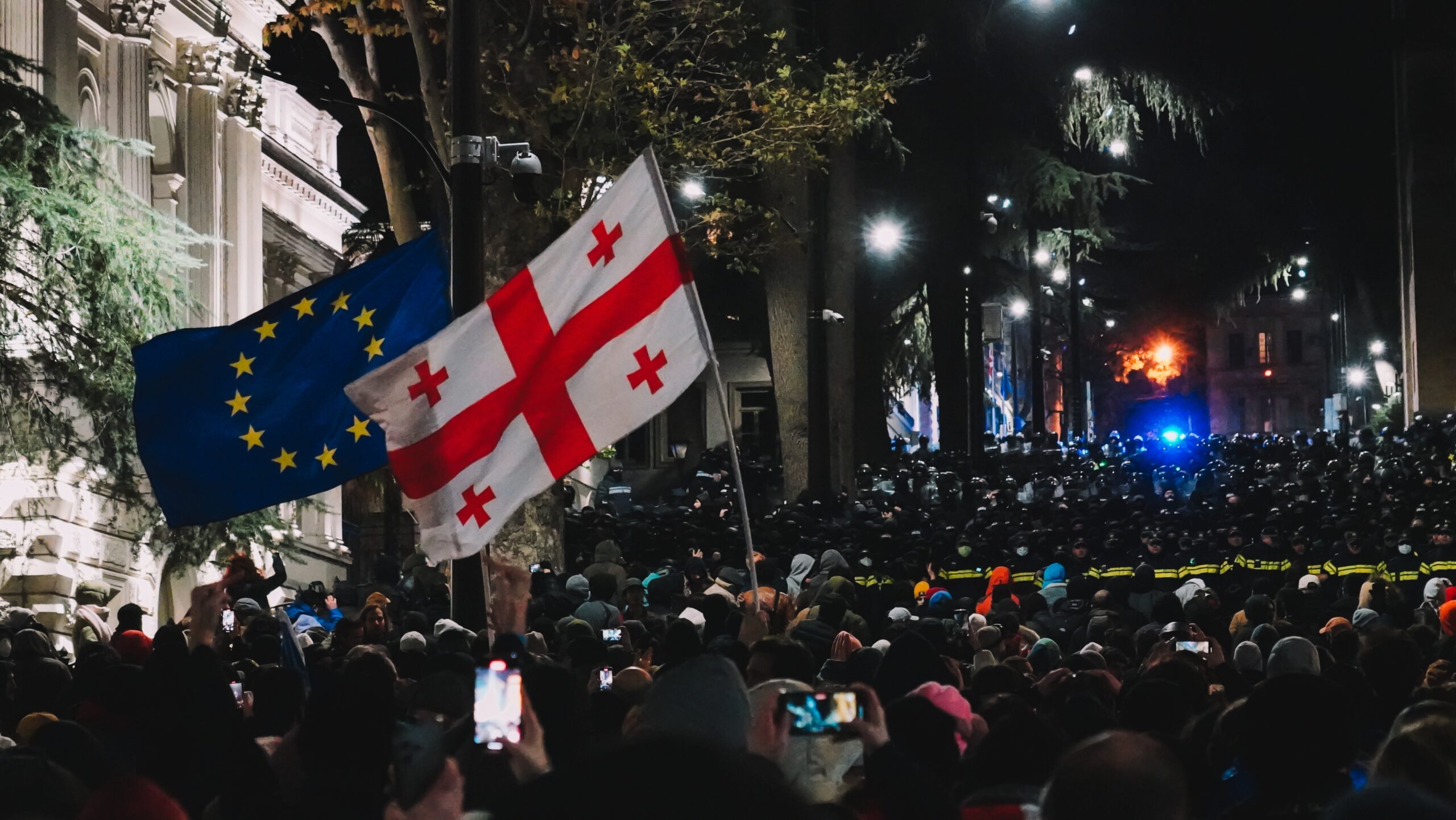
The reforms have been pushed through parliament in the same week that legislators adopted new restrictions on protests, extending police powers to clear not just roadways but also pedestrian areas – a direct response to daily demonstrations that have continued outside parliament since Georgian Dream’s announcement at the end of November that Georgia would suspend its EU integration process until 2028.
For the kids coming to watch JESC, there’s been a parallel bunch of reforms to schools too. Primary schools will see mandatory uniforms for grades 1-6, mobile phone bans during classes, and state-approved single textbooks for all subjects – again, critics see a systematic effort to establish state control over all levels of education, while the government argues that a 2004 document on national education goals, adopted by the formerly ruling United National Movement (UNM), was “saturated with liberal values”, and stressed that the new version approved in 2024 is based on a “patriotic spirit”.
Capture, don’t destroy
Allegations about universities fuse some of the conspiracy theories we’ve seen in the UK with some of Trump’s wilder allegations. In September pro-government TV channel Imedi reported that Georgia’s State Security Service is investigating “money laundering” linked to anti-government protests, claiming that foreign intelligence services are spending millions to orchestrate regime change through youth movements.
Georgian Dream has some form on alleging foreign-orchestrated revolutionary plots – this report accused several Georgian universities, particularly the University of Georgia, Ilia State University, and Free University, of being hubs for protest training, claiming that up to 600 students “trained by foreign intelligence services” were being paid 200-300 GEL daily to protest, with funding allegedly channeled through university-linked companies and NGOs.
More broadly, there’s a pattern to all of this both in Europe and across the West – populist governments believe that universities are too valuable to close, but too influential to leave autonomous. From Hungary’s restructuring of university governance to Poland’s attempts to control academic appointments to Turkey’s post-coup purges, the pattern is capture, don’t destroy.
These governments understand universities as sites of ideological formation that shape future elites and national narratives. Rather than rejecting higher education, they’re trying to repurpose it – maintaining prestigious institutions and even improving facilities while systematically removing international connections, critical perspectives, and institutional autonomy.
It often succeeds initially – because it’s wrapped in appealing promises of accessibility and national service. Who argues against “free” education or “raising standards”? But for people like Maia Chankseliani, Professor of Comparative and International Education at Oxford, they risk undoing much of the progress made by Georgian higher education over the past two decades:
Georgia needs a university system that is open, autonomous, and globally connected, rather than one bound by rigid rules and centralised visions of conformity. Georgia’s students and academics deserve a system that is free to think and innovate.
The thing though that’s most interesting about the debate is the extent to which those opposed seek to engage with the arguments on their own terms – will this really improve quality, will this actually improve outcomes, and so on – and those who argue that something more fundamental is being done to universities that renders constructive engagement on the detail hollow and counterproductive. That’s also a debate that’s been raging across US HE – and it’s very much coming to the UK.
Donald Trump’s defunding of scientific research and proposed new charges on migrant labor will not be enough to deter international academics from heading to America, given the country’s unparalleled willingness to reward academic talent, Radenka Maric has argued.
Since February 2022, Maric has served as president of the University of Connecticut, a six-campus public research university with a $3.6 billion annual operating budget.
The Bosnian-born engineer is arguably one of the world’s most well-traveled university leaders, having worked in seven countries in a 30-year career, including Japan (where she earned her Ph.D. at Kyoto University and worked at Toyota’s material science research division), Canada (where she led the Institute for Fuel Cell Innovation at the National Research Council Canada), and Italy (where she was a visiting professor at Polytechnic University of Milan on a Fulbright scholarship).
“As someone born in Bosnia without a U.S. college degree, I would never have been made a university president in Japan, Italy or even Canada,” argued Maric, who studied at Belgrade University in Serbia, where she later worked as a junior scientist.
“I don’t have that traditional academic pedigree required by some countries. I didn’t study at Harvard—I have a ‘Japanese Harvard’ Ph.D., but who really cares about my Japanese degree—nor have I been a provost or dean at a big U.S. university,” she continued.
“But American universities don’t care if you studied in Italy or Serbia—they are only focused on excellence in science and innovation, which means ‘what is your h-index?,’ ‘where have you published?’ and ‘how many people have you brought with you on your journey?’” Maric said.
Despite uncertainty over federal science funding—with several national agencies facing cuts of about 50 percent to their budgets next year—the academic meritocracy promised by U.S. universities will continue to appeal to international researchers, Maric believes.
“That is what is powerful about American academia. As long as the American dream is there—that people like me can make it on their own merits—then America will be a magnet for talent. Crises will come and go,” she said.
The current uncertainty over funding has undoubtedly caused problems, Maric explained, while there are growing concerns over plans to charge a $100,000 fee for H-1B skilled worker visas, up from $7,000—a move that would make it much more difficult for U.S. universities to employ foreign Ph.D. students or postdocs.
On the likely damage of Trump’s recent higher education policies, Maric said, “It depends how long this lasts, but America has a great capacity to resituate itself very quickly. If you compare how the U.S. pivoted after the 2008 financial crisis, it came back much quicker than any other nation.”
Despite her evident enthusiasm for her adopted homeland, Maric said she was also inspired by her time in Japan. “This was the 1990s and I was the only woman doing a Ph.D. at Kyoto’s engineering school. I stayed for 12 years there, so it wasn’t just the language that I learned but the culture. There is an immense amount of care in how everything is done, so I applied this to my career by thinking, ‘how can I improve my skills?’ or ‘how can my research get better?’
“When I was in Japan, it was constantly stressed that there was no great science if it didn’t lead to great technology. And there is no great technology without a product, and there is no product without a market,” Maric explained of her approach to applied science—she worked in the field of battery technology for Toyota and later Panasonic before leaving to join a start-up in Atlanta.
“The most important thing about Japan is kata—a way of doing things in a particular way. There is a natural tendency to do things in a certain way and there is a desire to protect their culture, so eventually I knew I had to leave,” reflected Maric on her leap from Toyota to the U.S. start-up world.
Recruited to lead a battery fuel research group in Vancouver, Maric eventually headed to Connecticut—a state with long-established defense and manufacturing industries, in which the university now plays a crucial research role.
“Since 2010 the state has been recruiting faculty in renewable and environmental sustainability, including CO2 capture, so I’ve been part of this, but the history of manufacturing goes back to the mid-19th century when bicycle companies had their first factories in Connecticut,” Maric said.
Her university’s willingness to recruit someone with an eclectic CV—including stints in corporate R&D, academia and start-ups covering three continents—then promote them to the top job is a good example of why American academia will continue to thrive, despite the current challenges, Maric said.
“I am not a traditional person, but I was always a hard worker who sought to improve myself and bring people along with me whenever I could. Not many foreigners—whatever their expertise or experience—will become university presidents, but it is possible in America,” she said.
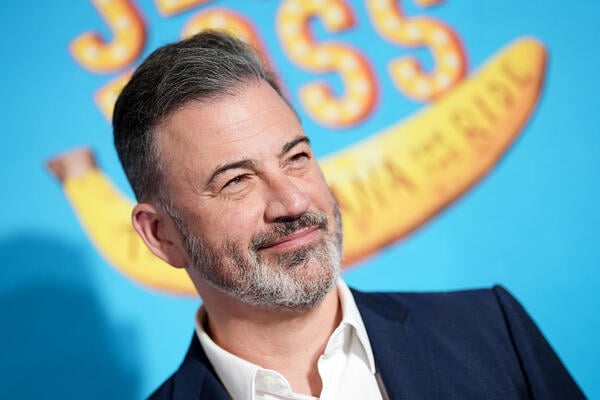
On Wednesday ABC announced that it had taken Kimmel’s late-night show off the air “indefinitely.”
More professors in the United States have been fired for controversial views in the past week than any other week in all of American history. The violations of academic freedom, free speech and due process on campuses in the wake of Charlie Kirk’s assassination have been extraordinary and indefensible.
The campus firings are toonumerous to describe in full, but consider the case of Darren Michael, professor of theater at Austin Peay State University, who was fired because he reposted on social media a 2023 Newsweek headline: “Charlie Kirk Says Gun Deaths ‘Unfortunately’ Worth It to Keep 2nd Amendment.” Tennessee’s U.S. senator Marsha Blackburn reposted Michael’s view on X, asking the university to take action.
Austin Peay administrators declared, “A faculty member of Austin Peay State University reshared a post on social media that was insensitive, disrespectful and interpreted by many as propagating justification for unlawful death. Such actions do not align with Austin Peay’s commitment to mutual respect and human dignity. The university deems these actions unacceptable and has terminated the faculty member.”
This is an utterly appalling excuse to punish anyone, and certainly not an adequate reason for a university to terminate a professor without any due process. There is absolutely no rule at Austin Peay banning people from being insensitive or disrespectful, since any rule like that would clearly violate the First Amendment. And the idea that posting a headline quoting Kirk’s views would somehow justify his murder is insane. It’s perfectly legitimate to criticize anyone for favoring or opposing gun control. This critique of Kirk is anything but pro-murder.
The violations of due process involved in these arbitrary firings, with no opportunity for a hearing or a defense, are terrible in themselves. But the justifications for the firings are so insubstantial that they cannot merit any kind of penalty, let alone an immediate dismissal.
It is perfectly legitimate to criticize and even insult both the dead and the living. Any conservative who thinks Charlie Kirk hated free speech so much that he would want his critics purged from campuses is making a far worse insult against Kirk than what any offensive leftist has written or said.
Of course, the suppression of free speech goes far beyond academia.
The suspension of Jimmy Kimmel by ABC on Sept. 17 following FCC chair Brendan Carr’s demands for his removal and threats against broadcast licenses represent an alarming repression of free speech, with the combination of corporate censorship and government suppression.
On his Sept. 15 show, Kimmel said, “We had some new lows over the weekend, with the MAGA gang desperately trying to characterize this kid who murdered Charlie Kirk as anything other than one of them and with everything they can to score political points from it.” What Kimmel said was, in fact, technically true: Conservatives were doing everything they could to claim that Kirk’s murderer was not one of them. And the murderer was, in fact, a white male college dropout from a Republican family in Utah that taught him to shoot and provided him with guns.
Of course, conservatives are probably correct to call the murderer a leftist with political motives, and if Kimmel was trying to invoke theories that the killer was actually a right-winger, that seems unlikely now based on evidence released after Kimmel’s show aired. But even if Kimmel was trying to make a dubious claim that has now been discredited, that’s protected by the First Amendment and principles of free speech.
The second part of Kimmel’s claim—that conservatives were using Kirk’s murder to “score political points”—was never in doubt and has been proven yet again by his removal from the airwaves.
Kimmel didn’t celebrate any violence or say anything bad about Charlie Kirk. The glorification of Kirk is a cover for an authoritarian agenda to suppress political enemies. Donald Trump immediately celebrated Kimmel’s banishment and called for NBC hosts Jimmy Fallon and Seth Meyers to also be fired.
This is the slippery slope of censorship: First they come for those who celebrate murder, then they come for anyone who questions the hagiography of the victim, then they go after anyone who quotes the victim’s own words, then they silence anyone who objects to the repression itself. This is why even offensive and stupid comments about Charlie Kirk must not be punished.
But when Vice President JD Vance urges everyone to “call their employer” in response to offensive comments, that’s not critique or argument: That’s cancel culture, pure and simple. That’s government-mandated repression.
The right to free expression must include the right to say horrible and evil things. It protects all of the conservatives (including Donald Trump, his son and Charlie Kirk) who joked about the attempted murder of Paul Pelosi. It protects the Fox News host Brian Kilmeade, who urged mass executions of homeless people.
As David Letterman noted about Kimmel, “You can’t go around firing somebody because you’re fearful or trying to suck up to an authoritarian criminal administration in the Oval Office.”
Less than two years ago, before he began issuing government commands to silence the media, Carr posted on X, “Free speech is the counterweight—it is the check on government control. That is why censorship is the authoritarian’s dream.”
We are living in the authoritarian’s dream, and it’s a nightmare for free speech and democracy.
What do you dream about your online presence that you’re not at now? Is there something you think you want in the future, but you just can’t see it happening? Feel like it will take more work than you have capacity for right now?
That’s how I felt about my blog/podcast/updating my website. At one point, I felt not good about each of these things. You see, website updates are something that can happen anytime. For professors that might include adding a new publication or speaking engagement.
But when there are substantive changes you dream about? Or a new project? Sometimes that list of to-do’s can add up. That makes it more than updating what you already have.
For your online presence, that might look like doing an overhaul of your LinkedIn profile. Writing a new academic bio or faculty profile. Doing a professional photoshoot for photos of you.
So what sparked taking action for me? Doing it for myself wasn’t enough. It’s when I thought about who this would help, the people who were involved. Which is you! The readers! And all the academics to come.
I was open about the fact that I was behind on this with my friends, Brittany Trinh and Jennifer Ho. They happened to need to update their websites too. I ended up hosting a coworking day for us. It was fun to do it together, each of us using our energy towards better communication. Sharing a clear representation of who we are on our websites is always a good use of time.
That’s true for clients I work with on their websites. We’re doing it together. The process of dreaming can make it beautiful. If you have a friend or colleague who is also interested in their online presence, I encourage you to do it together and cheer each other on too.
That’s one thing I love about websites: it allows me to create an open source trove of articles and interviews that people can find, and people do find, even years after they’ve been shared.
I’m sharing this story with you because of what came after my redesign, when there was no more to-do list and I had space to think and dream again. That’s when creative opportunity sparked.
I want to have more conversations with professors, grad students, researchers, the people who help them… because telling our own stories is really powerful.
When we can build community and share what we’re open about with people in ways that could help them, we have to make that work for our lives. It has to be doable within our creative constraints, equipment, budget, tech, skills, and time. There are all these things that might impact how we feel about our dreams.
For me, having my podcast has always been not consistent. I don’t release episodes on a set schedule. I don’t have the regular publishing schedule that I admire in other podcasters. But I love being able to share in these more accessible ways.
I love that you can experience an interview in written form, or watch it on YouTube, or check it out on Spotify. Creating in written, audio, and video format makes it interesting for me to create and it helps more people. I have the capacity to do that. Consistency is the only thing I sacrificed.
Actually, I remember my first time being open to being on video for my podcast (which had been audio only for 1+ year). I interviewed Dr. Ruth C. White about being on video and TV. She shared a story about pitching herself to the local TV station in the middle of the night. In the morning, she had an invitation to appear on their show that day as an expert on mental health.
I thought, ‘Wow! I’m so glad I was open to trying out putting myself out there when I didn’t know if I was going to stick with it.’ To be honest, I thought I’d go back to audio and leave YouTube. Nothing was set in stone, except my willingness to try.
When the spark came that I wanted to highlight more people on The Social Academic this year, I realized my current process of getting episodes out wasn’t going to be within my capacity.
I’d been teaming up with an audio engineer, Sir Nic, and my husband, Matthew, was doing the video editing. We had a process we were happy with that worked for a long time. But the time frame to get episodes out wouldn’t have allowed me to highlight all the people that I had dreamed about.
That’s why The Social Academic interview series is now a live-first format. And honestly? That kinda makes me laugh. It brings up a memory of a friend from college, Jose, who was a YouTuber. He was well known enough that some people recognized him. And he made it work, recording in his college dorm room. Jose used to livestream on a platform called YouNow, which is how I met one of my favorite DJs. And, where I first forayed into livestreaming.
At the time, I was deep into research for my creative thesis, a collection of poetry based on the pianist, Glenn Gould. Gould had a fascinating view of the relationship between audience and performer, and became reclusive later in life. I was a singer. And my own relationship with performance had shifted. It was like better understanding Gould helped me make a more informed decision for myself.
I no longer wanted to sing for people in person. But I was curious about how musicians were opening themselves up to performing virtually. It seemed like a different relationship, one that created distance while also sharing this more intimate personal side of the musician livestreaming. And the musicians? They seemed mostly relaxed.
I wanted to explore how I felt performing live to strangers. It touches me to think back to that moment of bravery because opening yourself up can be scary for many people. It certainly was for me. I tried livestreaming a few times. I even got a couple virtual tips. And while my livestreaming experience on YouNow was shortlived, it opened up my mind to what it meant to hold space for people. And, to create space for yourself too.
Sometimes, the things we try out aren’t your dreams. But they help other people. Maybe they build your capacity. Or, help you to better understand yourself.
While I never dreamed about being a livestreamer, it really works with the kind of openness I am hoping we can create for each other in that conversation when we are live on The Social Academic interview series.
LIVE ON THE SOCIAL ACADEMIC
P.S. There is another live on YouTube this evening! Dr. Lily Rosewater joins me to talk about what it means to be more visible as an expert.
When you want support to make your dream happen
What dreams do you have? What dreams have you been holding back? Is there something you’re open to, but you aren’t sure how to get there?
You don’t have to move forward with your dream now. I just love that you’re open to it for yourself in the future. If I’m more open to my dreams, if my guests are open to their dreams, if you the reader are more open to your dreams…we can better protect higher education in the ways that we care about it.
Research is important, teaching is important, faculty, and each person on campus has value.
I want people to be able to have a voice.
It’s ok if the way you dream about sharing your voice doesn’t feel accessible to you right now. There may be ways or opportunities for you in the future. Naming your dream now can be a gift to ourselves.
I want to wrap up with a personal story. My father-in-law, Bob Pincus, was one of my first clients back when I started The Academic Designer LLC in 2018. His online presence was not something he dreamed about. Social media in general was not a priority for him. He’s an art history professor, and a local celebrity here where he was art critic for the San Diego Union-Tribune for many years.
Whether social media was a priority for Bob or not, his audience of people who already care about and were connected with him, were on social media. Every time he posts on Facebook, people are excited to talk with him. Do you have a professor friend like that?
I’m sharing this story with you because Bob, who never loved social media, had a new dream recently. And actually this is funny, because none of us can remember what first sparked it. My mother-in-law, Georgie, says it was my idea. My husband, Matthew, says it was Bob’s. One day at the Costco in Carlsbad, California, we’re sitting at the outdoor bench having a slice of pizza. By the end of the slice, a plan for his YouTube channel was already in the works.
Someone who never dreamed about having a YouTube channel now has multiple episodes in progress. He’s sharing in meaningful ways with the public about art in America through video.
When Bob was laid off from paper, like many excellent journalists around the country were, people suggested he create something for himself. They said, “You should start a podcast!” or a blog. More recently he’s been encouraged to try Substack or a LinkedIn newsletter.
But you have to want it for yourself.
I’m so glad that when the spark for sharing on video came to Bob, he was open to the conversation. To turning the idea over in his head and seeing what we could make happen for him as a team. While you can totally start your YouTube channel on your own like I did, Bob knew he didn’t want to get there on his own. When you have an idea, it’s okay if you’re like Bob, thinking, “I need collaborators on this.” Maybe your idea is best solo, but it’s okay if you need a team to support each other too.
One professor I chatted with who dreams about a podcast to talk about her research field, shared that a reason she’s wanting to be more active on social media is in hopes of finding a co-host for that dream.
When we have a dream that feels like us and helps share our voice, it’s ok if you don’t know how to get there. These academics were all DIY for their YouTube. I’ve met podcasters who have started on their phone. I’ve met people whose university was able to support them in creating their podcast.
I want you to believe that if you don’t know how to do something, there’s an opportunity to explore your dream in the future when you’re ready.
What’s your dream, academics?
Here’s a few ideas for what you may dream about for yourself as a professor or researcher. You can help more people by being intentional about how you show up online. If it’s something you want for yourself? I’m excited for you. You’ve got this. Find resources on The Social Academic blog to help you.
TORONTO – August 1, 2025 – Top Hat, the leader in student engagement solutions for higher education, is proud to announce the 2025 recipients of the Shannen’s Dream Scholarship, presented in partnership with the First Nations Child & Family Caring Society. As lead sponsor, Top Hat is funding two $10,000 and two $5,500 scholarships, awarded to First Nations students pursuing post-secondary education in recognition of their academic excellence and outstanding contributions to their communities.
Scholarship recipients were selected based on outstanding academic performance and a demonstrated track record of promoting health, wellbeing, and equity within their communities. Whether through mentorship, health advocacy, or cultural revitalization, these individuals are already acting as important agents of change.
“We are deeply inspired by all that these individuals have accomplished so early in their lives. They are community builders, advocates, and future leaders with enormous potential,” said Maggie Leen, CEO of Top Hat. “It’s an honor to play even a small part in helping them achieve their dreams of higher education and go even further.”
Named in honor of Shannen Koostachin, a courageous youth from Attawapiskat First Nation who led a national campaign for equitable education, the Shannen’s Dream Scholarship celebrates Indigenous students who exemplify resilience, leadership, and a commitment to social change.
What makes the scholarship unique is its “pay-it-forward” requirement. Each recipient is expected to make a fair and measurable contribution to the Shannen’s Dream campaign or a related First Nations initiative. Previous pay-it-forward campaigns have included creating a guide to help students navigate the medical school application process, hosting talks and workshops on Shannen’s Dreams, and establishing an online database of scholarships for Indigenous youth.
“Shannen believed in the power of education to change lives and communities. Each of this year’s recipients carries that vision forward, not only through their academic efforts, but through their leadership and service,” said Cindy Blackstock, Executive Director of the First Nations Child & Family Caring Society. “We are proud to celebrate these remarkable students and grateful to Top Hat for helping to make the Shannen’s Dream Scholarship a reality for more First Nations youth.”
Meet the 2025 Shannen’s Dream Scholarship Recipients
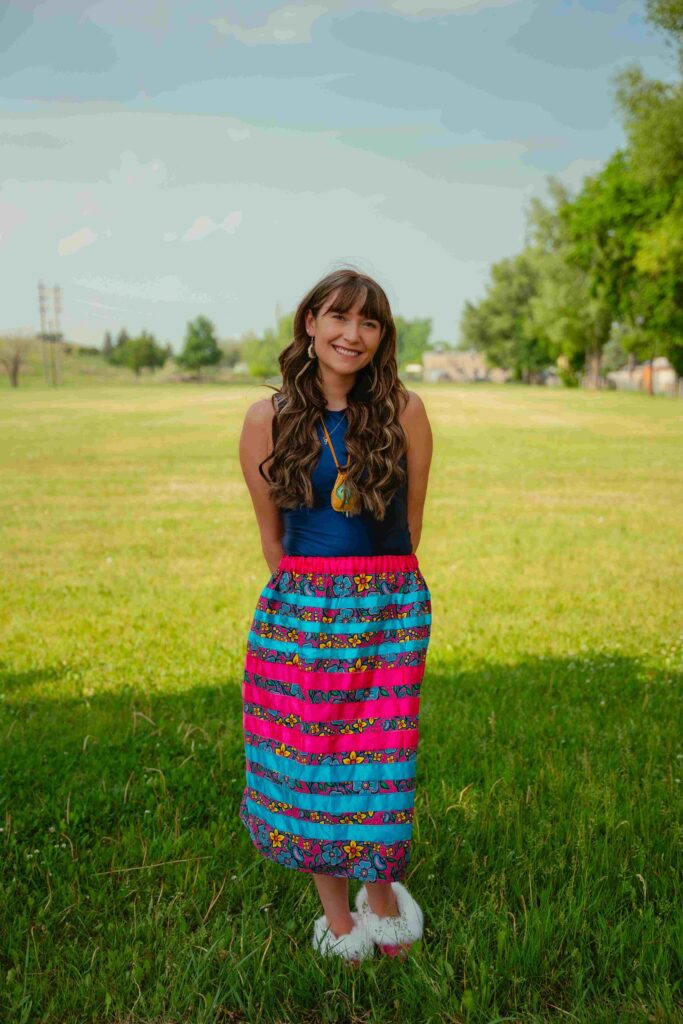
Zoe Quill, a member of Sapotaweyak Cree Nation with ties to Wuskwi Sipihk First Nation, holds a BSc in Genetics from the University of Manitoba and will be attending the Max Rady College of Medicine for Fall 2025. She is a published researcher and 2024 Manitoba Indigenous Youth Achievement Award recipient, and is committed to advancing Indigenous health and representation in care.
Mercedes Stemm, a proud Mi’kmaw woman from Natoaganeg First Nation, is a second-year medical student at the University of Manitoba. With a BSc in Neuroscience and minor in Indigenous Studies, she co-created Indigenous admissions pathways and launched a national mentorship program supporting future Indigenous medical students.
Syndel Thomas Kozar, from One Arrow First Nation, is completing a Double Honours in Indigenous Studies and Women’s and Gender Studies at the University of Saskatchewan. A community advocate, Kozar holds leadership roles in youth and arts organizations, with work focused on cultural reclamation, and empowering Indigenous youth through storytelling.
Ruby O’Tennadzahe, a Dene woman from Northlands Denesuline First Nation, will begin the Bachelor of Nursing program at Red River College Polytechnic in Fall 2025. A former Health Care Aide, she brings clinical experience and a strong focus on holistic, culturally grounded care for Indigenous youth.
About Shannen’s Dream Scholarship
The Shannen’s Dream Scholarship was established to assist First Nations youth with the financial burdens of post-secondary education. The scholarship honors Shannen Koostachin, whose advocacy for safe and comfortable schools for First Nations students ignited a nationwide movement. This scholarship aims to continue her legacy by empowering First Nations students to achieve their educational aspirations. To learn more, please visit www.fncaringsociety.com.
About Top Hat
As the leader in student engagement solutions for higher education, Top Hat enables educators to employ evidence-based teaching practices through interactive content, tools, and activities in in-person, online and hybrid classroom environments. Thousands of faculty at more than 900 North American colleges and universities use Top Hat to create meaningful, engaging and accessible learning experiences for students before, during, and after class. To learn more, please visit tophat.com.
In 2001, conservative activist Grover Norquist declared that his goal was to shrink government “to the size where I can drag it into the bathroom and drown it in the bathtub.” More than two decades later, under the leadership of Secretary Linda McMahon, the U.S. Department of Education’s March 2025 reorganization delivers on that radical vision—not with fire and fury, but with vacancies, ambiguity, and quiet institutional collapse.
Vacant Seats, Hollow Power
With dozens of senior leadership roles left vacant, enforcement functions gutted, and policymaking handed over to political allies and industry insiders, the Department no longer resembles a federal agency tasked with protecting students and public investment. Instead, it has become a hollowed-out vessel primed for deregulation, privatization, and corporate exploitation.
The new organizational chart is littered with the word “VACANT.” From Chiefs of Staff and Deputy Assistant Secretaries to senior advisors in enforcement, civil rights, and postsecondary education, entire divisions have been effectively immobilized. The Office of Civil Rights is barely staffed at the top. The Rehabilitation Services Administration is leaderless. The General Counsel’s office lacks oversight in key regulatory areas. This is not streamlining—it is strategic self-sabotage.
Federal Student Aid (FSA), overseeing over $1.5 trillion in loans, is run by an acting chief. Critical offices such as the Office of Postsecondary Education (OPE) are fragmented, missing key leadership across multiple branches—especially those charged with accreditation, innovation, and borrower protections.
The Kent Controversy: A Symptom of Systemic Rot
The collapse of federal oversight is not only evident in the vacancies—it is also embodied in controversial political appointments. As education policy watchdog David Halperin has reported, the Trump administration’s nominee for Under Secretary of Education, Nicholas Kent, epitomizes the revolving door between the Department of Education and the for-profit college industry.
Kent’s career includes roles at Education Affiliates, which in 2015 paid $13 million to settle a Department of Justice case involving false claims for federal student aid, and later at Career Education Colleges and Universities (CECU), the lobbying group for the for-profit college sector. Under Kent’s policy leadership at CECU, the organization actively fought against borrower defense rules, gainful employment regulations, and other safeguards meant to protect students from exploitative educational institutions.
Despite this record, the Senate Health, Education, Labor and Pensions (HELP) Committee advanced Kent’s nomination on May 22, 2025, in a party-line 12–11 vote—without a hearing. HELP Ranking Member Bernie Sanders objected, saying, “In my view, we should not be confirming the former lobbyist that represented for-profit colleges.” Advocates, including Halperin and six education justice organizations, sent a letter to Chairman Bill Cassidy calling for public scrutiny of Kent’s background and the Trump administration’s destructive higher education agenda.
Among their concerns are the elimination of key enforcement staff and research arms at the Department, the cancellation of ongoing research contracts, the rollback of borrower defense and gainful employment protections, the $37 million fine reversal against Grand Canyon University for deceptive practices, and the Department’s silence on accreditation reform and oversight of predatory schools. These developments, the letter argued, mark a decisive return to the era of unchecked corporate education—where taxpayer dollars are funneled to dubious institutions and students are left with mountains of debt and worthless credentials.
“Mission Accomplished” for the Privatization Movement
This version of the Department of Education, stripped of its regulatory muscle and stocked with industry sympathizers, is not an accident. It’s the culmination of decades of libertarian, neoliberal, and religious-right agitation to disempower public education. The policy pipeline now flows directly from organizations like the Heritage Foundation and ALEC to appointed officials with deep ties to the industries they were once charged with policing.
Rather than serving the public, the department’s primary role now appears to be facilitating the private sector’s conquest of higher education—through deregulation, outsourcing, and the erosion of civil rights protections.
A Shrinking Federal Presence, an Expanding Crisis
The consequences are far-reaching. Marginalized students—Black, brown, low-income, first-generation, disabled—depend disproportionately on federal guarantees, oversight, and funding. As these protections recede, so too does their access to meaningful educational opportunity. Instead, they are increasingly funneled into high-debt, low-return programs or shut out entirely.
Meanwhile, the political vacuum left by this strategic dismantling is being filled by corporate actors, right-wing religious institutions, and profit-seeking “ed-tech” startups. The dream of public education as a democratic equalizer is being replaced by a market of extraction and exploitation.
The Dream Realized
Grover Norquist’s fantasy of drowning the government has now been partially fulfilled in the U.S. Department of Education. What remains is an agency in name only—a shell that no longer enforces its core mission. In the name of efficiency and deregulation, the department has abandoned millions of students and ceded its authority to those who view education as a commodity rather than a public right.
The danger now is not only what’s been lost, but what is being built in its place. The Higher Education Inquirer will continue to monitor the ongoing capture of education policy and fight for a system that serves students, not shareholders.
Sources:
U.S. Department of Education, Organizational Chart, March 17, 2025
David Halperin, Republic Report, “The Senate Shouldn’t Vote on Trump Higher Education Pick without a Hearing”
U.S. Department of Justice press releases on Education Affiliates
Politico Pro Education updates, May 2025
Senate HELP Committee voting record, May 22, 2025
Heritage Foundation and CECU policy recommendations
It’s April 1, 2025. And this is no joke. Under Donald Trump and his Republican government, the US is quickly headed down the wrong path, politically, economically, and socially, with little resistance. After three months of government disruption, there are still tens of millions of Americans that do not get what’s happening, and many more that do get it but are unwilling to act.
In history, we have seen moments very similar to this. This time, politicians, corporate CEOs, and higher education elites, who should know better, have largely stood on the sidelines. At their worst, these elites have systematically punished those who did have the courage to speak out, making others fearful of even nonviolent resistance.
Highlighting excellence in community college education, Achieving the Dream (ATD) has named 23 institutions as either Leader Colleges or Leader Colleges of Distinction for 2025, celebrating their commitment to student success and institutional reform. The announcement was made last week at the organization’s annual meeting in Philadelphia.
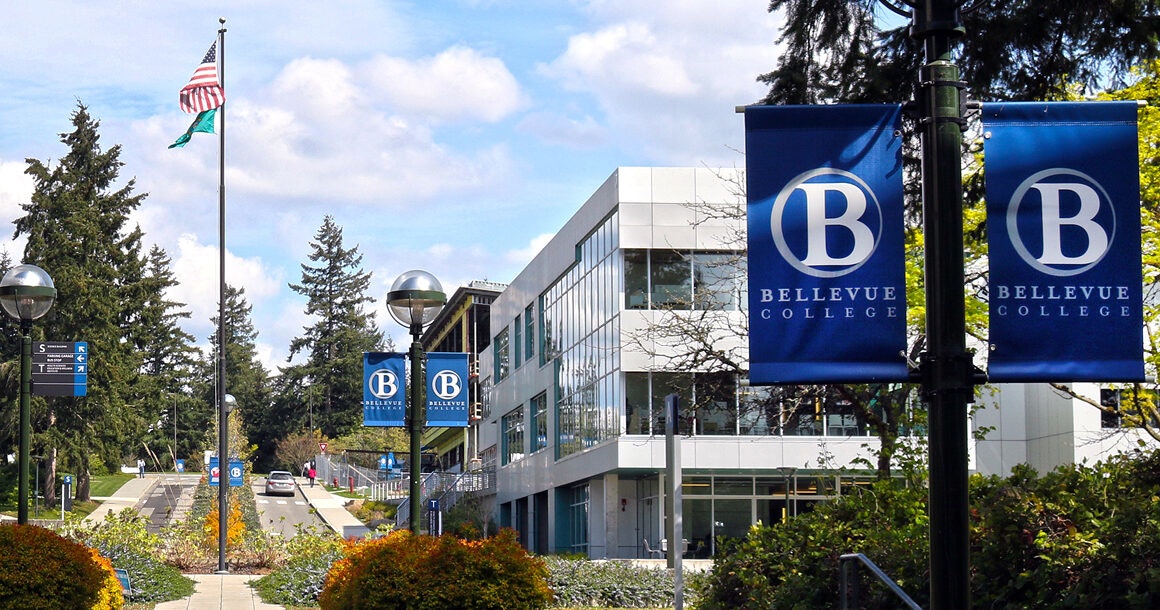
Among the honorees is Bellevue College, which earned its first Leader College designation since joining the ATD Network in 2017.
The honor recognizes institutions that have demonstrated measurable gains in student outcomes and fostered meaningful institutional change. Eight colleges achieved the prestigious Leader College of Distinction status, including three first-time recipients: College of Lake County (Illinois), Little Priest Tribal College (Nebraska), and Southwestern Oregon Community College.
Bellevue College’s recognition as one of ten new Leader Colleges reflects its successful efforts to transform the student experience.
“We are honored Achieving the Dream selected our institution as a Leader College,” said Bellevue College Provost Dr. Jess Clark. “Since joining ATD, Bellevue College has seen increased markers of student success and retention. We look forward to continuing our commitment to transforming the student experience so that all students will find success at Bellevue College.”
The designation as a Leader College is particularly significant as these institutions play a crucial role in accelerating the adoption of effective practices across higher education. Leader Colleges are recognized for their work in whole-college reform and their innovative approaches to sharing knowledge about evidence-based reform strategies with other institutions.
Dr. Karen A. Stout, president and CEO of Achieving the Dream, noted the importance of these recognitions.
“These colleges exemplify excellence within the ATD Network, achieving measurable gains in student outcomes and fostering impactful change within their institutions and communities,” she said. “Their dedication to using data-informed approaches to create meaningful opportunities for students and their communities serves as a powerful example for all institutions of higher education.”
The 2025 cohort also includes five colleges that have recertified their Leader College status: Community College of Beaver County (Pennsylvania), Highline College (Washington), Lone Star College System (Texas), Passaic County Community College (New Jersey), and Wallace State Community College (Alabama).
ATD’s Leader College of Distinction award, created in 2018, sets an even higher bar for institutional achievement. Recipients must demonstrate improvement in three or more student outcome metrics, including completion or transfer rates, and show reduced equity gaps for at least two student groups. This year’s five returning Leader Colleges of Distinction include Chattanooga State Community College (Tennessee), Lemoore College (California), North Central State College (Ohio), Odessa College (Texas), and Pierce College (Washington).
As a partner to more than 300 community colleges nationwide, Achieving the Dream focuses on what it calls “Whole College Transformation,” providing integrated support for everything from leadership and data analysis to equity initiatives and student support strategies. The organization’s vision centers on helping colleges become catalysts for equitable and economically vibrant communities, driving improvements in access, completion rates, and employment outcomes for all students.
For institutions like Bellevue College, this recognition validates their ongoing commitment to student success and institutional improvement. As part of the ATD Network, these colleges continue to work toward creating meaningful opportunities that transform not just individual students’ lives, but entire communities through the power of education.
TORONTO – June 7, 2024 – Top Hat, the leader in student engagement solutions for higher education, is proud to announce that four exceptional First Nations students have been awarded this year’s Shannen’s Dream Scholarship. Launched in 2022 by the First Nations Child & Family Caring Society with the support of Top Hat and the Collure Family of Richmond Hill, ON, each recipient will receive $10,000 to support their pursuit of a post-secondary education.
“We are truly inspired by this year’s Shannen’s Dream Scholarship recipients, both in terms of their academic achievements and as volunteers and agents of change within their communities,” said Maggie Leen, CEO of Top Hat. “As future leaders, doctors, scientists, and educators, they exemplify what’s possible when dedicated individuals have access to the benefits of higher education.”
The Scholarship is named in honor of Shannen Koostachin, a courageous young leader from Attawapiskat First Nation who inspired a national movement to establish safe and comfortable schools for First Nations students. What makes the Shannen’s Dream Scholarship particularly special is the ‘pay-it-forward’ component, which requires recipients to make a measurable contribution to the Shannen’s Dream campaign or related First Nations initiative.
“Our scholarship recipients are honoring Shannen’s legacy through their leadership, their community contributions and their academic achievements,” said Cindy Blackstock, Executive Director of the Caring Society. “We are grateful to Top Hat and the Collure Family for their support and for sharing our conviction that a more equitable and just society rests on ensuring First Nations students are able to pursue their dreams of a high quality education.”
Meet the 2024 Shannen’s Dream Scholarship Recipients
Aleria McKay was raised on Six Nations of the Grand River and is completing her Bachelor of Education at York’s Waaban Indigenous Teacher Education Program. A poet, playwright and educator, this fall she will start her Masters of Fine Arts in Creative Writing at the University of British Columbia.
Jaimey Jacobs is Ojibwe and a band member of the Walpole Island First Nation. A first year medical student at the Schulich School of Medicine and Dentistry at Western University, Jaimey is a passionate advocate for Indigenous healthcare and supporting Indigenous youth in navigating educational opportunities within the healthcare profession.
Rainbird Daniels is Plains Cree, Yankton Sioux, and Dakota from the Sturgeon Lake First Nation. She is pursuing a degree in Psychology at York University in Toronto where she also serves as the President of the Indigenous Student Association. As an Indigenous Languages Specialist at the Centre for Indigenous Knowledge and Languages, she is deeply committed to promoting cultural awareness and advancing human rights.
Taylor Nicholls is from the Wahnapitae First Nation and is pursuing a Master’s of Science in Biology at Laurentian University. Her thesis involves assessing various environmental contaminants in fish the Wahnapitae First Nation relies on as a traditional food source. Taylor is an ardent environmentalist whose research involves weaving Western science, citizen science, and traditional ecological knowledge.
About Shannen’s Dream Scholarship
The Shannen’s Dream Scholarship was established to assist First Nations youth with the financial burdens of post-secondary education. The scholarship honors Shannen Koostachin, whose advocacy for safe and comfortable schools for First Nations students ignited a nationwide movement. This scholarship aims to continue her legacy by empowering First Nations students to achieve their educational aspirations. To learn more, please visit www.fncaringsociety.com.
About Top Hat
As the leader in student engagement solutions for higher education, Top Hat enables educators to employ evidence-based teaching practices through interactive content, tools, and activities in in-person, online and hybrid classroom environments. Thousands of faculty at 750 leading North American colleges and universities use Top Hat to create meaningful, engaging and accessible learning experiences for students before, during, and after class. To learn more, please visit tophat.com.