
Tag: dropped

  • F-1, J-1 Student Visa Issuances Dropped in May

    F-1, J-1 Student Visa Issuances Dropped in May

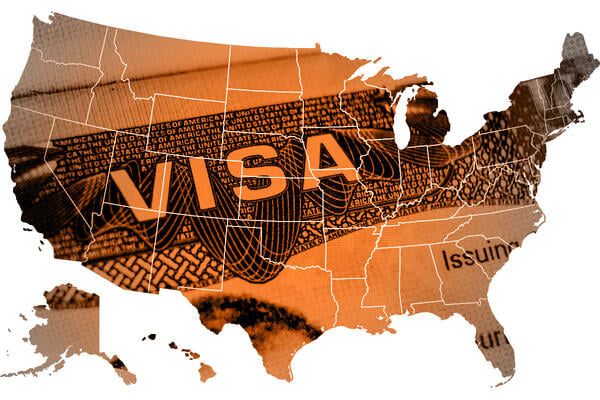
    The U.S. Department of State issued 12,689 fewer F-1 visas in May 2025 compared to the May before, which could forecast a decline in international students able to attend U.S. universities this fall.

    Recently published data from the State Department shows a 22 percent drop in F-1 visas issued across the world and a 13 percent decline in J-1 visas.

    While visa issuances can help predict international student enrollment trends, they don’t tell the full story, said Rachel Banks, senior director for public policy and legislative strategy at NAFSA, the association of international educators. Still, the trend line isn’t positive.

    “We’re not really going to know until we get through September to know everyone who arrives, to know what the enrollment really looks like,” Banks said. “But it’s certainly not encouraging.”

    Over the past few months, President Donald Trump has cracked down on international students via arrests, travel bans and revocations of legal status. Those moves and other executive orders could affect the number of F-1 and J-1 visas issued.

    In May, the administration said it would revoke visas from Chinese nationals who have ties to the Chinese Communist Party. The number of Chinese nationals issued a F-1 visa in May declined by 15 percent (or about 2,578 students). The State Department also paused visa interviews in late May while the agency developed a policy to screen international students’ social media profiles. Interviews resumed in June once the policy was in place.

    The interview pause may have contributed to but cannot fully explain the decline in visa issuances, said Finn Reynolds, head of market research at Lawfully, a legal tech start-up focused on immigration.

    The State Department doesn’t publish the number of visa applications or interviews it engages in, which means the decline could be tied to a decreased demand or slower processing by the department, Reynolds added. A May 27 survey by Study Portal found student interest in studying in the U.S. has dropped to its lowest point since COVID-19, with fewer students interested in U.S. programs and instead considering other English-speaking nations such as the U.K. or Australia.

    Additionally, the State Department doesn’t share daily visa issuance numbers, meaning the drop could be tied solely to the pause in the final week of May, Banks said. The connection, over all, is unclear.

    The data also points to the effect of travel restrictions on students from certain nations. The Trump administration banned visitors from 12 countries and implement heightened restrictions for seven other countries in June. The May numbers show a nearly 150 percent decline in F-1 visa issuances (or 451 visas) and a 105 percent decline in J-1 issuances (157 visas) to citizens from the impacted nations, even before the ban took place.

    One factor not reflected in the data is the number of students returning to their institutions who already hold visas. Students don’t need to receive a new visa if they remain in the U.S.; they only need one when traveling in and out of the country. Given the disruption to Student Exchange and Visitor Information System statuses in April, many students chose to remain in the U.S. over their summer break, Banks said.

    Reynolds expects to see a further drop in visa issuances for June and July, because social media vetting procedures result in fewer appointment slots.

    Students in China, Ghana, India, Japan, Niger and Nigeria have had the most trouble getting appointments, according to NAFSA members.

    “We’re halfway through July, and there’s still students who are struggling to get an appointment; that’s troubling,” Banks said.

    Future policies could also bottleneck the visa pipeline for international students. A proposed rule at the Office of Management and Budget would end duration-of-stay policies and instead implement a fixed date for how long students can remain in country on their visa.

    “We’re very concerned that if that were to go through, that sort of adds to further disruptions and hurdles that students have to jump over, that then gives students more reason to say, ‘You know, this seems like a hassle, this seems like I’m not welcome, I’m going to find another opportunity to pursue,’” Banks said.

    Enrollment Declines Loom

    Colleges and universities are already anticipating declines in their international student populations. The Institute of International Education found that 40 percent of institutions projected declines in their undergraduate population of international students, and 49 percent anticipated a drop in graduate student populations.

    A NAFSA survey of about 150 members institutions this summer found 78 percent of institutions predict a decline in both undergrad and graduate international students.

    Each year, institutions enroll 1.1 million international students, about 6 percent of all college students in the U.S.

    Calculations by The Financial Times, published last week, found that a decline of even 10 percent in international student enrollment would cost U.S. colleges and universities $3 billion in revenue. A significant portion of this loss would be in tuition revenue; a 10 percent drop would result in a $900 million decrease in tuition dollars.

    Source link

  • VICTORY! Charges dropped against TN woman cited for using skeletons in Christmas decorations

    VICTORY! Charges dropped against TN woman cited for using skeletons in Christmas decorations

    GERMANTOWN, Tenn., March 10, 2025 —Less than a month after the Foundation for Individual Rights and Expression filed a First Amendment lawsuit against Germantown, Tennessee, the city has voluntarily dismissed charges against its resident Alexis Luttrell for keeping skeletons in her yard after Halloween.

    “We are thrilled that Alexis will no longer have to stand trial because government officials disapproved of her decorative skeletons,” said FIRE attorney Colin McDonell. “Punishing Alexis for her choice of expressing holiday cheer would have been a bone-chilling restriction on her First Amendment rights.”

    “I’m beyond pleased that I’m no longer on trial for nothing more than decorating my yard in a way that City Hall didn’t like,” said Alexis. “That these charges were ever brought in the first place was utterly surreal, but I’m glad that they’re dead and buried — and my skeletons aren’t.”

    Alexis set up a decorative skeleton and skeleton dog in her front yard to celebrate Halloween last year, and then redressed them for Election Day and Christmas as well. But in December, a Germantown code officer left a notice that said that she had violated Ordinance 11-33, which says that yard decorations “shall not be installed or placed more than 45 days before the date of the holiday” and must be removed within “30 days, following the date of the holiday.”

    On Jan. 6, she received a citation from the Memphis suburb saying she was still in violation and that she would have to appear before a local judge. If found guilty, she would have been subject to fines and a court order prohibiting skeletons in her holiday displays.

    All this violated Alexis’s First Amendment rights. Americans have the right to put up skeletal decorations in September, October, November, December —- whenever they want. And by refusing to acknowledge Alexis’s Christmas-themed skeletons as Christmas decorations, the city engaged in viewpoint discrimination by enforcing an arbitrary and narrow idea of the “right” way to celebrate Christmas.

    COURTESY PHOTOS OF ALEXIS AND HER HOLIDAY DISPLAYS

    FIRE jumped into action, agreeing to represent Alexis in Germantown municipal court and filing a federal lawsuit seeking to overturn the Germantown ordinance on First Amendment grounds.

    “The Holiday Decorations Ordinance violates the First Amendment,” the civil rights complaint read. “It is a content-based and viewpoint-discriminatory restriction on speech. It is not narrowly tailored to a compelling government interest. And it is unconstitutionally vague, allowing government officials to arbitrarily punish holiday expression based on their subjective beliefs.”

    Alexis’s municipal court date was originally scheduled for Feb. 13, but it was postponed for a month after FIRE filed the federal lawsuit. But ahead of the March 13 hearing, the city’s attorneys dropped the charges, meaning Alexis is no longer at immediate risk of being punished for exorcising — er, exercising her rights.

    FIRE’s federal lawsuit challenging Germantown’s ordinance is still pending, but with charges dropped, Alexis’s skeletons will stay up and dressed to the nines as the lawsuit progresses through the courts. Alexis has continued dressing the skeletons to celebrate every new holiday season. Last month, it was Valentine’s Day, now they’re dressed for St. Patrick’s Day, and Easter and Pride Month displays are set to follow.

    “Holidays come and go, but the First Amendment is here year-round,” said McDonell. “We look forward to seeing all the ways Alexis will express herself for the holidays this year, without government interference.” 


    The Foundation for Individual Rights and Expression (FIRE) is a nonpartisan, nonprofit organization dedicated to defending and sustaining the individual rights of all Americans to free speech and free thought — the most essential qualities of liberty. FIRE educates Americans about the importance of these inalienable rights, promotes a culture of respect for these rights, and provides the means to preserve them.

    CONTACT:

    Alex Griswold, Communications Campaign Manager, FIRE: 215-717-3473; [email protected]

    Source link

  • VICTORY! Charges dropped against Tenn. woman cited for using skeletons in Christmas decorations

    VICTORY! Charges dropped against Tenn. woman cited for using skeletons in Christmas decorations

    GERMANTOWN, Tenn., March 10, 2025 —Less than a month after the Foundation for Individual Rights and Expression filed a First Amendment lawsuit against Germantown, Tennessee, the city has voluntarily dismissed charges against its resident Alexis Luttrell for keeping skeletons in her yard after Halloween.

    “We are thrilled that Alexis will no longer have to stand trial because government officials disapproved of her decorative skeletons,” said FIRE attorney Colin McDonell. “Punishing Alexis for her choice of expressing holiday cheer would have been a bone-chilling restriction on her First Amendment rights.”

    “I’m beyond pleased that I’m no longer on trial for nothing more than decorating my yard in a way that City Hall didn’t like,” said Alexis. “That these charges were ever brought in the first place was utterly surreal, but I’m glad that they’re dead and buried — and my skeletons aren’t.”

    Alexis set up a decorative skeleton and skeleton dog in her front yard to celebrate Halloween last year, and then redressed them for Election Day and Christmas as well. But in December, a Germantown code officer left a notice that said that she had violated Ordinance 11-33, which says that yard decorations “shall not be installed or placed more than 45 days before the date of the holiday” and must be removed within “30 days, following the date of the holiday.”

    On Jan. 6, she received a citation from the Memphis suburb saying she was still in violation and that she would have to appear before a local judge. If found guilty, she would have been subject to fines and a court order prohibiting skeletons in her holiday displays.

    All this violated Alexis’s First Amendment rights. Americans have the right to put up skeletal decorations in September, October, November, December —- whenever they want. And by refusing to acknowledge Alexis’s Christmas-themed skeletons as Christmas decorations, the city engaged in viewpoint discrimination by enforcing an arbitrary and narrow idea of the “right” way to celebrate Christmas.

    COURTESY PHOTOS OF ALEXIS AND HER HOLIDAY DISPLAYS

    FIRE jumped into action, agreeing to represent Alexis in Germantown municipal court and filing a federal lawsuit seeking to overturn the Germantown ordinance on First Amendment grounds.

    “The Holiday Decorations Ordinance violates the First Amendment,” the civil rights complaint read. “It is a content-based and viewpoint-discriminatory restriction on speech. It is not narrowly tailored to a compelling government interest. And it is unconstitutionally vague, allowing government officials to arbitrarily punish holiday expression based on their subjective beliefs.”

    Alexis’s municipal court date was originally scheduled for Feb. 13, but it was postponed for a month after FIRE filed the federal lawsuit. But ahead of the March 13 hearing, the city’s attorneys dropped the charges, meaning Alexis is no longer at immediate risk of being punished for exorcising — er, exercising her rights.

    FIRE’s federal lawsuit challenging Germantown’s ordinance is still pending, but with charges dropped, Alexis’s skeletons will stay up and dressed to the nines as the lawsuit progresses through the courts. Alexis has continued dressing the skeletons to celebrate every new holiday season. Last month, it was Valentine’s Day, now they’re dressed for St. Patrick’s Day, and Easter and Pride Month displays are set to follow.

    “Holidays come and go, but the First Amendment is here year-round,” said McDonell. “We look forward to seeing all the ways Alexis will express herself for the holidays this year, without government interference.” 


    The Foundation for Individual Rights and Expression (FIRE) is a nonpartisan, nonprofit organization dedicated to defending and sustaining the individual rights of all Americans to free speech and free thought — the most essential qualities of liberty. FIRE educates Americans about the importance of these inalienable rights, promotes a culture of respect for these rights, and provides the means to preserve them.

    CONTACT:

    Alex Griswold, Communications Campaign Manager, FIRE: 215-717-3473; [email protected]

    Source link