Dropping the appeal ends a yearlong legal battle over the guidance that declared race-based programming illegal.
Celal Gunes/Anadolu/Getty Images
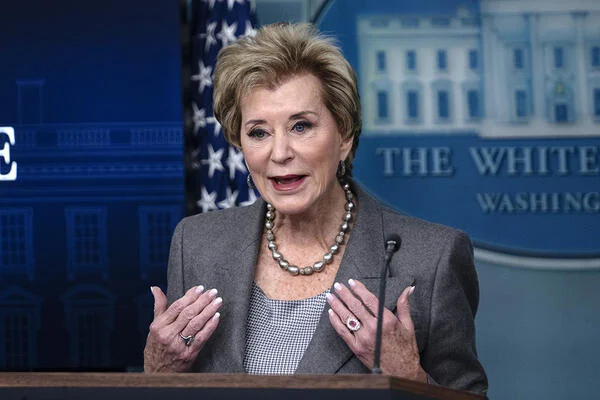
Education Secretary Linda McMahon and her legal team have dropped their appeal of a federal court ruling that blocked the department from requiring colleges to eradicate all race-based curriculum, financial aid and student services or lose federal funding.
The motion to dismiss was jointly approved by both parties in the case Wednesday, ending a nearly yearlong court battle over the department’s Feb. 14 Dear Colleague letter that declared race-based programming and policies illegal. If institutions didn’t comply within two weeks, department officials threatened to open investigations and rescind federal funding.
In response, colleges closed offices related to diversity, equity and inclusion; scrubbed websites; and cut other programming.
First Amendment advocacy groups and the DEI leaders who remain in higher ed declared it a major victory for public education. Democracy Forward, the legal group that represented educators in the case, went as far as to say that it marks the “final defeat” of Trump’s effort to censor lessons and scrub student support programs.
Skye Perryman, president of Democracy Forward, said it should encourage those affected by the Trump administration’s “unlawful crusade against civil rights” to keep fighting back.
“Today’s dismissal confirms what the data shows: government attorneys are having an increasingly difficult time defending the lawlessness of the president and his cabinet,” she said in a news release about the court filing. “When people show up and resist, they win.”
The court filing did not explain why the department chose to abandon the case, and Ellen Keast, a department spokesperson, declined to provide any further comment.
Trump officials had argued that they were merely enforcing existing federal civil rights laws and the 2023 Supreme Court ruling that struck down affirmative action. They claimed race-based programming constitutes discrimination.
But 10 days later, a coalition of education unions, a national association and a public school district challenged the letter in court, arguing it violated administrative procedure law and institutions’ First Amendment rights. Then, in August, federal district Judge Stephanie Gallagher struck down the department’s guidance, arguing it “ran afoul” of procedural requirements and that “the regulation of speech cannot be done casually.”
Colleges and universities aren’t entirely in the clear, though. Just days before the Maryland District Court issued its ruling on the ED letter, the Department of Justice released its own nine-page memo on DEI.
That guidance, which went even further than ED’s guidance, said that basing services on stand-ins for race—like “lived experience,” “cultural competence” and living in a minority-heavy geographic area—could also violate federal civil rights laws. In response, colleges have closed campus centers and publications cater to certain racial or ethnic groups.
Still, many educators see this as a significant step forward.
“When you fight you don’t always win, but you never win without a fight,” said Randi Weingarten, president of the American Federation of Teachers, one of the cases’ plaintiffs, in a news release. “We are proud that this case has once again halted the administration’s pattern of using executive fiat to undermine America’s laws that enshrine justice and opportunity for all.”
Florida is now the second state to drop its requirement that lawyers in the state hold a degree from a law school accredited by the American Bar Association, The Tallahassee Democrat reported Thursday.
The Florida Supreme Court, which sets law-licensure requirements, said the decision is designed to open the door for more law school accreditors.
“The rule changes create the opportunity for additional entities to carry out an accrediting and gatekeeping function on behalf of the Court,” the Jan. 15 opinion read. “The Court’s goal is to promote access to high-quality, affordable legal education in law schools that are committed to the free exchange of ideas and to the principle of nondiscrimination.”
Republicans, including Florida attorney general James Uthmeier, who called the ABA “a captured, far-left organization,” have targeted the ABA, which accredits the vast majority of law schools in the country, as part of a broader crusade against diversity, equity and inclusion efforts. Last year, the ABA suspended its DEI standards in response to conservative criticism.
On Thursday, Gov. Ron DeSantis praised the state Supreme Court’s decision as a “Good move” in a post on X. “The (highly partisan) ABA should not be a gatekeeper for legal education or the legal profession.”
For now, though, a new law school accreditor has yet to emerge. And experts say it’s unlikely most law schools will abandon their ABA accreditation any time soon, because it’s created reliable professional standards that make it easier for lawyers to practice in multiple states.
Justice Jorge Labarga, the only dissenting vote in the Florida opinion and the only justice who wasn’t appointed by DeSantis, cautioned that a new law school accreditor would have a tough time rivaling the ABA.
“[The ABA] has cultivated unmatched proficiency in dealing with Florida law-school-specific issues that would require decades for any successor to develop,” he wrote in his dissent. “Refinements can always be made. However, replacing an established entity with an unknown alternative is detrimental in the context of disputes.”
For the first time in 43 years, lawyers who want to practice in Texas will no longer be required to hold a degree from a law school accredited by the American Bar Association, the Texas Supreme Court decided last week.
While the ABA is “continuing to work with the Texas Supreme Court—and all other state supreme courts and bar admitting authorities—to help preserve the portability of law school degrees throughout the country,” the policy “reinforces the authority that the Supreme Court of Texas has always had over the licensure of JD graduates,” Jenn Rosato Perea, managing director of the ABA’s accrediting arm, wrote in an email to Inside Higher Ed.
Since 1983, Texas has ceded some of that authority to the ABA, whose Section of Legal Education and Admissions to the Bar accredits the majority of law schools in the United States. Most other states have similar ABA oversight in place; it became a popular move in the 1980s because law was becoming increasingly national business. Widespread adoption of ABA accreditation as a licensure standard offered more uniformity and has made it easier for lawyers to practice in multiple states.
The new Texas policy comes amid the broader crackdown on higher education accreditors by the Trump administration and its allies, and specifically on the ABA, which has become a target of the Republican-led anti-DEI crusade in recent years. Indeed, the ABA suspended its diversity, equity and inclusion standards last year. Now Texas has become the first state to say it will no longer rely on the accreditor to help to set law licensure standards.
“[The Court] intends to provide stability, certainty, and flexibility to currently approved law schools by guaranteeing ongoing approval to schools that satisfy a set of simple, objective, and ideologically neutral criteria (such as bar exam passage rate) using metrics no more onerous than those currently required by the ABA,” read a Jan. 6 order signed by all nine justices of the Texas Supreme Court. “[It] does not intend to impose additional accreditation, compliance, or administrative burdens on currently approved law schools.”
While the policy likely won’t change much in the short term, critics say it invites the creation of alternative law school accreditors, which could make it harder for lawyers to move their practice across state lines.
Republican-controlled Florida, Ohio and Tennessee are weighing similar measures.
“This could be the beginning of the end of the ABA as the accreditor of choice for law schools nationally,” Peter Lake, a law professor at Stetson College of Law’s Center for Excellence in Higher Education Law and Policy, told Inside Higher Ed. “It’s a little too early to call the game, but this is a significant step toward a goal the Trump administration and many states want to see happen.”
Part of that goal involves asserting more control over higher education accreditors.
In April, Trump issued an executive order directing the Department of Education to suspend or terminate the federal recognition of accreditors found “to engage in unlawful discrimination in accreditation-related activity under the guise of ‘diversity, equity, and inclusion’ initiatives.” It specifically called for an investigation of the ABA and the Liaison Committee on Medical Education, which accredits medical schools. In June, six states—Florida, Georgia, North Carolina, South Carolina, Tennessee and Texas—announced the launch of a new regional accreditor, the Commission for Public Higher Education; at the time, Florida governor Ron DeSantis described it as part of an effort to root out “woke ideology” in higher education and break up the “accreditation cartel.”
The federal government made adjacent arguments in supporting the Texas Supreme Court’s plan to minimize the ABA’s oversight of legal education, also announced last April. In December, the Federal Trade Commission submitted a public comment letter in support of the policy, accusing the ABA of having a “monopoly on the accreditation of American law schools” and of imposing “rigid and costly requirements” mandating “every law school follow an expensive, elitist model of legal education.”
Texas Open to ABA Alternative
While the Texas court stopped short of establishing a new law school accreditor, it acknowledged that it might in the future consider “returning to greater reliance on a multistate accrediting entity other than the ABA should a suitable entity become available,” according to the final version of the policy.
Lake said that could happen eventually, especially if other states decide to follow Texas and ditch the ABA’s oversight. “This is an open invitation to form a [new law school–accrediting] organization,” he said. “And I suspect that whatever group forms will probably be a little more aligned with the Trump administration’s goals and ideas.”
Educators and experts believe such a move will only impede the goals of legal education and practice.
“ABA accreditation provides a nationally recognized framework for quality assurance and transparency; portability of licensure through recognition of ABA accreditation by all 50 states, which is critical for graduates’ career flexibility; consumer protections and public accountability through disclosure standards; and a baseline of educational quality that correlates with higher bar passage rates and better employment outcomes,” the deans of eight of the state’s 10 ABA-accredited law schools wrote in a letter to the Texas Supreme Court in June.
The dean of South Texas College of Law Houston was among those that objected to minimizing the ABA’s oversight of law licenses in the state.
JHVEPhoto/iStock/Getty Images
A degree from an ABA-accredited law school is generally required to pursue a career as a lawyer, said Oren R. Griffin, a law professor at the University of Tulsa College of Law.
“ABA accreditation is a national stamp of approval,” he said. “Law schools may differ on what they prioritize, such as curriculum or clinics they offer, but the standards have identified some basic requirements that allow all law schools to operate at an efficient, effective level.”
And even if a state says it will license lawyers who didn’t graduate from an ABA-accredited law school, graduates from such institutions may still face limited opportunities.
“Law schools have been very well served by these standards,“ Griffin said. “If other states were to follow suit and begin to not require ABA accreditation as a national standard, you could end up with some real disparities or differences among the 50 states, which could increase the complexities for students who are graduating and want to be able to practice in multiple states.”
Regardless of the Texas Supreme Court’s new policy, law schools won’t likely abandon ABA accreditation anytime soon, said Austen L. Parrish, dean of the University of California, Irvine, School of Law and president of the Association of American Law Schools.
“For example, a school like the University of Texas—where about 40 percent of students come from out of state and some 30 percent of graduates are placed out of state—cannot afford to not be ABA accredited. And I suspect that’s true for all of the ABA-accredited schools,” he said, adding that any school that eventually gives up ABA accreditation would be charting “a very dangerous path.”
Students who are not held to the ABA’s national accreditation standards are less likely to receive a quality legal education, Parrish said—a result long demonstrated by the poor outcomes at California’s handful of non-ABA-accredited law schools, which have high attrition and low bar-passage rates, he added.
“The unraveling of the national accreditation system would be really harmful to students and law schools,” Parrish said. “We’re in a world where schools need to recruit from all over and students end up practicing all over. To have a school that doesn’t do that makes them less attractive to students and more likely to create some of the problems at some of the unaccredited schools in California.”
And even if Texas and other states do band together to form their own law school accreditor, rivaling the ABA’s influence would be a challenge.
First, “it’s very difficult to set up an accrediting body and takes quite a bit of money,” Parrish said. “They could set up a regional accreditor, but it’s not necessarily clear who will see that as sufficient for licensing eligibility, which means the schools in those states will still have to go with ABA accreditation … I’m skeptical that more progressive states are going to buy into something that’s blatantly political.”
For now, he interprets the Texas order as a placeholder.
“There probably won’t be many changes right now,” he said, “other than keeping the pressure on the ABA, because [Texas] has signaled a willingness to move to a different approach, though it’s not clear what that is right now.”
This audio is auto-generated. Please let us know if you have feedback.
Dive Brief:
Los Angeles Unified School District’s enrollment fell 4% year over year to 392,654 for 2025-26 — a greater-than-expected drop in a year where the school system has faced heightened immigration enforcement. The dip is “deeply connected to the realities our immigrant families are facing,” Superintendent Alberto Carvalho told K-12 Dive in a statement Tuesday.
Other districts affected by increased immigration enforcement activities have also reported enrollment drops, including Miami-Dade County Public Schools in Florida and Chicago Public Schools. The uptick in enforcement followed a Trump administration policy change in January that allows immigration raids at schools.
In many areas, these declines are partly driven by lower enrollment for newcomers, defined as students who have been enrolled for three years or fewer in any U.S. school, were born outside the U.S., and are English learners.
Dive Insight:
“These declines reflect a climate of fear and instability created by ongoing immigration crackdowns, which disrupt family stability, housing, and mobility,” said Carvalho. “These fears are now exacerbating pre-existing factors that were already driving statewide enrollment declines — including falling birth rates, rising housing costs, and broader economic pressures.”
LAUSD and its surrounding areas have seen an increase in immigration enforcement activity in both the current and previous school years, including incidents in which U.S. Department of Homeland Security officers attempted to gain entry into elementary schools by allegedly making false claims they had parent permission to speak with students. In another instance, agents apprehended a high school student with a disability while he was enrolling for classes in an apparent case of mistaken identity.
LAUSD families and those in other areas hit by heightened immigration enforcement have also experienced activity during school pickup and dropoff hours.
The impact of these activities on attendance has led some school leaders to emphasize the possibility of virtual schools.
Now, the apparent toll on enrollment — including that of newcomers — is set to impact districts’ budgets.
In LAUSD, newcomer enrollment for students who were expected to return for the 2025-26 school year is down 9% at 16,668, compared to the projected 18,232.
“Unless these overlapping issues are addressed at the state level, California’s public schools will face long-term ramifications that will affect classrooms, staffing, programming, and the future of public education itself,” said Carvalho.
Late last month, congressional Democratic lawmakers sent a letter to U.S. Secretary of Education Linda McMahon in which they inquired about steps the department is taking to protect students as raids impact their families and communities. The lawmakers wrote that they are “deeply concerned” about the fallout.
“The chaotic manner in which raids and apprehensions are being carried out is injecting needless trauma into these communities, which then makes its way into schools and contributes to absenteeism,” said lawmakers, led by House Education and Workforce Committee Ranking Member Bobby Scott, D-Va. Students, regardless of their immigration status, are being impacted, they wrote.
“The consequences of the Administration’s actions show that our nation’s students, families, and schools need resources to help in the days ahead,” the lawmakers wrote.
New data from the Department of Homeland Security from the Student Exchange and Visitor Information System for October shows an overall 1 percent decline of all international students in the U.S. SEVIS data includes all students on F-1 and M-1 visas, including those enrolled in primary and secondary school, language training, flight school, and other vocational programs.
According to DHS data, bachelor’s degree enrollment among international students is down 1 percent from October 2024 to October 2025; master’s degree enrollment is down 2 percent, as well. Associate degree programs have 7 percent more international students in October 2025 than the year prior, and international doctoral students are up 2 percent.
Campus-level data paints a more dramatic picture; an Inside Higher Ed analysis of self-reported graduate international student enrollment numbers from nine colleges and universities finds an average year-over-year decline of 29 percent.
Some groups, including NAFSA, the association for international educators, have published predictions of how international student enrollment would impact colleges’ enrollment and financial health. NAFSA expected to see a 15 percent decline across the sector and greater drops for master’s degree programs.
“Master’s [programs] have been very hit. And in addition to master’s being hit, programs like computer sciences and STEM in particular have been mostly affected,” NAFSA CEO Fanta Aw said in a Sept. 19 interview with Inside Higher Ed.
At the University of Wisconsin at Madison, for example, master’s degree enrollment dropped 22 percent from fall 2024. Ph.D. program enrollment declined only 1 percent compared to the year prior, according to university data.
While more selective or elite institutions have mostly weathered enrollment declines among undergraduate international students—reporting little or no change to their enrollment numbers this fall—Aw says graduate student enrollment is down everywhere.
The University of Pennsylvania’s Wharton School of Business, for example, reported that international students made up 26 percent of its incoming master’s in business administration class, down five percentage points from the year prior, as reported byPoets and Quants (Poets and Quants is also owned by Times Higher Education, Inside Higher Ed’s parent company). At Duke’s Fuqua School of Business, 47 percent of the incoming class in 2024 hailed from other nations, but that figure dropped to 38 percent this fall.
Because master’s degrees are shorter programs than undergraduate ones, averaging two years, Aw anticipates universities to see even more dramatic declines from 2024 in fall 2026.
“The current environment is still too uncertain for [graduate] students to even consider potentially applying,” Aw said. “You cannot have enrollment if they’re not even applying.”
Of colleges in the data set, Northwest Missouri State University reported the greatest year-over-year decline in graduate student enrollment, falling from 557 international students in fall 2024 to 125 in fall 2025. In April, Northwest Missouri State reported that 43 of its international students had their SEVIS statuses revoked; 38 of them were on optional practical training.
At that time, Northwest Missouri State encouraged students who lost their SEVIS status to depart the U.S. immediately “to avoid accruing unlawful presence,” according to a memo from President Lance Tatum published by Fox 4 Kansas City. The university declined to comment for this piece.
The dramatic changes in enrollment numbers are having budgetary impacts on some colleges.
At Georgetown University, foreign graduate student enrollment dropped 20 percent, which was expected but steeper than anticipated, according to a memo from interim university president Robert M. Groves. In April, Georgetown cut $100 million from its budget due to loss of federal research dollars and international student revenue, and Groves said more cuts may be needed in December.
DePaul University in Chicago saw a 63 percent year-over-year decline in new graduate students from other nations—a sharp drop that administrators, similarly, did not anticipate in this year’s budget.
As more colleges solidify their fall enrollment numbers, the sectorwide decline in foreign students has become more clear.
Inside Higher Ed’s initial data found colleges reported, on average, a 13 percent decrease in international student enrollment. The median year-over-year change was a 9 percent drop.
Small colleges saw significant changes. Bethany Lutheran College in Minnesota, with a total head count of 900 students, reported a 50 percent growth in international students. At the other end, the University of Hartford in Connecticut lost half of its international students, only expecting 50 instead of 100 this fall.
Community colleges are also feeling the loss of international students. Bellevue College in Washington State, a leading destination for international students in the two-year sector, reported a 56 percent year-over-year decline in enrollment.
A smaller percentage of Americans are drinking alcohol than ever before. For non-drinkers, Lilia Luciano reports, businesses and organizations are ready to serve alternatives.
Beleaguered by the Trump administration’s efforts to reshape higher education to align with conservative policy priorities, major universities continue to spend heavily on lobbying efforts to protect their interests.
While lobbying expenses over all have boomed during 2025 compared to last year, spending fell in the third quarter, according to an Inside Higher Ed analysis of major research universities.
Members of the Association of American Universities spent less in the third quarter of 2025 than in either of the first two quarters, racking up more than $8.6 million in lobbying costs, compared to $9 million in the first quarter and more than $10 million in Q2.
AAU’s member institutions have already spent more than $27.8 million combined on lobbying this year.
Top Spenders
Among individual AAU members, Johns Hopkins University spent the most on lobbying in the third quarter, shelling out $390,000. JHU spent $170,000 in the first quarter and $380,000 in Q2, for a total of more than $940,000 so far this year.
JHU’s lobbying disclosure form shows the private university in Baltimore engaged Congress on multiple issues, including the Trump administration’s One Big Beautiful Bill Act, student loans and psychedelic research.
“We continue to advocate for our research mission through all appropriate channels,” a Johns Hopkins University spokesperson wrote in an emailed statement to Inside Higher Ed.
Others that invested heavily in lobbying include Yale University, which spent $370,000 in the third quarter, and its Ivy league counterpart the University of Pennsylvania, which spent $360,000. The University of Washington was the top-spending public institution at $310,000, while Columbia University rounded out the top five with $290,000 in lobbying expenses for Q3.
“Communicating the impact of Columbia’s researchers, scientists, scholars, and clinicians to policymakers in Washington, New York, and locally is vital, and we utilize a combination of in-house and outside professionals to ensure our message reaches key stakeholders, including our New York delegation,” a Columbia spokesperson wrote in an email to Inside Higher Ed.
In addition to research funding and the One Big Beautiful Bill Act, common areas of focus noted in lobbying disclosure forms include appropriations, student visas and immigration, among other concerns that college officials have raised in private conversations with lawmakers on Capitol Hill.
Including their third-quarter expenditures, several of the institutions above are among the top spenders for the year. Northwestern leads AAU members in lobbying expenses at $1.1 million, followed by the University of Washington at $1 million, JHU and Yale at $940,000, and Cornell at $914,000.
Many universities dialed back lobbying expenses in the third quarter, some by significant amounts. Emory University, for example, spent $500,000 on lobbying in the second quarter but only $185,000 in Q3. Emory has spent $855,000 on lobbying in 2025.
Though still among the top-spending AAU members, Cornell pulled back on lobbying, which fell to $240,000 in Q3 compared to $444,000 in the second quarter.
Northwestern has cut spending in each successive quarter. The private university spent $607,000 on federal lobbying in Q1, the most of any university in any quarter this year. But that number fell to $306,000 in the second quarter and $230,000 more recently.
Outliers
Some universities outside the AAU also spent heavily on lobbying in the third quarter.
The University of Phoenix, for example, spent $480,000 on federal lobbying efforts. Phoenix has spent consistently across all three quarters, totaling $1.4 million in lobbying expenditures in 2025. That appears to make the for-profit institution the top individual spender across the sector this year.
Lobbying disclosure forms show Phoenix engaged on legislation, including the One Big Beautiful Bill Act and a bill related to student veteran benefits, but also on broad public policy issues.
Phoenix officials declined to comment.
Northeastern University is another top spender that falls outside of AAU membership. The university has spent $270,000 in each quarter, totaling $810,000 in 2024 lobbying expenditures.
This audio is auto-generated. Please let us know if you have feedback.
Dive Brief:
Academic performance drops when temperatures rise, according to a study released Thursday by the NWEA. When test-day temperatures clocked over 80 degrees, students had lower math MAP Growth scores, the organization that administers the assessment found.
Extreme heat affects high-poverty students especially. The NWEA study found that high heat negatively impacted math scores up to twice as much for students in high-poverty schools than for those from low-poverty schools.
The study recommends educators set testing schedules around weather conditions when possible, create better testing conditions by moving testing to cooler areas and testing during the morning, invest in updated HVAC infrastructure, and ensure that districts’ infrastructure planning takes into account high-poverty communities.
Dive Insight:
In 2020, over half of the nation’s schools (54%) needed to update or replace multiple building systems or features in their schools, according to a report released by the Government Accountability Office. About 41% of public school districts needed to update or replace the HVAC systems in at least half of their schools, according to the report.
“If not addressed, such problems can lead to indoor air quality problems and mold, and in some cases caused schools to adjust schedules temporarily,” the GAO report found.
At the same time, the school year is getting hotter.
Heat waves impact schools “seemingly everywhere,” according to the Climate Action Campaign, including in Arizona, Georgia, Michigan and Wisconsin. In August, for example, schools in Portland, Oregon, closed early in anticipation of a heat wave, according to local reports.
And by this year, about 2,671 additional school districts were expected to log 32 or more days of weather over 80 degrees — the heat threshold where cooling systems are typically installed. That number of school districts is a 39% increase since 1970, according to a 2021 project by the Center for Climate Integrity.
Such climate changes impact academics, a finding confirmed by the NWEA study released Thursday.
It gathered data from nearly 3 million MAP Growth tests administered to students in grades 3-6 across six states between 2022 and 2024. The study found that on days hotter than 101 degrees, students’ math performance was about 0.06 standard deviations below students who tested in 60 degree weather. The difference is about 10% of a 5th grader’s learning during a school year.
“Our findings show that as temperatures continue to rise, disparities in school facilities, such as having appropriate HVAC systems, can deepen existing inequities and make school infrastructure and building conditions significant issues of educational equity,” said Sofia Postell, research analyst at NWEA, in a Thursday statement.
The findings expand on previous ones examining heat’s impacts on student achievement.
In 2020, a study published by the American Economic Association found that “heat directly disrupts learning time,” and that without air conditioning, a school year hotter by 1 degree reduces that year’s learning by 1%. The same study also found that hot school days disproportionately impact minority students, and even account for about 5% of the racial achievement gap.
This audio is auto-generated. Please let us know if you have feedback.
Dive Brief:
Broward County Public Schools announced plans to “address” 34 of its 239 schools for possible closures or consolidations during a Tuesday board meeting.
The pending plans come at a time when the large Florida district is reporting an enrollment decrease of 10,360 students, a count taken 10 days into the 2025-26 school year compared to the year prior. The district’s total enrollment, excluding charter schools, was 188,002 on Aug. 22.
The district also reported in July that 58 of its schools were below 70% capacity, including 39 elementary schools, 16 middle schools and 3 high schools.
Dive Insight:
As the sixth largest school district in the U.S., BCPS is not immune to a national trend of districts facing enrollment drops amid declining birthrates and growing school choice options.
In a May survey of current and former BCPS parents conducted by Hanover Research, the data found that about half of respondents — 53% — said they enrolled their children in a nontraditional schooling option because they wanted higher quality instruction. A third of families also cited smaller class sizes and another third indicated the availability of more programs. The district surveyed 8,983 parents who either had a child enrolled, formerly enrolled, or partially enrolled in a BCPS school.
The top two reasons parents said they unenrolled their children from BCPS was because they were dissatisfied with the district’s education quality (26%) and they were concerned about school safety (24%).
Among those who previously had a child enrolled or partially enrolled at BCPS, 20% said improved teacher quality through professional development would have made them more likely to stay. Some 18% also separately said better support for students with disabilities, improvements on handling school bullying, or strengthened safety and security measures would have encouraged them to keep their child in the district.
To retain families, the district is being advised based on the parent survey results to:
Track school climate and culture outcomes for improvements.
Offer more college and career readiness support.
Provide more support to teachers to improve the district’s education quality.
Tackle school safety issues and work to reduce bullying and harassment.
An August analysis by Bellwether, an education nonprofit, warns that more school closures and consolidation could be on the horizon in the coming months and years due to declining enrollment — ultimately leading to strained school budgets. Bellwether estimated that the total loss in revenue from declining enrollment at the nation’s largest 100 districts could total up to $5.2 billion based on 2023-24 school enrollment.
This audio is auto-generated. Please let us know if you have feedback.
Dive Brief:
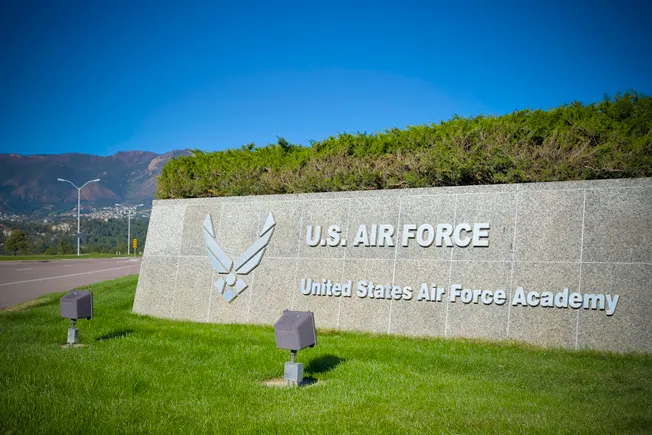
Students for Fair Admissionshas dropped its lawsuits against the U.S. Military Academy at West Point and the U.S. Air Force Academy over race-conscious admissions — practices that are no longer in effect at either institution under the Trump administration.
Both academies axed admissions goals based on race, ethnicity and gendershortly after President Donald Trump’s defense secretary, Pete Hegseth, took office.
SFFA had filed the lawsuits after the U.S. Supreme Court in 2023 sided with the anti-affirmative action group in its landmark ruling banning race-conscious admissions at colleges but allowed the practice to continue at military academies.
Dive Insight:
In a footnote to Chief Justice John Roberts’ majority opinion in Students for Fair Admissions v. Harvard — the case that ultimately ended decades of race-conscious admissions — the court said the decision did not address the practice at the nation’s military academies.
While no military academy had been party to the case, the court effectively created a carve-out for race-conscious admissions at the institutions “in light of the potentially distinct interests that military academies may present.”
In a friend-of-the-court brief to that case, the Biden administration wrote that “the Nation’s military strength and readiness depend on a pipeline of officers who are both highly qualified and racially diverse — and who have been educated in diverse environments that prepare them to lead increasingly diverse forces.”
After the ruling came down, SFFA soon filed legal challenges against military academies and their race-conscious admissions policies.
In its 2023 complaint against West Point, SFFA alleged, “Instead of admitting future cadets based on objective metrics and leadership potential, West Point focuses on race.”
The lawsuit further argued: “West Point has no justification for using race-based admissions.”
SFFA’s cases against West Point and the Air Force Academy, along with another one against the U.S. Naval Academy, were in progress when Trump retook the presidency in January.
The group quickly found it had an ideological ally in the new administration, whose policies reflect SFFA’s goals.
Hegseth banned race-based admissions at the nation’s military academies in January, days after being sworn in.In doing so, Trump’s defense secretary described diversity initiatives as “incompatible with the values of DoD,” adding that “the DoD will strive to provide merit-based, color-blind, equal opportunities to Service members but will not guarantee or strive for equal outcomes.”
Hegseth has gone much further than just rejecting race-conscious admissions at the academies. Under his leadership, the Pentagon ordered the military academies to purge hundreds of books from their libraries that deal with racism and gender issues, a move that has sparked outcry as well as lawsuits and at least one reversal.
In June, the Justice Department and SFFA asked that the group’s lawsuit against the Naval Academy be declared moot, after that institution dropped race-conscious admissions under Hegseth’s directive. The case was under appeal at the time, after a federal judge upheld the institution’s policies in December. In July, an appeals court dismissed the case in response to the request from SFFA and the Justice Department.
SFFA President Edward Blum said in a June statement, “We applaud this extraordinary accomplishment by the President and the Department of Defense which restores the colorblind legal covenant that binds together our military institutions.”