Tag: Dual

  • Dual Enrollment and AP Courses Yield Positive Outcomes

    Dual Enrollment and AP Courses Yield Positive Outcomes

    A recent report from the Community College Research Center at Columbia University’s Teachers College found that high school students graduate college at higher rates and earn more after college if they’ve taken a combination of dual-enrollment and Advanced Placement courses.

    The report, released Tuesday, drew on administrative data from Texas on students expected to graduate high school in 2015–16 and 2016–17, as well as some data from students expected to complete in 2019–20 and 2022–23. It explored how different kinds of accelerated coursework, and different combinations of such work, affected student outcomes.

    Researchers found that students who combined Advanced Placement or International Baccalaureate courses with dual-enrollment courses boasted higher completion rates and earnings than their peers. Of these students, 92 percent enrolled in or completed a credential a year after high school, and 71 percent earned a credential by year six.

    These students also showed the strongest earnings outcomes in their early 20s. They earned $10,306 per quarter on average at age 24, compared to $9,746 per quarter among students who took only dual enrollment and $8,934 per quarter for students who took only AP/IB courses. However, students taking both dual-enrollment and AP/IB courses tended to be less racially and socioeconomically diverse than students taking AP/IB courses alone, the report found.

    Students who combined dual enrollment with career and technical education—who made up just 5 percent of students in the study—also reaped positive outcomes later in life. These students earned $9,746 per quarter on average by age 24, compared to $8,097 per quarter on average for students with only a CTE focus.

    “Most dual-enrollment students in Texas also take other accelerated courses, and those who do tend to have stronger college and earnings trajectories,” CCRC senior research associate Tatiana Velasco said in a press release. “It’s a pattern we hadn’t fully appreciated before, which offers clues for how to expand the benefits of dual enrollment to more students.”

    Source link

  • What Happens to Dual Enrollment Credits After High School?

    What Happens to Dual Enrollment Credits After High School?

    Dual enrollment is often described to high school students and their families as a way to get an early college experience at a significantly reduced cost. These students will earn college credit—sometimes even an associate degree or other college credential—before graduating high school, potentially reducing the time and cost of earning a bachelor’s degree.

    At least that’s the promise. But what happens when the path after high school isn’t so clear?

    For us, both former DE students (or, as we call ourselves, “stealth transfers”), transferring to a bachelor’s program after high school wasn’t straightforward. And our stories aren’t uncommon. Too often, DE students leave high school without guidance on transfer pathways, and even fewer understand the complexities of credit transfer or the financial implications of their DE choices in high school. What happens to former DE students’ credits after high school? What challenges do these students face? How can we better support them?

    Stealth Transfers: Unforeseen Challenges With Credit Mobility

    As dual-enrollment students, we assumed transfer would be a simple handoff: The credits we earned in high school would transfer to any college or university we planned to attend, apply directly to our program of study and help us graduate sooner while saving money. In reality, it isn’t always this seamless. Here are a few reasons why:

    1. Students may not be aware, or advised on, whether their DE courses will be accepted for credit toward a bachelor’s or other credential in their major field of interest. Among the more than 4,000 DE students from 17 colleges who participated in the pilot of the Dual Enrollment Survey of Student Engagement (DESSE), fewer than half reported ever interacting with a college adviser, and 88 percent reported never having utilized the college’s transfer credit services.
    2. Researchers have used national data to track transfer outcomes generally; however, there is still limited research on the extent of the challenges of DE credit transfer and how colleges and K–12 partners can ensure that DE credits are seamlessly transferred and applied to students’ degree programs. Community college students face challenges in transferring credits toward a major field of interest—challenges that could be compounded for DE students due to a lack of understanding of credit transfer and infrequent use of transfer supports.
    3. After enrolling in a university, former DE students may feel poorly supported because they are right out of high school, yet have advanced academic standing, so they don’t fall so neatly into first-year or transfer student populations (and the support services designed for them). As such, stealth transfers may miss out on dedicated advising, scholarships and clear information on how to advocate for themselves during the credit-evaluation process.

    The Support That Traveled With Me: Akilah’s Story

    As a double transfer—first through DE in high school, then from community college to a private university—I always knew my path was right, even when others doubted it. While DE wasn’t as heavily promoted by my high school as other academic programs, I knew it was a valuable and accessible opportunity to prepare me for college and my future goals. However, the guidance from my high school and community college advisers wasn’t always clear and often felt generic. Instead, I leaned on the support from my faith and family. Thanks to my father’s research, I was aware of which credits would and wouldn’t transfer, helping me make informed decisions. After transferring to my university, it was affirming to have the university adviser recognize the effort my family and I put into mapping out my plan. In the end, 57 of my 65 credits transferred.

    Many students like me turn to faith, family and community to bridge gaps in information and support. My story urges colleges to recognize the supports and resources transfer students draw on while providing clear pathways and dedicated advising for them.

    Racing Through College Without a Road Map: Aurely’s Story

    When I graduated high school with an associate degree and 68 college credits, I thought being ahead of my peers would be an advantage, especially since I couldn’t afford to pay for college. I only applied to one in-state university because it accepted 60 college credits and had a scholarship for former DE students. DE prepared me for the rigor of college coursework, but not what it would feel like to be a junior-level student at 18 years old. My focus was graduating quickly to start making an income, so I met with my adviser monthly to stay on track—but I didn’t take advantage of internships or networking opportunities because I wasn’t advised of their importance and had little time left after balancing a heavy course load with part-time jobs.

    Like many low-income students, I had the encouragement to pursue a higher education, but not the guidance on how to leverage it for my goals or career. Looking back, a dedicated community for stealth transfers could have helped me catch up on the social, professional and developmental experiences that typically occur over several years in college.

    What Can We Do to Support the DE Transfer Experience? 

    The growth of DE nationally means more students will arrive on college and university campuses as stealth transfers. When these students’ transfer journeys are hidden, they may miss out on dedicated advising, strategies to reduce the cost of completing their degree and guidance on how to advocate for themselves in higher education and beyond. As former DE students who now research DE and transfer, we offer recommendations below grounded in both our lived experiences and national research.

    1. Collect data on credit transfer and experiences of former DE students. Too little information is available on what happens to DE credits after high school. Educators can better support stealth transfers by participating in surveys, like the DESSE, and tracking outcomes for former DE students, including how many credits are lost and which courses are often not transferable. These data should be disaggregated to identify gaps (e.g., race, income) and discussed with K–12, community college and university partners during professional development and planning meetings to improve transfer outcomes.
    2. Provide clear major-specific pathways and guidance for stealth transfers. Many former DE students transfer more than once after high school, yet information on these pathways is not always accessible (or understandable) to students and their families. Educators should publish clear guidance on K–12, community college and university websites for students who attend a community college after DE. In high school, students should be informed if they are taking DE courses from multiple institutions and to save their DE course syllabi so they can be better equipped in advocating for the transferability of their coursework in the future.
    3. Improve financial guidance for former DE students. Former DE students may be unfamiliar with the costs of attending college after DE. Educators can ensure that scholarship opportunities at various transfer destinations are available to former DE students and deadlines are communicated during their senior year in high school.
    4. Support stealth transfer experiences as part of college transfer support services. As dual-enrollment programs expand nationally, there will be more stealth transfer students entering higher education after high school. Educators can make transfer support services, like transfer centers, more inclusive by surveying stealth transfers to understand their needs, creating former DE affinity groups, providing dedicated supports for former DE students, fostering peer connections and hosting events or networking opportunities for this population.

    As dual enrollment continues to grow, college and university leaders must recognize that more students will arrive as stealth transfers. By making stealth transfers visible, we can ensure that the promise of DE is fulfilled—not lost in transition.

    Source link

  • Why Students Participate in Dual Enrollment

    Why Students Participate in Dual Enrollment

    Over the past three years, the number of high school students taking college courses has increased more than 20 percent, making them a growing share of all undergraduates, according to data from the National Student Clearinghouse Research Center.

    Dual enrollment can help high school students get a head start on their college degree. In addition to expediting the amount of time it takes to complete a two- or four-year degree, concurrent-enrollment courses may be cheaper or subsidized for high school students, reducing the costs associated with a college degree.

    A recent study by Tyton Partners investigates why students participate in dual enrollment and how the experience shapes their perceptions of college.

    Students say: A majority of surveyed students participating in dual enrollment were high school seniors (76 percent); 24 percent were juniors.

    Most high schoolers took only one or two college courses (58 percent); just 19 percent were enrolled in four or more. While one-third of students took courses online, two-thirds attended in person at a local college.

    The primary motivation for students to engage in dual enrollment was to get ahead on college credits and reduce tuition costs (51 percent). One in five students said they were looking for more advanced coursework.

    The data also pointed to dual enrollment’s role as a pipeline to higher education. Three in five students said they strongly agree with the statement “My dual-enrollment experience is preparing me for college,” and a similar share indicated they feel like they belong at their college.

    Dual-enrollment students worry about affordability in higher education; one in five said they do not feel they have the resources to pay for college. Research shows that dually enrolled students are more likely to receive grants and scholarships when they attend college, compared to their peers who are not concurrently enrolled.

    Over half of dual-enrollment students said the experience made them more motivated to attend college (57 percent), while one-third said their interest in higher education remained unchanged; 6 percent said the experience was a turnoff that made them less interested in college.

    One notable trend was that dual-enrollment participants who later enrolled in college full-time were more likely to pursue natural and physical sciences compared to the general undergraduate population. Thirty-seven percent of current college students who had taken college courses while in high school said they were studying natural and physical sciences, compared to 29 percent of their peers without concurrent-enrollment credits. Conversely, non-dual-enrollment students elected humanities and social science majors at higher rates (37 percent) than their dual-enrollment peers (31 percent).

    “While this may reflect the interests of students who opt into dual enrollment, it also highlights the potential of dual enrollment pathways to attract and support learners aiming for more technical or science-focused careers,” according to the report.

    Looking ahead: More colleges have implemented or expanded dual-enrollment offerings since 2020, in part to reverse flagging enrollment numbers, but also to expand access to higher education. However, equity gaps still persist in terms of who is aware of or participating in concurrent enrollment.

    In a survey of academic advisers and administrators, 45 percent of respondents said they expect their institution to increase resources for dual enrollment support over the next three years.

    College staff and leaders identified college transition programs (28 percent) and academic planning tailored to future degree pathways (28 percent) as the most impactful supports for dual-enrollment students.

    We bet your colleague would like this article, too. Send them this link to subscribe to our newsletter on Student Success.

    Source link

  • Judge strikes down Minnesota dual enrollment program’s ban on faith statements

    Judge strikes down Minnesota dual enrollment program’s ban on faith statements

    This audio is auto-generated. Please let us know if you have feedback.

     Dive Brief:

    • A federal judge on Friday struck down a Minnesota law prohibiting colleges that require high school students to sign statements of faith from participating in a state dual enrollment program.
    • The University of Northwestern and Crown College, two conservative Christian institutions in Minnesota, sued the state in 2023 over the law which rendered them ineligible to participate in the Postsecondary Enrollment Options program. Both colleges require on-campus students to sign religious conduct agreements.
    • Siding with the colleges, U.S. District Judge Nancy Brasel ruled that Minnesota’s law infringed on their constitutional rights by making them choose between participating in the PSEO program and practicing their religion.

    Dive Insight:

    Since 1985, Minnesota’s PSEO program has allowed local high school students to earn college credit for nonsectarian coursework at participating colleges. The program is free for eligible students and reimburses colleges with fixed payments per credit hour.

    But a 2023 law, passed by the state’s Democrat-controlled Legislature, prohibited colleges from participating in the program if they require faith statements or make admission decisions based on “race, creed, ethnicity, disability, gender, or sexual orientation or religious beliefs or affiliations.”

    The University of Northwestern requires students and employees to sign a pledge to abstain from “same sex romantic intimacy.” And Crown’s student conduct policy does not allow involvement or promotion of “any sexual behavior outside the marriage of one man and one woman.”

    Both institutions, joined by three parents of high school students, sued the state the same day Democratic Gov. Tim Walz signed the legislation into law.

    The Minnesota Department of Education filed counterclaims, arguing that Crown and the University of Northwestern’s admissions policies for the PSEO program are unconstitutional.

    Early on in the case, Brasel blocked the state from enforcing the new law, allowing the colleges to continue enrolling PSEO students and earning state funds from the program while the case proceeded. Between the 2017-18 and 2022-23 academic year, the University of Northwestern received over $33.2 million from the program, and Crown received roughly $5.8 million.

    In her Friday ruling, Brasel sided with the colleges.

    “If the Schools’ eligibility to participate in PSEO is conditioned on not using faith statements as an admissions requirement, their free exercise in maintaining a campus community of like‐minded believers is burdened,” said Brasel, a Trump appointee. Families also lose their right to free exercise of religion if they can’t use the public benefit at “a school of their choice of like‐minded believers,” she said.

    The judge further wrote that if the state elects to fund private education, officials cannot disqualify private schools solely because they’re religious.

    Brasel also dismissed the state’s counterclaims Friday.

    The Minnesota Department of Education did not immediately respond to a request for comment Monday.

    The leaders of Crown and the University of Northwestern — Andrew Denton and Corbin Hoornbeek, respectively — celebrated the verdict Saturday.

    “This legislation has given us yet another opportunity to affirm our mission; we remain committed to equipping our students to grow intellectually and spiritually to serve effectively in their professions and give God-honoring leadership in the home, church, community, and world,” Hoornbeek said in a statement.

    The same day, Denton thanked the legislators who originally opposed the ban and said Crown was grateful for the law’s reversal.

    “The court made clear that Minnesota cannot single out high school students who want to attend a faith-centered institution,” he said. 

    Source link

  • ED Won’t Fund CTE, Dual Enrollment for “Illegal” Students

    ED Won’t Fund CTE, Dual Enrollment for “Illegal” Students

    The Education Department said Thursday that federal money shouldn’t fund dual enrollment, adult education and certain career and technical education for “illegal alien” students, whether they’re adults or K–12 pupils who are accessing postsecondary education.

    Department officials said in a news release that they are rescinding parts of a 1997 Dear Colleague letter that had allowed undocumented students to access those programs.

    In the interpretative rule published on the Federal Register, the department declared that “non-qualified alien adults are not permitted to receive education benefits (postsecondary education benefits or otherwise) and non-qualified alien children are not eligible to receive postsecondary education benefits and certain other education benefits, so long as such benefits are not basic public education benefits. Postsecondary education benefits include dual enrollment and other similar early college programs.”

    Education Secretary Linda McMahon said in the release that “under President Trump’s leadership, hardworking American taxpayers will no longer foot the bill for illegal aliens to participate in our career, technical, or adult education programs or activities. The department will ensure that taxpayer funds are reserved for citizens and individuals who have entered our country through legal means who meet federal eligibility criteria.”

    Augustus Mays, vice president of partnerships and engagement at EdTrust, an education equity group, said in a statement that the change “derails individual aspirations and undercuts workforce development at a time when our nation is facing labor shortages in critical fields like healthcare, education, and skilled trades. This decision raises barriers even higher for undocumented students who are already barred from accessing federal financial aid like Pell Grants and student loans.

    “Across the country, we’re seeing migrant communities targeted with sweeping raids, amplified surveillance, and fear-based rhetoric designed to divide and dehumanize,” Mays said. “Policies like this don’t exist in a vacuum. They are rooted in a political agenda that scapegoats immigrants and uses fear to strip rights and resources from the most vulnerable among us.”

    Source link

  • How State Policies Can Support Dual Enrollment Students

    How State Policies Can Support Dual Enrollment Students

    Headline: How State Policies Can Support Dual Enrollment Students

    Title: Sharing the Cost: Insights From States Funding Dual Enrollment to Expand Access

    Authors: Krista Kaput, Sharmila Mann, and Carrie Hahnel

    Source: Bellwether

    Research demonstrates that participation in dual enrollment programs improves student outcomes, with the potential to increase graduation rates and college enrollment and further students’ postsecondary attainment. While these benefits reach all participating students, students face unequal access to dual enrollment programs, which serve white and high-income students at a higher rate than Black, Hispanic, Indigenous, and low-income students.

    To better understand the policies in place to support dual enrollment programs, a new report published by Bellwether examines dual enrollment programs and policies among four states, finding common themes related to both cost-sharing and access that states can replicate to further promote equity in dual enrollment participation.

    In analyzing the states and programs, the report notes seven themes related to increasing access to dual enrollment programs to serve as models for other states.

    Three of these themes involve funding policies:

    1. States allocate the full, per-pupil cost for dual enrollment students directly to participating school districts, ensuring that districts are not put at a financial disadvantage if students attend dual enrollment courses.
    2. Dual enrollment students are accounted for in community college full-time equivalent calculations, ensuring that community colleges are sufficiently funded for all students during the budget allocation process.
    3. States either fully or partially reimburse community colleges for the tuition costs associated with dual enrollment students, ensuring that costs are kept low for students while supporting the additional costs for community colleges.

    Four more themes concern policies unrelated to funding:

    1. There are specific, state-set goals for dual enrollment programs, which can involve a method for data collection, setting program performance expectations, and alignment with other state attainment initiatives, to ensure that students are receiving high-level programming.
    2. Community colleges and K-12 school districts are responsible for reporting dual enrollment program data to the state, allowing for policy adjustments supporting both strengths and opportunities for growth.
    3. States require the establishment of formal agreements between school districts and community colleges, ensuring that responsibilities for dual enrollment students are acknowledged and upheld among both parties.
    4. Dual enrollment coursework provides experience toward a credential of value or a need among the workforce, increasing the likelihood that credits earned through dual enrollment will support future postgraduation plans.

    Beyond the seven themes that support dual enrollment students found among the four states, the authors of the report go on to note further potential policy changes that states may make to better serve underrepresented populations in dual enrollment programs. To increase access and participation, states ought to establish sustainable funding that provides frequent investment in support of dual enrollment students. Students’ participation can also be supported by increasing the number of instructors among educational areas of high demand, establishing strong advising systems among school districts and community colleges, and allocating funding toward non-tuition costs that may hinder enrollment.

    To read more about specific dual enrollment programs, state policies, and how states can further increase access and participation among dual enrollment students, click here.

    —Julia Napier


    If you have any questions or comments about this blog post, please contact us.

    Source link

  • Dual Enrollment’s Long-Term Effects on Student Earnings

    Dual Enrollment’s Long-Term Effects on Student Earnings

    Title: Do Dual Enrollment Students Realize Better Long-Run Earnings? Variations in Financial Outcomes Among Key Student Groups

    Authors: Navi Dhaliwal, Sayeeda Jamilah, McKenna Griffin, Dillon Lu, David Mahan, Trey Miller, and Holly Kosiewicz

    Source: The Research Institute at Dallas College and University of Texas at Dallas

    Dual enrollment partnerships between school districts and colleges and universities provide an opportunity for high school students to enroll in college courses, often saving them time and money. However, the long-term impacts of dual enrollment have not been studied in depth, and the existing body of research offers mixed results. A recent working paper reveals many dual enrollment students experience long-term economic benefits, although outcomes vary based on race and socioeconomic status.

    In the study, students from the 2011 graduating class across 22 Texas school districts were tracked and examined, contrasting the outcomes of students that participated in dual enrollment against those that did not. Ultimately, by the sixth year after graduation, dual credit students were earning more than their peers. Students earned 4 to 9 percent more annually between year six and year 12.

    Additional highlights from the working paper include:

    • Many dual enrollment participants benefited from higher earnings than non-participants in years six through twelve after high school graduation, but not all student subgroups saw significant benefits.
    • African American, Hispanic, and limited English proficient students experienced smaller increases in long-term earnings outcomes.
    • Economically disadvantaged and African American students that enrolled in dual credit programs also reported higher levels of student loan debt compared to non-participants. For example, there was an $831 to $855 increase in student debt from year three to four for economically disadvantaged dual credit students, and a $1,231 to $1055 increase in student debt from years one to four for African American dual credit participants.

    To read the full report, click here.

    —Austin Freeman


    If you have any questions or comments about this blog post, please contact us.

    Source link

  • Dual leadership controversies plague Seton Hall

    Dual leadership controversies plague Seton Hall

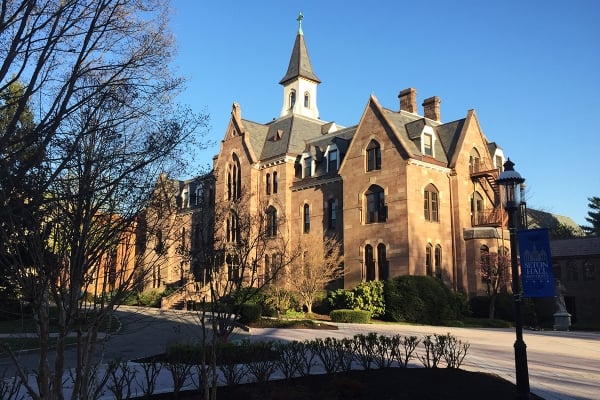
    Seton Hall University president Monsignor Joseph Reilly is facing mounting pressure from public officials and demands for transparency following a report alleging that he looked the other way on sexual abuse cases.

    At the same time, the university is contending with a lawsuit filed last year by former president Joseph Nyre, which alleges retaliation, breach of contract and various other misdeeds by the Board of Regents.

    The regents have remained silent on the Reilly situation and said little about Nyre’s lawsuit, beyond a report issued in July. Now lawmakers are ratcheting up pressure on the private institution to take action, raising questions about how the board is navigating the dual controversies behind closed doors with little public oversight.

    A Bombshell Report

    Reilly, who was hired as president in April, has a long history with Seton Hall.

    The new president earned a psychology degree from the university in 1987; in 2002, he became rector of the College Seminary at St. Andrew’s Hall, the undergraduate seminary of the Archdiocese of Newark, which is part of Seton Hall. A decade later Reilly became rector and dean of the university’s graduate seminary, a position he held until 2022. Then he took a yearlong sabbatical before returning as vice provost of academics and Catholic identity.

    Reilly also served on Seton Hall’s Board of Trustees—one of two governing bodies—during his time as an administrator.

    It was during his time at the graduate School of Theology that Reilly is accused of knowing about sexual abuse allegations that he did not report, according to documents reviewed by Politico. The case is linked to sprawling sexual abuse allegations involving disgraced cardinal Theodore McCarrick, the news outlet reported, who “created a culture of fear and intimidation” and “used his position of power as then–Archbishop of Newark”—which sponsors Seton Hall—“to sexually harass seminarians” for decades, according to a university report released in 2019.

    McCarrick, who sat on both of Seton Hall’s boards, was defrocked by the Vatican after he was found guilty of sexual misconduct in a canonical trial. A criminal case against McCarrick was suspended last year due to his inability to stand trial because of a dementia diagnosis.

    While Seton Hall never released to the public its full report on the abuse McCarrick allegedly committed, Politico’s review of the findings revealed that Reilly knew about the allegations against the cardinal and failed to report to university officials a student complaint about sexual assault by a seminarian. Politico also reported that Reilly dismissed another seminarian in 2012 who had allegedly been sexually abused and that he did not investigate the incident. In another instance, Reilly was allegedly made aware of a 2014 sexual harassment charge and did not report it.

    Politico also reported that Reilly did not fully cooperate with a 2019 investigation into McCarrick’s alleged abuse. A task force set up in 2020 to mete out discipline after the McCarrick scandal reportedly recommended removing Reilly from board and leadership roles.

    As the controversy has unfolded, Seton Hall has said little publicly.

    “As part of the search for the university’s 22nd president, the Board of Regents reviewed several candidates and overwhelmingly selected Monsignor Joseph Reilly to lead Seton Hall in recognition of his decades of effective service and leadership,” a Seton Hall spokesperson wrote in an email to Inside Higher Ed. “The Board of Regents remains unequivocal in its support of Monsignor Reilly and firmly believes in his ability and vision to enhance Seton Hall’s standing as one of the nation’s foremost Catholic universities.”

    The university did not provide a requested interview with regents, but the spokesperson added that following a 2019 review by a law firm, “the board determined that Monsignor Reilly should remain in his role and eligible for future roles at the University.” Seton Hall declined to provide a copy of the report.

    Demanding Answers

    Seton Hall’s silence has not gone unnoticed by Democratic state senator Andrew Zwecker, who chairs the Senate Oversight Committee and is vice chair of the higher education committee.

    “I’m appalled at the fact that they’ve just doubled down at this point without any transparency, just generic statements about values and doing a good job, et cetera,” he told Inside Higher Ed.

    Though Seton Hall is private, Zwecker noted that it receives about $2.5 million in state funding for certain programs. He added that the state could cut those funds—an option he might pursue if the university doesn’t respond transparently to concerns that Reilly ignored sexual abuse.

    “That is a lever that we must absolutely consider to keep the pressure on,” Zwecker said.

    He’s also weighing a public hearing. But Zwecker said he would rather see Seton Hall address the issue and answer questions about what Reilly knew about sexual abuse and whether the Board of Regents ignored those findings when it voted to hire him.

    If regents knew and “voted to install this president anyway, they should resign immediately,” Zwecker said.

    Democratic governor Phil Murphy also weighed in last week.

    “The Governor is deeply concerned by the allegations and believes that Seton Hall University must release the full report,” press secretary Natalie Hamilton told Inside Higher Ed by email.

    The Star-Ledger editorial board has challenged the university on its opacity, publishing an opinion piece on Monday under the headline “Why is Seton Hall hiding this sex abuse report?

    Faculty members at Seton Hall are also pressing for transparency.

    Nathaniel Knight, chair of Seton Hall’s Faculty Senate, noted “considerable concern” among the professoriate and said he wants to see a “greater degree of transparency” from the university.

    Knight said he supported Reilly’s hiring when he was named president, noting he “had the institutional memory” given his years of service and seemed to “embody the spirit of Seton Hall.” But now Knight wants the university to fully explain the concerns around the new president.

    “I support Monsignor Reilly. I supported his hiring. I think he’s a good man, a man of integrity and religious faith, and is someone who brought a promise of bringing the university, the community, together around its core values as a Catholic institution of higher education. Whatever is out there, I’d like to be able to weigh that against the positives that I see with Monsignor Reilly,” Knight said.

    An Explosive Lawsuit

    For Seton Hall, the Reilly controversy comes on the heels of Nyre’s unexpected exit in 2023, which shocked many in the community.

    “It was a surprise. I think we were bewildered. He had been brought in with great fanfare not long before,” Knight said. “He saw the university through the COVID years with a steady hand and was in the process of implementing this strategic plan that he had crafted. We saw no indication that there were any problems in the works. It was out of the blue and had us all scratching our heads.”

    Nyre sued Seton Hall last February, alleging breach of contract and retaliation by the board.

    In the lawsuit, Nyre alleges he was pushed out by the Board of Regents following a clash with then-chair Kevin Marino, whom he accused of micromanagement, improperly inserting himself into an embezzlement investigation at the law school and sexually harassing his wife, Kelli Nyre, among other charges. Marino, who is no longer on the board, was not named as a defendant in the lawsuit despite being at the center of many of the allegations.

    “Our litigation centers on the alleged systemic failures of the Board of Regents and their unwillingness to comply with federal laws, including Title IX, Title VII, and Title IV, as well as university bylaws and policies,” Matthew Luber, an attorney representing Nyre, said in a statement. “As alleged in the Complaint, the Defendants prioritized self-preservation, suppressing dissent and retaliating against individuals like Dr. Nyre who reported misconduct and advocated for meaningful change. As further alleged in the Complaint, the Board of Regents not only neglected their fiduciary responsibilities, but exposed the University and its personnel to significant risk. No matter the outcome, change is urgently needed at Seton Hall.”

    The university has pushed back in court. Officials filed a motion to dismiss last March, alleging that Nyre failed to state a claim and that the terms of his exit agreement barred him from filing a lawsuit against Seton Hall and/or its Board of Regents. Lawyers for Seton Hall wrote in a brief that Nyre’s lawsuit “can best be described as gamesmanship, and at worst sheer dishonesty.”

    University officials did not address the Nyre lawsuit in a statement to Inside Higher Ed, but last July they released a report from an outside law firm rejecting the claims against Marino. Attorneys for the firm, Perry Law, wrote that they “found no evidence to substantiate Mrs. Nyre’s allegations regarding Mr. Marino, despite the purported harassment allegedly occurring in public places in close proximity to numerous other individuals.”

    The Perry Law report was issued July 2, one day after Reilly assumed office. The report did not include interviews with the Nyres, who the authors noted did not participate in the investigation. Witnesses present for the alleged incidents told investigators that they did not see Marino engage in the behavior he is accused of, and the former board chair has denied the claims and blasted the lawsuit as “desperate and pathetic.” And, in a statement to Inside Higher Ed last year, Seton Hall said the claims were without merit.

    As controversies around Seton Hall’s current and former leaders play out, more details are likely to emerge in the Nyre case, barring a dismissal or settlement. But the Reilly review may remain shrouded in mystery as Seton Hall hunkers down, ignoring widespread calls for transparency.


    Source link