Colorado officials say money that helps 18,000 low-income families pay for child care could run out by Jan. 31 if federal officials don’t lift the freeze they’ve imposed on funding for several safety net programs in five Democrat-led states.
If that happens, some children could go without care and some parents would have to stay home from work. State lawmakers could cover such a funding gap temporarily, though Colorado is facing a significant budget crunch.
The Trump administration announced the freeze on $10 billion in child care and social services funding for Colorado, California, Illinois, Minnesota, and New York in a press release Monday.
In letters sent to the two Colorado agencies that run the affected programs, federal officials said they have “reason to believe that the State of Colorado is illicitly providing” benefits funded with federal dollars to “illegal aliens.”
The letters didn’t cite evidence for that claim and a spokesperson for the U.S. Department of Health and Human Services didn’t respond to questions from Chalkbeat about why federal officials are concerned about fraud in Colorado.
Spokespeople from both state departments said by email on Tuesday they’re not aware of any federal fraud investigations focused on the programs affected by the funding freeze.
The five-state funding freeze follows a federal crackdown in Minnesota after a right-wing YouTuber posted a video in late December alleging that Minneapolis child care centers run by Somali residents get federal funds but serve no children. It’s not clear why the other four states have gotten the same treatment as Minnesota, but all have Democratic governors who have clashed with President Donald Trump.
In a New Year’s Eve social media post, Trump called Colorado Gov. Jared Polis “the Scumbag Governor” and said Polis and another Colorado official should “rot in hell” for mistreating Tina Peters, a Trump supporter and former Mesa County clerk who’s serving a nine-year prison sentence for orchestrating a plot to breach election systems.
The federal freeze will affect three main funding streams in Colorado that together bring in about $317 million a year. They include $138 million for the Colorado Department of Early Childhood for child care subsidies for low-income families and a few other programs.
The subsidy program, known as the Colorado Child Care Assistance program, helps cover the cost of care for more than 27,000 children so parents can work or take classes. It’s mostly funded by the federal government with smaller contributions from states and counties.
The other two frozen funding streams go to the Colorado Department of Human Services and pay for Temporary Assistance for Needy Families, or TANF, and other programs.
In the letter to the Colorado Department of Early Childhood, federal officials outlined new fiscal requirements the state will have to follow before the funding freeze is lifted. They include attendance documentation — without names or other personal identifiers — for children in the child care subsidy program.
A state fact sheet issued in response to the funding freeze said funding for the child care subsidy program would be depleted by Jan. 31. It also outlined several measures already in place to prevent fraud or waste, including state audits, monthly case reviews by county officials, and efforts to recover funds if improper payments are made.
The state said it is exploring “all options, including legal avenues” to keep the frozen funding flowing.
Six Democratic state lawmakers, most in leadership positions, released a statement Tuesday afternoon calling the funding freeze a callous move that will make life more expensive for working families.
“We stand ready to work with Governor Polis and partners in our federal delegation to resist this lawless effort to freeze funding, and we sincerely hope that our Republican colleagues will put politics aside, get serious about making life in Colorado more affordable, and put families first,” the statement said in part.
The statement was from Speaker of the House Julie McCluskie; Senate President James Coleman; House Majority Leader Monica Duran; Senate Majority Leader Robert Rodriguez; Rep. Emily Sirota; and Sen. Judy Amabile.
Chalkbeat is a nonprofit news site covering educational change in public schools.
Did you use this article in your work?
We’d love to hear how The 74’s reporting is helping educators, researchers, and policymakers. Tell us how
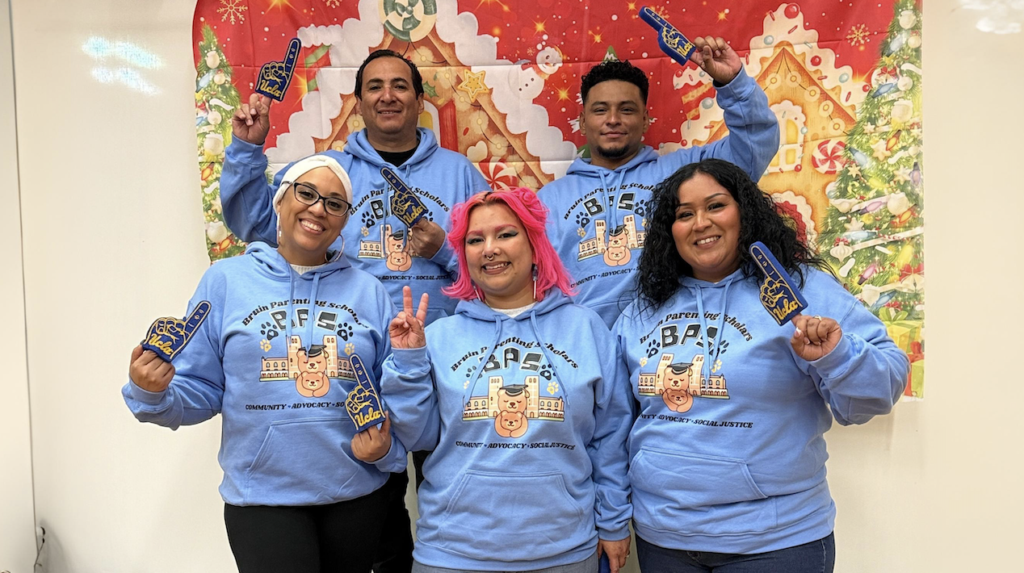
UCLA Bruin Parenting Scholars (BPS) board at their winter warmth basic needs drive for students with dependents.
Credit: Photo courtesy of Trina Rodriguez
As students across the country wrap up their final exams, academic pressure is front and center. For many, this season is stressful. For student parents, however, the stakes are even higher.
Alongside exams and essay deadlines, student caregivers balance jobs, household responsibilities, and the constant demands of raising children and other family members — often with little institutional support. For them, success in college is not just about grades; it is about securing stability for their families and breaking cycles of economic insecurity.
More than one in four undergraduate students in the United States are raising children, and 54% are doing so without a partner. Despite this widespread need for support, the programs that make higher education possible for student parents are threatened. Chief among them is the federal Child Care Access Means Parents in School (CCAMPIS) initiative, the only national program that provides campus-based childcare subsidies for low-income student parents so they can stay enrolled and complete their degrees.
Across the University of California (UC) system, survey data shows nearly 1,000 undergraduate students and 1,500 graduate students are caregivers. These students, often older, first-generation, and low-income, face challenges that traditional student support systems were never designed to meet. Parenting students also experience food and housing insecurity at disproportionately higher rates than their non-parenting peers. Add the cost of childcare, and the financial burden becomes nearly impossible to bear.
Despite this clear need, support is shrinking. Although Congress allocated $75 million for CCAMPIS in fiscal year (FY) 2025, and there have been previous bipartisan proposals to increase funding to $200 million annually, President Trump’s budget request and the House education spending bill for FY 2026 proposed cutting the program entirely.
Eliminating this funding would put thousands of families under severe financial strain, intensifying the challenges for caregivers already facing heightened food or housing insecurity and making it much harder to balance school and parenting responsibilities.
“As a CCAMPIS recipient, I know that without federally supported childcare, I would never have been able to care for my late mother while returning to school, nor would I have completed undergrad with dual degrees,” Schinal Harrington, a masters of social work (MSW) candidate at UCLA, wrote in an email to us. “As a first-generation, system-impacted woman of color, mother, and graduate student, I have spent my academic journey navigating red tape, institutional neglect, and the loss of [fellow] peers whose struggles were shaped by the same barriers student parents face today.”
Harrington chairs Bruin Parenting Scholars (BPS), a UCLA student advocacy organization that provides resources, mentorship, and community for students with dependents. Every day, she sees how childcare access, trauma-informed services, and flexible policies support not just parenting students, but their families.
Trina Rodriguez, another UCLA MSW student and student parent advocate, describes this reality with raw clarity: “My lived experience carries many identities, but the first thing I am when I wake up, before anything else, is ‘Mommy.’ When universities do not acknowledge the existence of this marginalized community through institutional supports — like flexible scheduling, affordable childcare, and family-friendly policies — student parents face systemic barriers to completing their education. Universities are, therefore, perpetuating harm on this community.”
Yet despite systemic gaps, student parents demonstrate extraordinary resilience. UC survey data show that parenting graduate students feel more upbeat about their career prospects and better prepared for the job search than their non-parenting peers. Their determination is evident — even when given modest support.
“As a parenting scholar [myself], I’ve witnessed how student parents embody perseverance, compassion, and leadership, yet must navigate systems that were never built with their lives in mind,” said Sonya Brooks, the 2025-26 UC student regent. “Supporting student parents means recognizing that higher education is not one-size-fits-all: it must evolve to meet the realities of those raising families while pursuing their dreams. The success of student parents ripples across generations, shaping stronger families, communities, and universities.”
Other resources for student parents
BrightLife Kids is a free virtual behavioral health coaching program for families in California with children ages 0–12.
Part of the CalHOPE initiative, BrightLife Kids offers 1:1 video coaching and secure chat services at no cost, with no insurance or referral required, providing caregivers with helpful tools.
When Congress passed a short-term continuing resolution (CR) to end the longest government shutdown in U.S. history, longer-term funding questions — including CCAMPIS funding for 2026 — remained unresolved. House and Senate appropriators are now deciding whether to follow the president’s proposal or save the program when the continuing resolution expires in January.
Congress must restore full funding for CCAMPIS and reject cuts that threaten the educational futures of thousands of student parents nationwide. Undermining these supports jeopardizes not only individual students but entire families.
Colleges and universities must also do their part by expanding childcare access, adopting family-friendly policies, and offering flexible learning options with integrated advising. Higher education cannot credibly claim to value its students while ignoring the realities faced by the many on campus who are raising dependents.
Parenting students have shown up for their families. Now it is time for our institutions to show up for them.
•••
Duke Dela Rosa is the director, and Amrit Dhillon, Arianna Li, and Sue Jung are associates, of the Associated Students of the University of California (ASUC) federal government relations department at UC Berkeley.
The opinions expressed in this commentary represent those of the author. EdSource welcomes commentaries representing diverse points of view. If you would like to submit a commentary, please review our guidelines and contact us.
She had been awarded the prize for her book Ghostly Pasts, Capitalist Presence: A Social History of Fear in Colonial Bengal, published in August 2024.
Tithi Bhattacharya, a history professor at Purdue University, formally declined the Modern Language Association’s Aldo and Jeanne Scaglione Prize for South Asian Studies in protest of decisions by the MLA regarding Israel’s attacks on Gaza.
“This decision is not a reflection of the committee’s rigorous work or the value of the prize itself, but a stand taken in light of the institutional silence and policy decisions made by the Modern Language Association regarding the ongoing genocide in Palestine, including the MLA leadership’s appalling suppression of the Delegate Assembly’s right to vote on a proposed resolution to boycott, sanction, and divest from Israel,” Bhattacharya wrote Wednesday in a blog post about her decision.
She had been awarded the 2025 prize for her book Ghostly Pasts, Capitalist Presence: A Social History of Fear in Colonial Bengal, published in August 2024.
“I also hope that by declining, I can contribute to the urgent conversation about the ethical responsibilities of professional academic organizations when facing colonialism, brutal state violence, and genocide,” Bhattacharya wrote. “My book, which my generous colleagues on the committee have recognized, is about how colonial capitalism does not even spare ghosts. Against such power, I still believe our weapon remains solidarity.”
First-generation students make up half of all undergraduates, but only one quarter of them retain and graduate with a degree.
A recent study from the National Bureau of Economic Research analyzed first-generation student data against that of their continuing-generation peers to identify gaps in the classroom that may be hindering their success. Researchers found that first-generation students who received lower-than-expected grades in their first term were more likely to leave college entirely compared to their peers who also underperformed but utilized other pathways to continue in higher education.
The findings point to a need for additional support resources to help first-generation students understand academic recovery opportunities—including course withdrawal and switching majors—to promote persistence to graduation.
Digging into data: The study relies on transcript data from 145,000 first-year students at Arizona State University from 2000 to 2022, as well as survey data fielded during the 2021–22 academic year.
Researchers found that parental education is a significant predictor of a student’s academic success, even when controlling for a variety of characteristics, including demographics, household income, major choice and early college performance.
One distinguishing factor between continuing and first-generation students was their use of academic policies to protect their grades. First-generation students were less likely to change their majors or withdraw from courses, strategies that some students deploy to save their GPAs. They were also less likely to know their peers or turn to family members for support when faced with academic challenges, researchers wrote.
“First-generation students who encounter negative grade events have about a 40 percent likelihood of dropping out, which is around five percentage points higher than observationally identical continuing generation students who face the same academic setback,” according to the study. “Rather than dropping out, we find that continuing-generation students who face academic difficulties in their first year are more likely to switch majors.”
Researchers surveyed students to understand how their academic perceptions and outcomes could influence their retention. Results showed that first-generation students were more likely to consider poor grades as detrimental to their success or a signal of their academic failure, which might push them to drop out.
One example of this was the decision to switch majors. While all students were more likely to switch majors if their first semester grades fell below a 3.0 GPA, continuing-generation students were much more likely to switch their major because of lower grades; first-generation students were more inclined to remain in their major even with poor grades.
Researchers hypothesized that first-gen students may be less likely to switch majors because they have a less differentiated perspective on major earnings, meaning they expect similar earnings after graduating college regardless of their major. Therefore, poor grades in one major would mean poor outcomes in all fields—not just that particular program.
Survey Says
A 2025 Student Voice survey by Inside Higher Ed and Generation Lab found that 55 percent of first-generation students said one of their top reasons for deciding to attend college was to pursue a specific career or profession.
First-generation students were slightly more likely to say they enrolled to increase their earning potential or to achieve a personal goal, compared to their continuing-generation peers.
One solution: As part of the study, researchers evaluated Arizona State University LEAD (Learn Explore Advance Design), a program that supports incoming students with lower grades or test scores. LEAD participants complete special first-year courses that focus on durable skills including time management and offer smaller class sizes and more interaction with faculty. The program also has dedicated staff and peer mentors who support incoming students.
Data shows the program effectively helped students learn to navigate the university; participants had a slightly higher GPA and reported a greater sense of belonging and positive mental health. LEAD students were also more likely to switch majors and less likely to declare an undecided major, signaling to researchers that the program improved students’ cultural capital and flow of information.
Related Research: First-generation students can be left behind in the classroom because they’re unaware of the “hidden curriculum,” or unspoken norms and processes involved in navigating higher education.
Similarly, one research project found that first-generation students were less aware of conduct systems and how to interpret the student handbook, which could result in disproportionate disciplinary action.
Beginning next week, First Amendment News (FAN) will be moving to Substack. Be sure to sign up and follow us there for future installments!
“No American President has ever before issued executive orders like the one at issue in this lawsuit . . . The instant case presents an unprecedented attack on . . . foundational principles. . . . Here, deciding what process was due to plaintiff is unnecessary, because no process was provided.” — Perkins Coie LLP v. Department of Justice (Dist. Ct., D.C., May 2)
“[T]he Court found that Ms. Rumeysa Ozturk has demonstrated a substantial claim of a violation of due process.” — Ozturk v. Hyde (Dist. Ct., VT, May 16)
Maxim: #1: Vagueness and due process cannot coexist, at least not in any system of constitutional justice worthy of the name.
Maxim #2: The broader the law’s sweep, the greater the likelihood that it was designed to be arbitrarily punitive.
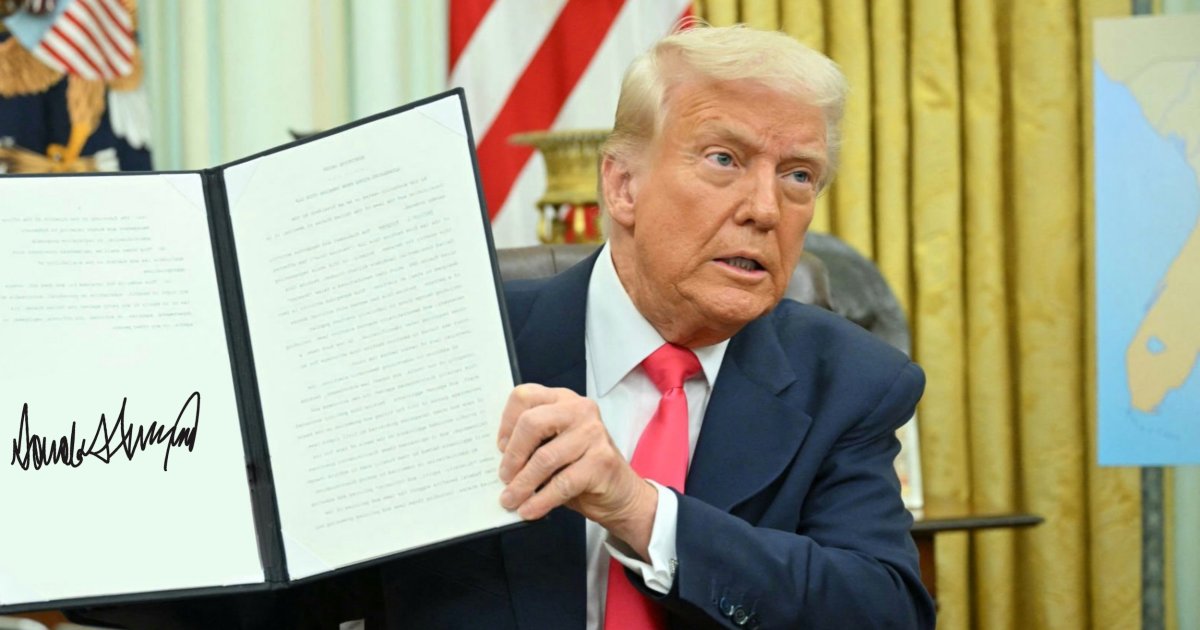
It is undeniable: Many of Donald Trump’s executive orders run wildly afoul of basic tenets of fairness. Time and again, he has ordered his subordinates to enforce orders that are shockingly vague and disturbingly broad. Both in their conception and execution, such orders patently violate the commands of the First, Fifth, and Fourteenth Amendments. And yet, the public and the courts are asked to countenance such abridgments of law in the name of unfettered executive prerogative.
Clarity and precision in lawmaking are fundamental to any system of justice. That call for clarity, which traces back at least to Roman law, finds expression in Montesquieu’s “Spirit of Laws” and William Blackstone’s “Commentaries on the Laws of England.” Laws must be “plainly and perspicuously penned,” is how Blackstone tagged it.
In “FederalistNo. 62,” James Madison condemned those laws that were “incoherent that they cannot be understood.” The idea is rooted in basic fairness, in due process of law. Such a process is especially important in the First Amendment context.
Whether it be in executive orders directed at DEI practices, law firms, universities, libraries, or immigrants, among others, the basic problem of vagueness is the constitutional cancer present in all of them.
As Justice Thurgood Marshall made clear in 1972’s Grayned v. City of Rockford, vagueness offends fairness because (i) it provides no meaningful warning to ordinary persons as to “what is prohibited,” (ii) it provides no “explicit standards” to law enforcement officials, judges, and juries necessary to avoid “arbitrary and discriminatory application,” and (iii) vague laws chill protected speech insofar as the “boundaries of the forbidden areas [are not] clearly marked.”
Justice William Brennan explained the First Amendment importance of that principle in 1963’s NAACP v. Button: “Standards of permissible . . . vagueness are strict in the area of free expression. . . [I]n the area of First Amendment freedoms, the existence of a [vague mandate is] susceptible of sweeping and improper application.”
In the unconstitutional process, lawyers, scientists, librarians, universities, law firms and others are chilled into silence — and that is precisely the point.
The evils of vagueness, among other constitutional wrongs, were thoughtfully identified by federal district court Judge Adam B. Abelson in the recent Maryland District Court case National Association of Diversity Officers in Higher Education v. Trump. In relevant part, Judge Abelson began:
This Court remains of the view that Plaintiffs have shown a strong likelihood of success on the merits of their facial free speech and vagueness claims . . . The Challenged Provisions forbid government contractors and grantees from engaging in “equity-related” work and from “promoting DEI” in ways the administration may consider to violate antidiscrimination laws; they demand that the “private sector” “end . . . DEI” and threaten “strategic enforcement” to effectuate the “end[ing]” of “DEI”; and they threaten contractors and grantees with enforcement actions with the explicit purpose of “deter[ring]” such “programs or principles.”
Judge Adam B. Abelson
Thereafter, he emphasized that the Court was
…deeply troubled that the Challenged Provisions, which constitute content-based, viewpoint-discriminatory restrictions on speech (in addition to conduct), have the inherent and ineluctable effect of silencing speech that has long been, and remains, protected by the First Amendment. And they do so through impermissibly vague directives that exacerbate the speech-chilling aspects of the Challenged Provisions.
To elucidate that point, he added:
Historically, the metaphor used to describe the effect of laws that restrict speech is “chill.” The more apt metaphor here is “extinguish.” Part of the explicit purpose and effect of the Challenged Provisions is to stifle debate — to silence selected viewpoints, selected discourse — on matters of public concern. They forbid government contractors and grantees from engaging in discourse — including speech such as teaching, conferences, writing, speaking, etc. — if that discourse is “related” to “equity. ” And they direct the “private sector” to “end” diversity, to “end” equity, and to “end” inclusion. See J21 Order § 4(b) (directing agencies to “encourage the private sector to end . . . DEI”). “End” is not a mere “chill.” “Deter[rence]” is not a side-effect of the Challenged Provisions; their explicit goal is to “deter” not only “programs” but “principles” — i.e. ideas, concepts, and values. After all, the opposite of inclusion is exclusion; the opposite of equity is inequity; and, at least in some forms, the opposite of diversity is segregation.
Such are but some of the evils rooted in many of Trump’s executive orders. Those affronts to due process and First Amendment principles are so obvious as to render their design intentional (see “Trump’s ‘So what?’ stratagem,” FAN 470).
Trump’s Justice Department defends such lawlessness by procedural obfuscation coupled with political rhetoric and claims of unrestrained executive prerogative. When that fails they take cover by being evasive, as revealed in oral arguments in the Second Circuit case of Ozturk v. Hyde:
The appeals court judges pushed . . . [Department of Justice attorney Drew] Ensign on whether or not the Trump administration believed that both students’ speech was lawful speech.
“We have not taken a position on that,” Ensign told the panel of three judges, saying concerns over where the students’ cases should be heard were more important.
“Help my thinking along,” Judge Barrington D. Parker then said. “Take a position.”
“Your honor, I don’t have authority to take a position on that right now,” Ensign replied.
Drew Ensign
In the unconstitutional process, lawyers, scientists, librarians, universities, law firms and others are chilled into silence — and that is precisely the point.
Consider as well this from an article in The New York Times by Stephanie Saul:
The Trump administration is set to cancel the federal government’s remaining federal contracts with Harvard University — worth an estimated $100 million, according to a letter that is being sent to federal agencies on Tuesday. The May 27 letter [from the U.S. General Services Administration] also instructs agencies to “find alternative vendors” for future services.
The additional planned cuts, outlined in a draft of the letter obtained by The New York Times, represented what an administration official called a complete severance of the government’s longstanding business relationship with Harvard.
The letter is the latest example of the Trump administration’s determination to bring Harvard — arguably the country’s most elite and culturally dominant university — to its knees, by undermining its financial health and global influence. Since last month, the administration has frozen about $3.2 billion in grants and contracts with Harvard. And it has tried to halt the university’s ability to enroll international students.
This episode features a conversation with Cass Sunstein, the Robert Walmsley University Professor at Harvard Law School and former administrator of the White House Office of Information and Regulatory Affairs. His recent working paper, ‘Our Money or Your Life!’ Higher Education and the First Amendment,’ explores the First Amendment constraints on federal funding to American universities.
In the last few weeks, the Trump administration has made several announcements that it is withholding a significant amount of federal funds from specific universities, notably Columbia University and Harvard University, and that those funds will not be released until those universities comply with a set of demands. Harvard received a letter on April 11 demanding changes in Harvard’s governance, faculty hiring practices, student admissions practices, viewpoint diversity among the faculty, and student disciplinary policies, among other things. On May 5, the Secretary of Education sent a letter to Harvard informing the university that the federal government will award it no grants for scholarly research in the future. Reportedly, there is more than $2 billion dollars at stake.
On the podcast we talk through what the Trump administration is doing, what the consequences are for Harvard and other affected universities, and what constitutional issues are raised by the administration’s actions in denying Harvard access to federal research funds. In the process, we get a short course on First Amendment doctrine relating to viewpoint discrimination and unconstitutional conditions.
Trump’s lackey: FCC Chairman Brendan Carr
FCC Commissioner Brendan Carr
“He has . . . abandoned the FCC’s posture as an independent regulator in favor of an openly personal embrace of Trump.”
Four months into his tenure as head of America’s top communications regulator, Brendan Carr appears to be running a Trumpian playbook to transform a long-independent agency.
Immediately after being promoted by President Donald Trump to chair the Federal Communications Commission, on Jan. 20, Carr launched investigations into top media companies, including NPR, PBS and Comcast.
Related
Latest update of Zick’s Executive Orders repository
SCOTUS denies review in middle school ‘two genders’ shirt case
This past Monday the Supreme Court denied review (7-2) in L.M. v. Town of Middleborough. The issue raised in that case was whether school officials may presume substantial disruption or a violation of the rights of others from a student’s silent, passive, and untargeted ideological speech simply because that speech relates to matters of personal identity, even when the speech responds to the school’s opposing views, actions, or policies.
Summary of facts: “In this case, L.M.’s [middle] school prohibited him from wearing a non-obscene, non-vulgar shirt stating, ‘There Are Only Two Genders,’ because the message ‘would cause students in the LGBTQ+ community to feel unsafe.’. The school even banned him from wearing the same shirt on which he covered the words ‘Only Two’ with a piece of tape on which he wrote “CENSORED” so that the message read, ‘There Are [CENSORED] Genders.’”
The petition had been distributed for conference twelve times.
Justice Clarence Thomas wrote a dissent. Justice Samuel Alito also wrote a separate dissent, which in part read:
This case presents an issue of great importance for our Nation’s youth: whether public schools may suppress student speech either because it expresses a viewpoint that the school disfavors or because of vague concerns about the likely effect of the speech on the school atmosphere or on students who find the speech offensive. In this case, a middle school permitted and indeed encouraged student expression endorsing the view that there are many genders. But when L. M., a seventh grader, wore a t-shirt that said “There Are Only Two Genders,” he was barred from attending class. And when he protested this censorship by blocking out the words “Only Two” and substituting “CENSORED,” the school prohibited that shirt as well.
The First Circuit held that the school did not violate L. M.’s free-speech rights. It held that the general prohibition against viewpoint-based censorship does not apply to public schools. And it employed a vague, permissive, and jargon-laden rule that departed from the standard this Court adopted in Tinker v. Des Moines Independent Community School Dist., 393 U. S. 503 (1969).
FBI reopens probe into Dobbs Supreme Court leak
The FBI will launch new probes into the 2023 discovery of cocaine at the White House during President Joe Biden’s term and the 2022 leak of the Supreme Court’s draft opinion overturning Roe v. Wade, a top official announced on Monday. Dan Bongino, a rightwing podcaster-turned-FBI deputy director, made the announcement on X, saying that he had requested weekly briefings on the cases’ progress. . . .
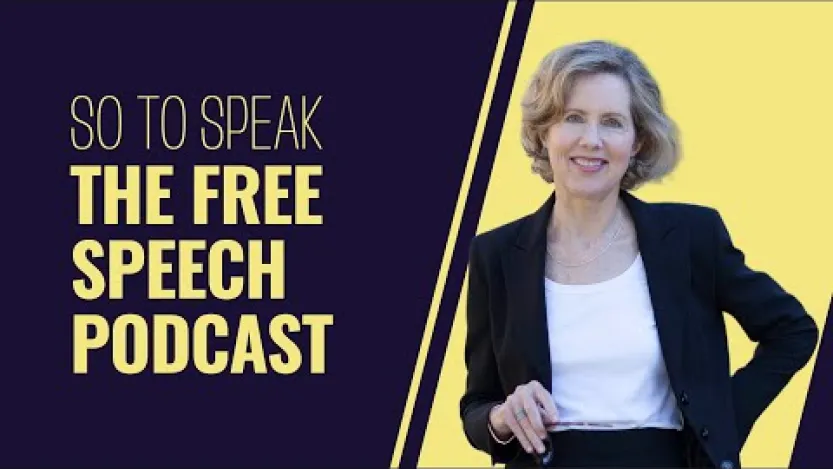
‘So to Speak’ podcast: Heather Mac Donald on Trump & free speech
“[M]y reaction to everything that Trump is doing, and I agree almost across the board with his substantive aims whether it’s with regards to the universities, whether it’s regards to immigration, is what would we feel if the democratic administrations were doing this exact same thing in favor of their values? Everything we’re doing sets a precedent. Again, I acknowledge the precedent has already been set. . . . I’m still very nervous about the government using power because even though I’m not deeply libertarian, I do think that the hope of a neutral arbiter of a government that is restrained by rules that are content-free that are politics-free is one of the biggest yearnings of humanity, at least in the west.” — Heather Mac Donald
Heather Mac Donald discusses the Trump administration’s free speech record amidst its battles with higher ed, mainstream media, law firms, and more.
Mac Donald is a Thomas W. Smith Fellow at the Manhattan Institute. Her most recent book is “When race trumps merit: How the pursuit of equity sacrifices excellence, destroys beauty, and threatens lives.”
Related
Heather Mac Donald, “The White House’s Clumsy Attack on Harvard,” City Journal (April 15) (“The administration is growing ever bolder in its crusade against the institutions responsible for left-wing ideology — whether elite law firms or universities. That crusade is unquestionably justified. Its targets deserve little sympathy. . .”)
2024-2025 SCOTUS term: Free expression and related cases
Cases decided
Villarreal v. Alaniz(Petition granted. Judgment vacated and case remanded for further consideration in light of Gonzalez v. Trevino, 602 U. S. ___ (2024) (per curiam))
Murphy v. Schmitt (“The petition for a writ of certiorari is granted. The judgment is vacated, and the case is remanded to the United States Court of Appeals for the Eighth Circuit for further consideration in light of Gonzalez v. Trevino, 602 U. S. ___ (2024) (per curiam).”)
TikTok Inc. and ByteDance Ltd v. Garland (9-0: The challenged provisions of the Protecting Americans from Foreign Adversary Controlled Applications Act do not violate petitioners’ First Amendment rights.)
Review granted
Pending petitions
Petitions denied
Emergency Applications
Yost v. Ohio Attorney General (Kavanaugh, J., “IT IS ORDERED that the March 14, 2025 order of the United States District Court for the Southern District of Ohio, case No. 2:24-cv-1401, is hereby stayed pending further order of the undersigned or of the Court. It is further ordered that a response to the application be filed on or before Wednesday, April 16, 2025, by 5 p.m. (EDT).”)
Free speech related
Mahmoud v. Taylor (argued April 22 / free exercise case: issue: Whether public schools burden parents’ religious exercise when they compel elementary school children to participate in instruction on gender and sexuality against their parents’ religious convictions and without notice or opportunity to opt out.)
Thompson v. United States (decided: 3-21-25/ 9-0 w special concurrences by Alito and Jackson) (interpretation of 18 U. S. C. §1014 re “false statements”)
Beginning next week, First Amendment News (FAN) will be moving to Substack. Be sure to sign up and follow us there for future installments!
This article is part of First Amendment News, an editorially independent publication edited by Ronald K. L. Collins and hosted by FIRE as part of our mission to educate the public about First Amendment issues. The opinions expressed are those of the article’s author(s) and may not reflect the opinions of FIRE.
Professor Mark Scott said teaching course enrolments are up 30 per cent compared to last year. Picture: Louise Cooper
Student teacher enrolments are bouncing back nationally after they dipped during the Covid-19 pandemic, fuelling positivity that the pipeline of graduates can ease the profession’s workforce shortage.
Please login below to view content or subscribe now.
New York University will withhold the diploma of a student commencement speaker who used his speech Wednesday to condemn what he called “the atrocities currently happening in Palestine.”
According to a statement released by a university spokesperson after the speech, the student, Logan Rozos, “lied about the speech he was going to deliver and violated the commitment he made to comply with our rules.” The university is pursuing disciplinary actions and will withhold his diploma while that process proceeds.
“NYU is deeply sorry that the audience was subjected to these remarks and that this moment was stolen by someone who abused a privilege that was conferred upon him,” the statement continued.
Rozos spoke at the ceremony for the university’s Gallatin School of Individualized Study. He told the crowd he was “freaking out” about delivering the controversial speech, but that he felt a “moral and political” obligation to use the platform to speak out in support of Palestinians. Video of the speech shows graduates in caps and gowns clapping and cheering for Rozos and some giving him a standing ovation, though some boos and jeers can be heard off camera.
Every semester, a student hoping to “earn their desired grade” approaches me at the last minute, asking to make up all their missed assignments. I have a standard missed due date policy, 1) let me know (communication) and 2) get it done in a week (extended deadline). The students requesting to stockpile assignments at the end of the semester usually had not completed the assignment at all or had not completed the assignment even with an extended deadline. Basically, they hadn’t even tried to complete assignments. It wasn’t like they had completed it at 12:01 am and it was due at 11:59 pm.
That being said, I do wonder, Why not grant a student’s request to get it (the class) all done at once? You know the requests: “I know this already. Isn’t there a test I can take so I don’t have to sit through the class?” or “I am sure I can get all these assignments done before finals week.” It makes sense that if a student can pass all the assessments, they should pass the class. So why not just complete all the assessments at the same time?
Would these students who were absent from most of the class or hadn’t done any of the assignments on their due dates pass the class with a C or better? Probably. So why enforce due dates at all. Why shouldn’t a professor simply allow a student to complete all the assignments before final grades are due without regard to timing?
The caveat in this “all at once” scenario is that a successful grade is wrongly associated with learning. If a student completes all the assignments in a few days during the semester, then assessments are the sole criteria used to define successful learning. However, the truth is that learning means much more than successfully navigating a certain percentage of the assignments.
In my reality, most students could use their previous knowledge to muddle through the assessments of an introductory course at an accelerated pace. Let’s view the situation from the perspective of a student. They have after all been in school for the last 13 years and they have become really good at taking quizzes and exams and writing essays with thesis statements. My pre- and post-quiz data for the course reveals this. At the beginning of the semester without warning, I ask a group of anxious, ill-prepared students to (within a limited and unreasonable amount of time) answer 20 questions about a topic that they haven’t even considered before walking into the room. The questions are a sampling of the final exam. The average on the pre-quiz hovers at about 50%. Given more time and a couple of days to study and contemplate, most of these students would pass the pre-quiz, and in essence, have the knowledge required to pass the final exam.
Nevertheless, is completing all the assessments what defines learning the contents of a course? Should a student be allowed to stockpile all the assignments and get credit for them as long as they get them done before the final grades are due. In my humble opinion, absolutely not, and it’s not for the classic soft skills reason. Of course, deadlines help students to navigate the world, (e.g. being responsible). After all, the professor is required to turn in final grades by a deadline.
That said, to me, deadlines are important because people (not just students) learn best when information is spaced out or interleaved (Birnbaum et al., 2013; Samani and Pan, 2021). In order to retrieve something from memory, you need time to learn it. Retrieving information is when you know something without having to look it up—like your name and phone number or all the lyrics of your favorite song. This type of learning requires time—spaced learning. You need to learn it, forget it, be asked about it, refresh it, forget it, be asked about it, refresh it and then if you’re lucky you can retrieve it (Feng et al., 2019; Kobayashi, 2022). This is considered spaced learning and is why deadlines are so important.
Due dates provide the structure for spaced learning and learning that is more substantive. Much to the chagrin of the student who wants to “get it all done at once,” this isn’t the way to learn retrievable material. Retrieving information is what allows you to progress to the next set of information and then progress to creativity and eventually creation. Assessments play a crucial role, but true learning doesn’t come from merely completing them. Instead, it happens through active participation in class, where students engage with the material and are consistently challenged by the professor to recall and apply previous lessons.
As professors, we should enforce due dates to give students the time to learn content in a meaningful and retrievable way. But maybe, just maybe, we can do it with a spoon full of sugar.
Adriana J. LaGier is an American Cell Biologist, whose main area of research is active learning and mechanobiology. She is a professor of biology at Grand View University in Des Moines, Iowa, specializing in teaching undergraduate level general biology and cell biology courses.
References
Birnbaum, Monica S., Nate Kornell, Elizabeth Ligon Bjork, and Robert A. Bjork. 2013. “Why Interleaving Enhances Inductive Learning: The Roles of Discrimination and Retrieval.” Memory & Cognition 41 (3): 392–402. https://doi.org/10.3758/s13421-012-0272-7.
Feng, Kanyin, Xiao Zhao, Jing Liu, Ying Cai, Zhifang Ye, Chuansheng Chen, and Gui Xue. 2019. “Spaced Learning Enhances Episodic Memory by Increasing Neural Pattern Similarity Across Repetitions.” The Journal of Neuroscience 39 (27): 5351–60. https://doi.org/10.1523/JNeurosci.2741-18.2019.
Kobayashi, Keiichi. 2022. “The Retrieval Practice Hypothesis in Research on Learning by Teaching: Current Status and Challenges.” Frontiers in Psychology 13 (May):842668. https://doi.org/10.3389/fpsyg.2022.842668.
Samani, Joshua, and Steven C. Pan. 2021. “Interleaved Practice Enhances Memory and Problem-Solving Ability in Undergraduate Physics.” NPJ Science of Learning 6 (November):32. https://doi.org/10.1038/s41539-021-00110-x.
Every semester, a student hoping to “earn their desired grade” approaches me at the last minute, asking to make up all their missed assignments. I have a standard missed due date policy, 1) let me know (communication) and 2) get it done in a week (extended deadline). The students requesting to stockpile assignments at the end of the semester usually had not completed the assignment at all or had not completed the assignment even with an extended deadline. Basically, they hadn’t even tried to complete assignments. It wasn’t like they had completed it at 12:01 am and it was due at 11:59 pm.
That being said, I do wonder, Why not grant a student’s request to get it (the class) all done at once? You know the requests: “I know this already. Isn’t there a test I can take so I don’t have to sit through the class?” or “I am sure I can get all these assignments done before finals week.” It makes sense that if a student can pass all the assessments, they should pass the class. So why not just complete all the assessments at the same time?
Would these students who were absent from most of the class or hadn’t done any of the assignments on their due dates pass the class with a C or better? Probably. So why enforce due dates at all. Why shouldn’t a professor simply allow a student to complete all the assignments before final grades are due without regard to timing?
The caveat in this “all at once” scenario is that a successful grade is wrongly associated with learning. If a student completes all the assignments in a few days during the semester, then assessments are the sole criteria used to define successful learning. However, the truth is that learning means much more than successfully navigating a certain percentage of the assignments.
In my reality, most students could use their previous knowledge to muddle through the assessments of an introductory course at an accelerated pace. Let’s view the situation from the perspective of a student. They have after all been in school for the last 13 years and they have become really good at taking quizzes and exams and writing essays with thesis statements. My pre- and post-quiz data for the course reveals this. At the beginning of the semester without warning, I ask a group of anxious, ill-prepared students to (within a limited and unreasonable amount of time) answer 20 questions about a topic that they haven’t even considered before walking into the room. The questions are a sampling of the final exam. The average on the pre-quiz hovers at about 50%. Given more time and a couple of days to study and contemplate, most of these students would pass the pre-quiz, and in essence, have the knowledge required to pass the final exam.
Nevertheless, is completing all the assessments what defines learning the contents of a course? Should a student be allowed to stockpile all the assignments and get credit for them as long as they get them done before the final grades are due. In my humble opinion, absolutely not, and it’s not for the classic soft skills reason. Of course, deadlines help students to navigate the world, (e.g. being responsible). After all, the professor is required to turn in final grades by a deadline.
That said, to me, deadlines are important because people (not just students) learn best when information is spaced out or interleaved (Birnbaum et al., 2013; Samani and Pan, 2021). In order to retrieve something from memory, you need time to learn it. Retrieving information is when you know something without having to look it up—like your name and phone number or all the lyrics of your favorite song. This type of learning requires time—spaced learning. You need to learn it, forget it, be asked about it, refresh it, forget it, be asked about it, refresh it and then if you’re lucky you can retrieve it (Feng et al., 2019; Kobayashi, 2022). This is considered spaced learning and is why deadlines are so important.
Due dates provide the structure for spaced learning and learning that is more substantive. Much to the chagrin of the student who wants to “get it all done at once,” this isn’t the way to learn retrievable material. Retrieving information is what allows you to progress to the next set of information and then progress to creativity and eventually creation. Assessments play a crucial role, but true learning doesn’t come from merely completing them. Instead, it happens through active participation in class, where students engage with the material and are consistently challenged by the professor to recall and apply previous lessons.
As professors, we should enforce due dates to give students the time to learn content in a meaningful and retrievable way. But maybe, just maybe, we can do it with a spoon full of sugar.
Adriana J. LaGier is an American Cell Biologist, whose main area of research is active learning and mechanobiology. She is a professor of biology at Grand View University in Des Moines, Iowa, specializing in teaching undergraduate level general biology and cell biology courses.
References
Birnbaum, Monica S., Nate Kornell, Elizabeth Ligon Bjork, and Robert A. Bjork. 2013. “Why Interleaving Enhances Inductive Learning: The Roles of Discrimination and Retrieval.” Memory & Cognition 41 (3): 392–402. https://doi.org/10.3758/s13421-012-0272-7.
Feng, Kanyin, Xiao Zhao, Jing Liu, Ying Cai, Zhifang Ye, Chuansheng Chen, and Gui Xue. 2019. “Spaced Learning Enhances Episodic Memory by Increasing Neural Pattern Similarity Across Repetitions.” The Journal of Neuroscience 39 (27): 5351–60. https://doi.org/10.1523/JNeurosci.2741-18.2019.
Kobayashi, Keiichi. 2022. “The Retrieval Practice Hypothesis in Research on Learning by Teaching: Current Status and Challenges.” Frontiers in Psychology 13 (May):842668. https://doi.org/10.3389/fpsyg.2022.842668.
Samani, Joshua, and Steven C. Pan. 2021. “Interleaved Practice Enhances Memory and Problem-Solving Ability in Undergraduate Physics.” NPJ Science of Learning 6 (November):32. https://doi.org/10.1038/s41539-021-00110-x.
The U.S. Department of Education’s Office for Civil Rights announced today it agrees with a federal court ruling that appropriately found the Biden-era Title IX rules to unconstitutionally restrict student First Amendment rights.
Those rules, effective in August 2024, infringed on constitutionally protected speech related to sex and gender. They also rolled back crucial due process rights for those accused of sexual misconduct on campus, increasing the likelihood that colleges would arrive at unreliable conclusions during those proceedings. OCR announced it will instead enforce the 2020 rules adopted during the first Trump administration which carefully considered the rights of complainants and respondents alike, while providing robust free speech and due process protections.
The following can be attributed to Tyler Coward, FIRE lead counsel for government affairs:
The return to the 2020 rules ensures that all students — whether they are the accused or the accuser — will receive fair treatment and important procedural safeguards. That includes the right of both parties to have lawyers present during hearings, the right for both attorneys to cross-examine the other party and witnesses, and the right to receive all of the evidence in the institution’s possession. Colleges are also required to adopt a speech-protective definition of sexual harassment that enables schools to punish genuine harassment instead of merely unpopular speech.
Restoring the Trump administration’s rules means that students can once again feel secure that their rights to due process and free speech will be respected while ensuring administrators have the tools they need to punish those who engage in sexual misconduct and harassment.